














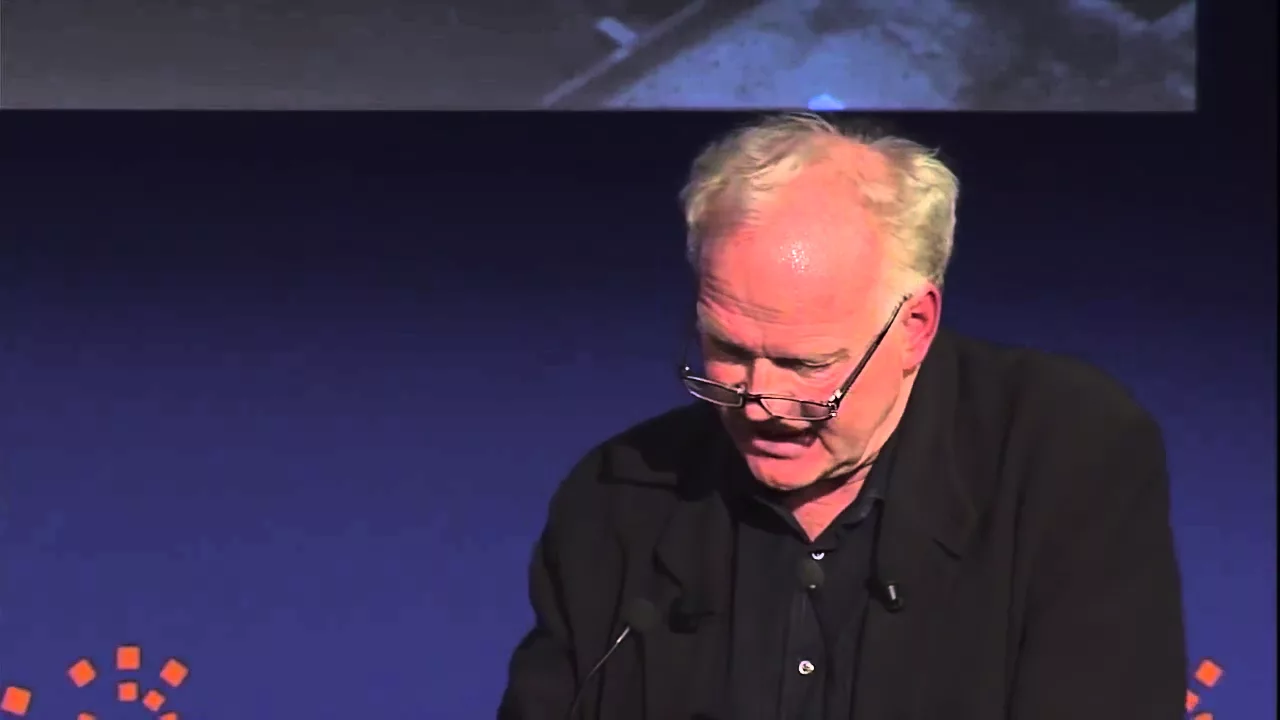











Prof. Ulrich Beck argues that traditional sociological frameworks based on methodological nationalism—treating the nation-state as the fundamental unit of analysis—are inadequate for understanding contemporary global inequalities and social dynamics. Instead, we live in an age of 'cosmopolitanization,' where global capitalism, transnational labor markets, and interconnected risks create new forms of inequality that transcend national boundaries. These processes produce both opportunities for human rights realization and significant challenges, as they generate anti-cosmopolitan sentiments and structural inequalities that require new analytical and political frameworks beyond conventional nation-state perspectives.
Global Inequalities and Human Rights: Ulrich Beck Lecture
Added:The concept of 'methodological nationalism' and how traditional sociology historically equated 'society' with the nation-state.
An introductory understanding of cosmopolitanism as a philosophical and sociological framework emphasizing global citizenship and shared human values.
Familiarity with Ulrich Beck's foundational theories, particularly his concept of the 'Risk Society' and the reflexive modernization process.
Basic knowledge of the international human rights regime, including how human rights are codified and enforced globally versus nationally.
Analysis of how global risks (like climate change, financial crises, and pandemics) transcend national borders and require cosmopolitan governance.
Critiques of cosmopolitanism, including arguments regarding its potential Western bias, elitism, and the rise of contemporary neo-nationalist movements.
The study of 'post-national citizenship' and how rights are claimed by migrants, refugees, and stateless individuals outside of traditional state structures.
An exploration of transnational advocacy networks and how global civil society mobilizes to address international economic inequalities.
17.4K views118likes1:10:39Original Release: 2011-04-03
well thank you very much good afternoon ladies and gentlemen it's a great honor everything is a lot of special honors for me to be here of course and I really mean it it's wonderful to have a second book in Hebrew table I don't speak a go but I read the introduction and I think it is a very good one since I am I've been characterized by some of the speakers as a German thinker I start with a small anecdote the first time when I was talking about with society in the British context that must be quite a long time ago a very sophisticated the sociologists II was on on technology and science studies said well it's a very interesting book but there's a German taste of security and wealth in the concept of with society and the British cannot afford being a recital I was quite embarrassing often I don't know how to answer those questions you know that it will happen and tonight as well but three weeks later the mad cow disease broke out and suddenly this society got a quite an important book in in the British public so there might be a German bankrupt but still there's something more to it and it might be even some of the discussion here today once upon a time class and class conflict have been the main notions for sociologists to understand the dynamics of the modern world but this is no longer the case think of the main cross for political occasions for the last 2025 years the breakdown of the Berlin Wall and the east-west conflict 9/11 financial crisis and the ongoing Arab revolution revolt we don't know how to call it anyway but it's happening and many other occasions like this what do those occasions have in common first of all they come by total surprise this means sociologists not only sociology are not prepared they don't have any framework to analyze those really big movements and the events second they all are transnational they are not nationally anymore sometimes even global as we know and this has a lot of implication and a lot of background so there is actually no conventional social scientific scientific frame of reference to understand what are the big events and the big changes which are happening in the world today my thesis is ass is too soft Academy it's too soft it doesn't it's not able to get the dramatic political dimension of social inequality anymore if you look at the history back we have it may be a different version and vision of class but nowadays we are confronted with a different kind of inequality which cannot be captured mainly by class why is this so because social sciences and politics frame inequalities in a nation-state perspective the Social Sciences are still prisoners of the nation-state this is a background of the history of the Social Sciences which came up under conditions of the invention of of the nation-state and if you look at the theories big theories then often don't really take the process of nationalization of state seriously somehow somehow the nation-state is suddenly there because it is self-evident that this is a main structure and perspective for the social sciences so if we want to understand what's happening in the world now we have to challenge one of the basic assumptions of social sciences which I call methodological nationalism we have to challenge methodological nationalism I come to this right now I will develop this argument in four steps first critique of methodological nationalism second we are not living in an age of cosmopolitanism but in an age of cosmopolitan this is a difference which I really will switch quite strongly then third what are the consequences of human rights regimes for the legitimation ordeal the mission of global inequalities and forth how can human rights be positioned in the current cosmopolitan constellation so first critique of methodological nationalism methodological epoch nationalism means that the social science is the observer of the social reality and actors equalize national borders with society and state this seems very normal to us but actually it is a historical product coming up from the 19th century and there's no logical connection between society and nationality as a evident natural connection the perception of social inequality in everyday life politics and scholarship is based on a worldview that equates territorial political economic social and cultural cultural borders in fact however the world is becoming ever more networked and interconnected territorial state economic social and cultural borders still do exist but they no longer quite say that in the sociology of inequality everything has been questioned classes straighter lifestyles we use individualization but not actually the territorial reference point of class not the nation-state frame of social inequality most theorists of class including for example Boyer who thought so extensively about globalization in his final years identity I identified class society with a nation-state the same is true of wallerstein and the different wages enlarging the nation's failed to the world system thinking about the nation of the largest vision I go up in another way which still who he still depends class sociology of Britain and I have to say myself my individualization theory or my individualization thesis has been captured by methodological nationalism in the first place - so actually this is a very common way of arguing in sociology and it's only lately that this becomes the problem let me show it in more detail in relation to social inequality national income has been the main unit of research of social inequalities during the 19th and first half of the 20th century that is how total income was split between large social classes workers of different kinds and capitalists may be of different types this was the framing to be kept self-evident as the key topic and political economy methodological nationalism determines all thinking and all research concerned with inequality in three ways the first time of first type of methodological nationalism asked what determines inequality among individuals within a single nation social inequality is a debate dependent variable that is something that ought to be explained by the conditions inside of the nation slave this again is a actually a theoretical problem the second type of methodological nationalism is actually methodological internationalism the comparative study is presupposed nation-states and niche national data as well and make a comparison between those different units we this is of course an improvement and it's very important step because we looked as sociologist beyond or nation-state and compare those different structures and data but still you use a nation-state as a basic unit for research and the third type is Steve the third type of methodological nationalism makes global inequality or inequality among all citizens of the world to be the unit of research and politics again very important improvement there which came actually up or did have a new impetus on under the patina of globalization but actually those global data and those global structures of inequalities products of national data using national data we organizing those national data and as somehow abstract in relation to the living conditions of people the global inequality is a construction of something which is statistically and this or that dimension and has a problem with relating to different millions in different life words and so on and so forth so you could say lot to those different versions of of methodological nationalism but why do I criticize those bushes maybe this is a quite good way of catching different aspects of inequality all three versions follow the logic of the National all three are actually explaining and expelling the version of the author national first on the national and on the international then on the global level it's actually the way of enlarging and widening the national perspective so what is the alternative the political dynamic the political explosive dynamic of social inequality this undermines exactly these distinction between national international and global so this is my second point we do not live in an age of cosmopolitanism but in an age of cosmopolitan this course calls for an idea of cosmopolitan as encounter or in management with the global other cosmopolitan as encounter or in management with the global other rather than just simply being dependent with something or someone who is outside cosmo qualifications therefore is not cosmopolitanism it's not an ideology it's not a philosophical system of ideas it is not globalization because globalization something which is happening outside it's maybe mostly related to economic globalization it is not only diversity or it's not only transnationalism because neither diversity itself nor transnationalism or globality guarantees this extension and count over the other this notion of cosmopolitan is often misunderstood I have to confess well this could be part of our discussion that choosing the word cosmopolitanism including the word gospel cosmopolitan is a very interesting and maybe controversial decision to look and focus at this specific social reality which I have in mind so you shouldn't just stick to this term you should open up to the reality which I have in mind so therefore cosmopolitan ippolit an ism is about norms is about philosophy cosmopolitan is about facts something which is happening in the real world and cosmopolitan is not as many on this understanding is not something which is consciously which is a buoyant ation those are not people who are becoming Cosmopolitan's cosmopolitan is a structural phenomena well this saw saw lots of big and ambitious sociology sociological concepts and worth so let me try to illustrate this by giving some examples getting down to to earth with examples I have I think three only because of the time limit first fresh kidneys second global care chains and third competition between workers first fresh kidneys the victory of medical transplantation and not its crisis the victory or of modernization and not its crisis has swept away its own ethical ethical foundation and opened and opened the flood the floodgates to a call shadow economy supplying the world market with fresh organs in the radically unequal world there's obviously no shortage in desperate individuals willing to sell a kidney a portion of their liver a lung an eye or even a test sheet for pittance the fates of desperate patients waiting for organs have become of still early embroidered with the faith's of no less desperate for people as each groups struggling to find a solution for basic problems of survival this is what the age of and creates cosmopolitanism of depreciation cosmopolitan of depreciation then a fascinating case studied the anthropologist Nancy scheper-hughes has shown how the excluded of the world the economically and politically dispossessed refugees the homeless street children undocumented workers prisoners aging prostitutes and so on alert into selling the origins and this way becoming physically morally and economically embodied in the mortally sick bodies and in the persons who are rich enough to buy and incorporate the origins of the excluded others in the individualized body scale of the cosmos polities ation the age of cosmic oddities asian continents races classes nations and religions all become fused Muslim while I read the soul sentences because you know I I really worked on them I think them have to be noticed so it's it's it's a literary work so I'm going to read them to them it's very difficult to be ironic as a German professor you're not very straight if you have God you have to have a heart working trying to get this across over a signal it's just a little bit so Muslim Muslim kidneys purify Christian blood white racist breeze with the eighth of one or more black lungs the blonde manager gazes out at the world through the eyes of an african street urchin a secular millionaire survives thanks to the liver carbon for from a precipitant form across certain prostitute living in Brazilian favelas so what does this example tell us first of all cosmopolitan is related to global capitalism it's not something which is happening by chance it's global capitalist world market yeah produces consequences in many directions then in this area as well second it's related to the international division of labor and related to the global power relations and the relations of inequality this is materialized in the bottles and it is a structural phenomenon it is not necessarily in them in the self definition of the people who are involved the bo political citizen of the world as a bo political citizen of the world emerges the white male body feet of fat with an additional with an addition of an Indian kidney or Muslim aisle etcetera etc so cosmopolitan is this amendment with the excluded other it's still excluded it's part of our body on the one hand and still excluded so this is a difficult thing to understand it's not either/or it's both end and exactly this process I think that I'm symbolize symbolizes our age of Cosmopolitan's Asian second example global care chains if we look at the sexual division of labor in households two trends stand out first men of the younger generations when compared to their fathers or grandfather's take much more active part in the upbringing of their offsprings from taking them to kindergarten to supervising sport or playground activities and so on even even if we have to confess well our rhetoric is much farther than our real active second with the exception of the Scandinavian countries the changes are modest in scope the most countries of the West women still bear the greatest burden of responsibilities in regard to child rarely and this comes and when it comes to household activities men participations even law the result is the cosmopolitan of many middle-class households the outsourcing or in sourcing of family work to women from countries of the so-called second or third world or to put it differently the rise of a transnational shadow economy when we speak of migrant domestic workers we speak a woman from all parts of the globe woman from Mexico who work in California as nannies woman from the Philippines who care for the elderly in Israel or Italy woman from Poland to clean houses and do the laundry for German families obviously the migrant workers have to bear most of the risks of this of the occupation of their specific position in the society the adult only have one position in one society they have two positions in different societies and their specific position cannot be understood only from one frame of reference you have to you know what it has been disconnected by the nation-state and seemingly objective reality in their point of view and their horizons has to be connected and sociology in order to understand this has to study those two interrelated horizons as well so migrant workers have to bear most of the risks they are trapped in a simian legal shadow economy they often have no reason or work from it no residents right often also they have no access to public health service they are vulnerable to exploitation you know there's a whole literature on this on the on the international level it's not just a small thing it's really one of the big labor markets issues on the global scale then all this can be documented quite quite well - three words characterize those working in the shattered economy hard-working cheap and illegal many of the women working abroad have left their family back in their home countries the old times it was a proof of your love that you stick together no matter what yet now in long distant families the opposite holds true for migrants domestic workers all over the globe love means first of all having to go away new patterns of transnational motherhood are being created those different ways of of motherhood in different spheres been mothering as offshored says mothering is passed down the race class nation hayashi the age of Cosmopolitan creates a new global hierarchy of delegation the work implied by the three C's carrying cleaning cooking is outsourced along the lines of Nations colors that ethnicity when we look at the family from the National point of view we don't see this actually it happens just as an individual case somebody as a nanny or something that doesn't matter really only if we look for me from a cosmopolitan point of view we suddenly find out that there are new kinds of life coming up first of all in the national context there is a hidden Cosmopolitan's Asian the inequality of the world is part of your own household knowledge in the person you hire in in his or her status in in illegal or legal status so actually seemingly family still has a wall behind it maybe enclosing it more and more but at the same time the global other is right in the middle of our lives even if we don't recognize it then well of course at the same time there are new kinds of mother transnational motherhood coming up which have to be studied by its own which have specific relations between those woman so again we have this cosmopolitan and this cosmopolitan is not something which comes from the outside it's not global or something or it's not just on the outside just in the middle of our life it's happening and it's not having because globalization forces us to change our life but because the internal structures of a relationship between men and women emancipation of women participation in the labor market of woman and men not really taking part in the household there comes up this need for for including the other in all in our own context and of course for example the children I don't know whether this might be the case in Israel as well so children from those mothers only speak Hebrew because they only lived here but still they are not getting citizenship rights because they don't belong they are in and out at the same time again we have this cosmopolitan even if it's not reflected as cosmopolitanism or something it's a reality which which has come here my last example competition between national populations of workers the increasing power of capital is prompting the sweeping transformation of the labor market and this is occurring with all public ballots or democratic decision-making processes without consultation and without those affected affected having any say in this process the labor market is being rocked by tectonic shifts from north to south from west to east which threaten the existence of millions of workers and their families mostly in the rich countries Emperor is in the affluent countries are becoming replaceable replaceable on the global scale they can be led off and replaced by employers which are much cheaper in the poorer low-wage countries in first motor energy national borders were also borders for competition you didn't have any competition between national nation-states and national societies under conditions of globalization suddenly we have worldwide competition all populations of workers are being in some kind of relation with each other being cosmopolitan eyes by being replaceable so here the existential Amendment means that the unknown other in an in another country or even in a different global region is becoming the eternal economic enemy for the inhabitants of the affluent countries because he or she is threatening their jobs their wages and their prosperity the result is a hostility toward foreigners in spreading and spreading reaching to something extent even epidemic proportions so first of all we can see that this kind of Cosmopolitan is a structural phenomenon again those workers who are replaceable don't have any contact there's no dialogue there's nothing well there's some kind of consciousness about this but it's nothing which is really part of this is Cosmo put it is Asians not being part of the cosmopolitan consciousness or something it's just the opposite Antti cosmopolitan sentiments and movements come from this and very strong ones for cosmopolitan does not create Cosmopolitan's cosmopolitan is a shock for most of the people and produces just the opposite antic cosmopolitan in many cases anti cosmopolitan sentiments there is no dialogue or communitive interaction between those who are dependent on each other and this is not something which is on a small scale but which is actually on a large scale and again but also think in class companies don't get this transnational possible political situation where all national populations of worker suddenly get in opposition to each other no not not the class category anymore something quite differently is happening and we are not opened so far we don't have even the frame of reference to understand those dynamics so what are the implications of these very different case studies of Cosmo and cosmopolitan the word cosmopolitan becomes indispensable for describing a situation in which humanity and world are not only thinkable but unavoidable more categories for humans the world over it is clear that this comes with the unsettling recognition that the very processes that have brought the cosmopolitan possibility of human cooperation and transnational coordination so close to hand have simultaneously aggravated existing differences and in many cases inspired anti cosmopolitan cleavage cleavage is to emerge sociologically speaking then cosmopolitan has gained plausible and immediate small as a widespread the elucidation of humanity's collective dilemmas at the beginning of the third millennium that then has any specific ethical or political program for their solution actually we don't have any solution for the new kind of cosmopolitan processes and it's ambivalences rather we are witness to the opening of a new chapter full of strife and controversy over the very meaning not only of the word good society but of the world but of the word the good world and significantly who gets to define it by Third Point human rights or the deal it's animation of cosmopolitan inequalities let me come back to the question again what are the basic problems of methodological nationalism methodological nationalism in its different forms fails to capture the problems of D legitimation of inequalities and the political explosiveness this fundamental weakness can clearly be seen in John Rawls theory of justice but also in his later work the law of peoples also some philosophers very explicit about being a methodological Nationals if you ever want to find out what math of the Lord Ganesh now this means she should we him because he is very expected in the assumptions really taking those assumptions seriously social scientists normally don't do it this is the difference between a philosopher reflecting its own background assumptions you've always wanted to ask what is fairness within a nation and this was actually his topic of his first book and the latter one was went further and addressed the issue of global governance and global justice but even then he only adapts an international perspective but arguing it is duty of libel well ordered well ordered people to help a burdened societies once burdened societies are transformed into well ordered societies differences income levels between the nations are no longer of any relevance if it is once ordered in this level way there the differences don't have any meaning anymore he argues I quote once all people have a working level or decent government there is no reason to narrow the gap between average wealth and different people's those differences involves perspective are the outcome of differences justified by the collective performance of principle and national preferences this nationally bounded and biased perspective on justice misses exactly from a sociological point of view the important question which is I think so important from a sociological point of view why and under what conditions do social inequalities lose say legitimation and we actually have him well this question is quite common in the international context of course we are used to all kind of inequalities and they are legitimate if they are related to performance the performance principle justifies differences of inequality this is our background and then of course our kind of conflicts come up if this is the case or not but this doesn't have an answer to why do we why don't don't we accept or don't really relate to global inequalities Y dou double inequalities don't have any effect on on the national political agenda only on the mall is only a moral issue but it's not very affected effective on on on the political agenda the answer is because of national borders national borders make the other irrelevant the other is not part of our own perception because only those inequalities become political which are inside of earth horizon of institutionalized equality norms of equality this might fall of the first you be parents but only if we have the assumption of a horizon of equal norms only then inequality becomes important if we don't have this horizon of equal norms then it doesn't matter Beyond Borders all kind of inequalities can happen without being recognized and relevant to the national political or any political agenda so on on the national level the performance principle legitimates inequalities on the global level national borders legitimate global inequalities and the and the interesting the interesting difference is now and here comes where the human rights regime comes in only under conditions of equal equality of equality norms like the human rights regimes transnational inequalities become important the more equality or The Prodigy horizon off of equality the more inequalities become politicized and this is of course it has a different perspective from the outside and from the inside the inside you don't recognize it from the outside you do recognize much more because you want to be part of of the universality of human rights and therefore you see yourself as a human being was part of of was it was position is not the ligament in relation to its own perception but on the national perspective you are being excluded because you are not part of of this of this new constellation so the first condition of D legitimation of social inequalities is the institutionalization of human rights regime the more human rights regime are being institutionalized then the more there is a purity zation of social inequality on a global scale so human rights at deal determinating social inequalities on the on the national level and again this is a salsa logically important insight because not only the increase of global inequalities but the institutionalized of equality knows makes a big difference for politicizing social inequalities even if if even if there would be a lessening of the differences of status even if there would be attempts to to really effectively fight global poorness and things like that this wouldn't be that wouldn't make the difference because in the horizon of equal norms suddenly you try to be you are beginning to compare those different positions and suddenly the inequalities are being politicized the ongoing transformation of the arab world is actually a demonstration of this case i think how the how the belief in equality of human rights make inequalities comparable and thereby politically explosive and this is exactly the transnational dynamic which is so obviously and surprising at the same time then ab network and no job generation is overturning the middle-east order of Arab proletarian regimes and the uprising Europe erupts across a region the long resistant resistance to change Islamic Islamists were a part of these revolts but not eight actually those who started it they have been driven by a secular youth hoping for freedom and this young global generation is institutionalized and cosmopolitan eyes at the same time by internet Facebook etc and this generation is encouraged by taking human rights seriously and again mainstream sociology which links which actually is most of most of the time concentrating focusing on the reproduction of order and not the transformation of order there fails to capture this historical movement my fourth and last point positioning human rights in the current cosmopolitan conjunction the practical discourse of human rights claims the burden of safeguarding the most fundamental features in conditioning of our humanity in so far at this universalistic vocation can conflict with the state's governance of its citizens Human Rights discourse is the other way of giving a human face to Cosmopolitan ization is not on Snyder and Daniel Levy argue in their work thus in this perspective there is a moral and political contradiction between the processes of cosmopolitan and human rights it is not difficult to illustrate this in relation to all the examples I gave you cosmo footages Asian means the global other is no longer out there but as part of our own life and this has all kind of different implications for not only a cosmopolitan identity but just the opposite that's on the one hand the dynamics of global capitalism and forces an amendment with the global other which could open up spaces and perspective for the inflammation implementation of human rights regimes not only trans national media and telephone telecommunication networks but also global risks like climate change financial crisis and some extent even the terrorist threat create global public's and promised to unite us into a common humanity rather than see Cosmo polities Asianet as a titular a singular condition that either exists or does not exist we should instead see it as an ethical political median medium of societal transformation that is based on the principles of world openness and this principle of work openness is associated with the notion of global publics viewed in this terms the Flex if Cosmo politician is an unvoluntary form of world disclosure and arises out of the imminent possibilities of the social word for transformations on the other hand at the same time these processes also raise the deepest concerns about the continuing preservation of our humanity these understanding of Cosmopolitan as a set of processes that can have inhuman consequences if they are not regulated by human influences are of course not you it repeats a time analytically in shemot shima whereby the entropy characterizing human interaction and social endeavor requires a higher normative force to hold it in shape for instance Moral Sentiments by adam smith's socialized labour by marx or critical reason by the Frankfurt School from Adana the intensified debates about human rights in recent years are driven exactly by this logic this finally raises the question how men the human condition of Cosmopolitan be successful successfully dealt with under the conditions of multiple competing modernities with their different normative models cultural perceptions material interests and political power constellations mighty to this question to answering this question is provided by what I call cosmic political they are political in order to understand and develop this concept it has to be distinguished in particular from normative philosophical cosmopolitanism on the one hand and idealistic adoption cosmopolitanism on the other cosmo political AI politic does not appeal to shared ideas and identities but to power and national interests if we adopt such a realist perspective the crucial question is how the meta power games of global politics can be shaped and interest pursued in such a way that they serve the realization of a cosmopolitan goal the cosmos the concept of cosmic political AI politics which aims at answering this question is based on the following example assumptions the age of cosmopolitan means that no nation can master its problems alone and those who play the national card will lose on the long run maybe on the short run as well our jury for the first time in history cosmopolitan commitments absurd real-world significance there are two sin aisles many said I said she but let me just put it in a contrast of two thinit's once an ayah now of being accused that I am only in favor of the first scenario that I'm actually in the background have been a virgin he is in position regal position the he Lucien sin I which promises the emergence of the co-operative cosmopolitan impaired if a cosmopolitan imperative imperative cooperate or fail or I don't know if I could say this human rights or human catastrophe however at the same time their raises is sinister alternative to the cosmic scenario normalize the state of exception and enforce an authoritarian regime of course one of the many interesting questions is what happens in Israel the Hadean xinru or Cache Mitsunari or both scenarios and in which mixture thank you very much this is an opportunity to thank professor wolf back also to open to open for discussion we have a few have some time to hear questions from the audience and mr. Beckwith will respond and after that we will have the promised symposium so questions from the audience please put this of your Biscay but just wait a second so that people who need to leave and we are if you could please speak up yes before you answer I was asked to repeat the question first maybe people didn't hear and then so I won't repeat the full question that we're also recording so the question concerned in general terms your statement about the relation between the Arab Revolution that we see now in many countries and your notions of Cosmopolitan yeah let me start with a small remark you know we have a hard time in using the right term this is actually only error Arab borders Israel included to some extent you know you we are always talking about an Arab revolution not taking Israel into into this view even the terms you're using or I'm using and somehow confusing are not really put it on on the table well I think what I mean but about you the the amazing thing is with the Arab revolt or whatever we could call it it's is it's transnational it's a transnational movement it's not related to only one country but it's spreading like I don't know like a disease or health but like a health thing which suddenly people want freedom in in different countries so actually I think it is this transnational you couldn't understand it from a national point of view because of this trans nationality and this means that there's a cosmopolitan not the cosmopolitanism by the cosmopolitan going on because of the new networks of of communication of Facebook and so on as well I said I think it's an impression of the of an emerging global January job globalized generation in in different cultural contexts which are not so different as we fought them to be in national context and of course our evolution is against the national power structure this well what should a revolution be if not against a national power structure and and but but it's not you couldn't understand and only from the different national is the premise of global links quality question and it's through your third example which I suggested it may be a complete faith especially science cooperation would just be a means for creating a cocktail among the strong as a token which walks the winners the weakest of the weakness by allowing yes yes well it's been just both very interesting question think of it well yes oh I don't think I was able to repeat it but the first one was about the first one is about the possibility of human rights in a cosmopolitan age whether that requires global governance yes structures of governance and the second raise the question about whether cosmopolitanism could also lead to cooperation against the we yes well yeah the first question I think of course actually you could see it you could argue on a on a global institutional level and on perspective from below from what people adopt at their vision you know and actually we we do have of course some form of global governance but they are not very strong so far as we know well we do have in your pubis actually when you win if you if you ask what is the essential of what is essential about you it's law it's it's not the European law there's no European government but it's law so we here we do have a court system and anything but the interesting thing is that met you know migrants and and legal and illegal migrants in all different forms actually anticipating equal rights because of many reasons because I don't know from from advertisement to to what people say put it politicians say this is actually one of their motive and and their perception of of having a legal and legitimate interest in going to the west and we say well you don't have anything like that because you just want to have a good business and so on and so on and so we keep them out I think this cosmopolitan from below it's a very important issue because people don't define themselves on many of those migrants don't define themselves meander not in the national context they want to get ahead in their status by just crossing borders this is what we call actually mobility and we all all you save you have to be flexible you have to mobile but please don't come from a different country then it's as troubling us so actually this is the contradiction see and therefore I think we have to look from former from below from those motives coming from below and well cooperate or fail or competition affair if you my my point of view is mainly was mainly on the workers and not on the corporation's you are you're correct in relation to the cooperations I would say because competition is the the element to overcome higher season and monopolies to some extent as we know to some extent but in relation to the workers it's different and I think we didn't think really so far about what's the Cosmopolitan of workers mean because we still think very much in national content national categories and we don't see how those well opening of borders in many ways especially for for global capital and investment changes the situation of of workers in all national communities and I wouldn't see well actually this is the anti cosmopolitan imperative it is actually the clothes off of nation-states what we actually have feel and recognize and realize them in many movements especially in in in Europe but many other cases as well so and I would I wanted to show how cosmopolitan is no just so the question concerned the relation and whether the weather parallel could be drawn a pillow between national boundaries and performances it's a very interesting question I actually mostly agree what you said it's very important to see that the performance principle is to some extent visible and as its own measures and has its indicators but Boris don't really age it in legitimate inequalities they just make us not see and take them them not relevant source and and not only on a personal level but on a political and and national level and of course if you if you think that those national borders disappear to some extent open up then I would say the negative cosmopolitan process is really beginning I think the good example of this is Europe in a former in a European context we still are very much concentrating on the national inequalities class structures are a sociologist but now we are actually in in relation to the euro crisis we are a transnational global inequality dynamic where southern and northern countries and so on have different positions of inequality and this produces nationalism doesn't produce cosmopolitan this produces nationalism we nationalization and this is exactly I think this is not a very optimistic point of view because then only the national attitudes seem to have the well seem to be the main reaction to this new a cosmopolitan eyes time at dynamics of inequalities and I think the question is clear so the question concerns the role of Islam in religion in general in the recent results or uprisings that we've seen in our culture and yeah of course well it's of course again a very difficult question to answer in just making a few remarks first of all I what I in relation to religion and cosmopolitan Islam and different Protestant and Catholic and so on all kind of religions are not geographically isolated anymore they are on all spaces all the different religions are in all places and spaces this makes the situation so dense and so violent to some extent because the exclusive visions of a real truth of a religious tools suddenly collide in all spaces I think this makes it but you cannot exclude them any more because they are in the public anyway you know this is this the religious other is a norm it's which we don't get we don't get rid of them anymore and this is thing I think this is the new can't concentrate in relation to to the well we don't know much about tree revolutions of wow we are just we are not very we had not very much knowledge and we don't even have the concept foot but I think there are quite a lot of parallels in relation to the breakdown of the building war and the breakdown of the Eastern Europe Empire it came by surprise it changed whole political structure suddenly communist countries became democratic and capitalistic with all kind of objections and I have the feeling that this is true for for Germany maybe it's in - for Israel as well that since we are in Germany and Europe very much frightened by an Islamic enemy image which to some extent of course has its truth but in many ways doesn't happen isn't true we are not taking the right position tor we have a heart of time and understanding what's going on there because at least in the first in the first movements as far as our data tell us those young people's are not fundamentalist Muslims they are just normal I would say Western young people want a nice job and be acknowledged and and and and have some liberties and and things like that I want you if this is going to this is going to be the end of of this movement of course yes lots of things are happening but our image of of Islamic of an Islamic enemy makes us not realize the possibilities of of what is happening in the breakdown of the Arab world this was the difference between actually the breakdown of communism because everybody welcomed it it was the new perspective of westernization and a democratic way of thinking and acting but even if there is a great impetus in this direction it's not being recognized Caesaria so we have time right now only for one more question so I apologize for those who won't have the opportunity to ask but I want to say again we'll have the symposium professor Overbeck will respond and then there will be more time for for questions so it's Nate yes so the question concerned the inequality from the perspective of race and ethnicity yes well if maybe I wasn't clear enough in my examples but if you for example if you take the first one you could even say that the differences between race ethnicity and inequality and imperialism which we know from the history is being reproduced in a new way of of connecting even the bodies of the different people so actually it is about it is about reaffirming all those differences it's part of the cosmopolitan process but the difference is that we cannot isolate each other anymore they are really interconnected and it doesn't mean that there's a cosmopolitan sentiment coming up but they are inside and outside at the same time this is a different situation and this situation makes people really nervous because so far we could say just exclude them you know in Germany we have do you have to realise this which is I think quite an interesting fact kids under five years at least one quarter of kids under five years have binational parents so actually cosmopolitan is happening very much you know and if for example I don't know if you know the discussion from Zara zine who made it has quite an impact and in the German context what would be the consequences do they want those children to get away exclude them to some place so well this is what cost book to privatization means they are here they are part even if you want to well maybe he is going to be grandfather to one half German half Indian boy sometimes so what is funny do you know this is what Cosmopolitan's Asian means you cannot exclude the other anymore this is actually what makes these people so nervous and and makes the difference of former imperialism and and Hayashi is and so on thank you very much we will resume here in ten minutes there are some refreshments outside but please be prompt and returning
Up Next

11:31
Food Access and Agricultural Revolutions: A Geography Lesson
@crashcourse
117.1K views•2022-02-15
54:57
Contemporary Sociological Theory: Micro, Macro, Integrative
@NaSESYNC
45.7K views•2016-02-17

19:23
How to Analyze Conversations Scientifically | Elizabeth Stokoe | TEDx
@TEDx
1M views•2014-12-04
9:41
What is Sociology? The Sociological Perspective Explained
@crashcourse
4.6M views•2017-03-13
Related Study Plans & Knowledge Roadmaps
Structured learning paths in Sociology
sociology
Celebrity Culture: From Hollywood to TikTok
01Foundations of Celebrity Sociology
02The Rise of Micro-Celebrity & Digital Platforms
03Parasocial Relationships & Algorithmic Intimacy
+ 2 more learning modules
12h5 modules
Explore Roadmap
sociology
Hostile Architecture: Space, Power & Control
01Introduction to the Sociology of Space
02Social Control and Surveillance in the City
03Hostile Architecture and Defensive Design
+ 2 more learning modules
12h5 modules
Explore Roadmap
sociology
Loneliness Epidemic: Third Places & Isolation
01Foundations of Social Capital and Community Cohesion
02The Death of Third Places and Urban Space Erosion
03The Privatization of Leisure and Atomization
+ 2 more learning modules
12h5 modules
Explore Roadmap
sociology
Sociology of Tourism: Gaze, Power & Heritage
01Foundations of the Sociology of Travel and Leisure
02John Urry and the 'Tourist Gaze'
03Staged Authenticity and Cultural Commodification
+ 2 more learning modules
14h5 modules
Explore Roadmap