


![Gene Sharp | How To Start A Revolution [Full Film]](https://i.ytimg.com/vi/I7HVluzQ8uo/sddefault.jpg)











This documentary chronicles how a nonviolent student movement called Otpor ('resistance') successfully challenged and overthrew Slobodan Milosevic's authoritarian regime in Serbia in 2000, demonstrating that broad-based coalitions of popular nonviolent protest can more effectively sweep away dictatorships than covert military or intelligence operations, as the movement systematically undermined police and army loyalty through grassroots organizing, strategic humor, and coordinated civil disobedience that transformed public fear into collective action.
How Otpor! Overthrew Milosevic: A Study of Nonviolent Resistance
Added:The historical context of the dissolution of Yugoslavia and the rise of Slobodan Milošević's authoritarian regime in the 1990s.
Gene Sharp's theories of nonviolent struggle, specifically the concept that political power is dependent on the consent and cooperation of the citizenry.
The foundational principles of social movements, including grassroots organizing, collective identity, and the role of youth-led activism.
A basic understanding of the geopolitical landscape of the Balkan region in the late 20th century, including the impact of international sanctions and NATO interventions.
The establishment of CANVAS (Centre for Applied Nonviolent Action and Strategies) by Otpor! founders and the global export of their revolutionary curriculum.
The study of subsequent 'Color Revolutions' in the post-Soviet sphere, such as the Rose Revolution in Georgia and the Orange Revolution in Ukraine, which drew heavy inspiration from Otpor!.
The political and economic challenges of democratic transition and institutional consolidation in Serbia following the fall of Milošević.
A comparative analysis of the success rates and long-term stability of nonviolent civil resistance movements versus armed insurrections.
120.8K views1.9Klikes55:43Original Release: 2019-12-20
Narrator: Spring 2000.
Angry young Serbs have declared a non-violent war against the man they say has stolen him the best ten years of their lives.
His name is Slobodan Milosevic.
Slobo, as he is known, is loved by his socialist party friends.
But his mild manner is deceptive.
he is also known as the bloodiest tyrant in Europe.
The butcher of the Balkans.
Milosevic has taken his country to war In Croatia, Bosnia, Kosovo... he has brought ethnic cleansing, concentration camps.
He has brought unemployment, poverty... corruption... repression... and fear.
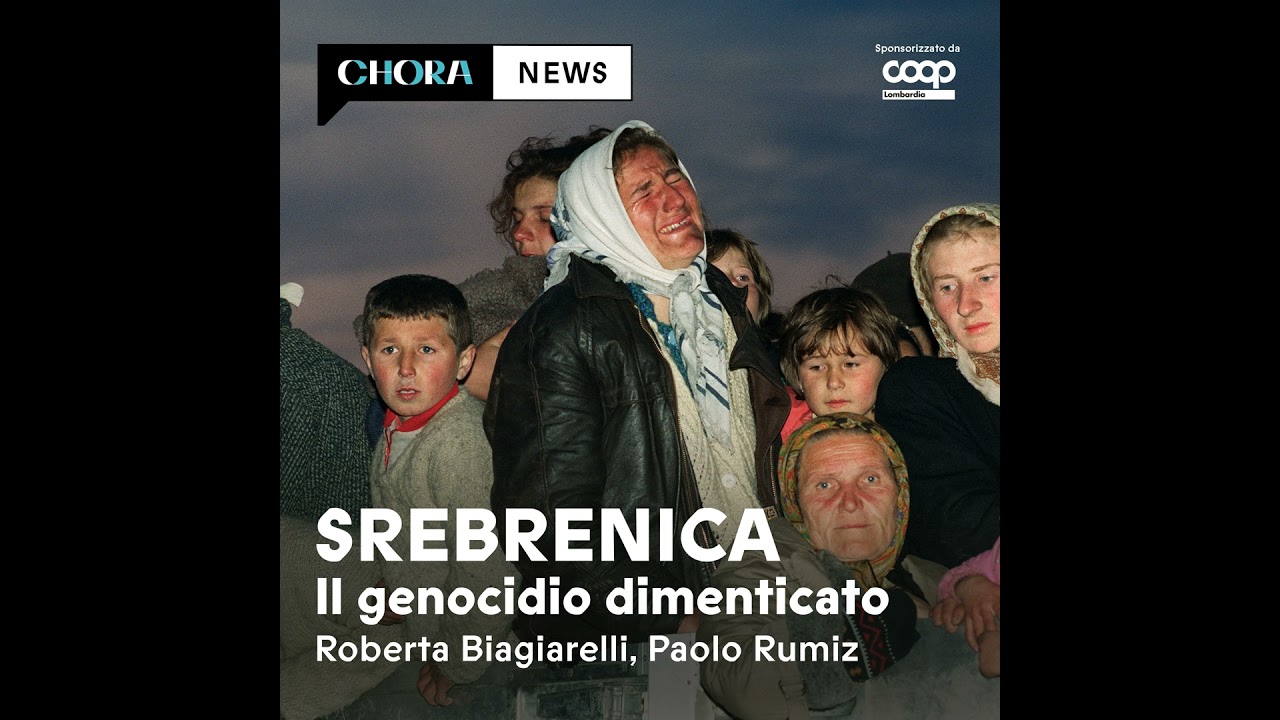
In 1998, Milosevic began driving ethnic Albanians out of Kosovo creating nearly a million refugees.
Western outrage over the massacre of civilians in early 1999 set the stage for a massive bombing campaign by NATO.
For 78 days - and a cost of three billion dollars - the bombs fell.
united by their suffering, many Serbs rallied around Milosevic.
The bombing compelled him to withdraw his forces from Kosovo but he remained defiant, bragging that he had faced down the NATO bully and survived.
Serwer: He didn't care how much damage his army suffered or his people suffered - what he cared about was his own hold on power.
The bombing, in the end, clearly strengthened his hold on power in the short-term.
It may have in a longer-term undermined it - but the notion that he was going to worry about military damage is nonsense! He wasn't going to!
But I heard many, many times in the State Department "he will only respond to force."
Narrator: After the bombing thousands of protesters, led by students take to the streets against Milosevic.
Security forces deal with them easily.
Though they are determined, marching day after day, the demonstrations are no serious threat to the regime.
But among the opposition, one group knows that protest is not enough.
Working quietly, they target the very foundation of Milosevic's power: the ordinary people, who until now have been afraid to oppose him.
Their symbol: The clenched fist.
Their name: Otpor - the Serbian word for resistance.
Otpor - resistance - is already a year old but in the aftermath of the NATO bombing, it's growing fast.
Founded by a dozen student activists in their teens and twenties.
Otpor has no offices.
They operate on a shoestring, meeting in cafes, communicating by cellphones.
Some of them have been arrested and the police monitor them closely.
Popovic: We have a long history of guerrilla movements winning the power in this country.
So when I say "guerrilla," I don't think about violence.
I just think about hidden leadership, some kind of mysteria about that... there is an organization where the whole story of Otpor even the recruitment list you are filling is like you're joining the army.
The army with a mission.
Narrator: Their numbers are small but they create the impression of an extensive organization.
Stark black and white leaflets reinforce their blunt slogans: "Bite the system!"
"Resistance: because I love Serbia."
"Freedom."
The fist and the slogans become ubiquitous - proof that opposition to Milosevic is possible.
Serbia's opposition politicians are divided as they try to capitalize on popular discontent after the bombing.
Zoran Đinđić heads the best organized party but there are two dozen political parties and most Serbs have lost faith in politicians.
Pancic: There is so many people in Serbia who will say that all the political leaders are corrupt.
I don't believe anybody I don't believe Đinđić, I don't believe Kostunica I don't believe Draskovic.
I don't believe anybody - and that was one of the sources of Milosevic's success for so long because many of people would say "Ok, not Milosevic - but who else? Who else?"
And these young girls and boys from Otpor said "No! Let's finish with Milosevic."
That is important.
Narrator: Otpor's activists make it clear they're not running for office.
To preserve their freedom of action and to maintain their clean uncorrupted image they refuse to align with any of Serbia's political parties.
but they are not reluctant to accept help from outside the country.
O'Brien: Soon after Otpor was formed, they had meetings with senior international officials, including Americans, and we all recognized the incredible talent and capacity within Otpor.
And they made clear they wanted to be seen as a largely Serbian - you know, Yugoslav - institution.
Not as a tool of the West.
And, you know, we respected that. We thought that was a smart judgement.
So from the beginning, we saw in Otpor a degree of enthusiasm and talent just kind of political... sense that was really encouraging, and deserved our support, however we could offer it.
Narrator: US foreign aid designated to promote democracy in Eastern Europe helps with Otpor expenses.
But the inspiration for what they call "actions" is all their own.
On Milosevic's birthday, they make a cake.
Marovic: The cake signifies our country, which fell apart as like all those pieces of cakes falling apart and they are eaten by Slobo.
Narrator: On the lunar eclipse, they invite shoppers to view the eclipse they have in mind.
Popovic: Everything we did must have a dosage of humor because while I'm joking, you are becoming angry.
You are always showing only one face, and I'm always again making another joke, with another action, with another positive message to the wider audience, and that's how we collected the third party in a whole story which is the very important - the publicity, the people on the ground.
Narrator: Otpor invites Belgrade to a New Year's Eve party.
Rock music is discouraged by the regime, but rock-and-roll, with its undercurrent of rebellion and resistance, is an Otpor trademark.
At midnight, instead of the traditional celebration, Otpor for shows the names and pictures of Serbs who died in Milosevic's wars.
Popovic: They came here asking for fun.
We gave them a performance before midnight.
After midnight, we broadcasted through a big screen the tragic film of people dead, refugees all the bad things and we said "there is no reason for the celebration.
Go home, and think what to do... so the next Orthodox New Year we have a reason to celebrate."
but the key sentence was "This is The Year. 2000.
This is The Year with capital T.
This year life finally must win in Serbia."
Narrator: A month later, Serbia's Socialist Party holds its fifth Congress to re-elect its president.
Narrator: Serbia's ruling elites are leftovers from Soviet-style Communism.
Now they are called Socialists, but the old ways persist.
Milosevic rewards loyalty, and punishes disobedience.
His re-election is rubber-stamp democracy that fools no one.
Across town on the same evening, Otpor stages a parody of the socialist charade.
Billed as the first 'Otpor Congress,' Otpor's first national meeting attracts major opposition party leaders and a few journalists willing to risk prosecution.
for publicizing an illegal organization.
Narrator: Police harassment has not discouraged them.
Recent arrests have spurred a surge in membership.
Narrator: Boasting activists from all over Serbia, Otpor declares itself a national movement.
Marovic: We did everything like we are a massive movement.
We made a Congress - like, I don't know, as if we covered the whole of Serbia.
And then after the Congress, we did cover the whole of Serbia.
we - I don't know... said we are a people's movement although we were just a bunch of students - but after that we became a people's movement.
and everyone came to us.
Narrator: Otpor's recruiting strategy relies on shock therapy.
The clenched fist, stormtrooper wardrobes, and black leather are intentionally sinister.
It's all part of the message.
Serwer: They had tremendous enthusiasm - the keenness of these kids to do something was extraordinary.
But there were others in official positions who raised some eyebrows about that - I mean, did they really want to be supporting student protesters whose symbol was a clenched fist?
I mean, that goes a little far for the US government.
To the credit of... those who were in charge, they were eventually convinced that it was a good idea.
and if you talk to the Otpor kids, you realized that these were not crazy kids.
These were people who wanted to be free.
Narrator: Now Otpor has a Belgrade office - A three room apartment lent by an activist's parents.
Otpor is one of a dozen Serb opposition groups which receive money from the US, and European countries to pay for copiers, telephones, postage and printing, computers and Internet service.
Otpor established a website even before it had an office.
Their demands and principles are posted in both Serbian and English The nonviolent removal of Milosevic, free elections, democracy.
Otpor's agenda is homegrown, but it's no secret that US and European funding is helping them spread the message.
In late winter, Otpor's foreign financing makes it vulnerable.
But when Milosevic says Otpor is an American puppet they know they're becoming effective.
Serwer: The people in these countries don't always like it done openly.
and that's understandable, too, but there's a big difference between that and a covert program.
These were not covert programs.
They were overt programs, and they were aimed not at the overthrow of Milosevic, but at building up the elements of the of a democratic society.
Narrator: Otpor's foreign support is more than money.
The International Republican Institute in Washington recommends books on nonviolent strategy by the American scholar Gene Sharp - and arranges for one of Sharp's colleagues, a retired Army Officer, to give them a weekend seminar.
Helvey: And I explained it.
It's a form of warfare, and you've got to think of it in terms of a war.
And if you decide to accept nonviolent struggle then the same principles of war - we mentioned objectives - we mentioned mass, you know, to be able to get your forces together at the decisive point... And the initiative, you know.
You're never gonna win by being on the defensive.
You've got to take the offense.
Whether it's in a military struggle or an unarmed struggle.
So the overlap of the principles of war are the same.
Popovic: There we were faced with the essential things we were already applying here, but just we didn't know that somebody has written a book about that.
So it was an amazing experience having this book in the hands seeing that systematically written in one place - which we developed by our experience, looking towards to what Gandhi's movement did and so on and so on.
Narrrator: Colonel Helvey's main lesson is now disseminated.
Eliminate the authority of the ruler.
Narrator: Elections are still at least a year away.
In the meantime, Otpor builds its network, using other weapons to undermine Milosevic.
Recruiting and training hundreds of grassroots activists, Otpor has no national leader or Central Committee.
Belgrade sends supplies, but local Otpor activists run their own affairs.
It's a conscious strategy to create so many layers of leadership that it will be impossible to arrest them all.
Otpor relies on local kids, well known in their own neighborhoods, as the best way to mobilise the discontent which is strongest in the provinces.
Pancic: Smaller cities became the center of the opposition, and Belgrade was like a black hole.
There were no independent electronic media in Belgrade in the last two years.
Everything was kind of silent.
And in cities like Cacak, Nis, Novi Sad, Kraljevo, Uzice, uh... the situation was very hot.
People were very... dissatisfied and very angry and very radical.
Narrator: As Otpor organizes in town after town, the regime faces a dilemma: whether to continue small-scale repression or launch an all-out offensive.
On May 14th, the state information minister suddenly escalates the attack on Otpor in a nationally-televised press conference.
Narrator: Having labeled Otpor a terrorist group, the regime unleashes a wave of beatings and arrests.
Otpor has expected the repression and prepared for it.
With each arrest, protesters quickly appear at police stations and prisons.
Popovic: We developed this chain of command.
When the information of harassment comes to the central office or the local office.
There was a system producing press releases, providing the lawyer's help to the arrested guy, and producing as many activists as we can at the proper moment to be in 10 minutes in front of the police station.
So that was really important, to develop such kind of solidarity.
Marovic: They were afraid of us and they wanted to portray us as terrorists, as fascists and, I don't know, criminals, drug addicts, something like that, but when people go out in the streets, they see members of resistance.
They see that these kids are, like, 18 to 20 years of age.
I'm one of the... older members - like I'm 26, 27 now - and they say "come on, this is ridiculous, these kids are not fascists. These kids are just kids."
So it was very important for us to show how the propaganda was actually ridiculous.
Narrator: After midnight on May 17th, the police take over Belgrade's largest TV station, two independent radio stations, and a newspaper which has criticized the regime.
In the morning, the city discovers its best sources of independent news have been cut off.
During the day, thousands of protesters assemble at the city hall.
Narrator: With this latest escalation, Milosevic has aroused thousands of people who have never before taken part in political protest.
Through the day, through the night, all the next day, and the next evening, the protest continues.
At ten o'clock, the regime has had enough.
Marovic: The main mistake of the regime was that they spread the circle of those who were under the repression.
And that's why this repression was counterproductive because it is like 3rd Newton law of... action and reaction when you raise the level of repression the resistance goes up as well.
Narrator: Ten days later, Otpor members from the provinces march into Belgrade.
They have come to put the squeeze on Serbia's opposition political leaders.
To stop their bickering, and work together against Milosevic.
Most of the party Chiefs don't want to be here, but no one wants his rivals to have the stage to themselves.
If they run against each other, as they always have, Milosevic will win.
Otpor wants them to work together, but the party Chiefs are suspicious, and jealous of Otpor's growing popularity.
Popovic: They were really worried, because we were filling the political space you know, like cancer.
Filling all the blanks for which they didn't, weren't able to fill.
Giving all the answers to all the issues people asked which they were not... clever, or competent enough to give and also we had the strongest network.
Narrator: Their reluctance to touch the flag of the brash Otpor movement shows how hard it will be for them to work together against Milosevic in next year's election.
On July 27th, Milosevic springs a surprise, calling for elections ten months ahead of schedule.
He knows the opposition is unprepared, and he badly needs to renew his claim to legitimacy.
Dereta: He understood that his position is getting worse every day.
He was trying to save what there still existed, support for him.
That's one thing.
The second thing is he was prepared to steal, and the third thing is he was prepared to keep his power by force.
Narrator: Under Milosevic, average income has fallen from $800 a month to $50.
A newspaper reports that the majority of voters are wearing ten-year-old shoes.
Milosevic is vulnerable, but against a divided opposition, it won't be hard to steal or even win the election.
September 1st.
Serbia's opposition unveils a new coalition to run against Milosevic.
Pro-democracy groups like Otpor have demanded it, and the Americans and Europeans have offered to help if they work together.
Their coalition is called the 'Democratic Opposition of Serbia' - DOS.
DOS is 18 parties pledged to support a single presidential candidate - a man barely known outside Belgrade's political elite.
His name is Vojislav Kostunica.
Kostunica is a lawyer who heads a small party.
Opinion polls have shown he is the best candidate to run against Milosevic.
His nationalist credentials and anti-American rhetoric will make it impossible for Milosevic to call him a traitor.
Narrator: Serbia's ethnic minorities will be the key in what is sure to be a close election.
Narrator: Kostunica works the smaller towns, where Milosevic dares not go.
DOS strategists get help from U.S. pollsters and political advisors based outside Serbia.
Cromer: The polling told us the voter desperately wanted a reason to vote against Milosevic and for a better life in Serbia.
So we really worked with the party leadership to understand they had to go out and meet the voter one-on-one.
You know, shaking hands as you go through the market, going and knocking on doors, doing telephone calls.
And as a consequence, they got tons of local press, local television, and they were able to compensate for what they couldn't get in Belgrade.
Kostunica: The positive message was our vision of the new way of life.
Because we have been so tired by... our life being so uncertain.
Wars, pressures, Milosevic's repression, and my impression during that campaign, talking to so many people, was that actually that's what they needed, and that's what they dreamed about, so... they were not just thinking so much about Milosevic.
Narrator: Kostunica stresses the positive but the catchiest campaign slogan is negative.
Invented by Otpor - 'Gotov Je' - "He is finished!"
Serwer: Gotov Je, he's finished!
It was daring, audacious, bold to say Milosevic, he's finished.
And they didn't even say Milosevic.
They said "he's finished."
Everybody knew what they meant.
And they did this over and over with different slogans that had an edge to them.
They fit in the society in a remarkable way.
Narrator: Kostunica campaigns alone.
Other party leaders like Zoran Đinđić set aside their own substantial egos and ambitions to campaign separately on his behalf.
DOS and Kostunica are reinforced by Otpor and others.
At least five major campaigns - coordinated, but separate.
They have the advantage, because Milosevic can't attack them all.
Dinkic: The advantage of opposition in this campaign was that the campaign was dispersed.
Otpor in one side other non-governmental organizations - G 17 Plus, DOS parties, and Kostunica.
We had five campaigns, so they didn't know who is the leader.
It was not recognizable.
So Milosevic didn't know who should be attacked.
Narrator: Milosevic makes his first campaign appearance only two weeks before the election.
For him, personal contact with the voters is unnecessary.
It's no secret that the Socialist Party pays people to turn out for his rallies to make better pictures on state television.
On independent TV stations, the opposition campaign dominates.
Narrator: Less dramatic than campaign speeches and commercials, the training of poll watchers is probably more important.
The sessions are organized by the Center for Free Elections and Democracy, a Serbian civic group which teaches how to spot and prevent vote fraud by Milosevic election authorities.
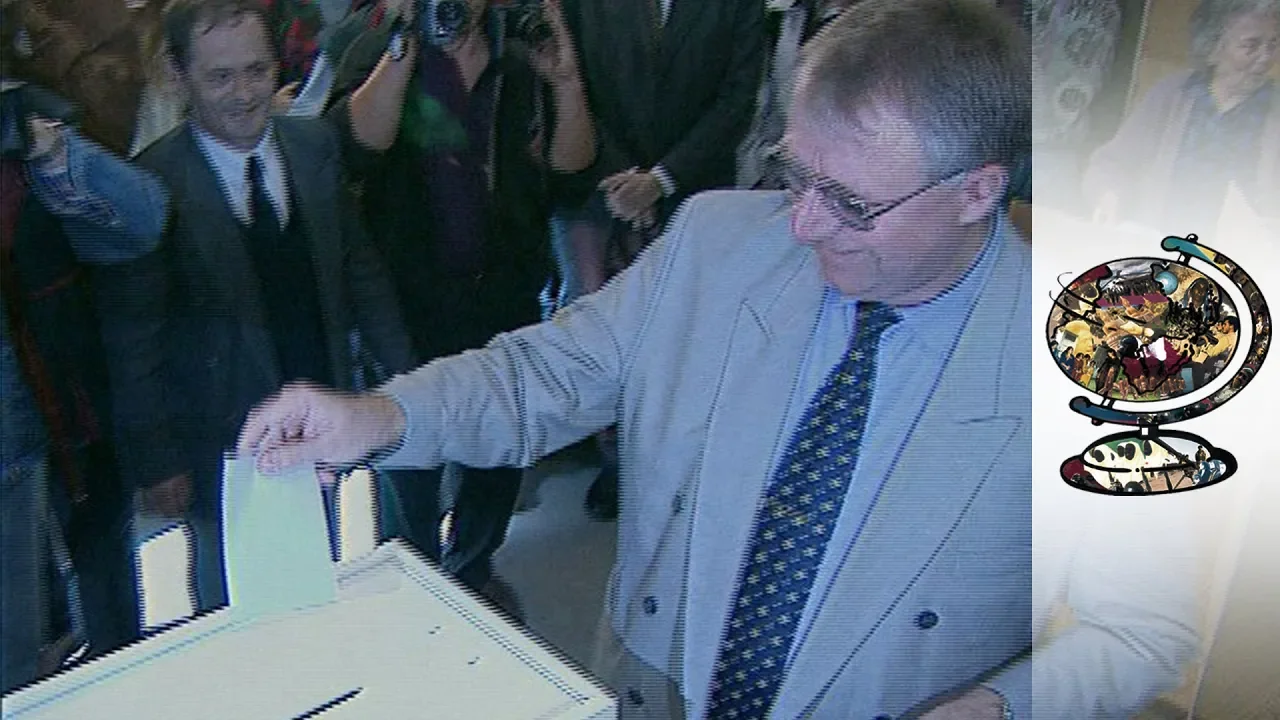
By Election Day, the democratic opposition, get out the vote groups, Otpor, dozens of pro-democracy and human rights organizations and independent media have joined in the campaign.
In the last year, they have received 25 million dollars from American sources.
When the voting stations close, all parties certify the count at each location.
Any attempt to steal the election will have to be committed by the regime in Belgrade.
Serwer: And there were 10,000 polling places - you need at least 30,000 people to monitor 10,000 polling places.
Had they really organized 30,000 people?
Well not only had they organized something like 30,000 people, but they had an organized this incredible effort to convey the election results to Belgrade almost immediately so that when the fraud occurred they had numbers that demonstrated the fraud.
Narrator: An email network feeds the results to a computer center.
As they wait for the votes to be totalled, there is little doubt of the result.
But no one knows what will come next.
Đinđić: We knew that we will win.
We knew, and we knew that Milosevic will not accept.
And our advantage was we were prepared for second step.
That he will not win, and he will not accept our victory, and he will try to manipulate after that.
At campaign headquarters after midnight, they wait until the tabulations have been double-checked.
Then they make the announcement, which will make manipulation of the official results impossible.
Narrator: Only one question remains.
When or whether the winner will take office?
In the next days, as Belgrade holds its breath, Milosevic's Electoral Commission says neither candidate pulled over 50% and calls for a runoff election.
Narrator: They've trained and organized for months.
Now they face the decisive test of their nonviolent movement.
Can they force the regime to step down?
DOS and Kostunica declare a runoff is unnecessary, and call upon the people to prepare for a general strike.
Three days before the strike is to begin, coal miners at the Kolubara Mine, just south of Belgrade, give Kostunica an unexpected boost.
A committee representing 17,000 workers votes to strike immediately.
They say they want their action to inspire the rest of the country to support the strike.
The mine, which produces 70% of Serbia's electrical power, is idle.
The miners have set an example.
Now the rest of the country joins them in a nationwide action to bring all normal life to a standstill.
Đinđić: We knew that Milosevic can resist only with support from police and army.
And we knew if we can... affect police and army around him, and bring them to think should they support Milosevic or not - or the people - that he cannot survive.
And it was very important for us to find symbols of this very wide national resistance, and to show to the police and to army that it's not just opposition against government, but it is people against Milosevic.
Narrator: As police and army encircle the striking miners, ordinary people respond to an urgent call to support and protect the strikers.
Thousands come - a signal to the police and army that Milosevic is finished.
In larger cities, taxi drivers join in slow-moving rolling blockades.
Public transport drivers park their buses and streetcars across major intersections.
The police try to maintain order, but everyday the strike spreads.
Having lost the election and been thwarted in his attempts to steal it, Milosevic must now step down... or use violence.
Popovic: We had the nation trained not to attack the police, not to use the violence - because our message was but there is no war between police and us.
That we together are the victims of the system and there is no reason... to have war between victims and victims.
Some victims are in blue uniforms, other victims are in blue jeans - but there is no reason for that blood.
Narrator: DOS and its supporters are angry and persistent, but they are also patient - determined to avoid bloodshed as they slowly escalate their actions.
Đinđić: It was crucial that we left enough time for the people in the regime to understand what is going on.
It was not just one day revolution but it was ten days with daily increasing this pressure, and Serbia was in blockade.
By the end, it was absolutely clear that the majority is against Milosevic.
Narrator: Ten days after the election, almost no one in Belgrade realizes the turning point is at hand.
Since before daybreak, Serbia has been on the move, converging on the capital from every direction.
The operation has been quietly planned by DOS leaders across the country.
Convoy leaders have prepared for police resistance.
They've even brought bulldozers to break through barricades, if necessary.
At 9 a.m. one convoy - led by the Mayor of Cacak in his jogging suit - finds the road completely blocked by police.
Narrator: Tired of negotiating, the men of the Cacak convoy removed the blockade themselves.
Pancic: These people who came from cities like Cacak, Uzice... they were prepared to do anything.
They were not just the urban demonstrators, as most people of Belgrade.
You know, just go to the streets and shout and then go home.
No, these people came here to do something and they will not go back home before that is finished.
Ilic: Special units for anti-terrorist actions were expecting us in Belgrade.
They'd be cooperating with us closely.
We made radio contact with them every 10 minutes.
I would then give the information to my fellow citizens: "we have the police - they are taking our side any minute now."
Narrator: As the morning goes on, it becomes clear that the police will build barricades but not defend them.
Convoys from the south enter Belgrade at about 11:00 in the morning.
Their rendezvous point is the federal parliament building.
Mayor Illic stays in contact with convoys still on the road.
They plan to link up for a non-violent takeover of the Parliament at 3 p.m.
Through back-channel contacts with commanders, DOS has been assured the security forces will step aside, but no one takes it for granted.
Đinđić: We didn't know how police would react.
We knew that some part of police will not... react against the people, but we didn't know about all parts of police.
And the police were very, very confused.
Narrator: The impatient Cacak contingent advances before the other convoys arrive, but they are easily repelled.
What the police don't know is that hundreds of thousands of Serbs are still on the road to Belgrade.
The farmers and workers who supported Otpor - and are determined to stop the theft of their votes.
Hours after the first convoys arrived in the capital, the news reaches Belgrade citizens.
They come into the streets chanting "Serbia has arisen."
On this day, there is only one place to be.
Narrator: DOS leaders now monitoring police radio channels listen as orders are given to remove the crowds.
But nothing happens.
Pancic: They didn't really mean to do anything they simply ignored the orders, and they observed what is going on - and when they'd realized that there is hundreds of thousands of people in the streets of Belgrade and there is more and more and more coming from all parts of Serbia, and that you have a kind of uprising in this country.
Of course they knew that any kind of using the force against these people would be a self-destruction, and they realized that it would mean that they are losers together with Milosevic.
They didn't want that to happen.
Narrator: A reporter wrote "the police and army commanders never ordered their troops to fire because they knew their own kids were in that crowd."
Inside the building they find thousands of presidential ballots, pre-marked for Milosevic.
Popovic: Well, breaking the few windows and Parliament in flames - it's just nothing... in comparison to the former period here, to what Milosevic did here, to what other Balkan countries did here, to what the United States did here with its bombs... that was like a children's game.
Narrator: Two lives are lost in the takeover - a heart attack suffered by an elderly man in the crowd, and a traffic accident.
Milosevic has not been seen in two days.
But there is no doubt - he's finished.
The people have taken power.
Serwer: What we needed the whole time was not the threat or use of force.
It was the threat to his hold on power, and that was best gained through democratic forces with Serbia.
And you know the grand lesson here is that broad-based coalition of popular nonviolent protest can sweep away a dictatorship much more quickly than all the covert action on earth.
Popovic: I think we succeeded because we simply loved life more than them.
Generally, those guys were the preachers of the death.
Their hatred, their propaganda, you know, their language smelled like death.
And we won because we loved life more.
We decided to love life - and you can't beat life.
So this is what Otpor did.
We were a group of fans of life, and this is why we succeeded.
Up Next

82:48
Should We Accept the Recycled Metaphors of Our Oppression?
@mediasanctuary
105.4K views•2015-06-01

24:30
BRICS Pay and de-dollarization: A New Financial Order Emerges? | 55 chars
@DannyHaiphongYT
164.6K views•2024-10-22

46:49
Understanding Civil Resistance: Strategies, Power, and Nonviolent Action
@NonviolentConflict
1.6K views•2010-12-30
10:19
Explaining the Saudi-Iranian Proxy Conflict in the Middle East
@Vox
18.2M views•2017-07-17
Related Study Plans & Knowledge Roadmaps
Structured learning paths in Political Science
political-science
Economic Statecraft: Sanctions & Chokepoints
01Foundations of Geoeconomics and Economic Statecraft
02The Mechanics of Weaponized Interdependence
03International Sanctions: Types, Implementation, and Efficacy
+ 2 more learning modules
12h5 modules
Explore Roadmap
political-science
Central Bank Independence: Politics & Policy
01Foundations of Central Banking and Monetary Policy
02The Time Inconsistency Problem & Inflation Bias
03The Delegation Model and Designing Independence
+ 2 more learning modules
12h5 modules
Explore Roadmap
political-science
Consociationalism: Power-Sharing & Stability
01Democratic Dilemmas in Divided Societies
02Introduction to Consociational Democracy
03The Four Pillars of Consociational Design
+ 2 more learning modules
12h5 modules
Explore Roadmap
political-science
Rebel Governance: Legitimacy, Economy & State
01Foundations of Rebel Governance and Statehood
02Establishing Political Legitimacy and the Rebel Social Contract
03Wartime Economies and Rebel Resource Management
+ 2 more learning modules
14h5 modules
Explore Roadmap