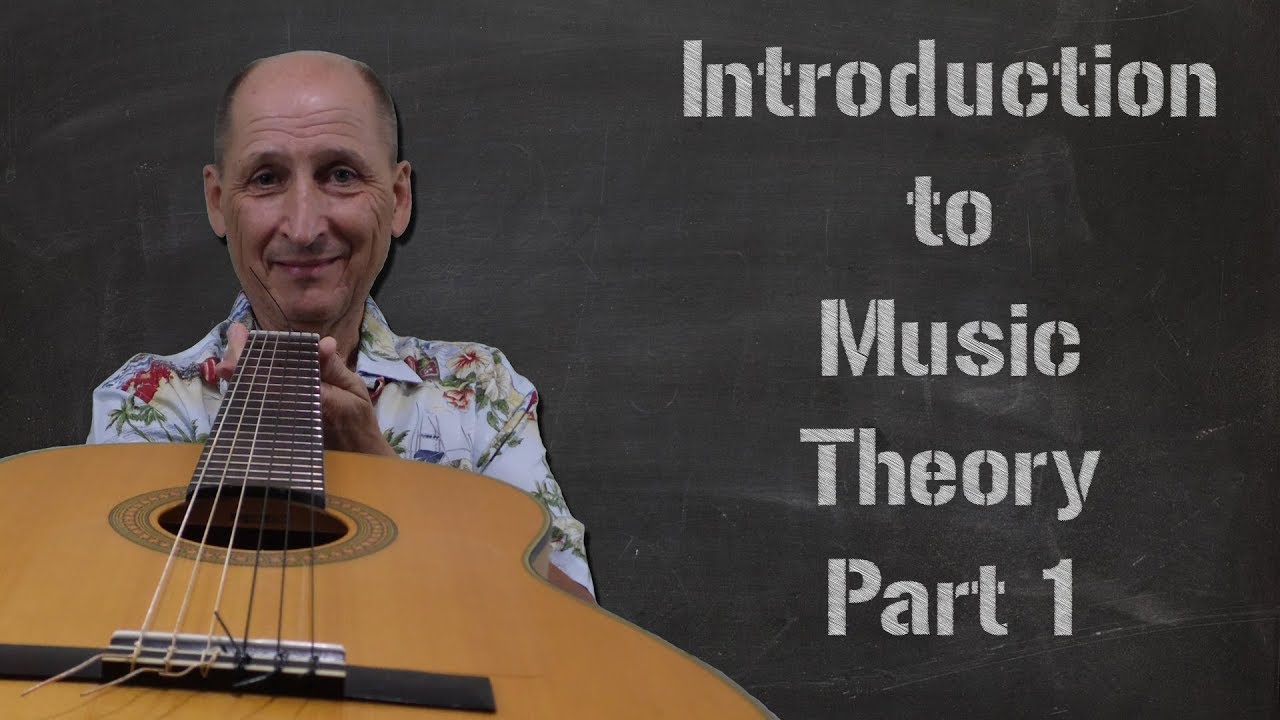





















The piano keyboard follows a repeating pattern of black keys (groups of two and three), where C is always found directly left of a group of two black keys; middle C serves as the central reference point, and notes can be located by counting up or down from C using the musical alphabet (A-G). Note durations determine how long to hold notes: quarter notes get one beat, half notes get two beats, dotted half notes get three beats, and whole notes get four beats. Reading notes on the staff involves recognizing that lines and spaces spell patterns (FACE for treble clef spaces, EGBDF for treble clef lines, and ACEG for bass clef spaces), with ledger lines extending the staff for notes outside the standard range.
Piano Keyboard Layout and Key Names for Beginners | Music Theory Basics
Added:Familiarity with the musical alphabet (letters A through G) and its repeating nature.
A basic intuitive understanding of pitch, specifically the concept of high versus low sounds.
The concept of a steady beat or pulse, which forms the foundation of musical rhythm.
Understanding that written sheet music is read from left to right, similar to reading standard text.
Understanding accidentals (sharps and flats) and the concepts of half steps and whole steps (intervals).
Learning to play and construct the C Major scale using the correct fingering patterns.
Introduction to basic chord construction, starting with major and minor triads.
Developing proper hand posture, finger numbering, and coordination for simple two-handed playing.
Exploring time signatures and how note durations and rests are organized into measures on the staff.
390.2K views6.3Klikes14:13Original Release: 2013-05-08
[Music] All right. So, we're at le uh some pretty simple things again today. Uh today we're actually finally going to get to the keyboard a little bit. Uh I'm going to teach you how to find notes on the keyboard. Uh pretty simple, but you know, we're getting into there. As I said, uh, the next couple lessons, we'll finally get playing, uh, examples on the keyboard. So, things should start to get a little more interesting if you're already familiar with with these very, uh, you know, introductory subjects, uh, and things like that. Another thing I'm going to explain are note durations, which is how long to hold the notes. Uh, you know, quarter notes, half notes, dotted half notes, things like that. So, I'll have an explan explanation there for you. Um, and one more thing we're going to talk about is reading notes on and off the staff uh, and give you a little more experience uh, reading notes because that's very important. That's probably something we'll we'll practice going on uh, as we move forward. And I'll probably make maybe some uh, supplementary videos about note reading as well just to give you a little more practice. Uh, I'll also try to post a link somewhere to a site that gives you uh, some experience note reading. uh so you don't have to keep, you know, watching the videos over and over and you you can actually uh go and learn on your own, which I think is very important. So there you have it. Uh that's what we're going to do in lesson three and I hope you enjoy. Okay, so we're finally at the keyboard or piano or whatever you want to call it. Uh this thing here with the keys is known as the keyboard. Um some people happen to have a piano and I happen to have a professional keyboard.
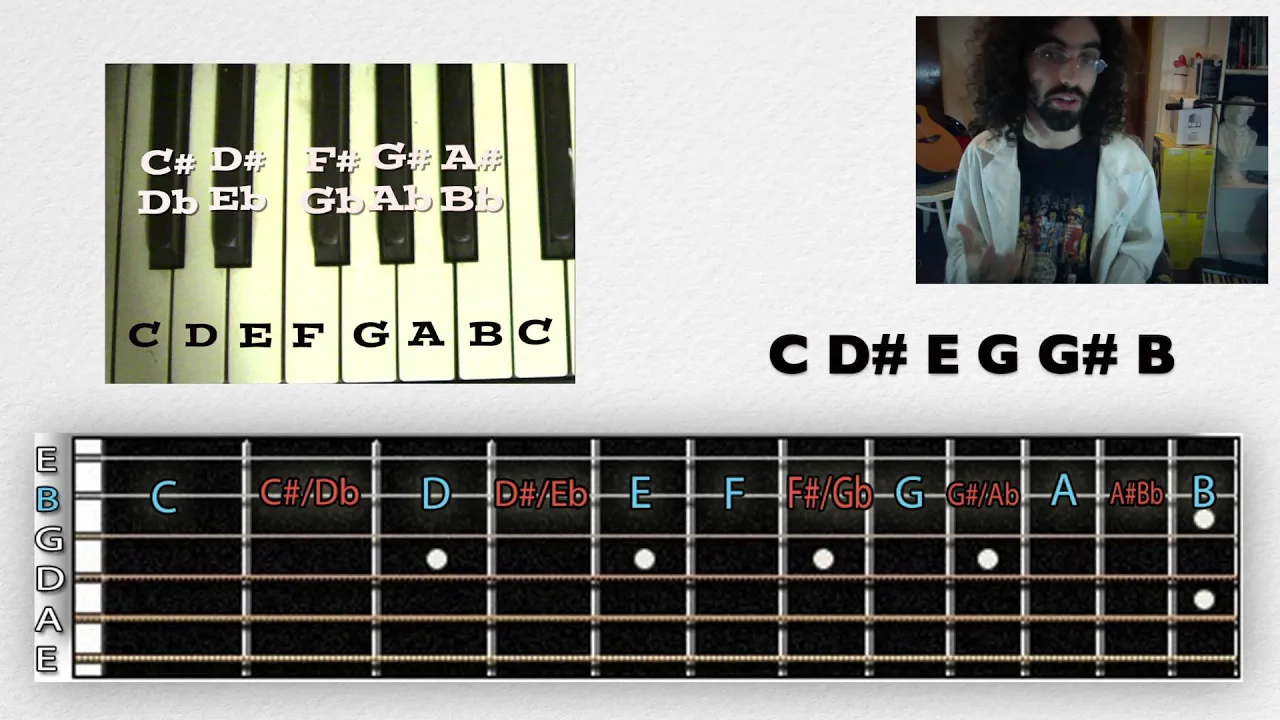
So, uh, the layout of the keyboard goes like this. I'm sure you've noticed already that on the keyboard there are white keys and there are black keys, of course. And that the black keys go in on a pattern of group of two, group of three, group of two, three, two, three, and then it just keeps repeating all the way to the end. So, I'm with this knowing this, I'm going to show you how to find the note C. So, how to find the note C. First, you want to find a group of two black keys. Uh, here's one. And C is always going to be directly down and to the left of your first or leftmost black key. So, here you go. And that one's going to be C. So, let's find another one. Uh, so the first thing, if you remember, is to find a group of two black keys. Here it is. Um, and remember C is going to be right to the bottom and to the left of that group of two. So there's your C. So we're going to go back to our first C, which is here. Um, this C happens to be in the middle key, middle of the keyboard, and it's commonly referred to as middle C. Uh, if you know your musical alphabet, you remember that musical alphabet goes from A to G and then goes on to H. No, it repeats. So we have C.
What's after C in the alphabet? D, E, F, G, and then A, B, C. Um, so if we take our C, then what's right before C in the alphabet? B, A.
So, if you ever get lost, you can always uh look for the note C and count up or down from there. Um, that's why I think in the other video I told you to be able to read the musical alphabet forwards and backwards because that gives you a lot of practice going from C to D, E, F, and then back down. E, D, C, B, A. So you can find notes a little bit quicker.
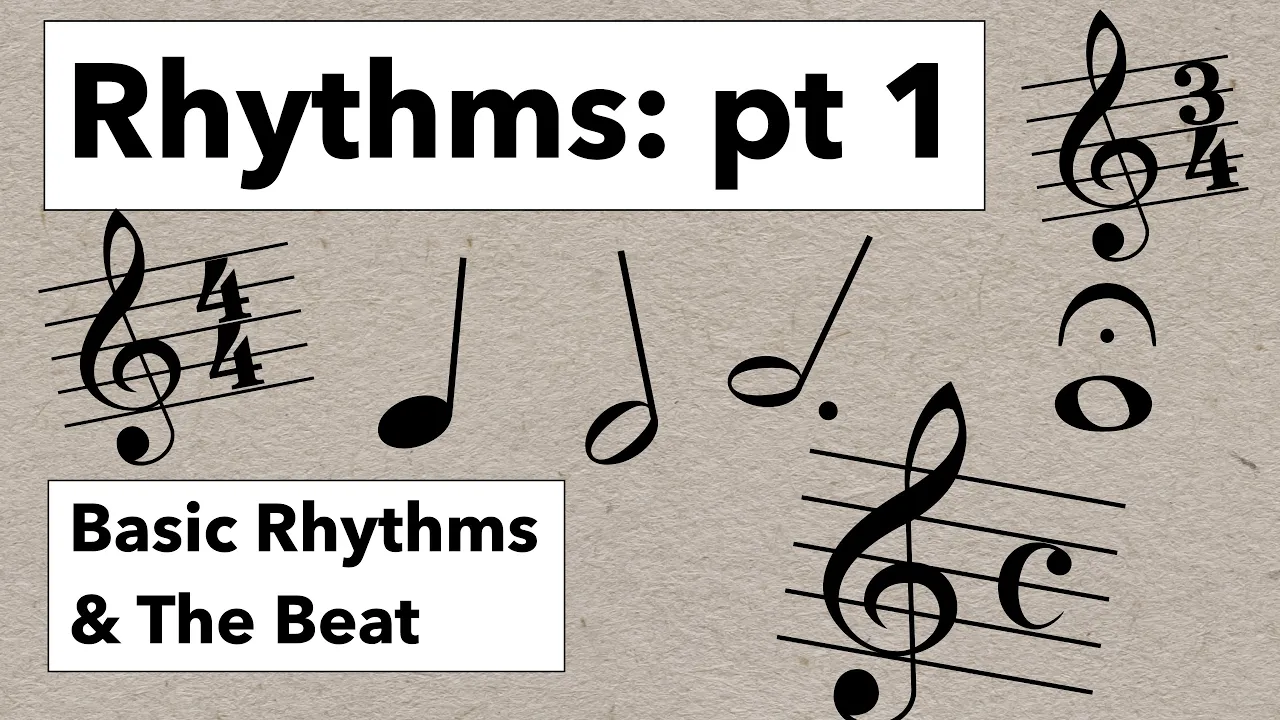
Um, another thing I recommend is to memorize where the other notes are on the keyboard. Um, so you can do that in their relation to the groups of two and three black keys. So you could say, okay, C is to the left of that group of two black keys. D is in the middle of that uh group of two. E is to the right of that group of two. Um F is uh directly below and to the left of the group of three. Uh G is in between, you know, the first two and that group of three. A and so forth. I think you get the idea. Um so I recommend that. But if not, if all else fails and you forget how to memorize or or where the locations of these other keys are, should at least be able to find the note C and count up or down from there uh to be able to figure out where you are. Okay. So, here I have a couple different types of notes. And what these will tell you is how long to play uh to play the piano. Um, one thing I want to point out is that mostly every note has what's called a head and a stem. And the head is this thing here. And the stem uh will either go up or down. Uh sometimes you'll see the note like this um depending on where the note is located on the staff. So the first one we have here, this first example is called the quarter note. Uh the quarter note, you can tell has a filledin head uh with a straight stem coming off of it. And that one is going to get one beat. Um or you might want to say one count. you'll play the piano and count to one. Um, the next kind of note is known as the half note.
A half note has an open head with a straight stem. And this one is going to get two beats or two counts. And then this third one we have here is called the dotted half note. You can tell because it looks like a regular half note with a dot attached. And this one is going to get three counts.
So here, last but not least, um, and this one is a little bit of an exception to the rule because it just has a head with it and no stem. So when you see that, you know that you are playing a whole note and a whole note will get four counts. So if you remember before we were talking about the lines and spaces of the basscliff and how to read notes on the staff, uh, knowing the lines and spaces for each of those cliffs. So there's one thing little thing uh detail I wanted to point out about that that I feel is pretty important and that's when you put the lines and spaces together.
Um so you'll have line space line space.
So you're basically just lining them up.
Um so the bottom line as we know is E then F G A B C. So you should have noticed something about this and it's when you put the lines and spaces together um the letters will go in consecutive order. Of course, knowing that the musical alphabet repeats uh after G. The same thing about the bassclft, we have that bottom line we all know as G and then begins A, B, C, D. So when you put the lines and spaces together, they will go uh in consecutive order. So I just wanted to point that out. You may have noticed it, maybe not.
Uh but I think it's worth pointing out.
So here is a brief explanation of this.
Um the use of ledger lines. Now ledger lines are for notes that don't fall on the staff. they fall either uh directly above the staff or directly below the staff. So they add in these little lines so you can be able to basically tell where you are and figuring out these notes. Um now a rule of thumb when you're trying to figure these out is to find the next nearest note. So say uh you know I cover that up and you're like oh gee that falls outside the staff.
What do I do? Well you find the next nearest note which you do know and you probably know the the first line of the treble cleft. Um, if you don't, that letter is E. So E. And then what's right before E in the alphabet? D. Right before that, C, B, and A. So this goes in consecutive order as well, but because you're going down, uh, it will be in backwards order, of course. Uh, same thing with the bass cleft. We have these ledger lines. Um, so you're like, "Oh man, I don't know what note that is.
That's the, you know, that's below the staff. I don't know that." Well, find a note on the staff that you do know. you know that first line or you should anyway. Uh and that is of course going to be G. Well, what's before G in the alphabet? Of course, it's going to be F for that's E, D, and C. And once again, it's important to point out because we're going uh down below the staff. Uh it will go in backwards order. So, let's get some practice with these. Here we have the some treble cleft. Let me move this out of the way.
Uh move it a little further out of the way. There we go. Um, so we have the treble cleft. We have that bottom line.
We know that as E, of course, because it's every good bunny deserves fudge. So E bottom line. Now we have this below it. Um, oh no. What is that note? It's below the staff. Well, remember this is E. So this is right directly below E. So that's going to be that's right, D. Hopefully you said D anyway. Um, so knowing that that's D, what's this one? Take a second to think about it.
Maybe that's right, C. Excellent. Good work. Okay. Uh, so moving on, knowing that that's C. Uh, first thing I want to mention about this, I want you to memorize this one. Um, because only because um, this specifically is middle C and you will be seeing this note quite a lot in the next couple of exercises we're going to do. Um, and the ne and the first couple of exercises really any piano student comes across. So, it's really important to know uh that that's middle C. So, what's the next one down?
Let's see. Oh, that's right below it, I'd say, because there's a ledger line.
This one's right below it. What's before C in the alphabet? If you said B, you are right on the money. There you go.
All right. Falling all over the place today.
Okay. I'm gonna move that out of the way.
Now, we're going to have a little experience uh doing notes that are directly above the staff on the treble cleft. So, I put this one out here for you. Uh hopefully, don't panic. You can get this. Uh so, if you know, remember that this is right at south side of the staff. And this is remember that top line. That's probably should be the closest one that you know at this point.
And of course, you know that this note is the top line. I mean, would be F. So, if I had a note there, that would be F.
What's right after F in the alphabet? G, of course. There we go. So, that one's out of the way. Knowing that this is G, we have the next one. So, G and A. Yep, A is the next one. And then we have A over here. And what's this one? This one is going to be D, of course. So, there you go. That's the general idea. That's the treble cleft uh directly below and directly above the staff. Now, of course, we have our old friend, the bass cleft.
So, here we go. That's our bottom line.
You remember that as G, I hope. And then knowing that that's G, what is this one? Well, G, let me think about A, B, C, D, E, F. So F is going to be right before G. I'll stick this one over here, knowing that that's F.
This one, as you probably get the idea by now, right before it on the first letter ledger line below the staff, that's going to be an E. And below that even is going to be D. So that's generally how that works. Uh that's the below the basscluff.
Now, real quick, I'll show you right above the base cliff. Here we go.
So, oh no, freak out. No, don't freak out. Uh, remember that the top line is A and then this next one's going to be B.
Of course, you're a pro at this by now, I'm sure. Um, another one. I want you to memorize this one as well.
B C and specifically, this is middle C.
So, um, I showed you middle C before.
Hopefully, I can find it here. Here we go. Move that out of the way. So, if you remember, you're like, "Oh, man. I thought he said this was middle C."
Well, I have news for you. They're both middle C. See, if you put the uh bass cleft down here and the treble cleft right above it, they actually connect and they kind of meet at this uh middle C note. Um so, if you go way up above the the you know, the bass cleft, you'll actually kind of wind up in the treble cleft area. So, that's kind of how it works. They they are actually interconnected. They're not exactly two separate things. Uh but when memorizing notes for each, uh we kind of consider them separate. So I thought those were some interesting things to point out about reading notes on the staff. You know, um knowing that if you put the lines and spaces together, it goes in consecutive order. And um you know, we talked about reading notes directly above and below each of the staffs. So there you have it. Uh and we'll move on to the next segment. So there you have it. end of lesson three already. Um, we talked about note durations today, which is how long to hold the notes. Feel free to look at that part of the video again if you need to. Uh, we also talked about finally talked about finding notes on the piano. Uh, so that's something especially if you haven't done before, I really suggest you really review that information as well as practice on your own on your own keyboard. Uh, finding those different notes. Uh you should probably practice that almost every day until you're like you're really really good. You can find any note. Uh anybody could come up to the piano, play a note, and you know uh exactly what it is. Um also what we did was we talked about reading notes uh on and off the treble cleft and bass cleft as well as giving you a little more experience reading notes in general. Uh so there you have it, lesson three. Uh as always, I hope you learned something. Hope you maybe you had a little bit of fun. I don't know. Uh, and I'll catch you on the flip side, whatever that means.
Up Next

6:03
Herbie Hancock Minor 11th Voicing: Jazz Piano Chord Construction
@PianoGroove
223K views•2015-01-18

12:54
Triumph of Orthodoxy Icon: Byzantine Art & History Explained
@BenCallan
2.1K views•2024-08-06

9:49
FastAPI vs Flask vs Django: Choosing the Right Python Web Framework
@TechWithTim
302.5K views•2024-05-26

1:42
Game of Thrones Opening Credits: A Cinematic Analysis
@gameofthrones
46.3M views•2011-04-18
Related Study Plans & Knowledge Roadmaps
Structured learning paths in General & Interdisciplinary Studies
general-studies
Elevator Engineering: History, Physics & Cities
01From Hoists to Safety Brakes: The Dawn of Vertical Lift
02Hydraulic vs. Traction: The Engineering Physics of Elevators
03Modern Speed, Safety, and Algorithms
+ 2 more learning modules
12h5 modules
Explore Roadmap
general-studies
Rubber: Material Science, History & Geopolitics
01Origins of Natural Rubber & Mesoamerican History
02The Chemistry of Natural Rubber & Vulcanization
03The Geopolitics of the Rubber Boom & Colonization
+ 2 more learning modules
12h5 modules
Explore Roadmap
general-studies
Containerization: Evolution, Logistics & Trade
01Ancient Trade & Bulk Cargo: Amphorae to Barrels
02The Industrial Revolution & Cardboard Packaging
03The Containerization Revolution: Malcom McLean
+ 2 more learning modules
12h5 modules
Explore Roadmap
general-studies
Textile Tech: Evolution, Labor & Global Impact
01Pre-Industrial Textiles: Handloom & Cottage Industry
02Mechanization: The Spinning Jenny to the Power Loom
03The Factory System & Global Labor Transformation
+ 2 more learning modules
10h5 modules
Explore Roadmap