
![Intellectual Property: A First Principles Debate [POLICYbrief]](https://i.ytimg.com/vi_webp/BEV6hWog2Ww/maxresdefault.webp)
















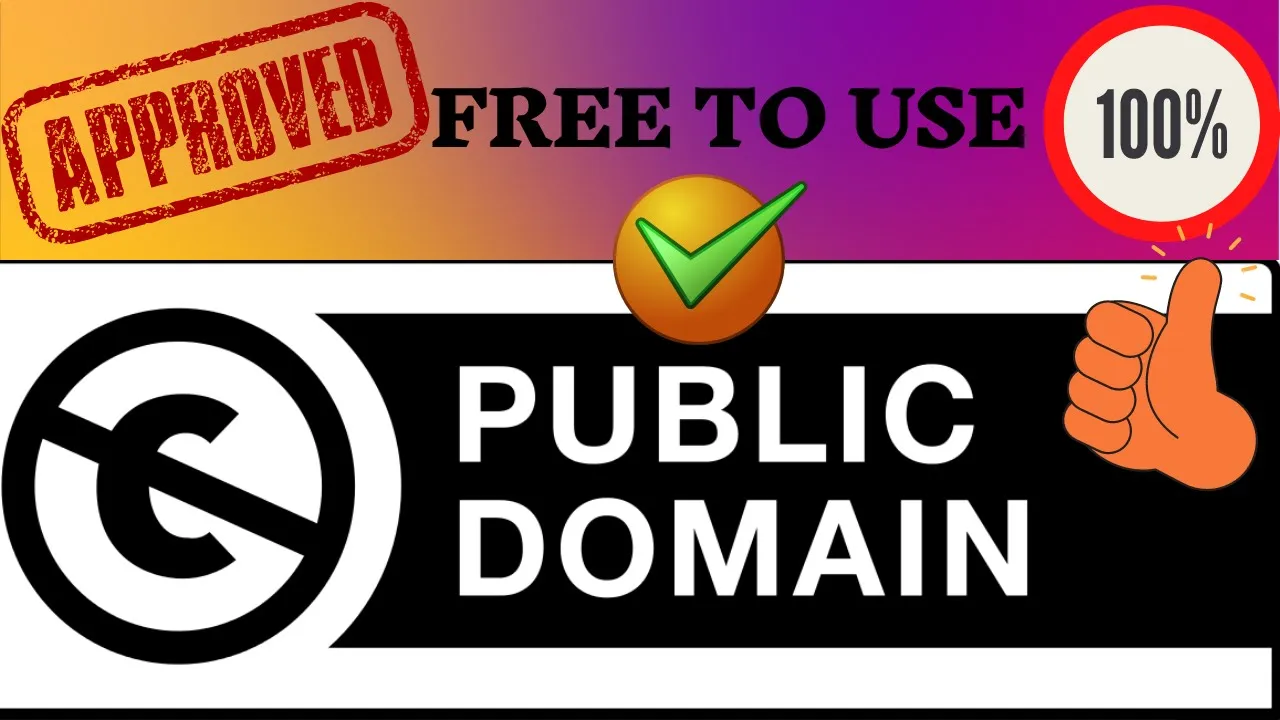
Public domain refers to works not protected by copyright, allowing free use without permission or royalties; works typically enter the public domain through aging out of copyright, with specific rules: US works published in 1922 or earlier, European works before 1890, and government publications are automatically public domain; for modern works, copyright lasts 70 years after the last author's death (life plus 70), 95 years from publication for anonymous/corporate works, or 120 years from creation for unpublished anonymous/corporate works; determining public domain status requires knowing the country, publication date, and checking for copyright statements.
Public Domain 101: Copyright Expiry and Legal Use Explained
Added:The fundamental definition of intellectual property and its distinction from physical property.
The basic purpose of copyright law, including what it protects (original works of authorship) and what it does not (ideas, facts, or methods).
How copyright is secured automatically upon the creation and fixation of a work in a tangible medium.
The distinction between copyright infringement (a legal violation) and plagiarism (an academic/ethical violation).
How to conduct a copyright duration calculation and search public records to verify a specific work's status.
The role of Creative Commons licensing as a modern, flexible alternative to traditional copyright and full public domain.
International copyright variances, such as the Berne Convention, and how public domain rules differ across jurisdictions.
The legal and practical challenges surrounding 'orphan works'—copyrighted materials whose owners are difficult or impossible to identify.
Best practices for sourcing, modifying, and safely attributing public domain assets in creative, academic, or commercial projects.
876 views3likes7:24Original Release: 2017-03-08
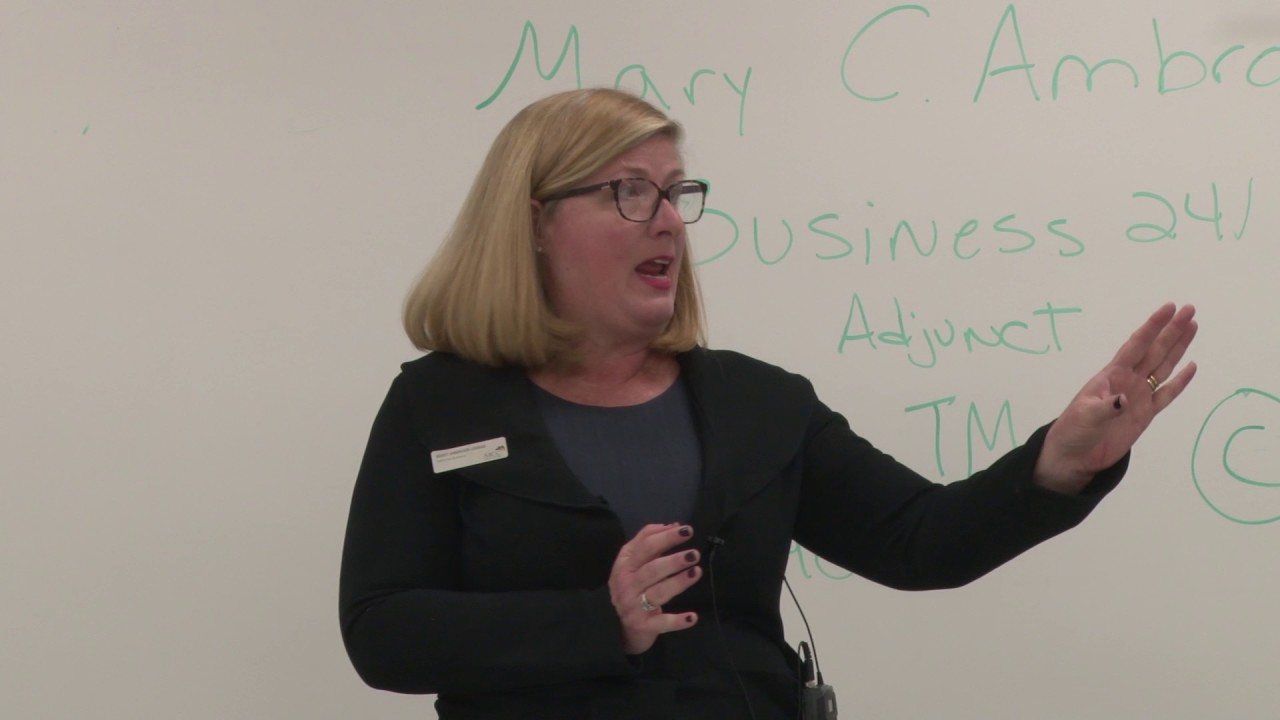
Our next topic is the public domain.
Works that are in the public domain are not protected by copyright. That means that you don't need to ask permission to copy it or create a derivative work and you don't need to pay royalties. Usually, a work is in the public domain because it has aged out of copyright. Copyright has a finite duration. Anything published in the US 1922 or earlier is in the public domain.
For most of Europe, anything before 1890 is a safe bet. Later than that, there's no quick way to know how long any particular work will stay in copyright because the law has kept changing and as it changes, older works are grandfathered in under the older laws.
In addition, different countries have different copyright term limits for works that are published now and since 1976 in the United States.
Here are the rules. If the work has one or more named authors, you take the date that the last author dies, go to December 31st of that year and add 70 years. They call this life plus 70.
For published anonymous works and corporate works, which means works that were authored by an organization or business, you take the date of publication and add 95 years. For unpublished anonymous or corporate works, you take the creation date and add 120 years. If you can't determine the date, you're obligated to assume that it was the last possible date on which it could have been created based on the circumstantial evidence. Copyright law assumes that if something is unpublished, it should be protected more strongly than if it were published. Copyright terms didn't used to be this long. There are a number of works published in the middle of the 20th century that may be in the public domain or may be impossible to to determine without extensive and expensive research. But long story short, for a work to be in the public domain, it usually has to be very old.
One major exception is that publications of the United States federal government and its agencies are automatically in the public domain from the moment of creation. Because public domain is so tricky, I created a tool using Google Forms that walks you through finding out whether something is in the public domain. It won't always give you a concrete answer. Sometimes with those mid-century works whose authors may or may not have renewed their copyright back when those things were required, you may actually have to pay for somebody at the Library of Congress or another country's equivalent to go through the records.
But for most other situations, if you know the country in which the work was published and the original publication date and you can see whether it has any copyright statement on the back of the title page, you will be able to figure out whether the work is in the public domain yet. At the end of this presentation, I will provide the link to this and every other tool that I use in the presentation.
Our next topic is the public domain.
Works that are in the public domain are not protected by copyright. That means that you don't need to ask permission to copy it or create a derivative work. and you don't need to pay royalties. Usually, a work is in the public domain because it has aged out of copyright. Copyright has a finite duration. Anything published in the US 1922 or earlier is in the public domain.
For most of Europe, anything before 1890 is a safe bet. Later than that, there's no quick way to know how long any particular work will stay in copyright because the law has kept changing and as it changes, older works are grandfathered in under the older laws.
In addition, different countries have different copyright term limits for works that are published now and since 1976 in the United States.
Here are the rules. If the work has one or more named authors, you take the date that the last author dies, go to December 31st of that year and add 70 years. They call this life plus 70. For published anonymous works and corporate works, which means works that were authored by an organization or business, you take the date of publication and add 95 years.
For unpublished anonymous or corporate works, you take the creation date and add 120 years. If you can't determine the date, you're obligated to assume that it was the last possible date on which it could have been created based on the circumstantial evidence. Copyright law assumes that if something is unpublished, it should be protected more strongly than if it were published. Copyright terms didn't used to be this long. There are a number of works published in the middle of the 20th century that may be in the public domain or may be impossible to to determine without extensive and expensive research. But long story short, for a work to be in the public domain, it usually has to be very old.
One major exception is that publications of the United States federal government and its agencies are automatically in the public domain from the moment of creation. Because public domain is so tricky, I created a tool using Google Forms that walks you through finding out whether something is in the public domain. It won't always give you a concrete answer. Sometimes with those mid-century works whose authors may or may not have renewed their copyright back when those things were required, you may actually have to pay for somebody at the Library of Congress or another country's equivalent to go through the records. But for most other situations, if you know the country in which the work was published and the original publication date and you can see whether it has any copyright statement on the back of the title page, you will be able to figure out whether the work is in the public domain yet. At the end of this presentation, I will provide the link to this and every other tool that I use in the presentation.
Up Next

61:29
How Musical Keys Affect Human Physiology: Biomusicology Lecture
@AdamODell
825 views•2015-06-20

12:54
Triumph of Orthodoxy Icon: Byzantine Art & History Explained
@BenCallan
2.1K views•2024-08-06

9:49
FastAPI vs Flask vs Django: Choosing the Right Python Web Framework
@TechWithTim
302.5K views•2024-05-26

1:42
Game of Thrones Opening Credits: A Cinematic Analysis
@gameofthrones
46.3M views•2011-04-18
Related Study Plans & Knowledge Roadmaps
Structured learning paths in General & Interdisciplinary Studies
general-studies
Elevator Engineering: History, Physics & Cities
01From Hoists to Safety Brakes: The Dawn of Vertical Lift
02Hydraulic vs. Traction: The Engineering Physics of Elevators
03Modern Speed, Safety, and Algorithms
+ 2 more learning modules
12h5 modules
Explore Roadmap
general-studies
Rubber: Material Science, History & Geopolitics
01Origins of Natural Rubber & Mesoamerican History
02The Chemistry of Natural Rubber & Vulcanization
03The Geopolitics of the Rubber Boom & Colonization
+ 2 more learning modules
12h5 modules
Explore Roadmap
general-studies
Containerization: Evolution, Logistics & Trade
01Ancient Trade & Bulk Cargo: Amphorae to Barrels
02The Industrial Revolution & Cardboard Packaging
03The Containerization Revolution: Malcom McLean
+ 2 more learning modules
12h5 modules
Explore Roadmap
general-studies
Textile Tech: Evolution, Labor & Global Impact
01Pre-Industrial Textiles: Handloom & Cottage Industry
02Mechanization: The Spinning Jenny to the Power Loom
03The Factory System & Global Labor Transformation
+ 2 more learning modules
10h5 modules
Explore Roadmap