































Terrestrial muons from cosmic ray collisions in the upper atmosphere provide direct experimental evidence for time dilation in special relativity, as these particles with a 2.2-microsecond half-life travel 10-30 kilometers to reach Earth's surface despite being able to travel only about 660 meters in their own rest frame; this paradox is resolved by either time dilation (where Earth observers see muons living longer due to their near-light-speed motion) or length contraction (where muons perceive the atmosphere as compressed to just 500 meters).
Muons and Special Relativity: Proof of Time Dilation
Added:Einstein's Postulates of Special Relativity: The constancy of the speed of light in a vacuum for all inertial observers and the principle of relativity.
Classical Frames of Reference: How observers in relative motion measure distance and time under Galilean relativity.
Radioactive Decay and Half-life: The concept of particle decay, mean lifetime, and exponential decay rates of unstable subatomic particles.
Basic Kinematics: The classical relationship between speed, distance, and time (d = v * t) to understand the expected travel limits of particles.
Lorentz Transformations: The mathematical equations used to translate space and time coordinates between different inertial frames.
The Twin Paradox: A famous thought experiment that deeper explores the asymmetrical nature of time dilation for accelerating observers.
Relativistic Momentum and Energy: How relativistic effects modify mass, momentum, and lead to the mass-energy equivalence equation (E=mc²).
Real-World Relativistic Engineering: How GPS satellites must correct for both special and general relativistic time dilation to maintain accurate positioning.
1.2M views51.4Klikes4:33Original Release: 2018-11-13
Every second, thousands of cosmic rays - mostly hydrogen and helium nuclei - strike every square meter of the earth’s upper atmosphere. We don’t really know where they come from, but we do know that when cosmic rays crash into air molecules in the atmosphere, they create a shower of other fundamental particles: pions, kaons, positrons, electrons, neutrons, neutrinos, gamma and X rays, and muons.
We know this because we have particle detectors in labs down on the surface that detect the directions and energies of the particles in these showers, and use them to study the original cosmic rays.
But there’s something fascinating about the fact that we detect a lot of the muons from cosmic rays down on the surface of the earth.
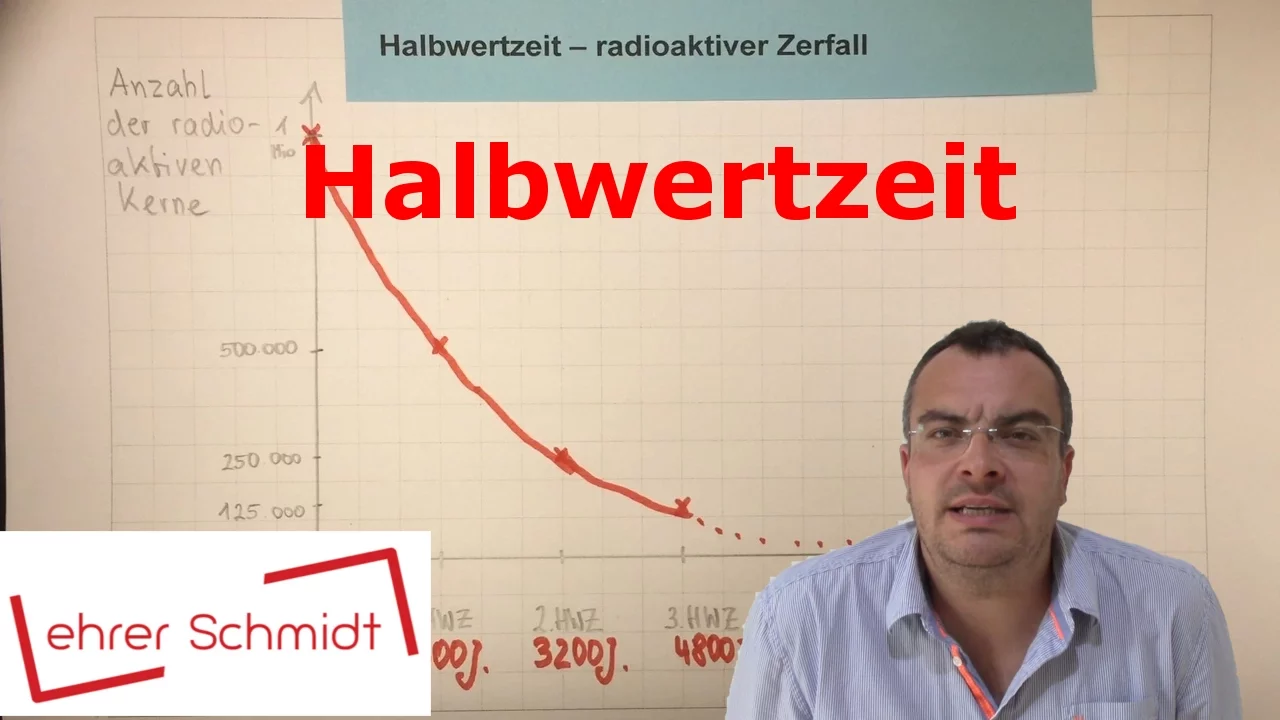
Because muons, if you make them in a laboratory, only have a 1.5 microsecond half life before they spontaneously decay into an electron or positron and some neutrinos.
Oh yeah, the greek symbol, mu is both used for “muon” AND for “microsecond”, which can certainly be a little confusing; but the lifetime of muons is really close to a microsecond, so it’s also kind of beautifully appropriate/fitting.
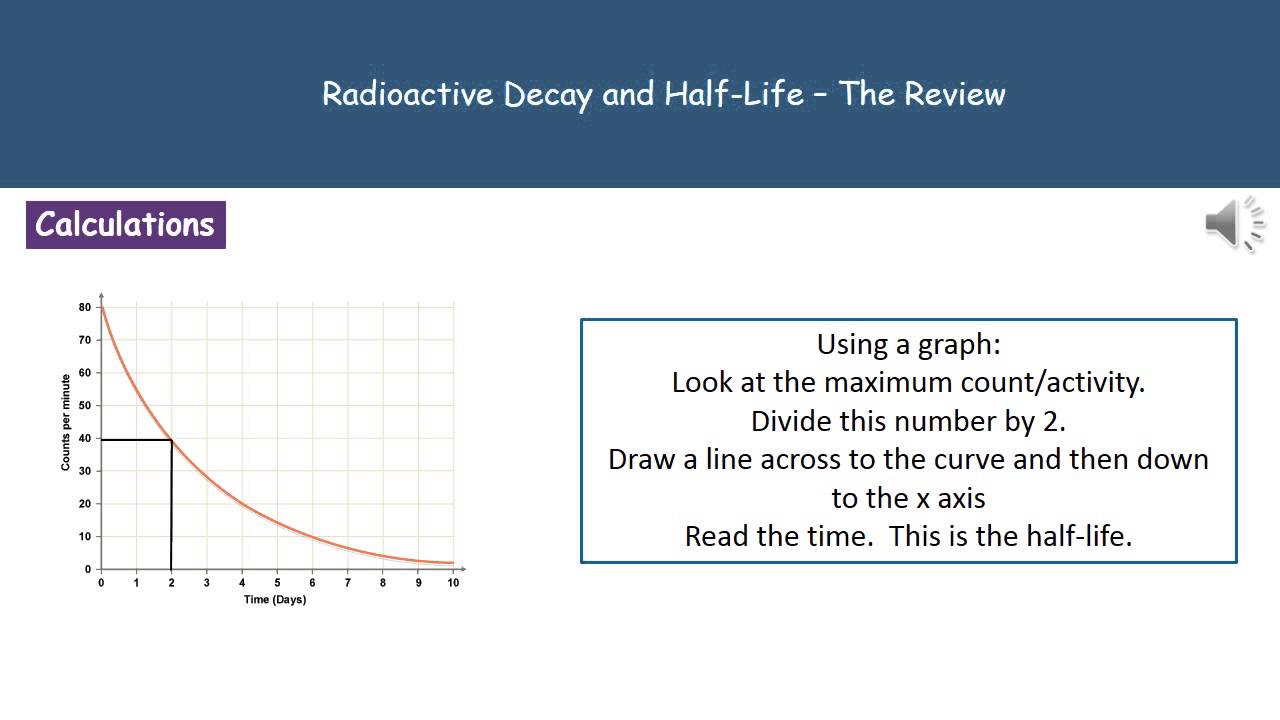
Anyway, the point is that if you have a bunch of muons, More specifically, if you have a bunch of muons, you’ll only be left with about 50% after 1.5 microseconds, and 25% after 3 microseconds, and after 10 microseconds there will only be 0.1% of the muons left.
Muons don’t live very long -2.2 microseconds on average!
To put that into perspective, light, which travels fast enough that it could go around the earth 7 times in a second, only travels 660 meters, or less than half a mile, in 2.2 microseconds.
So even muons traveling at essentially the speed of lighta, wouldn’t make it more than a kilometer or two before the vast majority of them decayed. Which is far less than the 10 or 20 or 30 kilometers that muons DO regularly travel from the upper atmosphere to the ground.
So how do muons travel dozens of kilometers through the atmosphere without spontaneously decaying, when in fact they should only be able to travel less than one kilometer?
Time dilation.
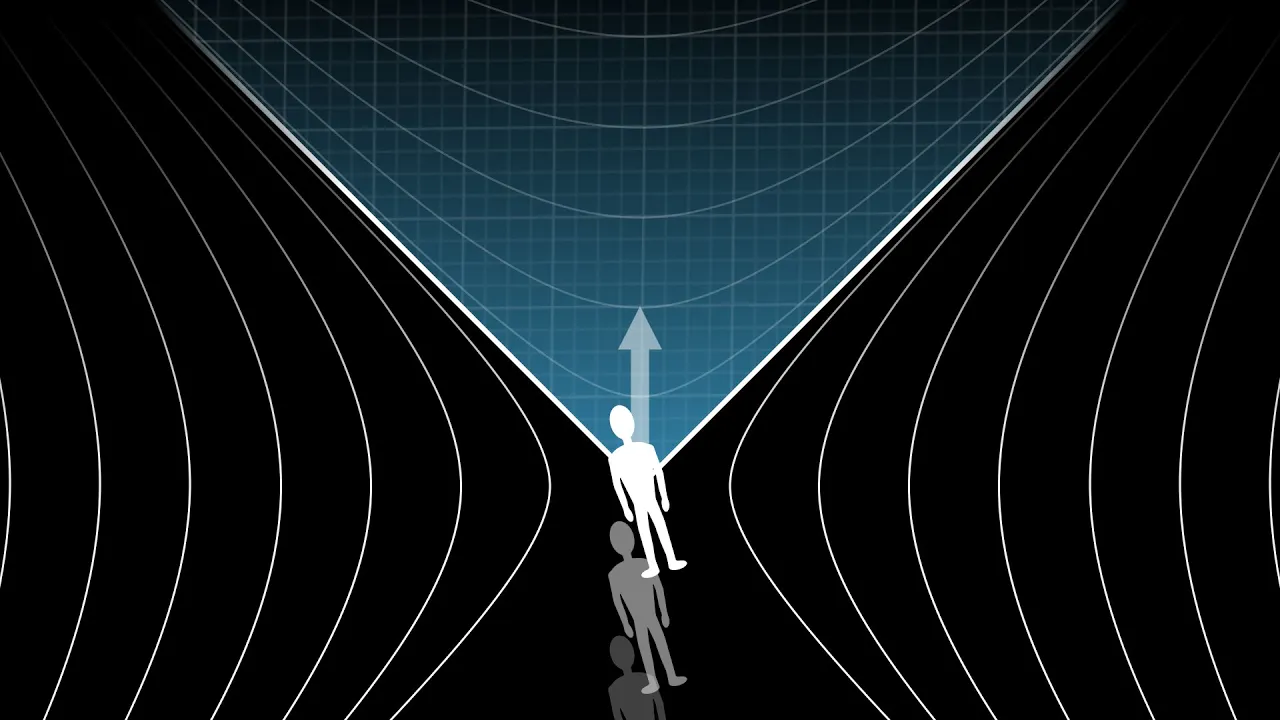
Yes - because the muons are traveling close to the speed of light, their time literally passes more slowly - at a speed of 99.5% the speed of light, 2.2 microseconds for them would be ~22 microseconds for us, enough time for the average muon to travel at least 6km (instead of half of a kilometer) before decaying.
And even higher-energy muons going even faster would even more easily reach our detectors on the earth’s surface before they decayed - at 99.995% the speed of light, the average muon would live for 220 microseconds and travel at least 66 kilometers before decaying.
So from our perspective, the fact that so many cosmic ray muons reach our detectors on the earth’s surface is direct evidence for special relativity and time dilation!
But what about from the muons’ perspectives, where they DO only live on average 2.2 microseconds?
Well, for them the answer to the apparent paradox is also relativistic - relativistic length contraction.
From the muon’s perspective, it’s the earth and the atmosphere which are moving - at 99.995% the speed of light - towards the muon.
And the lengths of moving objects are literally contracted by a factor dependent on their speed - in this case, 50km of our atmosphere is, to the muon, literally only half a kilometer - aka 500 meters - thick.
Which is thin enough for even a muon with a lifetime of 2.2 microseconds to traverse - well, actually from this perspective the atmosphere moves past the muon - but at a speed of 300 meters per microsecond and at a distance of only 500 meters, the ground has no problem reaching the muon before the muon decays.
This, in my mind, is one of the most awesome experimental verifications of special relativity: the unequivocal time dilation (or length contraction, depending on your perspective) for objects moving close to the speed of light.
The specific time dilation and length contraction factors I talked about can be calculated using the time dilation and length contraction formulas - once you know how to use them, you can plug in any speed you want and see how much distances and time intervals will be distorted.
And Brilliant.org, this video’s sponsor, is a great place to learn about not just the details of time dilation and length contraction, but many of the other amazing equations that describe our universe.
Like, they have a course that leads you towards understanding the Schrodinger equation of quantum mechanics, and one on Hubble’s law in astronomy, and the famous Bayes’ theorem of probability and statistics.
And the first 200 people who go to brilliant.org/minutephysics will get 20% off a premium subscription to brilliant with access to all of brilliant’s courses and puzzles.
Again, that’s brilliant.org/minutephysics for a deeper understanding of the equations (and not just the concepts) that underlie our universe.
Up Next
12:17
Lorentz Transformations Explained: Special Relativity Chapter 3
@MinutePhysics
2M views•2018-04-03

4:32
How Tuned Mass Dampers Stop Structures from Shaking
@MinutePhysics
573K views•2018-08-28
21:43
Feynman's Lost Lecture: Why Planets Orbit in Ellipses | Physics Explained
@MinutePhysics
3.7M views•2018-07-20

33:44
The Blue LED: A Decade-Long Scientific Challenge Explained
@veritasium
46.5M views•2024-02-08
Related Study Plans & Knowledge Roadmaps
Structured learning paths in Physics
physics
Medical Physics: Imaging, MRI & Radiotherapy
01Foundations of Radiation and Matter Interaction
02X-Ray Imaging and Computed Tomography (CT)
03Magnetic Resonance Imaging (MRI) Physics
+ 3 more learning modules
15h6 modules
Explore Roadmap
physics
Nuclear Physics (Decay, Fission & Reactors)
01Atomic Structure and the Binding Force
02Radioactive Decay and Half-Life
03Nuclear Fission Mechanics and Chain Reactions
+ 2 more learning modules
12h5 modules
Explore Roadmap
physics
Soft Matter (Polymers, Colloids & Rheology)
01Foundations of Soft Matter & Thermal Forces
02Polymer Physics and Macromolecules
03Colloids, Surfactants, and Self-Assembly
+ 2 more learning modules
38h5 modules
Explore Roadmap
physics
Analytical Mechanics: Lagrangian & Hamiltonian
01Mathematical Foundations: Calculus of Variations
02From Newtonian Mechanics to Constraint Dynamics
03The Principle of Least Action & Lagrangian Mechanics
+ 3 more learning modules
28h6 modules
Explore Roadmap