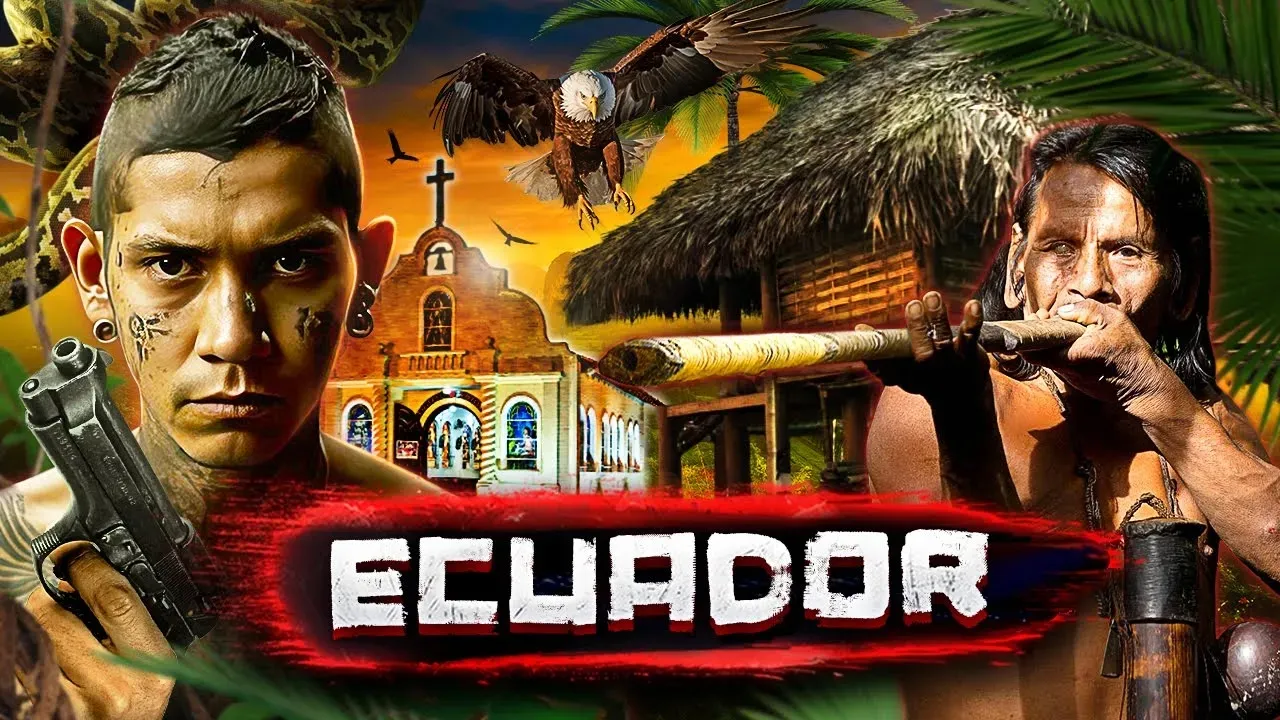
















This documentary explores the sacred Amazonian vine ayahuasca (referred to as 'Iawaska' in the video), which contains two key psychoactive compounds: betaarbolene from the vine and DMT from the Psychotria (chakruna) plant. The video explains that while DMT is normally destroyed in the gut, when combined with betaarbolene it becomes active, producing powerful visionary effects. The film documents indigenous shamanic traditions where these plants are used for healing, spiritual guidance, and connecting with the spirit world, while also examining the global war on drugs that has criminalized these traditional practices despite their cultural and spiritual significance to indigenous Amazonian communities.
Shamans of the Amazon: Ayahuasca, DMT, and the War on Drugs
Added:Understanding of basic ethnobotany and the traditional socio-cultural roles of shamans in indigenous Amazonian societies.
Fundamental concepts of neurochemistry, specifically how neurotransmitters like serotonin function and how exogenous substances interact with brain receptors.
The pharmacological synergy of Ayahuasca, specifically how DMT (dimethyltryptamine) interacts with Monoamine Oxidase Inhibitors (MAOIs) to become orally active.
A historical overview of the global 'War on Drugs' and international drug control policies, such as the 1971 UN Convention on Psychotropic Substances.
The clinical and therapeutic potential of psychedelic-assisted psychotherapy in modern medicine for treating PTSD, depression, and substance use disorders.
The ecological, cultural, and economic impacts of global 'psychedelic tourism' on indigenous Amazonian communities and local ecosystems.
The legal, ethical, and political dynamics of bioprospecting, biopiracy, and the patenting of traditional indigenous plant medicines.
Advanced topics in cognitive science, neuropsychology, and the philosophy of mind regarding altered states of consciousness and ego dissolution.
163.1K views1.8Klikes52:18Original Release: 2013-04-01
Oh my [Music] 8 years ago, I was drawn to the mysterious Amazon and made a documentary about a tribe defending their ancestral territory against oil companies.
Enticed by the mystery of ancient knowledge, I'm returning 8 years later with my new family to meet some of the keepers of the knowledge, the medicine men, the tribal shamans. I'd heard about a sacred vine called Iawaska, which enabled the shaman to have visions of the future and communicate with the spirit world and the natural kingdom.
I knew that historically altered states of consciousness have been an integral part of many cultures and in tribal societies these states have often been induced by taking hallucinogenic plants with the shaman acting as the spiritual guide.
I was curious as to why the United Nations had outlawed Iawaska and I wanted to experience the Iawaska ritual and gain insights into the shaman's world. My journey would lead me head on into the global war on drugs.
Every society chooses a small number of substances, no matter how toxic, and enshrines them in its cultural values, then demonizes all other substances, and then persecutes and launches witch hunts against those users. I am thrust into life-threatening situations between worlds of opposing values.
And I experienced realities I never even dreamed of.
[Music] Ecuador lies on the equator on the western side of the Amazon basin. We touched down in the capital, Kito, which is nestled amongst volcanoes high in the Andes mountains. This trip into the Amazon was set to be more challenging than my last.
This time, I had Jasmine, my one-year-old daughter, and my wife Willow, who was 6 months pregnant, traveling with me. I've always believed that the Amazon is the wildest place on Earth, and I had to see it for myself.
Half of Ecuador's population is indigenous and there are 12 distinct language groups as well as some unconted tribes. With its diverse climates ranging from snowcapped mountains to lowland Amazon rainforest, Ecuador is one of the most biologically and culturally diverse countries on Earth.
Ecuador has a long history of hallucinogenic plant use with the San Pedro measculine cactus in the mountains and the Iwasa brew in the [Music] Amazon. We were warned that the road leading down to the Amazon was perilous and a year before a bus went off the edge killing everyone on board.
[Music] [Music] Eight years earlier, while filming the Warani Indians cutting a demarcation line around their territory, I met Flavio.
[Music] Flavio is a shaman and a warrior fighting hard to preserve his land and way of life from the oil companies, the colonists, and the encroaching outside world.
[Music] Flavio's father, Raphael, is a schwah warrior and an iwasero shaman. They've organized workshops on their community where the local shamans share their culture and knowledge with the youth.
Raphael is determined to pass on his ancestors culture, knowledge, and land to his children.
The shamans are the spiritual guides and the medicine men of the tribe who have vast knowledge of the jungle plants and their medicinal uses.
[Music] It is satinoa Silva del Rio tingismo control shamanismo in Controller spirited.
[Music] for different tomato.
This is Pablo Armaringo is also an Iawasero shaman who paints the visions he's had during Iawaska rituals.
This painting represents the two plants necessary in preparing the iawaska brew.
Out of the iawaska vine comes a black snake with a yellow aura. There is another snake called the chakruna snake which penetrates the Iwasa snake producing the visionary effects of these two magic plants.
[Music] In this vision, a defeated king from a remote tribe in Peru rises from his grave to tell his shocked wife that he has grown a vine from his hair, which is to be called Aia, meaning vine of the dead. He said, "You must mix this vine with the takuna plant, which will allow you to see sound, to have visions, and develop your psychic abilities and acquire deep knowledge from past cultures.
[Music] In scientific terms, the iawaska brew consists of two main active ingredients.
Betaarbolene from the iawaska vine and the extremely powerful dimethylryptoamine or DMT from the psychotria or chakruna plants. Normally DMT is destroyed in the gut, but you take it in combo with betaarbolene and then it's active.
This was discovered by Amazonian Indians millennia ago and not discovered by western science till 1956.
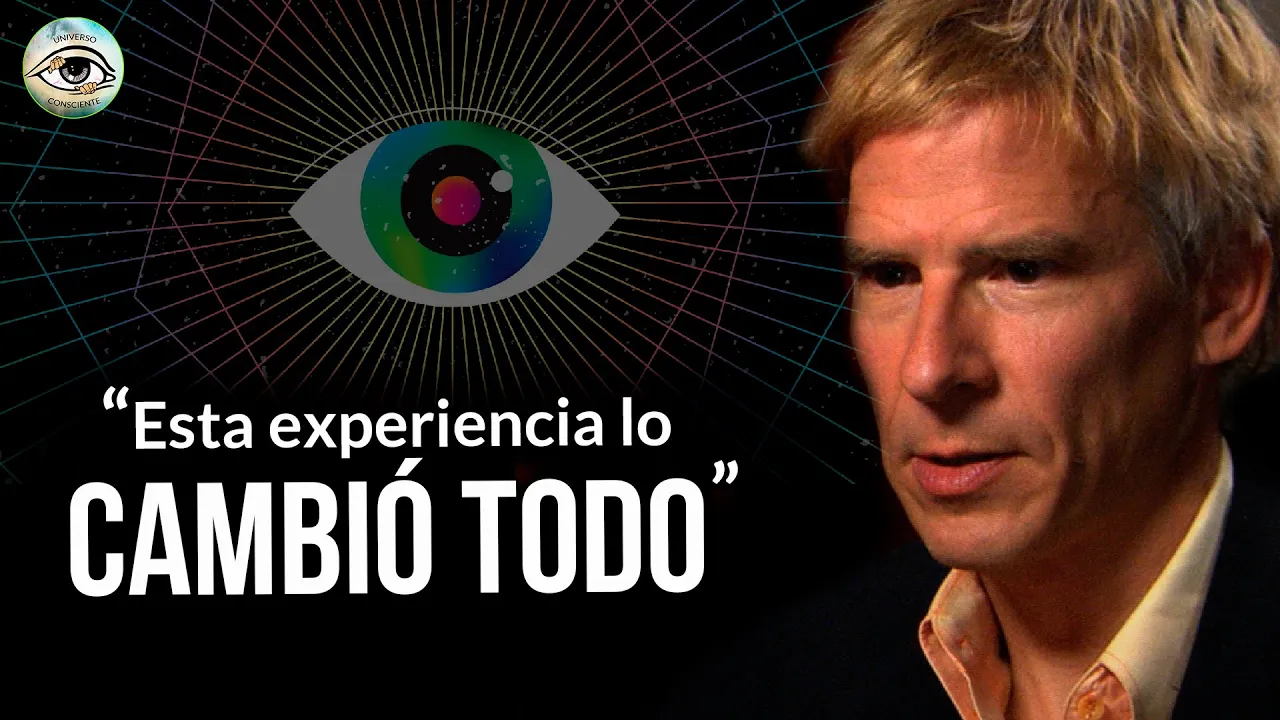
During my research for this journey, I met author and ethnobbotonist Terrence McKenna. Terrence was so inspired by his spiritual adventures with these Amazon shamans over the last 30 years. He wrote several books on his experiences and philosophies. He became a world-renowned speaker, advocate, and expert on plant-based hallucinogens and shamanic rituals.
Shamanism is about going into the realms of death, transcending the body, transcending space and time. What the psychedelics do is they dissolve boundaries. They dissolve the illusion of separateness.
[Music] Raphael invited us to an overnight iawaska ritual at a sacred site in his ancestral territory deep in the headarters of the Amazon. Willow didn't want to drink iawaska because of her pregnancy, but she still wanted to come for the adventure. The wildness, the sense of mystery and intrigue was enough to capture me. It was a journey into myself to discover my personal boundaries. I had no idea of the extent of the challenges that lay before me. I felt enormously protective.
[Music] Cavesa, [Applause] we just saw a jaguar prince and apparently it swims in the river and eats children.
[Applause] So, we're traveling in the jungle with a baby.
We've just um done a three and a half hour walk through mud and um I'm seven months pregnant and I've still got 3 and 1 half hours to walk.
I've been told to be very careful of snakes cuz there's apparently a lot of off around here. And they were going to build a plastic house, but we asked to build a house out of build. And so looks like we're going to have a traditional hut made in very very short time.
I felt how my modern lifestyle had allowed a sort of separation to develop between myself and nature. Through their actions, I could see how these forest Indians were still directly connected with the natural environment. I felt like I had journeyed back in time. I felt privileged to be able to participate in this ancient ritual.
[Music] I knew that drinking I was could be a very intense experience that it tasted foul and often it made you vomit.
I was feeling apprehensive about how it would affect me.
Millions of people take Iawaska in the Amazon. It is the largest psychedelic religion on earth.
The waking world and the world of the dream become one.
So then it becomes the function of the shaman, the gadfly, the gobetween to carry information back and forth between these worlds. Yeah.
Everything sounds really loud and alive.
It feels like the whole forest and everything in it is aware that we're here drinking Iawaska.
I'm seeing iridescent rainbow spirals and complex geometric patterns. Feels like I'm being bombarded by some sort of ancient knowledge, a universal consciousness that I don't understand.
foreign. Yeah.
[Applause] This is a lot. Yeah.
Then this thing took classes.
[Music] millions of possibly entert [Music] Yeah, I'm a natural patch mama espei.
In many countries around the world, people are now running their own unique style of Iawaska rituals to open a doorway into this shamanic world. What you see, I think, is the morphogenetic field, the invisible world that holds everything together. You don't have to spend 20 years around the ashram.
Iaska to me is a very very feminine spirit. It's a feminine experience. It's an experience of of let go, of surrender, of nurturing, of love, of light, of the heart. It's a holographic library. Speaks to you in visions. It communicates through pictures. And also, you're very sensitive to sound in IAS cuz sound can influence wherever you go. So, we use sound as a navigator. Also use your intent and you use [Music] sound. Iaska can be seen as a doorway, a link between the dimensions. It can give you all kinds of let's say shamanic information. It can give you a look into the animal world, the spirit world, the world of insects, the world of plants, the world of minerals, the galactic world, the cosmic perspective. And Iaska is like a deep immersion into that kind of experiential understanding of unity.
And this unity is liberating. It's a transforming experience.
Iaska teaches that we are it. We are nature. We are not separate from it.
for [Applause] transform peopletos.
The Amazon Indians have lost more than their claim to ancestral lands.
Militarybacked oil companies have pushed roads through their territory and their land is being invaded by colonists and outsiders. Their culture is undergoing massive upheavalss and the people look to their shamans for vision and guidance in these rapidly changing times.
As threats to the Amazon people change with the times, the shamans use Iawaska to gain insights and strategies to fight New enemies.
[Music] territorial.
[Music] for this. We're at the blockade now.
There's a lot of military going through here and uh got the indigenous people being held off by the military.
Yeah, Petrol.
See? Yeah.
[Applause] for Yeah.
I'm convinced that in its native setting, Iaska is a telepathic drug. I mean, small groups of tribal people are taking this thing and making group decisions based on group hallucinations based on the collective database of the tribal group. They're seeing the information from a higher dimensional space.
On this Iawaska journey, I was given deeper insights into the shaman's world and their intimate relationship with nature. I saw how the shamans through their visions were able to communicate with the planet as if it were a conscious living entity.
[Music] [Music] in 1971. Largely in response to the popularization of psychedelics in the United States in the 60s, such as LSD, magic mushrooms, and marijuana, the United Nations drafted the narcotics convention, which was signed by all of its members prohibiting hallucinogenic plants and chemicals. Without any real scientific research, DMT and other hallucinogens were placed in the schedule one category along with heroin and cocaine.
Dealers in these substances face between seven years and life in prison and in some countries even death except in Brazil and Peru. Iaska rituals are now banned in every United Nations country on earth. In Brazil 80 years ago, an Amazonian shaman introduced rubber tapper Rando Sierra to Iawaska.
Roando became a shamanic healer and later established the Santa Damian religion which is an unusual combination of Christianity, owski rituals and nature worship. Today the Santa Dami church has over 15,000 members in Brazil and many centers around the world.
The Netherlands is a signary to the narcotics convention and in October 1999 the government raided a centami service with 70 people in the congregation and arrested the two spiritual leaders. I went to the Netherlands to meet Brazilian Yatra Syla de Bababosa who established a number of Santai centers in Europe.
In my country it is legal. Iawaska in South America it's is being taken in the same way ritualistic way for healing for you know spir spirituality back to 500 years before Christ that we know as a fact I cannot understand this way of thinking you're going to jail for seven years or 15 years because you you are running a ritual is just too much. So, this is going to be our first ritual with our doors closed.
So, there is a risk that the police might come here. The doors downstairs are totally locked. It's like you put the lights on.
Everything that's in the darkness will show up and you can work with that. So, actually makes you closer to yourself.
It brings you in contact with God which in you it brings you back into your heart space.
It's impossible to use as a recreational first because you throw up like crazy, you know.
I you don't really enjoy every moment.
It's not something that you take and you go to a party because when you drink Iawaska, you really come in touch with your innermost and it's not all the time flowers. There is a lot of sorns.
[Music] We've been healing people of physical diseases like cancer, psychosomatic diseases, depressions, drug addiction, heroine, cocaine. I want to be free. So free like a flower in a I've been addicted to cocaine and heroin since I was 16.
and went through many, many different treatment programs and none of them worked. Basically, it just helped me go inside myself and look at why I was using. People need to know about it and it needs to be legal. It needs to be able to go on and happen because without it, I would be dead right now. And I know many, many more people would be dead right now.
We understand the problem and you know it's not a case to send people to jail but to send people into treatment.
The narcotics convention also banned virtually all scientific research into psychedelics and their possible clinical applications. Before the ban, some psychologists such as author Stanloff Gra were using psychedelics as a therapeutic tool, accessing deeper levels of consciousness to unlock traumas with very positive results.
I think it's a great tragedy of 20th century science that the original excitement about exploring consciousness and mental illness generated by the discovery of LSD gave way to establishment paranoia and uh and uh repression of drugusing populations.
drugs might actually cause people to wake up to some of the of the abuses and scams that were being run by late modernism and capitalism.
We are supposed to live in a narrow canyon of consciousness walled in between awake and sleep.
[Applause] So this is uh the dump square in Amsterdam site of many protests.
And the protest behind me is one to try and get Hayawaska legalized.
Oh, let the way of the heart. Let the way of the heart. Let the way.
We have the right to choose who we are.
We have the right to choose our gods and we have the right to be.
As we enter the new millennium, we shouldn't have to be dealing with religious and spiritual persecution. Something we should have left behind in the dark ages. But unfortunately, the dark ages are still with us. So, we have to make a stand.
We have fundamental law and we have also uh the European Convention on Human Rights which says that people have uh liberty to have freedom of religion. And we have seen this also in the United States where they gave the freedom to the Native American church to use the pot cactus. In my country in Brazil, we had the same thing happened and a case that lasted for eight years, but not a case as the police, the investigators were scientists, anthropologists, doctors and after eight years we won the jury by unanimity. So they took Ayawaska out of the opium law and we want to have the same here because we really have the right to have our own religion. There's a lot of international pressure on the Dutch government to uh conform in the uh uh drug policy with the other European countries in the United States. the big war on drugs.
Due to the war on drugs in America alone, there are currently 3/4 of a million people spending around 5 million years behind bars costing over 60 billion US. America spends more in its prisons than it does on its schools.
the so-called war on drugs, which is really a war against other people's values. It's a continuation of cultural genocide and all the other efforts made by the phenomenal success of capitalism to shove its agenda down other people's throats. People's uh minds, like their bodies, must be a domain free from government control.
It is a civil rights issue.
This psychedelic dimension is part of the human birthright.
No plant should be illegal. These things should not even be talked about as drugs.
The big drug and biotech companies have been sending their biop pirates to the Amazon for years to steal and patent shamanic medicinal knowledge and in 1988 a variety of Iawaska was patented. The patent was challenged by a coalition of Amazon tribes.
The Supreme Court ruled that you can't patent a plant, that a plant is not an invention. One of the active ingredients in the Iwasa brew, DMT, is found in many species of plants throughout the world.
In the Amazon, shamans have used DMT in their snuff rituals for thousands of years.
The shamans derive the DMT from the hakula beans and the verola tree and absorb it through the nasal passages.
The snuff is used to induce a trance to see visions to communicate with the spirit world and drive away evil spirits.
There is an ancient Amazon legend about DMT which says in the beginning the sun created various beings to serve as intermediaries between him and earth and created the DMT snuff powder so that man could contact these supernatural beings.
The national symbol of Australia is the wle. It's an acacia. The acacia ecology of Australia is jammed with DMT. And then of course the question was, well, do the Aboriginals know about [Music] this? I asked Paul Dylan from the Australian National Drug and Alcohol Research Center about the dangers of DMT and other hallucinogens.
We did a call out to DMT users asking them for their experiences.
Interestingly, every single caller we had um emphasized that it was a drug that they were not going to use again.
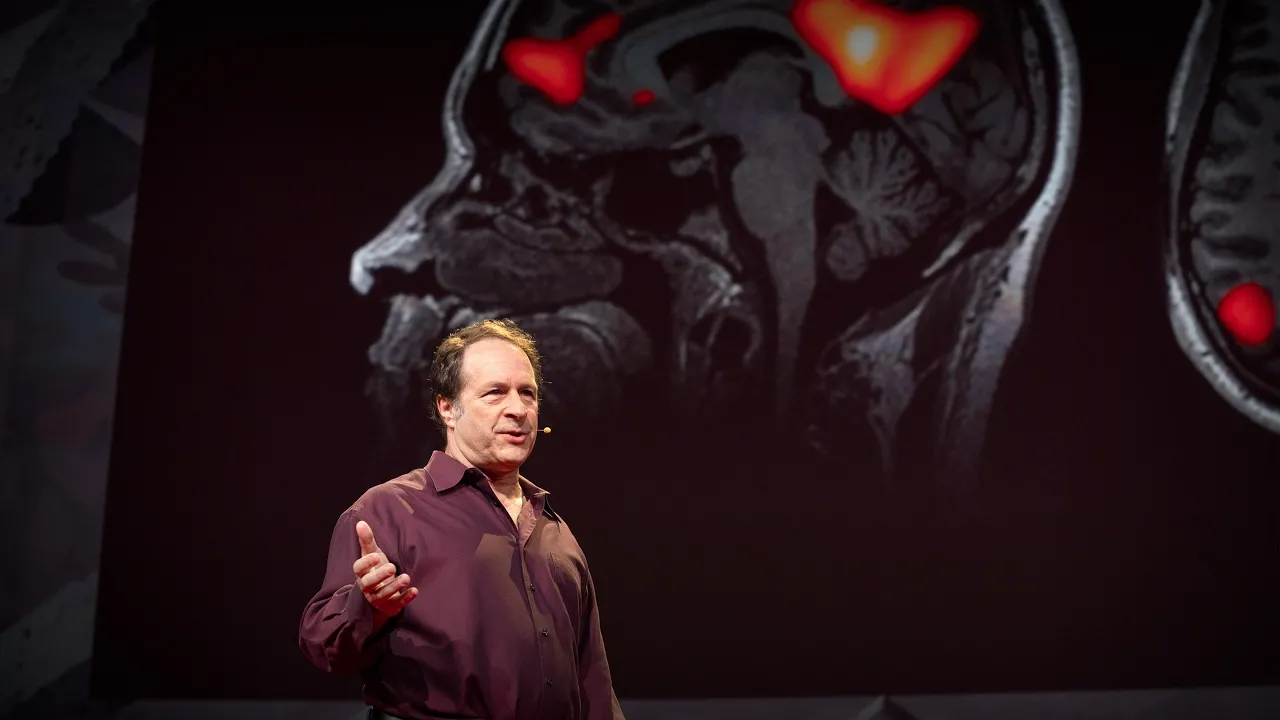
They found it very intense, quite unpleasant, and they really weren't prepared for the experience at all. The most harmful drugs in in society are definitely the legal ones, alcohol and tobacco. Tobacco kills almost 20,000 Australians every year and uh alcohol is up around 4,000. And the hallucinogen drugs, none to my knowledge, but uh I suppose they're drugs that uh we do need to know more about. We need to know about the psychological effects. I think more research needs to be done. The only legal scientific research into psychedelics and DMT since the narcotics convention was conducted by psychologist Dr. Dr. Rick Straussman in New Mexico in 1990. He concludes amongst other things that DMT is naturally released from the pineal gland during birth, death, and other naturally occurring psychedelic states.
The strongest drugs are the ones most like ordinary brain chemistry. The most extreme case being DMT. DMT only lasts 7 to 10 minutes and yet it's the most profound dislocation of reality that you can undergo.
[Music] I thought I knew a lot about psychedelics before I encountered DMT.
And it showed me that I knew virtually nothing. And I took three, four very large inhalations.
My impression was of falling forward through some kind of tube that was fluctuating. This space was filled with beings, entities of some sort, creatures made of light, and they were jumping in and out of my chest.
And I thought I must have died that this couldn't happen to somebody and come back. You cannot go further than this into the Bardau and return. The shaman is someone who has seen the beginning and the end.
It's the most challenging, enlightening, astonishing, terrifying, joyous, strange thing in the world. I don't mean to scare anyone off, but these are bizarre dimensions of extraordinary power and beauty. People should be very careful.
[Music] The shaman offers an immense example of courage.
While I was making this film, Terrence was diagnosed with terminal cancer.
It's too bad we don't have time. I asked if he had one message to share from all his experiences, what would it be?
Sheer curiosity is uh the thing that I've always let carry me along. And uh I have no regrets about any of this. Uh I I think it's worth the life to uh put these issues in front of [Music] people.
Hold on. Willow was now nearly 8 months pregnant and suffering from dizzy spells and headaches. So, we searched out a shaman named Enrique who lived by the Amazon River who he heard used mainly as a tool to heal people. Enrique and his family have established an indigenous foundation to help preserve his ancestral territory.
Part of the finances needed to run the foundation he gets from offering Iawaska rituals for ecoourrists.
see la raspa say kungawa say Quando in Ecuador is legal.
Mhm.
[Music] is benar.
Usually the shaman and the patient will drink iawaska.
No, [Music] [Music] felt like he was sucking up blockages and negativity and stuff and just sucked it out of my crown. It was like a oric cleanse. I feel like he can read the internal aspects of my body. He can read my body like a book. It was like he had all of his lineage there working through the sounds he was making.
[Music] Shamisch.
[Music] [Music] Banana. Yeah.
[Music] Anak.
[Music] [Music] [Music] I felt that when these shamanic plants were used with correct preparation, guidance and ritual, they could be powerful tools for healing and personal [Music] transformation. You okay?
I didn't take any mask, but I had a healing from from him. I've been having a lot of movement and a lot of pain and and a lot of faintness, and he said that um I need lots of minerals and vitamins.
I wanted to see if this baby is a boy or a girl. And he says it's definitely a boy. Mhm.
Parasites.
After returning to Australia, we all became quite sick. We tested positive for amiebas and parasites. I also spent 4 days in hospital unable to walk due to a problem in my spine. Oh yeah, and we did have a baby boy. We named him Shaman. In Ecuador, thousands of people were evacuated as a number of volcanoes begin to violently erupt.
for natural [Music] What it brings is a an empathy to the destruction of the planet. you you know the cutting of a rainforest is suddenly no longer completely abstract. It's actually something you can feel and relate to. And all political change begins with a change of feeling and value. We have become a toxic force in planetary biology.
There is going to have to be a radical transformation. Human future will be designed on how conscious we are able to make ourselves. If we can change our minds, we can take hold of this process and halt it.
[Music] My journey into this mysterious world of the shamans of the Amazon lasted 3 years.
I'm left wondering whose interests are really being served by keeping illegal these shamanic plants that can help you connect with yourself and the natural world. And how is it that humanity is allowing such unprecedented destruction of nature? Meeting the shamans and taking Iawasa opened me to a world I never imagined. A world that challenged my current concepts of reality and made me question my life's purpose and my relationship with everything.
Espiras mahikas.
[Music] You are you [Music] are you [Music] [Music] Thank you so much.
[Music]
Up Next
10:26
US Healthcare System Explained | Global Health Models Compared
@MedSchoolInsiders
192.6K views•2022-10-01

26:22
Walking in the City: Urban Rituals and the Flâneur in Contemporary India
@PSBTIndia
1.9K views•2016-08-02

9:49
FastAPI vs Flask vs Django: Choosing the Right Python Web Framework
@TechWithTim
302.5K views•2024-05-26

1:42
Game of Thrones Opening Credits: A Cinematic Analysis
@gameofthrones
46.3M views•2011-04-18
Related Study Plans & Knowledge Roadmaps
Structured learning paths in General & Interdisciplinary Studies
general-studies
Artificial Light: History, Tech & Human Impact
01The Pre-Electric Era: Fire, Oil, and Gas Lighting
02The Incandescent Revolution and Grid Electrification
03Gas Discharge and Fluorescent Illumination
+ 3 more learning modules
14h6 modules
Explore Roadmap
general-studies
Elevator Engineering: History, Physics & Cities
01From Hoists to Safety Brakes: The Dawn of Vertical Lift
02Hydraulic vs. Traction: The Engineering Physics of Elevators
03Modern Speed, Safety, and Algorithms
+ 2 more learning modules
12h5 modules
Explore Roadmap
general-studies
Rubber: Material Science, History & Geopolitics
01Origins of Natural Rubber & Mesoamerican History
02The Chemistry of Natural Rubber & Vulcanization
03The Geopolitics of the Rubber Boom & Colonization
+ 2 more learning modules
12h5 modules
Explore Roadmap
general-studies
Containerization: Evolution, Logistics & Trade
01Ancient Trade & Bulk Cargo: Amphorae to Barrels
02The Industrial Revolution & Cardboard Packaging
03The Containerization Revolution: Malcom McLean
+ 2 more learning modules
12h5 modules
Explore Roadmap