









![[CORTE] Episódio 4 - IONOSFERA e Clima Espacial - ERROS no sinal de GPS - Quais são os principais?](https://i.ytimg.com/vi/h52wE7ph_jw/maxresdefault.jpg)

![Путешествие к ближайшим Планетам [Невероятные космические миссии]](https://i.ytimg.com/vi/uSjPBhv96VM/maxresdefault.jpg)
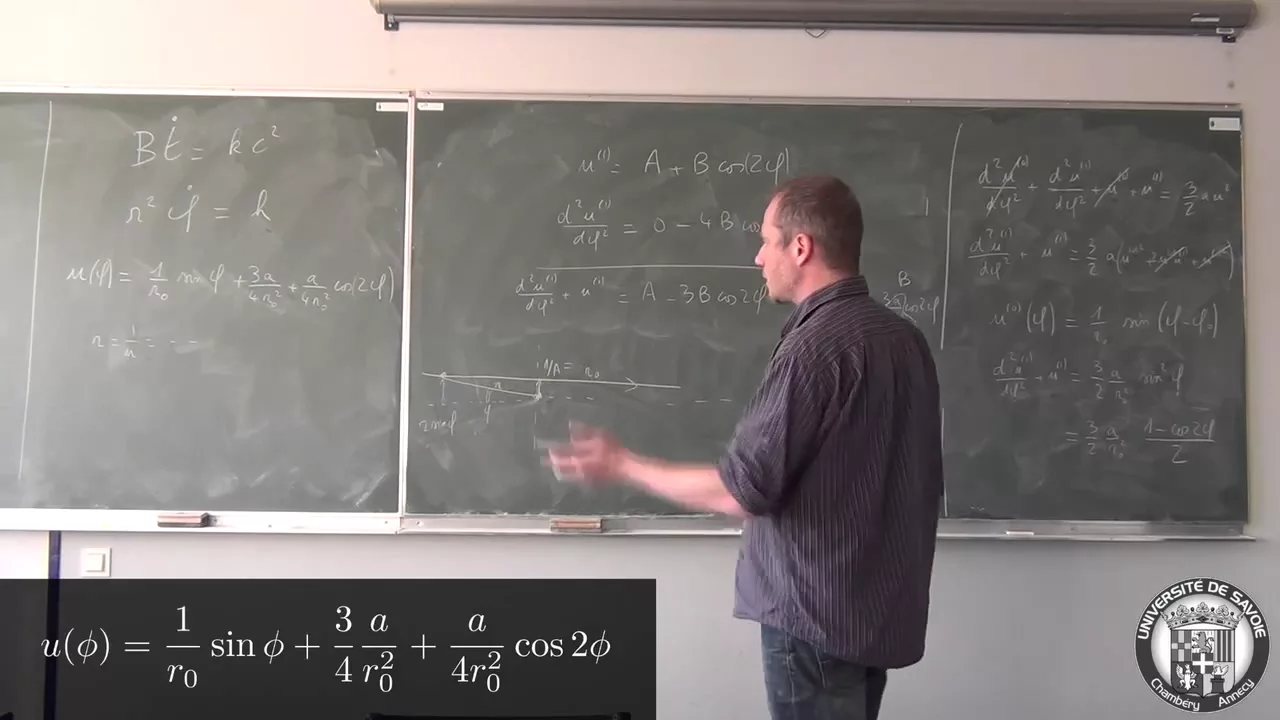



GPS satellites orbit Earth at 20,200 km altitude and 14,000 km/h, experiencing two relativistic effects: velocity time dilation slows their atomic clocks by 7.2 microseconds per day, while weaker gravity at altitude speeds them up by 45.6 microseconds per day, resulting in a net 38.4 microsecond daily difference that would cause several kilometers of location error without Einstein's relativity corrections.
How GPS Works: The Role of Relativity and Time Dilation
Added:Basic understanding of the Global Positioning System (GPS) and the concept of trilateration using satellite signals.
Einstein's Special Theory of Relativity, specifically how relative velocity causes time dilation (kinematic time dilation).
Einstein's General Theory of Relativity, focusing on how gravitational fields affect the passage of time (gravitational time dilation).
The fundamental concept of the speed of light as a constant in a vacuum and how distance is calculated using time-of-flight.
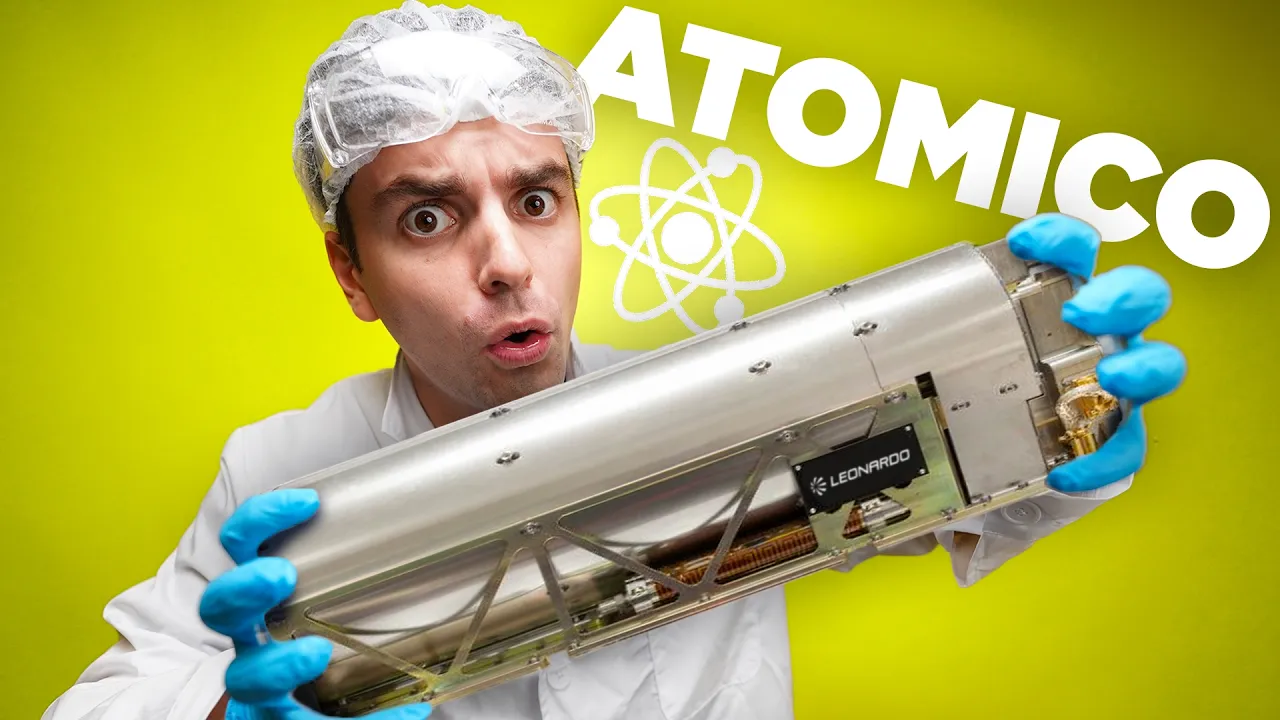
Advanced engineering of atomic clocks (cesium and rubidium standards) and how they are synchronized from space to Earth.
The impact of atmospheric interference (ionospheric and tropospheric delays) on GPS signals and how these errors are corrected alongside relativistic offsets.
Relativistic effects in deep-space navigation, autonomous space probes, and future lunar or Martian positioning systems.
The study of other cosmological proofs and applications of General Relativity, such as gravitational lensing and frame-dragging.
171 views6likes4:22Original Release: 2025-11-08
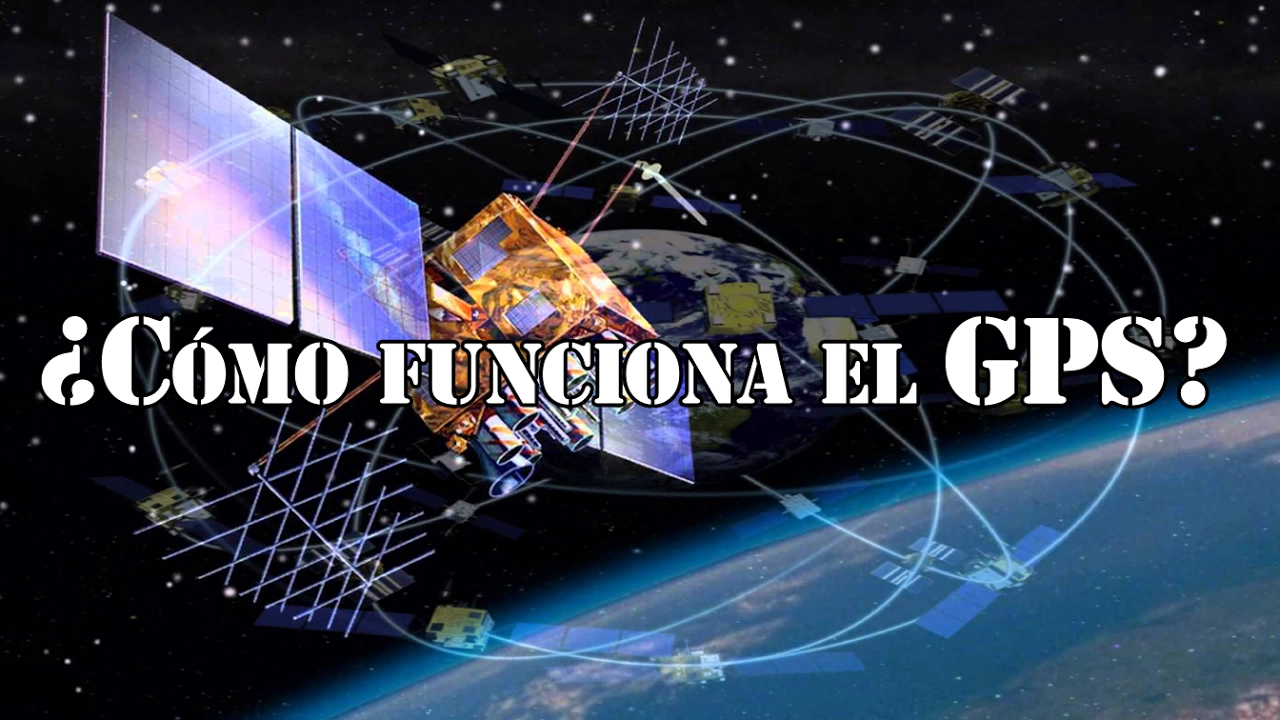
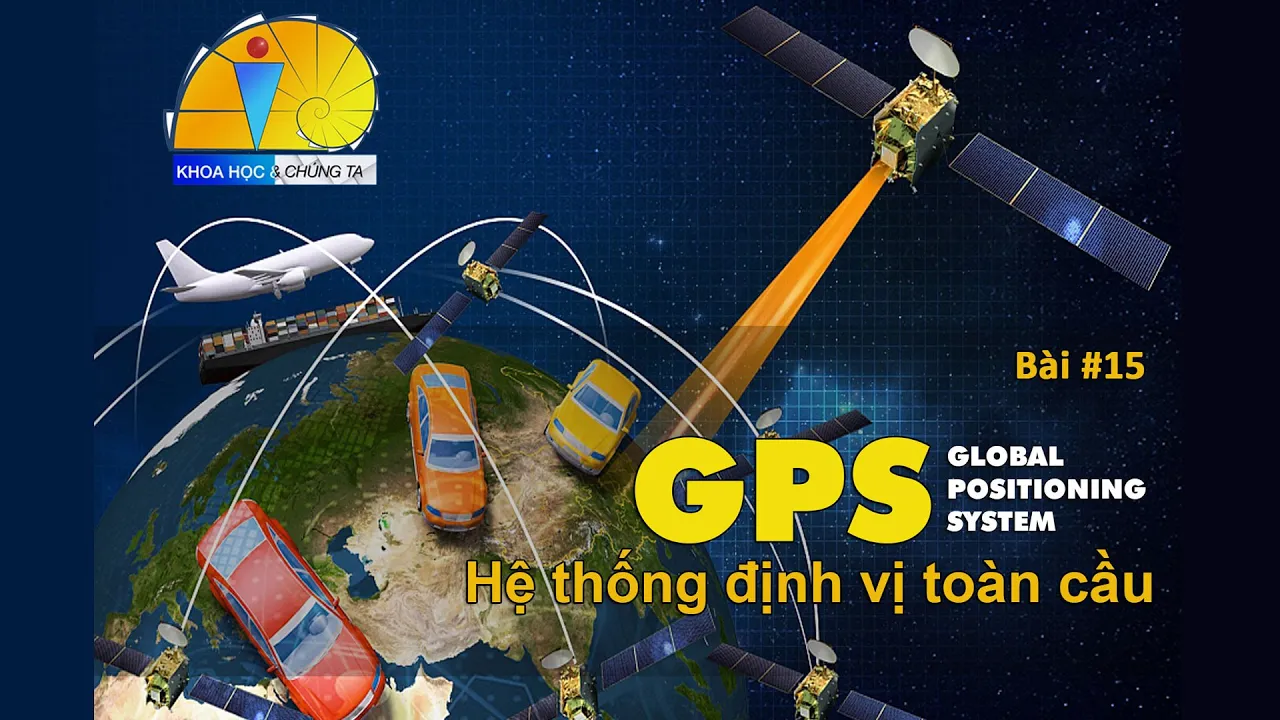
What you see on screen is the Global Positioning System, GPS, a vast constellation of satellites that allows a small device on Earth, like your phone, to know exactly where it is.
But here's something few people realize.
Without Albert Einstein's theory of relativity, GPS simply wouldn't work.
Our entire navigation system, the one guiding airplanes, ships, and every car on Earth, would fail within hours. GPS works through a constellation of satellites orbiting Earth about 20,000 km above the surface. Each one travels at roughly 14,000 km hour, constantly sending signals toward the ground. Your phone listens to those signals and calculates its own position. To do that, it needs very precise information.
The exact time the signal was sent, the location of the satellite, and its speed in orbit. At least four satellites are always required to pinpoint your position anywhere on the planet. That's why the system uses 24 satellites divided into six orbital planes, ensuring full global coverage 24 hours a day. When your phone receives these signals from four or more satellites, it performs a calculation that allows it to determine both your position and altitude with astonishing precision. But here's the mystery. Why does a system made of simple clocks and radio signals depend on Einstein's theory of relativity?
The answer lies in how time itself behaves for those satellites. There are two relativistic effects involved. One caused by velocity, the other by gravity. Because the satellites travel so fast, they experience time dilation.
Time actually passes more slowly for them than for us here on Earth. Each satellite carries an atomic clock, but because of its velocity, the clock runs slightly slower. This effect delays the satellites time by about 7.2 microsconds per day compared to clocks on Earth. It sounds tiny, but for GPS, that difference is catastrophic.
Now let's look at the second effect.
Gravitational time dilation. At an altitude of 20,200 km, gravity is weaker. And according to Einstein's general relativity, weaker gravity makes clocks run faster. So while velocity slows the clock, reduced gravity makes it speed up. This second effect causes the satellites clock to gain about 45.6 micros seconds per day relative to a clock on the ground. Two opposite effects, one slowing time, the other speeding it up. When combined, they don't cancel out. They leave a residual difference of 38.4 micro seconds per day. That might not sound like much, but if left uncorrected, that tiny time shift would translate into errors of several kilometers in your phone's location after just one day.
So, the GPS system you use every day is not just a triumph of engineering. It's a daily confirmation that Einstein was right. Every satellite in orbit carries a built-in correction, a direct application of the equations of relativity, ensuring that time, distorted by speed and gravity, stays perfectly aligned between Earth and space. Without it, the modern world would quite literally lose its way. And that is how relativity keeps you on the map. If you enjoyed this video, leave a like and subscribe to the channel. See you in the next one.
Up Next

11:47
Energy Bands in Solids: Valence, Conduction & Forbidden Gap
@SimpleEngineering
2K views•2022-02-07

12:53
21cm Hyperfine Transition in Neutral Hydrogen: Radio Astronomy Basics
@AaronRobertParsons
12.4K views•2011-10-13

32:32
NMR Spin Physics I: Zeeman Effect, Resonance Condition & Larmor Frequency
@nptel-indianinstituteofsci8064
2.3K views•2024-01-17

27:14
Entropy and the Second Law of Thermodynamics Explained
@veritasium
27.5M views•2023-07-01
Related Study Plans & Knowledge Roadmaps
Structured learning paths in Physics
physics
Nuclear Physics (Decay, Fission & Reactors)
01Atomic Structure and the Binding Force
02Radioactive Decay and Half-Life
03Nuclear Fission Mechanics and Chain Reactions
+ 2 more learning modules
12h5 modules
Explore Roadmap
physics
Soft Matter (Polymers, Colloids & Rheology)
01Foundations of Soft Matter & Thermal Forces
02Polymer Physics and Macromolecules
03Colloids, Surfactants, and Self-Assembly
+ 2 more learning modules
38h5 modules
Explore Roadmap
physics
Analytical Mechanics: Lagrangian & Hamiltonian
01Mathematical Foundations: Calculus of Variations
02From Newtonian Mechanics to Constraint Dynamics
03The Principle of Least Action & Lagrangian Mechanics
+ 3 more learning modules
28h6 modules
Explore Roadmap
physics
General Relativity (Spacetime & Cosmology)
01Foundations of Relativity: Special Relativity
02The Geometry of Spacetime: Equivalence Principle & Curvature
03Einstein's Field Equations: The Mathematics of Gravity
+ 2 more learning modules
55h5 modules
Explore Roadmap