


















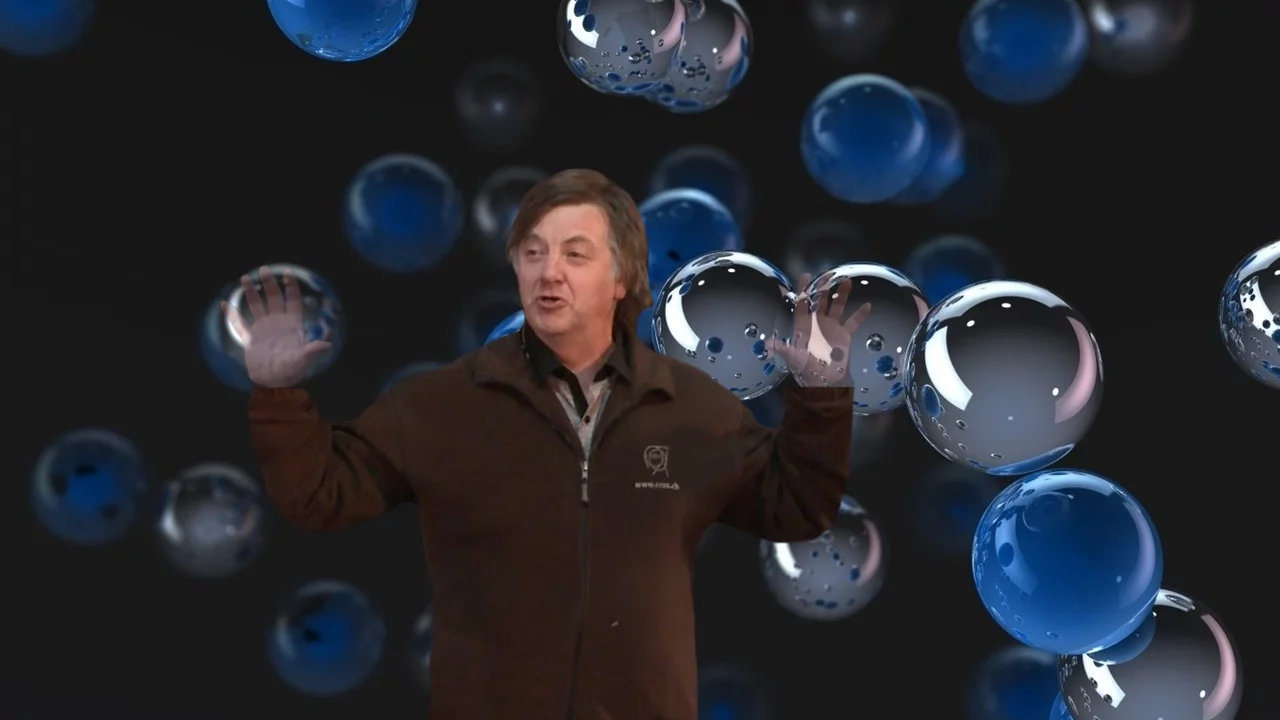


![[3] Dr. Richard Uhlig, Intel Labs](https://i.ytimg.com/vi/hnIN7QQ2b30/maxresdefault.jpg)

A transistor is an electrically controlled switch made of doped silicon where a gate electrode creates a conductive channel between source and drain terminals when voltage is applied; Moore's Law predicts transistor sizes will shrink exponentially to about 22 nanometers by 2013, but quantum tunneling effects will eventually prevent further miniaturization as the distance between electrodes approaches atomic scales (around 3-4 atoms), potentially ending traditional transistor scaling by 2025 and necessitating new computational approaches like quantum computing.
Transistor Function and the Limits of Moore's Law
Added:Basic electrical principles, including voltage, current, and the distinction between conductors, insulators, and semiconductors.
The concept of semiconductor doping and how p-n junctions control the flow of electrical current.
Fundamentals of digital logic and binary systems, explaining how physical switches represent logical 1s and 0s in computation.
The historical context and basic definition of Moore's Law regarding transistor density on microchips.
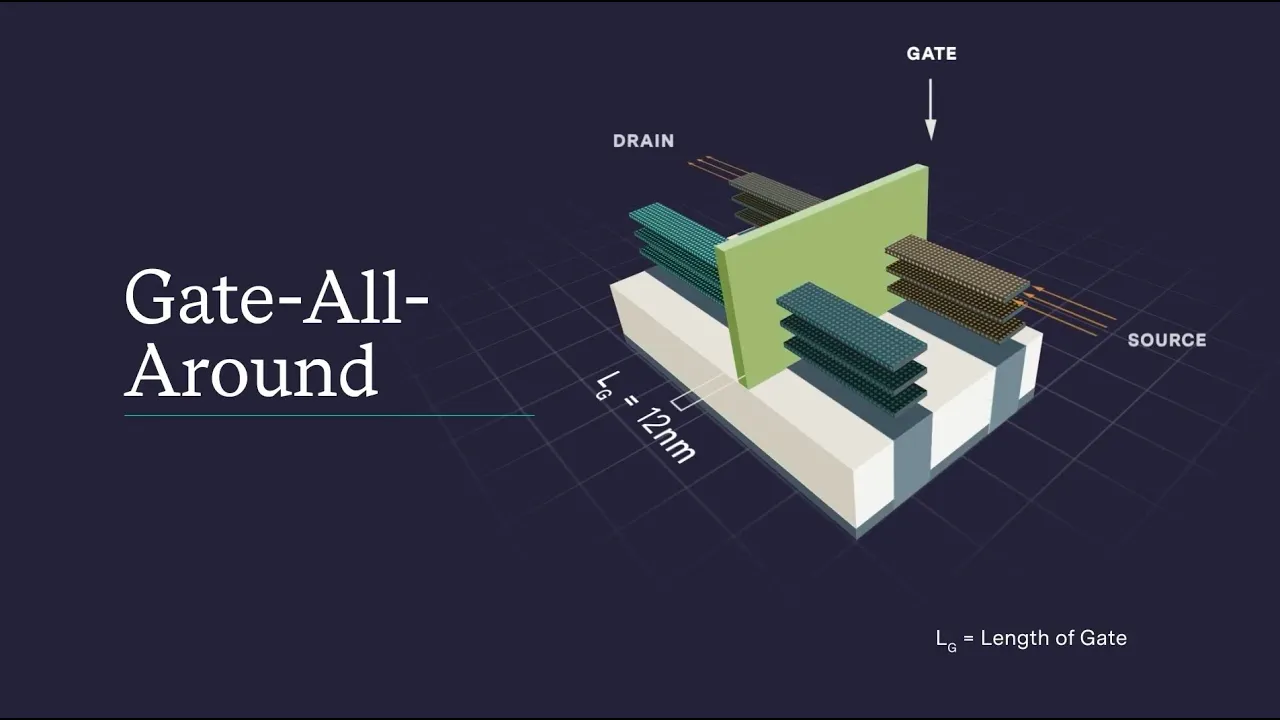
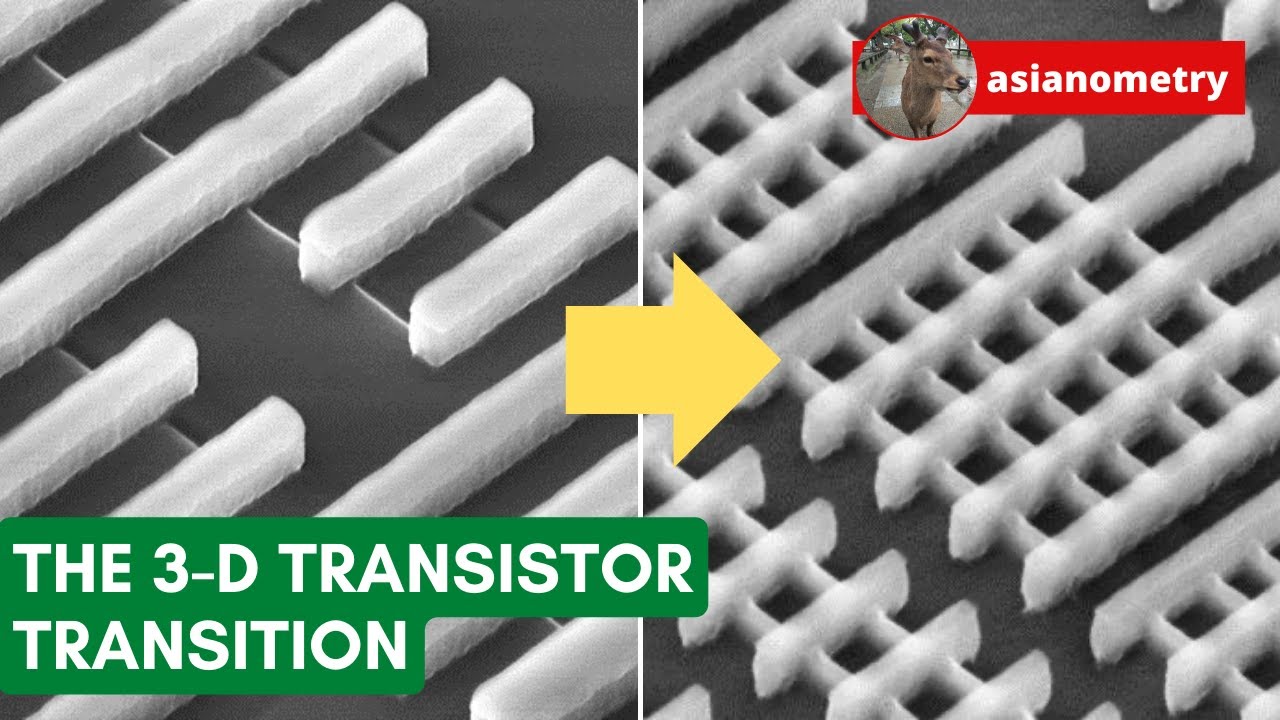
Advanced transistor architectures designed to overcome scaling limits, such as FinFETs and Gate-All-Around (GAA) FETs.
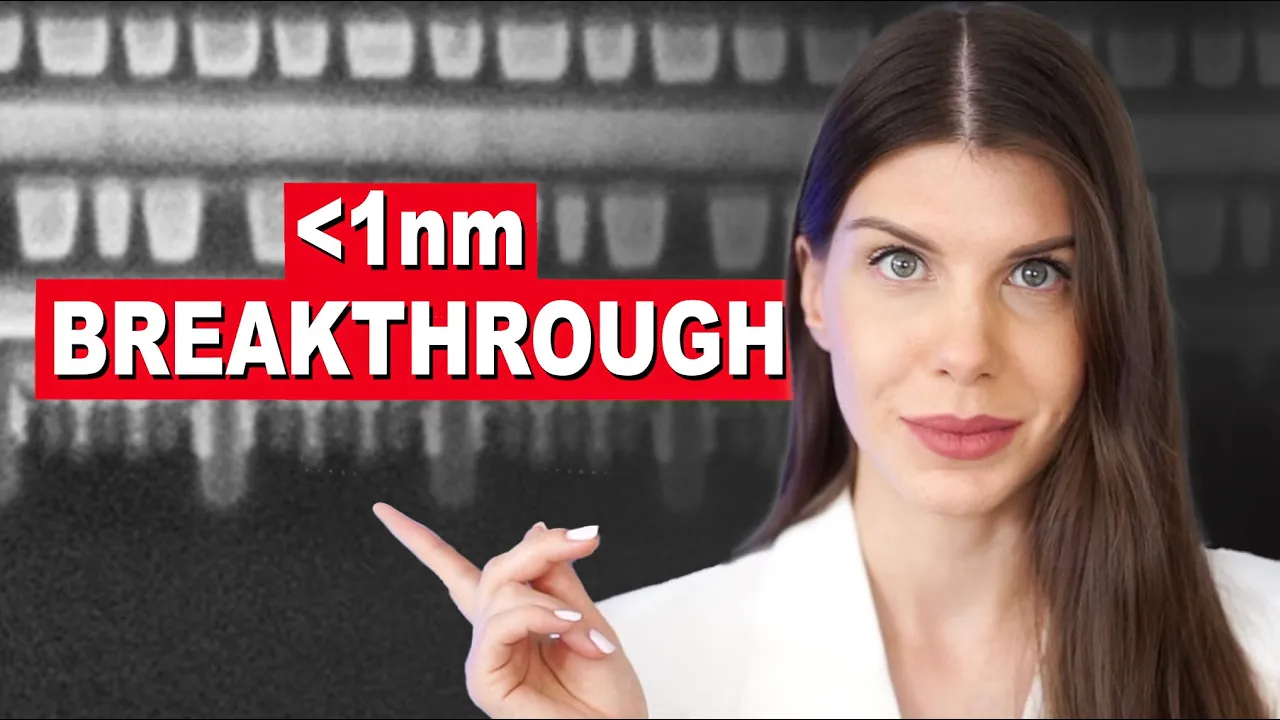
The physics of quantum tunneling and how subatomic particle behavior causes leakage current in sub-nanometer silicon nodes.
Alternative semiconductor materials beyond silicon, such as gallium nitride (GaN), carbon nanotubes, and 2D materials like graphene.
Emerging non-classical computing paradigms, including quantum computing and neuromorphic hardware design.
1.5M views31.7Klikes8:49Original Release: 2013-05-27
the transistor is essentially an electrically driven switch that allows or denies the passage of a current between two terminals so these two points in this case would be something like this would be two contacts that we call source and drain source and drain and they're made out of they're made out of silicon but modified to turn it into essentially a metallic material so what you do in here here you just add a very high concentration of impurities such as phosphorus that have extra electrons this basically has the consequence of giving many more electrons available and when the concentration is high enough there is so many that this silicon effectively becomes like a metal and then so these are like the two ends of the switch that can be opened or Clos right and so the next thing you want is the switch so the the switching action so you will have let's say some electrical contacts here and then you want something that controls the switch so something that acts like you know your hand your finger pushing the switch when you turn the light on or so this is done by adding an extra electrode this one will be made of metal or again of very highly conductive silicon which is on top of this insulator and this is called gate now if you do nothing these two highly metallic silicon electrodes with the semiconducting Silicon in between will not conduct any current it's like a switch that's open okay there is no channel for the current to pass in here if instead you apply a very positive voltage on here so let's let's say you have a battery of about let's say 2 volts what this will do you see the positive is here right so you have a positive potential what that will do is it will attract electrons underneath right you have a a metal with a positive potential on it electrons are negative charges so they're attractive by the positive potential so electrons will start to accumulate under this insulating layer of let's say silicon oxide and when they do so at some point they form a conductive channel that connects the source and drain so now you have closed the switch okay so you've gone from an open switch lights off to a closed switch lights on but without any mechanically moving part all you've done is to change the voltage on this electrode here in the old days people made structures like this with feature sizes of order of microns now what people call the size of a transistor is this distance here is the distance between the source and the drain so this is the minimum space you need plus some space for this contacts to fit a transistor somewhere so it is the most handy measure of how much space on a chip a transistor will take which tells you given a chip of this size how many transistors you can put on so in the old days people started making these things of size you know several microns even you know fractions of a millimeter essentially Mo's law tells you that this size well Mo's law there there's different incarnations of it I think the most famous one is that the number of transistors per chip uh doubles every 18 months which means that the size needs to shrink accordingly to fit more transistors on the chip right and so that being an exponential law it means that the size of the transistor much shrink exponentially so if you make a plot of the size versus ear now we should look it up on a proper table but I'm kind of inventing here so let's say 19 let's start from the 70s 80 90 2000 2010 um well this would be actually log of size so you will have a line that looks like this and so we are now 2013 we are now at a 22 nanometer node which means this distance between the source and the drain of this transistor is 22 nanometer now the thing to realize is that 22 nanometers means there's about 50 silicon atoms in here between source and R okay so we are really reaching the atomic size but not in some exotic laboratory device in every device you have in your computer and your mobile phone how many transistors are on a chip now about a billion depending what you buy so a normal quad core let's say on a on a good computer with a quad core processor that's between one and two billion transistors why is that so important number of transistors well because that essentially is what gives you the computing power that is what determines how many operations in parallel your computer can do so that determines how big you know a video your iPhone is able to play that determines how complicated a calculation uh your computer can do to you know to either do proper calculations of things or to show you know images or to process words or any other thing you do with your computer can the size of this go on forever can that keep dropping well so essentially the what determines whether the transistor works or not is whether you can stop the electrons effectively enough when these two electrodes come so close to each other okay so essentially you have two electrodes the two ends of the switch that are coming closer and closer and closer and closer and you're still trying to find a way to block the current in between them at some point Quant mechanics becomes a problem so in quantum mechanics we know that even if there is a potential barrier between two electrodes electron can still flow because of a quantum mechanical Effect called the quantum tunneling essentially electrons can go through the wall as it were but the probability of them doing so depends on how high the barrier is so the whole art of making this Ultra small transition transistors is a potentially the problem of uh engineering a potential barrier that is high enough despite being so thin that it manages to stop the current by probably 2025 you would get to the level where you literally have like just three or four atoms in here right and at that point it becomes really hard to imagine that you can keep quantum mechanics out of the way so in in a sense the whole challenge for modern micro Electronics or I should call it Nano Electronics to keep pursuing mors law and keep having transistors that function just like the light switches you have in your room is to avoid quantum mechanics to start playing a role because quantum mechanics would allow the current to pass even though you're trying to stop it so that is really the engineering problem trying to keep quantum mechanics out of this that's right but your research is actually trying to put quantum mechanics into yes and what we are trying to do is in fact not something that is um a different way to pursue mors law we are trying to build a completely different machine that is not you know along the path of evolution of the current computers is just a completely different computational machine that actually uses the laws of quantum mechanics to give you an exponentially great computing power even though you actually can have just a small number of bits or Quantum bits as we call them colum cuits call them cubits then you have like two to the 300 classical bits which is as many particles as there are in the universe
Up Next
88:29
STM32 Programming Tutorial: GPIO, Interrupts, UART for Beginners
@RobertFeranec
432.9K views•2022-07-28
87:26
Introduction to Secure Multiparty Computation with Yehuda Lindell
@fhe_org
7.7K views•2021-02-04

4:55
HTTP Requests Explained: GET, POST, PUT, DELETE
@codecademy
103.1K views•2021-10-07
19:25
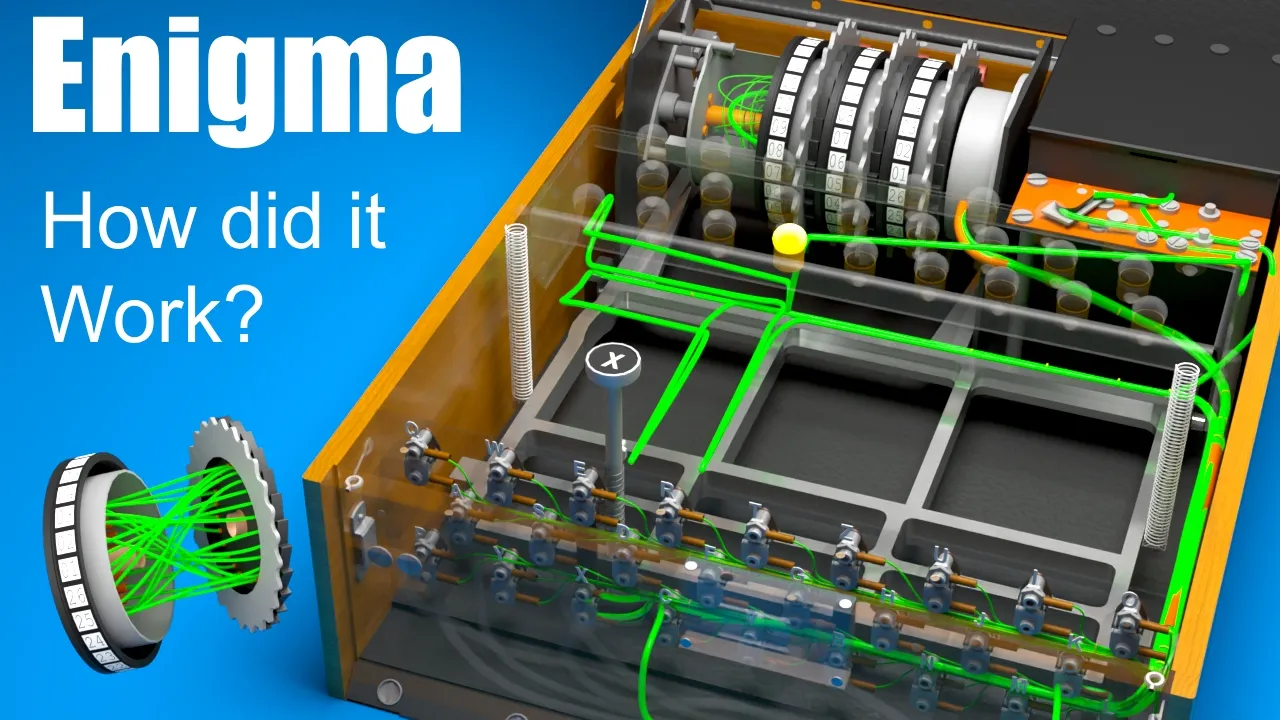
Enigma Machine Mechanics: WWII Encryption Explained
@JaredOwen
13.2M views•2021-12-11
Related Study Plans & Knowledge Roadmaps
Structured learning paths in Computer Science
computer-science
Container Runtimes: Namespaces, Cgroups & Go
01Linux Systems & Go Programming Foundations
02The Core of Isolation: Chroot and Filesystems
03Linux Namespaces: Process Isolation
+ 3 more learning modules
32h6 modules
Explore Roadmap
computer-science
Building a CHIP-8 Emulator: Rust & CPU Basics
01Computer Architecture Foundations (Bits & Bytes)
02Rust Programming for Systems Development
03CHIP-8 Virtual Hardware Specifications
+ 2 more learning modules
32h5 modules
Explore Roadmap
computer-science
Building BitTorrent: Go, P2P & Concurrency
01Go Fundamentals & Concurrency
02Networking Foundations & P2P Architecture
03Bencode Parsing & Torrent Metadata
+ 3 more learning modules
26h6 modules
Explore Roadmap
computer-science
Actor Models (C++ Concurrency & Lock-Free)
01C++ Multi-Threading Foundations
02Thread Pools and Task Scheduling
03Atomics and Lock-Free Queue Design
+ 3 more learning modules
45h6 modules
Explore Roadmap