![[TUTORIAL] PYTHON para Análise de Dados - Aprenda do ZERO](https://i.ytimg.com/vi/FZODEbfcDwU/maxresdefault.jpg)
![Как анализировать данные с Python библиотеками Pandas и Numpy [GeekBrains]](https://i.ytimg.com/vi_webp/lLf6Qt6wSJ8/maxresdefault.webp)




















![[Paper Review] A review of novelty detection](https://i.ytimg.com/vi/VkOQST5pf0o/maxresdefault.jpg)



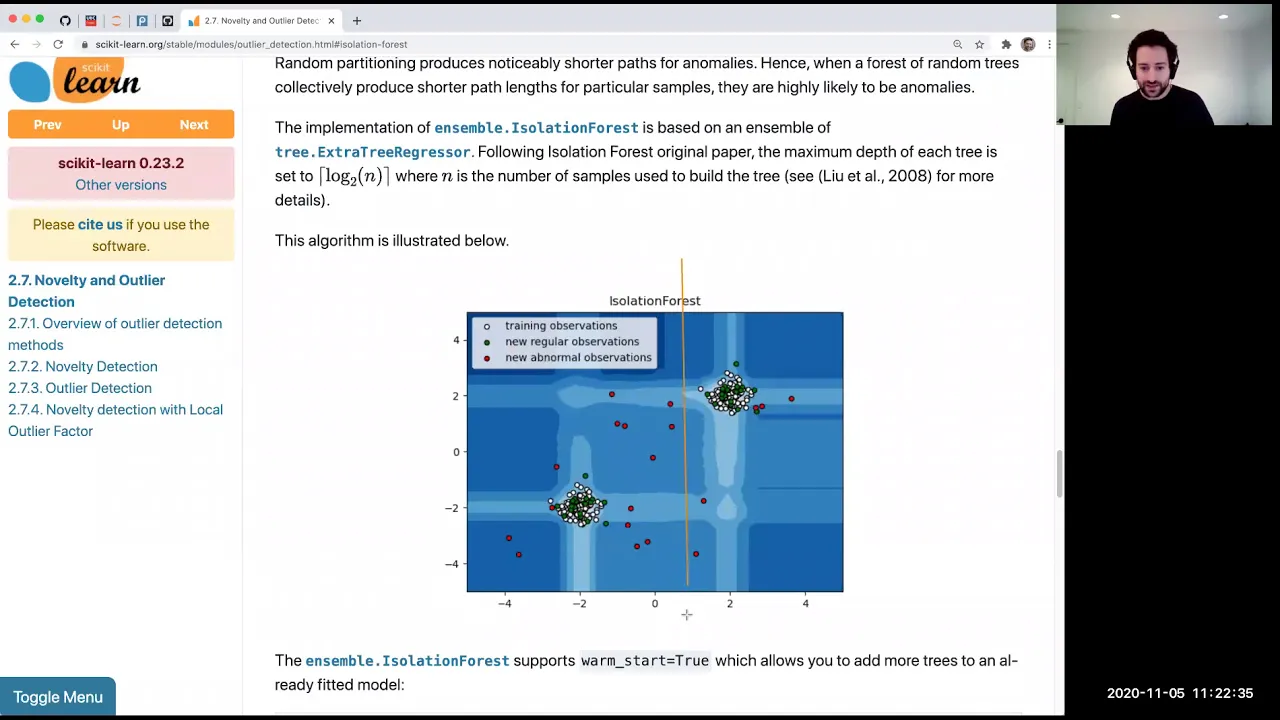
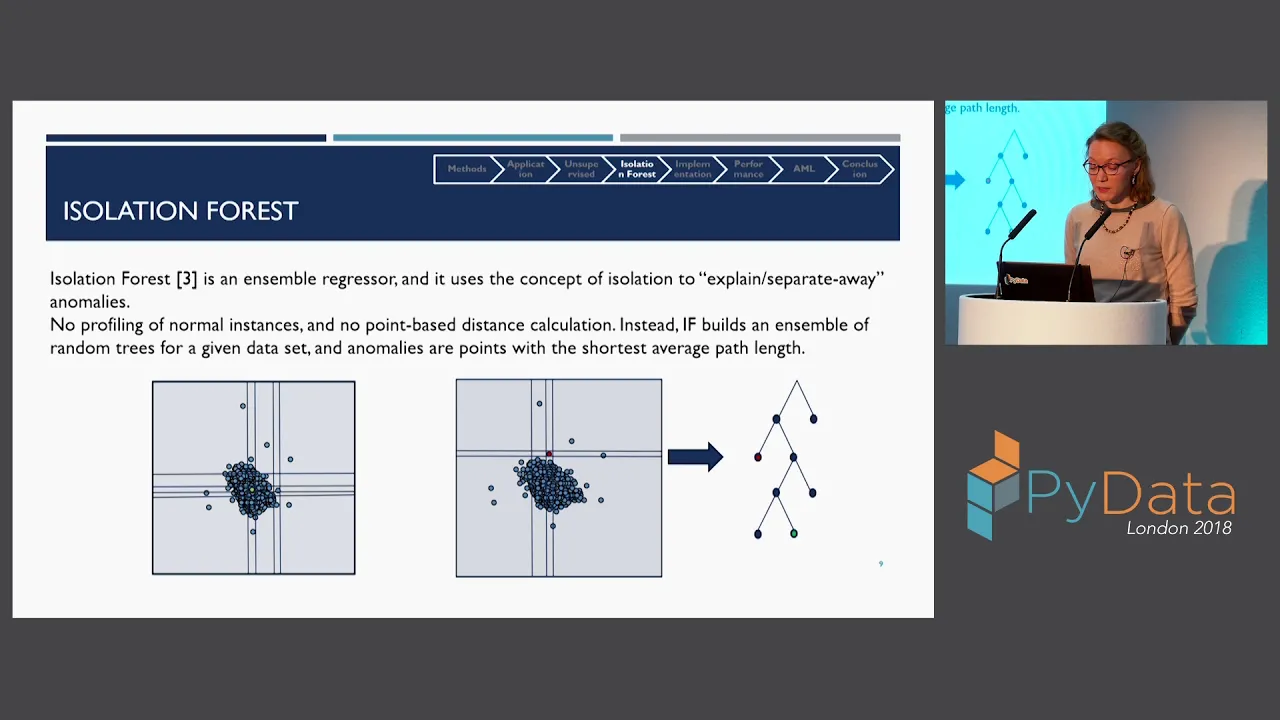
Isolation Forests detect anomalies by exploiting the fact that anomalies are few and different from normal data; the algorithm uses an ensemble of isolation trees that recursively split data based on random features and split values, with anomalies requiring fewer splits and thus having shorter path lengths, making them easier to identify.
Isolation Forest Anomaly Detection in Python & Scikit-Learn
Added:Fundamental understanding of Python programming, particularly using libraries like NumPy and Pandas for data manipulation.
Basic concepts of Unsupervised Machine Learning, specifically what constitutes an outlier or anomaly in a dataset.
Core principles of Decision Trees and Ensemble Methods, as Isolation Forests isolate observations by randomly partitioning feature spaces.
Familiarity with the Scikit-Learn library workflow, including the standard fit and predict model API.
Hyperparameter optimization for Isolation Forests, specifically tuning the 'contamination' rate, number of estimators, and maximum samples.
Comparative analysis with alternative anomaly detection algorithms, such as One-Class SVM, Local Outlier Factor (LOF), and Autoencoders.
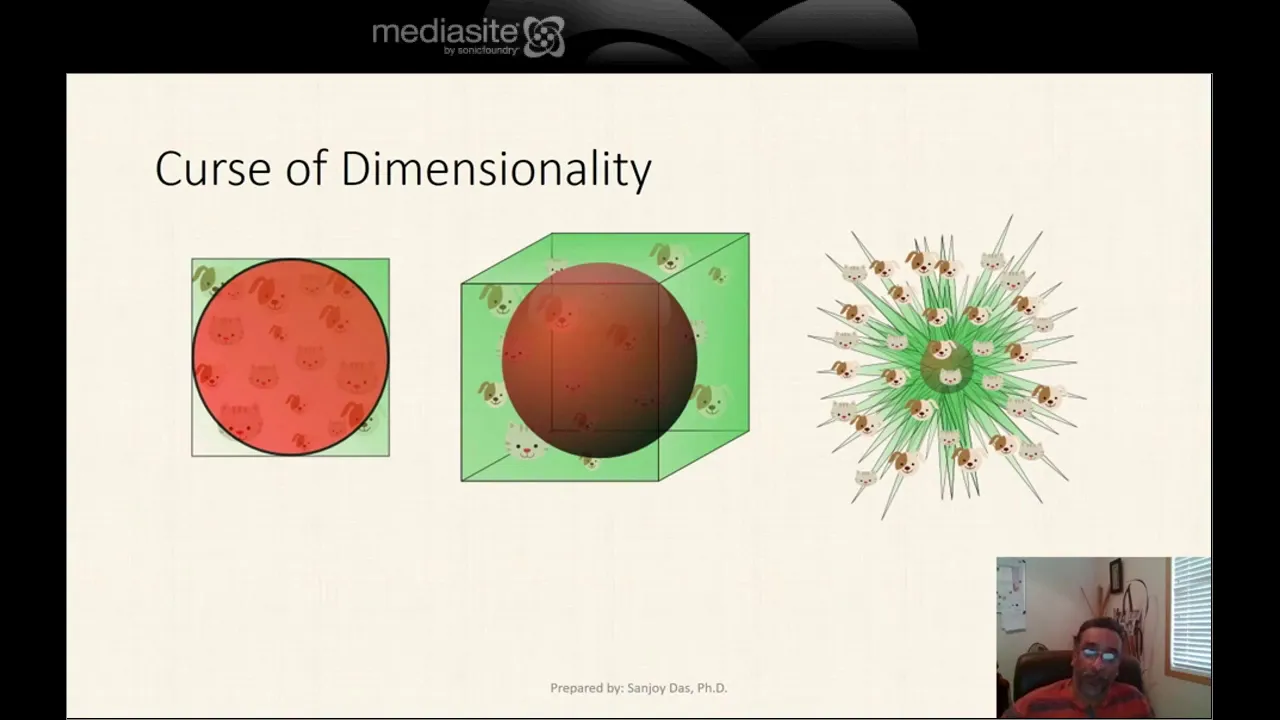
Techniques for handling high-dimensional data in anomaly detection and the impact of the curse of dimensionality.
Deploying unsupervised anomaly detection models in real-time production pipelines, such as financial fraud detection or network intrusion monitoring.
9.2K views173likes3:42Original Release: 2024-06-22
welcome back to codecraft where we Master the coolest Ai and data science tools and libraries I'm alista Louise and today we are diving deep into the fascinating world of anomaly detection using isolation Forest let's get started anomaly detection is a crucial task in data science whether you're looking to detect fraud in financial transactions identify Network intrusions or spot manufacturing defects being able to identify outliers or anomalies is essential so what exactly is an anomaly anomalies are data points that deviate significantly from the norm they are few and different making them easier to isolate and that's where isolation forests comes in isolation forests operate on a simple yet powerful principle anomalies are few and different unlike other methods that profile normal data points isolation Forest explicitly isolate anomalies it uses an ensemble of isolation trees or ey trees to partition the data each ey tree isolates data points by recursively splitting the data set based on randomly selected features and split values anomalies being distinct tend to require fewer splits to be isolated this results in shorter path lengths in the tree making them easier to identify let's get our hands dirty with some code we'll start by doing some exploratory data analysis or Eda on a sample data set and for this example we are using a data set of salaries to demonstrate anomaly detection using isolation Forest we first need a data set we'll generate a synthetic data set of salaries with some anomalies so let's dive into the code to create this data set we start by importing the necessary libraries we set a random seed for reproducibility we then generate normal salary data using a normal distribution with a mean of $50,000 and a standard deviation of $155,000 to introduce anomalies we add salaries that are significantly higher and lower than the normal range we loow the data set and take a Peak at the first 10 rows this data includes salaries of different professionals as you can see most salaries are around $50,000 but there are a few anomalies that stand out this data set will be perfect for demonstrating how isolation Forest can detect these outliers a violin plot combines the features of a box plot and a density plot giving us a comprehensive view of the data distribution now it's time to build our isolation forest model we'll use the isolation Forest class from pyit loan we set up our isolation forest with 100 estimators and fit it to our salary data the contamination parameter is set to 0.1 indicating that we expect 10% of the data to be anomalies once our model is trained we can use it to predict anomalies the predict method assigns a score to each data point where minus one indicates an anomaly here we add a new column to our data frame to Mark each point as anomaly or normal finally let's visualize the results to see where the anomalies lie in our data using a scatter plot we can clearly see the anomalies in red this visual representation helps us quickly identify the outliers in our data and that's a wrap today we have covered the theory behind isolation Forest performed some exploratory data analysis and detected anomalies in our data set using python if you want to dive deeper check out the written blog linked down in the description for more resources and document ation on isolation Forest don't forget to like share and subscribe if you found this video helpful hit the Bell icon to stay updated with our latest content until next time keep coding and stay curious
Up Next

30:00
Implementing Autoencoders in PyTorch: Theory and Code
@patloeber
85.8K views•2021-03-22

57:48
Secure Multiparty Computation (MPC): Foundations & Challenges
@SimonsInstitute
7.3K views•2015-05-28

13:03
Bypassing Tor Censorship: Bridges and Pluggable Transport Guide
@Coding_ForEveryone
397 views•2024-06-11

18:41
Neural Networks Explained: Math, Layers, and Learning Fundamentals
@3blue1brown
21.9M views•2017-10-05
Related Study Plans & Knowledge Roadmaps
Structured learning paths in Artificial Intelligence
artificial-intelligence
Aligning LLMs: DPO, TRL & Custom Datasets
01Foundations of Python & Machine Learning
02Transformers and Large Language Models (LLMs)
03Aligning LLMs: SFT and RLHF
+ 3 more learning modules
24h6 modules
Explore Roadmap
artificial-intelligence
Federated Learning: PyTorch, Flower & Privacy
01Python & Machine Learning Foundations
02Deep Learning Basics with PyTorch
03Introduction to Federated Learning
+ 2 more learning modules
35h5 modules
Explore Roadmap
artificial-intelligence
Securing LLMs: Guardrails AI & NeMo Gateway
01Introduction to LLMs, Python, and APIs
02Understanding LLM Vulnerabilities & Threats
03Defending LLMs with Guardrails AI
+ 2 more learning modules
15h5 modules
Explore Roadmap
artificial-intelligence
Building Recommenders: Two-Tower & Vector DBs
01Foundations of Python & Machine Learning Basics
02Introduction to Recommender Systems
03Deep Learning & Representation Learning
+ 3 more learning modules
75h6 modules
Explore Roadmap