









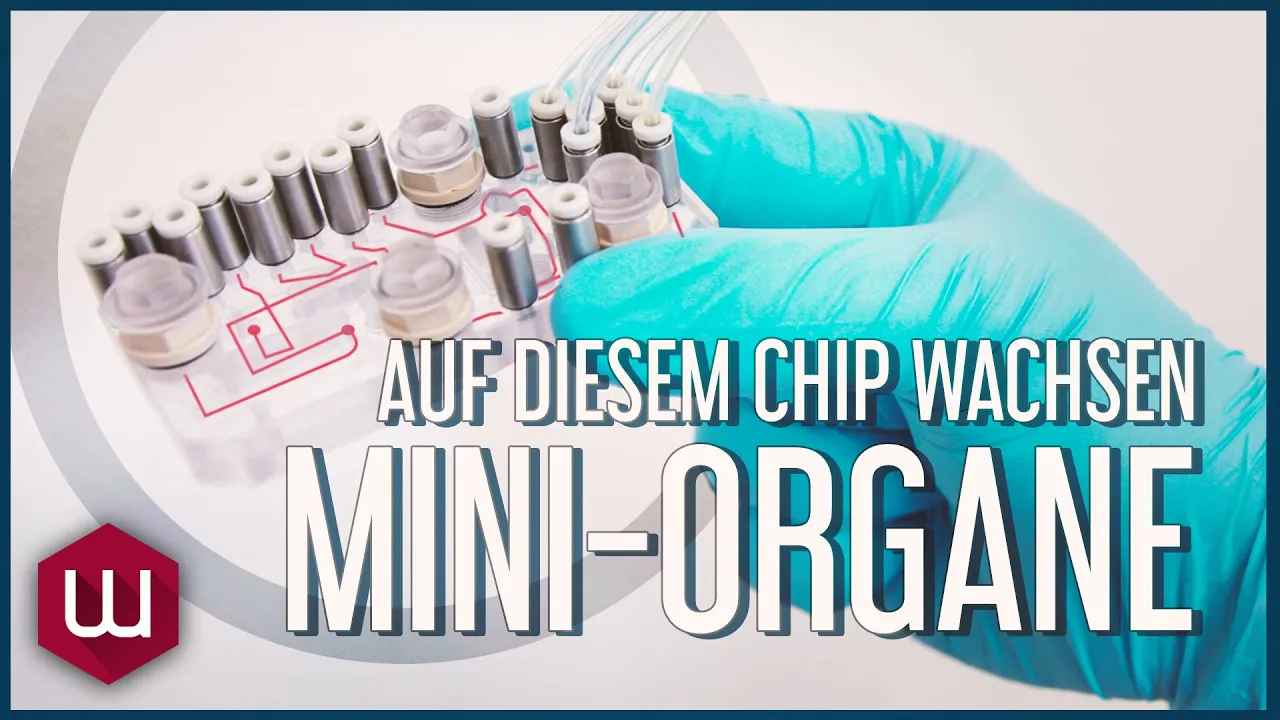







Organ-on-a-chip technology uses microfabrication techniques to create microengineered devices that can grow human cells and mimic the structure and environment of living human organs, such as lungs and eyes, allowing researchers to test drug responses in a more realistic and predictive model than traditional cell culture or animal testing, thereby potentially reducing the time and cost of drug development.
Organ-on-a-Chip Technology: Engineering Human Organs | Dan Huh | TEDxPenn
Added:Basic cellular biology and tissue architecture, including how different human cells interact with each other and their extracellular matrix.
The traditional pipeline of pharmaceutical drug discovery, specifically the high costs, attrition rates, and limitations of animal testing.
Fundamental principles of microfluidics, which involve the behavior and precise control of fluids constrained to a sub-millimeter scale.
Multi-organ-on-a-chip (or body-on-a-chip) systems designed to model systemic drug absorption, distribution, metabolism, and excretion (ADME).
The integration of patient-specific induced pluripotent stem cells (iPSCs) with microfluidic chips to advance personalized medicine.
Regulatory affairs and validation standards required by agencies like the FDA to accept organ-chip data as alternatives to preclinical animal testing.
Advanced biofabrication techniques, such as 3D bioprinting, to create highly complex vascularized tissue models on microfluidic platforms.
57.4K views950likes16:19Original Release: 2015-06-09
[Music] So today I'm standing in front of you to talk about one of the most critical challenges we're facing in the 21st century.
And this problem is about drugs. So at some point in our lives, we all take certain types of drugs and medications.
And for many people, they're absolutely necessary to support daily living. So for example, my 70-year-old father has high cholesterol. So every morning he takes this uh prescription drug called Lipur. So this is the number one drug around the world for treating high cholesterol patients. And chances are a couple of people in your extended family might be taking this same drug. Liper also happens to be the bestselling drug ever in the United States. So basically this is a very common drug that affects our lives on a daily basis. So now I'm going to try to draw our attention to the dark side of this story by asking the following question.
Have you ever wondered how much money and time it takes to develop a successful drug like Lipur? Have you guys ever thought about it? So just to put this into perspective uh let me give you some numbers. So in case of this drug lipur uh from the synthesis of the first drug compound called uturvvisastatin it took 12 years and over one billion dollars to get approval from the FDA and bring the new drug to the market this is a lot of money and such a long time for just one drug isn't it and if you uh happen to be a football fan uh this is a price that will buy you every seat in every NFL stadium in the country for six weeks in This is just ludicrous. And importantly, this is not just a problem for this particular drug.
This happens to be the problem for the entire pharmaceutical industry. So today, developing one successful drug like Lipur cost an average of $1.5 billion and takes somewhere between 10 to 15 years. And what's really concerning is this problem is actually getting worse.
So pharmaceutical companies are spending more and more money every year to develop new drugs, but the number of approved drugs has been declining steadily over the past two decades. And this productivity crisis is becoming a major threat to the pharmaceutical industry. And more importantly, we're failing to deliver new drugs to the clinic when patients really need them.
So it's really time for us to think about how to reverse this undesirable trend. This is very big and very serious problem. And according to research, high cost and long delays of drug development are caused mainly by a failure of drugs in clinical trials due to for example serious side effects or lack of efficacy.
And to minimize the risk of this failure, drug developers actually try to predict drug response in humans before clinical trials by testing drugs on human surrogates in a pre-clinical stage. So for example, one of the traditional models for this preclinical drug testing is cell culture. So here our idea is very simple. So we take living cells from the human body and grow them in a plastic dish and we test drugs on them. Simple, right?
But if you think about it, this is such a strange, unnatural, uncomfortable environment for these cells that are used to this dynamic three-dimensional and very complex environment in the human body. And as a result, uh these cell culture models can't predict what's going to happen in the human body. So having realized this problem, so drug developers are now relying heavily on animal testing.
So these models are sufficiently more complex than cell culture models, but animals like mice are not a good representation of humans. Well, we see them act like humans all the time, but their biology is completely different and that's why animal testing for the most part fails to predict human drug responses.
So as a result uh these limitations of traditional models are creating a large gap between what's predicted in pre-clinical testing and what actually happens in humans during clinical trials. So now we realize solving this fundamental problem in drug discovery essentially comes down to this question.
Can we develop better, more predictive and realistic models of the human body to bridge the large gap between these two critical steps of drug discovery?
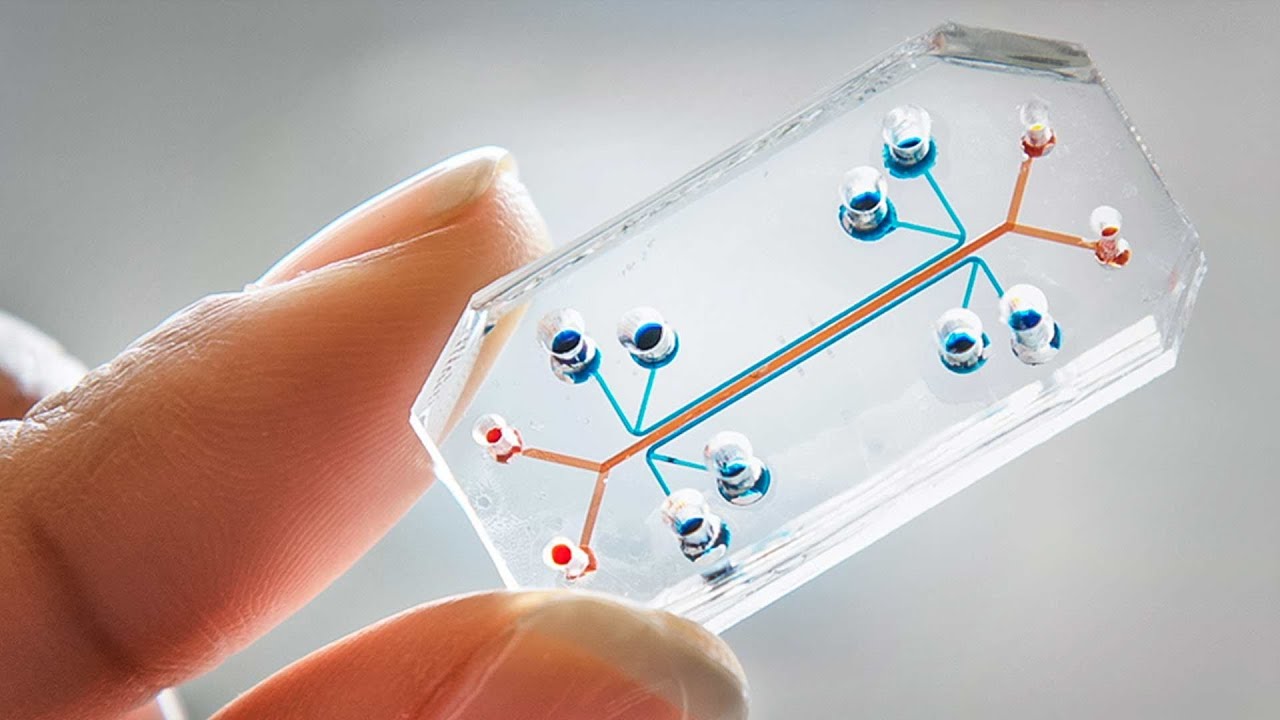
So this is the key question we have to think about to solve this problem. And um this may sound a little strange but I think we might be able to achieve this by using micro fabrication technologies uh developed for manufacturing computer microchips to make microengineered devices that we can use to grow human cells but also mimic the most salient structure and environment of living human organs in a completely different way. So we call these microengineered systems human organ on a chip. So just to uh just to help you understand what's really possible with this technology, let me give you an example and tell you a little bit about mimicking our lungs for example based on this technology. So the human lung is a very complex and dynamic organ consisting of functional units called Lvoli. So these are microscopic air sacks in the deep in the lung that expand and contract during breathing. Uh these alve air sacks are covered with blood capillaries to enable gas exchange. And the barrier between alvosex and surrounding capillaries is comprised of lung tissue on one side capillary tissue on the other side separated by a very thin membrane.
So to mimic this interesting structure and dynamic environment of the lung uh we actually use micro fabrication techniques to build this device called the human breathing lung on a chip. So, I actually brought this device with me today and I'm holding it between my fingers and it's about the size of computer memory stick and it's made of transparent silicon rubber. And if you uh look at the uh the cross-section of this device, so the top and bottom cell culture chambers are separated by this thin por flexible membrane. And here we can grow lung cells on one side and capillary cells in the other side to mimic their original structure.
And we can also apply vacuum suction uh through these vacuum channels to stretch the tissue layers attached to this membrane to mimic basically a breathing motions in this micrfluidic device. So just to give you a sense of scale 100 microns is the thickness of your hair and the pentagonal pores on the stretching membrane are about eight microns in diameter.
So basically this micrfluidic device allows us to culture human cells in a very physiologic and body-like environment with air on the lung side and liquid flow on the capillary side and eventually form this living biological interface that looks like the structure unit of the lung. But what's more interesting and important is that this model also functions like the lung.
It actually mimics the complex physiological responses of the living human lung to external stimuli. So for example, when your lungs are infected with bacteria, the cells in your lungs send chemical signals to the surrounding capillaries to alert the immune system.
And when this happens, white blood cells circulating in your blood patrolling the body. They actually h have the ability to sense these chemical signals. And then what they do next is they actually stick and roll on the capillary tissue.
And then eventually what they do is they squeeze themselves through capillary tissue into the airsacks in the lung.
And once inside the airsacks in the lung they are attracted to the chemical signals and they start crawling directly towards the side of infection. And when they get there they try to resolve the infection by engulfing the bacteria. So basically this is how our lung fights of infection. So important question here is can the lung do this? So let's take a look. Uh so this movie shows fluorescently labeled human white blood cells flowing in the lower blood capillary channel of the lawn system. As you can see here, nothing interesting happens in this case. However, when we introduce bacteria on the lung surface to mimic infection, the white blood cells that normally zip by actually stick to the capillary tissue. And as you can see in this movie, after attachment, the white blood cells crawls around. At some point, it wiggles through the capillary tissue and one of the pores on the membrane and eventually into the lung compartment. And following this response, uh the white blood cells shown in red here chase the bacteria and engulf them to clear and resolve the infection just like what happens in living human along.
So using the system we can mimic the entire process of complex normal physiological functions and responses of the living human lung. So this is great but another really exciting aspect of this technology is the system also can mimic diseased human lungs. So for example uh when kidney cancer patients receive chemotherrapeutic drug called interlockin 2 they often develop a complication known as pulmonary edema.
So this is a life-threatening medical condition where airsex in the lung become flooded with fluid leaking from the capillary side and in severe cases we find these blood clots in the alv airsacks. So interestingly when this same drug is administered into the lung on a chip so fluid in the lower capillary channel slowly leaks into the upper alve compartment and eventually fills the entire airspace.
And during this process it's also observed that uh these blood clots are formed and appear on the lung surface just like what happens in patient lungs with pulmonary edema. So taken together this human breathing lage technology allows us to simulate and also directly observe the entire process of complex normal physiological responses and also pathological disease responses in the living human lung. And I think this is very exciting and represents a major advance from previous cell culture models. But what's even more exciting is that we can use exactly the same strategy that we use for the lung to mimic any other organs in the human body on a chip. So for example, lab is also developing a microengineered model of the human eye especially one of the functional units of the human eye called the ocular surface. So the ocular surface is basically the window of the eye responsible for protecting the ocular system from the external environment and it consists of cornea at the center surrounded by the conjunctiva which is the white part of the eye and another interesting thing about the ocular surface is blinking. So we all blink. So this spontaneous eye blinking is critical for spreading the turf film and keeping the ocular surface hydrated.
So to mimic this interesting structure and dynamic environment of the eye, we actually used a microengineering technology to make this microengineered model called human blinking eye on a chip.
So in the system uh we use 3D printing technology to make this three-dimensional dome-shaped cell culture scaffold with the same curvature as a human eye and grow human corial cells and conjunctal cells on this scaffold to generate physiological tissue pattern that looks just like an eye. And we also combine this with micrfluidic channels and soft moving hydrogel to mimic blinking motions and keep the ocular surface hydrated with tear fluid just like what happens in the living human eye. So this system is another great example illustrating the power of organip technology for creating better human organ models. So what are future possibilities and opportunities for this technology?
So as you can imagine, we can use exactly the same micro engineing strategy we that we use for the lung and the eye to mimic any other organs in the human body to make these individual organ chips and then connect them to each other to develop human a body on a chip system to simulate human physiology at the whole body level and I think this will be a truly innovative platform for predictive drug testing.
Uh this organized technology may also expand current drug markets by providing testing platforms for diseases that have traditionally been challenging to address for ethical reasons like pregnancy related or pediatric diseases. And another interesting thing to think about is so for example I could take my own cells and then grow them in one of those microfutic devices to make Dan Hut on a chip right and I'm not sure if this is possible using exactly the same approach we could also make a presidential microfilotic called bub on a chip so here idea is we can put anybody's cells your cells in these micrfluidic devices to make physiological representation of your own organs and develop therapies and drugs that are more specific specific and tailored to your personal medical needs and I think this will be a truly innovative platform for this emerging concept of personalized medicine. Okay, so back to where I started, let me ask this question one more time. Can we develop better models for testing drugs? So based on what I talked about today, what I what I showed you today, my answer to this question is yes. And I hope I was able to convince you as well.
And I think this human organ on a chip technology represents an exciting new wave of innovation and creativity in drug discovery. And if successful, this technology will completely shift the paradigm of conventional preclinical drug testing. It allow us to weed out drugs that are destined to fail as early in the process as possible. And by failing cheaply and early, we'll be able to maximize the chances of success in clinical trials and more importantly reduce the time and cost required for developing new drugs that you and I might need in the future. So I believe this human organ ownership technology is an exciting first step towards revolutionizing drug discovery and may hold the keys to solving one of the fundamental challenges in our society.
in realizing the full potential of this technology will take many years from now. But this is an idea with tremendous potential impact that we as scientists and engineers must explore in our time.
Thank you.
Up Next

9:56
Microfluidics Soft Lithography: Part 9 – Plasma Bonding
@dk-hu3er
847 views•2022-05-13

12:54
Triumph of Orthodoxy Icon: Byzantine Art & History Explained
@BenCallan
2.1K views•2024-08-06

11:43
Indigenous Astronomy: Rethinking Space Ethics | Karlie Noon TEDx
@TEDx
15.1K views•2025-11-30

1:42
Game of Thrones Opening Credits: A Cinematic Analysis
@gameofthrones
46.3M views•2011-04-18
Related Study Plans & Knowledge Roadmaps
Structured learning paths in General & Interdisciplinary Studies
general-studies
Elevator Engineering: History, Physics & Cities
01From Hoists to Safety Brakes: The Dawn of Vertical Lift
02Hydraulic vs. Traction: The Engineering Physics of Elevators
03Modern Speed, Safety, and Algorithms
+ 2 more learning modules
12h5 modules
Explore Roadmap
general-studies
Rubber: Material Science, History & Geopolitics
01Origins of Natural Rubber & Mesoamerican History
02The Chemistry of Natural Rubber & Vulcanization
03The Geopolitics of the Rubber Boom & Colonization
+ 2 more learning modules
12h5 modules
Explore Roadmap
general-studies
Containerization: Evolution, Logistics & Trade
01Ancient Trade & Bulk Cargo: Amphorae to Barrels
02The Industrial Revolution & Cardboard Packaging
03The Containerization Revolution: Malcom McLean
+ 2 more learning modules
12h5 modules
Explore Roadmap
general-studies
Textile Tech: Evolution, Labor & Global Impact
01Pre-Industrial Textiles: Handloom & Cottage Industry
02Mechanization: The Spinning Jenny to the Power Loom
03The Factory System & Global Labor Transformation
+ 2 more learning modules
10h5 modules
Explore Roadmap