
















![[이슈점검] 한국형 항공모함과 F35B 1부 #항공모함 #f35 #샤를세환 #이세환](https://i.ytimg.com/vi/OqQEIsKYc-o/maxresdefault.jpg)
The Fleet Air Arm Museum at Royal Naval Air Station Yeovilton showcases the evolution of naval aviation, from Buffalo Bill Cody's 1903 kite demonstrations that sparked Royal Navy interest in flight, through early biplanes like the Short S27 (first flown off a moving ship in 1910) and the Short S184 (first air-launched torpedo bomber in 1915), to World War II search and rescue aircraft like the Supermarine Walrus that saved over 1,000 Allied crewmen, and finally to modern helicopters including the Sea King (used as missile decoys in the Falklands War) and the Sea Harrier (which shot down 20 Argentine aircraft without losses). The museum demonstrates how naval aviation technology has continuously advanced to meet operational requirements, from observation and rescue to combat and anti-submarine warfare.
Fleet Air Arm Museum Tour with The Mighty Jingles | Part 1
Added:Sunrise at last. Check it out. You can actually see through the windscreen. Now, you may be thinking, "Wow, Eddie finally cleaned his car at last." But no, it got so dirty he actually went ahead and bought a new one. Isn't that right, Eddie?
Yep. We're not joking. Howdy, folks, and welcome to the Fleet Air Museum at Yogleton with the mighty Jingles.
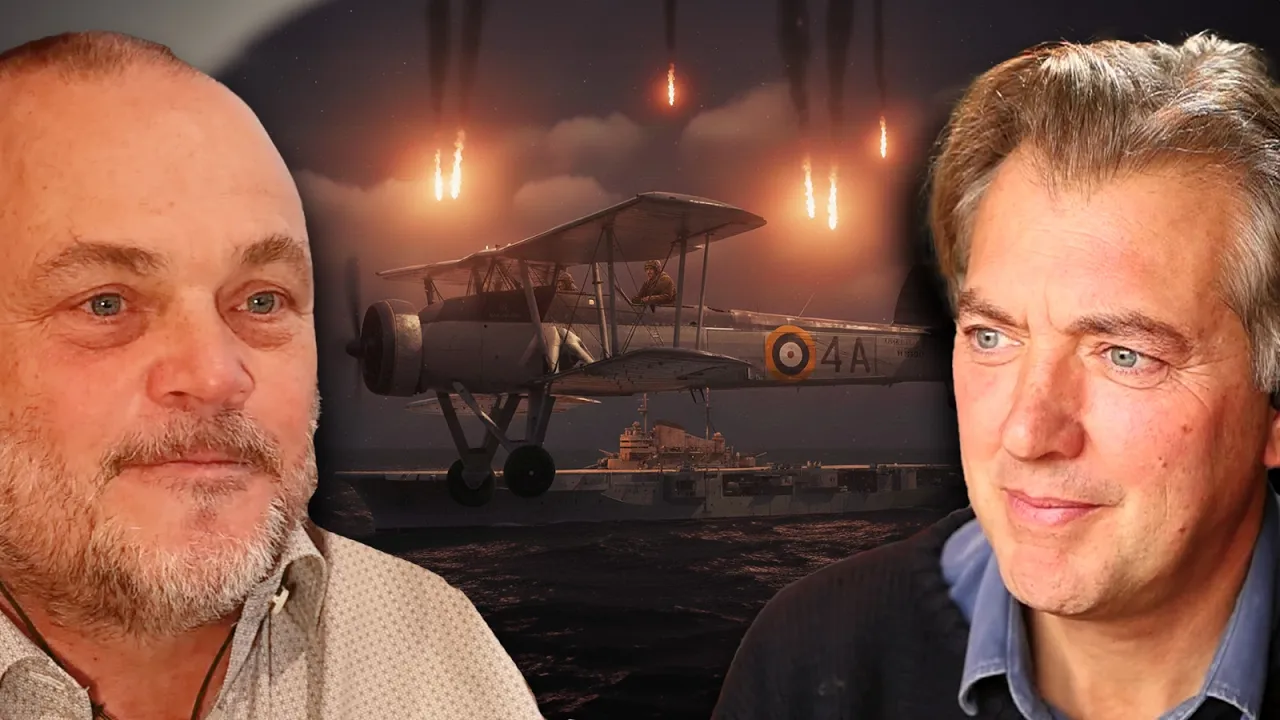
Right, before we go any further, there's been some confusion in previous videos about exactly who these two gentlemen are. The gentleman on the left is Eddie, my faithful but incompetent cameraman. He doesn't know how to operate this camera. That's why I'm the one filming. The gentleman on the right is Ed. Ed's the guy who's basically organized all these visits. He organized the DCC Shriven visit and he's the reason we're here at the Fleet Aron Museum in Yelbertton today. Right then, let's get this show on the road. So, the first thing that you see when you enter the museum is you come in via the gift shop and the ticket desk. And yes, I will be spending some money in here later. Over here you've got a model showing the ground plan and the layout of the museum, including the various different aircraft that are on display in each section. So, this is where you plan your visit. Just in case you were left in any doubt whether or not this was actually the Royal Navy Fleet Airarm Museum and not anything to do with any of those fancy pants, Air Force types, there's a we're here in the gift shop. There's a couple of books you can buy. This one is called Laugh with the Navy. As you can see, it's full of cartoons and jokes about the Navy. This one is laugh with the Air Force. And they all have very fine mustaches, don't they? Yes, even her. I bought one of these for the Air Force Sergeant I work with at Royal Hospital Hler, as a Christmas present.
She saw the funny sound.
fantastic collection of books. So, the first thing that you see when you come out of the gift shop is this area here, which is set up to demonstrate aerodynamics. They've got a bunch of aircraft models with working control surfaces set up in these little wind tunnels, and you can activate the wind tunnels and move the control surfaces, and it just shows you exactly how the rudders and the elevators and the ailerons and so on and so on work.
So this wind tunnel model explains how the elevators of an aircraft work. And there you can see you drop the elevator wind tunnel nose of the plane drops. See the control system down here. And obviously if we return the elevator to the resting position like so plane returns to level flight. And then if we raise the elevators, knows that the plane goes up. But enough messing around with toys.
Let's go and see the real thing. Here we are in hall one. Falcon's war display and early flight. Believe it or not, this is something I actually had no idea. Um, that is Buffalo Bill Cody, the famous Buffalo Hunter from the American Wild West.
He actually demonstrated kites to the Royal Navy in Portsouth in 1903. If you can see here, the idea was you would actually use these kites from warships in order to get observation uh to be able to spot enemy ships further away, mines further away, and so on and so on. And it was actually Buffalo Bill Cody who sparked the Royal Navy's interest in in flight. I had no idea. So, thanks America. This is a short S27 biplane built by the Schwarz brothers of Belfast in Northern Ireland. And you may be thinking, what the hell is this doing in a Royal Navy display? Well, the Royal Navy was actually the primary user of this biplane. First flew in 1910. One of these was flown by Charles Rumy Samson, who later became an Air Commodore and was one of the first four people selected for flight training by the Royal Navy. In 1912, he was the first person in the world to fly an aircraft off a moving ship. He launched one of these from a specially constructed ramp on the front of HMS Hiburnia.
Just to prove it wasn't a fluke, they transferred the ram to HMS London. Then he did it again. On the 20th of June 1910, Cecil Grace set a British altitude record when he managed to get this thing up to the dizzying heights of 360 m.
Later the same month, he flew this aircraft at uh at a Midland Aero Club meeting held in Wolverampton, where he managed to keep this thing in the air for a massive half an hour. Over here, we've got the wreckage of the first Royal Navy torpedo bomber, the Short S184. On the 12th of August 1915, during the Gipoly campaign, one of these was the first aircraft in the world to attack a ship with an air launched torpedo.
This particular short S184 was flown by flight lieutenant Edward Rutland who became known as Rutland of Jutland because flying this aircraft, he was the only British aircraft to take part in the Battle of Jutland in 1916. He spotted four enemy cruisers while flying this aircraft. The aircraft survived the battle intact and was later presented to the Imperial War Museum in uh London.
The reason it's in this condition is because it actually got bombed by the Germans during the Blitz. So, it took them 20 years, but the Germans did eventually get it. On the 17th of August 1915, again during the Gallipoli campaign, one of these aircraft was forced down onto the water due to engine trouble. But the pilot spotted a Turkish tug. So, he taxied up to it on the surface, released his torpedo, sank it, and without the weight of the torpedo was then able to take off again.
Over here, we've got one of Ed's favorite aircraft. So, he's going to talk us through this one. Ed, what's this? This is the Supermarine Warus flying boat. Um, she was one of Britain's premier search and rescue vessels used in the Second World War.
Over a thousand Allied crewmen and pilots were saved by superior wares. Very, very sturdy plane. Um, she could take enormous amounts of punishment, including capsizing and rolling in stuff rough seas, and still be flyable the next day. She was armed with a pair of Vicers machine guns at the back. the one or two and she had just enough room inside the boat here for wounded people to lie down. After the war, many walruses were used as taxiing services from the Barbados, Caribbean, even in Scotland because of their rugged durability. And this is one of the few surviving still military colors. Oddly for a sea plane, she is actually a biplane. So you can see you've got a pair of wings here. They would fold out and then the wheels would lift up under the wing howling there. Very very very sturdy little thing. Many many Alloy pilots owe their lives to these. It's the British Catalina of its time. So starting off, this is part of Falcon's display. This hall number one is dedicated to early aviation and the aircraft that were used in the Balkans. Western seeking um still used by the Royal Navy today obviously used here in the F conflict. This one is the actual Seek King that was flown in 1982 by his Royal Highness Prince Andrew who was a helicopter pilot for the Royal Navy War. As you can see, survived undamaged. But one of the jobs of the Sea King pilots down there in 1982 in the South Atlantic was to act as a missile decoy should the situation arise. They were actually equipped with uh some top secret gear that's used by the Royal Navy as missile decoys. The idea being that it would fool seek a head of a air surface missile into going for the decoy rather than the carrier, which was great news for the carrier crew.
But a bit of a one-way mission for the helicopter pilot. Thankfully, it was never needed to be used.
What we have here is a Westland Dragonfly, which was a licensebuilt version of the American Sikorski S51. This was used by the Royal Navy as a search and rescue aircraft. It was eventually replaced in the late 1950s by the Westland Whirlwind, which was again another Westland license built version of an existing American Sakulski aircraft. By the time of the Falcon's War, this thing was obviously no longer in frontline service, but this was the aircraft that helicopter pilots would train on prior to flying aircraft like the Sea King or the Westland Wessex.
What we have here is an Augusta Westland A109. Um, this aircraft was used by just about everybody. Designed in the early '7s, its primary users are the Italian Air Force, the Royal New Zealand Air Force, and the Swiss Air Rescue Service.
This one obviously not used by the British, as you can tell by the Argentinian markings. This one was actually captured during the Faullands from the Argentine army. Is a very, very good aircraft.
It's hard to believe this thing was designed 40 years ago and it's still in service even today.
What we have here is the name plate of the Rio Iguatsu which was an Argentine coastal vessel and used for transportation pilot duties and coastal patrols. On the 22nd of May 1982 while carrying supplies including Picara aircraft spares from Port Stanley to goose green. She was attacked and damaged by two sea harriers of 800 squadron. One of them was Sea Harrier XZ499, which you can see here. Easiest way to tell the difference between a Navy Harrier and an Army Harrier is, well, obviously, apart from one's got Royal Navy painted on the side and is gray, is the bulbous nose cone on the Sea Harrier, which houses the frequency agile India Band Blue Fox radar. During air-to-air engagements in the Faullands, Sea Harriers shot down 20 Argentine aircraft without losing a single one in return. Using this, the A9L Sidewinder missile. The only Sea Harrier losses during the conflict were uh two shot down by ground fire and a further four were lost due to either accidents or mechanical problems. Today, the Sea Harrier has been retired from frontline service, although you can still see a couple of them in use at the Royal Naval School of Flight Deck Operations at Royal Naval Air Station Cold Rose in Scotland. This is a Westland Wessex.
It's another Westlanduilt version of a Sakorski design. This time, the Sakorski S58. It was used in the search and rescue, anti-ubmarine and utility roles primarily by the Royal Navy, the Royal Air Force, the Royal Australian Navy, and the Uruguayan Air Force. When it was used in the anti-ubmarine role, it was a great anti-ubmarine detection aircraft, but it didn't have the horsepower to carry the weapons that were also required for the role. Uh, so it was quite quickly superseded in service by yet another Westland variant of an American design, the Westland Sea King.
This Wessex, as you can see, if you're wondering what all these little red circles are, those are markers painted on the airframe to indicate where this thing took shrapnel hits during the Faulland. Just look at the amount, especially at the rear. Look at that.
This aircraft operated from HMS Antrim, a county class destroyer during the Faulland's War. It was responsible for the rescue of 16 special air service troopers from the Fortuna Glacier in South Georgia. And the flight observer of this aircraft, Lieutenant Chris Perry, is the man who spotted and death charged the Argentine submarine Santa Fe. Little known fact, the Santa Fe was actually built and commissioned as the USS Catfish, and it served in the Pacific in the Second World War and the Korean War before being sold to the Argentinian Navy.
There's also a small display in this hall dedicated to Regginald Alexander John Warford who was a sublutenant with the Royal Naval Air Service flying with number one squadron in the first world war and he was awarded the Victoria Cross for actions that took place on the 7th of June 1915 at Gent in Belgium. He was flying a Marine Sier type L spotted and attacked the German Zeppelin LZ37.
He chased it from the coast near Rostend and despite defensive machine gun fire managed to drop a bunch of 20 lb bombs on it, blowing the zeppelin up. The explosion flipped his plane over, damaged his engine, and he was forced to land behind enemy lines. Not being the type of chap to let something as trivial as a broken aircraft stop him, he spent 20 minutes repairing it, took off again, and flew back home. He was awarded the Victoria Cross for his actions that day.
Well, that's it for the first video, of which there will be many more of my visit to the Fleet Airarm Museum at Royal Naval Air Station Yoton in Somerset. Bear in mind that all you've seen so far is the first and smallest of the four different display halls available at the museum. As well as that, we were allowed inside the restoration workshop to look at work being done to restore a Glouester Gladiator biplane and a close look at a Japanese ochre kamicazi aircraft. As if that wasn't enough, the museum staff very generously opened up the restoration hall to us, which is normally only available to the public on one day a year. Inside, we were able to see the huge range of aircraft they have that they're constantly working on restoring, as well as a very, very special project, the fairy barracuda torpedo bomber. No examples of which exist in the world today. All of this coming up in future videos. Obviously, the museum isn't going to turn down any offers of financial assistance with help restoring the Ferry Barracuda. And if you'd like to give a donation, no matter how small, details in the video description below.
But we'll actually see some of the work that they're doing on the Ferry Barracuda restoration project again coming up in a future video. As always, folks, take care out there and I'll catch you next time.
Up Next

Grimm Fairy Tales: Sleeping Beauty and The Juniper Tree | Mythology Analysis
@thegreattales
2.9K views•2025-09-19

Triumph of Orthodoxy Icon: Byzantine Art & History Explained
@BenCallan
2.1K views•2024-08-06

FastAPI vs Flask vs Django: Choosing the Right Python Web Framework
@TechWithTim
302.5K views•2024-05-26

Game of Thrones Opening Credits: A Cinematic Analysis
@gameofthrones
46.3M views•2011-04-18
Related Study Plans & Knowledge Roadmaps
Structured learning paths in General & Interdisciplinary Studies