

















![OCaml from the very beginning [1]](https://i.ytimg.com/vi/qtcG-pPg5SQ/maxresdefault.jpg)




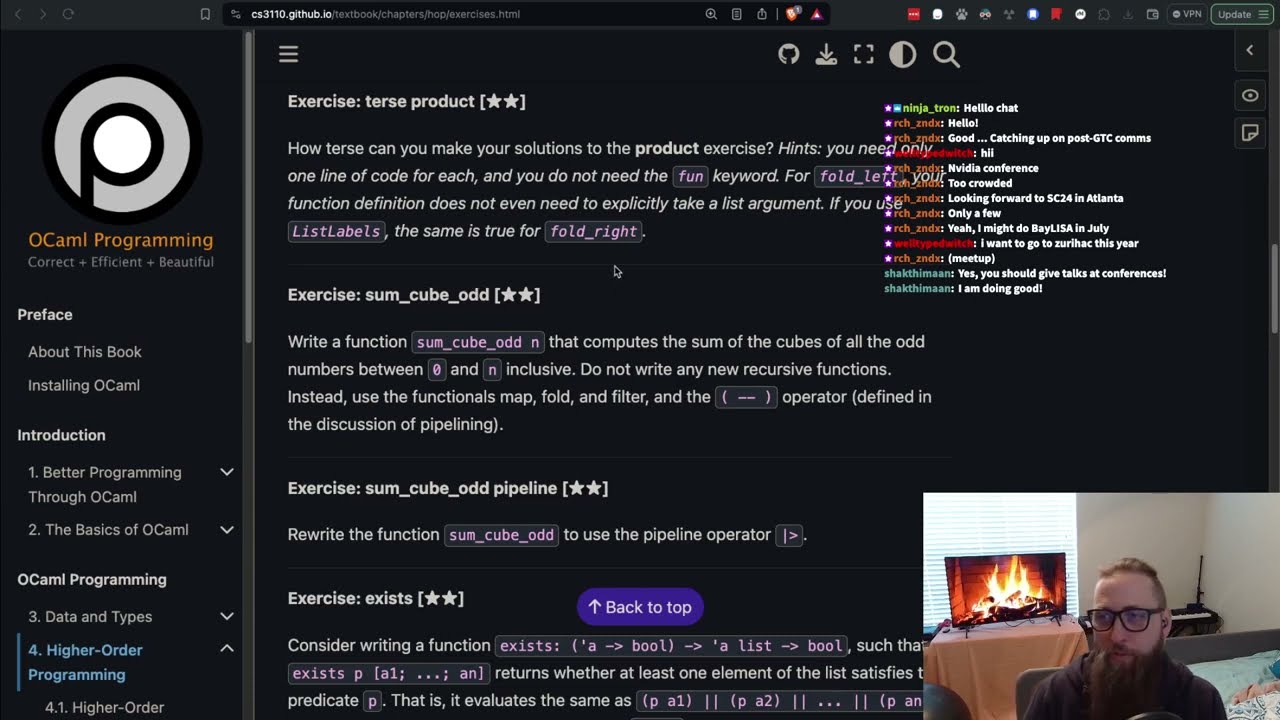



OCaml is an industrial-strength functional programming language known for its expressiveness and safety features, particularly its strong type system that catches errors at compile time; unlike imperative languages that describe sequences of instructions, functional programming focuses on describing solutions through function evaluation and data manipulation, with key concepts including treating functions as first-class values, pattern matching instead of if statements, and tail recursion optimization that allows the compiler to reuse stack frames and prevent stack overflow for large computations.
OCaml and Functional Programming: A Beginner's Guide
Added:Basic programming literacy in at least one imperative language (like Python or C++) to understand variables, loops, and conditional statements.
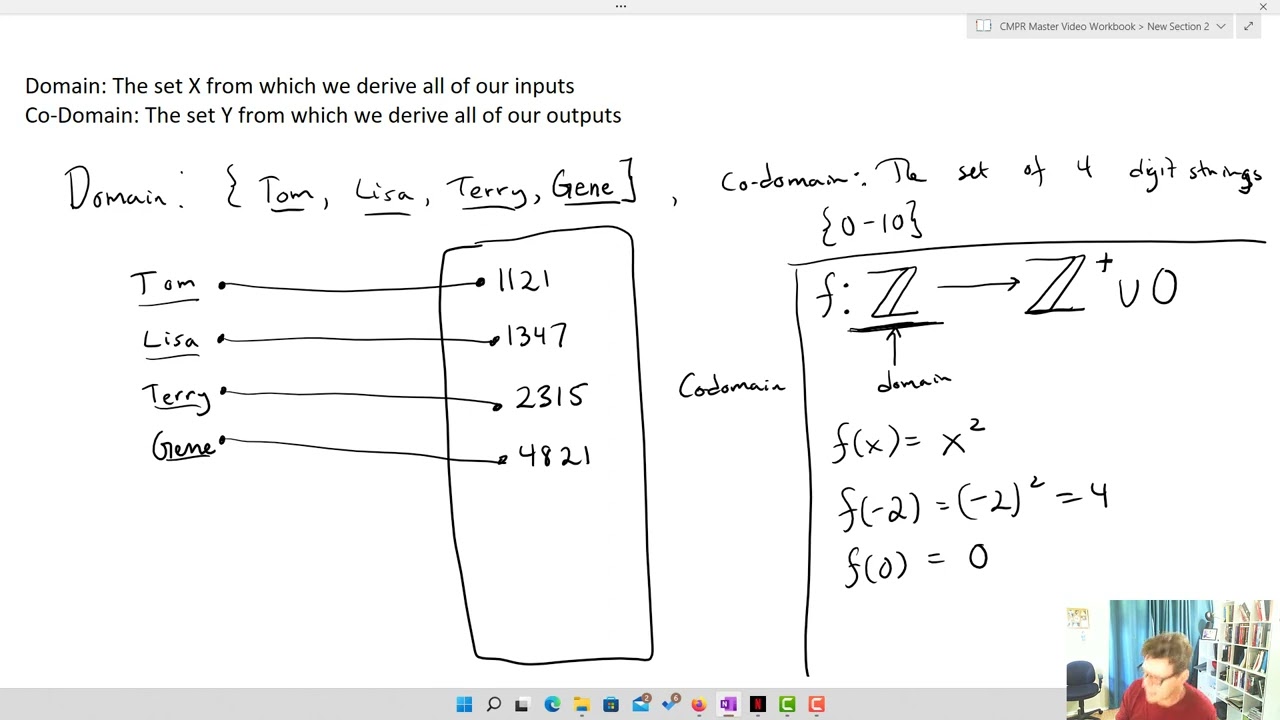
Fundamental mathematical concepts of functions, including inputs (domain), outputs (codomain), and composition.
A general awareness of how program execution works, specifically the concept of a call stack when functions are invoked.
Basic familiarity with using a command-line interface (CLI) for running commands and navigating directories.
Pattern matching and Algebraic Data Types (ADTs) in OCaml to model complex data structures cleanly.
The concept of tail-call optimization and how to write tail-recursive functions to avoid stack overflow errors.
OCaml's strong type system, type inference, and how to work with polymorphic types and generics.
The OCaml module system, including structures, signatures, and functors for building scalable and reusable software architectures.
33.8K views1.2Klikes5:30Original Release: 2023-05-02
a lot of the classes I have to take for my computer science major are pretty painful but last term I took a class called CS4 where I was introduced to a camel and functional programming which is what this video is going to be about since I think it's a bit unappreciated so what is a camel short answer it's a programming language on its official website it's described as an industrial strength functional programming language with an emphasis on expressiveness and safety I think that's a great description functional programming is really the key and the chef's kiss feature of ocamel in other languages like python Java C plus plus these are all called imperative programming languages and in them the programmer describes a sequence of explicit instructions that the computer should perform in order to solve some sort of task whereas in functional programming languages it's focused on describing the solution to a problem in terms of the evaluation of functions and the manipulation of data structures instead of this sort of sequence of operations so in functional programming languages functions are treated as first class values which means that they can be passed around and manipulated like any other data type and this is really powerful stuff other functional programming languages include Haskell and lisp also industrial strength this kind of implies that ocamel can handle really large scale projects and the demands that come with that such as performance scalability reliability in real life I know that okiml is used by companies like Jane Street in the finance industry to develop trading systems um expressiveness that means that you can write really concise code for really complicated stuff which we'll see later and safety is another really big feature of ocamel it's known for its strong type system which means that it catches errors at compile time before the code is even run so that was a lot I think a demo is the best way to see the stuff in action so let's write a function that calculates the value of the Fibonacci sequence at a given position okay recall that the Fibonacci sequence is a series of numbers where each number is obtained by adding the two numbers that are immediately before it's starting with zero and one those two Addies together are one one plus one added together is two one plus two added together is three two plus three added together is five and so on and so forth so I'll go ahead and write the code now so in this code we Define a function called Fibonacci that takes in an integer n as an input so the function uses an if statement to check if n is less than or equal to one and if it is we return n and otherwise we recursively call the Fibonacci function with n minus 1 and N minus 2 as arguments and add the results okay to check that it's running properly we can go ahead and try it I'm trying it with eight and it looks like it returned the correct answer of 21. very good what if I told you that there's a more ocamely version to write this code Okay so we've written a second version of Fibonacci and you'll notice that it has no if statements but rather this sort of matching so if statements are used in a camel but they're not as prevalent as they are in imperative programming languages what's going on here instead is pattern matching which is this language construct often used in place of if statements which allows developers to match values against patterns and execute code based on the match so what's going on here is that we're passing in n and then the function asks is n0 if so return zero otherwise if n is one return one and if n is anything else what we're going to do is recursively call the function again passing in N minus 1 and N minus two is arguments and adding the result for a little bonus here's another way to write it okay so this is a totally valid and correct implementation you'll notice that it's basically the previous implementation just in one line instead of multiple and honestly to me it's a little bit harder to understand compared to the previous version but I just wanted to include this version because functions in ocamel are often written in a very super concise and compact style and sometimes this means that there's a lot being fit on a single line while editing this video I got a bit carried away and I want to show one more version to rewrite this function foreign is found in many programming languages but okamo uses tail recursion which is a type of recursion in which the recursive call is the last operation in the function so a common pattern in functional programming is a main function which takes in the arguments needed to calculate the final output and a helper function to perform the actual recursive computation which is bitter in our case what's different here is we have two accumulators called accumulator one and accumulator 2 which store the last two Fibonacci numbers as before we basically add up the last two Fibonacci numbers and you'll notice right here that we call the helper function and we pass in the position that we're looking for as well as 0 and 1 to represent the first two Fibonacci numbers in the sequence so the whole point of having this helper function and doing everything tail recursively is that it allows the compiler to optimize The Code by reusing the same stack frame for each recursive call rather than allocating a new stack frame for each call and this overall just provides stack Overflow errors if we have a really really large n so yeah that was a taste of this very distinct style of programming with vocamo if by the end of this video you're like that's cool but I'm probably not going to use this that's okay I always encourage you to explore what resonates with you and your interests whether it's a specific language like a camel or whatever subscribe for more videos
Up Next
7:44
OCaml Recursion with Lists: Length and Sum Functions
@redirecttutorials7281
9.4K views•2018-04-15

87:26
Introduction to Secure Multiparty Computation with Yehuda Lindell
@fhe_org
7.7K views•2021-02-04
4:55
HTTP Requests Explained: GET, POST, PUT, DELETE
@codecademy
103.1K views•2021-10-07
19:25
Enigma Machine Mechanics: WWII Encryption Explained
@JaredOwen
13.2M views•2021-12-11
Related Study Plans & Knowledge Roadmaps
Structured learning paths in Computer Science
computer-science
Container Runtimes: Namespaces, Cgroups & Go
01Linux Systems & Go Programming Foundations
02The Core of Isolation: Chroot and Filesystems
03Linux Namespaces: Process Isolation
+ 3 more learning modules
32h6 modules
Explore Roadmap
computer-science
Building a CHIP-8 Emulator: Rust & CPU Basics
01Computer Architecture Foundations (Bits & Bytes)
02Rust Programming for Systems Development
03CHIP-8 Virtual Hardware Specifications
+ 2 more learning modules
32h5 modules
Explore Roadmap
computer-science
Building BitTorrent: Go, P2P & Concurrency
01Go Fundamentals & Concurrency
02Networking Foundations & P2P Architecture
03Bencode Parsing & Torrent Metadata
+ 3 more learning modules
26h6 modules
Explore Roadmap
computer-science
Actor Models (C++ Concurrency & Lock-Free)
01C++ Multi-Threading Foundations
02Thread Pools and Task Scheduling
03Atomics and Lock-Free Queue Design
+ 3 more learning modules
45h6 modules
Explore Roadmap