























Starling forces govern fluid movement across capillary walls through two opposing pressures: hydrostatic pressure (blood pressure pushing fluid out of capillaries) and oncotic/colloid osmotic pressure (protein concentration pulling fluid back in); the interstitial space is actually a gel-like matrix of collagen fibers and proteoglycans rather than free liquid, and lymphatic vessels continuously remove excess fluid and proteins to maintain balance, with filtration occurring primarily at the arterial end and reabsorption at the venous end.
Starling Forces: Oncotic and Hydrostatic Pressure Explained
Added:Basic anatomy of the microvascular system, specifically the structure of capillaries and the interstitial space.
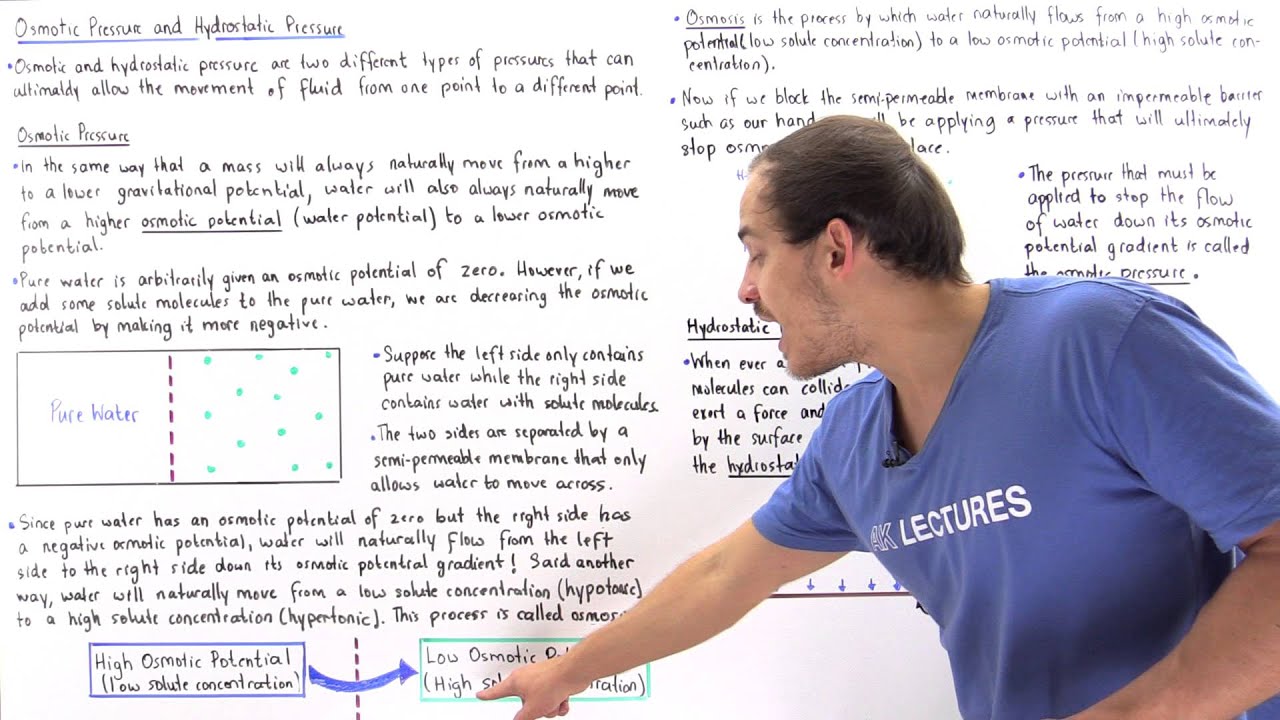
The principles of diffusion, osmosis, and osmotic pressure gradients across semi-permeable membranes.
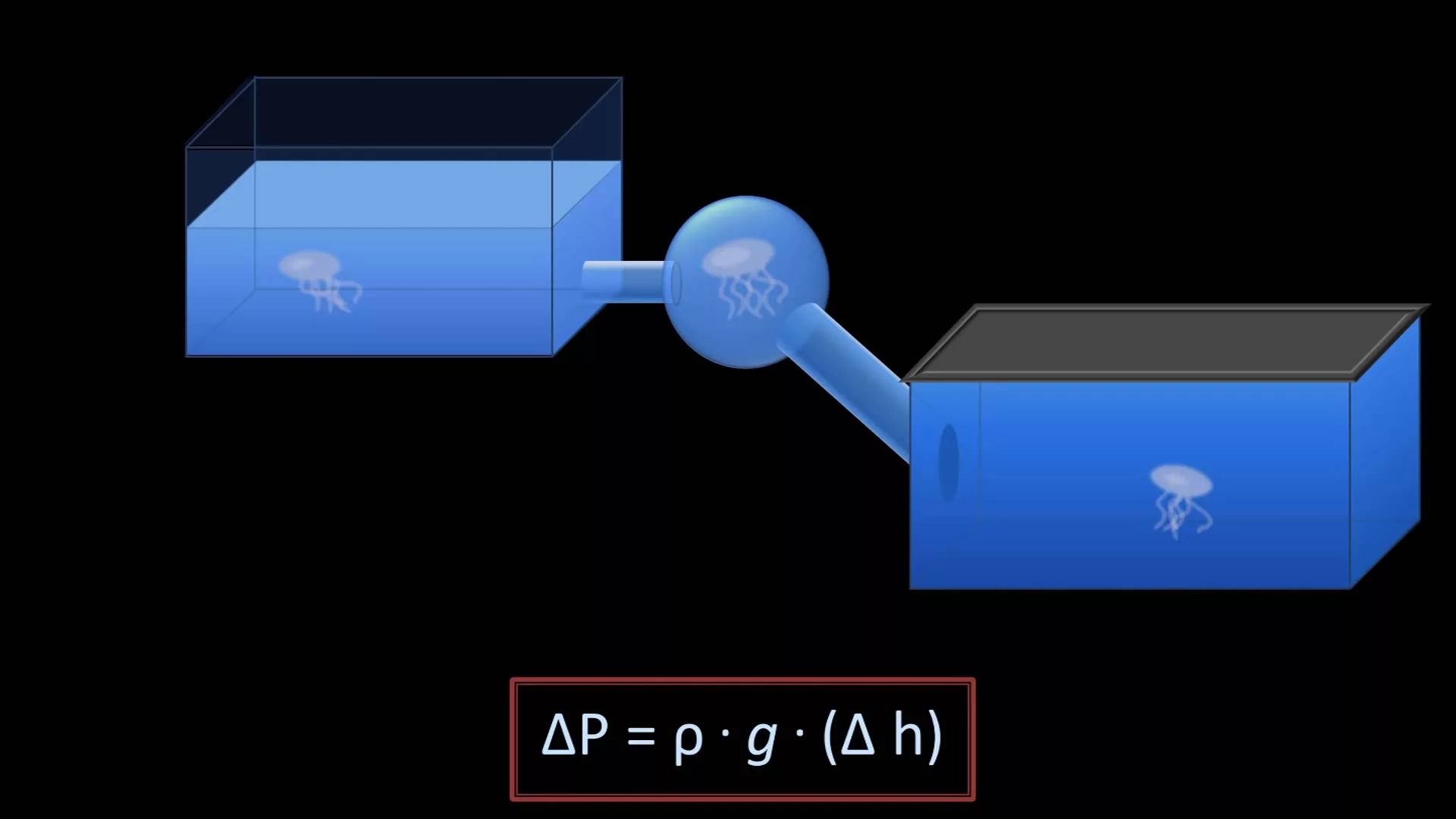
The definition and physical concept of hydrostatic pressure in fluid dynamics.
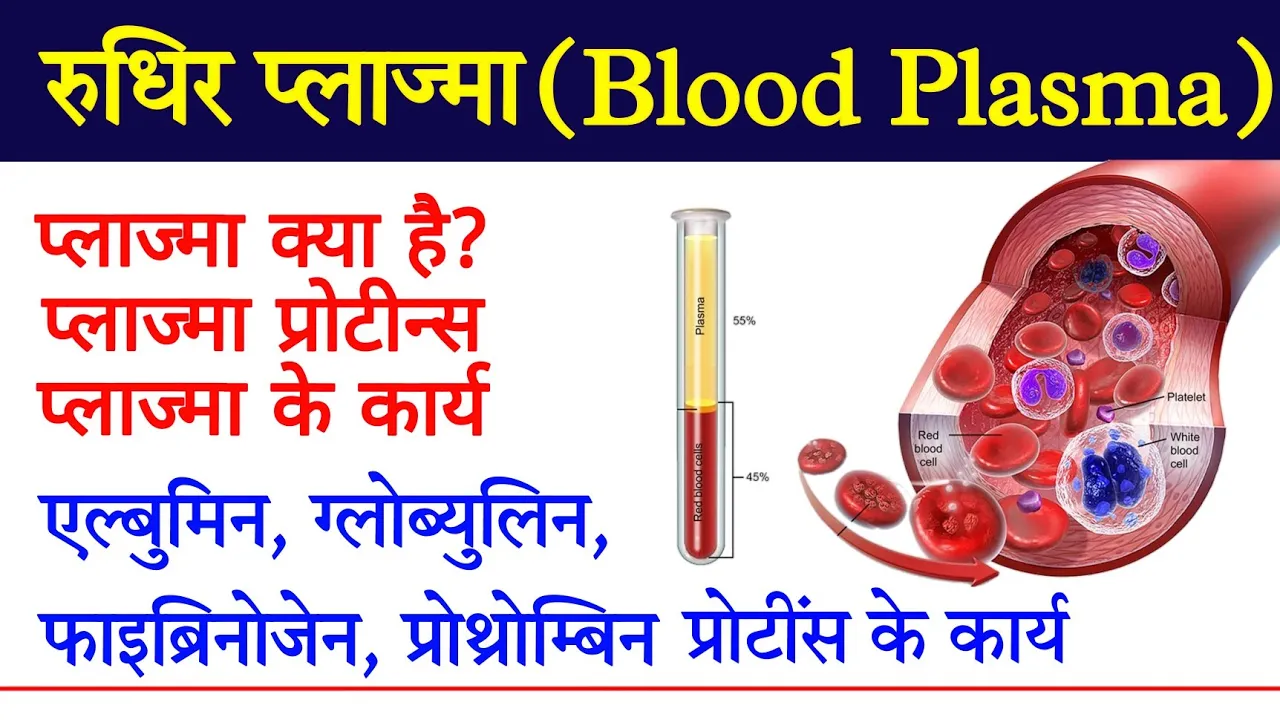
The composition of blood plasma, particularly the physiological role of plasma proteins like albumin.
The clinical pathophysiology of edema, including how imbalances in Starling forces lead to conditions like systemic or pulmonary edema.
The role of the lymphatic system in draining excess filtered interstitial fluid to maintain fluid balance.
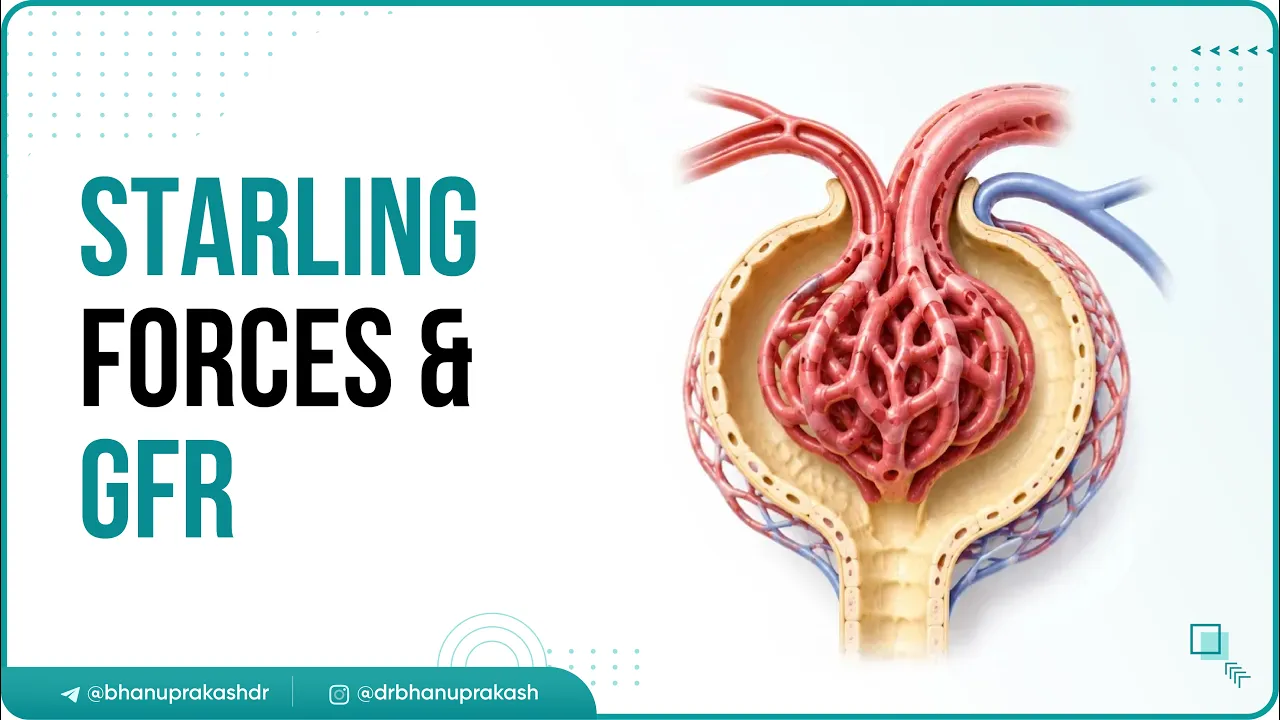
The application of Starling forces in renal physiology, specifically in determining the Glomerular Filtration Rate (GFR).
Therapeutic fluid management, including the clinical distinction and use of crystalloid versus colloid intravenous solutions.
255.3K views3.7Klikes12:03Original Release: 2015-05-21
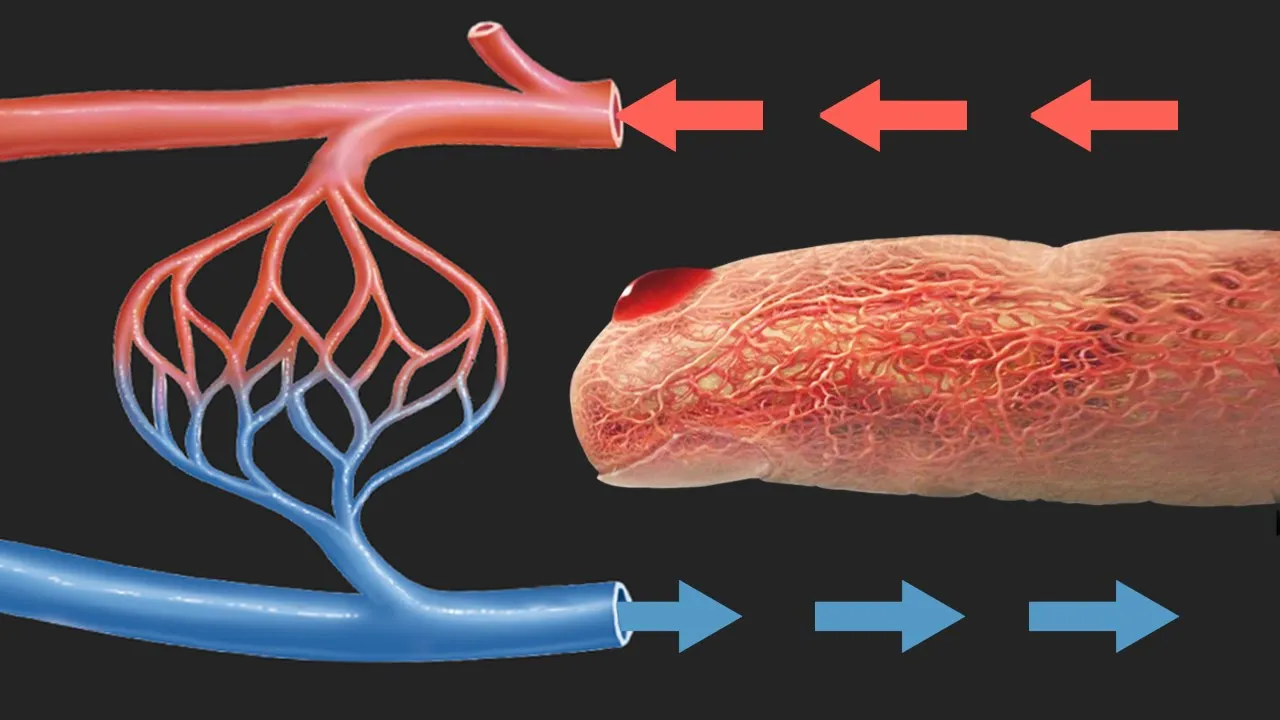
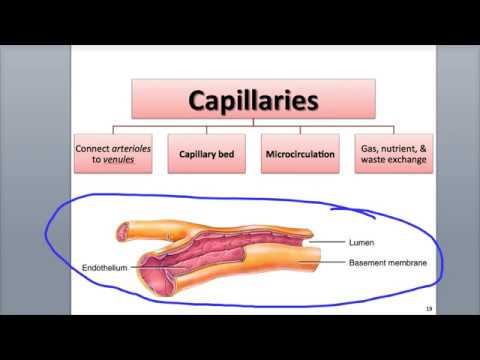
Hi everybody, it's Camille. I want to talk to you today about starling forces, also known as enotic and hydrostatic pressure in the capillaries. So before we start, I want to clear up one misconception that I run across often. What we're really talking about today is how fluid moves in and out of the capillaries. And as part of that discussion, you'll often hear about the interstatial space and the interstitial fluid. And what's not shown here in this diagram are cells, right? So you have cells outside of the capillary and then you have this interstitial space. And you can see they've drawn it here almost like an ocean. Like it's this sort of liquid oceanlike substance. And it turns out that's not really what that's not really what it is at all. Uh the interstial space is primarily held up by this skeleton of collagen fibers. Okay, so we've got this skeleton of collagen fibers and then this mesh of proteoglycans, which is just a combination of proteins and sugars that that makes up the bulk of the interstitial space. And the proteoglycans actually attract water and turn into this gel. So most of the fluid that we're talking about is this gel-like substance inshed in the proteoglycan um frame, if you will. So there's not really large compartments of liquid just slloshing around everywhere. There are some small vesicles that are filled with fluid and there are also some spaces called rivullets that might have free fluid in them, but for the most part we're looking at a gel and diffusion happens through this gel just the same as it would um in the more the more uh kind of liquid substance in the blood.
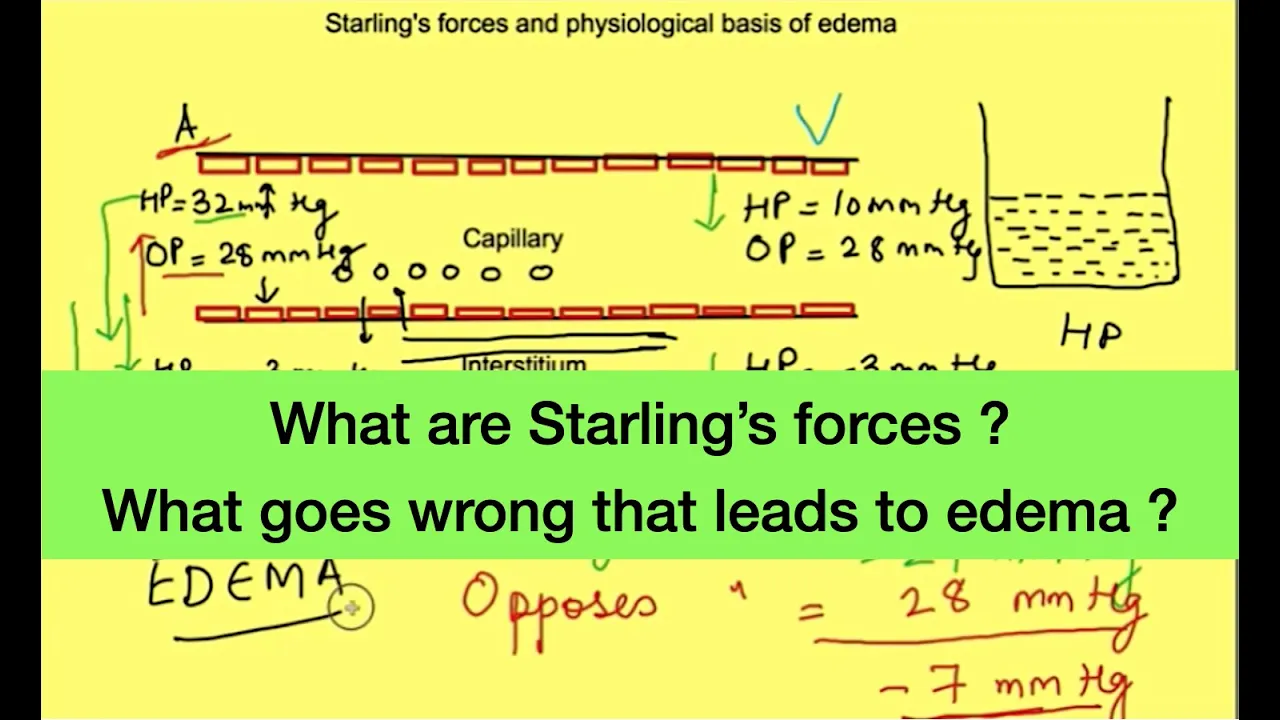
So that's not really going to be a big factor, but just in terms of what you're thinking about in your head, I wanted you to be clear on that. All right. So there are two main forces that determine how much fluid is going to come in and out of the capillaries. We're going to look at this first from the capillaries perspective and then we're going to back up and look at it from a broader perspective. But from the perspective of the capillaries, we've got hydrostatic pressure. And this is probably the easiest one to understand. This is the pressure of the blood on the membrane of the capillary. So you can also think of this as if you blew up a balloon, the air the pressure of the air on the membrane of the balloon would be similar. Or if you had a garden hose and you turned it on and covered up the hose with your thumb, the pressure of the water on the hose itself would also be similar. So that's hydrostatic pressure. when it increases, you're going to have more fluid leaving the capillary and coming into the interstitial space. Countering that, we have os what we call enotic pressure.
I'm going to talk to you in a minute about why I'm calling it encotic instead of osmotic. And onotic pressure is essentially pulling the fluid back into the capillaries or at least preventing the fluid from leaving the capillaries.
And basically what's happening here is that most most of what we have in the blood can leave through the um quote unquote leaky capillaries. However, there are some things that are too big to get out. That would include red blood cells, white blood cells, and the larger proteins. Albumin is the main one that we have in the blood. But we also have globulins. We've got fibbrronogen and and so forth. So all of those bigger proteins are going to stay in the blood despite that hydrostatic pressure.
And when because they stay there, there is some pull to draw water back into the capillary or at least prevent it from leaving. And so that's uh that's what we call enotic pressure. Now, why am I calling it onotic instead of osmotic like it says right here? Well, it turns out that there's a specific definition for osmotic pressure that um that I want you to understand. So as a refresher when we talk about osmosis we're talking about um the movement of a solution right towards an area of higher concentration of solute. So when we take this vessel here we put a semi-permeable membrane in the bottom of it and fill it up with water on both sides and we dump some sugar in one side. The sugar can't cross over the membrane. And so what's going to happen is the water is going because of osmosis is going to come towards the side where the sugar has been dumped. However, it won't just keep going. All of the water won't wind up across the membrane because there's a certain force that pushes back. There's a certain point where no more water is going to cross that membrane and you're going to reach a new equilibrium, if you will. And so the force that keeps the water from coming over, it's basically antiosmosis or countering the osmotic force. That force is called osmotic pressure. All right? So when we're looking at this from the perspective of the capillary, osmotic pressure in general is anything that's countering the osmotic um movement out of the capillary. So that includes that includes the colloid pressure or the encodic pressure but it there are other things that can also um draw that water back in or keep it from leaving. So that's why osmotic pressure is kind of a broader term and the specific part of it that's related to the proteins staying in the capillaries is called encotic pressure or colloid osmotic pressure.
just to um hopefully that it's probably clear as mud, but I just wanted to throw that in there because just sometimes that is a little bit of a hangup for people. As another side note, it's called colloid pressure, but um interestingly, these these proteins are not actually the solution is not actually a colloid solution. It's a it's a molecular solution, but uh it seems colloidal. So that's why they call it that. Anyway, just to further confuse people. All right. So the next thing I want to do is look at a bigger picture because we don't just have the capillaries here. There are also pressures associated with the interstitial fluid. So I want to uh talk to you about those. So for example um this hydrostatic pressure this is called the capillary hydrostatic pressure. Oops.
Let me go back here. So there's also hydrostatic pressure coming from the interstatial fluid going the other way.
So coming this direction. And similarly, there's also osmotic pressure being uh drawing fluid the opposite way. And all four of these different um pressure gradients are going to affect how much fluid is coming out of the capillary and at what point. So I want to walk you through I want to walk you through that here um just so you can kind of get a feel for what's happening at what point in the capillary. Now if you recall this up here is going to be the arterial side. So there's going to be arterials up here. The blood comes this direction and then it's going to exit into a venule and go carry on. It's going to be moved back towards the heart. So the pressure is going to be higher. The blood pressure is going to be higher up on this end, right? Because it's closer to the heart and that pumping action. So what that means is that on this end of the capillary, you're going to have more hydrostatic pressure and more filtration. So more movement out of the capillaries. However, by the time you get down here, the pressure um the hydrostatic pressure is lower. So, you're going to have less pressure moving out. The osmotic pressure in the capillaries is going to stay basically the same theoretically speaking the whole time. So, the proteins will stay here and they'll continue to draw water towards them throughout. So, that doesn't change.
On the interstitial side, what we have is um the hydrostatic pressure of the interstitial fluid is normally right around zero. It's normally not a big factor. However, um the reason that it stays around zero is because we have lymphatic vessels up here. So, anytime the pressure of the interstitial compartment increases, fluid and proteins and whatever else are going to be carried away via the lymphatic vessel. So the lymph is the lymphatic vessels are basically what keeps that pressure normalized. So if there's some kind of backup in the lymphatic system is not working properly or if for some reason this interstitial compartment the pressure increases dramatically to the point where the um the lymphatic system can't take care of it then you may have some hydrostatic pressure going the opposite direction. As a side note, um some areas of the body don't deal well with increased pressure. So for example, the brain, you have the skull around the brain. So if there's increased pressure in uh hydrostatic pressure in the interstitial fluid, it can actually start to damage the cells out here because there's nowhere else for it to go and you don't have a lot of room for expansion. Whereas of course in for example the legs if you have increased interstitial fluid or interstitial pressure then your legs just get puffier as anybody who's uh been pregnant in the summer might know. Um okay so we also have on encotic pressure in the interstitial fluid which is basically um related to the amount of proteins here.
Again, this is not going to be a huge factor and it doesn't tend to change as the blood flow uh goes from one end of the capillary to the other. So, basically what the main thing that's changing from one side to the other is this hydrostatic pressure. So, on this end, what you have is more fluid coming into the interstitial space. And then down here, as the hydrostatic pressure of the capillary decreases, the osmotic pressure stays the same and you're actually going to have more fluid being drawn back into the capillary. So basically, you reabsorb most of what gets secreted into the or filtered into the interstitial space. There's a small percentage of the fluid that doesn't get reabsorbed and that does get taken up by the lymphatic vessels and moved away.
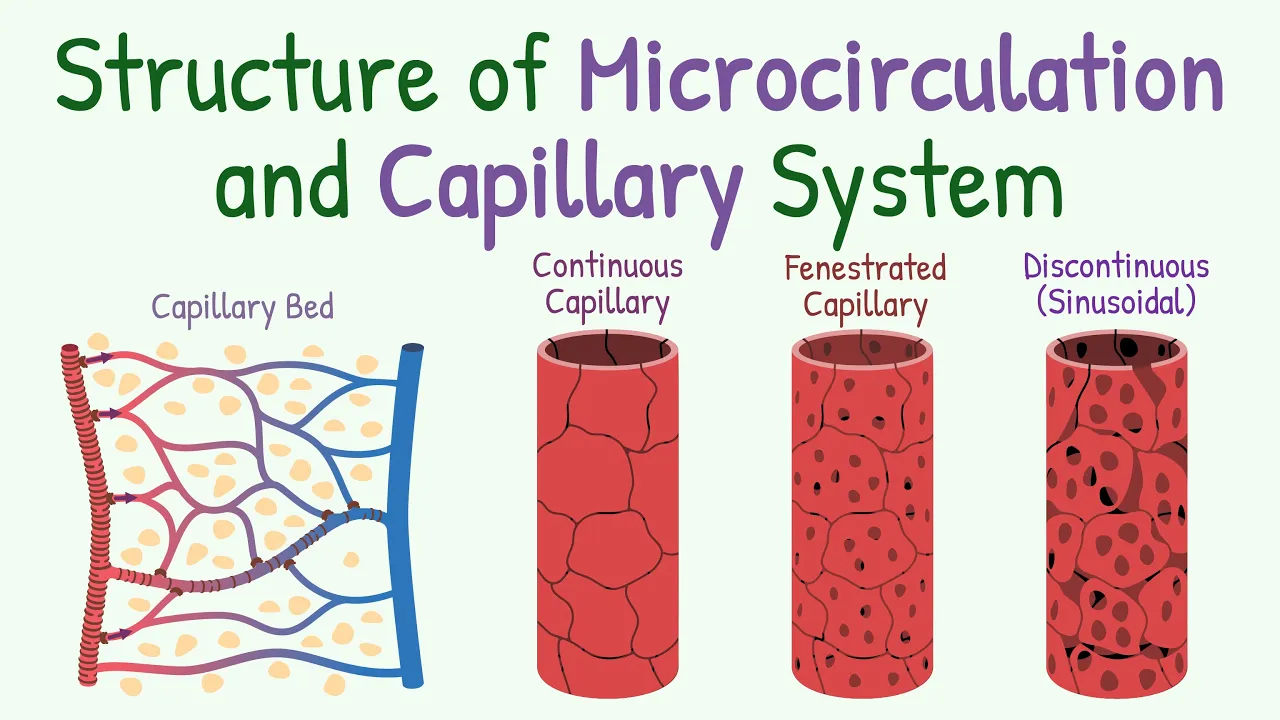
There's one small thing. There's one small caveat that I want to mention to you, which is that we always we you always hear people say, "Oh, proteins, they don't leave the capillaries." Well, it's not entirely true. There's always going to be some proteins that do leave the capillaries and certain types of capillaries are a little bit leakier than others. And so, the more leaky they are, the more proteins are going to come out into the interstitial fluid. And of course that is going to have some small effect on these different um forces the different pressures um in the interstatial fluid and the blood flow.
Now this is another great reason to have lymphatic vessels because the proteins once they come out of the blood are usually too big to come back into the capillary. And so the only way they can get removed is again via the lymphatic vessels which will take them away. But depending on how long that takes, um, that can cause more fluid to come out of the capillaries because you're going to increase the osmotic pressure, uh, of the interstitial space. Um, and it's also going to decrease the osmotic pressure slightly, not a lot, but slightly decrease the osmotic pressure of the capillaries as well. So, just to show you what I'm talking about here, these are three different types of capillaries. And clearly this sinosoid capillary is going to have a lot more protein loss as you move from the arterial end to the venus end than this type of capillary over here. And then lastly, I just wanted to give you a visual of the lymph. Um so you can see that the lymphatic vessels are closely intertwined with the capillaries specifically so they can take away extra fluid and proteins um to maintain that that balance there. All right, so I hope that helps. Let me know if you have any questions and I'll see you soon.
Up Next

59:17
Edema Pathogenesis | Hydrostatic & Oncotic Pressure | Pathology
@MedLiveByDrPriyanka
90.5K views•2022-09-12

48:47
Graphic Medicine: Comics for Collaborative Healthcare Communication
@nationalpatientadvocate
189 views•2023-12-04

10:28
Neuroanatomy: Central and Peripheral Nervous System Divisions Explained
@AKLECTURES
136.2K views•2014-09-20
3:05
Stages of Labor and Vaginal Birth | Childbirth Animation
@nucleusmedicalmedia
52.1M views•2017-08-18
Related Study Plans & Knowledge Roadmaps
Structured learning paths in Medicine
medicine
Abnormal LFTs: Diagnostic Workup & Pathology
01Liver Anatomy and Basic Physiology
02Introduction to Liver Function Tests (LFTs)
03Hepatocellular vs. Cholestatic Patterns
+ 3 more learning modules
12h6 modules
Explore Roadmap
medicine
Analyzing Blood Smears: RBC, WBC & Platelets
01Introduction to Blood Components & Smear Preparation
02Normal Morphology of Blood Cells
03Erythrocyte Pathologies & Morphological Variants
+ 2 more learning modules
12h5 modules
Explore Roadmap
medicine
Mechanical Ventilation: Waveforms & Alarms
01Anatomy and Physiology of Breathing
02Introduction to Mechanical Ventilation & Core Modes
03Ventilator Settings and Waveform Interpretation
+ 2 more learning modules
12h5 modules
Explore Roadmap
medicine
Neuro Exam: Localization & Stroke Syndromes
01Foundations of Neuroanatomy and Vascular Supply
02The Neurological Examination: Step-by-Step
03Principles of Neurological Localization
+ 3 more learning modules
18h6 modules
Explore Roadmap