




![Genetik [Einführung / Zusammenfassung, 1/2] - Abitur [Biologie, Genetik, Oberstufe]](https://i.ytimg.com/vi/qK-tg7K7jVg/hqdefault.jpg)










Cancer develops through the accumulation of mutations in two classes of genes: oncogenes (which promote cell proliferation when mutated) and tumor suppressor genes (which normally inhibit proliferation and require two hits to be inactivated). Oncogenes are typically activated by gain-of-function mutations (like the RAS mutation causing constitutive signaling), while tumor suppressors like RB are inactivated by loss-of-function mutations. This understanding enables molecular diagnostics and targeted therapies for personalized cancer treatment.
Cancer Genetics: Oncogenes, Tumor Suppressors, and Mutations | MIT 7.013
Added:The Central Dogma of Molecular Biology: Understanding how DNA is transcribed into RNA and translated into functional proteins.
The Eukaryotic Cell Cycle: Familiarity with the phases of cell division (G1, S, G2, M) and the general concept of cell cycle checkpoints.
Basic Genetics and Types of Mutations: Knowledge of how DNA mutations (e.g., point mutations, deletions, duplications) alter genetic code and protein expression.
Normal Cellular Signaling Pathways: Understanding how external signals (like growth factors) trigger intracellular cascades to promote cell growth or survival.
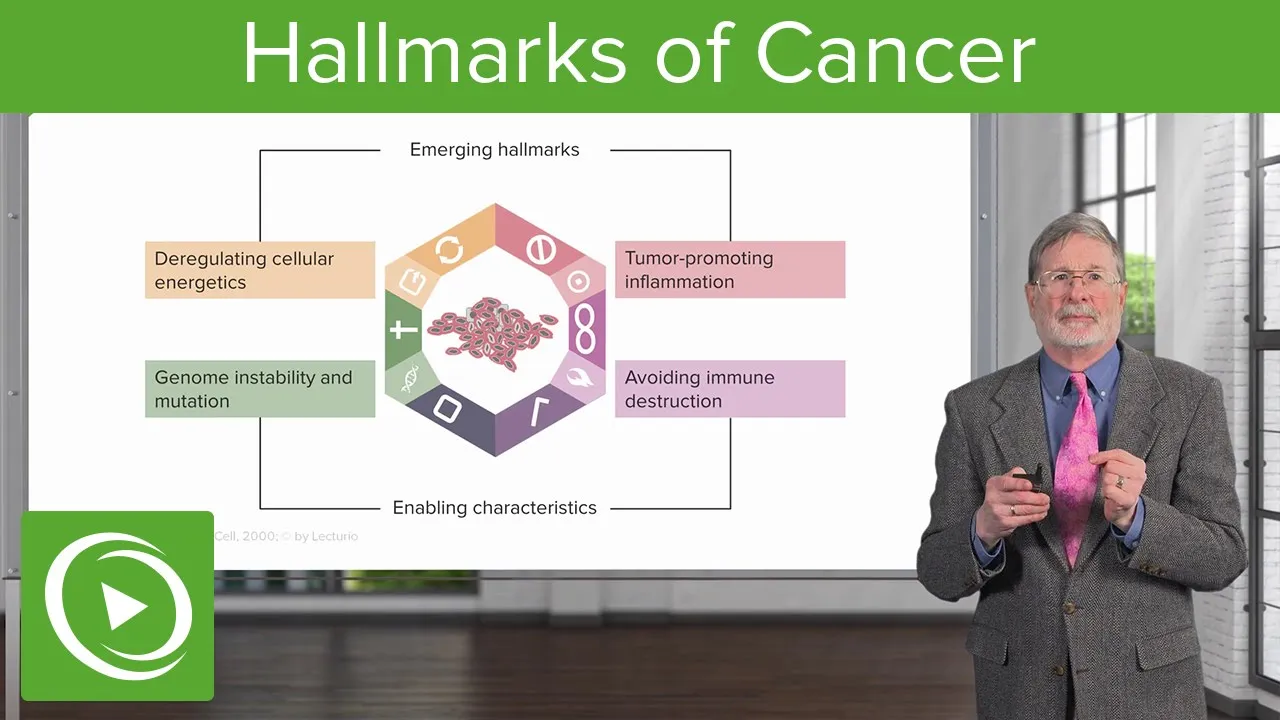
The Hallmarks of Cancer: Exploring the comprehensive framework of biological capabilities acquired by cells during the multistep development of human tumors.
Targeted Cancer Therapies: Studying how molecularly targeted drugs (such as tyrosine kinase inhibitors) specifically inhibit the proteins encoded by oncogenes.
Cancer Immunotherapy: Learning how the immune system interacts with cancer cells and how therapies like checkpoint inhibitors unleash the immune response against tumors.
Precision Medicine and Tumor Profiling: Investigating how DNA sequencing technologies identify patient-specific mutations to guide personalized cancer treatment strategies.
41.8K views598likes50:24Original Release: 2014-01-15
The following content is provided under a Creative Common License. Your support will help MIT Open Courseware continue to offer high-quality educational resources for free. To make a donation or view additional materials from hundreds of MIT courses, visit MIT Open Courseware at ocw.mmit.edu.
Okay, good morning everybody.
Morning. Good morning. Good morning.
All right. Uh we're going to continue our discussion about cancer today as well as on Friday. In between you have an exam on Wednesday. Um partly in preparation for that. I'm having office hours today uh sorry tomorrow between two so between three and four in 76453.
And as the note says, come with questions that you have about immunology which I taught you and the introductory cancer course uh cancer class that I taught you. If you have questions about other subjects that will be covered in this exam that professor Civ covered for you, it's best to go to her office hours or to your TAs or the other um sections that will be held. All right. So towards the end of last lecture, we talked about smoking and cancer and I warned you against the evils of smoking and I hope you were paying attention. Um, this slide shows you some pretty startling statistics that relate the increase in smoking shown here among men in this country uh, which began around 1900. And you can see rapidly increased over the first part of the last century. And you can also see that about 20 years later, lung cancer rates rose equally quickly.
And this was some of the evidence that smoking caused lung cancer. And we now know as I mentioned to you last time that there are lots of carcinogens in lung cancer in cigarette smoke that cause lung cancer. Lots of mutagens either mutagens in their in their native form or promutagens that can be converted into mutagens um that we expose ourselves to through the process of tobacco smoking. That was men. Um but lung cancer has also increased in women. uh you can see this also precipitous increase in in uh lung cancer among women in this country and lung cancer has now passed breast cancer as the leading cause of cancer deaths among women in the United States. You can see that in the case of men um smoking levels actually started to drop uh quite some time ago and coincident with that lung cancer deaths among men in this country also have been dropping. It's a direct result of smoking sessa c s c s c s c s c s c s c s c s c s c s cessation and people not starting to smoke that had not happened in the case of women until very recently in fact just last month a study was published that showed that also for women lung cancer rates are now starting to go down and that's a direct consequence of the fact that fewer women are smoking it takes a few years to see that effect play out because people who were smoking 20 years ago are getting cancer based on that now so Um, examples of why smoking is bad for you. Cigarette smoke can be considered a environmental carcinogen although it's one that we expose ourselves to. Um I talked to you about variety of other environmental carcinogens that we expose ourselves uh that we get exposed to. I also described this phenomenon by which chemicals that are not in their native state mutagenic can become mutagenic through metabolism in our bodies. Prout mutagens can be converted to mutagens in our body. And I showed you the example of benzo pyrene which is in cigarette smoke and gets converted into a mutagenic form in our bodies. Um and there are many other such there are also examples and I didn't say this explicitly of non-mutagenic carcinogens.
This goes against the rule that carcinogens are mutagens. These are actually non-mutagenic, but they're cancer-causing. So, we call them carcinogens. And examples of this would be alcohol and asbestous. These affect cancer rates we think because they cause tissue damage.
Alcohol in the liver, for example, causes tissue damage in the liver.
Asbessus, if you breathe it in, can cause tissue damage in the linings of the lungs. This tissue damage then results increased proliferation. Cells are recruited to grow in order to repair the damage that was caused. And this can then indirectly result in mutations because as I mentioned to you, every time your cell divides, there's a chance that a problem will happen, a chance that a replication error will occur. There's a chance that an important gene relevant to cancer will incur a mutation. So more replication, more proliferation, the greater chance that a uh problematic mutation will take place. I didn't say this explicitly, but likewise problems in chromosome segregation can occur. Every time a cell divides, we have intricate systems to ensure that chromosomes separate properly so that each daughter cell gets the right complement of chromosomes. But sometimes that breaks down and sometimes cells get the wrong number of chromosomes. We talked about this in the context of meiosis. But non-disjunction events can occur in mitosis as well leading to chromosome imbalances which are also hallmarks of cancer. As I showed you last time, if you look at the chromosome content of a cancer cell, it is often very very abnormal. And these abnormal chromosome numbers occur due to defects in chromosome segregation including non-isjunction events. Okay. So various things that we expose ourselves to or that just go along with the normal process of cell division can lead to mutations. And as I emphasized in last lecture, cancer is the consequence of the accumulation of mutations in critical genes. So to summarize what I told you about last time, we now think of the process of cancer development as going from a normal cell through multiple steps to the development of malignant cells.
This process for most types of cancer will take years to accomplish.
Cells acquire these alterations over multiple years. And these arrows represent mutations. Mutations to cellular genes. Mutations in processes that are important in determining the normal behavior of these cells and allowing these cells to behave abnormally.
This process unfolds over time as I mentioned and gives rise to this phenomenon or this hypothesis really which for which we have great evidence now the so-called clonal evolution of cancer which I drew on the board for you last time. This is a nice version of that same concept from a figure from a book from Bob Weinberg who teaches this same class in the fall. Um here you have a a row of normal cells. Within these cells a mutation arises. This mutation gives that cell the ability to expand perhaps better than its neighbor cells.
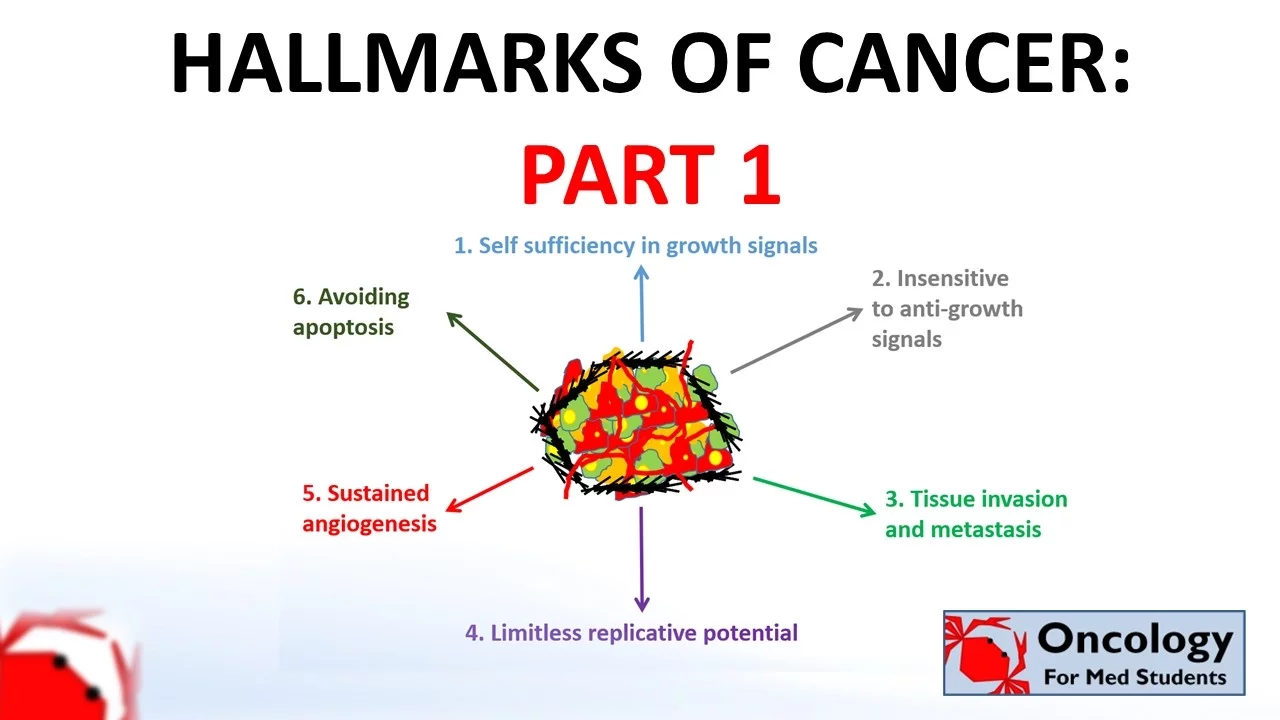
So that a number of daughter cells carrying this mutation are born. And within this now clone of singly mutant cells, a second mutation can arise. Say in this cell here, this mutation likewise confers upon these cells a greater ability to grow, divide, survive, out compete their neighbors. So you get a lot of these cells too. And then within that expanded clone of cells, a third mutation arises and so on until one has enough mutations to have a fully malignant cell. So what are the genes that are relevant here? Well, let's think about the processes that we know are important in cancer development and those are listed in the bottom right.
Proliferation is the most obvious one.
Cells proliferate abnormally in cancer.
So mutations in genes that regulate proliferation are likely to be important here. Cancer is a disease of cell number. Too many cells. You can get that because you have too much proliferation.
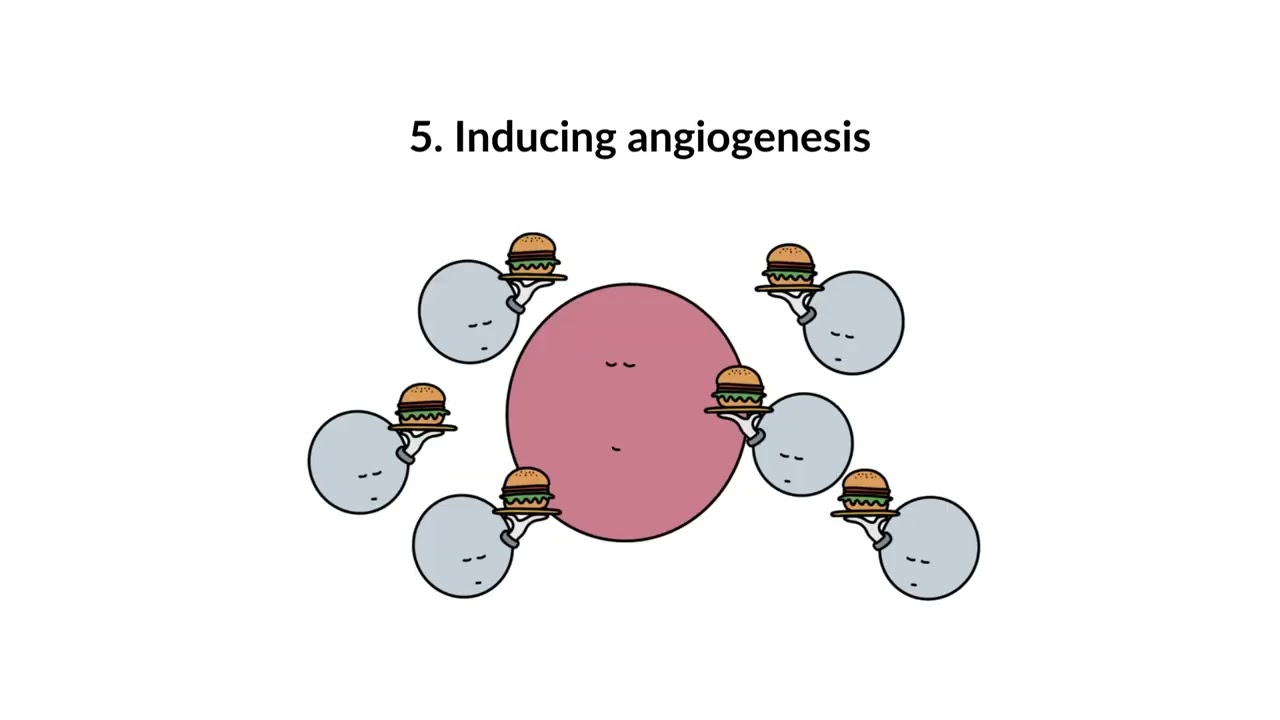
But you can also get it if you have too little cell death. So mutations in genes that regulate cell death processes are also found in cancer. I told you last time about angiogenesis, the process by which blood vessels are recruited into the tumor. These two are recruited by virtue of signals that the tumor sends.
some of which are the product of mutations. I told you that cancer cells move in the process of metastasis. They break their bind their their uh their interactions with their neighbors and they begin to move throughout the tissue and ultimately throughout the body. So they have increased cell motility and they also can invade they can invade through the basement membrane. They can invade into the local tissue. So they have increased invasiveness and there are other changes that take place within cancer cells.
And so these mutations then collectively increase proliferation, decrease cell death, increase angioenesis.
increase motility and increase invasiveness. It's important to know about these because today we're able to target some of these mutations. we're able to target the gene products formed by these mutant genes and thereby create better therapies. So our goal is to understand these processes such that we can ultimately control them more effectively in the context of treatment. Okay. Okay. Well, that then leads us to what are the genes? What amongst the 22,000 genes in your genome get mutated in the development of cancer? How can we find them? Nowadays, we sequence the genomes of cancer cells. That's how we find them. But that's not always been true.
It's actually been true for only the last few years. And so I'll give you some examples of how they were found previously. And why do we care? Well, I've already indicated some of this a few minutes ago, but the reason we care to understand the disease at the molecular level. Ultimately, we will be able to provide in very accurate detail improved diagnostic information, improved prognostic information. We'll be able to tell that an individual has cancer by detecting abnormal genes in their blood, circulating DNA in their blood, carrying specific mutations associated with particular cancers. We'll be able to diagnose the disease at an earlier stage. That way, we'll be able to figure out exactly what mutations are present in the cancer cell to know whether that's a tumor that's going to go on to kill the patient or sit there and do nothing. Should we treat the patient aggressively or should we leave them alone? Only with this molecular information will be we'll be be able to figure that out in detail.
We will and we already use this information to make better cancer drugs, molecularly targeted therapies that will replace conventional chemotherapy, which I'll teach you about on Friday.
Chemotherapy can work, but it's highly, highly toxic, and we'd like to be able to get rid of it and replace it with drugs that are much more specific, much more selective, and much less harmful except for the cancer cells. And this will usher in a new era, which I would argue is already here in some small way, called personalized medicine.
The individual's disease will be diagnosed at the molecular level and a specific therapy will be designed for them based on those alterations. We'll dial up the right therapy based on that information and again hopefully hopefully yield better results uh and less toxic side effects.
Cancer is leading the way actually in personalized medicine uh but it'll be true for lots of diseases in the not too distant future.
Okay. So, what are the genes? Well, I'm going to introduce you to two broad classes of genes today. Um, the first of which are called ankco genes. Enko for mass genes, ankco genes, cancer genes, cancercausing genes of one sort or another.
The first of these ankco genes was identified in the context of encogenic viruses. For example, Rouse saroma virus which is a retrovirus.
We'll learn about more about those next week. Retroviruses are viruses with an RNA genome. HIV falls into the same class. Rous saroma virus or RSV has been studied since about 1910 or so. Uh it was discovered by a viologist at Rockefeller University by the name of Payton Rouse. Pton Rouse was a viologist and uh a Long Island um chicken farmer came to Payton Rouse with a prize hen from his collection, a prize hen that had a tumor mass growing on its breast muscle. And the farmer brought this hen to Pton Rouse and asked him to cure the hen because it was very valuable to him.
Payton Rouse took the hen, the farmer said, "Thank you." The farmer went away.
Payton Rouse then promptly killed the hen and isolated the tumor and was able to isolate from the tumor a virus. A virus that could infect another bird and cause cancer in that bird. So this was the first example of a virus associated with tumor development. There have since been many examples of viruses associated with tumor development in animal species. A few examples in people but relatively few. Most cancers in humans are not virus associated but some are like human papilloma virus associated cervical cancer as an example. Um but these viruses studied in laboratory animals were extremely important in teaching us about how cancers arise normally. It was known using rous saroma virus that if you took a normal chicken cell fiber blasts from a chicken and infected it with rouse saroma virus it would cause those cells to round up and begin to proliferate abnormally and these cells were given a term called being transformed.
transformed cells that had the appearance of cancer cells. After that work, a great deal of effort went into figuring out what were the genes of rouse saroma virus that allowed the virus to cause those cells to become transformed.
And it was determined that the virus has carries a single gene called sarkc src for saroma um which is responsible for this transformation process. You could basically just add the sarkc gene and the same process would occur.
trying to understand the origins of the SARC gene. Two investigators at UCSF, Mike Bishop and Harold Varmas in around 1975 determined that the SARC gene has a homalue, a related copy in chicken cells.
And they went on to hypothesize correctly that rous saroma virus stole this gene from the chicken cells that it was infecting and incorporated into its genome. So the sark gene this cancer gene had a cellular origin. Moreover, they were able to show that sark exists in human cells and this is quite shocking. This cancer associated gene was present in our DNA. This discovery led Bishop and Varmas to win the Nobel Prize in 1989.
And a funny story happened that day.
This is a true story. I actually worked for Varmas as a PhD student. So I heard it from the horse's mouth. Varmas' sister-in-law was standing in a cafeteria line at Berkeley waiting to get her lunch. And two guys were standing in front of her. And uh one guy said to the other, "What are you going to have today?" And the guy said, "I don't really know." And the first guy said, "Well, don't get the chicken because two guys just won the Nobel Prize for showing the chicken causes cancer." This is sometimes how the public perceives what we do. Um, but anyway, they went on to win the Nobel Prize for this important work.
And they proposed that there were genes in our DNA which they referred to as protoonco genes which could undergo mutation and become enkco genes. In the case of RSV, the mutation was to take the gene out of the genome and stick it in the in the genome of a virus. But as we'll see today, there are other ways to do that too. Now, what the heck are we doing with protoono genes in our genomes? What are these genes doing there? Why do we have the SAR gene? Why do we have other such genes? Who can tell me? Why is it beneficial to have a cancer-causing gene in our DNA? What might these genes be doing?
Normal metabolic processes. Yeah, normal metabolic processes are perhaps normal proliferation. Our cells divide too. You go from a single cell when you're at fertilization to 10 to the 13th cells.
It's a lot of cell division. That's a controlled process. There's lots of genes that are devoted to teaching your cells what to do when they're supposed to do it. And these genes are presumably involved in those normal cell division processes, but they get corrupted in the context of cancer. They get altered, so they don't work properly. Okay, so RSV was the first example, SARKC was the first example, but it still led to some skepticism, some concern that in fact what was seen in the context of these viruses might not be relevant to real human cancer, which as I told you a few minutes ago rarely involves viral infection. And so along came Bob Weinberg who was and is still at MIT.
His lab is in the Whitehead Institute.
And Weineberg did a critical experiment. He started with an individual. Sorry about that.
This is a person sort of. And this individual had bladder cancer.
Weineberg isolated the DNA from the bladder cancer to ask the question, were there cancer genes in there? Were there Anka genes in there? Were there mutationally altered genes which were the reason that this tumor arose?
And so he did an experiment. He took this isolated DNA and he introduced it into some cells in the laboratory. These were immortalized, mouse cells. Immortalized meaning that they would grow in the lab forever, which by the way is not normal. Normally, you take cells out of your body or out of a mouse, put them in the lab, they'll grow for a while, but they'll stop growing eventually. These cells were immortal.
They could continue to grow, but they were otherwise pretty well behaved. They laid flat on the dish. They had normal boundaries between cells. They were non-transformed. They didn't look like cancer cells. And they were non-turogenic.
If he introduced those cells, these cells into an experimental animal, they wouldn't cause a tumor. Okay? They were immortalized, but they were otherwise pretty well behaved.
He introduced the isolated DNA from the tumor cell through a process we call transfaction where basically the DNA gets sheared up and introduced into the cells such that roughly speaking each cell is getting individual genes individual genes spread out amongst population of mouse cells. And then he waited. And what he found was that at low frequency, whereas most of the cells stayed in their normal morphology, occasionally he got this. Can somebody get that?
um a transformed colony of cells and he assumed correctly that this colony arose because one of these genes was a cancer gene that allowed these cells to divide abnormally. He further could show that if he took those cells and introduced them into an animal, they would now cause a tumor. So they were not just transformed, they were also tumorogenic.
He went on to isolate the human gene, which was not difficult to do because the cells themselves were mouse.
And so he was looking for the human DNA sequence.
And he found eventually that it was a mutant version of a gene called RAS, a gene that you've actually learned about already in class, and I'll tell you more about in a second. This discovery made by Weineberg's lab and a few other labs at the same time in the early 1980s is the reason I'm standing before you. When I was your age, Weineberg came to my college and gave a lecture on this work.
And I was so excited about the potential of learning about cancer at the molecular level that I decided right then and there to start working on cancer and have been doing ever since.
So sometimes the things you learn in class actually change your life. Not to say that's going to happen today, but sometimes it does. Okay. So Weineberg isolates the RAS enco gene from these bladder cancer cells.
They went on to sequence the gene to determine how it was different from the normal copy of RAS. And that's illustrated here. Here's the normal RAS sequence. This is now not working. Here's the normal RAS sequence.
It's a version of RAS called H RAS.
That's insignificant. Um, you can see the codeons, the encoded amino acids.
Here's the change that has taken place within the cancer cells. They didn't have a G in this position. Instead, they had a T in this position. This gene wouldn't encode glycine like it's supposed to, but instead veiling at codon position number 12. This change, this single nucleotide change, this single amino acid substitution caused this signaling protein to go from a regulatable state as shown here. And hopefully this is familiar to you because you learned about it already in signaling in the signaling part of cell biology. Ras is a GTP binding protein which normally cycles between an active GTPbound state and an inactive GDP bound state. It goes from on to off through this hydraysis of GTP. In the context of this mutation, the GTP hydraysis is inhibited. So the protein stays in its GTP bound active state. It gets stuck on and rather than signaling in a regulated fashion, signals constitutively. Rather than telling the cells to divide when they should, it tells the cells to divide always. And that's presumably why this mutation is selected for in this type of cancer and many many others. Okay, I remind you that RAS is in a signaling a signal transdu transduction pathway. Here's RAS itself.
RAS interacts with upstream receptor molecules and growth factors. There are intermediary um adapter proteins that help that interaction. There are downstream signaling proteins like kinases and ultimately there are nuclear transcription factors and target genes that they regulate. This is a signaling cascade. And actually what we learn in cancer is that many of these genes, not just RAS, but many of these genes can be mutated in the development of one or more cancers. For example, some genes like these are amplified, and I'll tell you more about that in a second. Others are the product of transllocation so that they're expressed abnormally.
Others have structural mutations like deletions and others have very subtle mutations. The RAS mutation is a subtle mutation. It's a single nucleotide change that allows this gene to function abnormally. Okay. So importantly, anko genes dominantly transform cells. Weineberg added a single mutant gene and it transformed those mouse cells.
The mutations are gain of function mutations. They're dominant mutations.
Gain of function mutations. There are now about 300 or so, and the number is growing, known Anka genes. Within the 22,000 genes in your genomes, about 300 of them can be converted to an ankcoenic form through mutation. What types of mutations do we find? Well, I've listed them on that slide, but I'll just write it down as well. Subtle mutations. RAS is the classic example. A single amino acid change will convert the protein to an encogenic form. We can also find gene amplifications. Your genes are present at two per cell. One from mom, one from dad. You're supposed to have two.
Sometimes in cancer, amplification of regions of the DNA occur. So you go from having not two but four, eight, 50, 100 copies of the gene. And you can imagine having too many copies leading to too much protein product would actually lead to inappropriate signaling. So here the structural gene may not be mutated. The amino acid sequence may be the same.
You've just got too much of it.
Also, genes can be rearranged. Gene rearrangements, for example, transllocations. And I showed you some pictures of transllocations, chromosomes that get joined inappropriately together. This can break two genes and form a new gene in the context of the transllocation. Perhaps a gene is expressed from a weakly acting promoter normally but because of a transllocation event a very strongly acting promoter gets stuck in front of that gene by mistake and now the gene is expressed at very high levels inappropriately. It's not unlike the consequences of gene amplification. So transllocations likewise occur frequently and we'll hear about consequences of camplification and rearrangement next time when we talk about therapies. Okay. So anka genes act dominantly. They can transform cells all by themselves. But this should be in your minds creating confusion because I've also told you that cancer is a multi-step process.
And if cancer were a multi-step process, how could it be that single mutations can transform cells? But in fact, we now know that single mutations are typically and maybe never are not sufficient to produce true cancer. So given that, can somebody explain how the Weineberg experiment worked? How was it that Weineberg was able to transfer a single gene into these cells and cause them to become transformed and tumorogenic? If single mutations aren't enough, why did this work?
Anybody? The key is that they weren't normal cells. The cells he started with are already abnormal. They were already immortalized. They'd already been growing in the laboratory dish for a long time. So, they were sensitive to a single mutation. But normal cells in your body are not. And that's a good thing because as you sit there today, you probably have about a million RAS mutant cells in your body scattered around. And that's just based on the normal mutation frequency. The likelihood is that we all have about a million or more RAS mutant cells in our body. But because RAS mutations are not sufficient to drive cancer formation, that may be an tumor initiated cell, but it's not yet a full cancer. Other mutations have to take place thereafter.
We now believe that there's probably something like 3 to 20 mutations are required to make a full-blown cancer.
Okay. So I've told you about anka genes and I've related their function to normal cell division and that's appropriate to do. Normal cells do get signals to divide make more of themselves and moreover they get signals to stop dividing when it's time to stop.
In embryogenesis once you form the liver you want to stop cell division within the liver cells. When you wound yourself, you recruit cells to divide.
But once the wound is healed, you want it to stop dividing. And so there's complimentary signals, stop signals that come into play to cause the cells to stop. Cancer cells have defects in both of these classes of signals. We've been talking now about the anka gene signals.
They are the go signals, the signals to tell the cell to divide.
And because of these alterations like in RAS, the cells are more capable of dividing. They make more of themselves. Moreover, the breaks on this process, the stop signals are also typically lost in the development of cancer such that now the cells lacking the breaking signals will continue to divide still more. And these two classes of genes are called enco genes that we've been discussing already and tumor suppressor genes that we'll discuss from now to the end of the lecture. Tumor suppressor genes. There are a number of tumor suppressor genes now as well. More than 200 known. So that's 500 or so known cancer genes already. The first one, the very first one described occurred in this type of tumor. This is a child with a tumor of the eye. The tumor is called retinol blasto. And based on the examination of the genes within those tumor cells, it was hypothesized that the retinol blasto gene that was responsible for this disease was one of these tumor suppressor genes before any of them were actually known. that led ultimately to the cloning of the RB gene, the retinino blasto susceptibility gene called RB also in Bob Weinberg's lab which encodes a protein called PRB and further work in Weineberg's lab and many others showed why cells get rid of the RB gene in the development of that cancer as well as other cancers. The RB gene is now or the protein that it encodes is now known to be an important regulator of the cell cycle. We learned about the cell cycle.
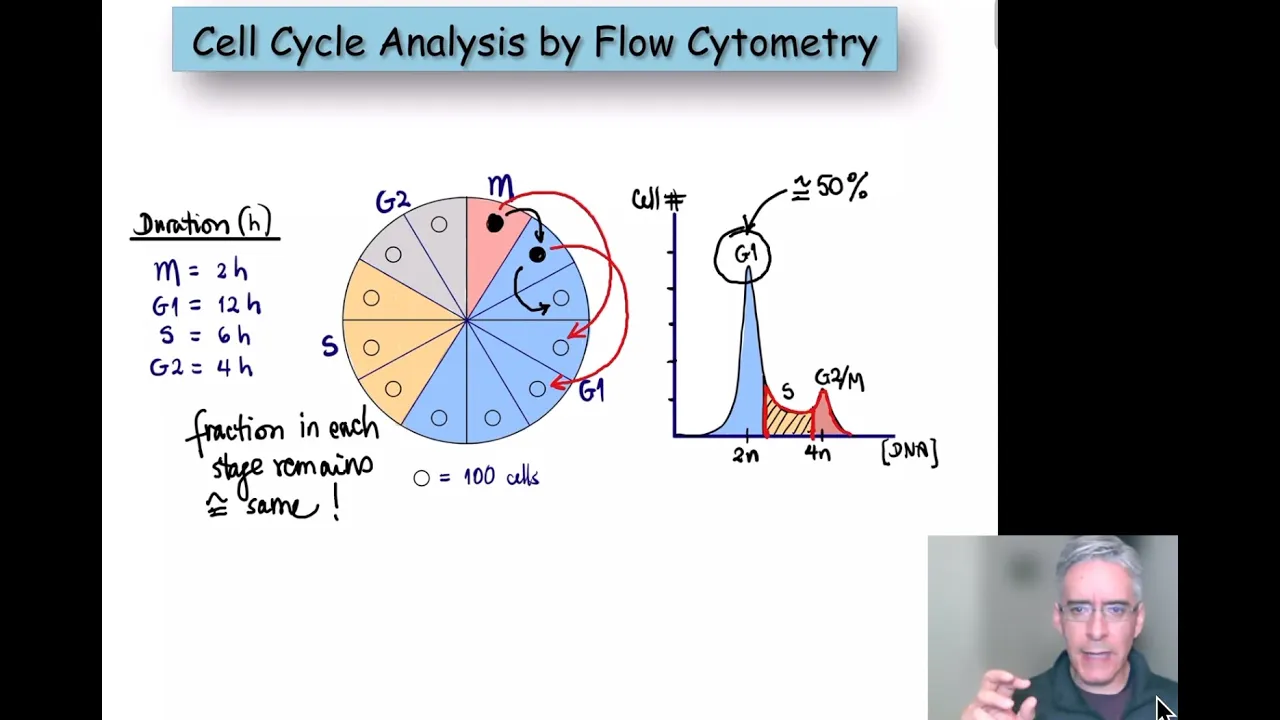
Cells go from mitosis to G1 into Sphase and then G2 and then into mitosis again.
This is a regulated process and the RB gene or protein is important in controlling it.
The RB protein acts here by blocking the transition from G1 into S. And I'll tell you a bit more h how it does so in a moment. This is when the protein is in its active state. It can be inactivated through phosphorilation.
a phosphate group. Actually, many phosphate groups can be transferred onto the RB gene through kinases which are stimulated by growthpromoting signals.
Growth factor binding to a cell will ultimately result in the stimulation of these kinases to phosphorolate the RB protein, taking it from this active state to its phosphorolated state which is inactive. So the break is released because the kinases inactivate the break. Okay, just a little bit more detail about RB. A lot is known about this process.
Now, this transition from G1 into S requires some transcription factors called E2F transcription factors. And RB binds and inactivates the RB transcription factors, keeping them silent when it's in its active state. When it's in its active state, RB has a little pocket to which the E2F transcription factors bind. Here's PRB and here are the E2F transcription factors and they are sequestered by the RB protein and can't otherwise do their job. But when RB gets phosphorolated by those kinases, these phosphate groups interfere with the binding of E2F and E2F is then liberated to carry out its normal function driving this transition. Okay, so this is how the break functions and it's a very very important break. RB is mutated in a very high percentage of cancer cells, not just retinol blastoomas but many others as well. And the pathway that it that it is controlled by is likewise mutated in a high frequency. Tumor suppressor genes like RB are the brakes. They negatively regulate proliferation.
As such, are these cells are these genes normally hyperactivated or inactivated in cancer? Hyperactivated or inactivated?
Inactivated. That's in contrast to the Anka genes which get activated hyperactivated. These get inactivated or lost. These inactivating mutations are recessive. They are loss of function. Again in contrast to the situation with alka genes which are dominant mutations gain of function and this actually creates an interesting challenge for us. If these are recessive mutations and a cell acquires a mutation in one copy of the RB gene and I'll just show the chromosomes on which RB exists happens to be chromosome 13. We have a normal cell. Say it's a normal cell in the developing retina. And that cell incurs a mutation. Random chance. Cigarette smoking. Probably not in this child, but random chance leads to the inactivation of one copy of the RB gene. What's the phenotype of this cell? It's normal.
These are recessive mutations. Having one normal copy is sufficient to provide RB protein to provide control of the cell cycle. So the cell is normal but the cell is predisposed. Predisposed because now it only has one functional copy left. We could call this the first mutation.
And now within this clone of cells, if a second mutation occurs, then we're in trouble. And this second mutation can occur in one of a couple of different ways. For example, it could be that by random chance, bad luck, the normal copy on the other chromosome gets mutated. Or it could be and it's actually more frequent that a chromosomeal event takes place. For example, a cell arises which only has one chromosome 13 through chromosomeal non-isjunction and it's the one with the mutant copy. These are functionally equivalent.
Both of these cells are RB deficient and they are on their way to becoming cancers. Tumor suppressor genes therefore require two hits. Two hits, two mutational events to inactivate the two normal copies of the gene. They can be two mutations within the gene or they can be one mutation within the gene plus some chromosomeal event. And I've shown you one example here. There are others.
Okay, so that looks good. Everybody gets it right. No problems. Let me show you this picture which I actually showed you on the first day of class. This is a child who has bilateral multif focal retinol.
This child has 12 different retinolas tumors affecting both eyes. Not only that, this child comes from a family in which retinol blast is passing through the generations. The grandfather had it. He passed on the predisposition to multiple of his children who passed on the predisposition to multiple of their children.
This is an example of a familial cancer syndrome. Familial predisposition to cancer. Most cancers don't have this kind of pedigree. Most cancers are sporadic. But about 10% of cancers look like this with a clear family history.
Familial retinol blasto, familial breast cancer, familial colon cancer. And there are others. These are caused by mutations in genes like this. This individual that I showed you, the individuals in this family have inherited a defective copy of the RB gene from one of their parents. And as such they have this genotype. They are hetererozygous for an RB mutation. hetererozygous for an RB mutation. And because they're hetererozygous for an RB mutation, they are highly predisposed to developing retinol blasto. And the reason is that within their cells, within the developing retinal cells in their body, two mutational events are not required.
Instead in them all of their cells look like this. All of their cells are in that hetererozygous predisposed state. And therefore in them a single hit is required to give rise to a cell that is lacking the function of RB altogether.
and that's why they're predisposed and that's why BRCA1 patients get breast cancer and why APC patients get familial colon cancer. This slide also raises for you some interesting questions and we'll talk about them next time. Here's a person who has the right genotype but he didn't get the disease. Why not? And another question, what would happen if two individuals who were hetererozygous for a mutation were to marry have a child who was homozygous for an RBG mutation? What would happen then? We'll talk about that next time.
Up Next

4:50
Tumor Angiogenesis: How Cancer Hijacks Blood Vessel Formation
@henrikslab
41.3K views•2020-05-04
50:12
Bacterial Communication: Quorum Sensing and Biofilm Formation Explained
@JHUAAP
12.6K views•2011-06-28
49:08
Chemical Bonding Lipids and Membranes | MIT 7.016 Introductory Biology
@mitocw
262.9K views•2020-05-12
7:08
Bacteriophages: Earth's Deadliest Killers and Future Antibiotics
@kurzgesagt
34.6M views•2018-05-13
Related Study Plans & Knowledge Roadmaps
Structured learning paths in Biology
biology
RNAi: Biogenesis, RISC & Gene Silencing
01Molecular Biology Foundations: DNA to Protein
02Introduction to RNA Interference (RNAi)
03Molecular Biogenesis of miRNA and siRNA
+ 2 more learning modules
10h5 modules
Explore Roadmap
biology
Mycorrhizae: Signaling, Biophysics & Ecology
01Foundations of Mycorrhizal Symbiosis
02Molecular Signaling and Root Colonization
03Biophysics and Bioenergetics of Nutrient Exchange
+ 1 more learning modules
11h4 modules
Explore Roadmap
biology
Circadian Clocks: TTFL, SCN & Periphery
01Foundations of Molecular Biology & Gene Expression
02Introduction to Chronobiology and Actograms
03The Core TTFL: Molecular Architecture of the Clock
+ 3 more learning modules
14h6 modules
Explore Roadmap
biology
Population Genetics: Math, Drift & Selection
01Genetic & Probability Foundations
02The Hardy-Weinberg Principle and Baseline Models
03Mathematical Modeling of Natural Selection
+ 3 more learning modules
18h6 modules
Explore Roadmap