



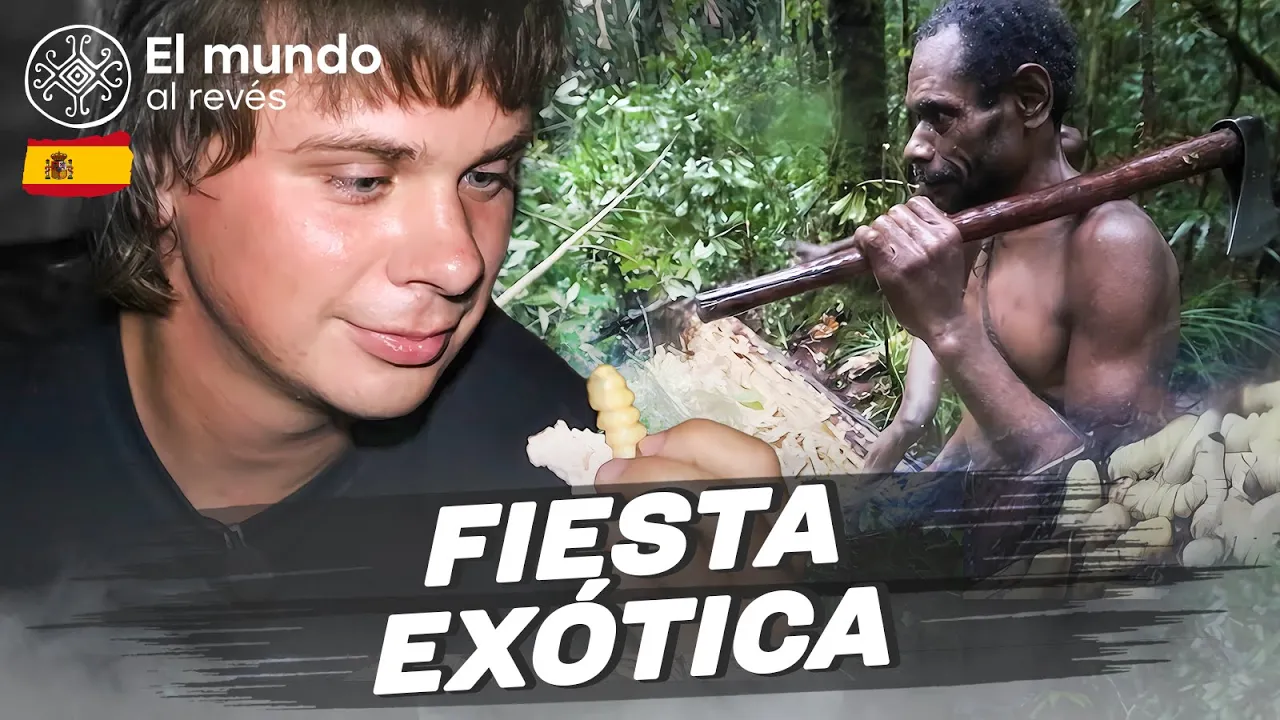









Rites of passage are culturally significant ceremonies that mark major life transitions, such as the Kombai initiation ceremony in Papua New Guinea where boys aged 8-15 undergo circumcision to transition from childhood to manhood, gaining rights to marry, raise families, and join the men's lodge; these rituals serve as powerful mechanisms for transmitting cultural values, reinforcing community bonds, and establishing individual identity within traditional societies.
Kombai Initiation Ritual: Coming of Age in Papua New Guinea
Added:Arnold van Gennep's theoretical framework of 'Rites of Passage', specifically the stages of separation, liminality, and incorporation.
The methodological principle of cultural relativism, which is essential for studying unfamiliar or controversial cultural practices without ethnocentric bias.
Basic ethnographic and geographic knowledge of Papua New Guinea, including its high cultural diversity and the traditional lifestyle of its indigenous rainforest communities.
The concept of social cohesion and how small-scale, non-state societies use shared rituals to maintain order and transfer knowledge across generations.
A comparative study of Melanesian initiation ceremonies, such as the Chambri 'crocodile' scarification rituals of the Sepik River.
The ethical, legal, and cultural debates surrounding bodily modification and circumcision rituals in indigenous versus global contexts.
The impact of globalization, resource extraction, and missionary influence on the preservation of traditional Kombai customs.
Anthropological and psychological theories on 'high-cost signaling' and how painful or challenging rituals foster deep group solidarity and identity fusion.
105.4K views1.2Klikes52:13Original Release: 2025-07-26
[Music] Papo and New Guinea is a land of mystery that caught my eye and caught my soul.
I've spent my entire life exploring lost islands and rainforests, discovering unusual wildlife and photographing secret ceremonies.
Meet my tribal friends in two remote villages where I capture their world through my lens.
A unique bond with tribes in focus.
[Music] After three long days traveling from France and a few hours at sea, I finally made it back to my island.
>> Look at the welcome they've prepared.
[Music] [Applause] [Music] [Applause] [Music] I've traveled to Papua Newu Guinea numerous times, but this is the first time I've been invited to photograph an initiation ceremony of the Com tribe.
[Music] I've created a particularly special relationship with the inhabitants of this island through my many trips. So, they decided to welcome and surprise us.
It's an incredible opportunity to be able to share this kind of moment with them, dancing, chatting, laughing.
This great welcoming foreshadows the upcoming ceremony where sacred masks will dance announcing the circumcision of three boys who will soon become men.
>> Thank you. Thank you. Thank you.
>> You know how much love I have for this island and for all of you.
>> There I've planted my heart here.
Hey, [Music] I've been documenting the lives of my papwan friends for over 20 years now to share through my photographs and books country's extraordinary wealth of tribal culture. I love stepping into their shoes, wearing their feathers, speaking their language, pigeon, and becoming a papwin amongst Papwins.
Here they call me the camera clown and I love my nickname.
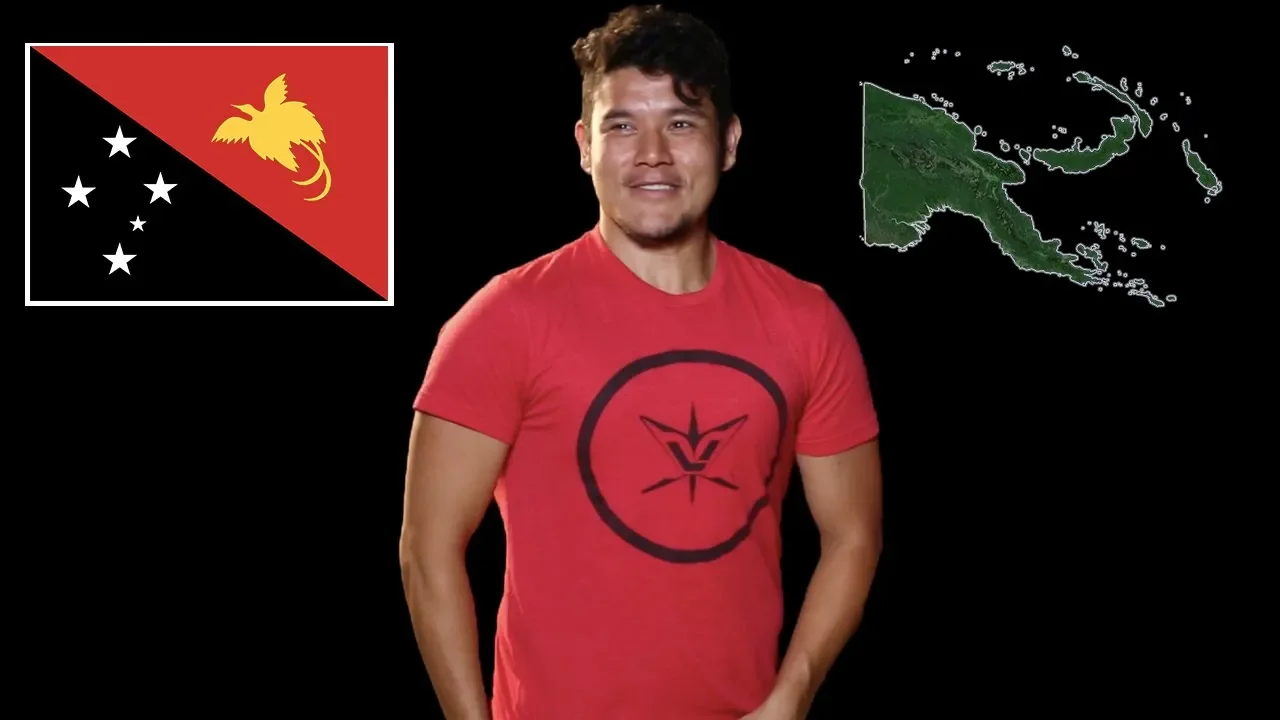
Surrounded by the Pacific Ocean, Papa New Guinea lies to the north of Australia and the east of Indonesia.
On the northwestern coast of New Britain, many little isolated islands are inhabited by small communities.
[Music] My friend Francis lives on one of them.
[Music] 300, marking the passage between childhood and adulthood. Three of Francis's nephews will soon be initiated and circumcised.
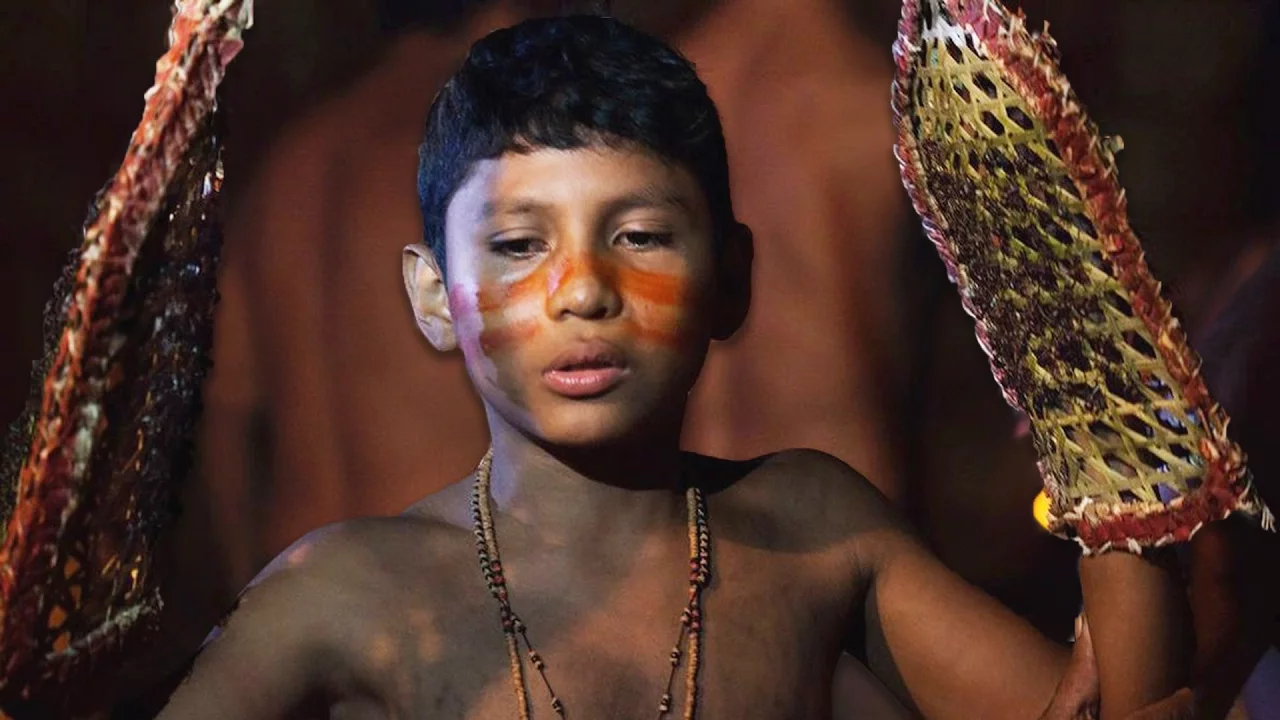
Organized when the boys are aged between 8 and 15, it's an essential step in the lives of all young boys.
After this ritual, they will be able to marry, start a family, and enter the men's house for the very first time.
>> Morning, morning.
This house man, [Music] >> I take advantage of the men's lengthy discussion to photograph the children at the island's primary school.
supreme papar [Music] [Music] [Applause] [Music] school celebration.
Okay. You All right.
Awesome.
Big [Music] Busy Bruce must come.
[Music] We were soon on our way to shop at a neighboring island, 3 hours away by canoe.
[Music] [Applause] [Music] [Applause] >> We are welcomed in Tonai by our friends Simon and David.
I've come with Francis who is preparing for an initiation. And while he's doing that, well, you know me, I'll take hundreds of photos.
>> It's been a while since you last saw my face around here, hasn't it?
>> Oh, sorry.
Okay. Okay.
>> Don't be scared, baby.
something kind.
[Applause] [Applause] >> Kids, kids, don't stand in front of the camera.
[Music] They found us really exotic.
>> A Frenchman shows up with his camera and white skin, equipment, and clothes.
It's like seeing a film on the television for them. Obviously, they don't want to miss a single second of what I'm doing. So, there are always tons of children following me around.
[Music] [Applause] After a good night's sleep, we start the day off as you do by sharing battlelenuts, >> a fruit the pap ones are mad about. It's a kind of natural sour chewing gum. It's very unique.
>> I'm going to die. My nose is running. My mouth is burning.
>> Wow.
It's a really special flavor.
But it's hot.
This strange national tradition stains the mouth the deep blood red color.
[Music] >> I used to eat battle nuts regularly, but I stopped because women didn't want to kiss me with red teeth.
[Applause] [Laughter] [Music] Francis has bought several baskets of bettlen nuts, but he also has to buy another treat that is a mustave at all important occasions. Tobacco.
[Music] [Applause] [Music] [Applause] [Music] [Applause] inside. Okay.
[Music] In the meantime, I'm out fishing with Simon.
[Music] >> I'd like to get a photo with the island behind you.
to go down.
>> Wait, wait.
>> Okay, let's go.
[Applause] >> Although these islands look like a paradise worthy of Robinson Crusoe, I've learned with time that life here isn't that easy.
Fore health.
I see stop.
Yeah. Yeah.
[Music] The shark would have made an excellent meal, but Simon brings back a different fish for dinner.
[Applause] [Music] Ah, thank you.
Thank you. Okay.
[Music] >> For their ceremonies. The combe use a traditional currency made out of pieces of shell that are pierced, assembled on a string, and then polished.
>> A 1 m long necklace is worth €3.
>> Okay.
>> While Francis buys the necklaces for the ceremony, I follow the children playing in the island's outstanding tree.
Although I'm fascinated by their agility, I often struggle to keep up with them.
Don't worry about me. You can come up.
>> Okay.
>> Okay. Come on. Come on. Come.
>> I do my best to follow young Jacob between the branches of this giant fig tree. I want to capture the determination in his eyes of the man he will soon become.
>> Okay, Jacob.
>> Yeah.
>> Do you often climb this tree?
Wow, impressive.
[Music] Francis has finished shopping and we get ready to head back to Capo.
But here, nature always has the final say.
[Music] Yes.
Watching the rain, I remember all the times we've shared on this small patch of land, lost in the middle of the ocean.
[Music] Look at what I've always been welcomed on Terminal.
The generosity of these fishermen is renowned throughout the country and there's often fish cooking over the fire.
What's going >> white man?
>> Oh, it's hot.
>> I could eat a whale.
>> Number one.
>> Delicious.
[Applause] While we spend our last and unscheduled night on Tamai, the preparations continue on Kappa.
Tonight, away from prying eyes, the men build a secret and sacred space.
Here behind the men's house, forbidden to the non-initiated, the masks will be prepared.
>> It's an ancestral ritual.
[Music] While everyone is getting ready, we take a detour to Talis on New Britain, the main island.
[Music] Oh, too big.
Okay, good.
Hey.
[Music] Hey.
You're looking looking [Music] for me. Yes. Bigger than me.
[Music] come plenty time.
in Papua Newu Guinea. And he's right.
When I'm with Francis, I feel like a member of the family.
Today, I'm sharing his nephew's last carefree moments in the forest.
[Music] [Music] [Applause] [Music] There is still one thing missing for the big day.
We head out with Walter, the best hunter, to find precious feathers.
These jewels of nature decorate the adornments and masks at all the important ceremonies.
[Music] The lush forest is a real blessing for the pupans. There isn't a plant, tree, or animal that they don't take advantage of.
[Music] >> Back on Kapo, it's the morning of the big day. The shell currency necklaces are handed out, placed around the necks of Francis's family, as is the tradition.
Now, the sacred masks can finally come back to life. Here, the community believes that these symbols of authority simply sleep between ceremonies.
police.
You must come inside now.
very very clear by me by [Music] >> touched. I'm very aware of the trust Francis has in me by allowing me to take photos here. Some secrets and mysteries are never to be revealed.
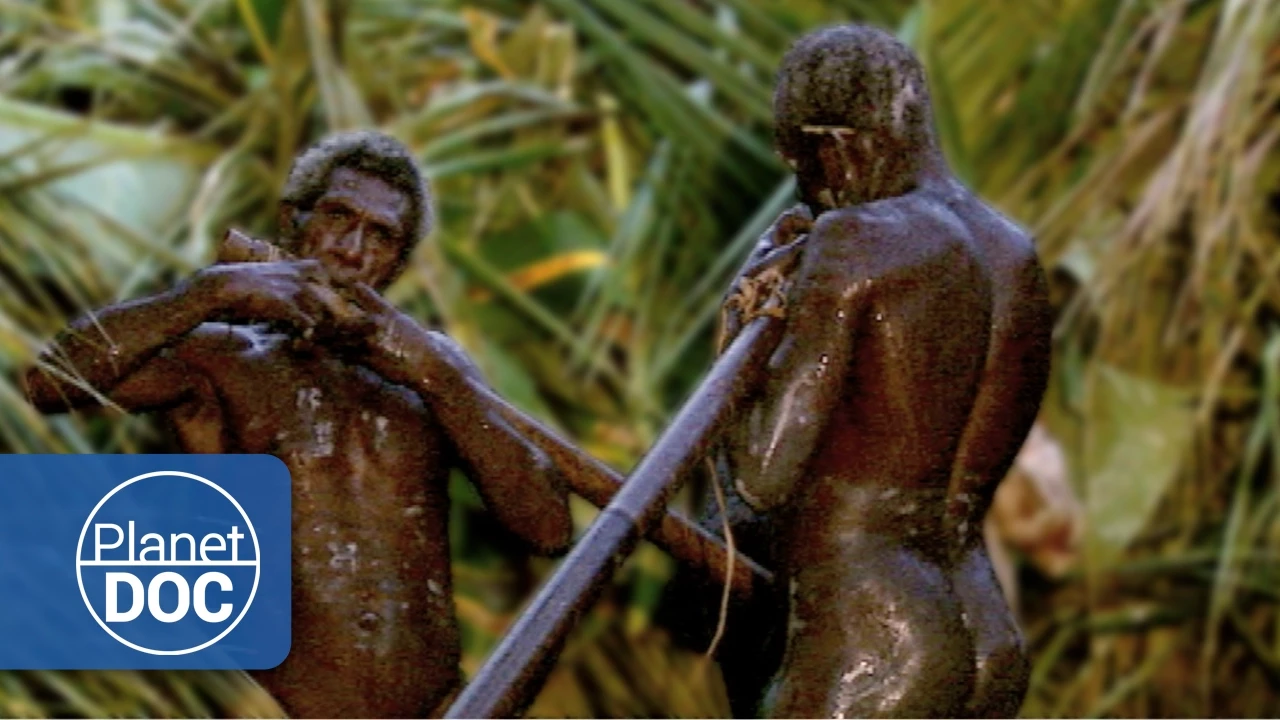
[Music] From sunset until the following morning, the masks dance to the rhythm of the drums, announcing to the community that tomorrow, three children will be allowed to enter the men's house for the very first time.
Although Francis's nephews remain hidden from sight, the other children don't dare approach the leaf and feathercovered giants. Those too curious might receive a smack with a stick. The masks are the constables of the ceremony. After all, after so many years sharing the lives of this island, taking these photographs is a huge gift. It's my photographers's grail.
[Music] Dusk signals the moment the men have been impatiently waiting for. A mandatory step, the ritual sharing of tobacco.
[Music] The masked dancers can only take short breaks through the night in order to smoke or eat a battle nut.
The following day at sunrise, the entire village gathers together in the center of the island. Nobody can ignore the call of the drums and the singing.
[Music] Exhausted from a sleepless night, everyone heads to the men's house to watch the ceremony.
[Music] [Applause] Until now, Francis's three nephews have been very discreet, as tradition dictates. But the moment has come where Barry, Filimone, and Frederick are the center of attention.
importation.
[Music] Begin.
From now on, Francis's nephews will be considered adults and will find their place in this world.
>> Soon, they'll own their own canoe, will be able to dance with the masks, talk with the elders, and have their own gardens.
[Music] Photos are much more than exotic images for me. They tell the stories and the lives of my friends.
Big Lucas, Yan and his friends, and the beautiful Antonia, who will tell anyone who listens that I want to marry her.
Look at your smile.
[Music] >> I always leave little gifts before I go.
>> Rather than taking photographs, I like to give them to those who I share life's little challenges and happiness with.
>> Okay.
>> It works like this. You look here and press there. Okay. You press him.
>> If it's good, take the photo.
[Applause] [Music] On this side of the planet, I love getting lost, but I'm never that far from home. I have so many friends in so many places.
But here, it's quite an adventure to travel from the ocean to my next home in the heart of the rainforest.
[Applause] Deep in the center of the Papua New Guinea jungle lies the village of Sugu, a place close to my heart.
[Applause] Despite the good mood, I'm here today to share the vill's grief.
[Music] Have a life.
>> Hey, don't put it up my nose.
>> My friend, old Papa Maninoa died recently, and I've been invited to photograph a grand ceremony held in his honor.
>> It's a ritual that has been described by many ethnologists as being exceptional and extremely original, one of a kind.
Christmas time.
>> Hey, that's not true. Timon, I'm not bald. I just keep my hair short.
[Music] >> As is the tradition, a year after his death, we are going to honor Papa Maninoa with a great fire dance.
Come on, you've all got crocodile faces.
Don't you have a smile here?
>> Soon, the villagers will take off their t-shirts, dress with their feather adornments, and become fire dancers.
[Applause] >> The Kuli, a small tribe of 2,500, live at the foot of the Bosavi volcano.
The village is a few days walk or a 30inut air taxi ride from the nearest town.
As soon as I arrive, Papa Minoa's daughter Wendy and her cousin Timon take me to the edge of the village.
I'm mad mad papa.
Last year I'm die.
[Music] for the next few days. We will collect everything we need for the Kuba ceremony performed in Papa Maninoa's memory from nature.
Guided by Wendy, we start by going to a plot of land her father left her.
>> Who planted all these trees?
Oh, okay.
>> Ah, okay.
>> How long do they take to grow?
>> Okay.
>> Seo is a flower extracted from the seo palm. The starch is the Kuli tribe's main food and a vital inheritance for Wendy. Here there are no grocery stores or restaurants. Everything comes from the wild.
>> The men cut down the tree and peel the back.
The heart of the palm is a delicacy that you eat raw and share with friends.
Simply delicious.
>> While the men chop the trunk, the women strain the fibers.
>> It's hard work. They have to crush, filter, and decant the slurry to make the flour.
If I open [Music] Back in the village, Timman checks his adornments to make sure nothing is missing for the great ceremony.
M gimma something this m kingdom kingdom time.
>> Yes.
M skin block protects you back from the flames.
[Laughter] [Music] In Papua, each tribe cultivates this meticulous and ingenious art. With unparalleled imagination, man can find everything he needs in nature.
For me, it's a pleasure to photograph these living works that make up real tableau.
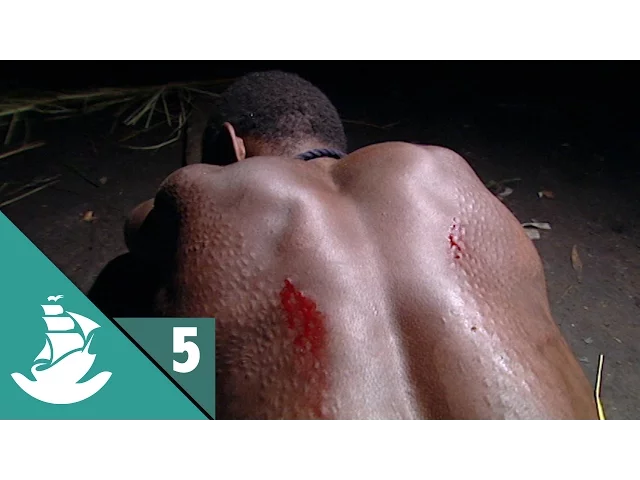
[Music] Despite being protected by the pelt, dancers are sometimes burned by the torches during the ceremony. Performed to honor the dead, the ritual does not intend to harm, but rather to share the pain of grief.
Yes. On your back. That's serious, isn't it?
[Music] Banana. Sak masses. Planket. Bunara.
Knife. Check him.
Something you buy me. Come back now.
>> Yes, I've got everything.
Are we going to hunt too?
Before the celebrations, we head out on an expedition deep into the forest to find a sap to make the famous torches.
Here, distances are not measured by kilome or hours. They are measured by water crossings. And we're going for nine rivers. It's quite a trick.
[Applause] In the heart of the forest, I often wonder who is watching whom.
[Music] [Music] Something tells me we'll be eating tree pythons soon.
[Music] >> You put him now. Okay.
>> Okay.
>> Then release.
>> You put him.
>> Now you put more >> like this.
>> And I put my finger on top.
>> Like that. Yeah. Magos.
[Applause] >> There we go.
>> Okay.
Oh, >> hey Simon, you don't always hit the target either, do you?
[Music] [Music] As evening falls, we set up camp by a river that Papaminoa like to visit.
[Music] While Wendy lights the fire, Timon's wife prepares a sego worm salad.
[Music] On the menu tonight, plantains roasted over a wood fire and seago starch pancakes cooked over the embers.
[Music] [Applause] [Music] [Applause] For the main course, the chef has prepared a snake stew served with a treat. Smoked sego grubs.
[Laughter] I'm worried I'll be ill. The last time I ate these, I had diarrhea for two months.
>> You know, for us westerners, we often think that you're very lucky to live here in the forest.
always.
>> Yeah. And you know that kind Like a lot of people, Papa Minoa died from a simple infection and a lack of medical treatment. It's the cruel reality of those who live in the Papa New Guinea jungle, and it's the main theme of the Kuli songs.
The following morning we reach a forest of particularly precious trees called ulis.
Oh, good.
>> Okay.
Look out. Be careful.
>> Be careful you don't fall.
[Music] >> On the way back, we cross our ninth and final river.
This waterfall river pool indicates that we are close to the village.
[Music] [Music] After harvesting the sap, the team immediately starts making the torches needed for the ritual.
Okay.
Mountain name.
Okay.
supposed because it's your way of recognizing.
When everything is ready, the village has to be informed. But there are no telephones, radios, televisions, or even electricity here. The news is broadcast by the man known as Radio Bosavi.
Without a microphone, Old B announces the day's news each morning.
foreign.
[Applause] [Music] [Applause] Thank you.
Also racist kindf.
[Music] I'm coing down flouring down flowerless big man.
for you. Hello.
[Music] finish. So suppose me Give a name.
[Music] As night falls, the village comes together for the great Kaluba ceremony.
The entire community is here to remember Papamino.
[Music] [Applause] [Music] [Applause] [Music] The charts evoke places that were dear to Wendy's father.
The mists clinging to the sides of Mount Ozabi.
[Music] the waterfall where he would fish for crayfish and the little hut he loved at the entrance of the village.
>> So many places that remind Wendy and her family of Papinoa.
[Music] [Applause] [Music] Just as the audience is on the edge of tears, they stamp out the pain of grief with the pain of the flames.
An odor of burned skin creeps into my nose.
>> It's an odor that cannot be shared through my photographs.
>> Don't move.
I came to the end of the earth to take these photographs, to capture the gleam of the torches, the crowns of feathers and painted skins, these griefstricken faces, this unique ritual that is part of humanity's world heritage.
[Music] [Music] In the dark, everyone holds their breath as the torches are put out on the dancers's backs.
As though their hearts stop beating for a second when the flame disappears.
[Applause] [Music] We are [Music] in cry time.
[Music] Big blood dy.
[Music] [Music] >> It's the first time I've seen Mount Bazavi clear like that. It's really exceptional. It's usually covered in mist under the rain.
>> I have a gift for you, Wendy. It's a photo of your father. The last time I was here, he went into the forest to get me a pandan fruit.
>> I'm very pleased to give it to you.
memory.
>> Moments like these are why I became a photographer. When my images become treasures, precious souvenirs of the people we have loved.
memory.
Thank you.
[Music] >> Photos are memories from the past, but they are also reminders of the passing of time.
And who's the little girl in this photo?
That little girl must have grown up now, right?
>> Oh, I didn't recognize you.
>> I think I'll take your photo every time I come here until you're very old.
Sorry.
[Music] It's time to say goodbye.
And I have a plane to catch.
More than seven rivers from here.
[Music] >> Okay.
>> Give me a hug. Trying all the place now. But you take this.
Okay. Wendy is single, so I can give her a hug.
[Applause] >> Don't make that face.
>> It's only goodbye for now.
>> I'm bored, but I'm not that old.
[Music] >> Before leaving, I say goodbye to all my jungle friends.
All except one.
Timon's wife is making the most of my return flight to get to the hospital.
And something tells me that Papa Minoa's spirit is on board, too.
[Music]
Up Next

17:17
Victor Turner's Liminality & Communitas in Symbolic Anthropology
@Ace_With_Ease_IAS
2.3K views•2023-12-25

26:41
Sensory Ethnography Explained by Sarah Pink | Research Methods
@NCRMUK
26.1K views•2015-03-27
4:45
Proxemics Explained: The Study of Personal Space
@Vox
536K views•2016-07-05
10:38
Psychology of Internet Trolling and Pranks Explained
@AzzyLand
10.7M views•2017-12-20
Related Study Plans & Knowledge Roadmaps
Structured learning paths in Anthropology
anthropology
Sensory Anthropology (Culture & Perception)
01Foundations of Sensory Anthropology
02Soundscapes and Acoustic Ecology
03Smellscapes and the Anthropology of Odor
+ 3 more learning modules
14h6 modules
Explore Roadmap
anthropology
Space Anthropology: Analogs, Culture & Habitats
01Foundations of Space Anthropology & Cosmic Imaginaries
02Extreme Isolation & Micro-Societies in Orbit
03Space Analog Habitats & Earth-Based Simulations
+ 2 more learning modules
15h5 modules
Explore Roadmap
anthropology
Legal Anthropology: Customary Law & Pluralism
01Foundations of Legal Anthropology and Social Justice
02Legal Pluralism: Coexisting Legal Systems
03Customary Law and Indigenous Dispute Resolution
+ 2 more learning modules
15h5 modules
Explore Roadmap
anthropology
Global Tourism: Gaze, Authenticity & Heritage
01Introduction to the Sociology of Tourism
02The 'Tourist Gaze' (John Urry)
03Staged Authenticity in Tourism
+ 3 more learning modules
14h6 modules
Explore Roadmap