



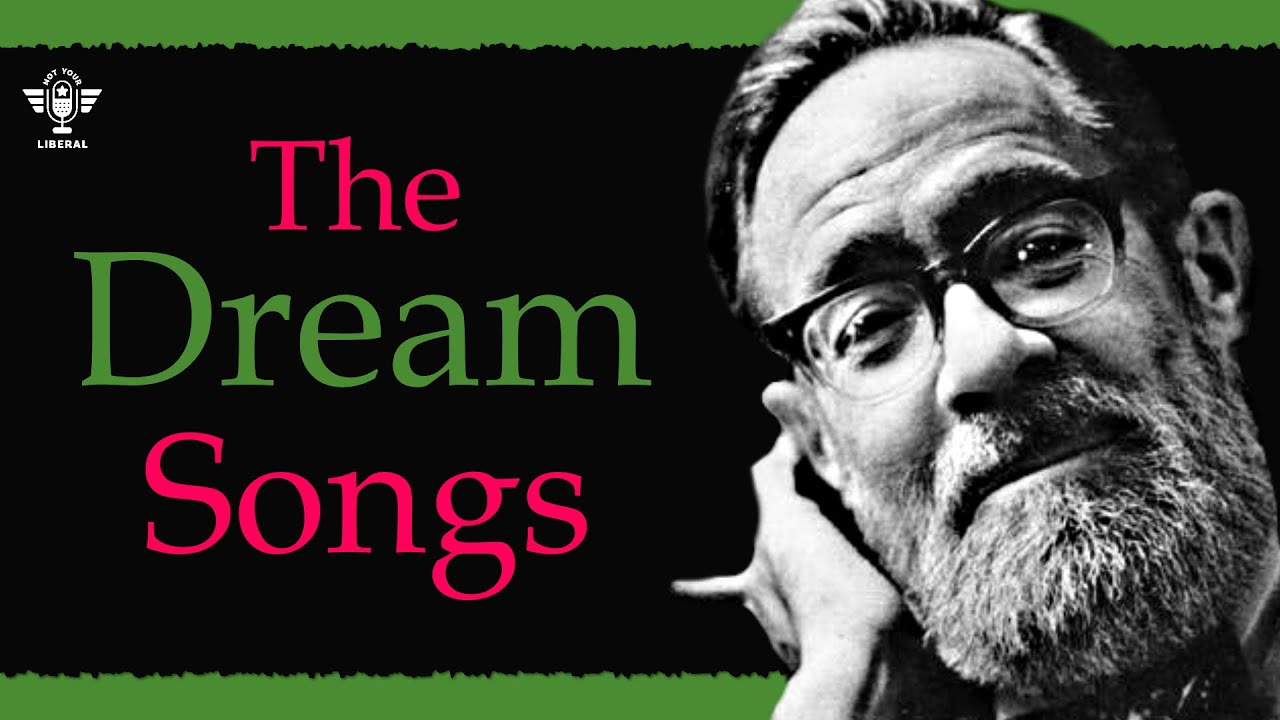
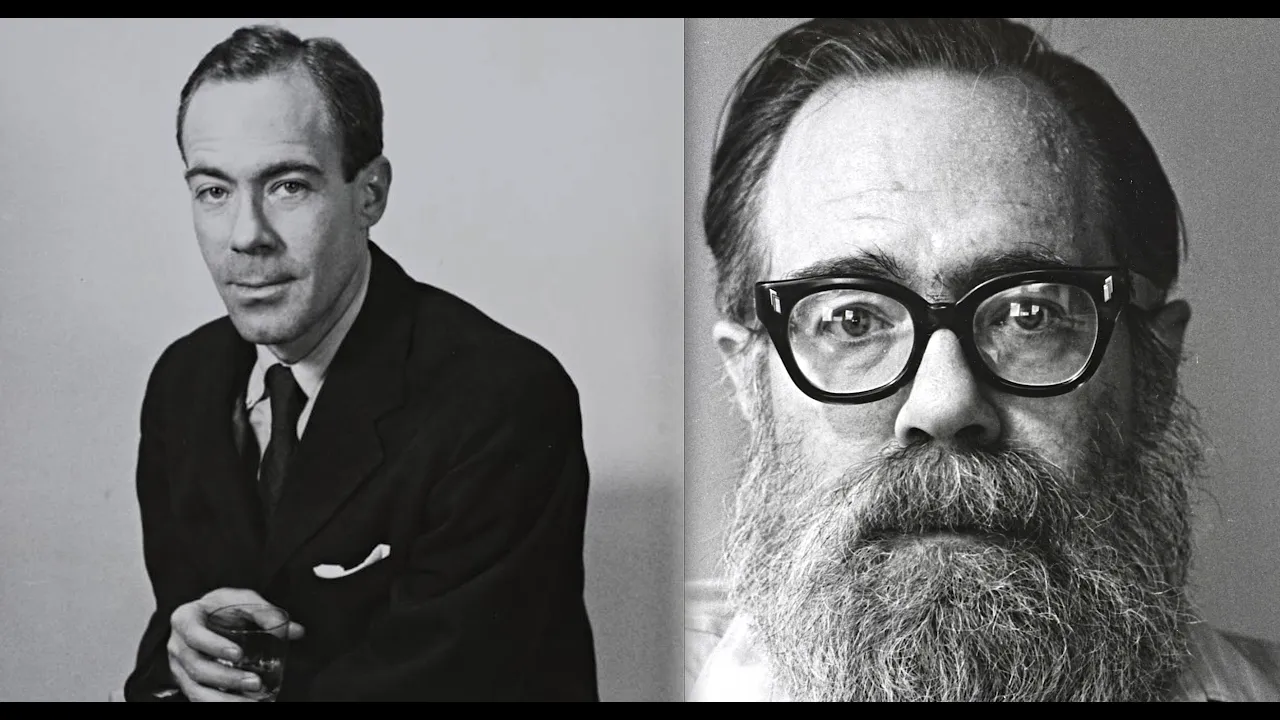
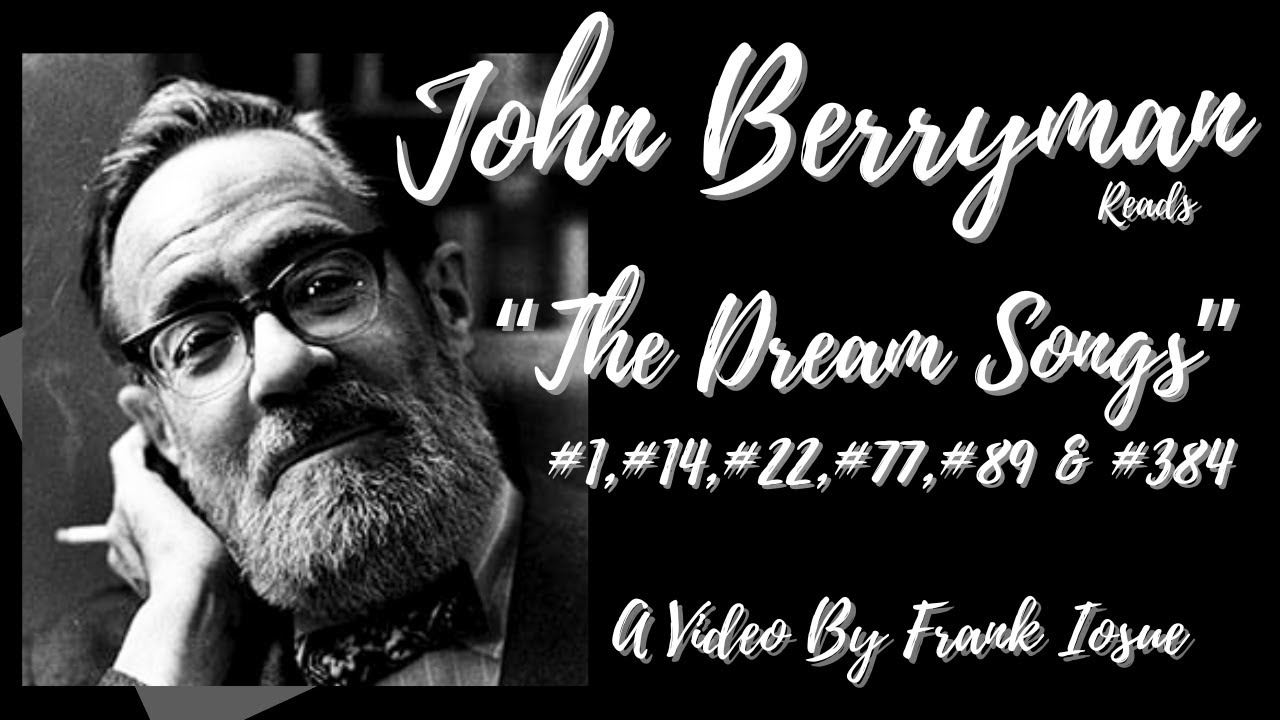
















John Berryman's 'Dream Songs' is a 400-page poetic sequence featuring an imaginary character named Henry, a white American in blackface who experiences irreversible loss and various difficulties; the poem employs a distinctive narrative structure where the poet's voice transforms into Henry's personality in the first song, and Henry's identity diminishes back into the poem's framework in the final song, while maintaining a central relationship with an unnamed interlocutor called Mr. Bones who serves as Henry's companion throughout the sequence.
John Berryman Reads The Dream Songs at University of Iowa, 1968
Added:Understanding the mid-20th-century Confessional Poetry movement, including its key themes of personal trauma, mental illness, and autobiography.
Familiarity with the structural framework of 'The Dream Songs,' specifically the 18-line stanza form and the central persona of 'Henry' and his unnamed companion.
Knowledge of John Berryman's biography, particularly his struggles with alcoholism, depression, and the formative trauma of his father's suicide, which heavily influence his work.
An introduction to the use of colloquialisms, literary allusion, and syntax distortion in post-war American modernist and postmodernist poetry.
Critical analysis of the controversial elements in 'The Dream Songs,' such as Berryman's use of blackface minstrel dialect and its reception in contemporary literary criticism.
A comparative study of poetic performance and vocal delivery by analyzing audio archives of Berryman's contemporaries, like Robert Lowell, Sylvia Plath, and Elizabeth Bishop.
Examination of the psychological concept of the 'double' or 'alter ego' in literature, comparing Berryman's Henry to other literary personas.
Exploration of the history and influence of the Iowa Writers' Workshop on mid-century American literature and academic creative writing programs.
37.2K views292likes8:42Original Release: 2009-06-11
Thank you very much, ladies and gentlemen. I can't imagine what you're uploading. Uh Mr. Starbucks introduction or the uh physical presentation of me before you. If I were you, I would reserve my applause until the end and then withhold it. Now, the program for this evening is extremely simple.
Can you all hear me?
Not, but then I'll speak louder. I can speak as loudly as possible, but some of the poems that I am going to read you are not meant to be spoken that loudly.
I don't care whether I'm hurt or not, but on the whole I would prefer to be heard. You see that? Even the least ingenuous among you must see that.
I will not read but bellow to you. I'm referring to my close friend Saul Bella, the only other man with one exception in the United States who can write a decent sentence. In my opinion, there are only threads and one is having difficulty with the marriage and the other has other difficulties. And I have many difficult Um, I'm assuming that you can hear me. Uh, this is not a cultural engagement, ladies and gentlemen. In case you were misled by anyone, this is an entertainment.
If at anybody at any time anybody is bored, let him get up and leave. We're all free agents. All except Mr. Johnson. Uh the poem is called the dream songs. The first volume was published two years ago called 77 dream songs. And the second volume which is called his toy, his dream, his rest um 307 dream songs, an incredible number is is scheduled for March or April in New York and London.
It's about a man named Henry, an imaginary character, a white American in blackface, namely a menstrual uh in early middle age who has suffered an irreversible loss and uh enjoys many other difficulties.
Two, the cast of characters is large, but the most important one is an interlocutor of Henry who calls him Mr. Bones. The interlocutor is never named.
I know his name, but the critics haven't found out yet.
We must leave something for the professors to do. Don't you think so? How otherwise can an assistant professor become an associate professor? Uh his unnamed friend calls him Mr. Bones or varants on that title. I'll read you the first one and then several in between.
and then some even more in between. Then we have from book four and then the uh the final songs. You understand that in the course of an hour it's impossible to give you much impression of a poem of almost 400 pages. Uh but and I am not going to try to do that. You'll have to take these songs as it were on their own. I will say though that in the first song, the personality of the poet uh diminishes itself into the personality of Henry. And that in the last song, the personality of Henry diminishes itself into the personality of the play. Otherwise, the poem, in spite of its large cast of characters, is entirely about a man named Henry. Not me. So the first one number one of book one goes Huffy Henry hid the day unappeasable Henry salt I see his point of trying to put things over. It was the thought that they thought they could do it made Henry wicked and away. But he should have come out and talked. All the world like a woolen lover once did seem on Henry's side.
Then came a departure of thereafter nothing fell out as it might or ought. I don't see how Henry pried open for all the world to see survive.
What he has now to say is a long wonder the world can bear and be. Once in a sycamore I was glad all at the top and I sang hard on the land where's the strong sea and Empty grows every bed.
Up Next
16:57
Why Confessional Writing Matters: An Exploration of Authenticity
@TEDx
929 views•2024-10-15

13:43
Formalism in Literary Criticism: An Academic Lecture Overview
@mattalberhasky9952
39.1K views•2015-08-05

9:47
John Berryman Interview 1970: Poetry & Dream Songs | Brockport Writers Forum
@erp65
4.8K views•2010-02-23

15:25
1984: Orwell's Dystopian World and the Mechanisms of Totalitarianism
@AlternateHistoryHub
7M views•2017-03-04
Related Study Plans & Knowledge Roadmaps
Structured learning paths in Literature
literature
Graphic Memoirs: Visual Art, Trauma & History
01Foundations of Sequential Art and Visual Language
02Autographics and Processing Historical Trauma
03Visualizing Personal Trauma, Grief, and Graphic Medicine
+ 2 more learning modules
14h5 modules
Explore Roadmap
literature
Campus Novels: Evolution, Themes & Critique
01Introduction to the Campus Novel Genre
02Mid-Century Satire and the Post-War Academy
03Dark Academia and the Critique of Privilege
+ 2 more learning modules
14h5 modules
Explore Roadmap
literature
Theater of the Absurd: Philosophy & Plays
01Postwar Existentialism & Historical Roots
02Dismantling Narrative: Esslin & Absurdist Conventions
03Samuel Beckett and Tragicomic Existentialism
+ 2 more learning modules
12h5 modules
Explore Roadmap
literature
Revenge Tragedy: Justice, Madness & State
01Foundations of Early Modern English Theatre
02Anatomy of Revenge: Structural Conventions
03Psychological Complexity: Madness and Melancholy
+ 2 more learning modules
15h5 modules
Explore Roadmap