




















American healthcare is expensive not because of higher consumption but due to fragmented private insurance markets lacking bargaining power; government programs like Medicare and Medicaid can negotiate lower prices because they represent millions of patients, while hundreds of private insurers each cover fewer people and cannot match this leverage, making single-payer systems potentially more efficient by consolidating purchasing power.
Why US Healthcare Costs More: Price Negotiation Explained
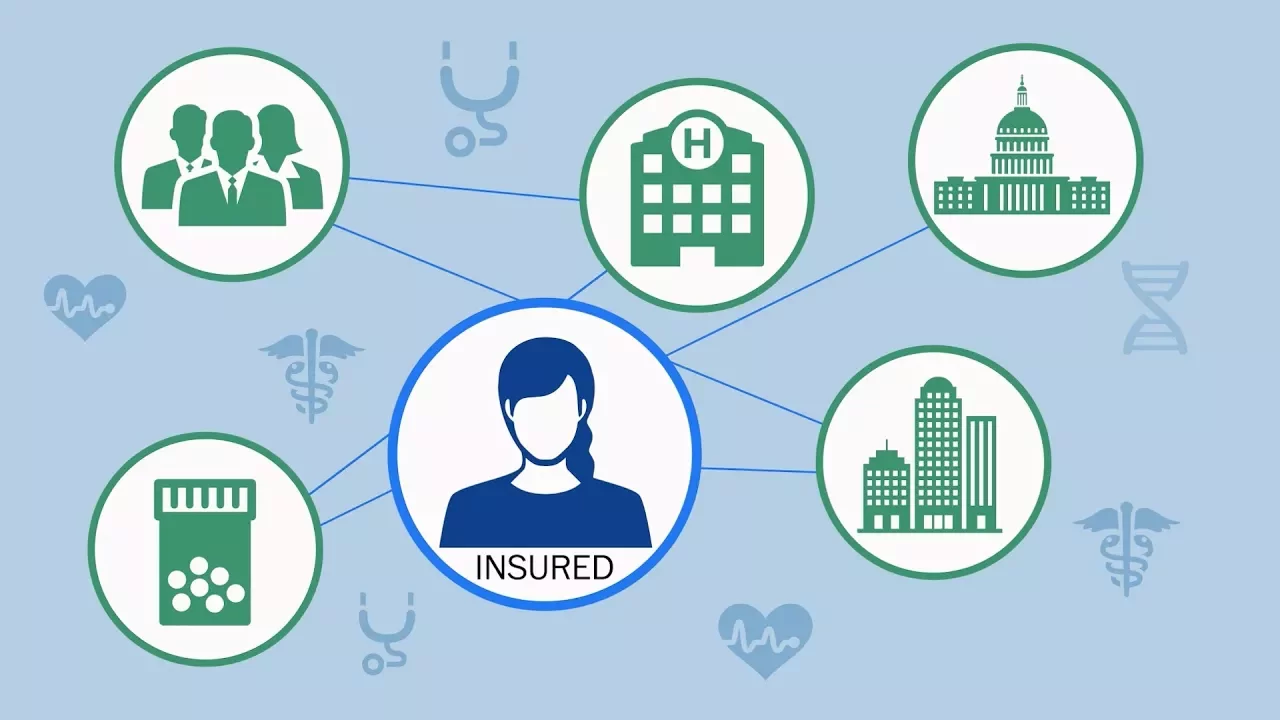
Added:Understanding the basic structure of the US healthcare system, including the roles of private insurers, employers, providers, and public programs like Medicare and Medicaid.
Fundamental economic concepts of supply and demand, particularly market power, monopolies, and how third-party payers (insurance) distort traditional consumer-producer price dynamics.
The distinction between healthcare spending driven by 'utilization' (how much healthcare is consumed) versus 'price' (how much each service costs).
Basic terminology of health insurance, such as premiums, deductibles, copayments, out-of-pocket maximums, and in-network versus out-of-network providers.
Analyzing comparative health systems to see how other developed nations (e.g., single-payer or highly regulated multi-payer systems) handle price setting and negotiation.
Exploring the concept of 'chargemaster' pricing in US hospitals and the ongoing regulatory efforts surrounding healthcare price transparency.
Investigating the economic impact of healthcare consolidation, specifically how hospital mergers and insurer acquisitions affect bargaining power and consumer prices.
Evaluating specific legislative reforms and policy proposals, such as allowing Medicare to negotiate prescription drug prices under the Inflation Reduction Act or implementing 'all-payer' rate setting.
6.5M views157.6Klikes5:41Original Release: 2017-11-30
I cannot tell you how obsessed I am with this chart.
It shows exactly what is wrong with America's conversation about health care.
On one level, you've seen this chart before.
It shows health care spending as a share of the economy of a bunch of countries.
There's Germany and France and Japan and Canada and oh! There's America.
But now I want to add something you haven't seen to this chart.
This is how much of that spending in each country is private and how much is public.
Here's what's amazing: America's government spending on health care on programs like Medicaid and Medicare and the VA - our versions of socialized medicine.
It's about the same size as these other countries.
These countries where the government runs the whole health care system!
And then there's our private spending.
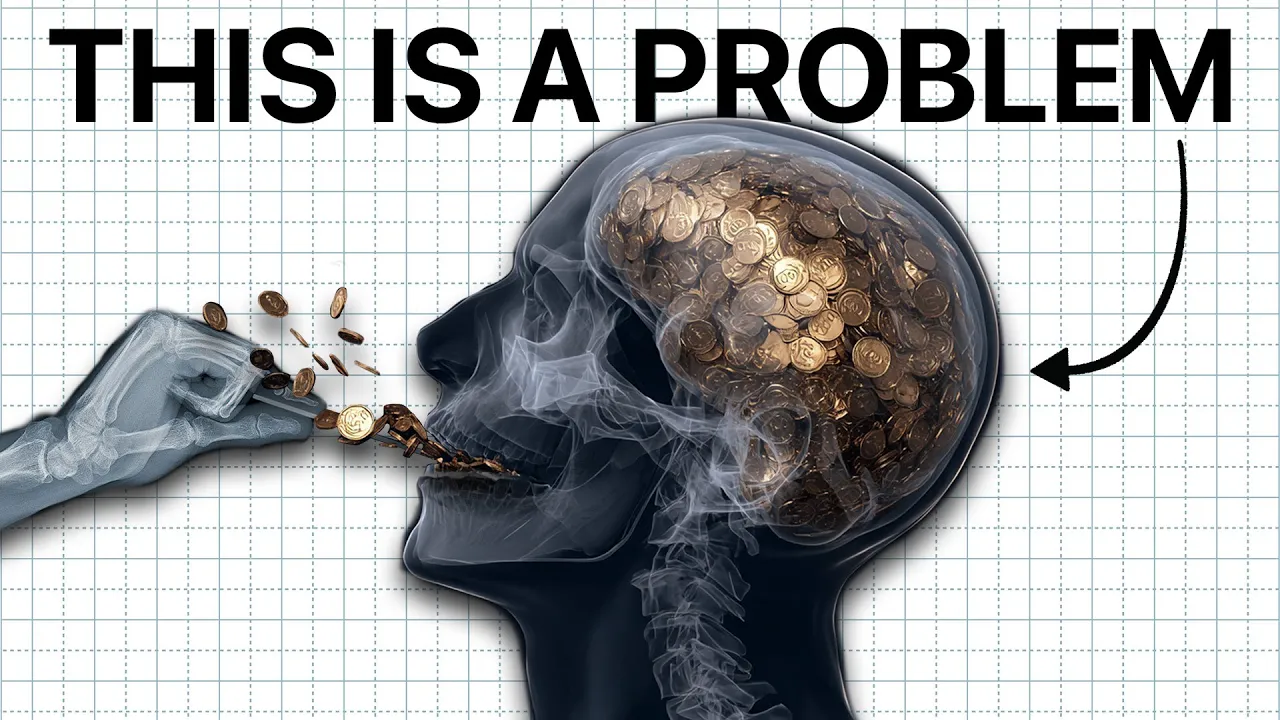
It's the private insurance system that makes health care in America so expensive.
Conventional wisdom says that the government is more expensive than the private sector.
"It can't say no. It's corrupt, it's inefficient, it's slow."
"If you want something done right you give it to the private sector."
That is what we hear in America all the time.
And yet here we are with the biggest private sector spending the most.
If you look at the data on physician visits and hospital discharges, you can get rid of one theory.
Americans don't consume more health care than people in these other countries.
We don't go to the doctor more than the Germans or the Japanese. In fact we go to the doctor less.
The difference between us and them is that we pay more.
Every time we go to the doctor for everything from an angioplasty to a hip replacement from a c-section to a pain reliever.
In America, the price for the same procedure at the same hospital, it varies enormously depending on who is footing the bill.
The price for someone with public insurance like Medicare or Medicaid is often the lowest price.
These groups he covers so many people that the government can demand lower prices from hospitals and doctors and they get those lower prices.
If the doctors and hospitals say 'No' they lose a ton of business.
They lose all those people on Medicare all those people on Medicaid.
But there are hundreds of private insurance companies And they each cover far fewer people than a Medicare or a Medicaid.
And each one has to negotiate prices and hospitals and doctors are on their own.
And if you're uninsured, you have even less leverage.
Nobody is negotiating on your behalf.
So you end up paying the highest price.
One study found that most hospitals charge uninsured patients four times as much as Medicare patients for an ER visit.
Other countries, they don't have this problem.
Instead of every private insurance company negotiating with every healthcare provider.
There's just this big list.
The country, the central government, they go and they say, "If you want to sell to us, to all of our people, then here's what you can charge for a checkup. Here is what you can charge for an MRI or a prescription for Lipitor.
And so then whether that bill goes to the heavily regulated private insurance companies in Germany or directly to the government like in the UK.
Each country is telling the doctor or hospital or drug company how much that bill will be.
And because the government controls access to all of the customers. It's an offer that hospitals and doctors and pharmaceutical companies typically can't refuse.
"I'm going to make him an offer he can't refuse."
In America the idea is that you'll be a consumer.
That you'll do what you do when you go to Best Buy and buy a television.
But that just doesn't work in healthcare.
It doesn't work in healthcare because you often come and get health care when you're unconscious, in an ambulance, when you're scared, when it's for your spouse or your child It is a time when you have the least bargaining power.
You are not usually capable of saying, 'No.'
You're not knowledgeable enough to do it, you're not comfortable doing it, or you're not conscious enough to do it.
That's why in other countries the government is a person who can say 'No' for you.
You can say, 'No, that's too expensive you're going to have to lower your price' because they do have that power.
Anchor: A new push for single-payer health care right here in the US.
Demonstrator: What do we want?
Crowd: Single-payer!
Demonstrator: When do we want it?
Crowd: Now!
Anchor: California and others are saying maybe we should adopt the European model.
Klein: If we decided to create a single-payer system with one of these huge price lists in the US There would be nothing to stop lobbying from hospitals from doctors from drug companies. And those prices would get influenced.
So we could end up with a single-payer system that is expensive. Even as expensive as our current system.
It all depends on how much you negotiate down the prices and now in America these groups have so much power because they are so rich.
That it's really hard to get them to bring down the prices.
This is the irony of American healthcare: It's so expensive that it's become hard to make it cheaper.
All that money they make, that becomes political power.
And years and years and years of overpaying - those are huge industries now.
And they have a lot of influence in Congress.
Under a single-payer system if we did drive prices down, doctors and hospitals they would be paid less than they are right now.
That might mean some of them close or some go out of business or some move.
It would be really painful. One person's waste is another person's essential service or local hospital or their income. But then single-payer it's not an all-or-nothing choice.
For instance, there's a really interesting section of Bernie Sanders Medicare-for-all bill.
Where he lays out this interim plan.
It's a plan he wants while he's setting up his new single-payer system.
And in that plan, he expands Medicare to cover vision and dental.
And he opens it to nearly everyone.
Not just people 65 and older.
All kids go on Medicare automatically and most adults can buy in.
That plan, on its own, it wouldn't get American health care spending far down overnight.
But it would at least begin to recognize what we already know and what most other countries already do: That health care is one of those things the government can do cheaper and better than the private sector.
Up Next
7:24
Canada's Single-Payer Healthcare System: An Analysis
@healthcaretriage
753.1K views•2014-02-23
5:07
Impact of Yuan in Indo-Russian Trade Amid Sanctions
@WION
261.9K views•2022-07-01
2:11
Understanding Obamacare's Individual Mandate: A Policy Analysis
@Vox
173K views•2014-03-19

113:18
The Age of Easy Money: Fed & Inflation | Full Documentary
@frontline
21.2M views•2023-03-15
Related Study Plans & Knowledge Roadmaps
Structured learning paths in Economics
economics
Sovereign Debt: Defaults, IMF & Restructuring
01Introduction to Sovereign Debt & Government Bonds
02Debt Sustainability & Credit Ratings
03Anatomy and History of Debt Crises
+ 2 more learning modules
12h5 modules
Explore Roadmap
economics
Market Design: Matching Theory & Gale-Shapley
01Introduction to Market Design and Price-Free Markets
02Two-Sided Matching & The Gale-Shapley Algorithm
03School Choice Systems and Mechanism Design
+ 2 more learning modules
10h5 modules
Explore Roadmap
economics
Impossible Trinity: Forex, Capital & Policy
01Introduction to Monetary Policy and Central Banking
02Exchange Rates and International Capital Flows
03The Mundell-Fleming Model
+ 2 more learning modules
8h5 modules
Explore Roadmap
economics
Healthcare Economics: Market Failures & Systems
01Introduction to Healthcare Markets and Market Failure
02Asymmetric Information and Adverse Selection
03Moral Hazard and Insurance Design
+ 2 more learning modules
12h5 modules
Explore Roadmap