The individual mandate requires most Americans to obtain health insurance or pay a penalty, addressing the 'death spiral' problem where healthy people leave insurance markets when premiums rise due to sick people's higher healthcare costs; by pulling healthy people into the insurance pool, the mandate ensures enough healthy individuals to balance the costs of covering sick people, making health insurance affordable and sustainable for everyone.
Understanding Obamacare's Individual Mandate: A Policy Analysis
Added:Deep Dive
The basic mechanics of health insurance, including risk pooling, premiums, and the concept of adverse selection.

Demand for Health Insurance Part 2 Basic Insurance Concepts
530
Insurance is fundamentally a contract where customers pay premiums in exchange for indemnity payments covering qualified medical expenses, with the insurance company retaining a loading charge to cover administrative costs and generate profit; the average premium must exceed the average indemnity for the company to remain solvent, and insurance operates most efficiently through group pooling which spreads risk across many individuals, with community rating setting uniform premiums regardless of individual health status versus experience rating which adjusts premiums based on past claims history.
Click to watch →
The BEST General Insurance Life & Health Study Guide | Pass The Test Effortlessly!
120.7K
Adverse selection occurs when high-risk individuals disproportionately seek insurance, such as people seeking dental coverage when their teeth hurt. This creates unsustainable business models for insurers. Risk pooling requires balanced numbers of good and poor risks so premiums from lower-risk individuals can cover claims from higher-risk ones. The law of large numbers ensures that with enough people, statistical predictions become reliable and losses are predictable.
Click to watch →

An Introduction to Healthcare Economics
203
This segment examines insurance market dynamics including adverse selection, risk pooling, and mandatory coverage. Adverse selection occurs when individuals anticipating high healthcare needs are more likely to purchase insurance, creating a pool of high-risk individuals that may be financially unsustainable. Risk pooling shares financial risks across a large population, with healthy individuals subsidizing costs of those with high healthcare needs. Mandatory insurance requirements expand the risk pool and prevent adverse selection. Actuarial principles calculate premiums based on expected costs, with age, health status, and lifestyle factors influencing pricing. Understanding these dynamics is essential for designing insurance systems that achieve broad coverage while maintaining financial sustainability.
Click to watch →

The Pulse - Health insurance & Mandatory disclosures
10.8K
Health insurance operates on pooling, where premiums from many people fund claims for the sick. The insurance company assumes how many will fall sick and what claims will cost. Adverse selection occurs when sick people join the pool, disrupting the balance. Material facts are those affecting risk assessment and premium calculation, which must be disclosed truthfully.
Click to watch →

Adverse Selection in Insurance Markets: Rothschild-Stiglitz Death Spiral
760
In insurance markets with multiple firms competing for customers, adverse selection occurs because insurance involves transferring money from healthy to sick individuals. A firm could skim off healthy patients by offering them very low premiums combined with very low payouts, high deductibles, and numerous hassles. Healthy individuals would accept these terms because they rarely get sick, while leaving the other firms with only medium and very sick patients. This process of skimming healthy individuals from the risk pool is a fundamental mechanism of adverse selection in insurance markets.
Click to watch →
Deep Dive
The fundamental goals of the Affordable Care Act (ACA), particularly its provisions regarding pre-existing conditions.

Biden discusses his plan for affordable health care
151K
The Affordable Care Act (ACA) was created to prevent insurance companies from discriminating against people with pre-existing conditions like asthma, diabetes, and cancer. Before the ACA, insurers could deny coverage, charge higher premiums, or drop coverage for these individuals. The law ensures that people with pre-existing conditions can obtain and maintain health insurance. The Ritter family from Pennsylvania exemplifies this protection: when their twins were diagnosed with leukemia at age four, the ACA ensured they would not be denied coverage for life. The twins survived cancer and now live healthy lives at age 22, demonstrating how the ACA allows families to focus on fighting illness rather than worrying about healthcare affordability.
Click to watch →

Kamala Harris Fires Back In Sizable Lead Over Trump, Poll Shows
27.6K
The Affordable Care Act protects individuals with pre-existing conditions from being denied insurance coverage. Without this protection, insurance companies could refuse coverage to people with conditions such as asthma, breast cancer, or diabetes. The video presents this as a fundamental policy issue where healthcare should be considered a right rather than a privilege available only to those who can afford it.
Click to watch →

Приднестровский американец .
62.5K
The Affordable Care Act (Obamacare) successfully prohibited insurance companies from denying coverage based on pre-existing conditions. This was achieved through intense political debate that nearly resulted in civil conflict. The law required insurance companies to cover individuals regardless of their medical history, representing a significant victory for healthcare reform.
Click to watch →

Kamala Harris Rallies In Georgia | Hasanabi Reacts
38.2K
The Affordable Care Act represents a major healthcare policy achievement that expanded insurance coverage and protected consumers from discrimination. The speaker emphasizes that reversing this legislation would return Americans to a system where insurance companies could deny coverage to people with pre-existing conditions. The speaker connects this to broader healthcare policy goals including expanding Medicaid in Georgia to ensure residents can access healthcare without facing medical debt, demonstrating how healthcare policy addresses both coverage expansion and affordability concerns.
Click to watch →

Pre-Existing Conditions, Bad Faith and Health Insurance Portability: Module 3 of 5
823
A pre-existing condition is a health problem an insured person has before coverage begins. Before the Affordable Care Act (ACA) in 2010, insurers could deny coverage, exclude conditions, or price plans out of reach for those with conditions like asthma, diabetes, or cancer. This affected 47% of those seeking private insurance and nearly 50 million people. The ACA revolutionized this by prohibiting insurers from using health status for eligibility, benefits, premiums, or lifetime limits. However, limited benefit plans, short-term coverage, critical illness policies, and grandfathered plans (purchased before March 23, 2010) remain exempt from these protections.
Click to watch →
Deep Dive
The concept of 'Guaranteed Issue' and 'Community Rating' regulations in health insurance markets.

ConLaw Class 6: Enumerated Powers IV
1.9K
The Affordable Care Act implemented two key insurance regulations: guaranteed-issue and community rating. Guaranteed-issue requires insurance companies to issue policies to anyone who applies, meaning they cannot deny coverage based on pre-existing conditions. Community rating means insurance premiums are priced based on the applicant's geographic location and age group, rather than individual health status. This creates a system where all healthy individuals in the same demographic pay the same rate as sick individuals, ensuring sick people can access insurance but creating potential cost-shifting problems where healthy people subsidize sick people's coverage.
Click to watch →

США 697: ObamaCare - реформа здравоохранения в США. Основные положения.
5.4K
The Affordable Care Act implements two key insurance market reforms: guaranteed issue and community rating. Guaranteed issue requires insurance companies to sell policies to anyone who applies, regardless of their health status or medical history. Community rating prohibits insurance companies from charging higher premiums based on health status or medical history, meaning that a person with a history of illness pays the same premium as someone who has never been sick. These reforms aim to make insurance accessible to all Americans, particularly those with pre-existing conditions who were previously unable to obtain coverage. The reforms represent a significant expansion of insurance market regulation.
Click to watch →
What worked and what didn’t in Obamacare insurance markets? - Part 2
597
Guaranteed issue (requiring insurers to offer coverage to all applicants regardless of health status) and community rating (requiring insurers to charge similar premiums regardless of health status) are fundamental principles that should be preserved in any healthcare market reform. These principles ensure that people with pre-existing conditions can obtain coverage and that premiums are not based on health status. As long as these principles are maintained, other elements of the system can be adjusted.
Click to watch →
Republican Plans for The Affordable Care Act
78.7K
Guaranteed issue is a requirement that insurance companies must issue health plans to any individual or group regardless of their health status. Community rating is a principle that prevents insurers from charging higher premiums based on pre-existing conditions or claims history, provided individuals maintain continuous coverage. These concepts are central to ensuring that people with health problems can access affordable insurance.
Click to watch →

Pending Obamacare Ruling
128
The Affordable Care Act contains two interconnected provisions: Community Rating requires everyone to pay within a certain percentage of what others pay for the same policy, preventing discrimination against sick people. The Guaranteed Issue Provision forces insurance companies to sell policies regardless of health status. These work together with the individual mandate, which requires people to purchase insurance. The Act lacks a severability clause, meaning if the mandate is struck down, the rest may fall too. A potential unintended consequence is that healthy Americans may pay the penalty rather than buy insurance, then purchase it only when sick, devastating the insurance market through adverse selection.
Click to watch →
Deep Dive
Basic economic principles of market failure, specifically asymmetric information between buyers and sellers.

Public Finance | CA Foundation Chapter 7 Unit: 2 | CA Foundation Jan/May/Sep 26 | CA Fond. Economics
228
Asymmetric information occurs when there is an imbalance in information between the buyer and the seller. One party knows more than the other about relevant facts. For example, a landlord knows more about property conditions than the tenant, a borrower knows more about their ability to repay a loan than the lender, a used car seller knows more about the vehicle's quality than the buyer, and a person knows more about their health condition than an insurance company. This information gap is a source of market failure.
Click to watch →

Grade 12 Economics: Unit 3 | 3.4 Part 1 | Asymmetric Information
2K
Asymmetric information occurs when buyers and sellers have unequal access to information about a product or service. This information gap causes market failure because one party can exploit their knowledge advantage. When sellers know more about product quality than buyers, they may sell inferior goods. When buyers know more, they may avoid the market entirely. This unequal distribution of information prevents efficient market transactions and resource allocation.
Click to watch →

CA INTERMEDIATE ECONOMICS CHAPTER 2 REVISE ENTIRE CHAPTER IN JUST 90MINS By Swapnil Patni
44.5K
Asymmetric information occurs when one party in a transaction has more or better information than the other, creating market failures. Examples include sellers knowing products are defective while buyers are unaware, or sellers exploiting information advantages. This can lead to adverse selection where only low-quality goods remain in the market. Governments address this through mandatory disclosure requirements (labeling on food, medicines, financial products) to ensure buyers have information needed for informed decisions.
Click to watch →
A Level l AS Economics (9708) l Market Failure l part 1/4 l by Abdul Hadi
375
Asymmetric information occurs when one party in a transaction has more knowledge than the other, creating an information gap. This information failure leads to market failure. Examples include restaurants serving goat meat as beef (producer knows, consumer doesn't) and used car markets where mechanics can deceive consumers about vehicle conditions. The information asymmetry prevents efficient market outcomes and requires intervention.
Click to watch →

Asymmetric information and market failure | public economics | cuet pg entrance | economics
1.8K
Asymmetric information occurs when buyers and sellers have unequal access to information about product quality, leading to adverse selection where low-quality products drive high-quality products out of the market. This market failure happens because sellers with better information about product quality can exploit buyers who lack such knowledge, causing allocative inefficiency. Solutions include private information production (credit reports), government information provision, intermediaries (like car valuation services), and collateral requirements.
Click to watch →
Prerequisite Knowledge
- Concept 01The basic mechanics of health insurance, including risk pooling, premiums, and the concept of adverse selection.
- Concept 02The fundamental goals of the Affordable Care Act (ACA), particularly its provisions regarding pre-existing conditions.
- Concept 03The concept of 'Guaranteed Issue' and 'Community Rating' regulations in health insurance markets.
- Concept 04Basic economic principles of market failure, specifically asymmetric information between buyers and sellers.
Subsequent Learning
- Step 01The impacts of the Tax Cuts and Jobs Act of 2017, which reduced the individual mandate penalty to zero dollars.
- Step 02Alternative policy mechanisms for encouraging healthy individuals to maintain coverage, such as continuous coverage requirements or auto-enrollment.
- Step 03The landmark Supreme Court cases challenging the constitutionality of the individual mandate (e.g., National Federation of Independent Business v. Sebelius).
- Step 04A comparative analysis of universal healthcare models in other developed nations, such as Switzerland's or Germany's use of mandates and subsidies.
Death Spiral
Death Spiral
0:00Playing Section
- 1
Insurance market risks collapse if only sick people enroll, raising premiums.
- 2
Obamacare bans denying coverage or charging based on health status.
- 3
Individual mandate penalties compel healthy people to buy insurance.
Criticisms and Market-Based Alternatives to the Individual Mandate
Critics of the individual mandate argue that forcing individuals to purchase a commercial product is an unprecedented government overreach that infringes on personal liberty. From an economic standpoint, opponents contend that the mandate unfairly burdens younger, healthier, and lower-income individuals by forcing them to subsidize older, sicker pools through inflated premiums. Rather than coercive mandates to prevent 'death spirals,' free-market advocates propose alternatives such as allowing insurance sales across state lines, expanding Health Savings Accounts (HSAs), and utilizing targeted high-risk pools to subsidize those with pre-existing conditions. Additionally, some policy analysts argue the mandate was practically ineffective, as the financial penalties were too low to compel participation among the healthy, suggesting that positive incentives like premium subsidies are far more effective at encouraging enrollment than government penalties.
Deep Dive
The impacts of the Tax Cuts and Jobs Act of 2017, which reduced the individual mandate penalty to zero dollars.

What You Need to Know About the Tax Cuts and Jobs Act
524
The Tax Cuts and Jobs Act reduces the individual mandate penalty to zero, effectively eliminating the penalty for not having health insurance. However, this is technically a reduction to zero rather than a repeal, meaning Congress could restore the penalty if political circumstances change. The business mandate requirements remain in place with all associated reporting and penalty provisions.
Click to watch →

Rutgers Federalist Society Chapter: The New Constitutional Challenge to Obamacare
171
The 2017 Tax Cuts and Jobs Act reduced the ACA penalty for non-compliance from approximately $700 to zero dollars. While this technically maintained the statute, it eliminated the revenue-raising function that was central to the saving construction. This change created a new legal vulnerability for the ACA's constitutionality.
Click to watch →

2017 Tax Cuts & Jobs Act: What You Should Know -- Individual Tax Reform
1.7K
The individual mandate penalty under the Affordable Care Act has been repealed beginning in 2019. In 2018, taxpayers still face a penalty for not having health insurance meeting requirements. Beginning in 2019, the penalty is set to zero. This change is expected to result in fewer young healthy people signing up for health insurance, potentially driving up premiums. However, the exact impact on premiums remains uncertain. Importantly, other provisions of the Affordable Care Act remain intact including open enrollment periods, subsidies for those who cannot afford premiums, and employer insurance requirements.
Click to watch →

New Year, New Rules The Impact of the New Tax Law on Employee Benefits
209
The Tax Cuts and Jobs Act effectively repealed the individual mandate penalty beginning in 2019, reducing it from $695 per adult to zero. However, the employer shared responsibility payment (payer plate penalty) remains intact. This means large employers are still subject to penalties if they do not offer compliant health coverage. The penalty amounts have increased by approximately 16% since 2014, with the affordability safe harbor for 2018 set at 9.56%. Practical implications include potentially fewer health plan enrollees as individuals may not face penalties for being uninsured.
Click to watch →
Tax Cuts & Jobs Act 2017
4.9K
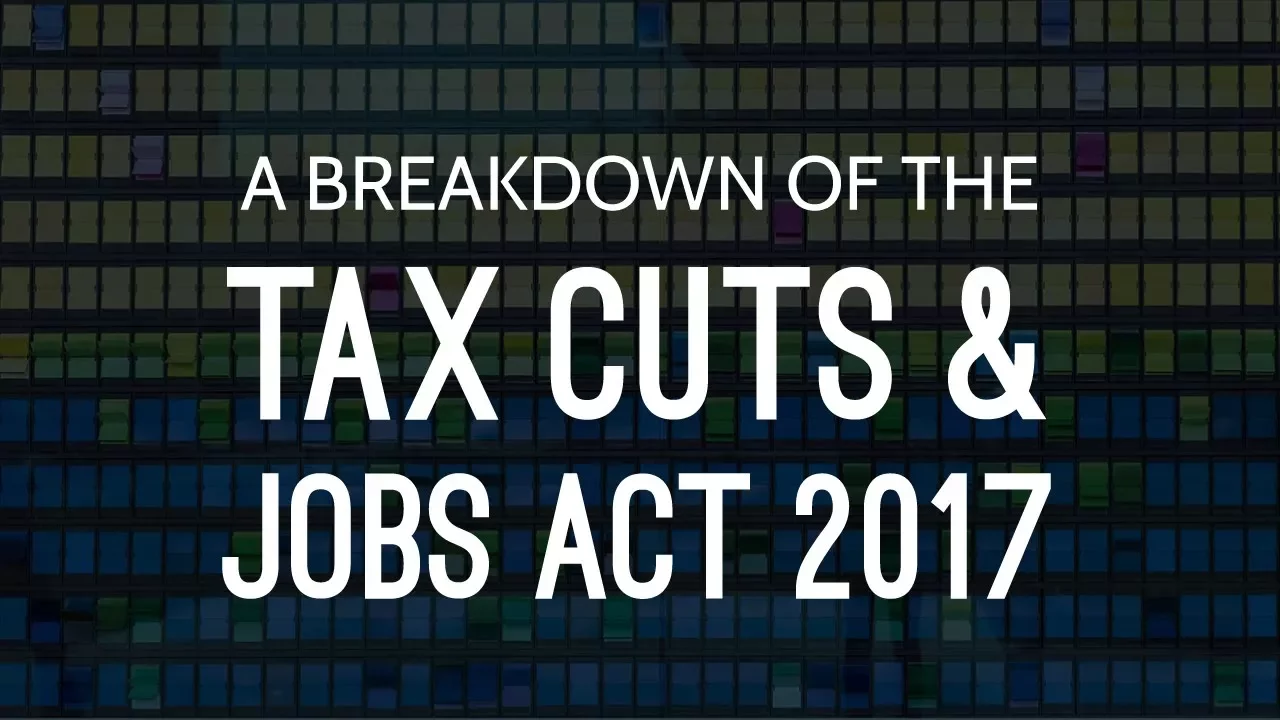
The Tax Cuts & Jobs Act of 2017 introduced significant changes to the U.S. tax code, including reducing personal income tax rates across seven brackets with the top rate dropping from 39.6% to 37%, doubling the estate tax exemption threshold from $5.6 million to $11.2 million per individual, lowering the corporate tax rate from 35% to 21%, implementing a 20% deduction for business owners under $315,000 income, and eliminating the individual mandate penalty under the Affordable Care Act starting in 2019.
Click to watch →
Deep Dive
Alternative policy mechanisms for encouraging healthy individuals to maintain coverage, such as continuous coverage requirements or auto-enrollment.
Health Insurance Mandate
822
The individual mandate is essential for universal healthcare coverage because without it, healthy people would avoid buying insurance, causing premiums to rise as only sick individuals remain in the insurance pool, ultimately collapsing the marketplace; there are four mechanisms to achieve universal coverage: requiring insurance with financial penalties (the Affordable Care Act approach), continuous coverage requirements, higher premiums for late enrollment, and auto-enrollment in basic health plans, though the mandate remains the most effective method despite being politically unpopular.
Click to watch →

The Health 202 Live: The health care debate on Capitol Hill
124
Beyond the individual mandate, alternative mechanisms can incentivize healthy people to purchase insurance. Auto-enrollment systems, which automatically enroll individuals in coverage unless they opt out, have proven effective in programs like CHIP (Children's Health Insurance Program) and Medicare. Louisiana implemented auto-enrollment for Medicaid expansion, adding 450,000 people to coverage within 18 months without requiring an individual mandate. These alternatives demonstrate that mandatory enrollment approaches are not the only way to expand coverage and achieve healthcare reform objectives.
Click to watch →

Stabilizing the Individual Health Insurance Market
237
Continuous coverage provisions (requiring people to maintain coverage or face penalties) are difficult to implement because people may decide not to participate if they think they can get coverage through other means in the future (employment, Medicaid, etc.). The mandate's penalty provides a stronger incentive because it applies regardless of future circumstances. However, if the mandate were better publicized and enforced, it could have more impact. The components of the mandate are important for long-term market health and stability, and simply replacing it with continuous coverage provisions may not achieve the same results.
Click to watch →
Avik Roy on the Rollout of the House GOP Obamacare Replacement 2017-03-08
872
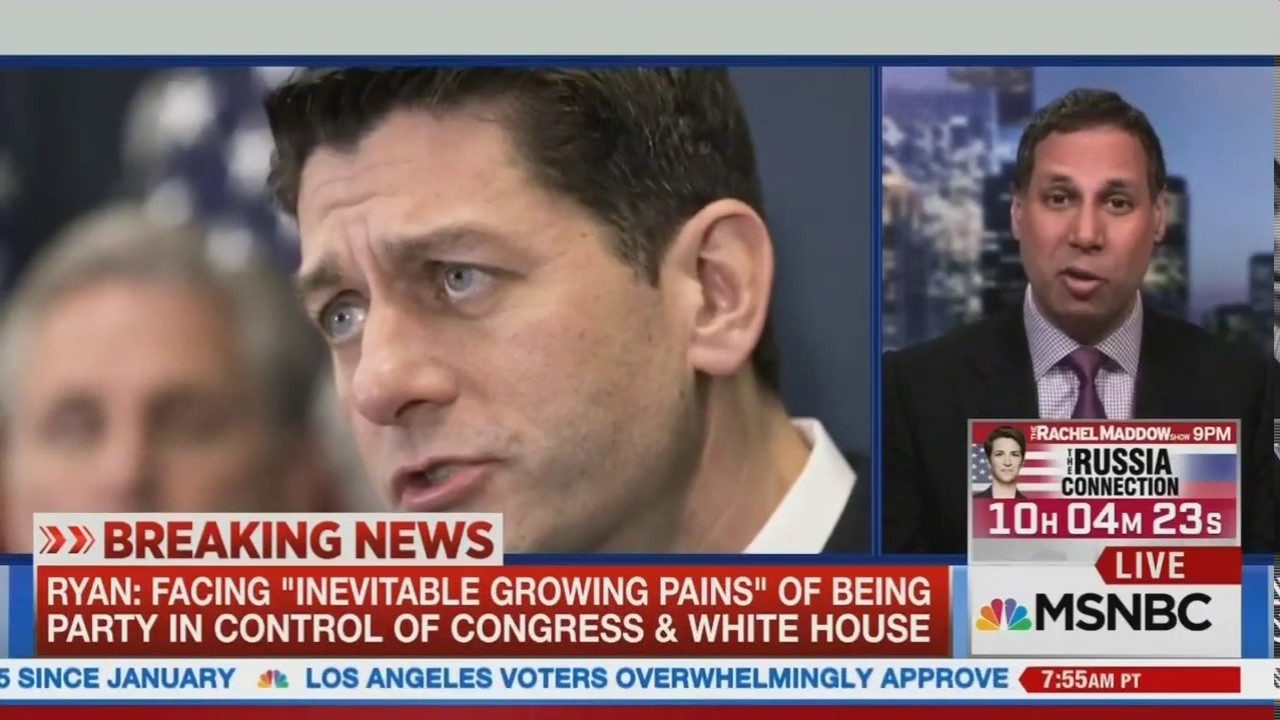
The proposed plan includes a 30% premium surcharge for individuals who allow their insurance coverage to lapse for a couple of months. This penalty is intended to encourage continuous coverage and prevent gaps in insurance. However, this creates a perverse incentive: healthy individuals may choose to remain uninsured rather than pay the surcharge, while sick individuals may take advantage of the surcharge despite it being a relatively small increase compared to potential premium doubling for those with serious health conditions. This dynamic could accelerate the 'death spiral' where the insurance pool becomes increasingly unbalanced between healthy and sick participants.
Click to watch →

Examining the Continuum of Coverage Proposals
123
Auto-enrollment mechanisms are critical for achieving universal coverage but involve trade-offs. Limited auto-enrollment targets identifiable populations like SNAP/TANF recipients eligible for zero-premium coverage, making automatic enrollment feasible. Continuous auto-enrollment with retrospective enforcement handles people who haven't voluntarily enrolled by enrolling them in the public option at year-end, with retroactive premium collection. This absorbs adverse selection into federal costs. The trade-off is that requiring contributions (through premiums or taxes) differs from the unenforced individual mandate penalties. Effective auto-enrollment requires creating copper plans with zero premiums, broader regulatory restructuring to lower premiums, and income-related deductibles to provide meaningful coverage without forcing people into high-deductible plans.
Click to watch →
Deep Dive
The landmark Supreme Court cases challenging the constitutionality of the individual mandate (e.g., National Federation of Independent Business v. Sebelius).
National Federation of Independent Business v. Sebelius Case Brief Summary | Law Case Explained
65.7K
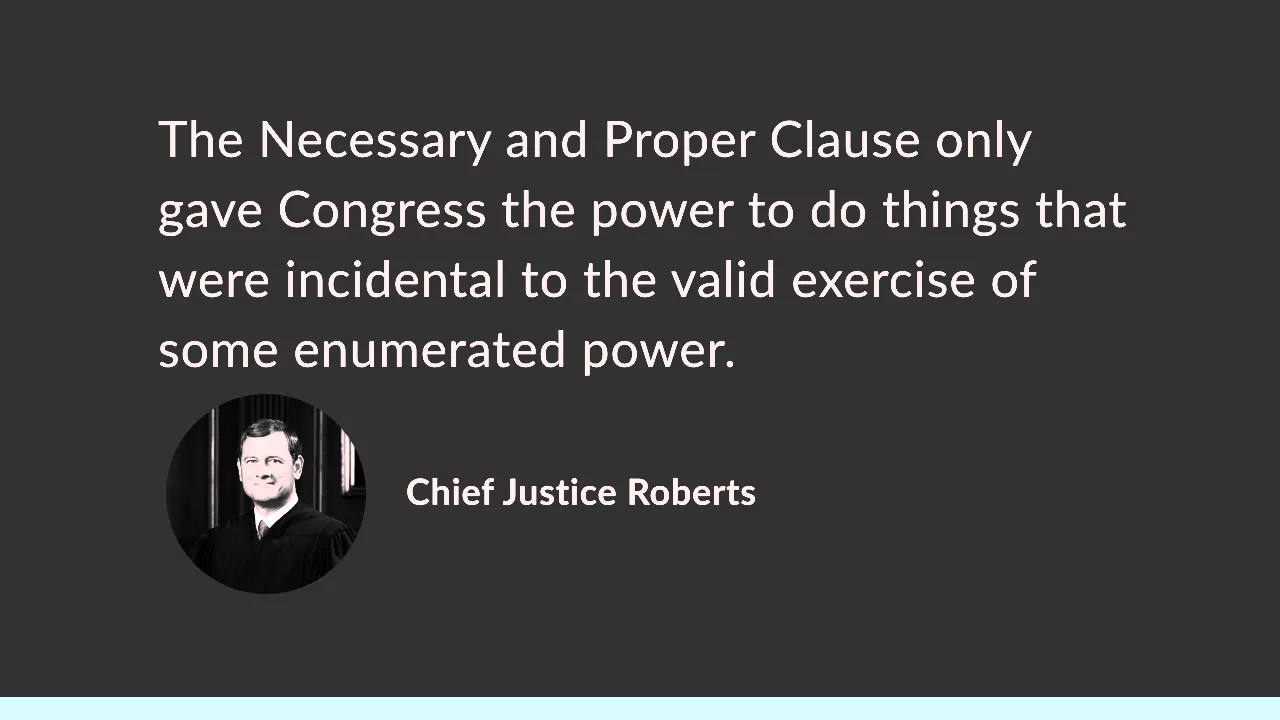
In National Federation of Independent Business v. Sebelius (2012), the U.S. Supreme Court upheld the Affordable Care Act's individual mandate as a valid exercise of Congress's taxing power, while ruling that the Medicaid expansion provision violated federalism principles by threatening to withhold existing Medicaid funds from states that refused to expand eligibility. Chief Justice Roberts, writing for the majority, determined that the Commerce Clause did not authorize Congress to compel individuals to purchase health insurance, but the penalty provision could be constitutionally interpreted as a tax. The Court also held that conditioning existing federal Medicaid funds on states accepting expanded eligibility was impermissibly coercive, though Congress could offer new grants with such conditions. Justice Ginsburg concurred that the individual mandate was constitutional under the Commerce Clause, while Justice Scalia dissented entirely, arguing neither the Commerce Clause nor the taxing power authorized the mandate.
Click to watch →

Legal Challenges to Obamacare Explained (Dissed Season 1 Episode 3)
326
The individual mandate requires individuals to purchase health insurance or pay a penalty. In NFIB v. Sebelius (2010), the Supreme Court upheld this mandate in a 5-4 decision authored by Chief Justice John Roberts, shocking observers and eliciting vigorous dissent. This case set the stage for subsequent challenges, including California v. Texas, which represents the seventh Supreme Court case involving the Affordable Care Act.
Click to watch →

Healthcare Reform in the Supreme Court 4-17-12
238
The Supreme Court's historic 2012 case NFIB v. Sebelius presented a landmark constitutional challenge to the Affordable Care Act's individual mandate, which required Americans to purchase health insurance or pay a penalty. The central legal question was whether Congress had constitutional authority under Article I to compel citizens to engage in commerce (the Commerce Clause), to implement ancillary provisions (the Necessary and Proper Clause), or to impose a tax (the Taxing Power). The government argued the mandate was a tax, while challengers contended it was a penalty backed by a separate requirement, thus falling outside Congress's taxing power. The case involved unprecedented oral arguments spanning six hours—the longest in over 50 years—and raised fundamental questions about the scope of federal power, the limits of judicial review, and the relationship between federal and state authority under the Constitution.
Click to watch →

Scholars and Scribes Review the Rulings: The Supreme Court’s 2020-21 Term
1.1K
In NFIB v. Sebelius, the Supreme Court addressed the constitutionality of the Affordable Care Act's individual mandate. The Court held that the mandate could not be supported by the Commerce Clause or Necessary and Proper Clause, but could be upheld as a tax under the Taxing Power. The Chief Justice adopted a 'saving construction' that interpreted the mandate as merely imposing a tax rather than a true mandate. When Congress later reduced the penalty to zero through budget reconciliation, the Court in Texas v. United States faced the question of whether this change destroyed the statutory basis for the saving construction. The Court rejected the 'bootstrap theory of standing' that would allow plaintiffs to bootstrap together several provisions to establish standing. The Court held that even if the mandate were inseparable from other provisions, the injury must be traceable to something that can be redressed by the court. Since the mandate was not being enforced, there was no injury that could be redressed.
Click to watch →
ConLaw Class 6: Enumerated Powers IV
1.9K
In NFIB v. Sebelius (2012), the Supreme Court upheld the Affordable Care Act's individual mandate as constitutional under Congress's taxing power, rather than under the Commerce Clause, by adopting a 'saving construction' that interpreted the penalty as a tax rather than a regulatory penalty; the Court also ruled that the Medicaid expansion provision was unconstitutionally coercive under the Spending Clause, requiring states to choose between accepting the expansion or maintaining their existing Medicaid programs without losing any federal funding.
Click to watch →
Deep Dive
A comparative analysis of universal healthcare models in other developed nations, such as Switzerland's or Germany's use of mandates and subsidies.

Comparing US Healthcare versus Rest of the World -- Is America #1?
612
The Swiss and German models represent different approaches to universal healthcare. The Swiss model requires everyone to buy insurance with community-rated guaranteed-issue plans, 30% subsidies for major costs, and a mandate similar to the Affordable Care Act. Most doctors work on fee-for-service, and patients have good doctor choice. The German model has 86% of people using the national public system with premiums based on income, paid by employers and employees with subsidies. Experts generally prefer the Swiss model because it delivers superior outcomes and has a system similar to Obamacare exchanges with regulated competition among insurers and an individual mandate. Switzerland has fewer unnecessary hospitalizations and lower heart attack mortality rates.
Click to watch →

One to One: Dr. Sherry Glied
365
All other high-income developed countries have universal healthcare coverage, while the US does not. These countries achieve universal coverage through different models: Canada uses single-payer public funding, Switzerland and the Netherlands use competitive private insurance with government mandates, and the UK employs government-employed physicians. Despite these differences, all share universal coverage as their common feature.
Click to watch →

Destiny Debates With Yale Students, Hosted By Yale Effective Altruism
785
Switzerland and Germany have healthcare systems that differ from Medicare and Medicaid. Switzerland uses health vouchers and catastrophic insurance, and was the primary model for Obamacare's insurance mandate. Germany works with trade unions to ensure access to health insurance. In both cases, private insurance companies still perform most of the work, rather than the government setting up its own insurance system.
Click to watch →

Modeling Swiss Health Care
6.8K
Switzerland implemented a universal healthcare system in 1994 through national referendum, guaranteeing healthcare as a human right with mandatory insurance for all citizens; the system features uniform pricing for basic coverage, government subsidies for those who cannot afford premiums, and patient choice in selecting doctors and insurers, though it remains expensive with costs exceeding other developed nations and requires continuous fine-tuning to address rising healthcare expenses driven by aging populations and advanced medical technology.
Click to watch →

Healthcare Around the World
2.3K
Countries achieve universal coverage through different models: socialized medicine (Britain, Scandinavia) with government-owned hospitals; private models (Germany, Switzerland, Netherlands) with private providers and government subsidies; and blended models (Canada) with private providers and government payment. Premiums are often income-based percentages, ensuring affordability. Government subsidies ensure coverage for those who cannot afford premiums, while maintaining choice through multiple insurance options.
Click to watch →
Death Spiral
Death Spiral
0:00- 1
Insurance market risks collapse if only sick people enroll, raising premiums.
- 2
Obamacare bans denying coverage or charging based on health status.
- 3
Individual mandate penalties compel healthy people to buy insurance.
Criticisms and Market-Based Alternatives to the Individual Mandate
Critics of the individual mandate argue that forcing individuals to purchase a commercial product is an unprecedented government overreach that infringes on personal liberty. From an economic standpoint, opponents contend that the mandate unfairly burdens younger, healthier, and lower-income individuals by forcing them to subsidize older, sicker pools through inflated premiums. Rather than coercive mandates to prevent 'death spirals,' free-market advocates propose alternatives such as allowing insurance sales across state lines, expanding Health Savings Accounts (HSAs), and utilizing targeted high-risk pools to subsidize those with pre-existing conditions. Additionally, some policy analysts argue the mandate was practically ineffective, as the financial penalties were too low to compel participation among the healthy, suggesting that positive incentives like premium subsidies are far more effective at encouraging enrollment than government penalties.
The basic mechanics of health insurance, including risk pooling, premiums, and the concept of adverse selection.
The fundamental goals of the Affordable Care Act (ACA), particularly its provisions regarding pre-existing conditions.
The concept of 'Guaranteed Issue' and 'Community Rating' regulations in health insurance markets.
Basic economic principles of market failure, specifically asymmetric information between buyers and sellers.
The impacts of the Tax Cuts and Jobs Act of 2017, which reduced the individual mandate penalty to zero dollars.
Alternative policy mechanisms for encouraging healthy individuals to maintain coverage, such as continuous coverage requirements or auto-enrollment.
The landmark Supreme Court cases challenging the constitutionality of the individual mandate (e.g., National Federation of Independent Business v. Sebelius).
A comparative analysis of universal healthcare models in other developed nations, such as Switzerland's or Germany's use of mandates and subsidies.
173K views1.8Klikes2:11@VoxOriginal Release: 2014-03-19
"Obamacare" "The obamacare sign-up deadline gets closer and closer" "The most contentious part of the law is the individual mandate" "The heart of the law."
To be affordable, health insurance needs a lot of healthy people for every sick person it signs up. But the problem with that is that Health insurance is worth more to sick people than to healthy people. Sick people want it more. And they will pay more for it.
So here's what can happen. You get a really good health insurance package. Really good.
So all the sick people rush to buy it. Healthy people decide it's too expensive because of all these sick people pushing up premiums. So the very healthiest, the people who think they need it the least, leave. That raises premiums.Those higher premiums push the next healthiest group out too. Up go premiums again, out go the next healthiest group. Over and over and over again.
That is a death spiral.
Until now, insurers had a real easy way to prevent death spirals. Just don't sell health insurance to sick people. Or, if you do, make them pay so much, that you don't have to charge healthy people more.
But Obamacare says they can't do that. Insurers need to sell to sick people. They can't even charge them more than they charge healthy people. The can't discriminate based on pre-existing conditions at all.
Enter the individual mandate. Now rather than keeping sick people out. The idea is we're going to pull healthy people in.
Starting this year anyone who doesn't have health insurance for longer than three months has to pay at least $95, or 1% of modified adjusted gross income. That's your income minus some tax deductions. You can calculate it online. We call it MAGI for short.
The penalty is even steeper next year.
So imagine your family's MAGI is $80,000 bucks.If you go without health insurance this year, it's $800 to the government. Next year its $1,600. And the year after that, $2000. Ouch.
Now that is a lot less money than health insurance usually costs. But you don't get anything for it. You don't get to see the doctor. You don't get your hospital bills covered. And so people, even young and healthy ones, tend to buy insurance rather than paying the penalty.
We know that from Massachusetts, where Mitt Romney actually signed one of these things into law. People ended up wanting health insurance. They just needed that push.
In Massachusetts, that was enough to prevent a death spiral. The question is whether it will be in the United States too.
Up Next
5:41
Why US Healthcare Costs More: Price Negotiation Explained
@Vox
6.5M views•2017-11-30

5:07
Impact of Yuan in Indo-Russian Trade Amid Sanctions
@WION
261.9K views•2022-07-01
10:33
Behavioral Economics Explained: Rationality, Nudges, and Risk
@crashcourse
1.1M views•2016-03-12

113:18
The Age of Easy Money: Fed & Inflation | Full Documentary
@frontline
21.2M views•2023-03-15
Related Study Plans & Knowledge Roadmaps
Structured learning paths in Economics
economics
Sovereign Debt: Defaults, IMF & Restructuring
01Introduction to Sovereign Debt & Government Bonds
02Debt Sustainability & Credit Ratings
03Anatomy and History of Debt Crises
+ 2 more learning modules
12h5 modules
Explore Roadmap
economics
Market Design: Matching Theory & Gale-Shapley
01Introduction to Market Design and Price-Free Markets
02Two-Sided Matching & The Gale-Shapley Algorithm
03School Choice Systems and Mechanism Design
+ 2 more learning modules
10h5 modules
Explore Roadmap
economics
Impossible Trinity: Forex, Capital & Policy
01Introduction to Monetary Policy and Central Banking
02Exchange Rates and International Capital Flows
03The Mundell-Fleming Model
+ 2 more learning modules
8h5 modules
Explore Roadmap
economics
Healthcare Economics: Market Failures & Systems
01Introduction to Healthcare Markets and Market Failure
02Asymmetric Information and Adverse Selection
03Moral Hazard and Insurance Design
+ 2 more learning modules
12h5 modules
Explore Roadmap