










![Because Regular Mac & Cheese Isn’t Extra Enough. [WTF Ep 406]](https://i.ytimg.com/vi/XqvuLpvmw_w/maxresdefault.jpg)




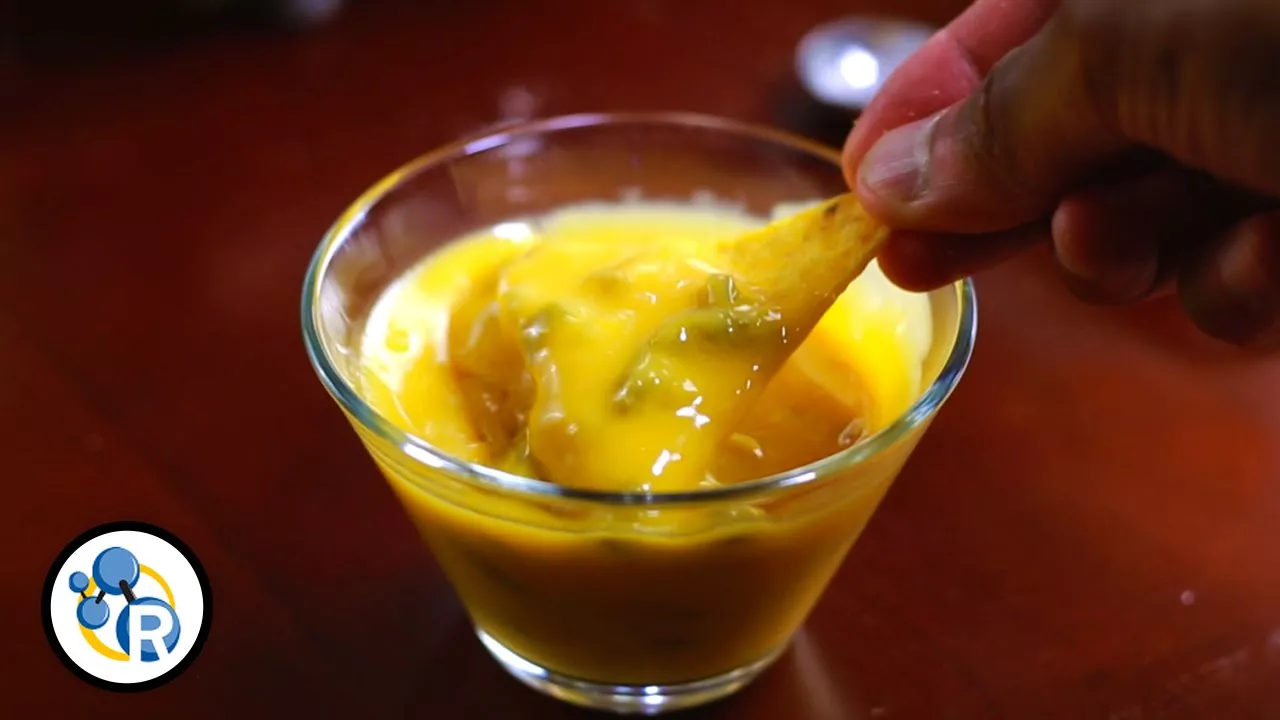






Emulsifying salts like sodium citrate or processed cheese enable silky smooth mac & cheese by unfurling milk proteins (casein) to bind water and fat together; the sauce must be stirred constantly during heating to form a stable protein web, and it thickens as it cools, requiring adjustments in liquid or cheese during preparation.
Emulsifying Salts in Mac and Cheese: Two Methods
Added:Understanding the basic chemistry of food emulsions, specifically how hydrophobic (fat) and hydrophilic (water) phases interact.
Knowledge of cheese composition, particularly how casein proteins hold fat and water together in a stable matrix.
The effect of heat on cheese, including why traditional cheeses melt, break, or become greasy when heated directly without stabilizers.
Familiarity with traditional sauce-making techniques, such as using a flour-and-butter roux (Mornay sauce) to stabilize cheese sauces.
Exploring other chemical emulsifiers and chelating agents used in modernist cuisine, such as sodium hexametaphosphate and sodium phosphate.
Applying emulsifying salt chemistry to develop stable fondues, cheese dips, and sauces using notoriously difficult-to-melt cheeses like aged cheddar or blue cheese.
Investigating the industrial food science processes behind the manufacturing of processed cheese products and shelf-stable cheese sauces.
Studying the role of hydrocolloids (like xanthan gum or gellan gum) in stabilizing food structures and modifying viscosity alongside emulsifying salts.
2.8M views65.1Klikes9:40Original Release: 2020-06-11
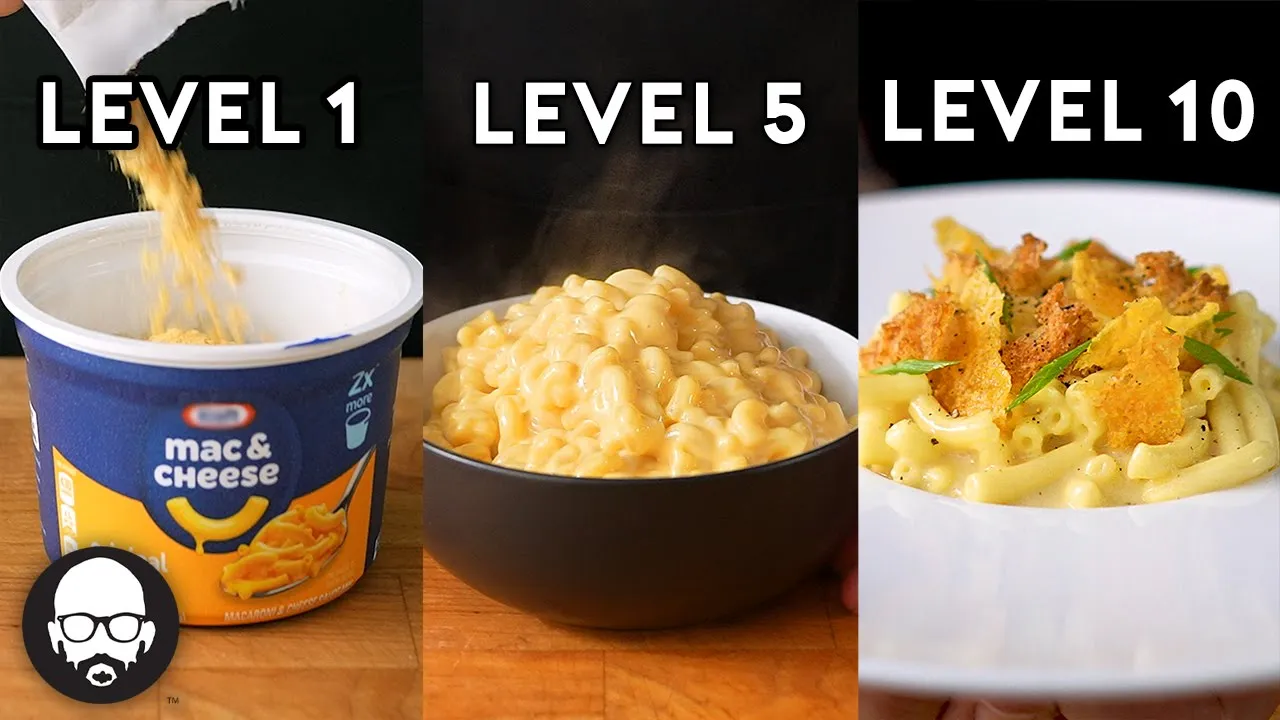
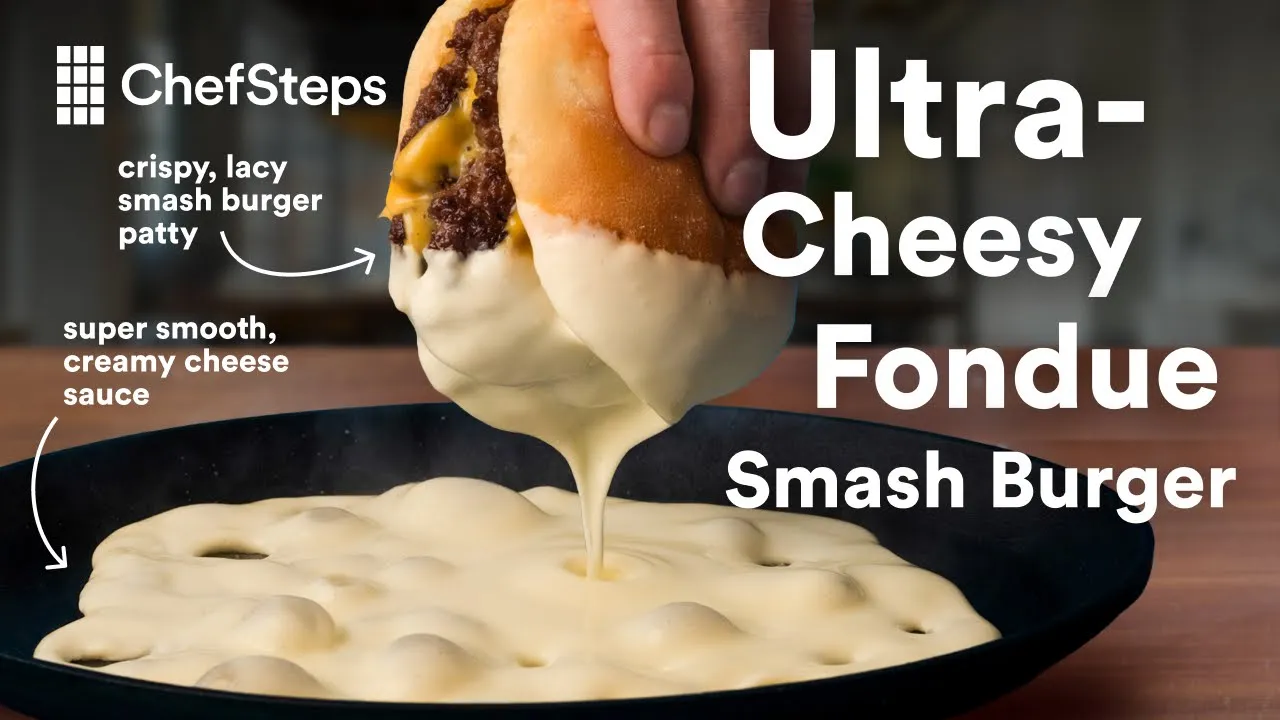
I'm gonna show you a couple ways to do a homemade stovetop mac & cheese that is every bit as silky smooth as the stuff you get from a box. The reason that stuff is so smooth is because of emulsifying salts: usually sodium phosphate and/or sodium citrate. These have the effect of kinda unfurling the milk protein casein, which is then able to bind with both water and fat. It brings the two phases together into a protein web — a thick, luscious sauce — far smoother than a normal homemade cheese sauce brought together with starch.
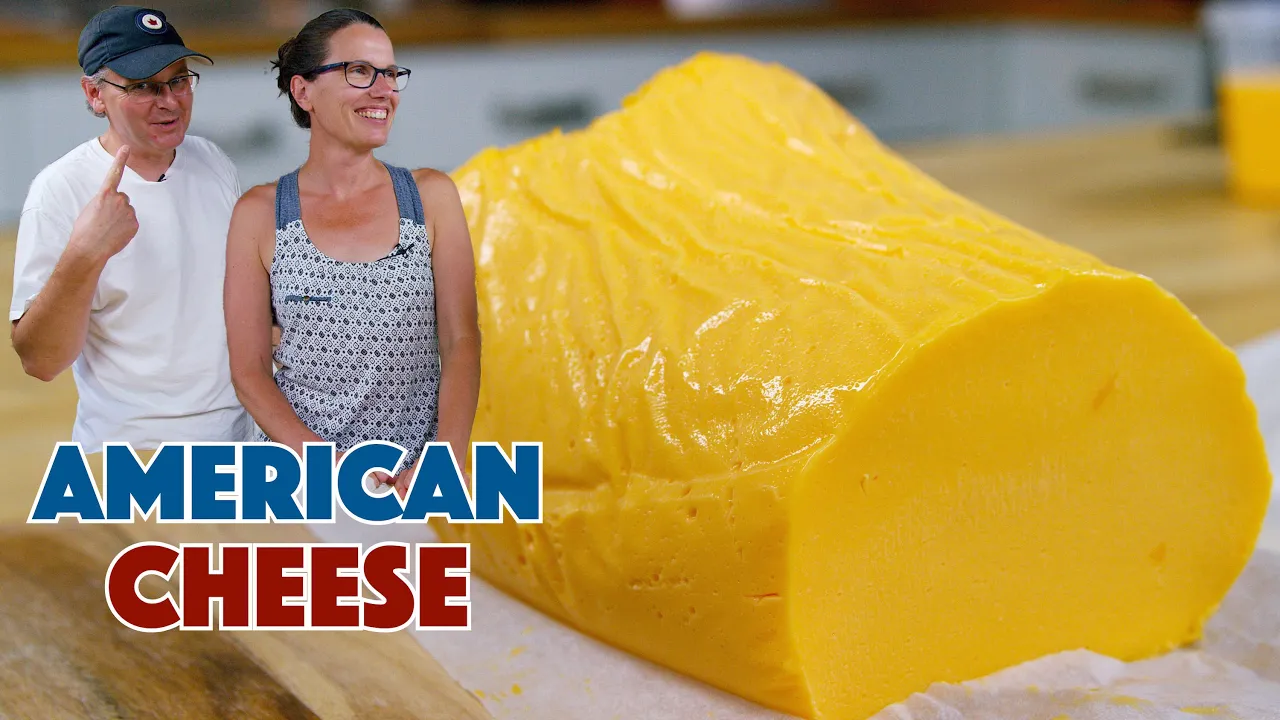
One way to get your own emulsifying salts at home is to use processed cheese — this is called "American cheese" here in the U.S. The Brits call it a "cheese slice." It's usually cheddar and maybe colby cheese all ground up and then reconstituted with emulsifying salts that make it unnaturally smooth-melting.
There's actually enough sodium phosphate and citrate in here to emulsify a bunch more cheese and milk. So I'm gonna use half American cheese, and half something else. Any real cheese that is reputed to melt reasonably well is gonna work. That'll generally be a semi-firm cheese, and I would use something strong and distinctive. I think that's the whole point of doing this instead of making mac from a box.
Smoked cheeses work great — smoked gouda or smoked cheddar, sharp cheddar — the cheddar in American cheese is comparatively young and bland, jack cheese would be a more mild choice, a semi-firm blue cheese would be really funky, but I'm gonna go with this semi-firm goat's milk cheese. This'll bring a nice acidic twang. I'll grate that up.
The recipe I'm going to show you makes one large dinner-size portion or it'd serve 2-4 people as a side dish. You can multiply it as needed. We need one half cup of grated cheese packed — packing it down helps you get a more accurate measurement. By weight, we're looking for about 50 grams of real cheese. And we need a roughly equal quantity of processed cheese — that'll be about three of these slices.
Get some water on the boil for your macaroni. Big pinch of salt in there, and I'm gonna use elbow macaroni, which is the classic choice, at lease in America. Though I will use a larger size than what Kraft gives you in the box.
When the water is boiling, that goes in. I'm putting in a quarter of the box — that's a quarter pound. A quarter of a 500 gram box in Europe for example would be 125 grams, or like 10 more grams than this, but this is not an exact science.
Just cook it as long as the instructions say. In this case, that's 7 minutes, which is the perfect amount of time to make our cheese sauce. Into a cold pan goes our grated real cheese and our torn-up processed cheese, with just under half a cup of milk — 100 ml.
And then 1-2 tablespoons of butter, depending on how rich you like it. Two tablespoons would be 30 grams.
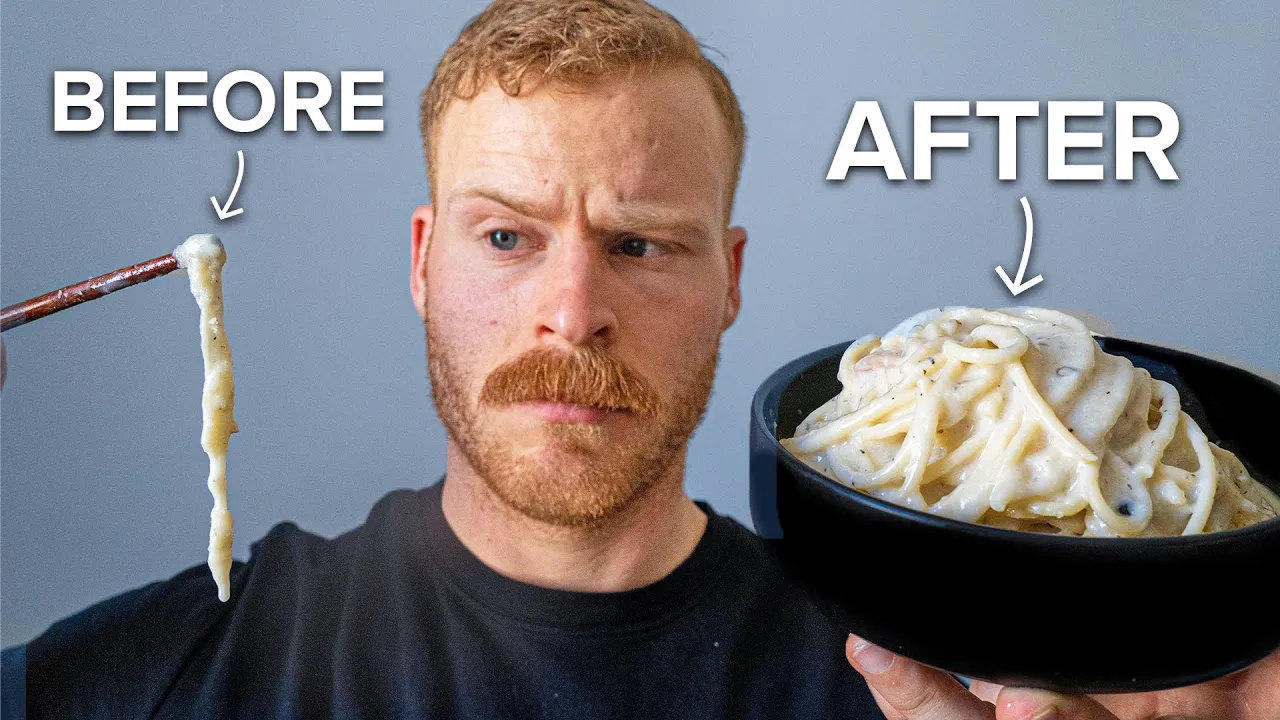
Turn the heat on about medium high, and then you have to stir this constantly until it has melted smooth. It'll just take a few minutes, but you have to stir it constantly to make the emulsion form. Here's what happens if you don't stir constantly. I've ignored this for a couple minutes. Now I'll stir it up, everything's melted, but you can see on the side of the pan there how grainy the sauce is. And it's totally loose and watery. The emulsion never formed. The sauce curdled — it's broken. People have ways of fixing this, but I don't think any of them really work.
Let's just start over. 100 ml or a little less than half a cup of milk in a cold pan.
You might try starting with a third of a cup. You can always add more later if the sauce is too thick for your liking. I'll tear in my three slices of American cheese. There's my half a cup, packed, of grated real cheese. We're looking for a hundred grams of cheese total. And my 1-2 tablespoons butter. Heat goes on medium high, and this time we'll stir it constantly and check it out — the emulsifying salts are going to work on the milk proteins, exposing the hydrophilic and lipophilic ends of those proteins which then join up with the water and fat molecules in the pan.
After a few minutes of constant stirring, we've got a smooth, stable, thick emulsion — probably too thick. I was conservative with my milk up front. By the time this cools to eating temperature it'll be gluey. It should look a little too loose when it's very hot.
So I'll just stir in a little milk. If you over-shoot on liquid, if it seems to thin, you can just melt in a little more of the processed cheese. You could use the real cheese instead, but at some point you would exceed the emulsifying power of the salts in there, so it's safer to adjust with the processed cheese.
Noodles are done — I'll just drain them. I usually drain through a gap in the pot lid — that way I don't have to get a strainer dirty. Dump that in, and there we go. If it looks a little too soupy at this stage, that's good. The sauce will thicken as it cools to eating temperature. You could taste this and then add any seasonings you want. I usually don't think it needs any additional salt, but you might.
If you wanted to make this slightly less of an empty calorie bomb, you could do what I do for my kids, which is stir in some frozen peas directly at this stage. They'll thaw instantaneously in the pot. Real good.
In the second half of this video, I'm going to show you how to make this if you don't have access to processed cheese slices, and I'll show you some ways to make it a little bit more interesting or flavorful. But I do love the simple version — sauce as smooth as Honey, which happens to be the sponsor of this video.
Honey is a free extension you install on your web browser. And whenever you shop online, it'll find promo codes that'll save you money. It takes two clicks to install for free, and I'll show you how it works. Mac & cheese isn't my guiltiest pleasure. My guiltiest pleasure is Papa John's. The kids love the breadsticks. So I go online to order, and when I get to the check-out page, Honey pops up and asks if I want to try some coupon codes. Absolutely.
It does its thing, and boom, I just saved 20% on this order. It's that easy, and it'll help you get the best deals at Amazon, Grubhub, Walmart, Target, Nintendo, almost any place you could think of. You can also just go to JoinHoney.com and browse for deals there.
Honey does not sell your personal information. They get a sales commission from the companies you shop from. That's how they make money. There's literally no reason to not use Honey for everything you buy online. It's free to use and installs in just two clicks. Get Honey for free at joinhoney.com/ragusea. That's joinhoney.com/ragusea. Link is in the description, you'll be doing us both a favor. Thank you, Honey.
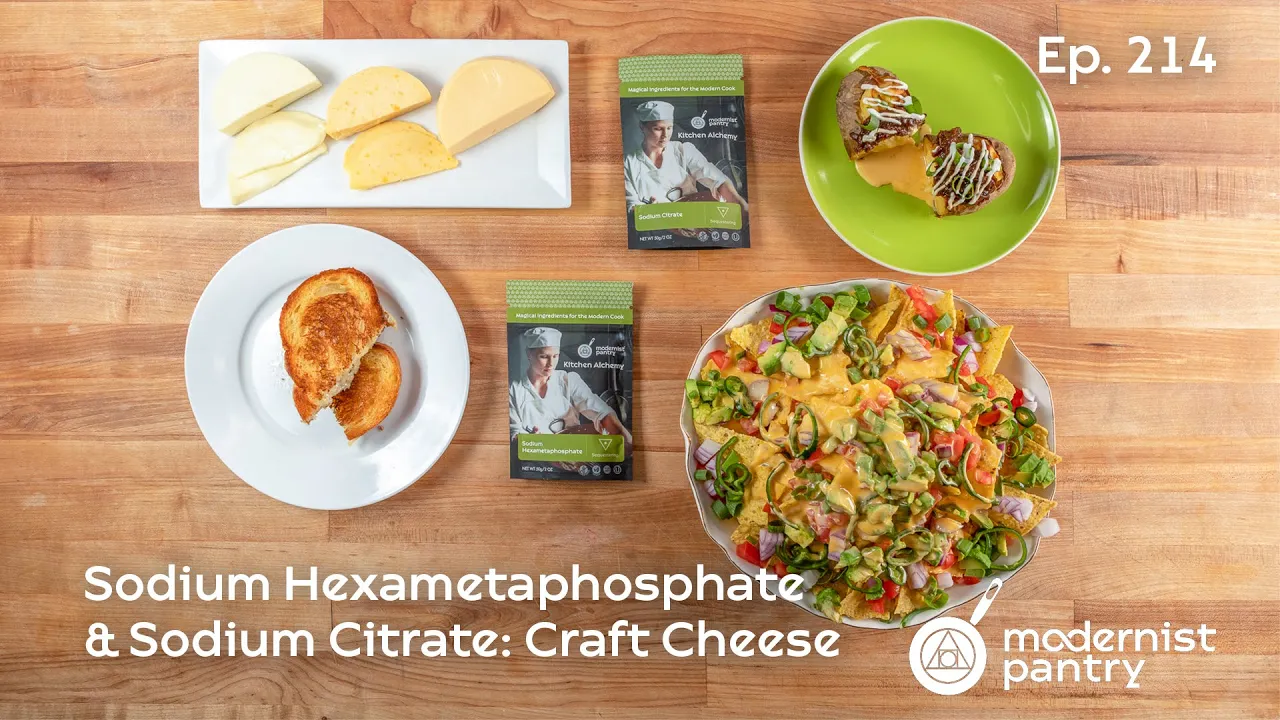
Now, say you can't get processed cheese slices, or say you don't want to use them. You only want to use high quality, real cheese. You can buy your own emulsifying salts on the internet. This is sodium citrate. It's cheap and it lasts forever in your pantry. It tastes like slightly tart salt, which makes sense. It is the sodium salt of citric acid.
Same recipe basic recipe. We need a hundred grams of cheese total. I'm gonna go with my favorite cheese combination for mac & cheese, which is smoked gouda and super-sharp cheddar.
But get creative and use whatever combination of semi-firm cheeses you like. Again, same basic recipe — I'm looking for one cup of packed shredded cheese, or 100 grams. It's nice to have a little extra in case you decide you want to add more. You could also just scatter some of it over the top at the end, for some textural contrast.
Water on the boil with a big pinch of salt, and speaking of textural contrast, let's make a little breadcrumb topping. Stovetop mac does not have the naturally browned top you get on baked mac, so it can be a little homogenous and boring to eat. We can fix that by melting some butter in a pan and browning some breadcrumbs in it. I'm doing like half a cup of panko into a couple tablespoons of butter. You could use any bread crumbs but panko is the crispiest.
This would be enough topping for a whole family meal of mac & cheese — a whole box of noodles.
My recipe times four. If you're just making one or two portions, I'd do like a quarter of this topping, and I would absolutely just eyeball it. Heat is on medium high and I'm stirring constantly. When it starts to brown, it'll happen very fast, and that's when you can optionally stir in some herbs or spices. I'm just doing a little of the Herbs de Provence blend. Use whatever, but cooking it a little bit at the end here helps to intensify the flavor, just be careful about burning it. Nice and brown all the way through — I will dump that onto some paper towels to cool off and drain. The paper towels will ensure that they're still crispy when we eat.
Again, a quarter-pound of elbows in the boiling water. A quarter of a box — one big dinner-size portion or a few portions as a side dish. Into my cold pan goes half a cup of milk — again, I usually put in a little less to start with, because I can always add more later. The exact amount of moisture you need could depend on the cheese you're using. You could use evaporated milk for a sweeter flavor, or alternatively you could just use water if you have trouble digesting lactose. There's comparatively little lactose in the cheese.
Now, my recipe in the description calls for a teaspoon of sodium citrate, like 4 grams.
But just like the milk, I'm putting in a little less than a teaspoon, because I can always add more. In goes my packed cup of grated cheese — 100 grams, and 30 grams of butter — a couple tablespoons, though you could use less.
Heat on medium high, and remember, stir it constantly. It'll just take a few minutes, and look at that. Don't take it past a simmer. It could burn easy. I'm turning the heat off.
If it's too thick, you can add more milk. If it's too thin, you could put in a little more cheese or a little more sodium citrate. The sodium citrate acts like a thickener in a cheese sauce like this. But remember that it's salty. You could over-season your sauce with it.
I think this looks perfect as-is. I like my sauce on the thick side. I'll drain off those noodles, and in they go. Another way to loosen this would be to let some of the boiling water go in with the noodles.
Remember, if it looks a little too loose at this stage, that's good. It'll thicken as it cools. Now is when I would consider adding some additional flavors. I'm gonna go with like a quarter teaspoon of garlic powder and mustard powder. Ahem, a quarter teaspoon of mustard powder. OK fine, I'll take off the shaky lid thingie.
You could go with whole mustard if you wanted to. I love that, but remember it's acidic, so it ends up making this taste more like pasta salad than mac & cheese. Which is not a bad thing, it's just different.
With a baked mac & cheese, you have to guess about the flavoring amounts. But with a stovetop mac, we're flavoring the finished product, so we don't have to guess. We can just mix in a little bit, taste it, mix in a little more until we like it. You can't lose! Into a bowl that goes and then scatter on that beautiful crispy topping. Now we've got some nice heterogeneous texture — each bite is a little bit different.
That is so good, and it took 15 minutes, start to finish. Don't be scared about using the amazing food additives that science hath wrought. You're probably eating emulsifying salts all the time in processed foods. There's sodium citrate in soda, for example. You're probably consuming it anyway, you might as well use it to get the most preternaturally gooey, smooth cheese sauce you've ever made. Go science!
Up Next

15:19
How to Choose the Healthiest Cooking Oils: A Nutritionist's Guide
@joinZOE
78.5K views•2022-11-07

12:54
Triumph of Orthodoxy Icon: Byzantine Art & History Explained
@BenCallan
2.1K views•2024-08-06

9:49
FastAPI vs Flask vs Django: Choosing the Right Python Web Framework
@TechWithTim
302.5K views•2024-05-26

1:42
Game of Thrones Opening Credits: A Cinematic Analysis
@gameofthrones
46.3M views•2011-04-18
Related Study Plans & Knowledge Roadmaps
Structured learning paths in General & Interdisciplinary Studies
general-studies
Elevator Engineering: History, Physics & Cities
01From Hoists to Safety Brakes: The Dawn of Vertical Lift
02Hydraulic vs. Traction: The Engineering Physics of Elevators
03Modern Speed, Safety, and Algorithms
+ 2 more learning modules
12h5 modules
Explore Roadmap
general-studies
Rubber: Material Science, History & Geopolitics
01Origins of Natural Rubber & Mesoamerican History
02The Chemistry of Natural Rubber & Vulcanization
03The Geopolitics of the Rubber Boom & Colonization
+ 2 more learning modules
12h5 modules
Explore Roadmap
general-studies
Containerization: Evolution, Logistics & Trade
01Ancient Trade & Bulk Cargo: Amphorae to Barrels
02The Industrial Revolution & Cardboard Packaging
03The Containerization Revolution: Malcom McLean
+ 2 more learning modules
12h5 modules
Explore Roadmap
general-studies
Textile Tech: Evolution, Labor & Global Impact
01Pre-Industrial Textiles: Handloom & Cottage Industry
02Mechanization: The Spinning Jenny to the Power Loom
03The Factory System & Global Labor Transformation
+ 2 more learning modules
10h5 modules
Explore Roadmap