

















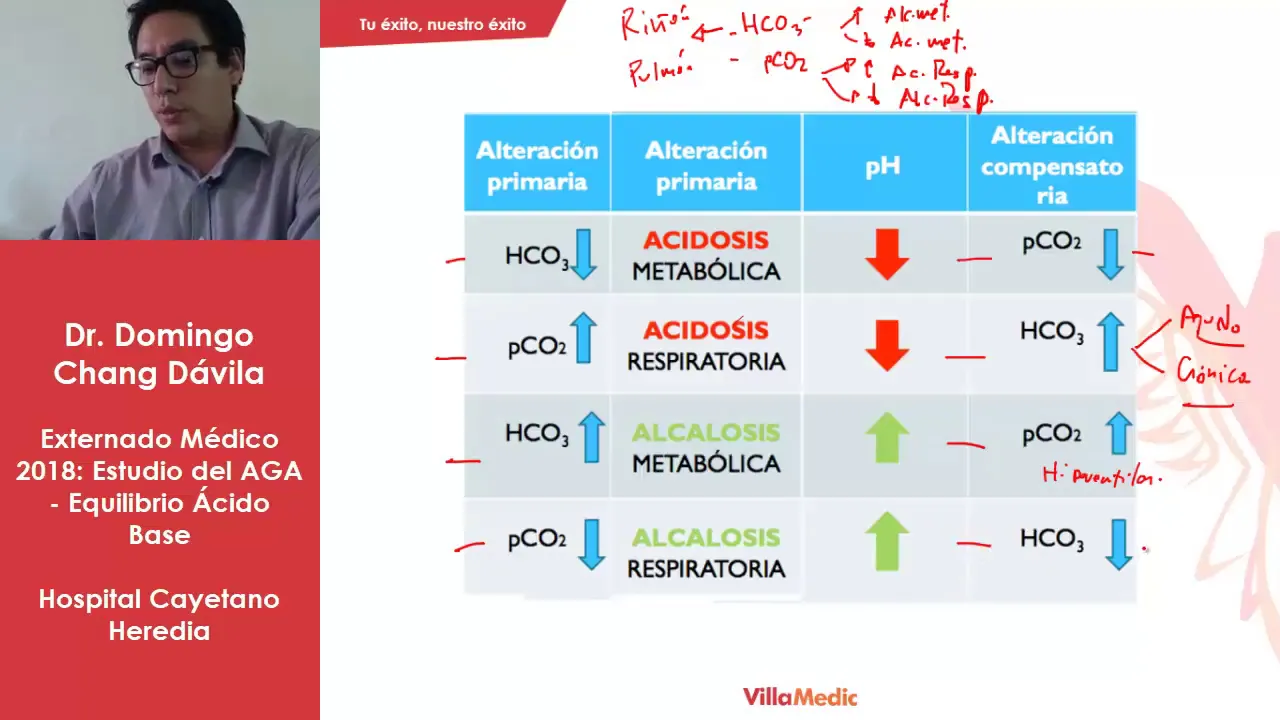




Acid-base disorders are classified into four primary categories: metabolic acidosis (with elevated anion gap >12 mEq/L indicating organic acid accumulation, or normal anion gap indicating renal or GI bicarbonate loss) and respiratory acidosis/alkalosis. Metabolic acidosis causes include diabetic ketoacidosis, uremic acidosis, lactic acidosis, and toxic ingestions; metabolic alkalosis results from vomiting, diuretics, or hyperaldosteronism. Complications include hyperkalemia, arrhythmias, and respiratory compensation. Diagnosis involves arterial blood gas analysis, anion gap calculation, and targeted investigations. Treatment focuses on addressing the underlying cause rather than merely correcting the acid-base disturbance.
Acid-Base Disorders: Metabolic & Respiratory Pathophysiology
Added:Understanding of the chemical definition of pH, hydrogen ion concentration, and the Henderson-Hasselbalch equation.
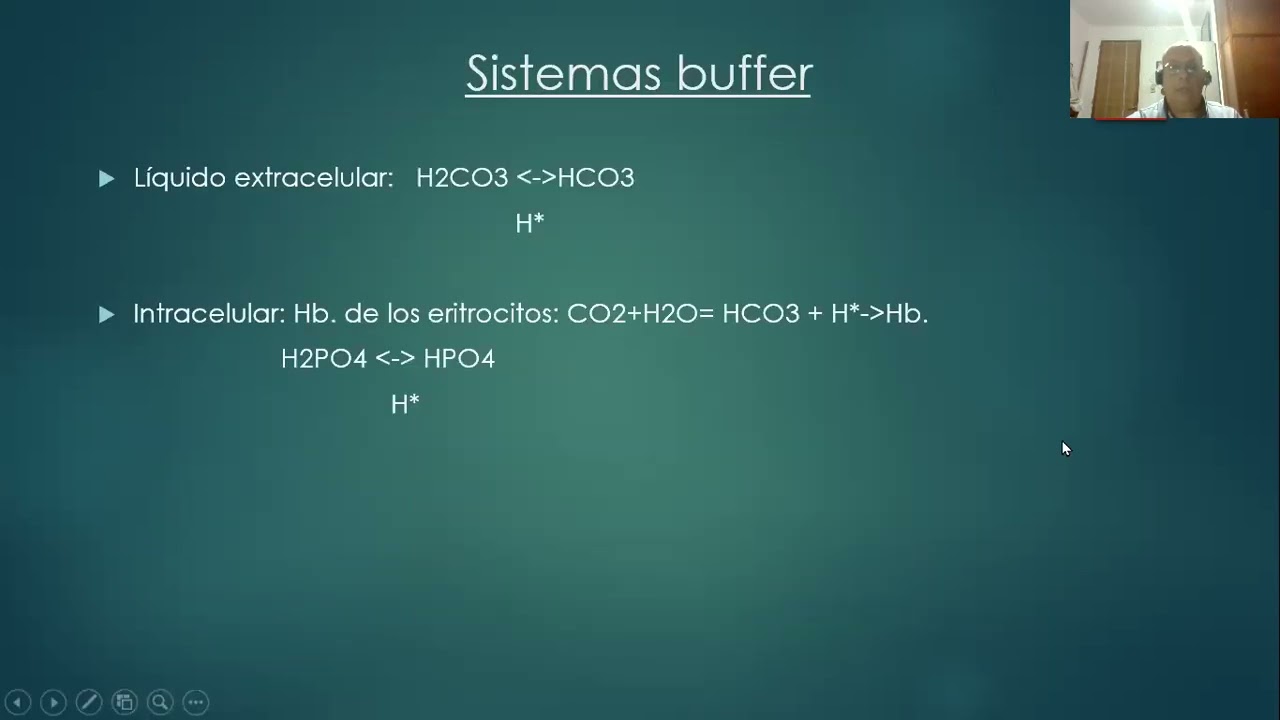
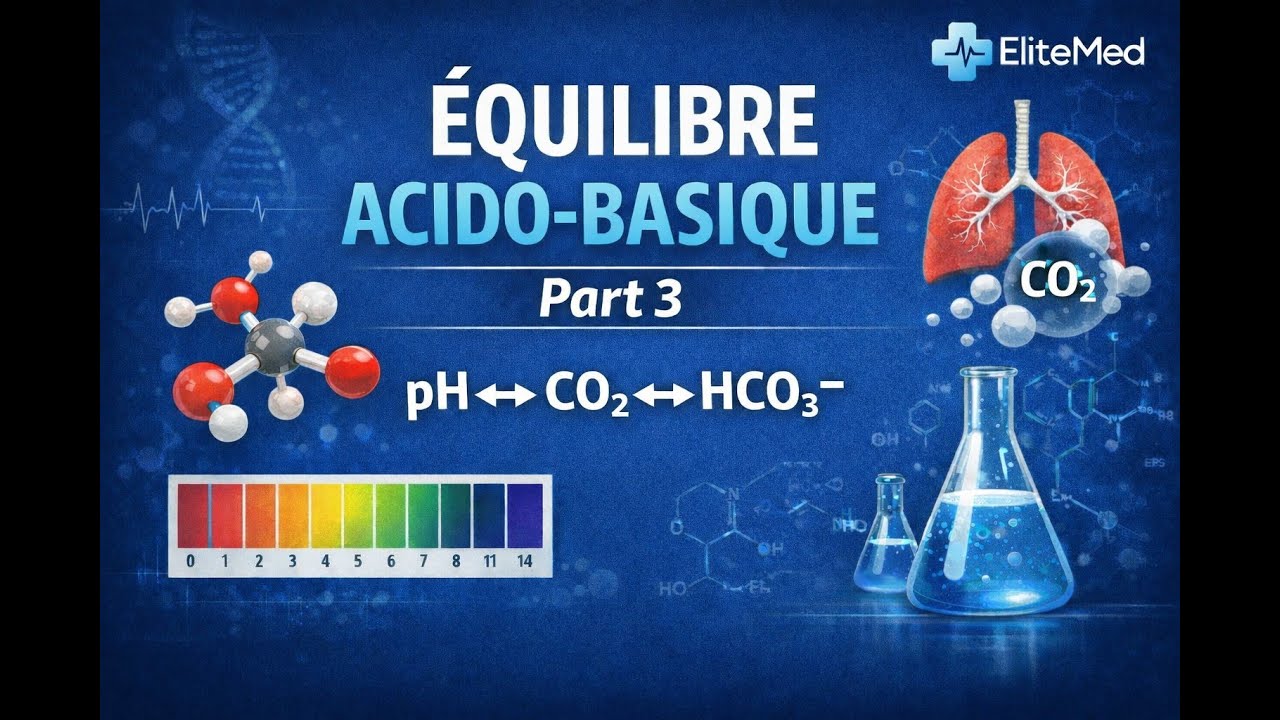
Familiarity with the bicarbonate buffer system ($CO_2 + H_2O \rightleftharpoons H_2CO_3 \rightleftharpoons HCO_3^- + H^+$) and how it maintains physiological equilibrium.
Basic renal physiology, specifically how the kidneys reabsorb bicarbonate and excrete hydrogen ions.
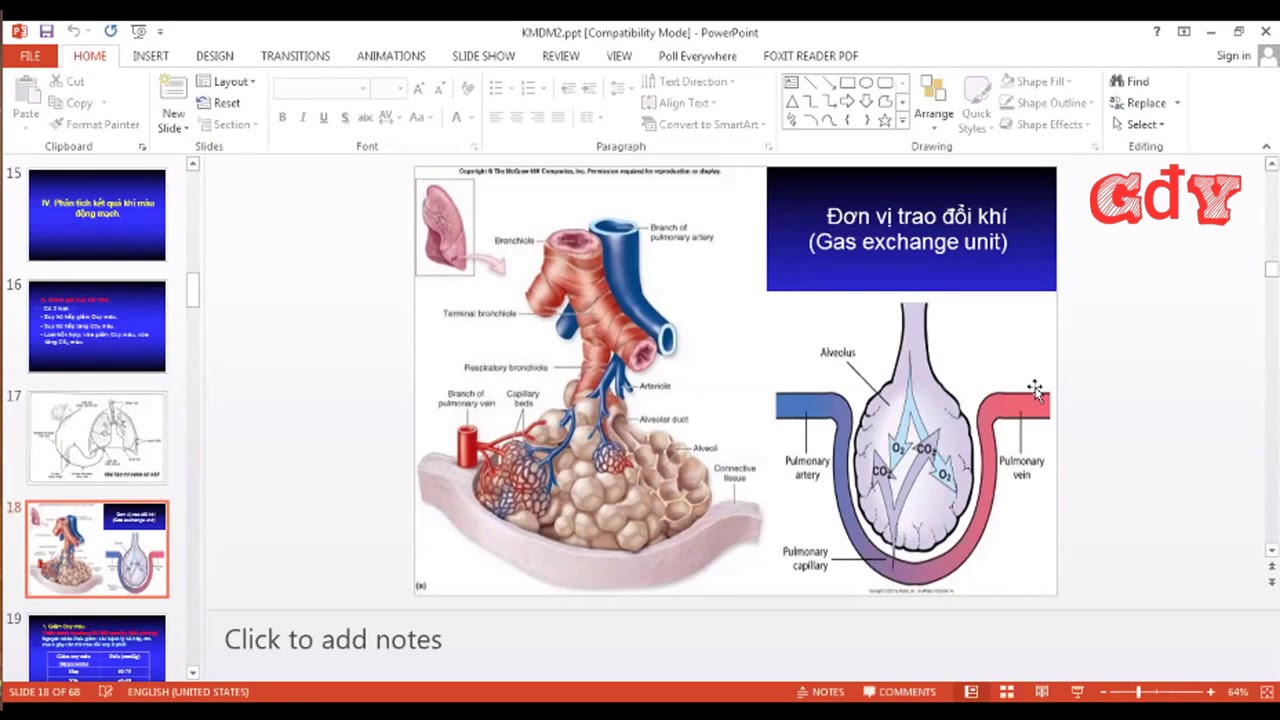
Basic respiratory physiology, focusing on alveolar ventilation and how the lungs regulate partial pressure of carbon dioxide ($pCO_2$).
Mastery of systematic Arterial Blood Gas (ABG) analysis, including calculated values like the Anion Gap and the Delta-Delta ratio for complex cases.
Evaluation and differentiation of mixed acid-base disorders where respiratory and metabolic disturbances coexist.
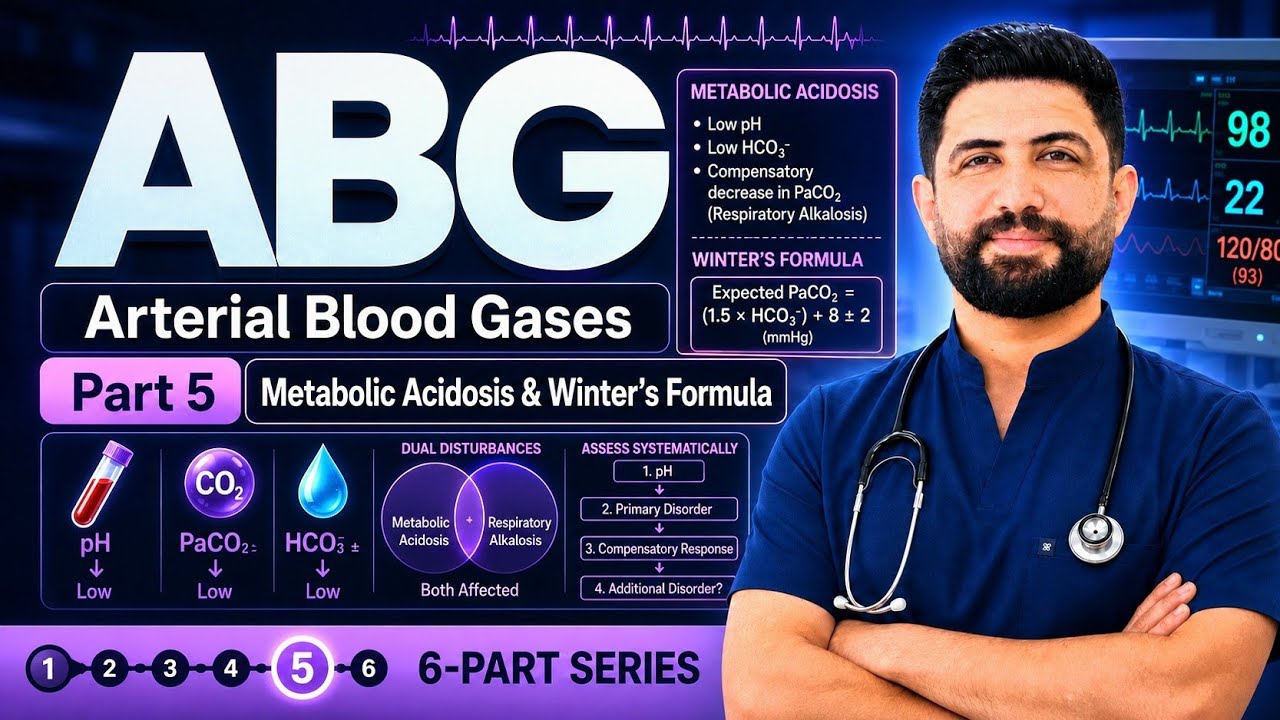
Clinical application of diagnostic formulas such as Winter's Formula to determine if respiratory compensation is adequate.
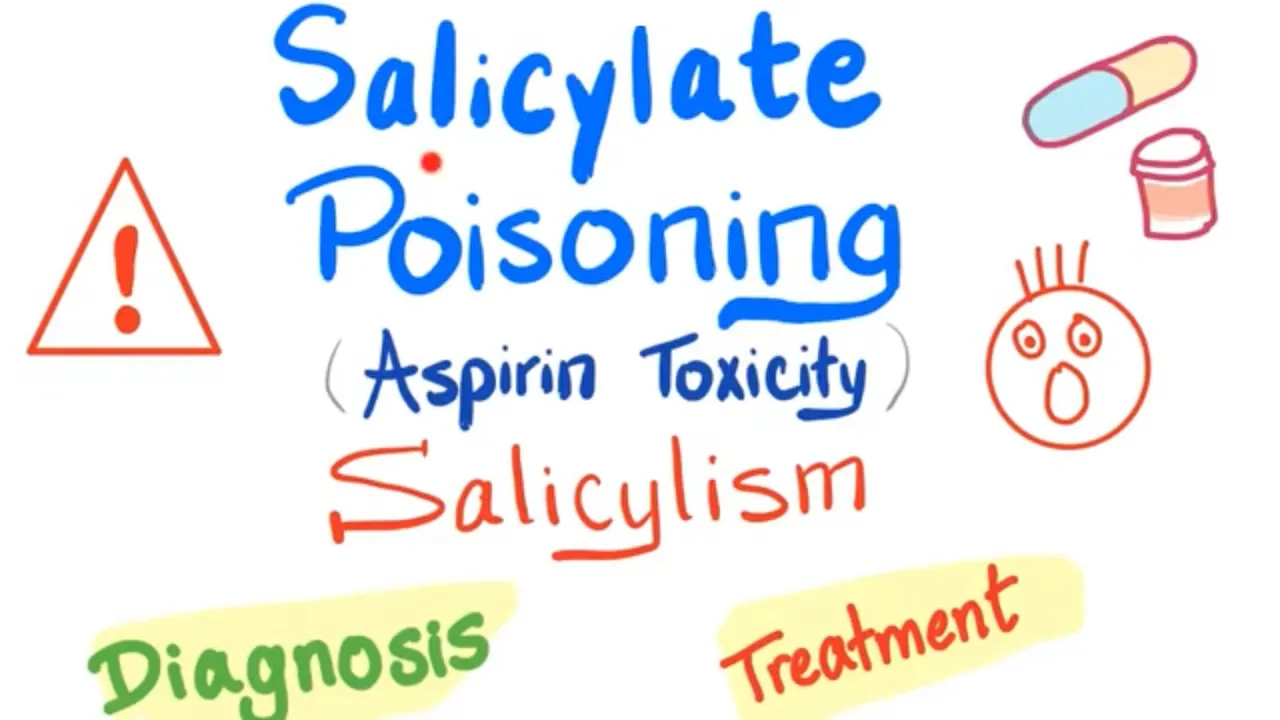
Therapeutic management strategies for specific underlying causes, such as Diabetic Ketoacidosis (DKA), Renal Tubular Acidosis (RTA), and salicylate poisoning.
317.8K views10.6Klikes1:32:31Original Release: 2024-09-24
what's up Ninja nerds in this video today we're going to be talking about acid-based disorders again this is a part of our clinical medicine section if you guys like these videos they really help you they really support you guys in your studies please support us and some simple ways that you can do that is by hitting the like button commenting down the comment section or subscribing also what I really believe would help you guys is if you had access to some premium resources things like notes illustrations quiz questions I think they'll really augment your learning process as we go through these video topics now you ask how could I do that Zack if you how do I do it oh go down the description box below there's a link that goes to our website on our website if you become a member you'll have access to all these things and I really think that it'll make a huge difference in your studying process all right without further Ado let's talk about acidbase disorders so there is four different primary acid based disorders there's metabolic acidosis alkalosis respiratory acidosis and alkalosis and we'll go through each one of them we'll talk about the pathophysiology the causes but more specifically kind of get you guys oriented to how to think about these diseases more clinically pragmatically speaking so first one is the an Gap metabolic acidosis this the subtype right of a metabolic acidosis now Within These an gaps it's really talking about what is the annion gap why is it elevated well there's your cations in the extra of fluid and then there's your anions in the extra of fluid right what I do is I take the cations and I subtract them from the anions what are there well the most abundant one here is going to be sodium right then when I talk about it for the annion I'm talking about chloride I'm talking about bicarb and then I have these guys called organic acids and they sometimes have a negative charge after they give off their proton now when I look at these I'm taking and subtracting the cations from the anions and that'll give me what's called my Ann Gap what I do is I actually take sodium I subtract it from chloride and I subtract it from b car and that gives me my anion gap when the an Gap is greater than what we call 12 so whenever we actually determine that a patient has an an Gap that is greater than 12 what that tells me is that they have lots of these organic acids like tons of them and when you have lots of these organic acids the problem with these suckers is that whenever a lot of them they give off protons when they give off protons they'll soak up some of the bicarb and what they'll do is they'll deplete your bicarb level and so what you'll see is that these patients will deplete their bicarb level right now as I deplete my bicarb level what happens here let's look at this there's a What's called the modified Henderson hassleback equation it's pH is equal to bicarb divided by the pco2 in a metabolic acidosis regardless if it's agma or nagma the bicarb is dropping it's just the mechanism by which it precipitates this is different so in this one bicarbs dropped so what's that going to do to the pH drop it so you have to remember that in a metabolic acidosis regard regardless of agma or nagma bicarb is depleted Bringing Down the pH what's the reason the organic acids they're driving down the bicar because the concept is here's an organic acid just a generic version of it this guy can give off that proton so what it does is it liberates this proton off and when it liberates this proton off that is what leads to this depletion in the actual bicarb because it binds to bicarbon converts it into carbonic acid all right cool we'll talk about what these organic acids are when we get in to the causes a component let's talk about the other one which is a nagma now nagma or non or normal you can call it non or normal anti metabolic acidosis again all you're doing is you're taking the cations I which is primarily sodium and you're subtracting chloride bicarb and organic acids now what you're noticing is that the organic acids really aren't the bulky one here it's really what we're noticing is that chloride is going up and that's kind of driving down the bicarb all right so I could notice that the chloride could go up and that could drive down the bicarb but what I really kind of notice here is that my bicarb is the most significantly diminished so I have to ask myself the question okay I know that in these patients who have a nagma their primary problem is is that you drop there bicarb okay well how how would that affect my ratio well if I go back to it against a simple concept here that pH is equal to the bicarb divided by the pco2 so as I drop down my bicarb what am I going to see happen to my pH I'm going to bring my PH down then we have to generate ourselves the question what's dropping the bicarb well one is it could be the kidneys dumping bicarb so there could be a renal loss of bicarb maybe the kidneys are dumping the bicarb into the urine which is depleting the bicarb with in the bloodstream that could be one reason or it could be a GI loss of bicarb and if I'm losing bicarb from my git that could explain why the bicarb in my bloodstream is depleted again as the bicarb plummets what happens is that you see the pH drop so you have to remember metabolic acidosis the pH is intimately tied to the bicarb and you just have to figure out the reason as why the bicarb dropped nagma it's an organic acid I'm sorry agma is an organic acid that's elevated and an agma is some type of renal loss of byard or GI law of Bic carve all right cool well we're almost there when we're going to start talking about what are the causes of increased organic acids what are the causes of renal losses what are the causes of GI losses before we do that I want you guys to start asking yourselves a question anytime we have a disease you should try to have an understanding of why it's bad what are some of the complications that could arise one of the first things that metabolic acidosis has three profound effects one on your electrolyte system so when you think about it in metabolic acidosis the pH is is low so there's also another relationship is that whenever the pH is low your protons are low so protons and pH are directly proportional in the sense right or inversely proportional s so as you have increase in protons your pH should go down so in these patients who have a metabolic acidosis what I'll notice is they have lots of protons in their bloodstream tons of them tons of protons in their bloodstream whether it's an agma or an agma now what happens here is that you have cells in your body and what they love to do is they love to exchange ions sometimes so whenever there's lots of protons in your bloodstream your body tries to say okay let me push some of these protons into the cell that'll get rid of some of the protons and it'll bring the pH back up that's a way of maintaining homeostasis but whenever I bring a positive ion into into the cell I have to push a positive ion out of the cell and so one of the ions that gets pumped out here is potassium and so you know what happens is that pottassium starts actually Rising in the bloodstream and if potassium rises in the bloodstream what do we call this we call this hyperkalemia so when the patient's potassium starts kind of bumping up above five we start seeing potential complications you know one of the biggest complications of hyperemia is it can cause muscle weaknesses but it can cause EKG changes it can cause arrhythmias and that's one of the biggest things that you have to watch out for here with hyperemia is you want to watch out is the patient at high risk or are they developing any complications such as arhythmia now there is a lot of EKG changes that may also become playful so in other words you can see Peak T waves you can see a change in their PR interval you could see a uh flattening of their p-wave you could also see a widening of their QRS complex um and you may even see potential complications such as sine wave patterns that put the patient into vtac or V Fib so these are all things that we'll talk about more in the actual potassium disorder lecture but watch out for hyperemia as definitely a possibility as a result acidosis the other thing is when a patient has uh lots of protons right so lots of protons built up cuz again you have to remember that in a patient has metabolic acidosis their bicarb depletes their protons go up all right because as there's less bicarb there's more protons that are freely available that aren't binding to the bicarb so when protons go up what they do is they stimulate these like little receptors that are in the periphery called chemo receptors these things are present like near the um usually near the the uh cored the common corate artery near the bifurca and also near the aorta and they're connected to nerves like the vagus nerve and the glossop fenial nerve and what happens is they stimulate these puppies when they stimulate these chemo receptors they send signals to your actual respiratory Center and say hey man it's really acidotic in this Blood you need to cause the patient to breathe faster blow off CO2 because if they blow off CO2 they'll blow off some of that carbonic acid and they'll help to drop down their protons and that'll bring the ph up and that's what happens is that what happens is these patients end up stimulating their respiratory Center they send lots of signals to the respiratory Center which increases their ventilation so what happens is these patients experience an increase in ventilation and when you increase your ventilation which is your tital volumes and your respiratory rate you're going to blow off CO2 and so what happens is these patients blow their CO2 off and what we'll notice is is that they'll notice that they'll breathe faster so they may have an increase in their respiratory rate or an increase in their tital volumes so they're taking deep breaths or they're breathing really fast and what happens is is they do that to blow their pco2 down and often times we see this as a potential compensation mechanism is that patients will breathe faster to try to bring their pco2 down because their hopes is is if I bring my pco2 down what does it do to the equation it brings the ph up because if you remember from that equation it will have a inversely proportional relationship to pH so that's the concept that I want you guys to remember all right so definitely can breathe faster which creates a compensatory change in the breathing pattern and at risk for arhythmia and hyperemia what else whenever you have high levels of protons especially when they're really really high causing the pH to get pretty low this can cause direct inhibition of M myocardial contractility so now The myocardium is all jacked up it's not going to contract if it doesn't contract you end up with a reduced cardiac output so that's one of the other complications is now the heart is stinking at being able to pump blood out if it struggles to pump blood out now what I see is I re see a reduction in what's called cardiac output and so these patients may have a reduction of cardiac output that then precipitates in the form of low blood pressure so another potential complication from these patients is they could develop hypotension but here's the big thing the acidosis has to be the point where the pH is less than where the pH is less than 7.15 it has to be pretty low for you to start actually inhibiting myocardial contractility and sometimes they even vasodilate the blood vessels but either way look for hypotension to kyne and arhythmia secondary to hyperkalemia in metabolic acidosis all right beautiful we've talked about metabolic acidosis we know that the bicarb is low the pH is low we know that there's agma anine Gap greater than 12 nagma an Gap less than or equal to 12 we know the differences between those pathophysiologically and we know that hyperemia reling to arhythmia hypotension and Topia are the most common complications or manifestations of metabolic acidosis all right let's now talk about the causes of agma within agma all right we got to talk about those organic acids what's building them puppies up one of the biggest causes is diabetic keto acidosis you need to have a patient who has Di diabetes they need to have a very high glucose level and they need to have elevated Ketone bodies in their bloodstream so most of the time it's diabetic type one and you want to see elevated glucose levels and you want to see elevated Ketone bodies how does this happen you know diabetes they got a jacked up pancreas it's not doing a good job reduction of insulin production usually and what happens is whenever the insulin is reduced in its production it doesn't allow for the cells to take glucose up right and so glucose uptake is inhibited and that's what leads to the increase in blood glucose levels well how does the Ketone bodies come into play all right insulin whenever you can't get the glucose into the cells says hey I got to tap into an alternative Source I need to generate ATP because I'm not using glucose to make ATP so what it does is it tells your liver to take fatty acids and break them down so it undergos a process called beta oxidation so you increase your beta oxidation and when you increase your beta oxidation you increase the formation of free fatty acids and then they get broken down eventually into Ketone bodies because there's too much acetylcoa you take free fatty acids make aceta not enough of that to actually get into the electron transport I'm sorry into the KB cycle so a lot of it gets shunted into making Ketone bodies that's what happens and these patients get heavy amounts of ketones in their bloodstream now what kind kind of Ketone bodies are there well one is called beta hydroxy berate and the other one is called aceto acetate usually the one that we measure in the bloodstream is beta hydroxy butter but both of these can be excreted into the urine you can get that off the UR analysis all right beautiful that's the concept there all right what's another cause another one is ureic acidosis ureic acidosis you can see in two particular diseases one is a severe Aki to the point where they pretty much need dialysis getting ready to on dialysis or severe instage renal disease where they're on dialysis and they haven't gotten dialysis recently or they're almost at the point of needing dialysis now differences in the pathophysiology slightly here is that in a severe Aki what you're going to want to look at here is they're just profound elevated creatinine and usually a reduction in the urine output and in stage renal disease you may also see this but what you're looking for more specifically is their sign significantly reduced GFR over the years either way in both of these scenarios what ends up happening is the kidneys are losing the ability to excrete metabolic waste products whether it be indicative of them having a very high creatinine or a very poor GFR what happens is they build up nasty metabolic waste products like sulfuric acid and phosphoric acid these things are building up now the concept behind this is that the kidneys are damaged they've had profound injury especially to the portions of the proximal convoluted tubal where you're supposed to excrete a lot of things and they have injury to their Glarus where you're supposed to filter things so these patients not only struggle with filtration via their GFR they also struggle with intact tubular function to secrete things from the blood into the tubular Lumen so what happens is these patients lose the capacity to be able to excrete these waste products into the bloodstream and that's usually the problem here my friends so we are struggling to excrete waste products whether it be via filtration or tubular secretion into the bloodstream I'm sorry into the urine that's the concept so in these patients you really want to see a poor renal function in this one you want to see high glucose and lots of Ketone bodies all right what about this next one here lactic acidosis so with lactic acidosis the problem with this one is there's two particular eies here one is you want to see very poor perfusion so you want to see a patient who's likely critically ill they're likely in shock that's usually the most common ethology here is a patient who is in shock what kind of shock am I talking about we go through the different types of shock any type it could be cardiogenic shock could be obstructive shock could be distributive shock so again they could have cardiogenic septic obstructive shock hypovolemia shock any of the types either way within the concept of this when you have poor profusion you struggle to get blood out of of the left heart you struggle to get blood to the tissues and deliver oxygen to the tissues if I do not deliver oxygen to these tissues so there's decreased oxygen delivery to the tissues what happens is they say well I'm not going to undergo saor respiration aerobically and so because of that what they do is is they say all right I'm not going to convert pyate into acet COA instead I'm going to undergo anerobic glycolysis and I'm going to make a crap ton of lactic acid and they build up lactic acid within the bloodstream to the point where this thing starts relieving protons and start causing acidity within the bloodstream so one problem could be poor profusion again think about any type of shock the other thing is there could be a clot what if there's like some type of like clot or imis here that's obstructing the flow that could definitely be another one so not only do you want to think about shock you want to think about some type of the most common cause is what's called acute mesenteric esea where there's a clot with inside of like the actual mesic vessels blocking the blood flow to the entire small intestine thing becomes a schic and infarcts the other one is maybe it's not a problem with perfusion maybe it's a problem with oxidative phosphorilation there's many diseases that do this but you really want to think could the patient be having something like um some type of decreased electron transport chain activity because you know electron transort is supposed to be able to help make ATP from having oxygen so what if you're having good profusion but something's interfering with this there's so many different drugs that actually could do this and I think that's important to remember some of the drugs one of them is metformin so metformin especially in patients who have very very significant chronic kidney disease can cause this they can uncouple of the oxidative phosphorilation another one is Ison it so look for a patient who is on this because they have TB another one that I really think is important to remember is whenever you have a very deficient level of thyine so thyine deficiency and another one could be aspirin toxicity so patients who have aspirin toxicity B1 deficiency Ison at or metformin these have all been shown that they potentially could inhibit the ATP formation so they not necessarily decrease oxygen levels oxygen def like profusion to the tissue could be completely normal but they uncouple it and lead to lots of lactic acid production okay so one of the big things is poor profusion or uncoupling sometimes we actually call this if you want to remember it like this we call this one type A so lactic acidosis type A and this one we call lactic acidosis type B because this one is a perfusion problem or a uh oxygenation problem and this one is a uncoupling of electron transport activity problem either way in both of these lactate levels should be elevated so look for the patient who's in shock who has abdominal pain or think about these particular drugs all right next one's actually pretty easy there's not too much to remember about this think about incidental ingestions so the two most common ones are going to be methanol and ethylene glycal now with these two particular toxins what we notice is that whenever they're ingested they do have the ability to liberate lots of hydrogen ions and cause an acidosis but the other thing is that they change the osmolality and so one of the things that we don't really look at so you've noticed the trend here this one we're looking at problematic issues with like renal function more particular issues with ketone bodies lactate levels this one there's not really a specific like level and this one it's more looking at something called The osmolar Gap and so we'll talk about this a little bit later what it does it actually changes the osmolar Gap and increases the serum osmolality and causes a big gap between the normal and expected and so you'll see that this level will go up and that's something to think about we'll talk about that later in the diagnostic section think about these particularly in antifreeze usually that's the classic example of a child who consumed some type of antifreeze or pain thinner next concept here is we're going to move on to non anap or normal anap metabolic acidos because we talk about all the agmas at this point so Zack okay I know that it's an nagma meaning that the anti-ap has to be less than or equal to 12 I know it's a renal loss problem or I know it's a GI loss problem all right let's go through the renal loss problems in this particular scenario there is a couple of them that I want you to think about first one that we can easily get off the board is CKD first thing I want you to look at in any patient is do they have a diminished renal function not to the point of what we call for ureic acidosis but it's mild I'm talking that their gfrs may be reduced it's less than 60 but it's not to the point where they're almost on dialysis so you want to look do they have a reduction in their GFR if they have a reduction in their GFR you're done you don't really have to go any further okay this is a patient who likely is going to have CKD and again they're just their problem is that they struggle to excrete protons or reabsorb bicarb but most commonly is they struggle to they have a decreased ability to excrete protons so they decreased they struggled to excrete protons that's their big problem these you only look at when you say oh the GFR is normal so across the board the only way that you can think about these is that the patient truly has to have a normal GFR so normal GFR because you can't exclude this you see what I'm saying you can't exclude it and then it makes these tests a lot more complicated and also kind of Alters their sensitivity and specificity so we'll go through these now RTA 1 2 and four you're like where's three I don't know we don't really talk about it so we're going to pretend like it's never there within each one of these they have a very specific mechanisms that's important to remember for your exams rta1 the primary disease process is in the distal tubal that's what I want you to remember their distal tubal is all jacked up so that's where their dysfunction exists okay so what do I mean well normal in the distl tual what happens is you take and you excrete protons right so you excrete protons into the Y and then you're also supposed to take potassium ions and then reabsorb the potassium ions that's what you're supposed to do so you're supposed to take potassium ons in and you're supposed to excrete protons you know what happens in these patients all jacked up they don't do this they do not reabsorb pottassium ions and they don't excrete proton ions if they don't excrete proton ions what happens to the proton ions within s of the bloodstream goes up if proton ions go up what happens to your bike my friends the bicarb will go down yes so this will cause the bicarb to go down and if bicarb goes down what happens to the pH the pH goes down so we see how that happens right but there's other things that we can gain from this if we don't reabsorb pottassium what happens to the potassium ends up in the urine so you get lots of potassium into the urine that's actually helpful because then I dump my potassium my pottassium in the bloodstream should theoretically go down because I'm supposed to resorb this that's helpful so so having a low serum pottassium level could help aiding in the diagnosis here cool what else well the other concept is that I don't actually acidify the urine this distl tub is responsible for acidifying the urine if it's not intact you can't acidify the urine so what happens to the urine pH is it going to be acidic no it's going to go up it's going to be greater than 5.5 so we we consider that less acidic so we'll say that the urine pH theoretically is going to be higher greater than 5.5 at least okay all beautiful so that's what we establish the diagnosis of rta1 now you're probably like okay what causes rta1 there's a lot of things that may cause this I think it's important to remember that usually it can be in the scenario of uh lithium so lithium has actually been shown to cause this sometimes even autoimmune diseases so like SLE ra make it the consider things like that but often times it may be like autoimmune diseases or lithium use that's been showed to be associated with RTA one again this is RTA one this diagram here okay what about the next concept rta2 got to have a normal GFR where's the problem proximal tubal so now there's proximal tubular dysfunction if the proximal tubal is jacked up what is the problem here all right well it's supposed to take bicarb and it's supposed to take pottassium and it's supposed to reabsorb these in the proximal tubule but it's all jacked up can't do it all right so then you lose by carb what happens if you lose bicarb you plummet the pH pretty simple one here right all right but I also don't reabsorb bicarb I mean a potassium what happens to potassium sh right in the pp right in the pp it goes so potassium there'll be a lot of it in the urine so what happens to the amount in the blood tanks so often times these patients will have hypokalemia pretty bad actually too now here's the interesting concept and rt1 DL Tu is jacked up rta2 RTA 4 tial tubul is intact it's pristine and it's secreting protons it's secreting protons so because of that you're beautifully secreting protons in this distal tubia that's not regulated by aldosterone because of that am I able to acidify the urine yeah so since this is okay my urine pH should be low for both of these and that actually helps in different differentiating these from one another all right cool so low urine pH less than 5.5 low year in PH less than 5.5 all right cool so that's RTA 2 what's causing proximal tub dysfunction there's a lot of things that have been theoretically associated with this could be multiple Myoma right there's also um anti-seizure drugs uh to pyramides also been associated with this one and there's another weird disease it's called fanone syndrome this is usually some type of like genetic disorder and then another one is acetazolamide which we actually use in certain patients uh we're trying to direse them and get rid of some of their actual bicarb so we don't actually bring their bicarb up pretty high uh so it's usually used in metabolic alkalosis when you want to direse people or we also use it in um idiopathic like intal hypertension as well all right so these are particular things that you want to associate with RTA two all right beautiful all right we go to the next concept here RTA 4 and in RTA 4 the problem is the distl tual but you're probably oh okay Zach I'm confused you said distl tual and now distl tual but Zach you said the distal tubio was intact here it is it's just there's a part of the distal tubio that we say is actually altered but it's more particular the distal tual that is aldosterone regulated let's actually kind of parentheses that right there so it's aldosterone regulated all right so this is the one that's jacked up so we're going to kind of Bring It just a little bit further to for for Simplicity sake all right in this particular scenario you now have to say Okay this aldosterone regulated all right cool cool cool well in this RTA 4 aldosterone levels are depleted aldosterone levels are depleted what aldosterone is supposed to do is normally you'll actually secret two different things one is you secrete protons the other one you'll secrete potass that's what it's supposed to do if it's intact there's a transporter there alash will help you increase the expression of it and push these ions out if alron is not present or it's depleted it's not going to be able to do this and therefore this process will be inhibited will you be able to secrete protons into the urine no if I have less protons being secreted what happens to my proton levels in the blood they go up if proton levels in the blood go up what happens to my bicarb levels well it's going to bind to the bicarb and then deplete the bicarb levels so that should deplete what happens to my pH if my bicarb goes down it goes down so we see how that causes that right but here's where it gets a little bit cooler it's supposed to secrete potassium but it's not going to secrete potassium what happens to the pottassium in the urine it's low potassium in the urine is low if potassium in the urine is low that means the potassium is likely going to be high in the bloodstream you see how there is a difference between all of these now you're also like okay Zack I see that they're not secreting protons here so wouldn't they not be able to cify the urine again the one that's more specifically constant it's not like aldosterone dependent is this part of the distal tubule it's secreting protons properly so therefore the urine should be appropriately acidified this is the big differences that I want you to remember now hypo aism there's different types so there's primary right and in primary usually this is an adrenal problem so we'll actually just put this in parenthesis so primary is some type of adrenal isue maybe like a tumor or an adrenal like adenoma of some sort all right secondary a little bit more different though there's a lot of different like things here that we can say with secondary hypo aism and some of these things that maybe are worth remembering could be things like diabetes it's actually been pretty common this is a pretty common board exam question um ineds and then any kind of drug that actually blocks like the angot tent like Ren and angot tent on aerone system so you can think about that like your ACE inhibitors your r and I'm going to abbreviate these M Ras your mineral corticoid receptor antagonist your Ostrum blockers anything like this can block the effect of lostone and exhibit the same type of effect so either you don't release it or you block its like actual uh activity somewhere in the um renens and aost system activity okay we talked about the Ral causes we come down to the last one and thank goodness this is the so easy one it's the GI losses now you your your GI loss of bicarb is primarily dependent upon movement of bicarb through the intestines if it's moving fast and it's not getting a lot of time to be able to be reabsorbed oh then you're not going to have an appropriate amount of B carb to be able to be absorbed so the concept here is that whenever you're losing a lot of bicarb because the absorption of bicarb is being inhibited then you're going to deplete your serum bicarb levels so diarrhea is going to be a big one I think the concept that you have to think about is what's the trigger often times this is usually associated with like some type of like gastroenteritis you may see this the other concept here is that usually these patients are significantly dehydrated so you really also want to look for a significant volume depletion so they're are significantly volume depleted in comparison to the uh eies up above all right same thing with the pancreatic fish usually this is like some type of recent abdominal surgery so they probably have had some look for a history of like an underlying abdominal surgery and if they've had that they probably had something that caused like a leak between their pancreas and their intes and what happens is their pancreas is responsible for making a lot of the basic bicarbonate and what happens is if there's an e like an opening connection between one of the Ducks and the intestines it'll dump bicarb right into the actual intestines and then what happens is you load your bicarb in your intestines and then if there's lots of bicarb you're going to saturate a lot of the opportunities to be able to allow for re the absorption of bicarb and then what happens is the bicarbon your bloodstream gets depleted abdominal surgery big one usually volume is not a significant issue here so there's not usually a problem with volume here all right so with this being said this is by far going to be the most common cause of GI losses this would be the least common cause of GI losses all right we talked a lot about metabolic acidosis right now what we have to do is we have to move into the other Concepts which is metabolic alkalosis and then we're going to talk about the respiratory disorders so acidosis and alkalosis all right my friends so now we're going to talk about metabolic alkalosis so in this particular scenario I think it's really important to try to be able to again think about what's really happening in this process so really what's kind of occurring in this process is the patient is having a renal loss particular protons that's really one of the big things is that they really lose a lot of protons in their urine this is definitely I'd say one of the more common ET theologies to definitely remember so whenever you pee out tons of protons right what happens is is it drops the number of protons inside of the bloodstream so if you're peeing out tons of protons that means less protons that are present in your serum right that's definitely the way we could look at this is if you're losing lots of protons from your urine this is definitely less protons in the serum what will happen is is when there's less protons that means that there's less of these protons binding to bicarb and so technically there'll be more free bicarbonate that will be present less of it will be bound in this particular scenario to protons and so bicarb will kind of go up and what we know is is that pH is basically equivalent to bicarb concentration divided by the partial pressure of CO2 and so what we can surmise here is that as bicarb goes up pH will also go up we just have to ask the reason as to why the bicarb is going up it's going up because the kidneys are dumping out protons if they have lots of protons in the urine then what will happen is theoretically in this scenario is that if you dump protons in the urine you'll have less of these protons that will be available in the serum and then you'll increase your bicarb because less of the protons will be bound to the bicarb all right what else another cause could be GI losses so you could lose a lot of these protons from your actual git all right now whenever you're losing a lot of these protons from the particularly the git as this starts to occur again you're going to have lots of these protons lost within your Fe season maybe unfortunately or I should not I'm sorry you're going to have lots of these protons lost in your gastric acid that's usually the example here and what happens is is as I have more of the protons being lost from the body lost from the body what happens is is I lead to less protons that are present within the serum and again as there's less protons so as I lose more protons from the body I'll have less protons present in the serum if there's less protons present within the serum that will lead to an increase in your bicarb because again there's going to be less protons binding to the bicarb so again this is the particular scenarios you're either losing protons from the git or losing protons from the kidneys we'll talk about the etiologies here in a little bit but that's the concept with metabolic alkalosis is bicarbs going up pH is going up it's either because you're losing protons from the git or from the kidneys all right simple as that what are the complications of metabolic alkalosis whenever the pH is really high what are some of the downstream negative consequences that can arise one of the things here I think that's important to remember if you guys remember from the metabolic acidos is again whenever protons are present in the bloodstream there's a nice exchange particularly potassium ions so in other words in patients when they have less protons with inside of the bloodstream there'll be less exchange so less protons will be available to move into the cell and therefore less potassium ions will move out of the cell if less potassium ions move out of the cell then the potassium levels with inside of the bloodstream will decrease and the patient can experience hypokalemia usually when the potassium levels drop to less than three when potassium levels drop to less than three the patient is at risk for arrhythmias so you can start experiencing an increased risk of arhythmia what are some of these particular arrhythmias you may ask well I think one of them is to remember that it can lead to something called torsades to points because the concept behind this one is it can actually drop your t- waves so it can cause t-wave inversion it also can cause U waves to form especially when the potassium gets low but then when it gets really really low it prolongs the QT interval which increases the risk of things like torsos to points we'll talk about that more again in the uh pottassium disorder lecture though all right so that's one big thing is hypokalemia you really want to watch out for that you know what's really interesting in um patients who have hypokalemia that can actually cause metabolic alcalosis and metabolic alcalosis can also cause hypokalemia so there is a bit of like back and forth and it's usually due to this particular activity here all right beautiful next concept this is actually kind of rare but sometimes they will kind of test this for you in the vignette and it's kind of related to calcium a little bit too which is kind of nice because we're in the renal system is that whenever you have um less of these protons right so less protons technically because again you're uh in these particular scenarios you're ending up dumping these protons and your uh you're vomit or you're dumping them into urine what happens is the chemo receptors um in the the ceds or in the aorta are responsible for sensing that and whenever this happens the chemo receptor they're normally responsive to whenever you have like really high levels of protons in this case they're kind of going to be inhibited they're not really responding to this like low PH so they send less signals if you will via the vagus nerve the glossal fenial nerve to the respiratory system so the respiratory Center inside of the brain stem will be kind of inhibited and it'll send less signals down to your diaphragm into your intercostal muscles so the rate of breathing will kind of actually kind of drop so these patients will experience something called hypoventilation now whenever the patient hypo ventilates what do you think actually happens here so the hypoventilation hypoventilation will lead to in this particular scenario less gas exchange whenever there's less gas exchange in in this particular event here the patient will try to build up their CO2 right and so what will happen is in this hypoventilation you'll see that the patient's partial pressure of CO2 and this attempts will try to go up and they'll try to generate like a weird respiratory acidosis in this particular scenario and that's also important however this is not as common I think it's important to remember that in comparison to a patient has metabolic acidosis and they develop a respiratory alkalosis extremely common patients with metabolic alkalosis and developing a respiratory acidosis it is less common all right the other thing that I think is important to remember here is that in patients who have metabolic alkalosis they may also have one other kind of effect and that is that they can cause tetany and they can cause like neuromuscular IR ability so I will write this down I'm not going to go crazy into the mechanism but it is important and it's kind of prudent to know that as proton levels kind of deete what happens is is you have more freed up spots from Alum I call like a free albumin and I'm going to kind of put that in parenthesis meaning it has more like sites where ions positive ions can bind onto so whenever you have low protons you now increase the amount of like free sights for albumin and what happens is is is this binds up calcium so then you get this calcium albumin complex and whenever you bind up calcium what happens to the amount of free calcium well then the amount of free calcium goes down and so as I form more of this complex I deplete my free calcium and as I deplete my free calcium I can start to experience weird things like tetany and I think it's important to remember this is more pertinent in hypocalcemia lecture what does tetany look like perioral paresthesias you can also get the carpopedal spasm right which is particularly when you inflate the blood pressure cuff the tro sign and you also may get the shave stack sign whenever you tap over the facial nerve so these could be things that you see in metabolic alkalosis that can worsen tetany findings all right cool so tetany kind of maybe something to think about hypoventilation something to think about but I think hypokalemia is a really big one to remember in metabolic alkalosis the next concept here is a okay well I know metabolic osis I know that the patient is they're getting rid of in this particular sit situation uh they're dumping out protons in their urine or they're dumping out protons from their vomit they deplete their protons inside of the bloodstream and as a result bicarb goes up all right Well's think about the renal losses of protons there usually two eies one diuretics and the other one is hyperism there is another one that's called barter and gittleman syndrome we're it's more in the Pediatrics kind of system it's very rare so we're not going to talk too much about it we're going to focus on the more common things diuretic is the big one there's two types Loops is going to be more common thide is going to be another one that's utilized this one's more in hypertension this one's more in like you know U volume overload State CHF patients now what happens with these is that they particularly work so you know here is our Loop of Henley our our nefron apologize so Bowman proximal convol tual Loop of Henley distal conval collecting duct in the ascending limit Loop of Henley what happens is these Loop diuretics specifically working um at this part here so what they're supposed to do is is they're supposed to play a role in um kind of like sodium um and chloride you know generally this helps to reabsorb sodium reabsorb chloride particularly into like the um in like this medular interstitium to create a nice gradient which allows for water to get pulled out in the descending limb so it's really important that countercurrent multiply mechanism we talked about in physiology well Loop of Henley uh particularly Loop Diuretics they'll inhibit this and so you're not going to be able to reabsorb the sodium and the chloride and put it into the interum so it kind of keeps water in the tubule and then kind of pulls a lot of volume out from the patients that's actually one thing to remember is that in these particular States you aren't able to so it's supposed to pull water so we'll kind of represent this as water but you're not going to be able to do that because you're not going to be able to pull the sodium and the chloride out here in the inner to drag the water out so another really important thing to remember is that whenever patients use diuretics they can kind of get relatively volume depleted so I I think a really important thing to remember so when patients are taking diuretics they may use it because they volume over or they may use it for other sitations but sometimes with excessive or overzealous use you may deplete deplete the patient's blood volume all right cool question is how the heck does this lead to acidosis okay whenever you have this inhibition of reabsorption you're kind of causing a lot of sodium to get to the distl tubal so now whenever there's lots of sodium in the distal tubal like more than usual because you're blocking this off what happens is that there's supposed to be like a little transporter right here and what it does it brings sodium in and pushes protons out and the more sodium there is present here the more protons it pushes out so if you have lots of distal sodium delivery you're going to have lots of protons that are being pumped out here into the tubu and then out into the urine that's how this happens so the mechanism by which it actually triggers this is it increases distal sodium delivery and by increasing that distal sodi sodium delivery you cause more exchange for protons in the actual distal tubules or the collecting duct leading to loss of protons in the urine but on top of that they also lose a lot of volume and they also sometimes deplete their pottassium so I think it's also important to remember that these patients will have a volume depletion and a depletion in their potassium and that could be helpful believe it or not in the diagnostic algorithms all right cool so we now know that Loop diuretics are acting here and then just for completeness sake the thide diuretics would actually work here so they're supposed to be pulling the sodium and the chloride at this level and if you are inhibiting this with thotics it'll cause a lot of sodium distal delivery there leading to protons being lost all right beautiful so think about that my friends hyperestrinism on the other hand What's Happening Here well in this one it's actually affecting the distal tubal so it's more particularly going to be uh two types we'll talk about these one there is a primary type and the other one is a secondary type but we will discuss these I think one of the big things to remember here is that with Hyper odinism is it primarily regardless of the primary or secondary it is going to hit the distal tubal so let's remember that it's going to be working on the distal tubal in comparison to the loop of Henley or the uh distal Convent tubal the early part for thid diuretics now when it works here what happens is let's kind of go through this mechanism you know uh the adrenal cortex J cortex is good at making a hormone called aldosterone but what if for some reason and we'll talk about the different reasons why this could happen which comes into the primary and secondary and second what if it's producing too much ostrin well you guys remember a metabolic alosis that what was the distal tual which is aldosterone regulated doing secreting what come on Yell it out protons and potassium so if abashon is present in high amounts what do you think it's going to do oh that soccer is going to be amped up and it is going to really hike up the activity of this and it's going to cause a lot of protons and a lot of potassium to be dumped into the urine that's one of the big things here to remember the other concept is it actually will cause a lot of sodium reabsorption as well so what I see here is I see that the patient is definitely losing a lot of pottassium but here's the other concept with aldashin I'm going to bring it over here alashan has also been known to increase sodium and water reabsorption so it increases sodium it increases water reabsorption what does that do to your blood volume my friends it increases your blood volume what would that do to your blood pressure it would pump up your blood pressure so often times their blood volume may actually become a little bit elevated and then on top of that their blood pressure may be elevated and that is actually very helpful to differentiate between these two is that sometimes these patients may be mildly hypervolemic they usually don't become profoundly hyperic because of something called aost Escape we're not going to go into that but it actually is important to remember that can happen but it is also common that we're dumping potassium so potassium will also be low but you're going to notice a slight difference here between a volume overloaded or hyperic state and a hypmic state with excessive diuresis okay so we got a concept of that and again it's important to remember that this is all based on aldosterone regulation that is important to remember so the mechanism between this is ostrin regulation whereas distal sodium delivery now let's briefly talk about primary and secondary just real quick in a patient who has what's called primary hyperestrinism the problem exists here in their adrenal cortex usually there's a tumor here there's a tumor that's just pumping out aldosterone usually it's something called con syndrome all right so it may be worth remembering con syndrome which is usually some type of like adenoma all right that's something worth worthy of remembering the other one is is usually secondary now secondary is usually a little bit more interesting this is usually things like um a renal artery stenosis U it could be CHF it could be sorosis I think the Common Thread along all of these is that all of these lead to a reduced renal perfusion in um renal artery stenosis there's a plaque in the renal artery right in uh CHF they are having a lot of fluid leaking in their interstitial spaces same thing with cous and so they have a reduced effective arterial blood volume because of that they have less profusion to the Glarus what's the um hormone that's released whenever there's low Ral profusion renin so whenever there's high levels of renin this is the big difference here renin will then stimulate the actual adrenal cortex to make lots of aldosterone so that's the difference between these patients is patients with secondary usually have high renin high aldosterone patients with primary have high aldosterone and usually negative feedback they shut down their renin so that's actually kind of helpful to remember when we get to the diagnostic portion okay my friends we've talked now about this point pretty good about the renal pathophysiologies behind metabolic alcalosis what about the GI well GI pretty straightforward your git is just you know dumping out protons and usually another one is chloride so they're dumping out protons and then another ion that they may be dumping out is chloride now when you dump out tons of protons and tons of chloride you'll see that these patients will lose their protons they'll end up causing an increase in their bicarb and as a result they'll end up with the metabolic alosis so with this one you really want to think about a loss of hydrochloric acid from the stomach what are the eies behind this a patient is vomiting or they have an in tube maybe they have a ball obstruction of some sort when you have a ball obstruction sometimes they put an in tube down into your actual um stomach to help to decompress it maybe there there's lots of fluid there and they're having to suction and suction and suction a lot of that out so that the patient doesn't have consistent abdominal pain that could be a very very very common you know pathophysiological process here the thing that you have to remember is that in these patients they're losing lots of protons hydrochloric acid but guess what else they're losing they're losing volume so often times these patients are pretty commonly volume depleted so they will have maybe a low volume the other concept here that's actually important to remember is that these patients whenever they're kind of in this state of metabolic alkalosis they'll try to tell their kidneys to kind of try to respond to that and what the kidneys will try to do is maybe it'll change the chloride kind of states and so another thing to important to remember here is that vomiting an NG tube suction they have a urine chloride level and what we've seen with these urine chloride levels is that they're often like relatively low and what it tells me is that these patients probably have some type of nonrenal source of proton and chloride loss it really helps to add to the diagnostic utility of this and saying if the urine chloride is low it maybe is more of a saline responsive State like excessive volume losses and vomiting in tube suction or like a remote prior history of diuretics CU diuretics will lead to direct chloride losses when they're being actively used all right we'll get more into into the Diagnostics it may seem confusing it'll become more apparent when we talk about the Diagnostics all right that covers metabolic alkalosis we now have to move into the respirator and finish this off talk about them and then go into the diagnostic section all right my friends so now we're going to move on to the respiratory acidosis and alkalosis this will finish off the pathophys the causes the complications and then we'll move into the Diagnostics so let's go through these when we talk about respiratory acidosis the problem here is the lungs they're having difficulty with being able to properly ventilate so the primary pathophysiological process that explains all of this is usually that the patient is undergoing what's called hypo ventilation now the problem with hypoventilation is that they're not allowing for proper gas exchange there's not enough movement of CO2 from the blood into the alveoli if that happens then you're not getting rid of CO2 all right so the problem here is with hypoventilation is that there is a inability to clear CO2 right so we're going to put down that there's what's called decreased CO2 clearance right when there's decreased CO2 clearance what happens is that the partial pressure of CO2 in the bloodstream starts Rising if the partial pressure of CO2 in the bloodstream starts to rise what happens to the pH my friends come on the pH will do what it'll decrease and the reason why is we can figure that out from the formula here is that the sense of this is that there's pH is equal to bicarb divided by the pco2 and if pco2 rises in the setting of hypoventilation then the pH should drop and that's what drives the acidosis the question that helps us here is what's driving the increase in pco2 hypoventilation now to dig in a little bit more all right hypoventilation is whenever the patient is not taking a deep breath or they're not breathing at a fast enough rate so it's poor respiratory rate and poor deep breathing so with that being said there's three particular ways that you can look at that one is there is a respiratory problem or a respiratory Center problem so you know inside of the brain stem this is the area that's supposed to send information to the nerves to the muscles contract take a deep breath in or breathe at a good rate if there is a dysfunction of the respiratory Center can you send the signals down to the muscles I mean via the nerves to the muscles and cause them to contract no that'll drive hypoventilation the other concept is what if there's damage to the spinal cord or to the nerves or the muscles that are supposed to be contracting if they're not sending signals or they're not receiving the signals to contract will they contract properly and take a deep breath in no and then lastly what if there's an obstruction in the airway there's an inability to take a breath in because there's an underlying Airway obstruction process that would also limit CO2 clearance so there's three particular ways that I want you to remember it respiratory Center depression neuromuscular disease and Air way obstruction that can drive hypoventilation and drive up the pco2 so what we've seen here it it doesn't usually cause very prolonged effects it's usually whenever you're at these high levels for a long period of time that it can be kind of detrimental but what we see is is when a patient has very high partial pressure of CO2 um it's kind of has an interesting effect on the cerebral blood vessels all right so what it can actually do is it can actually promote what's called cerebral vasod dilation so it's going to cause these vessels to undergo a very expansional process so they'll have what's undergo what's called cerebral vasod dilation whenever you dilate these blood vessels that allows for kind of a increase in blood volume or blood flow to the brain so as a result these patients will get what's called an increase in cerebral blood flow we kind of usually abbreviate that CBF when you increase the amount of blood flowing into the brain you the brain is inside of a skull right so the skull is a fixed space whenever you have more brain more blood more CSF the pressure inside of that skull increases and that's called intracranial pressure and so often times these patients may have a increase in their intracranial pressure the pressure inside of the skull and this could lead to cognitive deficits or actually I would say more specifically um arousal problems so what could that potentially look like these patients make kind of experience states of um lethargy right so they may have lethargy maybe super super tired maybe they become obtunded they require a lot of painful stimuli to arouse or they may even go to a come State this is usually in severe severe ICP elevations all right this is definitely something to consider all right now I think why this is really important is in patients who have underlying intracranial pressure you want to avoid respiratory acidosis I think that's the big thing to remember is if you have already an intracranial pressure problem the ICP is high if you add respiratory acidosis into the mix it can potentially worsen their intracranial pressure that's where you want to add this in so remember if there is a intracranial disease for example let's say like an i or subarachnoid hemorrhage and then you add and you have the problem here that you add respiratory acidosis this will definitely be a recipe for disaster because this combination my friends could lead to the very thing of where ICP can kind of boost up and that's where I really would want you guys to remember is that respiratory acidosis in itself is not going to be capable of producing a massive IC P elevation to cause these kinds of effects it'd be more likely if they have some other type of intracranial disease that it could precipitate this okay that's one concept the other concept here is how does the body compensate when a patient is chronically acidotic because you know the process whenever a patient's metabolically acidotic or alkalotic your respiratory system responds quickly when patients are chronically acidotic or chronically alkalotic from a respiratory process the kidneys take time to do this and so really important to remember that when a patient has a very high partial pressure of CO2 and I'd say the most common cause of this is going to be something like COPD super super common cause it causes the pco2 to rise when the pco2 Rises it will cause what to do what happens to the pH let's actually go there first what happens to the pH the pH will drop when the pH drops this tells the kidneys hey pH is you know kind of struggling here dude you got to change something and what the kidney does is says all right hold my beer I'm going to go ahead and reabsorb more bicarbonate and that's what it does it increases the bicarbonate when it increases the bicarbonate what that does is that causes the pH to do what go up and that's the compensatory process that's why patients who have chronic respiratory acidosis they may often live with an elevated Baseline bicarbonate to compensate and increase their pH so that they can live appropriately so that's really I think something to remember more appropriately and patients who have underlying COPD so again you can see elevated intracranial pressure I just think it's more important to remember in this particular scenario and you can see a compensatory process here it's just way more common and appropriate to see it in a COPD State we understand the complications now now move on to the next step here which is okay what is causing hypoventilation I told you three things respiratory depression ner NE muscular disease Airway obstruction with respiratory depression it's all here something is depressing this puppy the respiratory Center within the ponds medulla area it's not sending signals down to the nerves and so because of that the patient will undergo A reduced respiratory rate and that's usually the big thing sometimes we even say that this is so bad that they may even they may even progress to kind of an apnic State sometimes even worst case scenario they may develop apnea so so they're not really breathing at all okay this is usually because of drugs or some type of pathological process that is depressing the center usually for drug overdoses it's going to be opioids or it could be benzodiazapines these are usually going to be the most common kind of triggers here I would say opioids are going to be the big one with the opioid kind of like pandemic that we have and you know this is usually the problems one of the big things I think is important to remember with these is that they often times present with an alter mental status in combination with their reduced respiratory rate in aptia but here's the big thing they often times respond or improve with a reversal agent and we'll talk about those in the treatment section or even in the diagnostic session so improve with a antidote so watch out for a degree of altered mental status and on top of that an improval with an antidote with a stroke this is usually some type of like brain stem pathology all right so some type of brain stem disease maybe a brain stem stroke brain stem bleed something to that effect and what happens is is that these patients often times not only have an altered mental status maybe they have an altered mental status but they also have neuro deficits they may have dysarthria dysphasia uh contralateral weakness so things that have that effect that you really need to remember and these will have no change with an antidote so no change with a antidote so sometimes these patients may come in not breathing you think oh man I wonder if they they're altered I can't you don't really notice the neurod deficits at that moment you give them an antidote like flumazenil for benzos or nxone for the opioids and they don't improve and maybe think that it's a stroke pathology and then you should get to the CT scan or MRI all right that covers respiratory depression not too bad right but basically the concept is that they're not breathing they're not ventilating so they're not going to clear their CO2 what about neuromuscular diseases I don't want to spend a ton of time on these because they're actually kind of difficult to diagnose in the acute setting this is more kind of applicable to the actual neuromuscular disease that we'll talk about you know in individually but in this particular scenario the respiratory Center is intact there's something wrong with maybe the spinal cord the nerves themselves or the neuromuscular Junction there's a lot of different diseases here I don't want to go stir crazy on this I think it's important to remember think about things like L ALS with respect to the spinal cord think about something like guon Beret syndrome particularly with the nerves because it caus debation think about maybe even um a patient who has like um myasthenia gravis all of these things could be potentially ethologic because a neuromuscular Junction I think one of the big things here is that these patients again they have dysfunctional nerves or muscle neuromuscular Junctions the muscles don't contract so if there's an impairment and contraction this will therefore lead to very shallow tidal volumes so the big kind of problem here is that these patients take in very decrease tital volumes or they have what's called shallow breathing so it's not that they're not breathing they're breathing they're just not breathing very well so they take in very poor title volumes or other words quotation shallow breathing and sometimes they compensate and breathe faster to help themselves with that so think about that in a patient who has ALS you'll expect more significant like deficits um and like especially weakness um ke brace enter maybe the ascending paralysis with a reflexia myia gravis you may expect more particularly the uh the bulbar symptoms the the disartria the the diplopia the tosis the dysphasia uh in combination with the kind of shallow breathing so again ALS GBS and then make sure that this is clear myasthenia gravis okay what about the last one this is the one that I really want you to remember because respo depression is a big one and Airway obstruction is a big one for Airway obstruction it's usually COPD and asthma exacerbation there can't be upper Airway stuff like a form body uh but these are the big ones I think you'll experience in the exam so first thing is the prim problem with this is that the patient has an airway obstruction that is leading to something called Dynamic hyperinflation we talk about this more in the pulmonary system um but the concept is pretty like relatively simple in patients have coped and Asthma their airways are obstructed when they're obstructed it's hard for them to get air out their lungs inflate so they kind of like hold on to a lot more air they have more residual volume their total one capacity is bigger because that it makes it harder for them to take a deep breath in so imagine this is where lungs are in this solid Blue Line the dotted blue line is the place where they can go that's not a lot so their ability to take a deep breath in is very poor so they have kind of a similar scenario to the neuromuscular diseases where their title volumes are really really poor in other words they have that shallow shallow breathing and so sometimes you'll be like oh okay well how do I differentiate these two uh what if I don't have like an obvious neuro exam that helps me out or neuromuscular exam that kind of makes it obvious that it's a neuromuscular disease disease one of the big things with this one is that often times these patients will also have like profound wheezing because it's more of an airway obstruction so you really want to be looking for that that's one big thing but here's the other concept it actually improves when you give them Bronco dilators so if you give them something like a um a Bronco dilator or you give them a steroid it'll open up their airways it'll reduce the airway obstruction it'll help to be able to allow air to leave it'll reduce Dynamic hyperinflation and allow for them to take a deep breath in and clear their CO2 so that's some things to remember for COPD exacerbation please do not forget that that's respiratory acidosis baby let's talk about respiratory alcalosis this one's actually not too bad and I won't spend a lot of time on it um I think there's a couple things that are important to take away from it but it's not the most important acidbase disorder and unlikely the one that you'll get tested on a lot with respiratory alkalosis the primary concept behind this one is the respiratory Center and that Pon Junction is on fire that thing is hyperactive sending tons of signals down to the uh spinal cord down to the nerves down to the muscles and causing the patient to hyperventilate that's the concept here my friends they are hyperventilating when you hyperventilate you're breathing deeper and maybe even faster if you're breathing faster and you're breathing deeper you're going to clear your CO2 Prett pretty good so now if I'm increasing my CO2 clearance by ventilating faster or better what's going to happen to my partial pressure of CO2 my partial pressure of CO2 will dip if it dips what's going to happen to my underlying pH well use the equation here pH is equal to B carb divided by the pco2 as my pco2 dips my pH will go up because again these are inversely proportional so that's how I get the alkalosis the concept of how my CO2 drops is I'm hyperventilating so there has to be some type of respiratory Center hyperactivity we'll talk about what those are in a second when a patient has respiratory alkalosis what could be the complications well remember I told you before that it was actually more affecting the cerebral vessels so whenever a patient has um particularly their pco2 is kind of low so let's say that pco2 is really low when the pco2 is relatively low what it'll do is it'll cause the cerebral vessels to undergo Vaso constriction right so now I got a low pco2 really low it'll cause cerebral Vaso constriction those things will squeeze down when I Vaso constrict these vessels my cerebral blood flow common abbreviated like this is reduced if my cerebral blood flow is reduced again brain blood C CSF inside of the fixed space of the skull if brain decreases blood decreases CSF decreases what happens to the pressure inside of the skull it decreases and so theoretically what can happen is the intracranial pressure could decrease now you're like that actually sounds like kind of a good thing wouldn't it be well it could be one of the concepts here is that whenever you have a reduced cerebral blood flow one of the concepts that these patients may have reduced cerebral Buffalo really quickly and they could pass out and so one of the concepts that we can kind of see here especially with the reduced cerebral blood flow is you can get that transient loss of consciousness and so one of the things is is that you could experience what's called Syncopy or at least even PR Syncopy all right that's one manifestation imagine breathing really really fast and deep you ever hyperventilated before you got anxious sometimes you can syncopize that's kind of common with this effect with the ICP it's actually a therapeutic tactic let's say that a patient has an intracranial disease all right so something like an i something like a subarachnoid hemorrhage and because of this disease they've increased their intracranial pressure they've increased blood they've increased the amount of CSF or things inside of their brain because of that when you increase their ICP what could you do in effect to lower their ICP hyperventilate them do we do this in patients with the ventilator so what we'll do is is we'll actually undergo hyperventilation on the ventilator we'll make the ventilator cause them to breathe faster and deeper and by doing that we'll drop their PC2 and when we drop their pco2 will cerebral Vasa constrict them and drop their ICP this is a therapeutic tactic it's usually only going to transiently drop it down during an ICP crisis that's what it's used for shouldn't be used all that often because there has been some literature that says that it could actually cause them to vaser constrict too much that they could get a stroke so you want to be careful with this all right that's the concept I really want you to remember is them using an cranial disease is to drop the ICP what can it do to the kidneys it's actually pretty interesting um with this what do we see we see the pco2 is low and that's going to cause the pH to go up right so pco2 low PH goes up that's going to tell the kidneys all right PGH is up all right I should probably dump bicarb right I should probably dump the bicarb so I'm going to do that I'm gonna I'm going to pee out a ton of bicarb in my urine and if I pee out a ton of bicarb in my urine then I'll leave less bicarb carb in the serum and if there's less bicarb in the serum my pH will do what what's going to happen it's going to go down so again I'm going to have this process where the pco2 is low because I'm hyperventilating pH goes down tells the kidneys the kidneys say okay I'm going to go ahead and dump lots of bicarb into the urine if I dump bicarb into the urine theoretically the bicarb in the bloodstream now will drop if the bicarb in the bloodstream drops that means again what's going to happen you're going to have lots of protons that are available here what's it going to do the pH it's going to drop the pH so this is the compensation mechanism I would say this is relatively rare you don't see this a lot but it is something to consider all right my friends now the last part here is what's triggering the respiratory Center to be hyperactive I don't want you to go too crazy with these I want you to make it pretty simple the lyic system has a pretty profound effect on our medulla all right so things like pain and anxiety can definitely increase the stimulation of the respiratory center it's pretty straightforward usually this improves so one of the ways we can determine if this is the cause it is improves with the appropriate treatment in other words you give someone analgesia analis their respiratory rate will kind of come down their deep breathing will come down all right with hypoxemia there's so many different types of diseases oh my gosh could be high altitude I think that's an easy one to be able to uh pick up especially off of the um uh the patient kind of History so if they're kind of at a high altitude and they come down and during The Descent they improved with their respiratory rate and tile volumes that could be the ethology but it could be be other pulmonary diseases pneumonia PE um ARS so many different things that causes like chocked up lungs when the lungs get all jacked up they aren't able to oxygenate when you don't oxygenate what happens it tells the chemo receptors bro I ain't oxygenating you got to breathe faster and deeper and get some more oxygen in me and and that's the Common Thread here is that oxygen when it's low tells the respiratory Center breathe faster so usually the key with this one is that you treat them and with oxygen treating the underlying disease but often times when you give them oxygen it improves when you give them what they're deficient in so give them what they're deficient in they should improve all right what else metabolic toxicity this one's actually so many different things I don't want you to go too crazy because there could be a lot of other things that are hard to kind of differentiate but of often times aspirin toxicity seems to be of a common one that gets tested on there can be other ones if you want to remember them think about things like um early sepsis think about liver disease um think about pregnancy there's been some kind of literature that suggests that maybe even hyperthyroidism can do this as well but I want you to remember aspir toxicity what happens with this one is that I think it's important to remember that this is a one of the disorders where you can get a metabolic acidosis and a primary respiratory alkalosis this is a a rare one so sometimes it's it'd be mean but they could do it um and in this particular situation they could actually have you use What's called the winter formula and that could help you to calculate determine the changes in the pco2 in a metabolic acidotic patient but also think about patients with aspir toxicity they often times present with ttis so sometimes ttis and acidosis and dynia or respiratory alkalosis could really seal the diagnosis of an incidental or purposeful ingestion of aspirin toxicity all right my friends that covers the pathophys the causes the complications of the acidbase disorders now let's move into the Diagnostics now we've gone through the pathway we've gone through the complications I think the important thing to remember is how do we really diagnose the primary acid based disorder and once we've diagnosed that primary acid based disorder how do we determine what the actual type orology is of that specific acid base disorder let's go through that first thing you're going to need is an arterial blood gas from the blood gas you're going to be able to get your pH if it's less than 7.35 it suggests an acidosis from here you then need to determine is it metabolic or respiratory so for Respiratory the CO2 is the problem it's greater than 45 that's respiratory acidosis in this situation bicarb if this is low that's the primary problem this is metabolic then from here you need to look at the anine Gap why because the anine Gap tells me which type of metabolic acidosis so from here I need to calculate it sodium minus chloride minus bicarbon if it's less than or equal to 12 oh that was nagma and if it's greater than 12 that's agma so right away I've already determine if it's an acidosis then I think respiratory depression neuromuscular obstruction anti Gap nagma CKD rtas and diarrhea here an Gap is at the cult pneumonic there is other things I don't want you to to go too crazy but the anap metabolic acidosis you can further go forward and check What's called the Delta Delta ratio because sometimes people can have an agma as well as mixed diseases when you check the Delta Delta ratio you're basically checking the difference in the anig Gap over the difference in the bicarb and based upon that you get a ratio less than 04 it's a pure nagma if it's 04 to one it can be an agma and an agma combined if it's one to two it's a pure agma and if it's greater than two it is an agma and a metabolic alkalosis this is more step one particularly pertaining but now we've gotten a good idea of at least these primary let's go over here and talk about the other primaries greater than 7.45 it's an alkalosis check the CO2 in the bicarb if the bicarb is high it's metabolic if the CO2 is low it's respiratory alkalosis done we've generated our primary diagnosis and then gone a little bit further to determine the nagma nagma now we just have to go through each one of these and figure out how do we determine the actual cause so let's go through these respiratory acidosis history and physical do they have an altered mental status you got to suspect respiratory depression this could be drug overdose or stroke does it improve with the loxone oh that was opioid overdose does it improve with fasil oh that was the benzo aspine overdose and if it doesn't improve with any of them you probably should suspect some type of brain stem disease or stroke is there wheezing oh that probably means that there's going to COPD or asthma exacerbation binary obstruction given Bronco dilators and steroid does it get any better oh that's probably COPD or asthma exacerbation if you've done these and you've ruled these out then you can potentially start considering a neuromuscular disease all right my friends now let's move on to the diagnostic approach to figuring out the cause behind metabolic acidosis so when you look at this patient if they have an an Gap greater than 12 it's an agma right now from an agma you then got to think about okay what were the predic control causes oh isach said it was cult was a keto acidosis ureic acidosis lactic acidosis and toxic ingestions well how the heck do I figure that out well I would check ketones I would check a BMP to look at the renal function um and then on top of that I would check a lactate and an osmolar Gap by doing that you're giving yourself enough information looking at their history to figure out what the underlying cause is for example if the ketones back come back elevated and they have diabetes and their glucose is high it's probably dka if their Ura their bu their um their AB their creatinine their GFR is all jacked up then I would be thinking potentially about Aki or CKD as a potential etaly behind ureic acidosis if their lactate level came back elevated it could be lactic acidosis you then just have to do a little bit more digging behind their lactic acidosis look at their history are they hypotensive have they recently been in shock uh like circulatory shock of sort septic cardiogenic obstructive hypovolemic that could be their cause could it be that they have abdominal pain on proportion could be acute mesenteric esema um or could it be due to none of those their blood pressure is normal their profusion is good it's just that they've been taking metformin isid thyine or aspirin toxicity that's causing this decoupling of the electron transport chain and then lastly check their osmolar Gap so you check calculate their serum osmolality and you compare that to what the osmolality that was generated from a lab and then looking at that is it greater than 10 if it is then it's likely a toxic alcohol ingestion so methanol or ethylene glycol now from here you've generated your agma differential what about the nagas well if it's less than or equal to 12 okay then I'm suspecting an nagma what do I do here's where you check the urine anion gap the urine an Gap is very very helpful and what you're looking at is you're looking at the ability to secrete ammonium chloride into the urine that is the basic concept you're looking at the ability to secrete ammonium chloride in to the urine if the urine an Gap is positive this is most likely telling you that the problem is existing at the kidneys all right so usually this is your CKD your rta1 or your RTA 4 from here how do I differentiate these three check a GFR check potentially a pottassium from the BMP and check a urine pH for example if I do that and the GFR is really low it's probably CKD if the GFR is normal their serum potassium is low and their urine pH is high this is probably rta1 and if their GFR is normal their serum potassium is high and their urine pH is low that's probably an RTA 4 if the urine anine Gap is negative so negtive remember gut that can tell you that it's possibly a GI cause now there is one other renal cause that can kind of get mixed in there with the GI causes and that's rta2 so now you're thinking is it rta2 or is it a gut cause diarrhea pancreatic fistula if there's no diarrhea no abdominal surgeries nothing that suggests a pancreatic fistula then get a GFR a BMP and a urine pH the reason why is that the GFR is normal the BMP suggests that they have low potassium and their urine pH is going to be low that's an rta2 and then boom you've gotten the nagas and you're done let's now move into the respiratory osis this one's again a little bit more like schematic you have to think about it clinically if you get a history and physical and it suggests okay they I think that there's concerns for aspirin toxicity they have ttis they have a headache they have metabolic acidosis and a respiratory alkalosis get an aspirin level to rule out aspirin toxicity but often times pain or anxiety that improves with a proper treatment regimen that could be suspected increased lyic system activity and again if you give them analgesia and it improves it's probably pain induced if you give them analisis and it improves it's probably anxiety induced if they have hypoxemia from pneumonia ards or from uh potentially a pulmonary embolism or high altitude and you give them oxygen supplementation and they improve that could again support a hypoxemia driven etiology but then you have to ask yourself the question right off the get-go do they have exposure to high altitude if it's yes it's high altitude induced respiratory ossis if that answer is no then it's probably all the other ones pneumonia ards um or maybe a pulmonary embolism in that particular situation maybe get a chest x-ray or a CT scan of the chest and look to see for those particular pulmonary pathologies that would suggest this all right for metabolic alkalosis then was actually pretty straightforward in the sense that you just want to look at their volume status the reason why is I want to know if it's renal or GI right but I want to know okay renal I know it was diuretics that was the big one and it was also going to be uh a problem with aldosterone right so in this particular situation it was hyperaldosteronism if I look at these patients and I say okay either they're having lots of vomiting or they're peeing out lots of protons or they have hyperaldosteronism I know that the the the diuretics and the vomiting and the iny tube suction that caused hypovolemia I know that but hypervolemia was the hyperestrinism so right away I can create a bifurcation for example if I have a patient who has decreased skin turg dry mucous membranes as you can see here they have increased heart rate so tacac cardia and hypotension suggesting hypovolemia and they have flat jugular veins they have no evidence of Edema this suggests hypovolemia and particularly what we refer to as a contraction alkalosis if I look and their membranes are moist they have normal skin turer their BPS maybe even a little bit elevated they're a little hypertensive they have distended jugular veins they have maybe some evidence of peripheral and pulmonary edema that's a hyperemic related alkalosis right away this makes our lives so much easier because in a hypovolemic you just need to look at the urine and to see which one is more rich in chloride if the chloride is really really rich in the urine or if it's low in the urine you get an answer so low urine chloride tells you that this is not really coming necessarily from the kidneys it's coming from the git vomiting increased in tube suction and this one's interesting it's prior diuretic use so their kidneys had the opportunity after they stopped diing to go into a retention mode and so they stopped actually excreting chloride if they're actively using diuretics they're going to be peeing out chloride with their sodium and in this situation that would be their potential ethiology all right now hyper volic is pretty straightforward because it's probably just hyperaldosteronism and you then have to evaluate if it's a primary or secondary by checking their renin and aldosterone levels if the renin is low and aldosterone's high it's an adrenal problem all right so this is primary and if it's high Ren and high aldosterone this is a secondary problem and boom we've gone through a metabolic alkalosis now the question that comes about here is how do we really treat these and it really depends upon the underlying cause for all of these treatment of the underlying cause is of the utmost importance so for example metabolic acidosis for dka patients you need to give them insulin because if a patient has very decreased insulin they're not going to get glucose into their actual cells so it builds up and they develop hypoglycemia if they don't have insulin they undergo lots of lipolysis and they make lots of fatty acids that then takeen to the liver they undergo a lot of ketogenesis and make Ketone bodies so your job is to come in there and say how can I help let me give insulin if I give insulin I'll shuttle the glucose into the cells and drop their glucose if I give them insulin I shut down lipolysis and ketogenesis and I decrease their Ketone bodies one of the best ways of being able to see if a patient's acid anine Gap is is improving and their acidosis is improving especially dka is look to make sure that their Ann Gap normalizes as you give them insulin if it's not you need to give them more for lactic acidosis you have to treat the underlying cause for example if a patient's hypovolemic give them more fluid you'll increase their blood volume their stroke volume their cardiac output you'll peruse their tissues more give them more oxygen shut down the lactate formation and decrease their lactate levels if they have distributive shock meaning that their vessels are super super dilated you give them vase oppressors to squeeze the vessels this increases their resistance increases their mean arterial pressure peruses their tissues better gives them less Anor robic glycolysis and decreases their lactate level and if they have cardiogenic shock you give them inotropes to squeeze the heart and pump more blood out of the heart if you pump more blood out of the heart you'll profuse the tissues better drop their Anor robic glycolysis and decrease their lactate levels so again you're treating the underlying trigger and if it's a drug discontinue or remove the offending drug now the next one's ureic acidosis this one you have to treat the underlying disease but this is the only time where sodium bicarb really is kind of like the primary treatment here in ureic acidosis the problem is that they're having difficulty retaining bicarb and so because of that their pH is dropping and so what you do is you give them bicarbonate and by giving them bicarbonate you're replenishing the bicarbonate levels in their blood and this is going to bring their ph up in a patient who has ureic acidosis who you given sodium bicarbonate and they still become refractory to that and maintain an acidosis this is where I would obtain some type of access via Fula a graft or a central Venus catheter and perform dialysis to remove a lot of the excess acid now toxic alcohol ingestion if they are taking methanol and ethylene glycol you can give them a drug to shut down a lot of the metabolites that are being formed when methanol and ethylene glycol are ingested they tell the liver to make a lot of this particular molecules of toxic metabolites via an enzyme alcohol dehydrogenase if you give fosol and inhibits this enzyme inhibits the breakdown and reduces the toxic metabolites that are formed here now if a patient has a toxic ingestion and they're continuing to undergo the unfortunate effects of that ingestion you can then Bridge them to dialysis to remove those actual toxic ingestions lastly in a patient who has a nagma and non- anti-ap metabolic acidosis this is the time where sodium bicarbonate is helpful so in patients with mild CKD any of the rtas particularly RTA 1 and rta2 not so much RTA 4 um and any of the uh particular causes due to diarrhea or pancreatic fistulas could even be considered here as well the next thing is a metabolic alkalosis it depends upon which type so is it hypovolemic or is it hypervolemic so in hypovolemic you've gotten rid of too much fluid either you've gotten rid of a lot of chlorid Rich fluid from them vomiting and G2 suction or peeing out a lot of sodium chloride give them back that fluid so normal saline which is going to be 0.9% sodium chloride with fluid and water is going to improve their volume and improve their chloride lobe which is going to bring down their bard and bring down their pH all right so that's the mechanism here is you're just replacing what they're lossing what they're losing and that's going to replace their volume and it's going to drop their bicarb because as you increase chloride bicarb will drop and as a result pH will drop if it's hypervolemic metabolic acidos alkalosis acetazolamide may be the potential option here and this is good in patients who have underlying CHF or they have a contraindication to getting lots of fluids um in this particular situation acetazolamide inhibits sodium and it also inhibits bicarbonate reabsorption and so because of that you're going to lose a lot of the bicarbonate and volume in the urine and by doing that if you lose bicarbonate in the urine you have less bicarb present within the bloodstream and this is going to therefore cause the pH to start to come down all right again this is usually given to patients who have let's say CHF and and they have a metabolic alkalosis but you have to continue to keep diuresing them so you're giving them Loop Diuretics and thide diuretics which causes metabolic alkalosis and it's continuing and you don't want that metabolic alkalosis to continue you give them acetazolamide another option is you can give them potassium chloride tablets because as you direse you also get rid of potassium so you give them potassium chloride tablets you'll replete their potassium but you'll give them chloride and chloride naturally will drop their bicarb levels and that will also decrease their pH now that's how we would treat the acidosis and alkalosis for metabolic what about respiratory again it's treating the underlying cause so if they have a drug overdose for example nxone would be the best for an opiate overdose uh flazin would be the best for a benzodiazapine overdose you restore the activation to the center and boom breathing ensues and that's going to be important to remember there for a copian asthma exacerbation best thing to do is to Bronco and reduce inflammation so steroids Bronco dilators you know what else is very very helpful BiPAP BiPAP has been shown to be beneficial because it gives time for those in anti-inflammatories and Bronco dilators to kick in the concept behind this is in patients who have COPD or asthma exacerbations they air trap they trap a lot of air and they build up their CO2 within the lungs within the bloodstream so what you need to do is Institute BiPAP BiPAP keep the Airways stented open and maintain that patency to deflate and get rid rid of their CO2 if you get rid of that CO2 you're going to now improve their actual respiratory acidosis and also reduce that need for constantly having to breathe faster and deeper uh so you'll reduce their worker breathing significantly respiratory osis it's actually pretty straightforward we talked about a lot pain anxiety give them pain medication or anioly hypoxemia give them oxygen but treat the specific cause and based upon this we have now effectively and completely talked about acidbase disorders that was a tough one I hope that you guys stuck in there I hope that you guys enjoyed it and it makes sense to you and I hope that you're able to nail these questions really easily all right Insurance love you thank you and as always until next time [Music]
Up Next

11:55
NCLEX Lab Values Made Easy: Nursing Review Guide
@NurseInTheMaking
264.6K views•2022-06-16

37:45
Rapid Quantitative Immunostaining of Intact Biological Systems
@simonscenterforthesocialbr1919
247 views•2015-12-02
56:38
Hypothalamus Anatomy and Function: Diencephalon and Nuclei Explained
@NinjaNerdOfficial
676K views•2020-11-10
3:05
Stages of Labor and Vaginal Birth | Childbirth Animation
@nucleusmedicalmedia
52.1M views•2017-08-18
Related Study Plans & Knowledge Roadmaps
Structured learning paths in Medicine
medicine
Interpreting PFTs: Spirometry & DLCO
01Respiratory Anatomy and Physiology Foundations
02Spirometry: FVC, FEV1, and Flow-Volume Loops
03Lung Volumes and Plethysmography
+ 2 more learning modules
12h5 modules
Explore Roadmap
medicine
Abnormal LFTs: Diagnostic Workup & Pathology
01Liver Anatomy and Basic Physiology
02Introduction to Liver Function Tests (LFTs)
03Hepatocellular vs. Cholestatic Patterns
+ 3 more learning modules
12h6 modules
Explore Roadmap
medicine
Analyzing Blood Smears: RBC, WBC & Platelets
01Introduction to Blood Components & Smear Preparation
02Normal Morphology of Blood Cells
03Erythrocyte Pathologies & Morphological Variants
+ 2 more learning modules
12h5 modules
Explore Roadmap
medicine
Mechanical Ventilation: Waveforms & Alarms
01Anatomy and Physiology of Breathing
02Introduction to Mechanical Ventilation & Core Modes
03Ventilator Settings and Waveform Interpretation
+ 2 more learning modules
12h5 modules
Explore Roadmap