




![[입문편] 노벨 물리학상 받은 '양자얽힘', 가장 쉽게 설명해드립니다 (서울시립대학교 물리학과 박인규 교수)](https://i.ytimg.com/vi/LTjLMqDUhIw/maxresdefault.jpg)








![[Conférence] A. ASPECT - Des concepts étranges aux technologies de pointe : la mécanique quantiqu](https://i.ytimg.com/vi_webp/WrTEFCHl-Bo/maxresdefault.webp)












![양자컴 안 된다던 젠슨황이 거액을 투자한 이유ㅣ정지훈 박사 [1부]](https://i.ytimg.com/vi/Yrs3uCUB-qE/maxresdefault.jpg)
![10년전에 AI 아무도 몰랐죠? 지금 양자컴이 그래요ㅣ정지훈 박사 [풀영상]](https://i.ytimg.com/vi_webp/WZZT2eHZwFs/maxresdefault.webp)


![보어도 틀리고 아인슈타인도 틀렸다? 100년째 풀리지 않은 과학 최대의 수수께끼, 양자역학의 진실은!? (안될과학 공진) [2/2]](https://i.ytimg.com/vi/SRtCCVoRctw/maxresdefault.jpg)
The Bohr-Einstein debate centered on whether quantum reality exists independently of observation (Einstein's local hidden variables) or only manifests during measurement (Bohr's Copenhagen interpretation). John Bell's 1964 theorem provided a testable framework, and Alain Aspect's 1980s experiments confirmed that quantum entanglement violates Bell inequalities, proving that quantum systems cannot be described by local hidden variables. This means either locality or realism must be abandoned, with experiments showing that while non-local influences exist between entangled particles, they cannot transmit information faster than light, preserving causality.
Quantum Entanglement: A Physics Thought Experiment Guide
Added:Basic principles of quantum mechanics, including wave-particle duality, wave functions, and the concept of quantum superposition.
The measurement problem and the Copenhagen interpretation of quantum mechanics, particularly how observation affects quantum states.
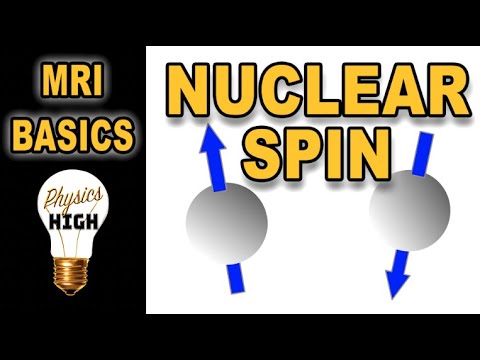
The concept of quantum spin and angular momentum, specifically how particles can exist in binary states like spin-up and spin-down.
An understanding of classical determinism and local realism versus quantum indeterminacy.
Experimental verifications of Bell's theorem, including the pioneering experiments by Alain Aspect and modern loophole-free Bell tests.
Applications of entanglement in Quantum Cryptography, specifically Quantum Key Distribution (QKD) protocols like E91.
The principles of Quantum Teleportation and its role in building a future quantum internet.
Quantum Computing fundamentals, focusing on how entangled qubits enable computational speedups.
Alternative interpretations of quantum mechanics that attempt to resolve the EPR paradox, such as the Many-Worlds interpretation and De Broglie-Bohm pilot-wave theory.
2.6M views38.9Klikes14:02Original Release: 2016-09-22
[MUSIC PLAYING] Is there a hidden physical reality that underlies the strange behavior of the quantum world?
Or is that reality an illusion in the eye of the observer?
The weird phenomenon of quantum entanglement gives us quite startling clues to the answer.
[MUSIC PLAYING] Babies may suck at math.
But they're actually surprisingly good at quantum mechanics.
Well, one fundamental aspect of it anyway.
The peekaboo game is thought to be so hilarious to babies because they lack object permanence.
Hide your face with your hands, and a baby won't automatically assume that you kept existing.
Reveal your face again, and it's as though you popped into existence from nothing, which is, of course, a hilarious thing to do.
Kids get over this pretty quickly as they learn that things don't magically pop into and out of existence for no reason.
By the time they grow up and go to college to study physics, the notion of object permanence is so deeply embedded that we don't even bother teaching it in physics 101.
And yet the idea that the universe keeps existing when we're not looking at it is a pretty fundamental implied assumption behind all of classical physics.
Indeed, most of science takes it for granted that the universe is real, whether or not we're looking at it.
This notion that the universe exists independent of the mind of the observer is called realism in physics.
But quantum mechanics is so bizarre that it still has scientists wondering if we need to reject even this basic premise.
This was the source of one of the most heated debates at the advent of quantum mechanics.
On the one hand, Niels Bohr insisted that it was meaningless to assign reality to the universe in the absence of observation.
In the intervals between measurement, quantum systems truly exist as a fuzzy mixture of all possible properties-- what we call a superposition of states.
In between observations, the wave function describing this superposition is a complete description of reality.
And our experience of a well-defined material universe only has meaning at the moment of measurement.
This peekaboo universe is the heart of Bohr's Copenhagen interpretation.
On the other hand, Albert Einstein insisted on an objective reality, a reality independent of our observation of it.
He insisted that the wave function, and by extension quantum mechanics, is incomplete.
There must exist what we call hidden variables that reflect a more physical underlying reality.
In an effort to demonstrate the silliness of Bohr's idea, Einstein along with Boris Podolsky and Nathan Rosen proposed a quantum scenario that showed that in order to abandon the assumption of realism, you also had to abandon a concept almost as sacred-- locality.
Locality is the idea that each bit of the universe only acts on its immediate surroundings.
This is fundamental to Einstein's relativity, which tells us that the chain of cause and effect can't propagate any faster than the speed of light.
The Einstein Podolsky Rosen, or EPR, paradox introduces one of the most mysterious ideas in quantum mechanics-- quantum entanglement.
Here's the idea.
Two particles interact briefly.
They influence each other so that their properties are somehow connected.
And yet we refrain from measuring these properties to preserve quantum uncertainty.
Quantum mechanics requires that we describe the particle pair with a single combined wave function that encompasses all possible states of both particles.
We call such particles an entangled pair.
Now, according to the Copenhagen interpretation, any measurement of one particle automatically collapses the entire entangled wave function, and so affects the results of measurements of the other particle.
That's an influence that could theoretically be transmitted instantly across any distance, and even back in time, violating locality and possibly violating causality.
Einstein et al thought this was very silly.
They thought that every special point in the universe must be real and physical and defined by knowable quantities, local hidden variables that could affect each other no faster than the speed of light.
The argument between Bohr and Einstein felt a bit philosophical at the time.
But in 1964, Irish physicist John Stewart Bell proposed an experiment to resolve the debate.
It involved entangled electron and positron pairs.
When spontaneously created from a photon, these particles will always be spinning in opposite directions to each other.
However, until measured, we can't know which direction either is spinning.
We just know that they're opposite each other.
Their wave functions are therefore entangled.
Measurement of the spin of one of these particles tells us the spin of the other, no matter how large the distance between them.
But in quantum mechanics, measurement actually affects the thing you are measuring.
In the case of quantum spin, that measurement effect is especially weird.
We define spin direction according to the spin axis.
That axis can point in any direction.
But to measure spin direction, we need to choose an axis to align our measuring device.
We always find that the observed quantum spin aligns itself with our chosen measurement axis.
If we choose to measure vertically, the spin will turn out to be up or down.
If we measure horizontally, it will be left or right.
Measurement forces the alignment of the measured particle.
But how does this affect the spin of its entangled partner?
The answer would settle the Bohr-Einstein debate.
Let me explain.
Scenario one, if Einstein was right, imagine the response of each particle to all possible spin measurements is encoded in each particle at the moment of their creation as hidden variables local to each particle.
Nothing we do later to one particle will then affect the other.
When we later measure the spins of both particles, there will be a correlation in the results because the particles were once connected.
But there'll be no correlation due to our choice of measurement axis.
Scenario two-- Bohr was right.
What if between creation and measurement, the electron and positron only exist as a wave function of all possible states.
In that case, measurement of one particle spin should cause the entire wave function to collapse, to take on defined values.
Both particles should then manifest opposite spins along whichever axis we choose for one of the particles.
That should lead to a correlation between our choice of measurement axis for the first particle and the spin direction then measured for the second.
This is exactly the spooky action at a distance that made Einstein so uncomfortable.
So John Stewart Bell figured out a set of observable results, the so-called Bell inequalities, that we'd expect to see in the case that Einstein was right and quantum mechanics needs local hidden variables.
But if an entanglement experiment violates the Bell inequalities, then local realism is also violated.
By the way, Veritasium describes this experiment in much more detail in this video.
I recommend you check it out.
It's a tricky experiment because entangled quantum states are hard to produce, but even harder to sustain.
Any interaction can destroy the entanglement.
But in the early '80s, French physicist Alain Aspect succeeded.
Instead of looking at the entangled spins of an electron positron pair, he used photon pairs with entangled polarizations.
Polarization is just the alignment of a photon's electric and magnetic fields.
But the principle is the same.
And Aspect found that there was a correlation between the choice of polarization measurement axis for one photon and the final polarization direction of its entanglement partner.
The Bell inequalities were violated.
The experiment was even set up so that the influence had to travel between the photons at faster than the speed of light.
Since then, many experiments have verified this result over larger and larger distances.
The instantaneous influence has been observed over many kilometers at this point.
The delayed choice quantum eraser, which we already covered, is yet another example of this strange result. It's now been thoroughly confirmed that the Bell inequalities are violated, suggesting that the wave function cannot have local hidden variables.
So does this confirm the Copenhagen interpretation and kill both locality and realism?
Do we live in a peekaboo universe that vanishes into quantum abstraction when we aren't looking at it?
Are babies really better at quantum mechanics than Einstein?
Well, not so fast.
The results of these entanglement experiments do seem to violate local realism.
But that may mean a violation of realism, or just of locality.
In fact, it was Doctor Bell's opinion that the violation of his inequalities disproved only locality.
Realism could be salvaged.
Non-locality requires that entangled particles affect each other instantaneously.
That sounds blasphemous to anyone who accepts Einstein's theory of relativity.
However, non-locality and relativity can actually be perfectly consistent.
Relativity requires that causality is preserved, so no faster than light information flow.
But none of these entanglement experiments allow any real information to be transmitted between particles.
It's only possible to see the influence between the entangled partners after measurements have been made and those measurements are compared, just as we saw with the delayed choice quantum eraser.
The universe seems to conspire to avoid the paradox of information traveling faster than light, or backwards in time.
The Copenhagen interpretation remains consistent with all quantum observations.
Niels Bohr's peekaboo universe may be the universe we live in.
However, realist and hidden variable interpretations are also consistent as long as they abandon locality.
For example, entangled particles may be dimensionally connected by Einstein-Rosen bridges, wormholes that allows instantaneous contact even between great spatial separations.
Also, the De Broglie-Bohm Pilot Wave Theory works by assuming real and non-local hidden variables.
There is even a way around all of this without sacrificing realism or locality.
That's the many worlds interpretation.
We'll get back to these in an upcoming episode of "Space Time."
Last minute announcement-- tomorrow night, Thursday, the 22nd, is PBS Nerd Night at the YouTube space in New York.
Myself and several PBS Digital hosts will be talking about nerdy stuff.
Link in the description.
OK, last week we talked about self-replicating spacecraft and why it may be surprising that none have found their way to earth.
There was a lively discussion in the comments.
Let's see what you had to say.
Daniel Oberley and others point out that a Von Neumann probe may be in our solar system, but be well hidden.
Would we ever even see a single probe if it didn't want to be seen?
OK, so the same statistical arguments for Von Neumann probes tells us that if we expect one, then we expect lots.
OK, so given that, we can't expect all probes to be equally cautious.
Remember, these things may be created by civilizations only slightly more advanced than our own, by a few centuries perhaps.
Humans are not on track to extreme cultural enlightenment over time scale.
But we are on track to some unthinkably powerful technological advancements.
There's no good reason to insist that a species that can reach an interstellar capable state will be highly culturally evolved, let alone to insist that all will be.
So even if there are invisible probes hiding behind the moon put there by some utopian prime directive of bane civilization, there should also be probes blundering through the solar system with no concern about being noticed.
Strofi Kornego and others wonder if life might be the ultimate Von Neumann machine.
You know what?
That's not entirely crazy.
We're on the verge of creating synthetic life ourselves.
This type of militarization may indeed be the most sensible for building self-replicating explorers.
The question then becomes, if Earth was seeded once, was it seeded only once?
Again, if one Von Neumann machine entering our system is likely, then lots are likely.
All life on earth pretty clearly descended from the one self-replicating molecule type.
That said, other later invaders may have failed to find purchase on this planet once the first had come to dominate.
But if these artificial panspermianic seeds are common, then we should expect to find them in space and on other planetary surfaces.
That's hard to do.
But there may be a way.
Borne Stellar asks, do you want reapers?
Because this is how you get reapers.
Why do they have to be reapers?
Why can't they be autobots?
[MUSIC PLAYING]
Up Next

6:25
Bell's Inequality Explained: Quantum Mechanics vs. Locality
@MichaelPiercePhilosophy
1.6K views•2021-05-17

12:53
21cm Hyperfine Transition in Neutral Hydrogen: Radio Astronomy Basics
@AaronRobertParsons
12.4K views•2011-10-13
6:59
Understanding Geodesics and Curvature in Spacetime: Clarifying Parallel Transport
@pbsspacetime
341.3K views•2015-07-08

27:14
Entropy and the Second Law of Thermodynamics Explained
@veritasium
27.5M views•2023-07-01
Related Study Plans & Knowledge Roadmaps
Structured learning paths in Physics
physics
Nuclear Physics (Decay, Fission & Reactors)
01Atomic Structure and the Binding Force
02Radioactive Decay and Half-Life
03Nuclear Fission Mechanics and Chain Reactions
+ 2 more learning modules
12h5 modules
Explore Roadmap
physics
Soft Matter (Polymers, Colloids & Rheology)
01Foundations of Soft Matter & Thermal Forces
02Polymer Physics and Macromolecules
03Colloids, Surfactants, and Self-Assembly
+ 2 more learning modules
38h5 modules
Explore Roadmap
physics
Analytical Mechanics: Lagrangian & Hamiltonian
01Mathematical Foundations: Calculus of Variations
02From Newtonian Mechanics to Constraint Dynamics
03The Principle of Least Action & Lagrangian Mechanics
+ 3 more learning modules
28h6 modules
Explore Roadmap
physics
General Relativity (Spacetime & Cosmology)
01Foundations of Relativity: Special Relativity
02The Geometry of Spacetime: Equivalence Principle & Curvature
03Einstein's Field Equations: The Mathematics of Gravity
+ 2 more learning modules
55h5 modules
Explore Roadmap