

























This lecture examines how Indian travelers, particularly from Bengal, portrayed Japan as a 'superior other' rather than an inferior one, contrasting with Western representations of Japan as exotic and erotic. Travel narratives from figures like Swami Vivekananda and Bengali writers such as Suresh Chandra Bandopadhyay depicted Japan as a place of superior culture, orderliness, and moral standards, especially in education and healthcare systems. This positive othering contributed to increased tourist mobility between India and Japan, as Japan was portrayed as a desirable and consumable tourist space. The presentation also discusses John Urry's concept of 'consuming places' and the 'tourist gaze' to explain how modern Indian travelers continue to engage with Japan through blogs and digital media, with anime culture playing a significant role in contemporary tourism.
India-Japan Travel Narratives: Tourism, Otherness, and Visual Culture
Added:Hello friends, uh welcome to the 25th monthly lecture organized by the Kizuna India Japan Study Forum.
The Kisuna India Japan Study Forum was launched in September 2022 by the Mahamusha Scholars Association of India which is an association formed by scholars who spent a year or so uh doing research in Japan.
The objectives of the for forum are to explore and document the lesserk known or underressearched aspects of India Japan historical and cultural interactions and disseminate the findings uh through uh lectures, seminars, conferences and publications.
The forum has held two international conferences in November 2018 and February 2023 and the papers presented in the conference are now published in the form of book. The first book is uh narratives uh of India lesserk known in historical and cultural interactions and the second book is geographies of exchange between India and Japan and the third conference uh the next conference is the third conference is going to be held on March 6th 7th 8th and the title is lived seasons and intercultural encounters at the India International Center New Delhi and it'll be in hybrid mode and Madurima I feel happy to inform the viewers that she'll be also one of the presenters.
There is no registration fee but you must register yourself those who are attending in person because we have to make uh appropriate seating arrangements.
The Kazuna forum also holds lectures on monthly basis. Today's talk by Arindam Gowami is the 25th held under Kizuna lecture series and he will be speaking on familiar yet foreign India, Japan and the tourist imagination.
Let me welcome and introduce the speaker.
Arindam Gowami is a doctoral candidate at the department of humanities and social sciences at IIT Gandhi Nagar Gujarat. His research interests include studies of travel narratives and gender studies.
He has presented papers at various national and international conferences and published a book review in SAP journey of literary and cultural inquiry as well as a feature article in the outlook India magazine. Welcome Arinder Gowami Arindam Gowami uh to Gizuna forum and let me welcome and introduce the chair Dr. Dr. Madurima Mukupadya an assistant professor MI emity institute of English studies and research Emity University Kolkata. Her research interests range from uh women's travel writings in the colonial period in Bengal to issues of marriage and domestic violence in globalized India. Her publications include several articles in reputed journals and also a book co-authored by her. Uh the title is the violent domestic law its practice and the strategies of survival. It was published in New Delhi 2022.
And let me uh welcome and introduce the discussant uh Swati. Will you switch on your camera?
>> Yes. I hope you can see me.
>> Oh yes. Yes.
>> Hello Prasha Sushila. Nice to meet you.
>> Dr. Swati Krishna is assistant professor of English at IIT Bhuberneshwar.
Her research interests include contemporary American literature, women's literature, road narratives and gender studies. Her publications include articles in several internationally reputed journals and she has co-edited a volume entitled gendered violence in public spaces women's narratives of travel in neoliberal India and it was published uh by Lexington books USA. So welcome all the three star speakers, chair and the discussant. So I uh now request Arindam uh sorry I request the chair to take over.
>> Thank [snorts] you ma'am. Thank you very much uh for your kind words and for the introduction. Uh it is a great honor for me to be chairing this session with two really very uh accomplished speakers. I would request Orindum to start with his talk to just introduce his talk familiar yet foreign India, Japan and the tourist imagination. Um the talk examines the emergence of Japan as one of the most popular international tourist destinations among Indians. This growing fascination can largely be attributed to the representation of Japan as an exotic and culturally distinct space drawing attention to the history of Indian travel to Japan. The talk will demonstrate how this subtle process of othering plays a significant role in the portrayal of the country as a desirable and consumable tourist space for Indian travelers. So over to you Arinda. Uh I think after his talk Swati would probably discuss the talk and then we can open the forum for questions.
>> Okay. Um thank you ma'am uh for this uh kind invitation and uh it's an also honor for me to present this topic in this uh renowned platform. Uh I'm sharing my screen. Uh uh ma'am can you please allow me to share the screen? Uh I'm not allowed to share the screen.
Uh, Manosa, Manoa, Manosa, can you hear me?
>> Yes, ma'am.
>> Uh, please allow.
>> Yes, ma'am. Yes, ma'am. Yes, ma'am.
Can you do it Arena?
>> No ma'am. Still it's not allowing me.
>> Give me Give me minute. Give me.
>> Okay. Okay.
Oh, now it's visible.
Um ma'am is it visible?
>> Yes it is visible.
>> Yes. Yes. Yes.
>> Yes. Okay. Just Okay. So uh the title of the talk is familiar yet foreign India Japan and the tourist imagination. As uh already explained the u objective of the talk by ma'am I am not going to elaborate it. So I will just start uh with the introduction. Now India has a rich and diverse repua of travel writing. These writings often encompass numerous travelers experience of traveling across the country as well as outside the country. Despite having a rich corpus, the genre continues to exist at the margin of critical study. Although there exists critical works like home and har nation, gender, empire and the cultures of travel by Indep.
Travels to Europe self and others in Bengali travel narratives by Simontanis and Indian travel writing in the age of empire 1830 to 1940 by Pikay. Their perview is restricted to the travel writings of colonial period. One of the most important works that study the scenario of Indian travel writing [clears throat] is a book named Indian travel narratives a collection of essays edited by professor Shomat Tamundal which encapsulates critical writings of critics like so of energy Robin Paul Jayati Gupta Shomdam Mandal and many others who have started to write critically about Indian travel writing the book's aim is as narrated by professor Mandal to explore the rich heritage of a country the size of a continent. The book is divided in three sections consisting of various article in Indian travel writing. However, as is evident from the discussion, the book particularly focuses focuses on travel writing on India and England. In fact, most of the critical works that study Indian travel writing mostly focuses on this east to west axis. However, if we take a look at the history of Indian travel writing, many Indians also traveled to various Asian countries including Japan.
Japan was popular international tourist.
In fact, in the early 1970s when travel writing when travel writing study was slowly emerging, Japan features as one of the most popular tourist destinations among the western travelers. In the book tourist with typewriters the authors Patrick Holland and Graham Hugan have specified four distinct jones of travel across the world. The tropical zone which refers to Congo and imagine the oriental zone which refers to Japan. The exotic zone or the south seas and the liinal zone that refers to Arctic.
However, in western imagination, Japan has always been portrayed as a land of romance and eroticism. In contrast to western imagination, the Indian imagination has portrayed Japan as a place of superior culture. Swami Bhanandha's letter is a prolific example of such portrayal. In fact, it can be said that one of the earliest documented links between India specifically Bengal and Japan is the later Swami Viveanand wrote from Yokohama on 10th of July 1893 to Alasinga Perumal of Matras. At the time he was traveling to attain the world's parliament of religions in Chicago. From Yokohama, he crossed the space the Pacific and reached Vancouver in British Columbia and then continued by train to his ultimate destination Chicago. Japan became an important stop on his journey to the United States. He had departed from Bombay on 31st May 1893 about the SS Peninsula. His route included Colbo, Penang, Singapore and Hong Kong. From there he made a visit to Canto before returning to continue by sea to Nagasaki and Kobe in Japan.
Thereafter he traveled overland through several major cities including Yokohama, Oshaka, Kyoto and Tokyo. In his writing Bananda comments on Japan's scenic landscape as well as the orderliness and precision that characterized everyday life in the country. He writes, I quote, "The Japanese are one of the cleanliest peoples on earth. Everything is neat and tidy. Their streets are nearly all broad, straight, and regularly paved.
The little houses are cage-like, and the pinecovered ever little hills form the background of almost every town and village. The short statute fairs in quaintly dressed Japanese. Their movements, attitudes, gesture, everything is pictures. Japan is the land of the pictures. Almost every house has a garden at the back. Very nicely laid out according to Japanese fashion with small shrubs, grass plots, small artificial water and small stone bridges.
Commenting on nature of the Japanese people, Vivean further writes, "The Japanese seem now [clears throat] to have fully awakened themselves to the necessity of the present times. They have now a thoroughly organized army equipped with guns which one of their own officers has invented and which is said to be second to none. Then they are continually increasing their navy. I have seen a tunnel nearly a mile long bored by a Japanese engineer. The much the match factories are simply a sight to see and they are bent upon making everything they want in their own country. This appreciation for Japanese people and culture appeared as a major theme in many of the travel narratives written later about Japan.
To site another instance, Shchandra Das's speech can be mentioned. Shar Chandra Das traveled to Japan in 1915 following his earlier association with the Buddhist monk and explorer Akai Kawaguchi. Kaguchi had studied TVan under Sorchandra's guidance and had been in contact with him in Dariling during 1897. During his visit to Japan, Surchandra spoke at a gathering of the Indo-Japanese association in Tokyo on 21st of November 1915 where he remarked, I quote, "Not one in a 100,000 Indians has yet met with a Japanese merchant, traveler, or scholar. There is no record of even a single Japanese lady having ever visited India. It is therefore necessary that the Indian ladies and gentlemen come here to see for themselves Japanese home life. Here they will see how art how [clears throat] artlessly modest the fair six is and how collected in mind and manner the main of all classes generally are. During the early 20th century, more travelogs are published about Japan. Among the lesserknown writers as pointed out by professor Mundal, there are two traalologs namely Ma Chandra Royy's Japan probashikapro or letters of a visitor to Japan published in 1902 and Tokyo to Kolkata that is from Tokyo to Kolkata Kolkata published in 1903. Among the Bengali travelers there are Kilas Chandra Varatkars, Japan Jatra that is journey to Japan and Japan author Raj Bango that is Japan and her royal dynasty both published in 1911. Then there was another Bengali travel narrative called Japan written by Suresh Chandra Bandhapadhai which was published from Kolkata in 1910. The same year saw the publication of another book called Japan Propus that is living in Japan by another Bengali gentleman called Manmat Kosh who had traveled to Japan in 1906.
Later in 1915 he also published another book entitled Shupta Japan. Robin's 1916 trip to Japan was published as Japan Jatri in 1919.
All these travel narratives presented different facets of Japan to the readers in Bengal.
Am the women travelers who travel to Japan or Huri Prabha Labos Shesh Nalinto Charu Balamitra and Santa Di to name only a few. Suresh Nalin traveled to Japan 1920. Apart from describing the life and culture of Japan, a major part of a traalog deals with the Japanese education system for women as reflected by the writing of the education system in Japan was not gender biased. Girls in Japan had equal rights to education as boys. The girls school in Japan reminded her of the abysmal condition of the girls school in India. She writes, I quote, "After having tea, we are accompanied to some of the classroom.
Around 750 girls are enrolled in the school. Most come from outside to attend school and only 30 to 40 students are borders." The English language instructor, Miss Suk Bin Sukamoto, explained to us in English everything about the school. We inspected a few classes. Then we went into another room to see a drill class in progress. That was the school gymnasium, a massive room. An instructor was training 200 girls. It was very attractive and enjoyable to watch. Again, when I remember the abysmal condition of the girls school back in our country, I was mentally agreed. End quote. like sini a major part of charubalamitra's obush and Santa devi's travelers do focus on women's education in Japan santai in her traveler also speaks about the women's health care system in Japan while staying in Japan she visited a women's medical college and a maternity hospital and talked about how women engage themselves in different healthcare services traveler Bonga Mahila Japanra stands out from the rest of the traalog as it describes a Bengali's journey to Japan but also because of Horikra's position as a member of a Japanese family as her husband was Japanese by birth. Her book contains a rich description of the Japanese family culture and custom. She writes, I quote, quotesy and gratitude are intrinsic to their speech. If they are shown an iota of kindness, they acknowledged it by bowing their heads in gratitude. Their conversational mode expressed their own humbleness and the extreme respect rendered to others.
While beating goodbye and seeing them off, the host made sure to invite the visitor to come again. End quote. Thus, as is evident from the above discussion, the writing of these travelers, in the writing of these travelers, Japan has always been portrayed as a place of superior and distinct cultural places.
And this portrayal contributes to the othering of the culture. If we go by the basic definition of travel writing that is a travel writing is a recorded documentation of travel writers encounter with difference and otherness otherness by representing the Japan in this in this manner. All these travel writers are participating in what contemporary travel writing criticism often describes as othering. Although widely used, the term carries two related but distinct meaning. In its broader and less charged sense, othering refers to the way one cultural group recognizes and emphasizes difference between itself and another community. In its more forceful sense, however, the term points to the rhetorical and ideological strategies through which one culture portrays another as not merely different but subordinate or laser.
In this broader understanding, nearly all travel narratives could be said to involve a form of othering since they depend on presenting accounts of people and places perceived as unfamiliar or outside the reader's experience. What remains open to debate, however, is whether travel writing necessarily participate in the stronger version of othering where difference is translated into hierarchy and cultural superiority.
As is evident from the above discussion of the travels, all these travel narratives mentioned before is stepped with reference to otherness. But it is not the discourse of inferior others but of superior other that dominate these travel writings. Instead of representing Japan as inferior others which is evident in the western representation of Japan at that time. This narrative focuses on the representation of Japanese community as having a higher moral and aesthetic standard exemplified in the discussion of their cultural society and education system. This portrayal of positive this portrayal of positive other has contributed to a increased touristic mobility between the two countries. Now apart from the print media the digital media too is abound in various tourist blogs about Japan.
Writing about the importance of tourist blog Betsy Auring opines that travel blog is the equivalent of personal online diaries explaining the effect of blogs on today's traveling. Noinin further states that I quote the genre of blogs mixes recognizable commodified imagery and personal stories and snapshots to establish a blog both as a globally recognizable commercial [snorts] effort and as a more personal site of travel discourse travel discourse. End quote. If we take a look at the recent travel blocks, the most frequented tourist spots of Japan include Tokyo Tower, UUA Park, Tokyo National Museum, Hiroshima, Mount Fuzi to name only a few. One such very popular tourist blog is travel with Kosik. During his travel across Japan, Kosi visit places like Kasukab, Mount Fuji, Hiroshima to name only a few.
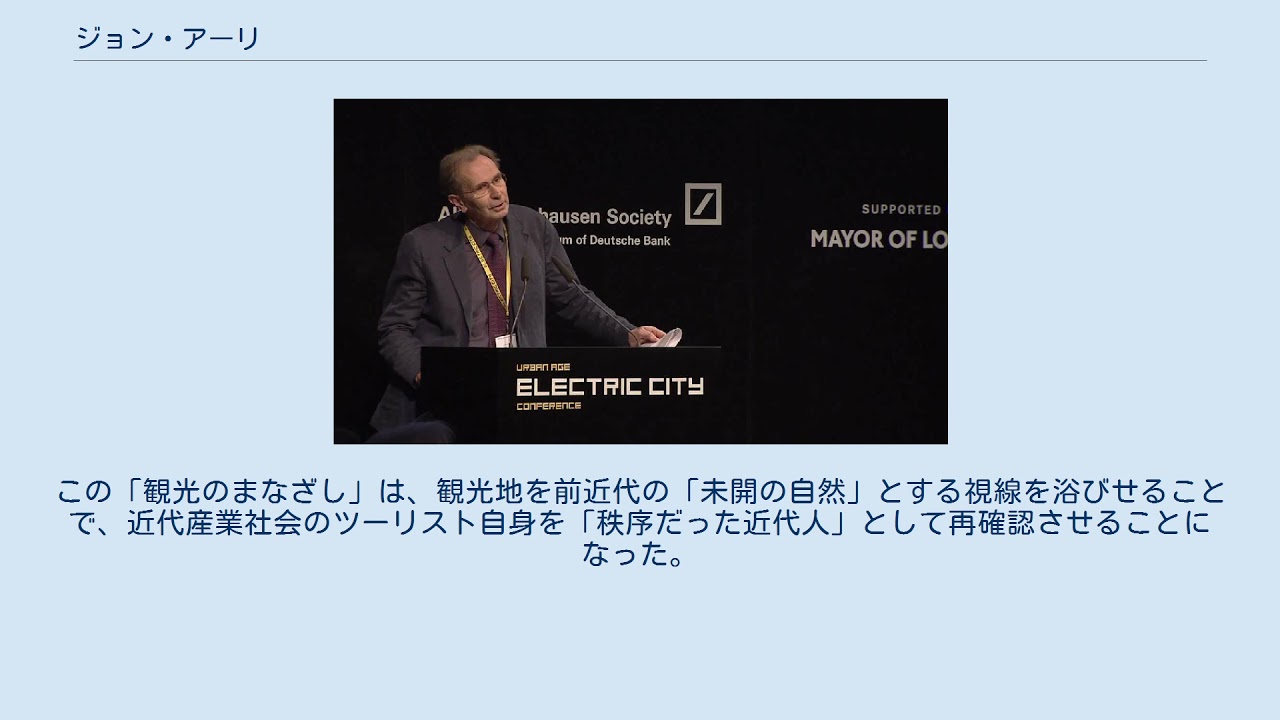
Now, Kik's portrayal of a travel through Japan resonates with John Uri's notion of consuming places discussed in his book consuming places discussed in his book consuming places referring to how places consumed. Uri mentions four distinct ways of consumption. First, places are increasingly being restructured as centers for consumption as providing the context within which goods and services are compared, evaluated, purchased and used. Second, places themselves are in a sense consumed particularly visually. Third, places can be literally consumed. What people take to be significant about a place that is industry, history, buildings or literature or environment is over the time depleted, devout or exhausted by use. Fourth, it is possible for localites to consume one's identity so that such places become almost literally all consuming places.
Kosix can be said to emerge as a consumer with reference to the first two aspects mentioned by UI. The first level of consumption in her case pans out through the detailed description he provides of his accommodation in the city and how initially he faces some hindrances at some of the instruction of the electric equipments in the home state while written in Japanese. The role of Kosik as a consumer is further apparent in her description of her acquisition of local products as especially a packets of chocolate chips during his visit to the Sinchan Museum in the town Kasukab. Now anyone who is familiar with this famous children so Shinchan knows that chocolate chips is a Shinchan's favorite snacks and many episodes of the series veers around these snacks. The second level of consumption in Mitraos's case is manifested through the detailed visual description he provides in the narrative of the various places she visits which corners the notion of visual conjunction. For example, I have taken some snaptures from uh Kosik's travel blog. Now this place is the flame of peace which is in uh Hiroshima.
The second is the children peace monument. So uh go travel blog is abound with description of many such places that are popular tourist blog. Now uh in contrast to print media which generally gives us a very rich description of these places through words metaphors or various other rhetorical speech in a blog we can directly visualize these places.
Uh now uh the second level of consumption in Mitra in uh Kosika's case is manifested through this detailed visual description he provides in a narrative of the various places he visits which converts the notion of visual consumption. The elements of visual consumption is highlighted in the narrative through his focus on the natural beauty of several places he visits. For instance, the description of Mount Fuji that Kosi captured through the lens. So, here is a small video clips that Kosi captures during his visit to Mount Fuji.
Um, is the video visible? Is it running?
>> Yes, we can see.
>> Okay.
Okay. Oh now um now uh now Uri elaborates his concept of visual consumption with reference to what he terms as the tourist gaze. In his book the tourist gaze he argues the tourist gaze is directed to features of landscape and townscape which separate them off from everyday experience. Such aspects are viewed because they are taken to be in some sense out of the ordinary. Puri mentions different ways in which the division between the ordinary and out of the ordinary can be established. This include seeing a unique object. He argues there is seeing there is seeing a unique object such as the Eiffel Tower, the Empire State Building, Buckingham Palace, the Grand Canyon or even the very spot in Dallas where President Kennedy was sought. These are absolutely distinct objects to be gazed upon which everyone knows about. They are famous for being famous. For example, similarly in Goik's tourist blog, we can see the different images of different places.
For example, this children peace museum and the flame of space are some of the popular tourist destination. Now, it is observed that Kusik 2 refers to this unique object like this peace symbol of Hiroshima, the volcanic landscape surrounding a mount Fuji which describes his travel through Japan according to Udi. Now another way of differentiating the out of ordinary from the ordinary is by seeing a particular signs. He claims I quote then there is the seeing of particular site such as the typical English village, the typical American skyscraper, the typical German via garden, the typical French chat and so on. This mode of gazing shows how tourists the how tourists read the landscape for signifiers of certain pre-established notion or sign derived from various discourse of travel and tourism. Co's visit to Cibua in north in Japan reputed for be for becoming one of the busiest crossing exemplifies this process. Kosik shows that how Ceu's crossing is one of the busiest crossing in the world. Thus, Cibua emerges as out of the ordinary for goi owing to its already established reputation.
Thus, as is evident Thus, as is evident, whether its culture or natural beauty, Japan has always been portrayed as one of the most popular international tourist destination among Indians. This growing fascination can largely be attributed to the representation of Japan as an exotic and culturally distinct space. This subtle process of othering which is evident in the above discussion thus plays a significant role in the portrayal of the country as a desirable and consumeable tourist space for Indian travelers.
Thank you.
>> Thank you very much. uh it was a very interesting uh reading of you know traalologgs and how you have looked at blogs. I would now request Dr. Swati to give her u you know discussion on this paper on this presentation.
>> Uh am I audible?
>> Yeah, you are audible and also visible.
>> All right. Thank you Arindam. Uh it was it was a different talk in the sense of how you view othering. So I'll just um um summarize what you have discussed and then may pose some questions. So uh you have started with the history of uh travels to Japan. So you brought in Swami Viveanandas travels and Sharachchandra Das and and how west and east views Japanese and Japanese culture and people and interestingly what I noticed was that when Bun travelers are mentioned so um you mentioned Srojini Sroj Nalini and Shanda Dvi >> interestingly they were talking more of the gender equality right education as well as in healthcare. So while the male travelers because I'm also a gender studies expert so this difference is what caught my eye first is that while male travelers were talking about this artless or artful artful women and men uh they were more concerned with the uh you know the women travelers were more concerned with the education of girls and the health care women's services which was interesting and also the idea of and then you talked about the superior Peter Rading and as well as you ended with John's uh concept of consuming places and Koshik's blog.
Um while I in our critical studies most uh in critical and literary studies we use othering with a negative connotation almost always. So if you are using for um in a positive sense uh this is my question to you. Do you have a theoretical backing because we in in our studies we need you know a proper theoretical background. Is it something you are coming about with by yourself or do you have a solid critical backing to your claim which would be questioned?
>> Yes you can answer. Yes.
>> Okay ma'am. So uh while uh initially when I started this study of trouble writing mostly I came across like how othering is uh the othering the uh term othering has always been used to refer to some inferior culture but othering can also be used in the sense of how one culture differentiates itself from another right so uh in K Thompson's book travel writing he was speaking about the noble savage actually the savage who is who are not inferior but they have some good qualities. So actually it my idea of superior others come from this idea of novel service mean it's a kind of inference on that idea like first of all Japanese culture is very different from our culture. So that is the first level of othering. Now all these people whether it's or even Swami Viveandu they are speaking about the higher like the the improvement of the culture and uh I think it's satraas he is also speaking about like he's like um inspiring the students to visit Japan to uh learn about their culture. So Japan has always been portrayed as first of all it's an other culture. Second, it's uh it's kind of superior culture. So there is no sense of inferiority. So my idea of superior rather is a kind of like inference from Carl Thomson's idea of novel savage.
>> Superior culture from the uh subjective perception of the travelers, right?
>> Yes.
>> So yes, that's what you're claiming. You don't you're not directly claiming that it has a superior culture.
>> Yes.
>> Yeah. I'm asking. So document.
>> Yeah. So it's from Yes. Uh it's from the traveler's perspective because a traveling is a very subjective experience and each traveler's experience is mandates to be different from other travelers. For example, u I myself have been to Japan on some conference and I have my own experiences. So there are certain things I like and there are certain other things that I uh don't like also. So it's a very subjective experience. So the traveler that I have referred here it's from their perspective that this notion of superior others that I am applying it's not from my perspective but from the traveler subjective perspective.
>> So yes in caseh you would wish to develop it into a paper in future maybe some theoretical backing would help with uh I think while it is a very interesting idea. Yes. Um uh other than that with the blog the blog that you were talking about and the visual representation how did you connect with the visual conception which was not very no clear >> uh I didn't get your question can you please >> the visual consumption and the the pictures that uh Koshik uses in his blog >> so when uh so the the notion of visual consumption is actually provided by John B where he said that the visual conjunction happens through the rich visual description of the places that the traveler provides. Now it would be very much popular if I can uh use the like if there is subtitles or the video that I uploaded if it comes uh with the audio but for some reason the audio I cannot play it because there there is this rich description of that u that uh volcanic cent of Mount Fuji. also in other there is like total 10 episodes of this blog that covers the major part of the Japan where Koshik has explained in details the culture the scenic beauty of Japan. So it's like he is consuming the places visually. So two levels of consumption that is happening here.
First of all like one is the material consumption where he is going he staying uh he is consuming the foods he is purchasing certain things. So one is the material consumption and the other is the visual consumption that is when you are consuming a places basically you are consuming the aesthetics of the places through your eyes >> and that is what uh I mean by visual consumption. Uh >> am I able to clarify it or >> uh I think so but uh have you heard of dark tourism?
>> Yes, a dark tourism it would be applicable when I was speaking about this Hiroshima and Nagasi the places that is kind of like uh has a haunted past. Haunted not in the sense of spectrality or spookiness but has some traumatic past. For example, if we are speaking in the context of Japan, both Hiroshima and Nagasaki, they can be mentioned as dark tourism and it is because of their traumatic past or the traumatic history. People particularly visit the places places. So it is the third point of consumption like people thinks that their history is the significant part like if you are visiting Tokyo, Tokyo has this uh Tokyo has this very rich cultural and scenic beauty. Mount Fuji is famous for it scenic beauty. But Hiroshima and Nag Nagasaki both of these places are famous for their historical past as it is related to the uh World War II and the atomic bomb explosion. So it is this history for this historical past that people are visiting these places they are consuming that history which is also evident in the like there are also these war memorials in Hiroshima and Nagashi and Pusik also visit those places which I cannot show because of the posity of time because the blogs are very lengthy and it's like that so yeah so I think it's also a part of dark tourism his visit to these particular two places >> and also nowadays there are certain virtual ways in which you can conduct dark tourism, right? Through museums to provide um ways or er or these artificial ways that you virtual ways you can consume dark tourist places. Uh but do you think that since you were talking about consumption, dark tourism is about consuming places of or pain or consuming places of historical atrocities. So what do you think about the ethical part of it though it was not directly related but since you're talking about consumption I thought of asking the question uh for this one I need some time to think because there should be an ethical part and um it it's a kind of like um I don't know how should I answer this question >> we talk about um Koshik's journey to Hiroshima Nagasaki Okay. So, go particularly uh visit to these places and he refers to the history. He also shows this there is particular building uh I think it name is something bomb tower like uh very near where the bomb gots exploded and everything. I think uh as it's related to the personal history of Japan, I think uh there should be some kind of permission kind of thing before portraying because it's also uh deals with the not only obviously it is a collective memory of the people the collective memory of suffering but it also comes with uh certain personal memories like people who have personally suffered. So there is a ethical dimension to this tourism but I cannot see any kind of ethical dilemma in coexpert he's a very his blog is a very commercializing blog and sometimes if you ask for my personal opinion I don't know whether I should say this like that sometimes people but it's kind of like they sell this history for uh like inviting more tourists Because these days it has also because these collective memories they have also been commercialized for inviting more tourists because people consume these things more and they are also interested in these things these days how it affects the other people. So I think um yeah that's my answer with the ethical part though I'm not sure about because I need some time. It's a very interesting question.
>> No I just have uh another question regarding your PhD work. Is it related to uh travel writing in in Japan?
>> Yeah.
>> No, actually uh my thesis entirely is based on Indian travel writing that is Indians traveling within India because when I was started working I see that this the notion of home travel that hasn't been that hasn't received much critical attention especially the book that was published after 2000.
>> So my work is completely based on that area.
>> Okay. Thank you Arindam. Thank you madima. Yes, that's it from sir. Thank you.
>> Okay, so I will now open the floor for questions. Uh though I also have a question for you Arinda. Maybe I'll come to that later if there's any question from the audience.
>> Uh ma'am, can I stop sharing the screen?
>> I think so because u now you'll get questions only. So you can stop sharing your presentation.
Yes. Uh there's one uh person who's raised hand. Yes. Please go on.
>> Yes. My name is Yeshua. Uh >> yes. Uh I have a question. When I have uh foreign guests in Japan.
>> Yes.
>> Well, it's uh often somewhat tricky to decide where to take them. Yes. and uh es and uh I and uh well especially with uh some many of the Indian people uh the restriction the barrier sometimes seems to be rather high for instance uh let's see uh gastronomy that's a very important part of tourism uh but uh as you know very well uh Indians have a lot of issues about various uh especially non non-vegetarian uh cuisines in in Japan uh and uh well Indians particularly so compared to many of the other uh foreigners also uh I love taking people to uh my favorite hot springs. Uh I think uh Indian people have a strong aversion to nakedness and uh this comes rather difficult as well.
uh and uh well I can uh uh tell you about uh other examples as well but uh do you think uh things will be uh going towards a direction that uh uh people get more used to or accommodating in various exotic aspects of Japan and uh uh we can have uh more fun together.
[laughter] What are the future prospects?
Okay, that's a very interesting question. Uh yes, I think the way the tourism industry is uh growing these days and people are more prone to new adventure and new experience, I think there are certain possibilities that people will be opening up for this diverse and various kind of experiences.
I think that can happen in a near future because nowadays they are always looking for something extraordinary, something fun. Uh so I think there is a possibility Uh just to uh give a personal uh example uh when I first traveled to Japan, I also felt very sigh when I joined the my friends in the hot springs. So like the first day I cannot join the second day I join ultimately. So it took me a day to overcome that sess to integrate it into that particular culture. So I think it would take some time but it would happen.
>> Yes. Well, uh I I just like to be optimistic about [laughter] >> Yes. Same.
>> Yes. Thank you.
>> Okay. Uh there's another question from Anka B. Can you just uh go ahead with your question?
>> Yeah.
>> Hello.
>> Hello.
>> I'm Anka from West Bengal. Uh thank you for the presentation and thank you for everyone who has been here. Uh I had um I had kind of three questions. So if you could just briefly address them. Uh why do you think the Bengali travelers portrayed Japan as superior? So was it also a way of exoticizing the country and its people just as the western people had done it for Japan? That is uh one question or maybe one and a half question. And the other is that also um can you equate or compare digital media from the age of 21st century globalization with print media at a time when the shadeshi movement were on the horizon or had already happened and its after effects were permeating the entire Bengali society and when travel writings had entirely different agendas. So my question is that can you um can you compare these two with with each other and what kind of way would you look at it?
>> Okay. Uh so go back to your first question. Your first question was like u the nature like why these Bengali men they are exoticizing this Japanese culture right if I am correct.
>> Well do well do you agree that they are exoticizing or not?
Yeah, to some extent I agree that they are exoticizing the Japanese culture obviously because they present it as a superior other. So I agree to you that to a certain extent they exoticizing it but uh not like the western imagination because western imagination has always portrayed Japan as a place of romanticism and eroticism. On the other aspect, it's basically like learning from a superior culture because all these writers they are talking about this uh education system and health care system and how Indian society can learn from them. uh both in Swami Viveanand's later shandas's later even in hurraheda or shush ninto it's a basically like a comparison of the both culture and how one culture can learn from the other culture because India and Japan uh both s are close tie uh through this cultural exchange that is one issue one thing and also like about this women education because when these women were traveling women education in Bengal uh like >> that was not very much uh kind of like a thing because I think it's only in the 19th late 18th or around 19th century I think it the women education started to increase uh so when these travelers travel to Japan they see that there is no gender biasness in the education system so something because like not originally she speaks about this abyal condition of Indian education system especially when it comes to women's education. So I think from that point of view it's basically like learning from the other culture. I cannot it's not completely exoticizing but it's just like learning from the other culture. Uh that is one thing. The second thing like how I can uh equate both the things see now uh uh both are the medium of narrative whether uh it's a 18th century writing or uh 20th century writings both are the means of narrative and if we go by the basic definition of narrative there is a narrator who who is narrating some incidents. So basically my point of comparison is that narrative stance whether it's in the medium can be different but in both the cases there is a narrator there are some in instances specifically if we see like whether it's a book or whether it's a blog the information that this traveler gathers there are like huge amount of information they then sit and carefully extract those information and they coherently in weave them together in the form of a narrative. It is very much true when it comes to this digital blog.
It is very much true when it comes to the writing. So from the narrative point of view, it can be compared. But again as the time period is different, there are certain differences that we have to keep in mind. Uh when like um you would be speaking about this about these uh vast historical timelines I think.
>> Okay. Thank you. Welcome.
>> Uh there are no more questions. Um Orindam if I just um want to ask you one question that is uh you were speaking about the colonial travelers and then you went to the blogs right so what is how have you linked them that is my question like what happens in between the many decades that are there uh how is this progress traced in your work or paper?
Okay. So uh actually uh my plan is to show like when this comes to this colonial enterprise the critics and the both the writings they are mostly focus on this east to west to west to west to west to west to west to west to west to west to west axis >> so there hasn't been much critical work on this uh Indian japan that cultural exchange though there in recent time there were some works for example professor Shamuta Mandal has written about it professor jay gupta has written about it >> there are many travelers who are traveling to Japan uh some of their writings has been published. Many of their writings hasn't been published because uh for the travel writings, the travel writers is more or less like uh they are more focused on how they are traveling to the west and how the west is being represented. So this area needs much more research and I believe that there are maybe some more documents. M >> maybe uh I need to do a more in-depth archival research uh to see if there exist or what kind of document exists like specifically in the post independence era because there is a huge gap between 1950s and during this re in recent time there is a travel book I came across when I was looking for materials for this talk Paul I think the book's name is uh orienting or something I forget the name but before that I did not come across uh many materials or the many books that talks about their uh travel to Japan. For example, the very prominent travel writers even Noonita Devshen or Shunil Gongabadhai the mostly spoke about these their travels to Europe and the America and the other European countries. uh so I think this area needs much more in-depth research and u I also couldn't find like much more material material dur during this post 1950s era so I have to sip to the blogs because I was following the lecture series and I saw that the lecture has already happened on this topic so I just sifted to the blog and also like in recent times because writing a book and publishing it is a kind of like time taking task so people are more focused on these blog and blog narratives these days. So I thought to focus it on the blog.
>> Okay. Thank you very much. I think it was a very very interesting talk and the way you placed it like linking colonial travel and then uh the blogs and also wonderful uh discussions and very interesting points initiated by Dr. Swati. So thank you both of you for the wonderful presentation and the discussion. I think I'll now um ask Dr. Sushila to uh end with her remarks.
Uh thank you Madurima.
I think Mitsukosa she had raised her hand. Mitsukosa.
>> Yes. Thank you. Um I think my question is uh not so important so I I know put my hands down but I just want to um add one thing if may uh if time allows. Um I think um uh these days Indian travelers increase uh tremendously uh probably because of the uh the um the financial uh you know um increase uh I mean improvement and >> and then also Japanese um uh government um allow uh issues the the visa much easier for Indian people. So that makes um you know uh traffic more. Um at the same time I think the impact of uh anime um many uh Indian tourists uh who I receive and then took them around they uh always talk about uh Japanese anime.
So that impact is a quite um uh big uh impact uh to increase the the travelers.
I just wonder um maybe the demography wise uh Indian travelers um you know in the the colonial time um the dem demography is more toward the Bengales and then you know wealthy and then aged and um I just wonder what is the demography demography of um uh recent Indian travelers. I assume probably the age is a little younger or business people or that that is something uh I I feel very curious about.
>> Thank you. So yes ma'am uh as you have pointed out it's I think uh it's more the younger generation that is uh traveling to Japan these days and obviously the anime is one of the major reason because the anime culture that is slowly growing in India because uh when Koshik starts his travel the blog that I was referring his first visit was the city of Kasuk to because Kasuk was the singan city and he visited this the entire blog is about visiting the Schan's museum and various figurines and collecting various anime figurines. And then there is this second the second episode is about uh I think it's Shinzuku visiting Doron's hometown. So second thing the third episode he speaks about Cibua and Cibua has been featured recently very recently in a very famous anime episode it's called Ju Sukisen and there is this entire arc it's called Cibua incident and there is this famous uh announcement that happens in the metro the next stopage is Cibua and then there happens this entire massacre in the Cibua station so now and even the Cibua station when the anime episode was featured the Cebu station was completely decorated with this anime figurines and according to the anime series and people from India are traveling they are making blogs about their experience in the Cibua station. So yeah this one of the major reason is this growing anime culture that is inspiring people to travel more to the Japan.
Yeah and also if I may add there's a huge influx of IT people who are you know settling all across the world and also Japan and they're also blogging their daily life you know how they travel how they cook what they eat how touh make living easy so that is also a huge um you know new kind of blog that is coming up.
>> Yes ma'am. Yeah, >> thank you. Which is a very good um sign and then I'm very hopeful for >> more [laughter] traffic.
>> More traffic. Yes.
>> Uh any other question?
So let me wrap up. Uh it was indeed great listening to the three young scholars. This is the first time we are having you know all young scholars.
[laughter] uh Arinda, Madurima and Swati and all of them bound by common scholarly interest uh in travel narratives and gender studies.
Actually at that time for most Indian travelers uh especially Bengales destination Japan held a special appeal partly stimulated after Swami Viveananda uh went and uh brought back very nice uh feedback about the Japanese their culture and everything. And then the direct interaction between Okakaratin and the Indians and then of course Tor's visits and uh um Shanti Niketan becoming a haven for uh the Japanese philosophers, artists and thinkers. And another reason which I think uh encouraged the Bengales was uh the direct shipping linkages between Kolkata and Kobe.
>> So that provided them uh facilities and proximity. In fact uh these shipping companies they even came out with packages >> for both the Japanese and the Indian tourists. So the traffic became very frequent and uh this also encouraged uh tourism and Japan also represented a non-western mo model for the Indian reformers >> because at that time we were all struggling with our freedom uh li liberation issues and everything. So we were looking for a model which is not western and Japan after especially after uh the Russo-Japanese after its victory over Russia in 1955 it presented a model and the uh speed with which Japan modernized itself and you know preserved its independence. So that provided an inspiration. So and most of these Bengali women who went you know like Abu she was the wife of uh Jagdish Chandra. So many of them were highly educated. So that is why in their travel logs also you will find that they are um looking at Japanese women's education the reforms etc etc. And they wanted to bring back uh those ideas in Japan in India so that they could also carry out reforms in Bengal and then uh rest of India. So uh it was really a pleasure listening to all of you meeting all of you and I hope you'll continue uh taking interest in Kizuna activities Kizuna lectures and uh you would also uh participate more often. Uh I would also like to thank all the other participants for their interest in kizuna activities and joining us via zoom. Professor Yoshiro Ahazuma, he's always there.
Mitsuko Takahasha, she is also there.
And I see many others also who have been regularly attending our Kisuna lectures.
Hope to see you again. And let me tell you that all the lectures are available on YouTube, Kisuna India Japan forum and the Mosai website. So those who have missed you can uh see uh the lectures and uh uh I'm sorry I can't give you the next date for the lecture because in March we have this conference and it's in hybrid mode. So and uh Arindam there is there are seven eight speakers you know we have a session where there are seven eight speakers talking only about the Bengali travel narratives. So you you Professor Shom Data Mandal is also there. Madurima is also there. So you must attend and there are also some uh speakers on Orya Travelog on Telugu travelogs. So you know you must attend Pari Travels. So you must attend if you come. I mean at least you know online.
>> So thank you so much really uh I enjoyed listening to all of you. Thank you so much.
>> Thank you so much. Thank you. Thank you.
Thank you.
>> Bye-bye.
>> Bye.
Up Next

Tourist Motivation Theories: Psychology & Sociology Explained
@jessponting1844
1.7K views•2018-03-05
Astrobiology Through an Anthropological Lens: Field Insights
@georgiatechastrobiology
128 views•2021-04-14

Proxemics Explained: The Study of Personal Space
@Vox
536K views•2016-07-05
Psychology of Internet Trolling and Pranks Explained
@AzzyLand
10.7M views•2017-12-20
Related Study Plans & Knowledge Roadmaps
Structured learning paths in Anthropology