






















![[ES] Mabrian: Big Data e Inteligencia Artificial para el turismo del futuro | Shiji Insights #16](https://i.ytimg.com/vi/2qabepS-xF8/maxresdefault.jpg)
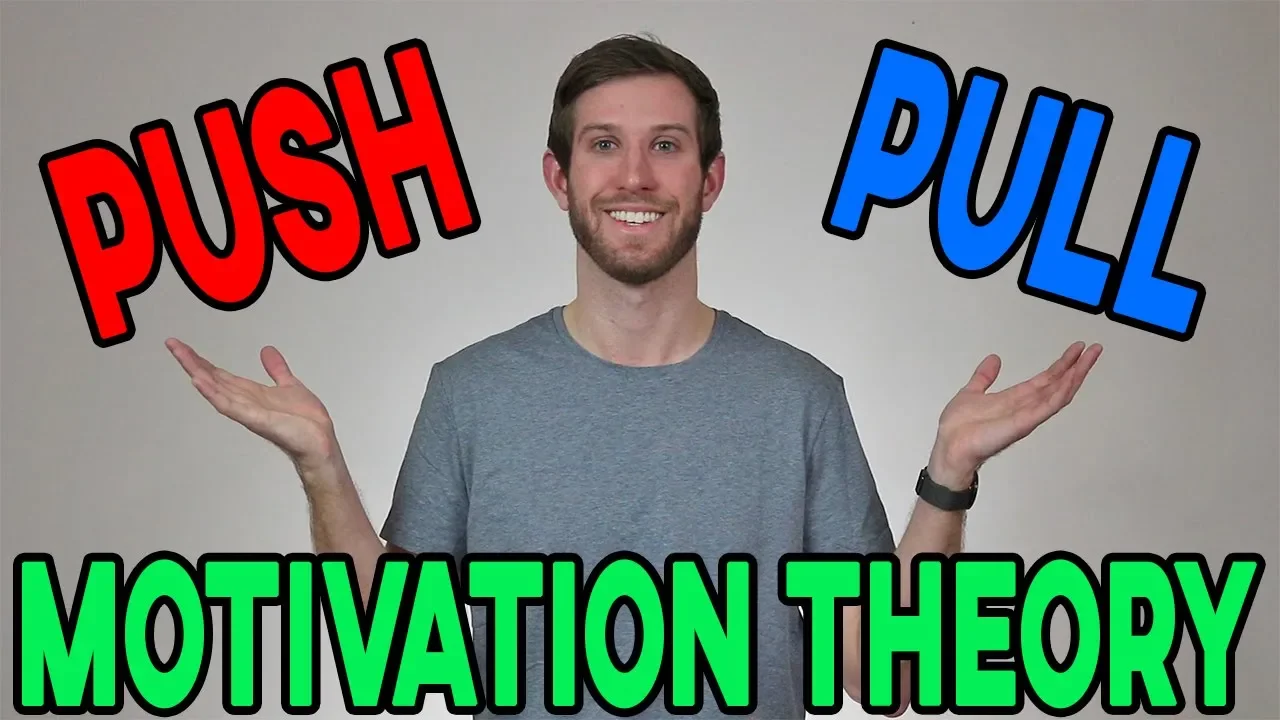
Tourist motivation can be understood through multiple theoretical frameworks: Plog's psychographic typology divides tourists into psychocentric (insecure, prefer familiar destinations), mid-centric (follow discoveries), and allocentric (adventurous, seek cultural exploration); Cohen's model adds institutionalized vs. non-institutionalized categories; Maslow's hierarchy of needs and Pearce's travel career ladder explain how travel needs evolve from basic survival to self-actualization; Ryan's travel motivators include escape, relaxation, family bonding, prestige, education, and shopping; sociological perspectives like Boorstin's critique of manufactured authenticity, McConnell's search for authenticity, and Urry's culturally constructed tourist gaze reveal how tourism creates artificial experiences and shapes tourist expectations; Gilbert's four-stage consumer decision process (push factors, destination perceptions, decision-making roles, and constraints) provides a practical framework for understanding how tourists make travel choices.
Tourist Motivation Theories: Psychology & Sociology Explained
Added:[Music] welcome to this lecture and theories of tourist motivation from the perspectives of psychology and sociology firstly from a psychological perspective plug was writing in 1974 about tourist-type ologies and he's continued with this vein of research well up into the 90s and early 2000s essentially plug divided up the tourist market depending on how adventurous they were these are psychographic dimensions he placed tourists on a continuum of tourist types at one end of the psycho centric tourists these are the tourists who are unsure and insecure about travel they travel to places that tend to be similar to their home in the middle and this is where most tourists will lie on the mid centric they prefer to go to destinations that unknown they don't explore they don't seek new adventures and they follow the discoveries that have been made by more adventurous tourists these more adventurous tourists are known as allo Centrex they are independent they seek cultural exploration and adventure and according to plug writing in 1974 they often have an above average income Cohen also writing in the 70s came up with topologies that were quite similar to plugs he also placed her ass along a continuum based upon the psychographic dimension of essentially adventurousness so his continuum runs from familiarity through to novelty in much the same way that plugs dimensions go from psycho centric to a low centric but he's put in a few more categories here he's divided these up into institutionalized tourism and non institutionalized tourism institutionalized tourism refers to that which deals routinely with the tourism industry tourism operators travel agents hotels and tour groups people who utilize all of the instruments of the tourism industry to make their trip ez non-institutionalized tourism is where individual travelers shun contact with the tourism industry except where absolutely necessary now when I finished my undergraduate degree in 1995 I went off to go on an extended surfing trip through Indonesia after spending almost two years living in Papua New Guinea and I had an open itinerary a surfboard a backpack and a guitar and no plans and I traveled using local transport I stayed in local hotels didn't use any of the tourism infrastructure that was provided to me that was the way that I wanted to travel and that was what is referred to a non institutionalized tourist conversely someone who was an institutionalized tourist may even booked everything in advance would have transfers organized from the hotel a tour company would pick them up take them to the hotel maybe they would have a number of excursions planned and then they would return home underneath institutionalized tourism Cohen breaks these down in the organized mass tourist and the individual mass tourists the organized mass tourist just does the package tours doesn't have much contact with local cultural people other than those working in the tourism industry the individual mass tourists also takes these package tours but they have a little more flexibility than the organized mass tourists they might actually take a walk outside of their hotel or book a tour that wasn't already included in their package moving to the non institutionalized tourists explorers tend to get off the beaten track but they do prefer comfortable accommodation and reliable transport drifters on the other hand try to get as far from familiarity as possible they live with local people immersing themselves in local culture they have no fixed itinerary they are not going to established accommodation suppliers but maybe they are approaching the heads of villages and remote rural destinations and asking if they can sleep with them or they will tend to open up new tourism destinations which may then be visited by the explorers event a tourism industry will develop and you'll start to get the institutionalized tourists attending these places as well another psychological way of understanding tourist motivation was based on Maslow's hierarchy of needs so Maslow's hierarchy of needs suggests that there are a number of needs that people have and they can be placed in a pyramid and the people are wanting to get to the top of that pyramid but in order to move up to the next stage the earlier lower levels of needs need to be satisfied first and the first order needs are physiological needs food water shelter and survival once you have these things sorted out then you can feel about safety needs feeling secure or unafraid once you have these things figured out then you start looking for things like affection friends and love and once those things are figured out then you can become concerned with things like confidence and prestige before eventually shooting for self-actualization which is to become everything that one is capable of becoming Phillip Pierce essentially put two lines up the outside of Maslow's hierarchy of needs and called it Pierce's travel career ladder his idea is that you can consider your travel career how you travel throughout the course of your life as a career and that through this career you should be looking to ascend this travel career ladder but perhaps in your first forays as a tourist you're just looking to satisfy those lower order needs and as you become a more adept traveler throughout your travel career your needs as a tourist are advancing and evolving with you to get to that point of self-actualization where travel can help you become everything that you are capable of becoming some of the criticisms of the psychological approaches to tourism motivation are in the case of plug-in Cowan that they tend to reduce tourist motivation down to a single psychographic constituent that is how adventurous people are you're clearly more factors of work than that pieces travel career ladder similarly assumes that everyone is trying to ascend to this ladder throughout their travel career well some people do not seem to be interested in self-actualization but it may be looking more for fun in a manner which keeps them at some of these lower order needs that they tend to regress backwards down the travel career ladder in order to have fun in ways that they did perhaps when they were younger Chris Ryan writes about travel motivators and he has this list of travel motivators that's quite short but really accounts for most imaginable tourist motivations that tourists are either looking to escape from a mundane environment you're looking for relaxation and recuperation for opportunities to play to strengthen family bonds for prestige social interaction education wish fulfillment or shopping pretty much any buddies travel is going to fit into one or more of these categories many of them are pretty obvious some of the ones that people don't often admit to are those of prestige this is the kind of travel that people go on so they can brag to other people that they've been on this kind of travel for example I remember being a young adult and talking to a friend of mine both had dreams of travelling extensively but our reasons for doing this were really quite different mine were far more along the escaping from a mundane environment and education perspective whereas for him he would say things like I can't wait to go to Egypt so I can get a photograph of myself standing on top of the pyramids and put that photograph on the wall of my living room for him it was about having photographs taken at the world's great landmarks so that they could be conversation pieces in his home on another occasion I was taking a group of students to all the lagoon in Baja California in Mexico where the California gray whales breed now this is a unique place to view whales because they will actually come right up to your boat and mothers with calves will push the heads of these baby whales into the boat so that you can actually Pat them it's quite remarkable I was down there with a group of students and also a group of members from the public almost everybody had touched a whale except for one woman and this particular woman had spent the whole trip bragging about all of the very expensive nature trips that she'd taken which had included a number of trips to Antarctica icebreakers ships with helicopters and landing on the Arctic tundra and hanging out with penguins now she was very annoyed that she hadn't managed to pad a whale and it got to the point where her complaining became so incessant that one of my students picked her up physically she was just a small lady hold held her over the side of the boat and she reached down and touched a whale for the first time and she shrieked with pleasure and shouted my friends from Antarctica are going to be so jealous when they hear about this and that had appeared to be her primary motivation for this whole trip was to make other people jealous rather than being there for the enjoyment of the trip itself and this is an example of prestige as a travel motivator optimal arousal theory suggests that individuals have different comfort levels of stimulation and will constantly attempt to reach them so if you have an existence that you find is too stimulating in order to reach a level of homeostasis you would according to this theory choose less stimulating travel choices if you found your life too boring or mundane you might choose instead high stimulation travel choices in order to reach this desired balance of stimulation moving on to sociological perspectives of tourism motivation Daniel Boorstin who was a an American Republican and the librarian at the Library of Congress for some time had written in 1961 a book called the image a guide to shoot our events in America he was quite a cynical man and he didn't like the way that the culture of celebrity and movies and the the generation of fake narratives incest he didn't like what that was doing and he said in 1960 ones are pretty early on tourism once offered a passport to reality it now provides artificial products in which picturesque natives fashioned paper mache images of themselves for tourists who expect to see scenes out of the movies so he's saying that tourists are not expecting reality they are expecting a manufactured reality that they have seen in the media and that native peoples around the world are producing those scenes that the tourists are expecting even though it's not an accurate reflection of their culture and there are certainly examples of this from around the world this is a photograph of a cultural dance in Fiji it was billed by the backpacker hostel in front of which this performance is taking places of Fijian cultural dance now fire twirling is not a cultural dance in Fiji it has no place in Fijian traditional dancing there is one small community on the island of anouther that has a fire dance but it consists of people stomping around on burning coconut husks not twirling sticks of fire as you see in here this is a completely imported dance it's certainly visually arresting and entertaining but it has nothing to do with Fijian culture but the tourists have been been led to expect that there will be these kinds of spectacular fire dancers in Pacific cultures and so the tourism industry is giving them what they want now this all takes place next to a mock Fijian village that is only there to look like a real Fijian village and this Tiki pool now again these Tiki motifs have absolutely nothing to do with Fijian culture and I'm still not quite sure what the the intention was with this but here it is and it's meant to communicate to guests something authentic II about Pacific culture but with no actual references to anything real about for culture Dean McConnell also talks about the idea of authenticity and tourism but he kind of turns Daniel Boston's idea on its head where Boston suggested that people are out looking for the fake and that that's what they're getting Dean McConnell suggests that tourists are actually looking for the authentic given a lack of meaning in their own lives they're looking for meaning in the authentic lives of others but they're unable to find them we can all based his work on Goffman's ideas of front stage and backstage where front stage if you think about it in terms of a theater is where the show goes on there's a very polished performance that hides the fact that the actors have been rehearsing this for months and months and months and they're frantically backstage putting their makeup on and getting their costumes on and rehearsing their lines and trying to make sure that everything goes fine and they step onto that stage and the polished performance is perfect McConnell says the same thing happens in tourism what you see as a tourist for the most part is this show on the front stage it's what you see but it's not the authentic lives of others the tourists are really searching for that all takes place backstage where all the preparations are being put together and McConnell says that it's virtually impossible for tourists to access the backstage and the truly authentic lives of people in tourist destinations unless perhaps they were to get lost walking around a local community and happened to peer over the back fence of someone's house and see some real interactions taking place outside of the sphere of tourism English sociologist John Horry has written extensively about tourism is one of the more influential theorists in this area and he wrote a book in 1990 and released an updated version in 2002 called the tourist gaze this was based on french historian michel foucault's medical gaze the dehumanizing medical separation of the patient's body from the patient's person so if you've ever been into the doctor or if you've been with someone or you yourself have had surgery you might have had that feeling the medical staff had disconnected from you as a human being and they're seeing you as a lump of meat that needs repairing that's what Michele Foucault was talking about and that's the the idea that John ory brings to tourism is that tourists are disengaged from the destination in any real way and they're looking for these signs and symbols that they've been trained to look for and that's culturally bound and is different between different cultures and that the tourists gaze can change on a whim from one thing to another so it's culturally constructed there is no single tourist gaze depending upon the influencers placed on people in their lifetime tourists are drawn to different kinds of tourist sites and what tourists look forward reflects their own culture to a large degree far more than it does the culture that they're visiting and we tend to try and direct the tourist gaze as well these are photographs of places where a local tourism industry is really directing the tourists saying look you need to take a photo of this this is what you want to take a photograph of generally speaking the tourists will oblige them this is a good example of culturally bound meanings associated with the tourists gaze this is Gallipoli in Turkey and you probably have never heard of this place before when I asked my American students they've also never heard of Gallipoli in Turkey I've heard of Turkey but Gallipoli means nothing to them for Australians and New Zealanders Gallipoli means a lot this is the site of an important First World War battle where are tens of thousands of Australians and New Zealanders were killed the battle itself is kind of a long story suffice to say that the Australians and New Zealanders were trapped on a beach with high bluffs behind it with Turkish shoulders in great numbers is mowing them down and so this is the site of one of our greatest wartime defeats and it's something that is celebrated or at least in Australia New Zealand there is a public holiday dedicated to Anzac Day and these were the Australian and New Zealand Army that landed on this beach in the first world war and we're almost completely decimated many Australians have relatives ancestors who died on the beaches here and every year on Anzac Day many of them make a pilgrimage to Gallipoli even if they don't make it on that specific day many Australian and New Zealand tourists will come and pay homage at this site with so many people died now it's also just kind of a beautiful beach destination and you'll see tourists from other countries there as well wandering around thinking wow what a beautiful beachside community what a beautiful view and then you'll see Australian and New Zealand tourists walking around the exact same place but with very different feelings in their hearts they may be crying they may be remembering their grandfathers or great-grandfather's who were killed as teenagers trying to get up this Beach very different feelings in a very different tourists gaze now the tourists gaze can also have practical implications for tourist destinations and an example is in Sarawak in Malaysia where communities live in long houses these are great big literally long houses that the entire community lives in they don't have individual houses there's particular styles of longhouse that are particular to some communities and the image on the left is the one that is at all the tourist brochures and that's what tourists are looking for now it takes a long time to build a building of this size and the trouble with building it out of bush materials as this building is is that it needs completely replacing at least once every 10 years so what many communities have started doing where they can afford it is building long houses out of more modern materials and using more modern designs and then the image on the right you can see that the longhouse is using milk timber it has a corrugated iron roof which allows them to collect fresh drinking water the timber has been treated there are nails that this building may last for 30 to 50 years but it's not what the tourists have seen in the tourist brochure and the people in this community were told unless they took this long house down and built a traditional one like the one on the left that tourists would stop coming to visit their village other communities have been told that their style of longhouse design doesn't match that in the tourist brochures and that they should start making the designs that the tourists are expecting otherwise they might not get tourists as well so the tourist guy is informed by the marketing of the tourism industry is pressuring indigenous cultures to change their preferences and needs in terms of the housing that they provide for themselves we've looked at theories of tourists motivations based in psychology and some based in sociology in our next lecture we'll look at tourism from the perspective of a consumer decision making paradigm if we see tourists as consumers then tourism can be seen as the result of consumer decision making processes Gilbert in 1991 wrote about a four stage decision process in tourism based on consumer decision making paradigms these involve Energizer's of demand or push factors effectors of demand information and perception of destinations the roles and decision-making and filters of demand or the constraints let's look at each of these four stages in turn the Energizer's of demand are push factors push factors are those things which create a need that needs to be addressed and this would be addressed through tourism so in this case the push factor is extreme stress clearly this fellow has been working long and hard into the night he has a coffee on a trip directly into his veins he's going to need a holiday to rejuvenate from this level of stress this is his push factor the second stage are the effectors of demand or perceptions of destinations for example your perception of Fiji as a destination may reflect this image and may reflect this kind of marketing which is a little old now but Fiji used to be itself is the one truly relaxing tropical getaway I'm sure there are plenty of other tropical getaways that would argue that point but that is how Fiji was presenting itself the image of a woman on a beach typifies how they were trying to position Fijian Tourism now if this was your perception of the destination then if your push factor is that extreme stress that we were just looking at this would look like a pretty good destination for you to address that need for relaxation however in 2006 when I was living in Fiji the military overthrew the democratically elected government this was the scene all over the capital city of Suva military checkpoints every kilometer or so armed soldiers with machine guns and checking for people on the edge of this photo you can see the corner of a white tent this was just outside the entrance to the University of the South Pacific underneath that tent is a fifty caliber machine cannon pointed at the campus presumably in case the university population was going to rise up against this ku now there was razor wire and all kinds of things all over the city if that was your perception of Fiji which it was for many people at the time you probably wouldn't go there for a relaxing holiday your perception of that destination would be changed even though the destination itself is the same your perception has changed you might not necessarily want to go there anymore stage three and the decision process is about the roles in decision-making so let's take the average American nuclear family you have father or mother two children now their roles and needs in making tourism decisions may be quite different I'm going to be stereotyping along gender and family role styles here so my apologies for that in advance but the father and the family may be thinking about couple of different things he may be thinking about the need for kinship to rekindle familial ties maybe he's been working like wants to spend time with the family he may also be thinking about spending some alone time with his wife while the children are maybe being entertained in other ways at a tourist resort his wife may be thinking about the shopping opportunities that an airport duty-free store or that international department stores may provide his son may be thinking about how he's going to be missing his girlfriend back at school and he doesn't really want to go on a holiday anyway his daughter might be thinking about meeting a like-minded companion on the beach in their tourist destination so all of them have different motivations for going on the same family holiday the question is who makes the decisions and who has input into these decisions and that can vary between different families in some the children are going to have a very big part in making a decision about where the family should go and others it may be the father others it may be the mother or the parents working together to make those decisions whatever this situation the roles in decision-making will have an influence on the overall outcome so here's a model of the holiday decision-making process start off with personal needs those push factors and then it becomes a matter of weighing up different destinations the only way to do that is through the perceptions that you have destination image the impact of advertising how far is it what kind of transport is available have you been there before do you have any favorable or unfavorable childhood recommendations have you had a personal recommendation from someone what are your perceptions of risk in that destination do you have any particular individual views and then on the other side you have the opportunity and constraints that may stop you from going or influenced when and where you might be able to go including family work time money available products your lifestyle personal preferences your gender age and in this is social circumstances and your personal values and attitudes all of these things go into the process of choosing a holiday and deciding to go the fourth stage in this decision-making process are the constraints generally speaking these are going to be things like time and money so now that we know some of the psychological motivators for tourism we've looked at some of the sociological implications of people's barriers tourist gazers of their search for authenticity and we've also seen how to consumer decision-making processes work what do we do with all this information market segmentation is one of the practical applications of understanding tourist motivation we can classify to us into groups or market segments based on their purchasing behavior their needs etc tourism suppliers may be able to deliver and or market their products more effectively if they understand specific things about specific sectors of the market common basis for segmentation include things like the purpose of travel why are people going travelling is it to being the Sun is a desert is it to dive is it to have cultural experiences psychographic behavioral characteristics also come into play and this is more along the lines of the psychological explanations of tourist motivation put forward by Cohen and plugg are you very very adventurous or are you not very adventurous and religious looking to do something like you might do at home demographics are another important base of segmentation what is your encounter your place of residence your age your ethnicity your culture different cultures will be marketed to differently different products will be developed for different cultures despite people self selecting destinations through that decision-making process of what their needs are what destinations might satisfy their needs and their choice being influenced by those psychographic factors of how adventurous are they how far through their travel career are they then also being influenced by the sociological implications of the tourists gaze of a search for authenticity the constraints for travel people may still end up in destinations where they find the culture very challenging to be around this can lead to a phenomena called culture shock [Music]
Up Next

Consuming Places: Commodifying Nature and Cultural Geography
@steventhreadgold7537
151 views•2022-05-06
Astrobiology Through an Anthropological Lens: Field Insights
@georgiatechastrobiology
128 views•2021-04-14
Proxemics Explained: The Study of Personal Space
@Vox
536K views•2016-07-05
Psychology of Internet Trolling and Pranks Explained
@AzzyLand
10.7M views•2017-12-20
Related Study Plans & Knowledge Roadmaps
Structured learning paths in Anthropology