
















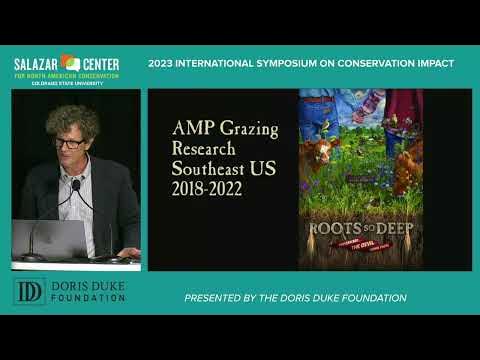


Cover crops serve as a foundational tool for building soil health and supporting grazing operations by mimicking nature's principles of diversity, continuous living root networks, and biological nutrient cycling. Effective cover crop integration requires understanding specific resource concerns for each field, such as improving infiltration, building organic matter, or providing winter forage, and designing diverse multispecies mixes that include legumes for nitrogen fixation, deep-rooted species for breaking compaction, and flowering plants for pollinator habitat. The key to successful cover crop grazing lies in timing—allowing plants to establish sufficient biomass before grazing, then removing livestock to trigger regrowth signals that pump more carbon into the soil system. This approach builds soil organic matter, increases water-holding capacity (with each 1% of organic matter holding over 20,000 gallons of water per acre), and creates resilient agricultural ecosystems capable of weathering drought and producing healthy livestock without synthetic inputs.
Gabe Brown: Cover Crops for Grazing & Soil Health Principles
Added:[Applause] You'll see on the far right, Bismar, North Dakota. And we're located actually in city jurisdiction of the city of Bismar. We're 223 days below freezing.
And people always ask me, well, how cold does it really get in North Dakota?
Well, I have a hard time believing it gets cold in Georgia, but I'm sure there's some mornings, you know, when you when it's a cool morning and you come into the farmyard with the farm pickup and the the house cat jumps up on that farm pickup, you know, to stay warm. Well, this is what it's like in North Dakota. You know, things can get a little cold there.
So, what does North Dakota have in common then with Georgia or Alabama or Texas or New York or any of the states that the people here this conference are from? Well, the answer is soil. And Rey explained that. And that's what we're going to talk about here this morning is the principles of soil health and how all we're trying to do on our operation is to mimic nature and follow those principles. And I'm extremely confident that those principles can be applied anywhere in the world where there's production agriculture. I've had the good fortune of being on thousands of operations all over North America and several other foreign countries and I feel very confident in telling people what I do on my ranch in North Dakota can be done anywhere because it's not about the species like Ray said. It's not about the tools. It's simply about the principles and those are the principles of nature.
Soil carbon is key and Rey drove that point home. Soil carbon is the key driver for the nutritional status of plants and therefore the mineral density in animals and people. Soil carbon is the key driver for moisture holding capacity. We're going to talk more about that. I firmly believe that you one can go onto any operation anywhere in the world and determine the potential profitability of that operation by the amount of carbon they have cycling in their system and it is a carbon cycle and we have to think of it as that. So the first thing we got to do is look at what our management does and back where I'm from in North Dakota, wheat is king.
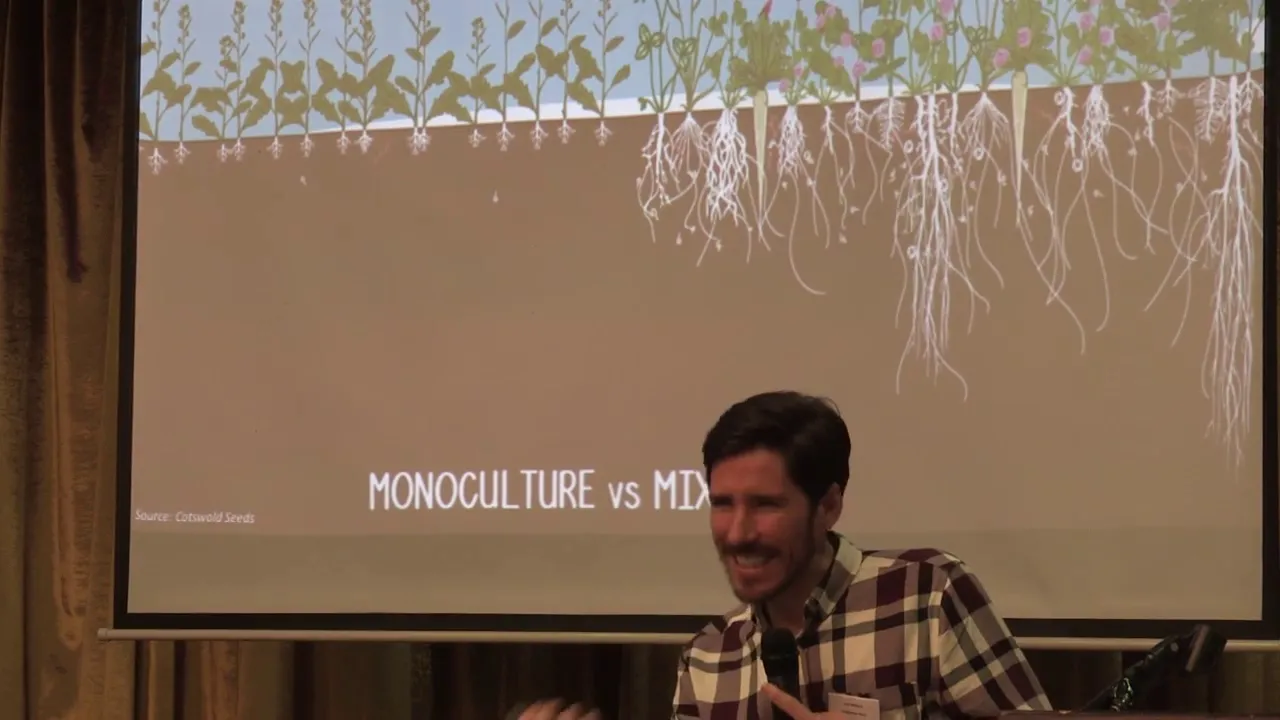
Although after $7 corn, there might be an argument that corn is king. But when we go combine that in the fall, we remove approximately a third of the carbon in the grain. Now, I'm using uh grain farming as an analogy here, but the same principle holds true with grazing practices. It's just easier to illustrate in the farming end. Back home, too many people have the cowboy mentality. If there's something out there, they're going to bail it. And if they bail it, they're removing another third of the carbon. And we can think of that in our grazing system as the more we remove through grazing, the less there is to feed the system. So, we have to be careful of that balance. And then I have had the opportunity uh earlier this week to drive through a part of Georgia and I noticed there's a lot of tillage. And it's that way in the eastern part of North Dakota, too. And unfortunately over a large area of the US it's that way. If we till then we remove another third of the carbon that was produced that year then pretty soon we're going negative and we're starting to see a carbon deficiency in our soils. Now I'm going to show you a series of slides here that show the power and the importance of diversity. This series of slides has been shown now all over the world and a lot of you may have seen it but there's nothing that illustrates more clearly the power of diversity and the importance of diversity than this series of slides. Back in 2006 I was speaking at no till on the plains in Salina Kansas and Jay Fear and I had the opportunity to hear this man speak. This is Dr. Adam Caligari. In my mind, he's the world's foremost authority on on cover crops. He works for the United Nations and he's worked in well over 60 countries all over the world. And he told me two things that day that really stuck home with me. He says, "You give me 2 in of moisture a year, 200 in anywhere in between, I can grow you a cover crop." Now, in our environment, we get about 10 or 11 inches of rainfall and another approximately five inches from the 70 of moisture from the 70 plus inches of snow we get. So, we're in about a 16inch moisture environment. I knew right then and there that I could grow covers. And I'd been growing covers for a lot of years, but Dr. Caligari also told us cover crops are meant to be seated in multiecies combinations. And I'll never forget when he told me that because I looked at Jay and and I just slapped myself on the head and I go, "Gabe, you idiot. That's how nature functions." Up until that point, I had been growing cover crops, two or three species in a mix. But Dr. Caligari talked to us about how you need to grow at least six, seven, eight species in a mix to capture some of this symbiosis that we see in nature. Now, the winter of 0506 was extremely what we call open in North Dakota. not a lot of snowfall and we' went into winter pretty dry. So in late May, the Burley County Soil Conservation District went into their plots and they have some plot land that's located exactly a mile south of my operation and we decided we'd te test Dr. Caligar's uh hypothesis. We were going to seed cover crops as monocultures and then we were going to mix them together and seed them as diverse polyultures. Now, we seated these in May, and by the end of July, when these photos were taken, we had had less than an inch of rainfall on them. So, this is what you'd expect from only an inch of moisture. The turnipss had all dried up and these were no tilled in and they were on soil that had been no tilled for a number of years.
The next plot we went to was the oil seed radish. Same thing, they were all dried up, nothing left to them. on down the line through the series of monocultures we went seeing the same thing until we got to the diverse polyulture mix. Now, we've been told as producers for years, you got to plant only monocultures. You got to keep all the weeds out. You can't have two species growing in combination. Really?
Then explain this. That's not how nature functions. Now, the district employees clipped those plots and here's the dry above ground biomass on those plots.
Look at that. Where we had the diverse polyulture mixes, we tripled production. Dr. Christine Nichols, who's one of the world's foremost authorities on microisal fungi, explained it this way. Not only do the fungi provide for the needs of one plant, but that fungal hy pipeline connects to multiple plants.
thus supplying the nutritional and energy needs of microorganisms and the plants. That's how nature functions. Nature doesn't function as monocultures. In fact, monocultures are a detriment to soil health. Now, you think of how we farm and ranch today.
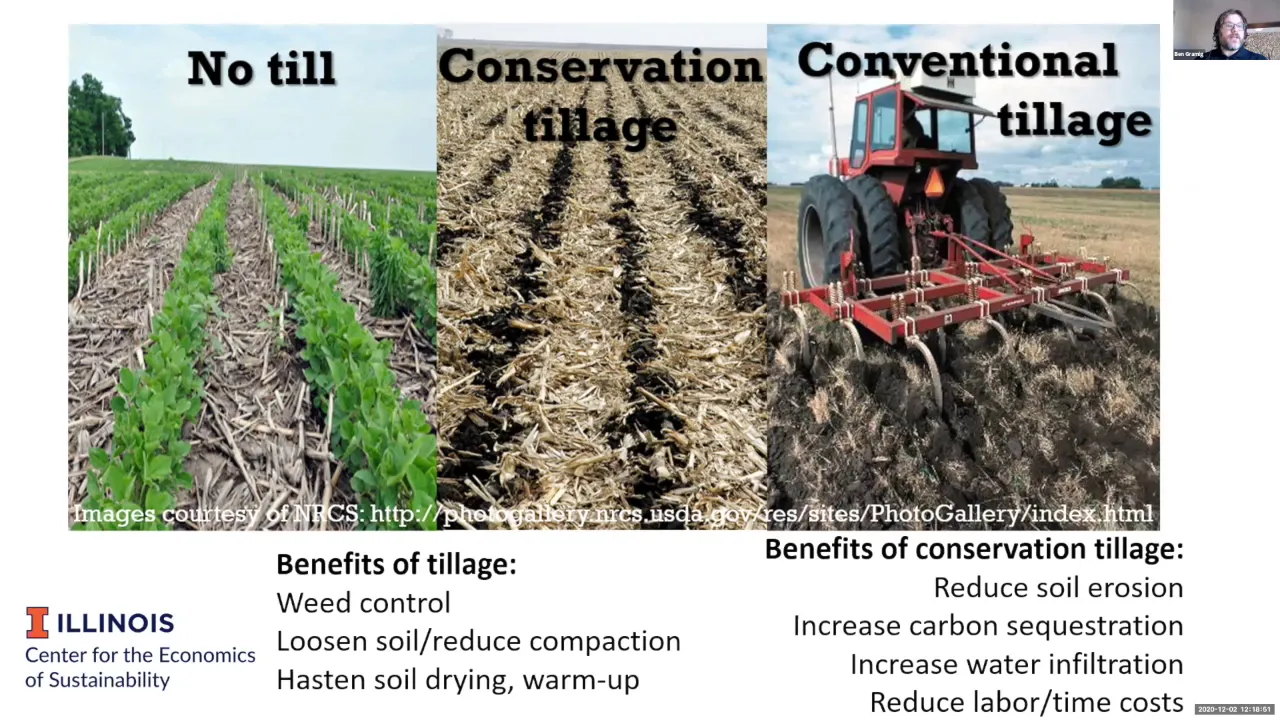
One of the things I found interesting traveling around Georgia here earlier this week was the amount of pastures that are basically monocultures. They might have two species, three species, but very very little diversity. That's not how nature functions. Yet we expect her that ecosystem to function. Look how nature does it. In nature, there is no mechanical tillage.
So we don't see that disturbance. Yet here we are as producers applying mechanical disturbance. There's always armor on the soil surface. You go out in a in in a healthy native ecosystem and you're going to see armor protecting that soil. Ray talked about that those raindrops falling at 20 plus miles an hour. How is that soil to be protected if we don't have armor on it? Nature cycles water very efficiently. I'll tell you this story.
In in January, I was at a conference in California and we were out on a ranch and the pastures had been grazed to nothing. And they said, "Well, it usually doesn't look like this. We're in a drought." And I said, "Well, how much rain did you have this last year?" We only had 32 in. And they're saying that to a guy who gets 10 to 11 in on his place. I finally listened to him and I I spent a week there going around looking at different operations and I finally said to the group just what Rey told us this morning. We tend to create our own droughts. So often this is the case. If we don't have armor, if we don't protect that soil, we're going to increase evaporation rates. Moisture cannot infiltrate. Just like we saw this morning with that infiltration test, we're creating our own droughts. Nature cycles water efficiently. We have to get back to that. Fourth principle of soil health. There has to be these living plant root networks. You know, back home, we're under snow for about 5 months out of the year, but even before the snow totally leaves, we have green plants poking through living root systems. Our last killing frost in the spring is usually around midmay. first one in the fall about the 10th of September. So many people think that that 120day window is their total growing season. On our operation, we have crops growing from the minute that snow leaves up until November. We can easily have plants growing in November unless the snow's too deep. You have to have a living plant root network at all times. The other thing nature does is it cycles nutrient very very efficiently. You know who was applying the nutrients to this land pre-European settlement. I'm going to show some data coming up at the end of my part of this presentation this morning. We have not used any synthetic fertilizer of any kind, no compost, no compost tees since 2008. And yet our our yields on our crop land are approximately 25% higher than county average. And I'll show you how we do that. The other thing I get really tired and disgusted about people saying that what we're doing today is conventional agriculture. I don't think there's anything conventional about it.
Nature's been around for thousands of years. I think that is conventional agriculture. What we're doing today is not conventional. We need to move beyond that. Growing top soil is a biological process and Ry discussed that with us.
We have to focus on biology. When I do onfarmm uh consultation work with with individual operators, the first thing I ask them is what's the biology in your soil? Very few can give me any type of an answer.
Yet, it's the most important thing in our soil is that carbon that's cycling through via biology. 85 to 90% of plant nutrient acquisition is microbially mediated, meaning it has to come through the microbes. I just cannot understand why so many people are just stuck in the path of writing checks, writing checks, applying nutrients which have to go through the microbes first. And even then the majority of them are going to go and uh down the watershed and not be used by one's own operation. Who feeds those microbes and with what? That's the question. Plants feed the microbes with liquid carbon. As I said, carbon is the most determining factor in profitability on an operation.
the liquid carbon pathway as Dr. Christine Jones likes to call it. Sunlight is free and Ray talked about that. You have to have a living plant grown as long as possible. Capture that sunlight, transllocate that energy to the roots out into the soil to be consumed by microbes. And that's how the cycle starts. Microbes feed the plants via their life cycle. That's what it's about.
I spend the majority of time on our operation figuring out how I can capture more of that sunlight, pump more liquid carbon into the soil to feed biology. I spend zero time taking the soil tests, worrying about which nutrient to apply because I don't apply any anymore. There's no need to in a healthy soil ecosystem. Of all the microbes, which is the most important? The answer is microisal fungi. I often ask this question. How many of you work with an aronomist does when you visit with your aronomist does he talk to you about or she talk to you about microisal fungi? If they're not, then fire them and get a different one. They're not worth their weight. This is one of the most important things we have going for us in production agriculture. Yet, we spend no time thinking about it. This picture is of a pine seedling. You can see the main roots of that pine seedling really are only in the center of that picture. Everything else that's microisal fungi. Microisal fungi is key to moving nutrients throughout the soil.
It's also key to the formation of soil aggregates and Ray talked about that. We saw that in the slake test, in the aggregate stability test. Those aggregates only last about four weeks and then you got to form new ones. What happens when you don't have the microisal fungi to form new aggregates?
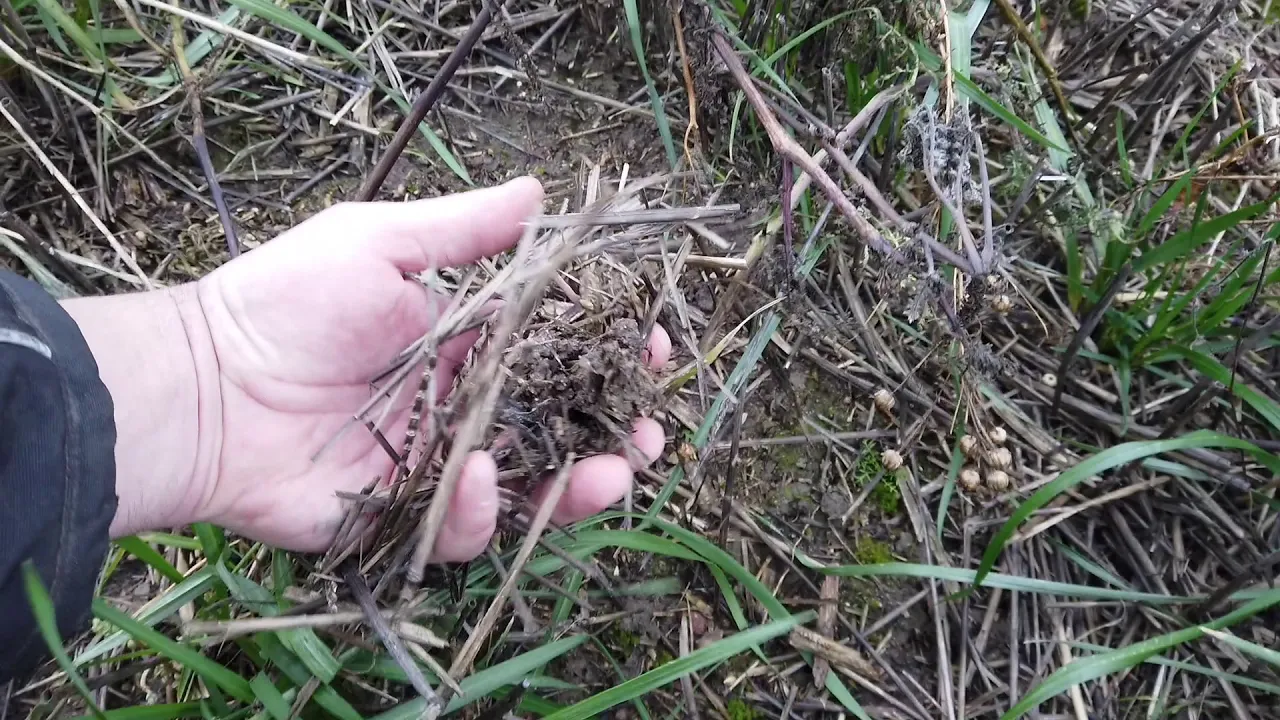
You end up with soil that can't infiltrate water. You end up with soil that can't efficiently move nutrients. This is an enlarged uh photo of new soil aggregates being formed. Soil should look like dark cottage cheese. That's what it should look like. One of the most important tools we have on our operation is a spade. I people know that I got to have my spade with me at all time because I'm checking the soil. Are we forming new soil aggregates and not destroying them?
That's key to a healthy soil ecosystem.
Tillage destroys those poor spaces. It destroys microisal fungi. It destroys the home for biology.
show you a series of photos. I question the rationale of this. I've been on that farm since 1983. Every year, bar none, my neighbor goes out and tills this low spot right across the road from me. He's done that every year since 1983. We'll tend to get a half of an inch of rainfall. And this is what'll happen to his fields every year, barring none. I can easily count on one hand the number of times that he's combined a crop off that low spot. He's destroyed the pore spaces by tilling year after year that water cannot infiltrate. Earlier this year, I was speaking in Arkansas and the producers there were telling me they're just tired of irrigating. And I said, "Well, how much moisture do you get?" "Well, we get 52 in of rainfall on the average." Yeah, Arlland and Maggie are laughing at that one. I know coming from where they come from. But 52 in of rainfall and they still have to irrigate. They put on another 50 in of irrigated water. I said, "What's your corn yield?" Our average corn yields 180 bushels per acre. I said, "Okay, let's figure this out. My average corn yield is 127. I can produce well over nine bushels of corn for every inch of water our place gets.
I said there's if you had my water use efficiency, you should easily be growing 900 plus bush of corn. But they've destroyed the soil aggregates through tillillage tillillage tillillage. Also no armor on the soil.
They can't infiltrate into the soil any rainfall. When we purchased our operation in 1991, I was very fortunate.
NRCS come out and they did some baseline soils data and what they found is that I could only infiltrate a half of an inch of rainfall per hour. That's it. The rest ran off because of the years of tillage and monocultures. This is a photo I took off the front deck of my house on June 15, 2009.
Weather Service was forecasting a major rainfall event. Started raining at uh 5:30, 6:00 in the evening. By 12 midnight, we were over 13 in. We ended up with 13.6 in in 22 hours. Jay Fear, our district conservationist, came out and he took that picture. Now, there's some slope going up there. That's the road leading up alongside the road leading up to my farmstead in the background. I'm a bit embarrassed of this picture because you can see a little bit of bare soil there, but it doesn't look too bad after 13.6 in of rain. Now, Jay stuck a spade in the ground and he took this photo. I so wish that I would have archived some of that soil back when I bought that place in ' 91 because it looked just like the soils Ray showed the picture of. No aggregates, dull color, lifeless. I could never go fishing. We never saw an earthworm on the operation for years until we went no till and started applying some of these principles. I'm going to preface the next slide. I had a I had a team of scientists there this last summer and they were doing tests on our operation, a variety of tests for uh insects and biology infiltration. And this is a video they took of how much rainfall we can infiltrate. Now, now what they did is they drove a cylinder into the soil and then you pour the equivalent of an inch of water on a piece of Saran Wrap. Pull that piece of Saran Wrap away and see how long it takes to infiltrate. Oh, I guess it didn't play automatically here.
Oops. Okay, Ray. Can't find the mouse here.
All right.
Okay. Here we go. So, here's an equivalent of an inch of rainfall. Answer is 9 seconds. Second inch went in in 16 seconds. 2 in in 25 seconds. Ray, what does that equate to?
Now, not all my soil can infiltrate that, but that was the same soil where we started. We could only infiltrate a half of an inch per hour. I found it interesting. I was on the tour that went to the University of Georgia and experiment station. I asked them, "What's the infiltration rate? We can only infiltrate a half of an inch per hour." I said, 'Are you working to improve that? They said, 'Th that's our soils. That's what we can infiltrate. That's appalling to me. It was utterly appalling. Me and the soil scientists had a nice discussion afterwards. Maybe not so nice, but anyway, that's beside the point. But we can heal our soils. We can regenerate our soils. And we can do it to any soil using the principles of nature. It's not how much rainfall you get. It's how much can you infiltrate into your soils and then hold via the organic matter because it's that humus and organic matter in the soil that holds on to the moisture for when it's needed. For every 1% organic matter in your soils, you can hold over 20,000 gallons of water.
When we bought our place in 1991, organic matter levels on the crop land were 1.7 to 1.9%. Today, we improved that to well over 6%. So, we've tripled the organic matter. Look at what that's done to the amount of water that we have on our operation. And that water builds resiliency into the system. That's my drought plan. I don't have to worry at all. If if we don't get moisture for a year, I'm still going to be able to operate for one year as if nothing happened because we have that kind of water holding capacity in our soils. So, I found this and I thought it was pretty appropriate. The old cowboy goes to the vet and says, "And then this morning I suddenly noticed she didn't look so good." And I think that's the way it is with our soils. We've all come to accept a degraded resource. We think our soils is what we have and that's what we have to live with. We don't have to do that. We can change that and we can regenerate our soils. So Ray and I are going to talk to you a bit this morning about cover crops and how to integrate them. We're not going to get into whole grazing systems.
There's just not enough time. So we're going to focus on the cover crop end of that. When you go to a seed supplier to buy cover crop seed, they should probably ask you your name and where you're from first. But the next question better be, what's your resource concern?
If they don't ask you your resource concern, don't buy from them because they don't have your best interests at heart. That's the first thing we identify. We design different mixes for all of our crop land fields. Now, in our operation, we have about 2,000 acres of crop land. We're going to grow cash crops on the majority, 90 plus% of those acres every year, but we're also going to grow a cover crop either before the cash crop, along with the cash crop, or in the case of fall by annuals, after the cash crop. But for every specific field, we're going to ask ourselves, what's our resource concern on that specific field? What is it we're trying to do? Are we trying to increase diversity? Are we trying to improve nutrient cycling? Are we trying to improve infiltration? Are we trying to build soil aggregates? Do we want to improve the water cycle? And the list goes on. What do you want to do on that specific field? Way too often I get phone calls, people, ah, I tried a cover crop and it didn't work. Well, what was your resource concern? Well, what do you mean? They plant a cover crop, but they never identified their resource concern first. I'll show you a mix here. This is just a simple warm season mix. Now, don't pay so much attention to the species I use. What I use in North Dakota may or may not work for you here.
That's up for you to determine and decide. You need to experiment and try things. My son and I on our operation, we try really hard to fail at several things every year because if we don't fail at something, we're not trying hard enough. The only way I know which species work on my soils and my environment is if I try them. So, you can get an idea from your local seed suppliers, but you need to experiment and find out. Now, this simple mix.
Every species on here is there for a specific reason. This is a warm season mix planted in our environment in July.
Cowpas really tolerate heat well. We don't get near as hot as you. Uh, so I'm sure they had worked down here. We put them in for that reason. It's pretty common for our moisture to shut off in early July, 4th of July. We won't get any rain for 60 days. Usually, it just shuts down at that time of the year. I need species that can tolerate some heat and very little moisture. Cowpas are also obviously a legume, so they'll fix nitrogen. The atmosphere above us is 78% nitrogen. Why in the world would anyone want to write a check for nitrogen fertilizer? That just boggles my mind.
You know, I think there's a saying about definition of stupidity somewhere there, but I I'll pass on that. Soybeans are in there. Same reason. Soybeans, a legume, they can put up with heat. They're going to fix some nitrogen. Pearl millet's in there. Pearl millet.
We can get a decent crop on of pearl millet with less than two inches of moisture. Really a drought tolerant crop. Sorghum Sudan grass is in there for a number of reasons. Number one, it produces a tremendous amount of root mass. Twothirds of your organic matter increase is going to come from roots.
The more roots you put in the ground, the better. The other thing is brown mid or sorghum sedan grass is a C4 grass.
It's got an extra carbon molecule. We're going to get more gain on our livestock if we have brown mid rib sorghum sedan in the mix. So we'll put that in the mix. That's uh for livestock gain and roots. Radishes are in there for the deep tap rotate. Now daicon radishes are daylength sensitive. We we've found it's best in our environment to plant them after the 10th of July. Otherwise, they're just going to bolt and go to seed. If you plant them after the 10th of July, we'll tend to get those large tubers that'll poke holes into any hard pans. Clay type situation, they work wonderful to help improve infiltration.
Turnups are there because they produce good grazing late into the year. Another brassacus, so they're accumulating nitrogen, which will when they break down the next spring will release that nitrogen for the next year's crop.
Sunflowers are in there. very very deep tap routt. It'll poke holes into hard pan areas. Very drought tolerant. So we have that in the mix. Buckwheat's in there because of the flower it has. It attracts pollinators and it attracts insects. And on our operation, we're going to have flowering species in every mix to attract insects. Good friend of mine, Dr. Jonathan Lundren, who's an entomologist, told me this. For every insect species that's a pest, there's 1,700 that are beneficial. So, as producers, oh, we're worried. We got this pest out there. We got to go kill it. I'd rather provide a home for the 1,700 that would eat that one. Why write a check if you don't have to? Buckwheat is also a phosphorus scavenger. It'll say its root exitates will help break down phosphorus and make it available to the crop. Safflower is in there for two reasons. One, it attracts pollinator insects with its flower. But the second reason it's in there is because livestock don't relish it because of the thorny spines on it.
You might ask, why would a cattleman plant something that cattle don't eat? I told you earlier, a third of our moisture is from snowfall. I need something standing upright during the winter to catch snow so that we'll have more moisture. We'll be able to infiltrate more moisture. So, all of these can serve a specific purpose, and it's up to us to find out which ones, and you need to do your homework. Now, I'm not I'm not uh trying to tell you which seed company to go to. Go to your local reputable seed dealer, but to learn about cover crop mixes, there's no better site than greencoverse seed.com. Click on the smart mix calculator. It's free to use. It will help walk you through designing mixes, what each of these species do, and the appropriate uh seeding rate. It'll do the calculations for you. Midwest Cover Crop Council, good website. They have some good data on there. SIR, you can go online and and we certainly thank SIR for sponsoring part of this conference.
They have a book called Farming Cover Crops Profitably that can be downloaded free of charge. So go online and download that. And there's many reputable seed suppliers out there.
There's several that uh kind enough to be sponsors of our conference here. Look them up and they will help walk you through which species work in your environment. I will say one thing though. I'm very leerary of these generic mixes and a lot of seed suppliers do that. They have these generic mixes they sell that may or may not address your resource concerns. So be careful about that first. Now what we do on our operation, we also use cover crops to fill the nutritional gaps and the production gaps in our crop land system. So what we do is figure out this is a basic forage chart. It just lists some of the forages when they're at their peak nutritionally. Whenever I have a gap, that's when I'm going to make sure I have a cover crop growing to fill that nutritional gap. For those of us grass finishing, that's particularly important to do. Let the cattle graze, fill in that nutritional gap, keep them grazing. This is just an overview shot of our operation. The light green areas, that's what we call our tame grass pastures. In other words, it was crop land at one time that's been seated back to quote unquote introduced species, primarily alalfa grass mix, legume grass mix, pastures. The light blue areas, that's crop land fields. And then everything that's outlined in yellow, that's our true native prairie. We have over 2,000 acres of what we consider native prairie that has never, to our knowledge, been tilled. So, it's very, very diverse. Uh, my son teaches rangeand management at the local college and he brought his students out to one of those native paddocks and in two hours they counted over 140 different species of grasses, forbes, and legumes.
That's the kind of diversity we used to find in nature, but we don't find in production agriculture anymore. So think of Dr. Pvenzen and his teachings with how animals can select for the different their different nutritional needs. Would you rather see him be able to select from 140 species or one? You know, so much of what we do with animal health is directly related to soil health and our soil ecosystems.
So, put together your own forage chart, put your map together, and then how are you going to integrate the system as a whole? I see way too often where producers segregate their crop land from their grazing land from where they winter their livestock. We need to put those all together as a whole and then think of it as a holistic system. These are just some of the cover crops we grew this past year on our operation. Again, don't pay attention to the species. They may or may not work for you. But notice I have some of all four crop types. There's cool season grasses, cool season broad leaves, warm season grasses, warm season broad leaves. This is just some of them. We actually grew over 70 different species on our operation this past year in different combinations according to the resource concerns on a particular piece of crop ground.
Now, one of the easiest ways for people to move into cover crops is with fall seated bianials. And I haven't found anywhere in North America where we really can't get them to work to some degree. And there's many different ones.
We've tried many different combinations. We have a lot fewer species that'll overwinter in our environment obviously than you do. This one's forage, winter wheat, winter pee, hary veetch, and radish. Now, the radish will not overwinter, but what we found is we put 2 lbs, no more, but 2 lbs of daicon radish in the mix. Even though it'll only get about so tall above ground, the root below ground will be much longer before it's frozen out. we can accumulate enough nitrogen in that that it'll release very quickly in the spring, thus giving a boost to that grass in early spring, thus saving us the need for any synthetic fertilizers.
We can get pretty good gains on this mix, pretty decent decent bricks reading, and I'll talk about bricks coming up. Winter trite kale and Harry Vetch, this is a slam dunk no-brainer on my operation. Just doesn't fail. We started planting Harry Veetch in 1995 and the seed I use today is out of that foundation seed. So I more or less have my own variety. I've never had a winterkill in North Dakota. It works extremely well. Fixes a lot of nitrogen and livestock do well on it. Now I'm going to show you a lot of the options you can do with these false seated bianuals in an operation. We rarely put up hay on our own land. I just don't like to mine the nutrients off any particular field. So, we buy a lot of our hay or we rent land close to the city that we know is going to be developed into housing and we export the take the nutrients from there and import them onto our operation. But in an emergency, we can hay this and it makes pretty decent feed. It makes better halage than it does dry hay. Now, remember those photos I showed you from the 2006, the trials where the radishes and that were all uh dried up. This photo, this picture here was that field is less than one mile from that cover plot land. I seated this in the fall. It was very dry, but it germinated open winter. We had a little bit of snow, not much. Same inch of moisture on it. And look at the production I got. That's my drought policy in an emergency. I'll always have that. We plant three to 400 acres of those fall bianials every year because it gives us a lot of options and it's my drought policy. Now, I'll tell you a true story about this photo. Day or two after I took this picture, I hadn't removed the bales. The phone rang one evening. Guy asked me, "Hey, is that all your hay bales right on north side of the interstate right east of Bismar?"
I thought I said, "Yeah." I thought this guy wanted to know how I got that much hay produced in a dry year. He said, "You need to get those bales off there cuz if too many people see it, we're not going to get disaster assistance." True story. Hung up the phone on them. I've got no time for people like that. Soil health is all about resiliency, too. You can build a resilient ecosystem if you have a healthy soil. So, hands an option.
Another thing you can do is combine it.
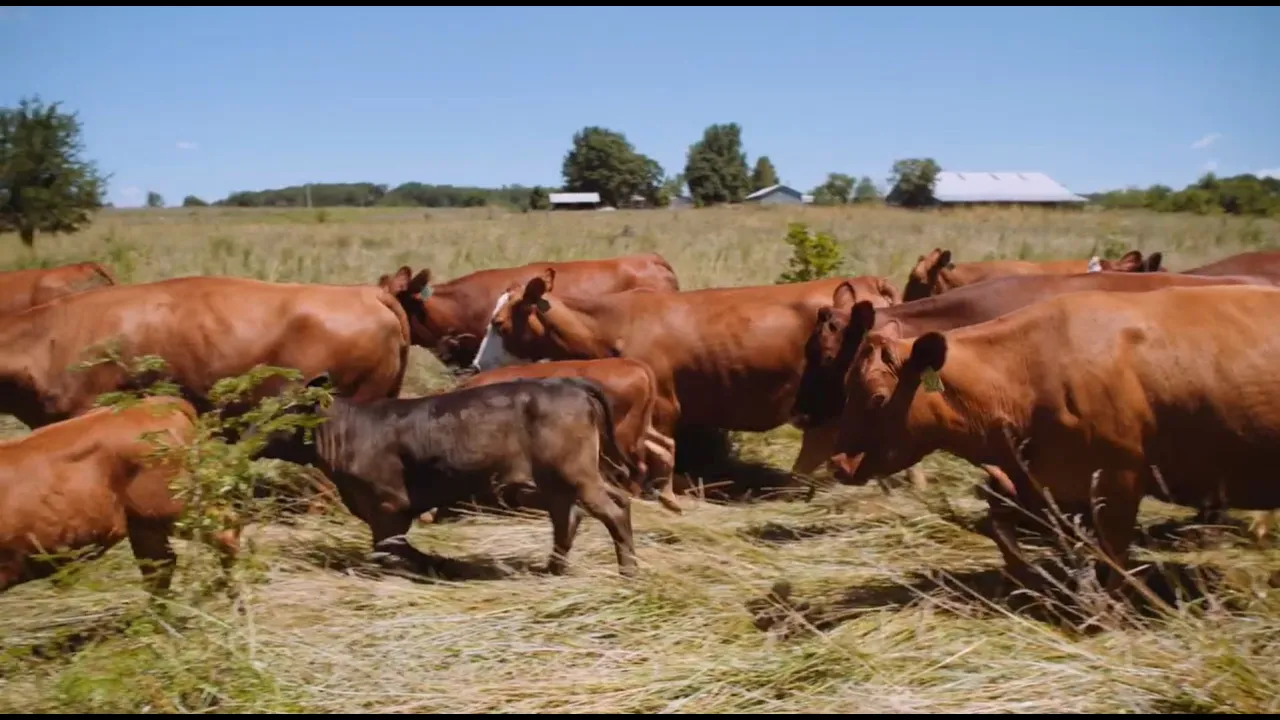
And we've combined our own seed from this for years, sold seed from it. It actually is the number one net return cash crop on our operation. So, works really well. But here's what we really like to do with it. We like to cave out on it. And we will rotate cving around the operation. It works extremely well. We cave in late May and June. The calves are run on the cow all winter. We wean them late March, early April. You turn those dry cows out on that, they blow up like a tick. They just put on weight really fast and they're extremely extremely healthy.
Now, we give them larger areas to cave.
We cave 2 miles from the nearest corral.
We've caved 350 head a year out on this for the last eight years. And we've lost one female in eight years. That's it.
Have we lost calves? Yes, but I used to lose a lot more when I was caving in the corral. The calves are extremely healthy out on this. It just works really well.
We don't set up a back fence so the cows can go back, get the calves, and just keep moving ahead. We move them to a fresh bite every day, but they have a rather large area. Now, I'm going to preface the next picture. My son, who's with me at the conference, he's 28 years old now, single, by the way, for any of you out there. But anyway, um he got out of college and him and his college buddies, we we we were having a tough winter, 120 plus inches of snow and really cold. And his college buddies were calling them, "Oh, it's miserable.
I got sick calves and scouring calves and haven't slept in days." And Paul says, "Well, I feel sorry for you. I'll send you a picture of us caving." And so he sent him that picture. Lost a couple friends over that deal. But it really is a joy when you cave in sync with nature.
It's absolutely no work. When we switched our cabin, we used to cave in February, March. That shows you how little intelligence I have cabin that early in North Dakota. When we switched to cabin in sync with nature in the spring, I told my wife, I should have to pay somebody to allow me to enjoy this this much because it's just no work at all. So, that's another thing we can do with these fall bianuals. We also do graze a lot of stalkers and grass finishers on it. On our operation, we run 350 cow calf pairs, 4 to800 stalkers and grass finishers. They're the variable according uh for forage conditions. So, our cow herd remains pretty constant, but those stalkers will vary according to forage conditions.
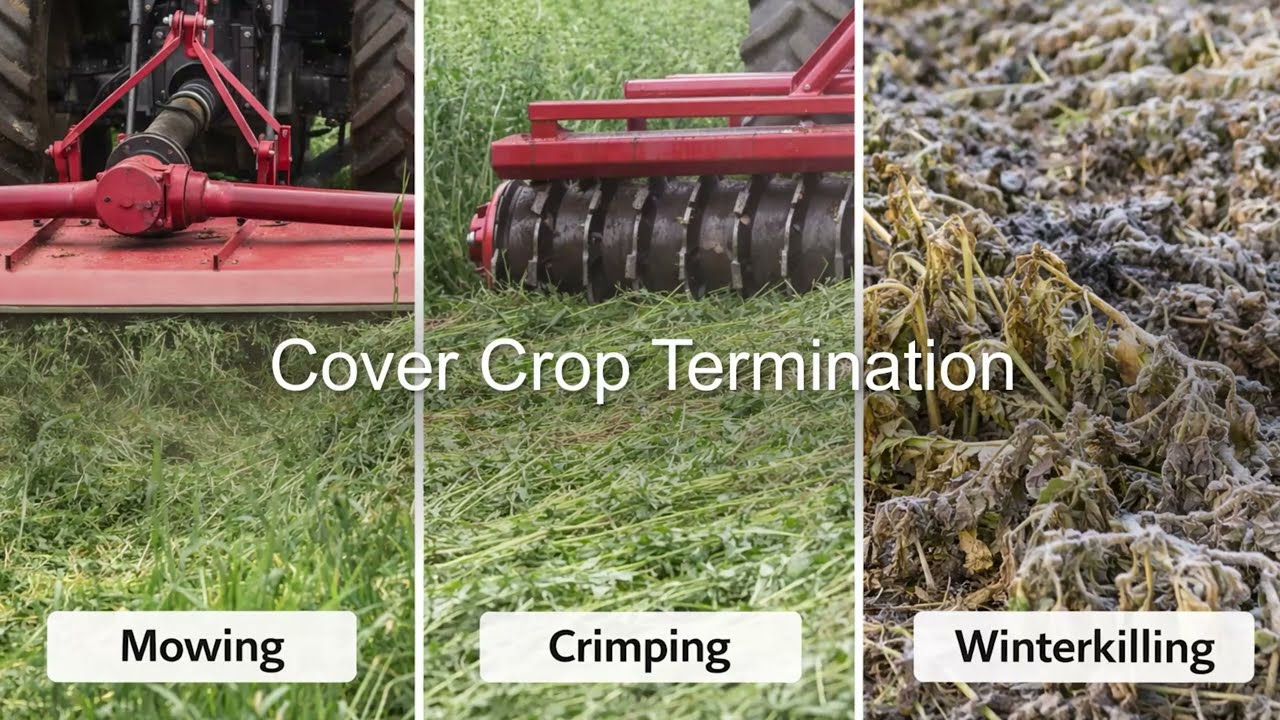
Now, if you do a real good job of management, you can move them on and off of these fall bianuals many times. We've done it up to five times, but you got to be you got to have a large group and keep a head because it's going to want to shoot a seed head pretty fast. When we do that, we use small paddocks, pretty high stock densities. And that's how we keep a head and keep it grazed back. Paul likes to call that a day at the office. To him, there's nothing more enjoyable than going out stringing some polywire. Takes us about an hour in the morning to roll up the previous days, five or six paddocks, set up the new ones, and then we use bat latches and the cattle move themselves. Those are little solar powered gate openers. I'm sure many of you see them. You can have either a bungee cord on them or a spring gate and it works extremely well. Now, in some situations, we'll purposely let that that fall bianual start to form a seed head and then we'll go in and graze it with high stock density. If our resource concern is armor, lack of armor on the soil surface, we will put down heavy amounts of cover on the soil surface to protect that soil and it will terminate the cover then. So, we don't have to use any herbicide. we can just use the livestock to terminate the cover crop.
That photo right there is of us right after we seeded a cover. I never want to see bare soil on my operation. If I do, I'm not doing a good job of management.
So, we got to have that armor to protect that soil. And the beauty of it is we can go right in there and continue what we call regeneration with another very diverse mix. In this case, this is a diverse warm season, predominantly cover crop mix that we're going to use for grazing. That's just what it looks like in the drill. And I always get asked, well, how do you mix all those different seed sizes? Aren't they going to settle out? How do the little seeds come up?
The answer is it works fine. It works fine. Those large seeds break an opening for the small seed. Up they all come and you get a tremendous amount of diversity. And what does that diversity allow? It allows you to collect more sunlight. Think of it this way. If you only have one leaf, one species out there, you only have one leaf size or shape. With all these different species, no matter the angle of the sun, I've got all these different canopies collecting sunlight, pumping my more carbon into my system. Now, we're usually seating these diverse mixes in mid to late July, and we'll easily go without rain to early September, but we can still grow this type of cover on next to no moisture.
For one thing, next to no rainfall, I should say, we have some moisture stored in the soil because of the organic matter levels. And then also because of the armor, we're not losing any the evaporation. We're more or less creating a microclimate for these plants. And what cow or stalker wouldn't want to eat that? I mean, you can get really good gains off there. Also, if you graze a living plant, you're going to be pumping more liquid carbon into the system.
Think back of all the stories we've seen and read about the native prairies and how they were formed. Large herds of bison moving across grazing, then the predators would push them on. That's what we're trying to mimic in our system. We will graze these living covers, then remove the livestock from them. That plant sends signals, hey, I was injured, damaged. I got to pump more carbon into the system to track biology so that I can regrow. Now, when we graze them with grass finishers, we're measuring bricks, which is a rough indicator of the nutrient density and of those forages.
So, we will move our cattle through according to bricks measurements.
We can easily get 3 and a/4 to 3 and 3/4 pounds a day gain when we're growing these predominantly brown mid rib sorghum sedan cover crops. For our grass finishers, we prefer a mix where 75 to 80% of it is the brown mid rib sorghum sedan. So we'll actually shrink the diversity a little bit when we're shooting for gain on livestock as long as we can address resource concern. Cattle do very very well on it. We run Angus, red Angus, British white. I really don't care about the breed. Meat I eats all red, so that's what I care about. We also can graze cow calf pairs on there. Usually, we don't graze cow calf pairs on there during the growing season, but in this particular case, I wanted to get a fall by annual seated afterwards. So, those cow calf pairs were in there at a higher stock density, pretty much terminating the cover. Now, what we do with the majority of our cover crops though that were seated in midsummer is we let them go, let them continue to photosynthesize, collect sunlight, pump carbon, and just run their life cycle. This photo was taken in early November. I guarantee it had froze at least 40 times by the time this photo was taken. But we still have green growing plants photosynthesizing those brassacas. It's got to get down to about 12 to 15° three nights in a row before it'll terminate them. So, we just let frost terminate the covers. Then, we go in there and we set up a polywire during the winter and that's what we winter our cow calf pairs on. I found it interesting. I was touring a place earlier this week that they were feeding hay and I asked him, well, you know, how long do you have to feed hay? Oh, we feed hay about five five and a half months out of the year.
We fed hay 42 days this winter in North Dakota. And if our land was contiguous, there is zero doubt in my mind I could graze all winter. But we have housing developments. We're in city jurisdiction. I just can't have the cattle on the other side of the housing development. Then in a snowstorm, I get a call that the cows are on under the neighbor's deck. That it's not good to get.
So, but I find it ironic that so much hay is fed down south. That just tells me one of two things. Either we're overstocked or we've got a really poor nutrient cycle in our soils. We're not producing enough. You know, now North Dakota State University did some pretty good research as far as the nutrient quality of these covers after freezing and in the winter. What they found, this is the test from late November, early December, which you know we had frozen probably 80 times by then. Radishes were still 14% crude protein, 70% TDN. Now, you do not plant radishes for livestock feed. Radishes are planted for the deep taproot and to accumulate nitrogen.
Don't expect the cows to eat the radishes. You're much better off with a forage brassica. And I know there's several seed suppliers in the hall adjacent to us that supply some really good brassacas. Harry Veetch is a slam dunk no-brainer. During during the growing season, it'll be 25 30% crude protein. During the winter, it's still 18% crude protein. That's how come we can leave the calves on the cows all winter. They do just fine with this.
They'll balance their own ration. And those heer calves are learning how to be cows in our environment during the winter. I do not like putting much millet in the mixes we're going to graze in the winter because it loses its nutrient quality extremely fast down to 50% TDN. I'd much rather put a brown mid rib sorghum sedan grass which will still be over 70% TDN in the winter. Works really well. Plus, we get a little more upright structure to go through the snow. You have to allow your livestock to do what they do best. We do not provide our livestock with a bed and breakfast. I don't have time for that.
This is not a herd of muskox. That's 350 cow calf pairs 40° below zero grazing cover crops. I actually felt a little sorry for my son as I sat in the pickup and made him go take that picture, but I made sure he made it back. You know, livestock will adapt. The problem today is we've taken that we've bred those genetics out of the livestock.
When we switched to this type of production model, we called the cow herd extremely fast. In fact, within 3 years, we had pretty much went through 90 plus% of our cows. But now, we got a herd that they're out there and they do it year after year and they do just fine. Now, I just want to mention because Rey talked a lot about diversity. I've talked a lot about diversity, but it's not only diversity of plants. You really, if you want to focus on soil health, you have to have diversity in animals. Also, we run a flock of sheep, not near as many as we should. I tell people, our sheep are on a planned grazing system.
Wherever they plan on going, that's where they go, but we're learning and getting the fencing down for that. We also run pastured pork. This is the most profitable livestock enterprise on our operation. This past year, we netted we netted over $1,000 per pig. There is big money in shakuderie and value added. We also run some pastured broilers, not near as many as we want to because there's not a slaughter facility in North or South Dakota. However, we've done the feasibility study. We are going to get a poultry processing facility built. We also run lay hands on the operation. This is a money maker.
Anybody with young children, get them in the business. If we're growing grains, and what we do is we run all the grain we produce through a quick cleaner.
These livestock get fed the screenings.
They would dock me for it at the elevator, generate profit, take the waste from one enterprise to fuel a profit in another. It's the most money you'll ever make. Now, because of all the cover crops we have, and I mentioned to you that we plant flowering species, we might as well have bees on the operation. It's proven that if you have bees uh beehive located within a quarter mile of any crop that needs pollination, you're going to increase the uh pollination of that cash crop by a minimum of 10%. Why not have beehives? What we've found, we formed an agreement with an apery. They bring the hives in. They had 19% higher production on the hives on our land than they did on any of their other hives because of all the flowering cover crops. Now, we buy all that that honey back from them, put our label on it, and market it, add value. People are willing to pay for it. So, this is just a uh an overview of some of the enterprises on our operation. It all starts with carbon. We have cash crops, cover crops, and perennials. I didn't even talk to you about the orchards, the fruit and nut trees. If we wanted, we could charge people to come and hunt on our operation. We have a tremendous wildlife population. We choose not to do that at this time. We have cow calf operation. We grassfish beef. We have sheep. Because we have sheep, we have border collies. Because we have sheep, we have we have guard dogs also. We use them as an enterprise. Also, we sell pups. Last year, we made over 14,000 selling puppies. Everything has to have the ability to generate profit and add to the ecosystem. We have bees, we have broilers, laying hands, pastured pork.
Uh we sell screenings, grain screenings to people who just have uh a few head of livestock and want to feed them. We sell grain, all non-GMO grains. And I didn't have time to talk to you about our vegetable production. All those things generate dollars and most importantly they equate to a healthy soil ecosystem.
Before letting Ray up here, I'm just going to quick show you the difference in management. I mentioned that we had that team of scientists on our operation. These photos and this data is from them. We went to three of my neighbors, all located within a mile of my operation. This is an organic producer. Very high diversity. He grows sunflowers and peas and spring wheat and tritale and alalfa and corn and barley and flax. Very uh diverse organic operation, but he tills. Look at that soil. You can see it's capped just like Ray talks about. Very poor infiltration. Next operation is a no till operation. Very low diversity though. Only grows a couple of cash crops. spring primarily spring wheat flax you can't tell much difference between that and the organic producer same thing even though he's no till and Ray showed those pictures of that field that had been no tilled for 19 plus years very very poor soil structure next operator is no till medium diversity but very very high use of synthetics if you use high rates of synthetics fertilizer you're going to drive down soil life you're going to decrease the aggregation in your soil and it's going to decrease the infiltration. Last operation was ours. We've been no tail since 1994. Very diverse cash and cover crops.
We've used zero synthetic fertilizer since 2008. No fungicides or pesticides since before the turn of the century.
And we integrate livestock. So they did soil tests on there and this is what they found. This is the amount of nitrogen, phosphorus, potassium. And the OT stands for organic carbon which is the food that's the pool that the biology eats. I look at that that bottom line. I have not added any synthetics since 2008. Yet my nutrients keep going up every year. That's how nature functions.
That's how a healthy soil ecosystem functions. We can do this anywhere in the world where there's production agriculture. Now, if you have a blatant deficiency in one nutrient, yeah, you might have to to uh add some to get going down this path. And I'm not telling anyone to remove the synthetics from your operation. Soil is like a drug addict. You got to wean it slowly.
Thanks to the Haney test that we have available to us now, it can help us determine how much to wean and how fast to wean ourselves off it. So, here's what we've done on our operation. And we've started with less than 2% organic matter in the soils, very little diversity. We started to diversify the cash crops, jump in the organic matter level, started to add cover crops, another jump. Started to integrate livestock in the multiecies covers. And we're to the point now the crop land fields are over 6%. And we actually have one field that we've now tested at 11.1% organic matter. And that's what the soils look like. Now historically the soil scientists tell us soils in that area were in the 7 to 8% range. So we know we can go above it. Why do you want to sustain a degraded resource?
Everybody today wants to be sustainable.
I have no desire to be sustainable. I want to be regenerative because it's only then that we're going to make it so the future generation can be sustainable. Ray showed that one earlier so I'm not going to dwell on it. There's my contact information.
[Applause]
Up Next
Regenerative Agriculture: Gabe Brown on Restoring Soil Health | TED Talk
@TED
243.5K views•2024-10-14

Triumph of Orthodoxy Icon: Byzantine Art & History Explained
@BenCallan
2.1K views•2024-08-06

FastAPI vs Flask vs Django: Choosing the Right Python Web Framework
@TechWithTim
302.5K views•2024-05-26

Game of Thrones Opening Credits: A Cinematic Analysis
@gameofthrones
46.3M views•2011-04-18
Related Study Plans & Knowledge Roadmaps
Structured learning paths in General & Interdisciplinary Studies