




















This lecture explains how asteroseismology improves our understanding of the relationship between stellar age, rotation, and magnetic activity. While traditional methods like lithium abundance and isochrones struggle with precise age determination for field stars, asteroseismic analyses of stars observed by missions like Kepler provide more accurate age estimates by measuring internal stellar properties. The speaker discusses empirical relationships derived from young cluster stars, including the inverse proportionality between rotation period and the square root of age, and how magnetic activity indices correlate with stellar age. By combining seismic observations with photometric light curve analysis, researchers can better constrain rotation periods, magnetic activity levels, and stellar ages, ultimately improving our ability to date planetary systems and understand stellar evolution across different evolutionary stages.
Stellar Ages via Seismology: Rotation-Magnetic Activity Relations
Added:Good afternoon everyone. Um so uh about this title I when I decided to give this title I was thinking about how I decided to or when I started to be interested in stars and it came back to when I was a kid. So anyway um I just um say more seriously this talk is about uh age rotation and magnetic activity relationship and I'm mostly going to focus on um on what seismology can bring to the picture uh of this uh relationship.
Um so stellar ages why are they so important? Uh I think a few the past few days many people have already talked about that a little bit. Uh but I just wanted to remind you about the fact that these ages can be important to study uh planetary system evolution or star form formation history for instance. But unfortunately these stellar ages are very difficult to determine especially for low mass field stars. Um so for uh a star that belongs to a cluster because these star are these stars are coevil uh it's more it's easier to determine their ages more precisely compared to field stars. Uh besides you also stellar physes phases uh can happen more or less rapidly uh in the evolution of the star. though depending on the stellar mass which makes some um phases of the star more easy easier to be dated compared to other uh phases. So here just a brief outline of this talk. So I'm going to start with a little bit of history on the age rotation activity relations. Uh then I'm going to show you some different methods that we can use to measure rotation and magnetic activity.
um and then I'll show you what kind of inputs we can get from seismic observations and I'll finish with some highlights on the recent results with the the Kepler uh mission. So let's start with some history. So uh I'm not going to talk about the whole history of um uh relation between ages, magnet activity and rotation. So I apologize if I forget anything but this is my biased point of view maybe. Um so um how do we measure ages? Um in the past the easiest way was to study clusters because stars are co-evil. Um they have a homogeneous chemical composition. So they are much easier it's much easier to determine more precisely ages for these stars. Then you also have um people who started to study the lithium abundance um because we know that lithium is destroyed uh very easily in stellar interiors. So this has been used as a an indicator of uh the age of the stars especially for low mass field stars. And um um so when um you have a star that has a very low uh lithium abundance, it means a very high lithium atomance, it means that it's a very uh young star. Um but on the other hand for massive stars you don't expect uh to have uh lithium uh depletion but there is uh there are a few stars where we have measured high lithium abundance. Uh so there is a kind of uh biodality that appears for this lithium abundance and this is still something that is puzzling me. So uh I think that we we cannot really rely on lithium abundance to really get very precise uh ages uh but at least measurement high measurement of lithium can give us information about uh a low limit on the ages of the stars. So uh this is mostly for uh clusters but then for field stars we can still use uh isocchrons to determine to determine the ages of the stars. I'm going to talk about the size mechanic analyszis to to get ages. Uh and then um uh some people have started to use other parameters to um uh to get uh ages of the stars like the rotation uh the magnetic activity I was trying to find a a word similar to gyocchronology. So chromosphere chronology chromocchronology anyway. So that's the idea of using magnetic activity and rotation periods to determine the ages of the star. Um so let's come back to uh what um 40 years ago started to do by studying um a few young clusters for which uh the ages were were known. So here you have um for these uh clusters there were measurements of uh lithium as a function of the age, the rotation period as function of the age and the magnetic activity. And um in particular he derived a law with the h showing that the rotation period is inversely proportional to the square root uh of the age of the star.
uh and then a few theoretical works were done uh further. Um but there is still some dependency with uh the stellar mass. Uh here you have uh this plot from the from craft in 1967. Uh this is an HR diagram and you can see that stars that were more massive than approximately 1.25 solar mass have a much higher rotation period compared to lower mass stars. So this is the craft break and this can be easily understood by the fact that because the so these more massive stars have thinner convective zone um they are less affected by the magnetic breaking and so they are less slow down compared to the lower mass stars. Um then um uh the last uh 10 years more works have been done on these uh relationships. Uh in particular Barnes and collaborators uh studied few more uh young clusters and here you have the rotation periods of the stars of these clusters as notion of the the color B minus B. Uh and here you have the uh cluster that are put in the increasing age. And in these last two panels you have um field stars, young field stars and old field stars for which there were measurements of rotation. And uh so Barnes and collaborators showed that there were two distinguished uh sequences that came out from these uh plots. Uh you have this uh convective sequence corresponding to the fast rotators and um these um correspond to convective uh fully convective stars and there you can see that they are mostly present in the very young uh clusters.
Uh and on the other hand you also have the interface sequence the interface dynamo uh which are slower rotators and um for which you have mostly large scale dynamos and they correspond to um coupling between the radiative zone, the conductive zone and the exterior of the stars.
And so from these uh observations uh they derived uh a new um relationship between the rotation period of the stars and the age and there is also a dependency with the the color of the star. Uh then uh there were more works that were done uh where the people were looking for a relationship between the magnetic activity of the stars and the the age. Uh so this is for instance that what has been done uh by mammate and helen brand in 2008. Um so here you have the age as a function of u the magnetic index r prime hk which corresponds to uh measurement of the chromospheric activity of the stars and this was done for a few young clusters and a few field stars for which uh the ages were obtained with isocone isocchron. And uh you can see that different uh relationships were derived between these two parameters and uh mometic and hillbrand added a dependence with the color as well uh similar to what Barnes and collaborators did. Uh this is the uh more recent work um done by Pace uh last year who also studied this the chromospheric activity of uh a very large number of stars, cluster stars and um few hundreds of field dwarfs uh where ages were obtained with um the Geneva Copenhagen survey and uh for which there were also observation of the chromospheric activity in Texas and one of the results of this paper was that um apparently uh that seems that there is no evolution of the magnetic index after 1.5 gig year. Um so well this this can still be biased by the fact that uh we are not observing we are observing the stars only at one given moment of the cycle. So there can be uh we can be observing it at minimum or maximum activity. So that can also bias the the results. So uh let's move on to what how we can measure rotation and magnetic activity of the stars.
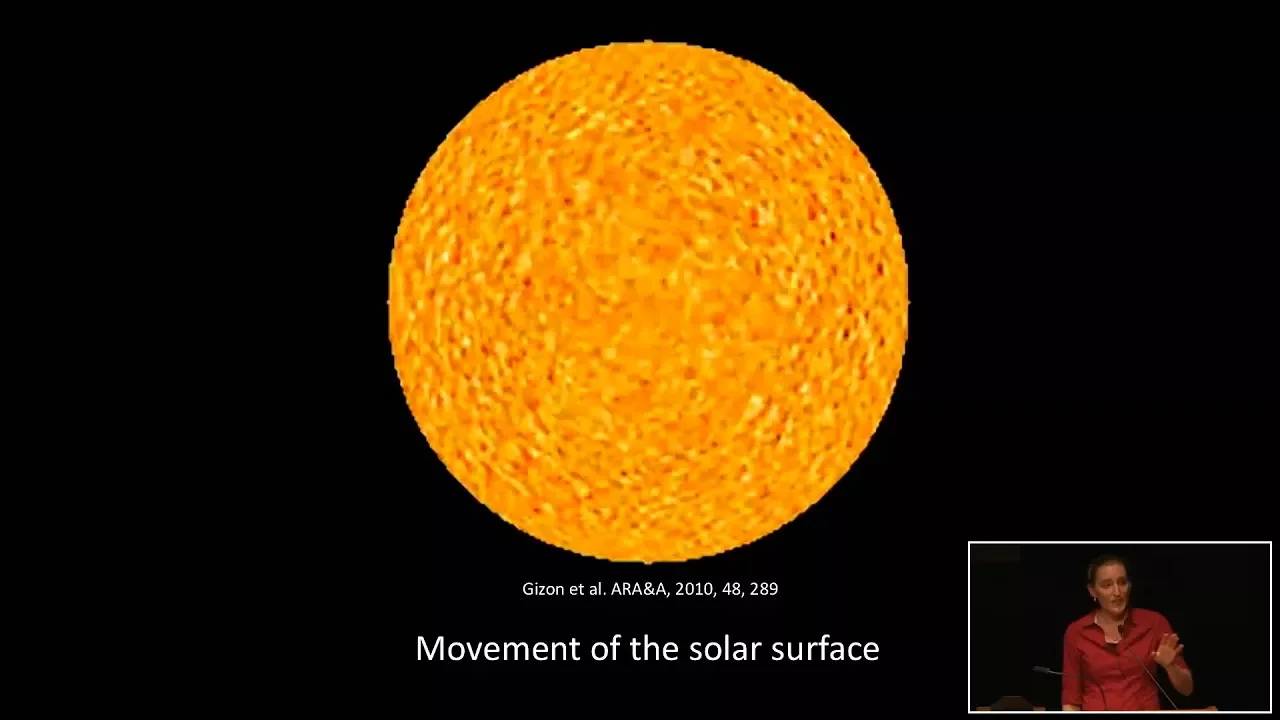
Um so concerning um there were well we can use classical observations like spectroscopy spectral polarry uh based on broadening of the lines to get B SI which is dependent on the inclination angle of the rotation axis of the rot the rotation a star also changes in the em emission in the absorption lines like smhk alpha um which has been shown for instance by katy earlier and um uh from spectral observation we can measure the magnetic field of the stars and its topology and that has been done uh for quite number of stars lately. Um and concerning the light curves um so we know that stars that have spot uh crossing the visible disc um create a modulation in the light curve. So that's the sun with uh during the maximum of activity and you can see this modulation that corresponds to uh the rotation period of the of the sun.
Uh on the other hand if there is no activity if you're observing the sun during the minimum of activity then uh you have a flat behavior in the in the light curve and you can't measure the surface rotation. So uh these two parameters are tightly related uh linked to be able to measure the the surface rotation. Uh so from these light curves um you can compute uh periodoggrams to get the highest peaks in the in the periodoggram to measure the rotation period. Uh you can also do some time frequency analysis uh or autocorrelation uh function. And uh one thing that we can uh I want to point out here is that with the most of the well with the period one of the the issue can be that you're measuring a harmonic of of the main rotation period. So and this is something that we can um that the the time frequency analysis and the autocorrelation function can uh get rid of.
Um so concerning the magnetic activity how can we measure it using uh light curves um so here you have an example of um of a light curve the flux as a function of time of a Kepler target um and uh because these spots are creating a modulation in the in the light curve you can have uh one way of getting a an index of the magnetic activity by taking the standard deviation of the time series that I call here PH. But because I showed that there is a very tight link between the rotation period and the magnetic activity of the star, uh we can also use the the knowledge of the rotation period of the surface of the star to get a more precise uh index of the magnetic activity. And this is uh what we have done by taking some uh subseries of the light curve uh of length an integer times the rotation period to be sure that we are really taking the magnetic activity of the star and computing the standard deviation of all these subseries and taking the mean value. Uh with this method we can also compute uh a contrast number which is basically the which takes into account the fact that we have um highest the lowest the highest standard deviation and the lowest standard deviation in these subseries. So it's just a ratio between these two values. Um so uh here this is um uh the time frequency analysis of this light curve using wavelets. So you have the period and the time and the wavel power in color code and um and the so basically it represents the correlation between uh the a given wavelength with a given period and the the time series. So the highest correlation is represented in red for instance and the lowest uh correlation is represented in blue. So here for this star for instance you can measure a rotation period of 2.5 days and um if you project uh this wavelet power spectrum on the the time axis you get something similar to a proxy of the magnetic activity of the star u and you can easily see that uh you have a minimum of activity and increase of the activity and again a decrease of the activity. Um so this is um an interesting way of studying the magnetic activity of stars. Uh besides if you look at this wavellet power spectrum you can also see that there is a change in the rotation period. So you can also have some kind of butterfly uh diagram by using this this technique. So let's come to what seismology can bring into the picture on um on this relationship between age and activity.
uh we have seen the past few days how we can use stellar models um that include different uh physical processes. This is a nonexhaustive list of uh physics that can be included in these models and we try to fit these uh models to the observables that are available. Um so these can be spectroscopic observations, effective temperature, uh metallicity but also seismic observables, delta new, newax and the individual frequencies of the mods. Um so you can use different methods u you can use grid modeling or also other techniques like the genetic algorith algorithm that's used in the astroismic modeling portal and these have been uh used on a very large sample of stars showing that we do improve improve the precision on the mass the radius of the stars but also on the edges of these stars. Um then we have also seen in the past few days that uh rotation has an effect on the ac on the modes. Uh so yeah it's just to show you how um uh the rotation lifts uh the degeneracy for the for the modes. So for for an example here you have an L equal one and because of the rotation of the star you have uh splitted modes. So here m= 1 and m= minus1 and the difference of frequency is called the rotation splittings which is proportional to the interior internal rotation of the star. Of course this also depends on the inclination angle of the stars. So um you also have to take that into account. Um and here I just wanted to show you that um using um a lots of modes with a lot of uh rotational splittings you can do inversions to get um a rotation profile and that's the case for for the sun. Then uh magnetic activity also affects uh the modes. So here I just wanted to show you how for the sun uh we know that uh the amplitudes and the frequencies of the modes are affected by the magnetic activity. So here you have the amplitudes of the modes as function of time the frequencies of the modes as function of time and the the red line corresponds to the sp sunspots number.
So a classical uh magnetic index and we see that there is this nice correlation between the frequencies and this uh sunspots number and an anti-correlation with the amplitudes of the modes. So um doing that there is we did some analysis of one of the core target HD9933 uh which has a rotation period of 3.4 four days um and uh we measured uh similar to the sun the amplitudes and the frequencies of the modes as function of time. So this star was observed in three runs here. I'm just showing uh the plus two runs and you can see that we have also this very nice anti-correlation between the amplitudes of the modes and the frequencies uh suggesting that we indeed have uh a magnetic cycle going on on this star. Um unfortunately we didn't have enough data to get uh a very precise measurement of the uh cycle period uh for this star but we had in parallel some uh spectroscopic observations confirming that the s index is compatible with the uh an active star. So that's what seismology can can do for rotation activity and uh ages of the stars and um so here I'm just going to come uh present some highlights of the Kepler results on these uh on this relationship between these three uh quantities. Uh so here uh this is the one of the first uh paper I think that came on the on the clusters of um observed by Kepler uh concerning uh rotation and age relationship. Uh so this is um NGC6811 which has an age of approximately uh 1 giga year and um so Mayorman collaborators measured the rotation period of approximately 71 stars which is represented here as a function of B minus V and uh in in orange you have over plotted the um the uh empirical color period uh relationship that was extrapolated to one gig area using this command law and you can see that uh this uh this relationship doesn't really agree with what is observed in the for this cluster. Um they also represented this um uh the results of theoretical uh rotational uh evolution models uh computed by Barnes. Um so these three colors correspond to three different um uh initial uh rotation period in the in the zans. Um they seem to agree better uh with the observations but we still have to understand uh to study this uh relationships. Um I'm going to go very fast with this one because there is a talk that's going to present that. So I just wanted to show you that surface radiation periods have been measured for a very large number of stars using the ocean correlation function and here you have the period as a function of the effective temperature with some theoretical uh relationships for different ages. uh according to this uh to this plot we could say that there are few stars older than 4.5 gigar and most of the stars seem to be younger than 1 gigar but there could be uh one of the issue is that uh most of the masses and the evolutionary stages are put in the same plot but we we need to remember that uh these different evolutionary stages and masses have behave differently so so that to explain this uh this plot. Uh then um this is a result on uh solar stars for which we had astroismic observations uh constraints on the mass, radius and ages. So this is sample of 540 solar stars um for which we measured the rotation periods using uh wavelenges and autocloration function. So here you have an HR diagram showing this s uh the sample of stars by which we could measure this rotation period. So it's approximately 300 uh stars and the different colors correspond to uh hot stars in red uh cold stars in blue and subgiants in green. Uh so here I just wanted to show you a histogram of uh the rotation periods and uh the SPH uh the magnetic index of the phototric data.
And one thing that I want to point out is that uh indeed for the hot stars we do have the uh fastest rotators which agree with the the craft break. Uh concerning the magnetic activity we also see that most of the active stars are also the these hot stars and in I invite you to go and see the poster by poster 110. Uh so from these uh measurements you can also start to study uh rotation period and ages. Uh and so we took uh a sample a subsample of stars for which uh we had more precise ages using the astroismic modeling portal. So it's 15 stars and we just computed the fit uh of these observations and compared them to um to relationships that exist between uh rotation period and ages. and they seem to agree quite well. Um and I have to remind that these stars are only um cool stars. Um then there were also some uh magnitude activity observations for 20 22 solarike stars. This has been done by car collaborators uh with uh the Nordic optical telescope. And here they was also trying to get relationship between uh the magnetic activity uh against the age of the stars. So in green you you have the ages that were determined by the astroismic modeling portal while in in black it's the they correspond to ages obtained with uh the a grid model.
Uh so the biggest differences come for the the the younger stars for which apparently uh the grid model doesn't capture the the the young age. Um and finally um from um from this uh sample of astroismic uh stars uh there were a few stars where that could be considered solar analog uh candidates. Uh so there were eight solar analog candidates for which we had rotation periods and uh with uh donenu and collaborators we tried to to see if we could uh get a larger sample of solar solar analogs uh candidates based on the updated cake input catalog. Um and well that led to a few to 22 stars for which we could measure rotation periods. And here you have the inverse of the rotation period as a function of the age. So we have uh so in uh the filled um circles correspond to stars where we had seismic ages while the the open circle correspond to isocchronone ages. Uh so they seem to agree quite well with uh known relationships between um age and rodition period and this is a paper that just appeared on on archive. So to conclude what I want to to focus on is that um so there were different relationships that were uh derived between age, rotation and magnetic activity using classical observations.
But now we we have the opportunity to uh study field stars because it was done mostly for young uh clusters and with seismology we can get very precise uh ages. We can also study rotation periods, magnetic activity and one thing that we need to keep in mind is that uh we need to take into account the evolutionary stage of the stars, the masses uh because all these different categories of stars might have different general chronology relationships, magnetic activity uh relationship as well. So um I thank you for your attention.
Thank you very much. Um, any questions for Savvita? I see one in the green shirt there. Thank you for the nice talk. Uh, I have a question concerning the age activity and period relations. So, age is not an observable we know and is model dependent in fact. Uh so testing different physics in the models how would impact the the the determination of the age in this case and so the scaling relations themselves and uh how reliable and can can we can we consider this scaling these relations between these parameters. Uh yeah actually that's something I I forgot to say that when you are using the stellar models of course it's for a given physics and the ages are of course dependent on which physics you are putting in in the models. Um so um I can't tell you exactly how it's going to change this relationship. We haven't tested the uh I haven't seen how uh different input physics are is going to change the the ages but it will definitely have an impact on on the relationships. Yeah.
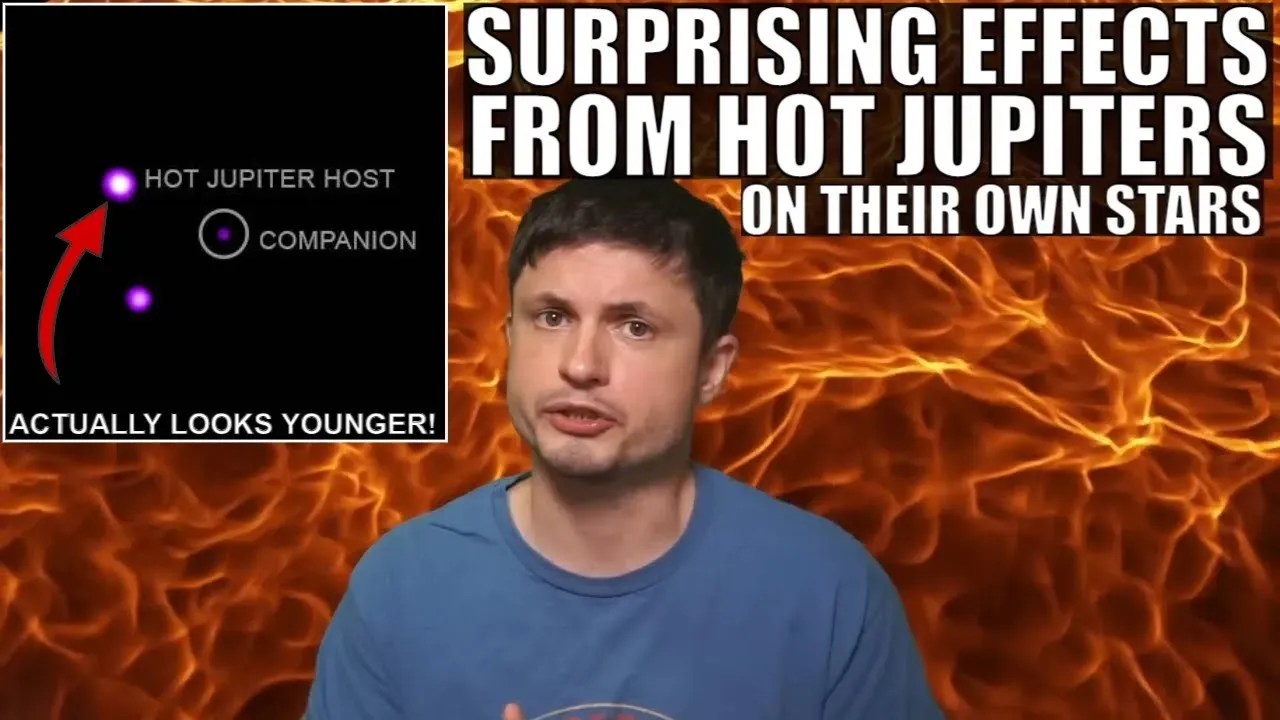
One one more question there. Yeah. I'd like to give a a little bit of an exoplanetary point of view for a lot of objects that we're studying a lot are hot Jupiters and they're very close to their stars and and generally gyro chronology is used as uh one constraint among others but sometimes an important one to uh um you know give a limit on on the ages on the possible ages and and then derive more precise stellar parameters, but we have to be careful that some stars can be be spun up by their planet uh and and then it can mess a lot of things. Calcium also indicators the rotation rate. I wonder if there are any uh uh objects that could be observed uh with seismology with close in uh planets and so for which we could test uh directly whether they have been spun up. Uh I think it's possible. I'm not aware if there is any work that has been done on that side but I'm sure it's possible to study these stars and actually that would be interesting to see how these relationships can be different because you have planets around these close closed planet around these stars and that could maybe help uh if we manage to do that for a sample where we we know there are planets it can help to find to see uh some outliers in our relation in our plot and say that they might of planets actually. So that can go on both ways. I know there are ongoing efforts to um do the detailed astroismic analysis and get age estimates and also people looking for surface rotation periods for KOIs, but I'm not sure that any of those that have been done so far have close in massive planets. But I guess there'll be a talk by Victor Silva Aira on that tomorrow.
Um I think we're going to have to move on to the next speaker. So let's thank Sevita again.
[Applause]
Up Next

Galactic Dynamics Lecture 2: Potential, Circular Velocity & Applications
@kmalhan07
620 views•2016-09-18
First Billion Years of the Universe with the Square Kilometre Array
@iaaudc
121 views•2022-05-26

Ensemble Asteroseismology, Clusters, and Scaling Laws
@ompvideo
258 views•2014-10-21

Gamma-Ray Bursts: Cosmic Snipers Explained | Astronomy
@kurzgesagt
15M views•2016-07-31
Related Study Plans & Knowledge Roadmaps
Structured learning paths in Astronomy