





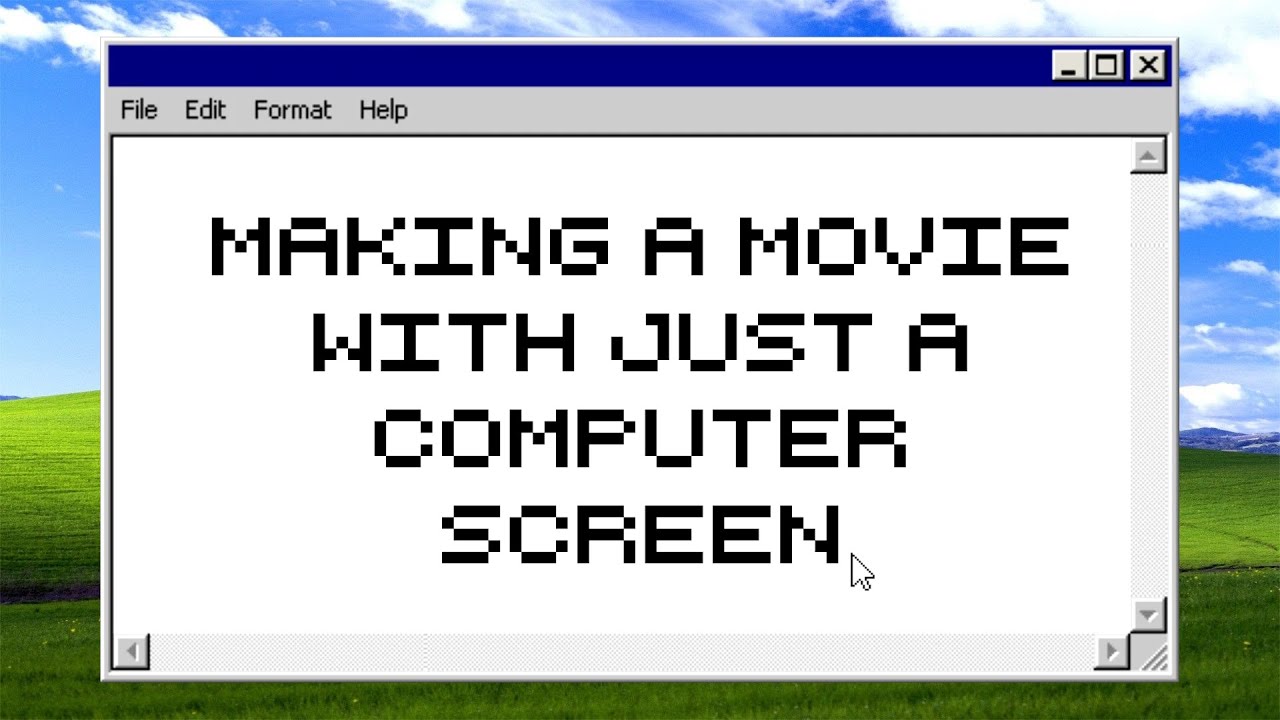
Desktop horror is an emerging sub-genre of horror cinema where films are filmed, edited, and screened entirely through digital technologies on computer screens or mobile devices, reflecting contemporary fears about online life, identity theft, and digital vulnerability; this genre represents a transformation of traditional horror conventions to express modern anxieties through the very medium of digital technology, with examples including VHS (2012), The Den (2013), Open Windows (2014), and Unfriended (2014).
Desktop Horror Films: Digital Media in Modern Cinema
Added:Familiarity with the 'Found Footage' horror subgenre (e.g., The Blair Witch Project, Paranormal Activity) as the stylistic and thematic predecessor to desktop horror.
Basic understanding of traditional cinematic techniques, particularly how camera placement, framing, and editing are used to build tension and direct spectator attention.
An awareness of the 'screenlife' filmmaking format, where the narrative of the film unfolds entirely on a computer screen, smartphone, or tablet interface.
Historical context regarding technophobia in cinema, specifically how horror has historically reflected societal anxieties surrounding new communication technologies.
Advanced study of media theories such as 'remediation' and 'hypermediacy' to analyze how digital interfaces reshape spectator engagement.
Examination of digital voyeurism, surveillance capitalism, and the psychological anxieties of the online panopticon as represented in modern thrillers.
Analysis of the screenwriting and production challenges unique to interface-driven storytelling, including non-linear multitasking and UI/UX-based narrative progression.
Exploration of emerging digital horror paradigms, such as deepfakes, algorithmic horror, and the uncanny valley in virtual/augmented reality spaces.
465 views18likes12:58Original Release: 2020-05-15
hi my name is dr. Lindsay hallo and I'm the co course leader of the be a film course at the University of East London I teach both theory and practice including a module on high horror and science fiction which I'll be speaking about today my research specialism is horror cinema and I've written books and articles about horror films from around the world and today I'll be talking about a recent trend in horror cinema which I call desktop horror where the film plays out on a computer screen I think these films are very relevant to this current movement that we're living in given that we are relying so much on living our lives online through our mobile devices we are all now producers of media as well as consumers of it purposefully inviting others into our lives documenting filming and sharing every moment significant or otherwise some welcomed the constant surveillance and quests for more likes retweets and fleeting minutes of fame but in turn we now have horror films that are beginning to explore the darker science of this new cultural practice and in the process are incorporating these new forms illustrating how cinema itself has Endicott undergone a transformation from an analog products being shot on film or celluloid to a digitally integrated medium the responses are vocht by these films is symptomatic of our relationship with technology which also produces bodily responses as Joanna Isaacson States our hearts race when we are messaged or liked an extra minute of waiting for a text stretches into timeless misery the resonant bright droney and dull sounds that accompany these gestures have now become part of our nervous system so on these terms our devices have become extensions of ourselves often causing anxiety when we lose them or forget them prompting our need to document each moment according to the mantra pics or it didn't happen which is a statement that demonstrates how all centricity is now dependent upon photographic evidence which is then viewed rated and shared by others online our moods our identity our sense of self and certainly our fears are now bound to the digital realm in the emerging sub-genre of desktop para there's an integration of new digital media with traditional horror cinema conventions expressing contemporary fears and anxieties via the very mode in which they're experienced by looking at these films it's possible to chart how I lived online experiences have informed new horror techniques as a result the forms of new media have come to shape the aesthetic of the films themselves as the desktop screen becomes the film screen it's already been several terms used and reviews to try and describe these films such as laptop horror and webcam horror while the producer and director to move bekommen betal prefers them as screen movies the term desktop film while fittingly encompasses the subtle variations that are found in this form because not all of them take place on a desk on a laptop or are shot from a webcam this term also relates to how the films themselves are filmed edited and screened entirely with digital technologies they often edited on a desktop the place of the desktop is the site where filmmakers and now from spectators interface with digital cinema technology which is central not only to how these films were made but also more recently how these films were consumed given that most of these films are streamed through services such as Netflix and Amazon Prime and it's important to note that both of these services and many others produce their own original content most of which bypasses a traditional cinema release altogether so they're only viewed and consumed online the first example of the desktop horror film format appears as a segment in the found-footage anthology film VHS from 2012 in a segment titled the sick thing that happened to Emily when she was younger the segment unfolds as a series of Skype conversations between a couple Emily and James and the separator while James is at medical school Emily begins to confide in James that she believes that the house she's staying in this haunted and through the conversations the real threat is revealed it's quite similar to Paranormal Activity where digital technology is used as a way to document supernatural activity while also hinting at a larger conspiracy that may also include collusion with alien life-forms throughout the segment there are instances of glitching and pixel ace exhalation and this enhances the realism through the incorporation of technical problems poor lighting and off-center framing so these faults make the film feel more real the film was made without the use of any cameras whatsoever the scenes were captured directly onto the computer and the director Joe Swanberg Swanberg commented that it became like a weird IT problem it was less like a movie problem to solve and more like we were managing Wi-Fi signals and computer frame rates Desktop horror has subsequently been expanded to feature-length in films such as the den from 2013 open windows and unfriended from 2014 it was also a sequel to unfriended called unfriended dark web which came out in 2018 and that was also the same year that two other films searching and profile were released as well there's some variation amongst these films for example the den unfriended and profile all take place on a characters desktop Street desktop screen which say static and that's different to open windows and searching where there are movements that zoom in and out from the desktop screen as well as tracking movements across various open windows and this footage from various cameras and locations which are then transmitted onto the desktop you'll see some examples of this later in the lecture the six thing that happened to Emily when she was younger the den and searching take place of a series of days and weeks while the narratives of open window unfriended play out in real time another interesting variation is a film called sickhouse which came out in 2016 which moves away from the computer desktop completely to another mobile device the cell phone and it was filmed completely through the mobile application snapchat and presented in the verdict vertical aspect ratio of an upright mobile phone this film was initially really released through snapchat and then later it was all the segments were edited together into a feature-length film the Netflix released calm for 2018 doesn't take place completely on a desktop but key scenes are presented as the live streaming performances of the protagonist is a cam girl called Alice the concept of identity theft is then taken to an extreme Alice becomes locked out of her account well while what appears to be a digitally created double of her continues to perform in her place the protagonists in all of these films are dragged into a sequence of events that they engage with through their computer or mobile device even more than they're engaging with their immediate physical surroundings thus time and space in these films is imbued with a sense of urgency but also isolation these protagonists become bound to their screens as their only means of survival the title of nacho Vega Londos open windows contains several puns on the new uses of the term windows in the modern age there's of course the prevalence of the microsoft windows and the term is used to denote the many different screens or windows that can be accessed on a computer desktop which allows the user to access and alternate between many different websites clips and programs at any one time the desktop screen itself is like a window to the world which is similar in a way to how cinema was once described as a medium through which the viewer can see and experience places that that were geographically distant it could be argued that the desktop screen in a window is even more open than that at the cinema screen given that there's increased interactivity and there's the ability to communicate with and influence what we engage with if there's also a danger to this openness as this film demonstrates as so much of our lives are lived online leaving us vulnerable to attack in many ways such as identity theft cyberbullying and hacking and just to give you a more of an idea about this film in case you're not familiar with it I'll play the trailer [Music] [Applause] [Music] [Music] the connection between window and screen goes back to alfred hitchcock's 1954 film rear window made 60 years before open windows the narrative of rear window is commonly interpreted as mirroring the film watching process as like the protagonist lb Jefferies we also collect clues and make inferences from what we see just as Geoffrey's odds by watching his neighbors through their windows in Hitchcock's film the window takes on many metaphorical dimensions relating to the cinema apparatus alluding to the lens of camera and projector the window in the projection booth and the eyes window bigger Londo expands on many of these points demonstrating that the metaphors from Hitchcock's film have not you become more relevant but literal within the physical space of the home or workplace people are often surrounded by as many screens as windows each offering a view to a different space whether they be physical spaces or cyber spaces thus the phrase opening a window has come to mean something new a movement that leads to more information more clues in an ongoing trail or narrative which is similar to how one move from scene to scene within a narrative film just as lb Jefferies collated more information by looking through windows that were located geographically across the street Nick chambers in open windows looks between a series of windows on his desktop in order to obtain information that will allow him within a narrative that echoes out of many in Hollywood movies to defeat the villain and save the girl in open window there are no straight cuts from one shot to the next instead there's a movement across the desktop to another window or shot creating the illusion that the film is continuous with no edits and this is actually similar to another Hitchcock film which he made in 1948 called rope it's not so much that we're following in the gaze as we're following the cursor as it negotiates between the different windows on the desktop which is in itself a form of editing it organizes a sequence of visuals the effect of this movement between shots is similar to that created by handheld camera work and found footage films and that there's a feeling of immediacy in the images and a sense the characters are using technology to keep up as events spiral out of control as open windows and other desktop films demonstrate the medium of cinema is reacting to the new media landscape which now primary primarily consists of and exists on an online digital space but so much of our lives our experiences and interactions take place digitally means that our emotions and our fears have also reacted to this changed we're now immersed in an intricate network of effective flows that traverse both physical and virtual realms leaders now social our relationships sometimes with people with whom we've never even actually met a forged and broken through digital interactions the desktop horror film thus expresses in a new form a transformation of horror film conventions in a way that not only reflects but connects into this network of emotion that we're currently experiencing with our fears and anxieties now becoming aspects of ourselves that exist beyond their own bodies an integral part of our shared digital world so thank you all for listening I hope you got something out of that my name has been dr. Lindsay Hallam if you have any other questions about the Bo film course please feel free to email me at film at you ELAC UK you can also stick around and look at some other master classes and also keep an eye out for some of the online interactive sessions that are being run where you can actually speak to lecturers and ask them directly any questions that you have so hopefully I will see you all next September
Up Next
9:25
In the Skin of a Jihadist: Book vs. Screenlife Film Adaptation
@CuriousRobinKnows
831 views•2021-11-28

26:22
Walking in the City: Urban Rituals and the Flâneur in Contemporary India
@PSBTIndia
1.9K views•2016-08-02

9:49
FastAPI vs Flask vs Django: Choosing the Right Python Web Framework
@TechWithTim
302.5K views•2024-05-26

1:42
Game of Thrones Opening Credits: A Cinematic Analysis
@gameofthrones
46.3M views•2011-04-18
Related Study Plans & Knowledge Roadmaps
Structured learning paths in General & Interdisciplinary Studies
general-studies
Artificial Light: History, Tech & Human Impact
01The Pre-Electric Era: Fire, Oil, and Gas Lighting
02The Incandescent Revolution and Grid Electrification
03Gas Discharge and Fluorescent Illumination
+ 3 more learning modules
14h6 modules
Explore Roadmap
general-studies
Elevator Engineering: History, Physics & Cities
01From Hoists to Safety Brakes: The Dawn of Vertical Lift
02Hydraulic vs. Traction: The Engineering Physics of Elevators
03Modern Speed, Safety, and Algorithms
+ 2 more learning modules
12h5 modules
Explore Roadmap
general-studies
Rubber: Material Science, History & Geopolitics
01Origins of Natural Rubber & Mesoamerican History
02The Chemistry of Natural Rubber & Vulcanization
03The Geopolitics of the Rubber Boom & Colonization
+ 2 more learning modules
12h5 modules
Explore Roadmap
general-studies
Containerization: Evolution, Logistics & Trade
01Ancient Trade & Bulk Cargo: Amphorae to Barrels
02The Industrial Revolution & Cardboard Packaging
03The Containerization Revolution: Malcom McLean
+ 2 more learning modules
12h5 modules
Explore Roadmap