














Borders are not natural or neutral boundaries but are artificial power structures designed to control populations, create hierarchies between citizens and non-citizens, and maintain systems of exploitation; they serve to divide people into included and excluded groups, denying migrants basic rights and creating fear-based control mechanisms that benefit wealthy nations and corporations while trapping individuals in cycles of poverty and precarity.
Why We Must Abolish Borders: A Historical Analysis of Migration
Added:The concept of Westphalian sovereignty and the historical origin of the modern nation-state.
The history of colonialism and imperialism, specifically how colonial powers arbitrarily drew geopolitical borders.
Basic sociological and economic push-and-pull factors that drive global human migration.
Max Weber's theory of the state's monopoly on the legitimate use of physical force/violence.
The political philosophy of 'Open Borders' and ethical arguments surrounding global freedom of movement.
Harsha Walia's framework of 'Border Imperialism' and the intersection of border control with global capitalism.
The history and efficacy of grassroots migrant solidarity movements, such as 'No One Is Illegal' and the Sanctuary Movement.
Alternative governance models, post-national citizenship, and the management of global commons without state borders.
39.3K views3.6Klikes21:41Original Release: 2021-07-21
“HEY, What a wonderful kind of day.” Introduction Trinidad and Tobago is the dual island Caribbean country I live in that sits a mere 11 kilometres off the coast of northeastern Venezuela. Our northern range, literally called Northern Range, is an extension of Venezuela’s Maritime Andes Mountains. But the connections don’t end there.
Human settlement in Trinidad dates back at least 7,000 years. In fact, the oldest human settlement discovered in the Eastern Caribbean, the Banwari Trace site, was found in southeastern Trinidad.
And the various indigenous groups that have settled in Trinidad over the millenia have, for the most part, migrated up the Orinoco river in what’s now Venezuela.
Exchange and migration between the continent and the island continued undisturbed for thousands of years before the arrival of the Spanish. Today, in our “free”, “post-colonial” world, what was once the norm is now criminalized. Now you have to go through “the proper process” in order to migrate, asking permission from governments who draw invisible lines and demand your deference.
Still, migration has continued, legal and illegal. Refugees desperate to escape the pressing thumb of American imperialism and Venezuelan government mismanagement flee to Colombia, Brazil, the Dutch Caribbean islands, other Latin American countries, and of course, Trinidad. Much of this migration is extorted by opportunists or facilitated by the organized crime of human traffickers.
These refugees struggle with mounting xenophobia and gross exploitation as they struggle to find work and secure the basic necessities of life. Those who do get jobs struggle to support themselves in their new countries while they send money back to their families back in Venezuela.
The Venezuelan refugee crisis is a disaster I’ve seen unfold before my own eyes.
One I have witnessed first hand. And one that is facilitated and exacerbated by the existence of borders. The History of Movement & Borders To the Delphic priests in Ancient Greece, one of the four freedoms that distinguished liberty from slavery was the right of unrestricted movement. For most of the world and for most of human existence really, free movement has been the status quo. Traders, migrants, hunter-gatherers, and nomads freely traversed this little blue marble. Of course, many ethnic groups maintained relationships with particular lands, but even when city states and such rose, it was rare for rulers to delineate precisely where their realm ended and another’s began.
Sure, the Romans threw up some limestone along Britannia’s north, but Scottish shepherds continued to shepherd the sheep on both sides of the wall. Hadrian’s Wall was primarily a military installation, meant to slow down invaders and project power, not prevent people from crossing. Of course it still sucked, it was a military installation, but between the various medieval realms, no man’s lands were still common, where rulers and laws were fuzzy and vague. The first large scale restrictions really arose under the Roman Emperor Constantine in the 4th century, forbidding serfs from leaving their lord’s land.
Documents requesting safe passage, what one may call the first “passports” became more commonplace. The medieval era bound large parts of Europe’s population in place by serfdom and movement was viewed by rulers as ruinous to their law and order.
However, serfdom wouldn’t last forever. With its decline, wage labour arose in the 15th and 16th centuries. That didn’t mean free movement came back though. Now, people were a commodity that a country’s government wanted to keep within its borders. Rulers offered citizenship and tax incentives in order to encourage immigration. Yet at the same time, countries like Spain and France were executing or expelling ethnic and religious minorities en masse.
Nationalism would begin to develop in the subsequent centuries, attempting to unite a vast range of cultural groups and classes under the state while defining themselves against outsiders.
Of course, this ruling class metanarrative exists as a mechanism of manufactured, meaningless loyalty in order to control you. I digress. Watch my video on National Liberation for more. With this era also came what historians have dubbed the largest involuntary migration in human history.
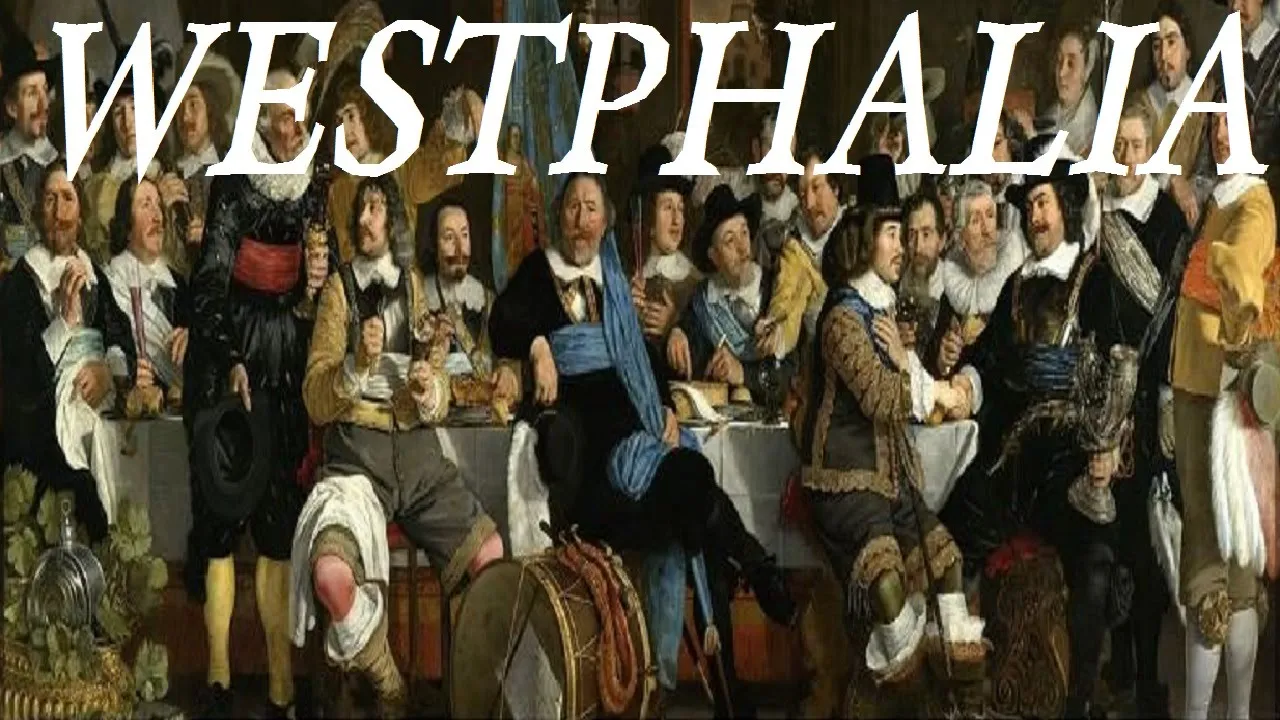
The Trans-Atlantic slave trade trafficked an estimated 12.5 million enslaved African people between the 16th and 19th centuries. There was a key moment in the history of borders that would have lasting effects today. At the end of the Thirty Years’ War, The Peace of Westphalia was signed by a hundred and nine principalities and duchies and imperial kingdoms, which agreed, in 1648, that states’ borders were inviolable, and an absolute sovereign state could not interfere in the domestic affairs of another. Westphalian sovereignty would go on to influence international relations for centuries, though the measure to which it has been consistently observed is rather debatable. Still, while the Westphalian era did lead to some interesting looking maps, the actual inhabitants weren’t really made privy to those imagined borders, which remained fairly fuzzy to their day-to-day in those liminal zones. Though the European powers sought to sustain their settler colonization efforts, they still restricted who the settlers would be, and they had different approaches. Spanish settlers couldn’t be Jews or Moors or related to heretics.
Any ship that facilitated the illegal carriage of passengers to the Indies would have its officers sentenced to death. Meanwhile, the British shipped off their dissenters, criminals, and pains in the bumcee to settler colonize places like Australia. So-called liberals like John Locke began to question the ruler’s right to restrict individual movement, though of course Locke himself was cool with chattel slavery, so I take whatever he says with a grain of salt.
Still, with Locke’s lil musings plus Adam Smith’s new school economics, the notion of free trade and free market gained some ground. Concerns of overpopulation, underemployment, and social unrest in Europe led governments to start facilitating emigration, opening up their colonies to a more general free for all settler colonialism, which would in turn lead to domestic depopulation.
Eventually, there would be another shift. In the 19th century, migrants from now underdeveloped regions began to stream towards the more developed areas in droves. North Africans went to France, Italians and Irish headed to New York, and all the while, racism and xenophobia festered and proliferated as nationalists whipped up fear against the so-called threats to the nation.
European countries began to lock down and restrict the entry of immigrants, with greater measures implemented in the age of revolutions, as political refugees flooded from all over.
These border restrictions were empowered by the rise and spread of new technologies in that era.
The telegraph, the railroad...they all enabled central governments to assert their presence across their whole territory unlike ever before. And then, of course, came the First World War, which saw the death of some sixteen million people. The segregationist Woodrow Wilson, who was US President at the time of the war, proposed Fourteen Points to the international community in order to prevent such horrors. Those Fourteen Points, which I’m not gonna read cuz you can look it up, became central to the Paris Peace Conference in 1919. One of the core principles of the Fourteen Points was that some of the globe’s borders be redrawn along clearly recognizable lines of nationality. This of course, is just for Europe, it’s not like any of those world leaders actually cared about the territories they carved up in Africa, irrespective of the actual linguistic or cultural groupings on the continent, solidifying a century of tensions and conflict.
In the post-war period, the collapse of four European empires, Ottoman, Russian, Austro-Hungarian, and German, would leave millions of refugees in a world where immigration controls continued to tighten and passports gained greater prominence. Alas, once the nation state was cemented in place, fascism and Nazism would arise to guard its supposed “purity.” The world would once again be plunged into War, which would again leave millions of uprooted and displaced people that states like Switzerland and the US would largely refuse to assist.
After the Second World War, nation building continued to displace and slaughter millions of ethnic and religious minorities. The consequences of environmental degradation are left in the hands of colonized countries, weakened by wars and poverty and imperialist intervention.
And the tens of millions of refugees from these lands are dismissed and deported by the Global North, despite the rising tidal wave of need. Immigration controls only tighten further, especially with the founding of the EU in 1993 and the implementation of ICE in the US in 2003.
Oh yes, how could I forget about what happened two years before 2003.
I wasn’t really conscious back then so forgive me. Never forget and all that.
In our post-911 reality, US border patrol has escalated to employ 20,000 agents and Israel runs the largest open-air prison in the world. It’s common these days to see militarized borders, with heavily guarded barbed wire and electrified fences.
These imaginary lines on a map have become, in some places, violent fixtures of the landscape, where thousands of people lose their lives every year for simply trying to cross. We’ve entered what political science professor Matthew Longo has dubbed an “era of bordering without precedent,” as several other countries follow America’s lead. Suddenly customs and immigration have turned from bureaucratic to militant. Thanks to today’s technology, governments know more about the people they govern than at any point prior in human history.
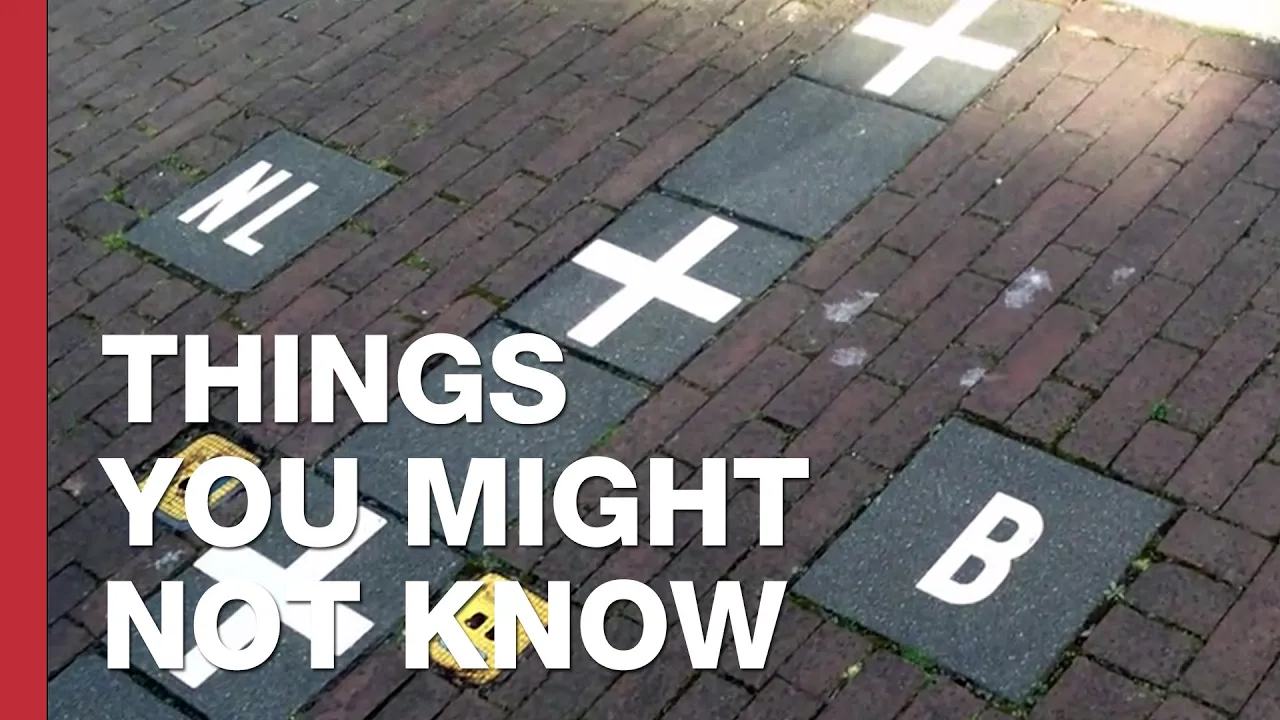
Cross-border surveillance keeps neighbours in the know, managing and monitoring their populace like lab rats, as data becomes more valuable than black gold itself. China has become well known for its advancements in surveillance technology, but it is not alone. These governments have chosen to wall and surveil. This is our world now, a surveillance capitalist dystopia, and borders have an important role to play. The Role of Borders “The border is not just a wall. It’s not just a line on a map. It’s not any particular physical location. It’s a power structure, a system of control. The border is everywhere that people live in fear of deportation, everywhere migrants are denied the rights accorded citizens, everywhere human beings are segregated into included and excluded. The border does not divide one world from another. There is only one world, and the border is tearing it apart.” —No Wall They Can Build by CrimethInc. In this global caste system, we are separated.
Whether by gated communities or for-profit prisons, these borders exist to control the masses and privilege the monied few. Internet firewalls, checkpoints, and hidden databases all section off human beings into citizens, maintaining boundaries through ceaseless violence, from deportation to vigilante attacks to street harassment to torture.
Migrants are often the first targets of economic downturn, repression, surveillance, and scapegoating, and one of the greatest weapons that borders wield is fear. Fear of immigration raids, fear of expressing dissent, fear of fighting for better pay when you work undocumented in a country wholly dependent on your hyperexploitation, all to blackmail a captive population. And of course, a manufactured fear of those on the lowest rung in society, that the media deems a threat.
Categories like refugee, asylum seeker, economic migrant, and illegal alien are used to further divide and control, separating those economically useful from those deemed criminal. But those “scary outsiders” we’re told borders protect us from are just people, like you and me. What we should be asking is “why are they outside?” Our economy is global. It has been for a while now. Resources are extracted from some parts of the world, processed in other parts of the world, products manufactured elsewhere and then sold worldwide, for profits to be hoarded by a select few countries and select few people.
Wealthy countries plunder the poor and then brutalize those who follow where the opportunities have been taken. But your destiny and your liberty should not be restricted by the passport you wield and the wealth you do or don’t control.
Look at this map. As a citizen of Trinidad and Tobago, I have the privilege of travelling to much of the Caribbean due to CARICOM, the Schengen Area due to a 2015 agreement with the EU, most of Latin America, and parts of Africa without a visa. In all, 150 countries and territories visa-free. The US, Canada, Australia, and Japan are not included. Some Caribbean islands have more freedom than us, like Bajans with 161, while others have less. Haitians with 49, Dominicans with 68, and Cubans with 64, have among the worst passports for visa-free travel. Americans with 187, Germans with 191, and Japanese with 193 enjoy the greatest freedom of visa-free movement.
While Israelis can boast visa-free travel to 161 countries and territories, Palestinians are restricted to only 38 countries and territories, yet those in the West Bank are restricted by violent checkpoints and those who live in Gaza can’t even leave the Strip at all.
A billionaire like Elon Musk could fly anywhere he wants in his private jet while a political prisoner like Ojore Lutalo can be kept in solitary for years on end.
Those who hold the privilege of certain citizenships can be bribed into maintaining it with pithy freedoms like legal participation in the labour market, social recognition, and a little welfare, as a treat. These papers we hold only hold power because others are without them. Because of artificial scarcity. The same passport privileges apply to areas of life other than work and travel too. Your chances of getting a vaccine are dependent on which side of the vaccine apartheid you were born in. The pandemic is “over” for some, despite the staggering majority of the world still without even the first dose.
The violence of borders targets us all, but Indigenous and colonized peoples suffer the brunt of it. Where we can live and where we can move has been determined by colonial and neocolonial divides. Traditional seafaring channels are now militarized and guarded by vast navies and pollutant cargo ships, disconnecting and unravelling the once deep ties between island communities. Indigenous people are shuffled around like pawns and shoved into borders within borders, like reservations or redlined communities, disrupting and disconnecting us from our land-based cosmologies and ways of life. Just as a prison transforms those within it, the border serves to turn us into prisoners or prison guards. To quote CrimethInc yet again: “As long as there is a border between you and those less fortunate than you, you can be sure there will also be borders above you, keeping you from things that you need.
Some people are deported, others are evicted, but the fundamental mechanisms are the same.
And who will help you tear down the borders above you, if not the people separated from you by the borders below?” The Fight Against Borders If you choose to take up this fight, understand that despite all their violents efforts, you must not overestimate the strength of states and you must not underestimate the strength of resistance. The underground railroads of anti-Nazi and anti-slavery resistance shows that everyday people can help everyday people, no matter the obstacles.
How can we get started? If you live near a border, a sanctuary city, or a migrant community, there are probably already groups putting in this work, and you can join that infrastructure of resistance. Connect with people who are affected by borders in ways you aren’t.
Maybe you have a neighbour or a coworker who’s undocumented and could use a helping hand.
Get involved in these networks. Make contacts, share information, pool resources, assist at meeting points or drop ins, lend your vehicle, and/or make your home or another space available as a safe house for migrants on the move. Connections, formal and informal, public and clandestine, are what makes these networks possible. Every day, millions of people and millions of connections help people move, live, and evade state violence.
Migrants are often among the most revolutionary groups in history. The Levellers and Diggers, largely composed of workers thrown off their lands by enclosure in 17th century England, were at the forefront of their early revolutionary movements. In the 19th and 20th century anarchism in Europe and the US was most popular among migrant communities. During World War 2, exiles from Spain and Eastern Europe fomented anti-Nazi resistance in France. The precarity, loss, and uncertainty of migrant life tends to invigorate people to take up new ways of thinking, organizing, and acting to survive. I say this to say, follow their lead.
Learn from them and share with them. Pick up some DIY skills, learn the streets, produce propaganda, maintain communications. I can’t speak to everyone’s situation, cuz different people’s legal status, language, education level, gender, race, class, commitments, and ability will affect their contribution to this broad, open, and diverse movement. But however you do decide to contribute, leave the stunt activism home. This fight is not about so-called “public opinion”, which is often just a dog whistle for some abstract projection of white folks’ privileged bubble or mainstream media’s constructed prop of a homogenized mass called public in order to suppress dissent. Pay attention to the media, but recognize that they are not our focus. The audience of our actions is not “public opinion,” it’s those we want fighting with us: the people who we most need to work with, the people who already know the violence of borders firsthand.
The No Borders Manifesto offers three principles for No Borders activities: Number One: Direct action, in the truest sense. Whatever you do, no matter how small, should have direct material outcomes for those affected. If you stop one person being deported, help one migration prisoner manage to escape, get one person a safe roof over their head, stop one eviction, win one asylum case, help one person trapped in the system to find strength to get through the days, win one workplace struggle, cause some real damage to a company’s profits, that is a material gain. Symbolic actions often serve to discourage us, while successful action reverberates in our communities, encouraging others to do the same.
Number Two: Ensure your direct action tactics are aimed toward a particular goal: building the infrastructure of resistance. Develop and strengthen your networks, make new alliances, and acquire useful skills and resources.
Number Three: Ensure your direct action tactics are founded in a particular strategy.
Think carefully about the strengths and weaknesses of yourself, your group, and your community.
Understand, but don’t underestimate, what you can achieve and where you need to improve. Never be afraid to question common practice and dogma. Never look down on those less able to take on risks as you, especially if you enjoy a level of privilege. Lastly, never forget that the fight against borders will not be easy. The only defense against the risks and repression of this regime is a strong community and a culture of solidarity. Conclusion We are all connected. The problems in one country can’t be solved without addressing problems in another. There is no “border policy” that is just and fair. Those in power are not going to fix the mess they created and rely on.
The only solution is international resistance against capitalism, colonialism, and the state. Global systemic change, led by networks and communities united in struggle.
There is nothing necessary or inevitable about borders. Only the violence of their more ardent believers keep them in place, and without them, borders would cease to exist.
Together, we can make borders unenforceable. Together, we can create a world in which everyone is free to travel, free to create, free to exist on their own terms.
Peace. Outro Thank you for watching. Thanks once again to the Famalay, Ongrad, Coby Tamayo, John Vechey, Ori Shimony, Len P, SomeGuy, Seth, J. Dorrance, Eepa, y@, Beyond Binary Podcast, Mamish Disgusting, Eshi The Mad, Hoie, Geoff Massey, kimonoko, Alki, Forrest Alvarez, PoodleHawk, Håkon Kleppe Normann, Spencer Harmon, Matt, Jason Baker, Jordan, Redenbush, Tom S, bean, Scott Trinh, Tyler Brant, Brandon Barney, Moomooshin, Christopher Hunter, Sian Charles-Davis, and Suavacado Jones. You can join these beautiful humans and support me too on Patreon.com/saintdrew. Please like, comment, subscribe, and share with your fellow peoples. Feed the algorithm. Check out my previous videos for other fascinating topics. You can follow me on Twitter @_saintdrew. Thanks again, peace!
Up Next
39:08
Mizoram Border Tensions: Aizawl Unrest and Political Repercussions
@mrwheelchairofficial
82.4K views•2025-04-26

24:30
BRICS Pay and de-dollarization: A New Financial Order Emerges? | 55 chars
@DannyHaiphongYT
164.6K views•2024-10-22

7:33
Government Surveillance Methods: 10 Ways You May Be Watched
@BeAmazed
1.6M views•2017-04-09
10:19
Explaining the Saudi-Iranian Proxy Conflict in the Middle East
@Vox
18.2M views•2017-07-17
Related Study Plans & Knowledge Roadmaps
Structured learning paths in Political Science
political-science
Economic Statecraft: Sanctions & Chokepoints
01Foundations of Geoeconomics and Economic Statecraft
02The Mechanics of Weaponized Interdependence
03International Sanctions: Types, Implementation, and Efficacy
+ 2 more learning modules
12h5 modules
Explore Roadmap
political-science
Central Bank Independence: Politics & Policy
01Foundations of Central Banking and Monetary Policy
02The Time Inconsistency Problem & Inflation Bias
03The Delegation Model and Designing Independence
+ 2 more learning modules
12h5 modules
Explore Roadmap
political-science
Consociationalism: Power-Sharing & Stability
01Democratic Dilemmas in Divided Societies
02Introduction to Consociational Democracy
03The Four Pillars of Consociational Design
+ 2 more learning modules
12h5 modules
Explore Roadmap
political-science
Rebel Governance: Legitimacy, Economy & State
01Foundations of Rebel Governance and Statehood
02Establishing Political Legitimacy and the Rebel Social Contract
03Wartime Economies and Rebel Resource Management
+ 2 more learning modules
14h5 modules
Explore Roadmap