




![IGCSE CHEMISTRY REVISION [Syllabus 5] - Electrolysis](https://i.ytimg.com/vi_webp/czwmdXpwd5Y/maxresdefault.webp)


![QUÍMICA - Electrólisis I [CICLO FREE]](https://i.ytimg.com/vi/nRZ03iwbu44/maxresdefault.jpg)




![ПИТАННЯ ВІД GOOGLE, НА ЯКЕ ВСІ ВІДПОВІДАЮТЬ НЕПРАВИЛЬНО 🤔 [VERITASIUM]](https://i.ytimg.com/vi/kZmvObHDuMs/maxresdefault.jpg)






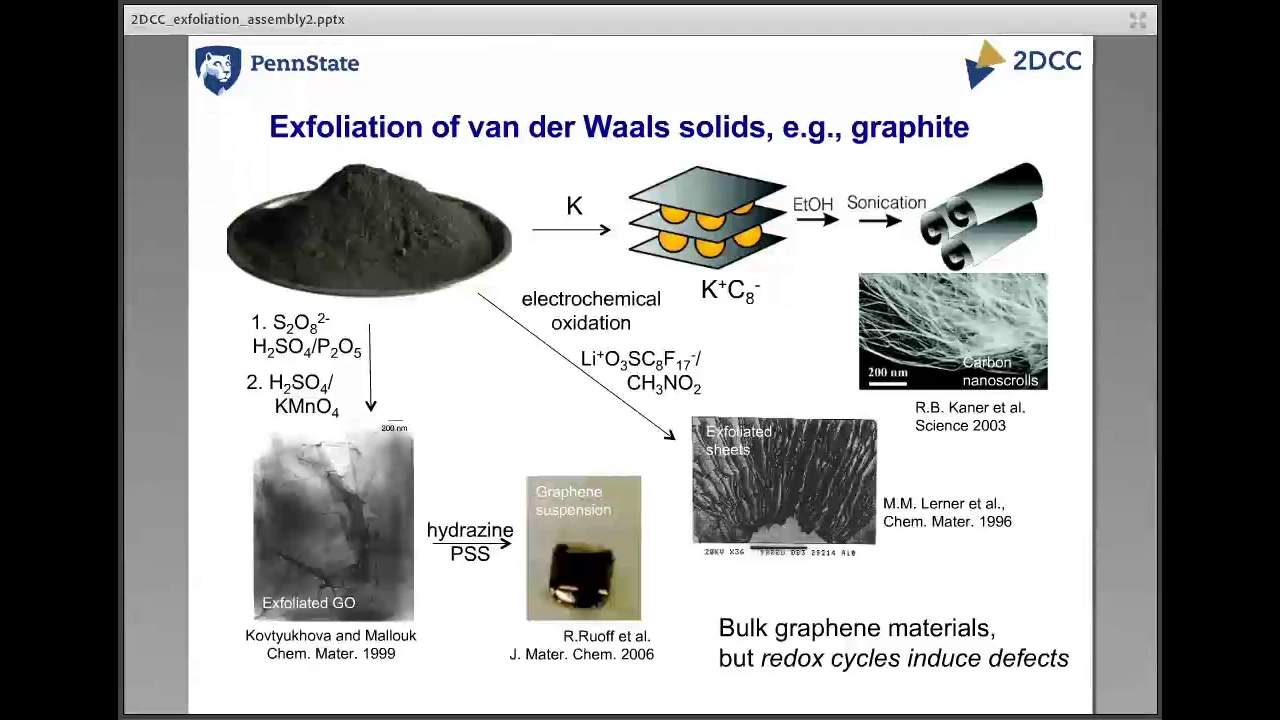

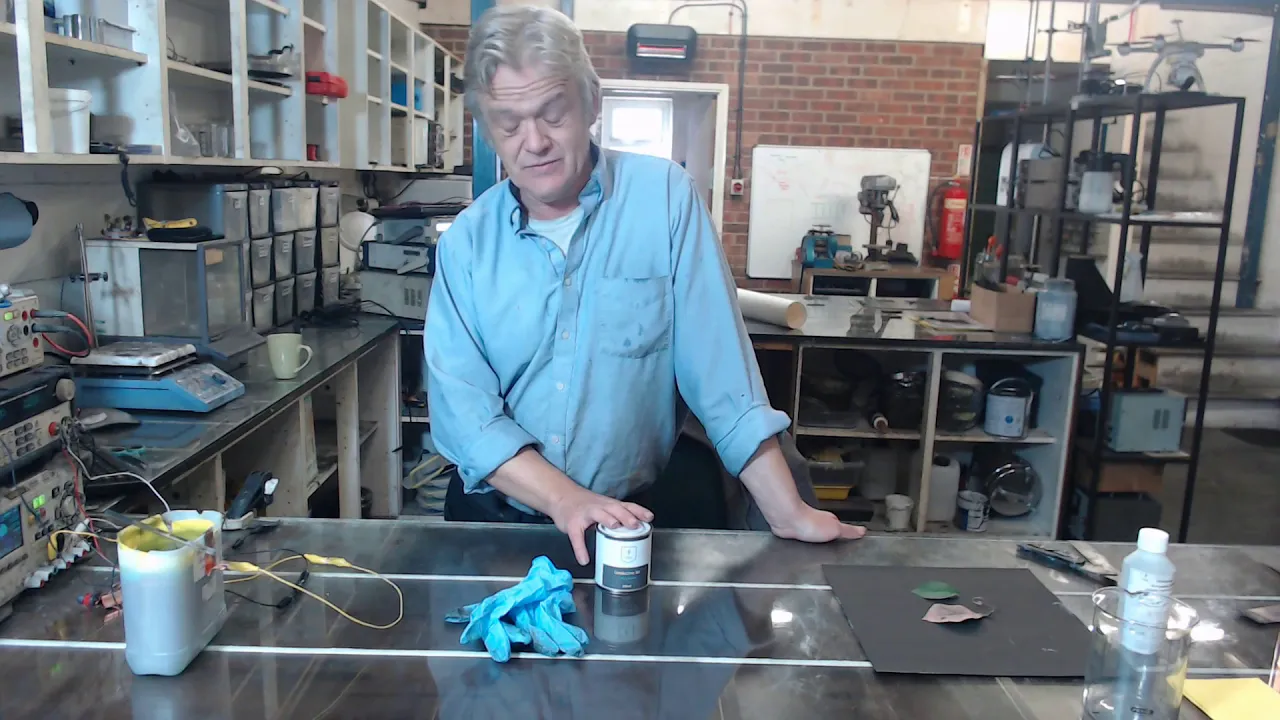





Graphene can be produced through electrochemical exfoliation by applying a low voltage (7-10V) across pencil lead electrodes immersed in a sodium bicarbonate solution with a small amount of table salt, causing the graphite layers to separate into fine particles; this method demonstrates that multi-layer graphene production is achievable using common household materials and simple laboratory equipment.
Graphene Exfoliation via Electrochemical Process with Pencil Leads
Added:The atomic structure of carbon allotropes, specifically the relationship between bulk graphite (found in pencil lead) and single-layer graphene.
Fundamental principles of electrochemistry, including electrolysis, the functions of anodes and cathodes, and electrical conductivity in liquids.
The role of electrolytes and ionic dissociation in aqueous solutions, specifically how common household salts like sodium bicarbonate and sodium chloride facilitate current flow.
The physical concept of Van der Waals forces, which hold the individual layers of graphite together and must be overcome during exfoliation.
Methods for characterization and quality analysis of synthesized graphene, such as Raman spectroscopy, Atomic Force Microscopy (AFM), and Scanning Electron Microscopy (SEM).
Advanced electrochemical exfoliation techniques utilizing organic solvents, ionic liquids, or surfactants to minimize structural defects and prevent restacking of graphene sheets.
Practical applications of exfoliated graphene, such as fabricating conductive inks, reinforcing polymer composites, or constructing electrodes for supercapacitors.
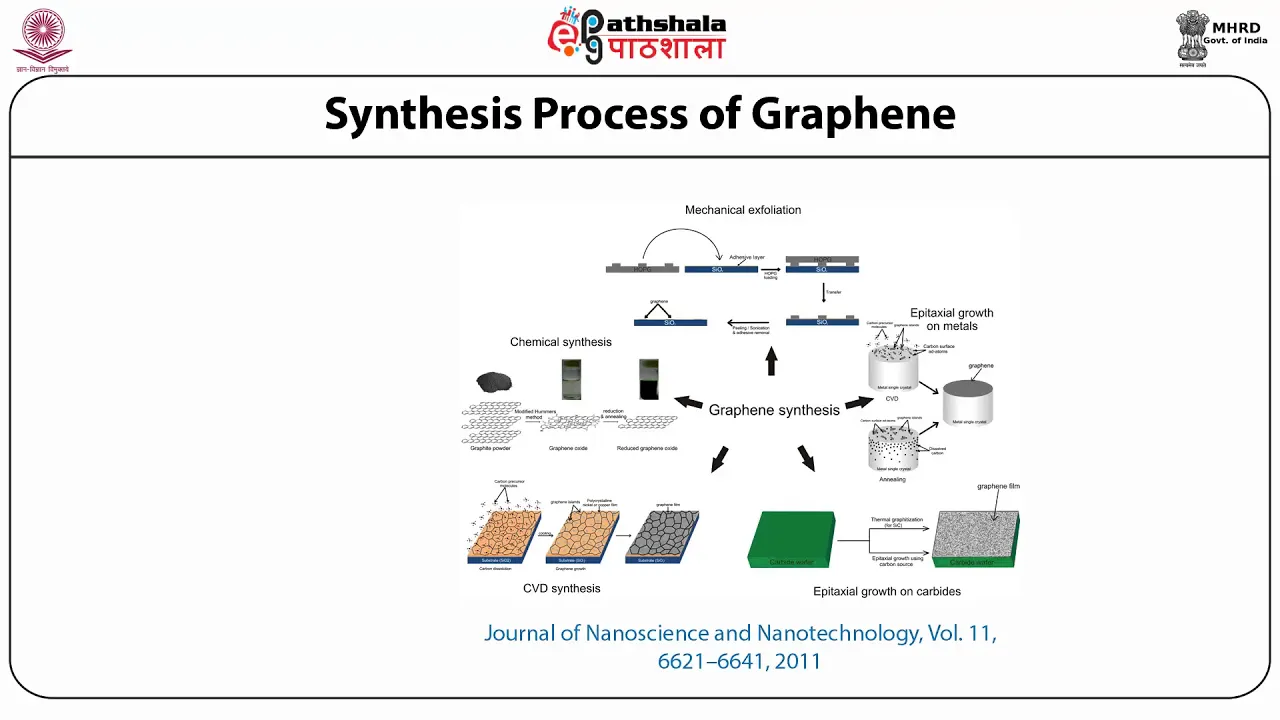
A comparative study of 'top-down' synthesis methods (like electrochemical exfoliation) versus 'bottom-up' methods (like Chemical Vapor Deposition/CVD) regarding cost, scale, and material quality.
3K views30likes6:50Original Release: 2021-01-25
hey there internet so i actually made a whole video on making this thing i i had made a solar pendulum in the past and uh it was really you know in my usual mo it was like clamps and nasty looking plywood and different things so i decided i was going to make a video about uh essentially uh you know the construction of the set of scrap parts and while it turned out okay there was a bunch of problems i mean the main problem is this cantilever design i don't think is the best way to make it adjustable but that's a long story but it got me on the side track which is i only had one of these big capacitors and i i watched a video by uh i think it's rec star org where he made a uh electrolytic capacitor with aluminum foil and sodium bicarbonate and i made one of those i was able i was able to get it to i think the the final result was something like three millifare ads which is actually pretty good for a homemade capacitor um unfortunately since i'm in seattle it's winter time it's raining it's overcast and the solar panel is not actually powering the device right now so my demonstration was it's it was been running all day but it just seemed to have petered out just now but anyway so i made that capacitor and then i was looking at uh there's a bunch of material on youtube about graphing capacitors and i was trying to figure out how to make graphene so i watched a bunch of videos on making graphene none of it really seemed accessible but i did see one maybe the most accessible one was by thought emporium and what he did was use some graphene foil and essentially electrochemical exfoliation of the graphene so i remembered that i had some pencil leads and i also did some research read a few papers and saw that somebody had actually done used sodium bicarbonate which you know i have here i don't have any nitric acid or uh yeah i don't really have the chemicals that most of the methods have but i did you know obviously i have baking soda so uh what i did is i set up a little experiment and it actually seems to be working so i'll take you over to that and you can just have a quick look and um i'll explain how it's set up and and maybe i'm producing some multi-layer graphene maybe i'm just making some fine particles of of graphite so this is my setup here um i've got uh i don't know about a tablespoon of sodium bicarbonate dissolved into this water here and just a just a pinch of uh table salt i tried it without the table salt and it didn't really seem to be doing anything but um interestingly when the re when the voltage gets about seven and a half to eight and a half volts the um the pencil lead starts to come apart into very very very fine pieces and the pencil light i'm using here is just some stuff i had in my tool box this is polymer lead which i have no idea what that is but i'm assuming there's some kind of a polymer binder for the graphite and it seems to be working pretty good now i'm going to pull this positive electrode out the negative electrode nothing is really happening to but if i focus on this you can see that it's it's it's just coming apart right there at the end and as i put that into the solution that's got about five point five point five volts and point one amps so if you look at the solution uh it's it's it's got a definite dark tint so here's i'm just using tap water so here's for comparison what the tap water looks like now i tested the connectivity the tap water and it's something like from from one side of this container to the other side it's something like two mega ohms resistance if i measure the resistance of the solution it's about 44k you can see i've got some big chunks now if the voltage is the voltage is too high it just blows these really big chunks off of here so those are obviously not going to be any good for for for graphing production but what i'm hopeful is is that as i dissolve this this down and i don't want to have the whole pencil light in there because actually i'll show you a big piece that blew off so here's a a really fine little piece that came off of there and uh you know there's really no way to hold on to it so i i think the weight it's it's it's a bit slow and painful but the way to do this is just to dip the very end in a little bit at a time now the less the the less of the pencil lead that's in the solution the higher the voltage gets so as it dissolves away the voltage actually goes up and it starts to blow apart quite a bit more quickly so we'll see i i'm gonna try to um get a whole second i've already got one pencil lead probably three quarters of a pencil that has been um exfoliated if that's what's actually happening i'm not sure i'm going to try to get the second one done and then i'm going to try to figure out a way to separate this i think i think i'm not really sure i might reduce it down with some heat and then try to centrifuge it out so again it's sodium bicarbonate with a little bit of table salt let me know if you think this actually is doing the exfoliation or not or something else is happening but uh the color looks either i have some some pretty darn small particles or i might actually be getting some some multi-layer graphene production in the solution let me know what you think in the comments thanks for watching
Up Next
12:17
The Evolution of Bipedalism: Why We Walk Upright
@SciShow
304.1K views•2025-10-20

12:54
Triumph of Orthodoxy Icon: Byzantine Art & History Explained
@BenCallan
2.1K views•2024-08-06

9:49
FastAPI vs Flask vs Django: Choosing the Right Python Web Framework
@TechWithTim
302.5K views•2024-05-26

1:42
Game of Thrones Opening Credits: A Cinematic Analysis
@gameofthrones
46.3M views•2011-04-18
Related Study Plans & Knowledge Roadmaps
Structured learning paths in General & Interdisciplinary Studies
general-studies
Elevator Engineering: History, Physics & Cities
01From Hoists to Safety Brakes: The Dawn of Vertical Lift
02Hydraulic vs. Traction: The Engineering Physics of Elevators
03Modern Speed, Safety, and Algorithms
+ 2 more learning modules
12h5 modules
Explore Roadmap
general-studies
Rubber: Material Science, History & Geopolitics
01Origins of Natural Rubber & Mesoamerican History
02The Chemistry of Natural Rubber & Vulcanization
03The Geopolitics of the Rubber Boom & Colonization
+ 2 more learning modules
12h5 modules
Explore Roadmap
general-studies
Containerization: Evolution, Logistics & Trade
01Ancient Trade & Bulk Cargo: Amphorae to Barrels
02The Industrial Revolution & Cardboard Packaging
03The Containerization Revolution: Malcom McLean
+ 2 more learning modules
12h5 modules
Explore Roadmap
general-studies
Textile Tech: Evolution, Labor & Global Impact
01Pre-Industrial Textiles: Handloom & Cottage Industry
02Mechanization: The Spinning Jenny to the Power Loom
03The Factory System & Global Labor Transformation
+ 2 more learning modules
10h5 modules
Explore Roadmap