



![[알릴레오 북's 16회] 자유의지냐? 운명이냐? / 운명의 과학 - 한나 크리츨로우](https://i.ytimg.com/vi/hTYZF_6xt_M/maxresdefault.jpg)



![[넛지 파이널에디션 / 리처드 탈러, 캐스 선스타인] 행동경제학 고전 / 넛지 개념, 뜻 / 넛지 예, 유용성 / 선택설계 / 슬러지](https://i.ytimg.com/vi_webp/mT4YipwWQNM/maxresdefault.webp)














![Miranda Bogen - Making Sense of the AI Auditing Ecosystem [Technical AI Policy]](https://i.ytimg.com/vi_webp/bTwsvANw1oA/maxresdefault.webp)






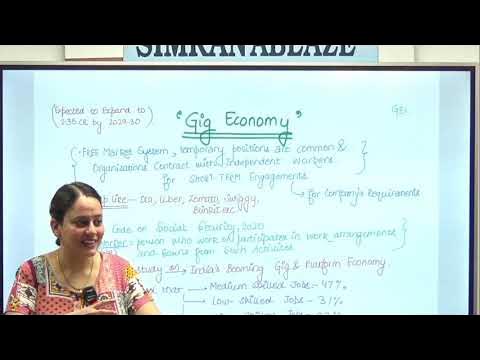
Gig economy platforms like Uber use psychological manipulation techniques through their apps, including artificial goal-setting (e.g., displaying messages like 'You're just $15 from your $330 goal'), gamification with badges and icons, and binge behavior triggers (e.g., notifying drivers about upcoming fares before they finish their current one), which exploit human psychological tendencies to work toward goals and continue activities, thereby maximizing driver productivity for the company's benefit.
Uber's Gig Economy: Psychological Manipulation of Drivers
Added:Understanding of the 'Gig Economy' business model, specifically the distinction between independent contractors and traditional employees.
Fundamental concepts in behavioral economics, such as nudge theory, gamification, and variable reinforcement schedules.
The concept of 'Algorithmic Management'—how software and algorithms are used to monitor, direct, and evaluate workforce behavior.
Basic sociological and economic definitions of worker autonomy, agency, and labor control.
Analysis of regulatory and legal responses to platform labor, such as worker classification debates and the EU Platform Work Directive.
Study of digital labor resistance, collective bargaining in the algorithmic era, and the rise of platform cooperativism.
The framework of Algorithmic Auditing and how to design policy or technical audits to detect and mitigate predatory system designs.
Comparative analysis of algorithmic control mechanisms in other sectors, such as warehouse logistics (e.g., Amazon) or crowdwork (e.g., Mechanical Turk).
24.3K views719likes7:52Original Release: 2017-04-08
If you're an Uber driver, you're being manipulated like a marionette by big data and big algorithms. All for the profit of the company to the detriment of you, the driver. I'm Scott with Right Angle and my co-host Bill Whittle and Steven Green. Brought to you by the members at bill whittle.com. Uh men, this is the new economy now, the gig economy. Everybody's got a side hustle and Uber is one of the most well-known, including uh Lyft and others like it.
Amazon's Mechanical Turk. a lot of people out there who are making extra income or trying to make a full-time go of it in these businesses. And now the story comes out in the New York Times that Uber is using um psychology, a psychological manipulation through the Uber app to basically force drivers to do things that are against their best interest. For example, they know that human beings are goal driven. And so a little thing will pop up and say, "Hey, I see you're just $15 from your $330 goal," which is not a goal you had, but they just made it up for you. Or u they have this little gified stuff where because they're not you're not really making as much money as you'd like, you can get little badges and icons and little things like that on the app that supposed to get you excited and keep you going. They also know the human beings tend to binge. And so before you're done driving your current fair, a little thing will pop up and say, "Hey, 2 minutes from you there's the next fair."
So, it's like Netflix where they're trying to get you to sort of chain smoke Uber passengers and keep moving you through that. So, all of this uh draws concern from some professors and some experts at the uh at the New York Times who are basically saying in the new gig economy, is it possible that big data will be used as a tool to manipulate the little guy? Bill Whittle, I know you've said that you occasionally take Uber um when it's utterly impossible for you to drive your Camaro, but how do you feel about this idea that these people are being controlled from above, so to speak, and being psychologically manipulated?
Well, first of all, if you um if you cannot resist something that says uh you're, you know, if you just put in another 10 hours of your time, you'll win the little silver medallion, you're probably not enough of an adult to to make it in the world. I I should have had this ready because I love it so much. I'm I'm getting to it. But in any event, Scotty, corporations do do Corporations do this all the time. People do this all the time. Everybody does this all the time. You can't very well fault Uber for trying to um accomplish whatever it needs to in order to get maximum uh efficiency for the company. That's their job. That's what you expect them to do. And if the driver feels like um this is too much intimidation and he wanted to go home but the little the little thing said uh 330 you know you're almost there and and he went and then then probably not you're ready to have your own gig type job. Reason I was looking though is because um you're talking about uh you know the the Amazon and how all of this stuff is connected together and and all of this binging and so on. There's a tweet here I just love so much. It's from a guy named Justin Shaines and it says, "Amazon thinks my recent humidifier purchase was merely the inaugural move in a newfound hobby of humid fire collecting." And uh it's so true. And so the reason I bring that up is this. The what he's referring to, and if you haven't had this experience, it's a bit shocking. You buy something online, you buy a lamp, let's say from Amazon, and then everywhere you go, InstaPun, all around the web, everywhere you go, there's ads for lamps and it's manipulation as well. And it's a little alarming, but it's this is the digital age. This is sales. So, I don't have any problem with this at all. None whatsoever. Steve, this can get even more intense because they'll be able to uh they're already able to monitor uh for example how much the driver u uses his brakes, how often he accelerates rapidly and things like that. And they could actually send a message to you, the driver, Steven Green, that basically says, "Hey, um you know, it looks like you've been a little heavy on the pedal lately. Your last three riders have reported that they felt unsafe in your presence. Why don't you why don't you head on home?" And in addition to that kind of manipulation, there is the manipulation that Bill pointed out where it is they want the drivers to all be in an area where there are likely to be a lot of fairs. But the more drivers get there, the less work there is for each individual. Also, Uber is motivated to to keep a fair surge from happening because if there aren't enough drivers in the area, the fairs actually go up and it's not as profitable for individual drivers or for or for Uber overall because people then don't ride because the fairs have gone too high. So anyway, all of this stuff's going on in the background in a way that you, the driver, aren't even aware of it, Steve.
And you are just being you're a puppet on a string. Is that okay with you?
Well, let me tell you about puppets on strings. This reminds me of a bit of family lore. Apparently, the story is true. I'm too young to remember it, but my mom and I were having dinner over at her folks, and I was probably about three, maybe four years old. And my favorite vegetables back then, and still one of my favorites now, are lima beans.
And so, apparently, I was saving them for last. I wasn't eating my limema beans. My grandfather looks at my plate and says, "Eat your limema beans." I look at him and I say, "Why?" And he says, "Because I told you to." At which point my little three-year-old hackles got up. And apparently I made this big show of not eating my limema beans. Like hovering the fork over them and then going for the pork chop, right? Uh and my grandfather then tells me I'm not going to leave the table until I've eaten my limema beans. And I keep not eating my limema beans. 20 minutes later, my grandmother leaves the table just in tears as I'm sitting there not eating. Another half hour after that, my mom leaves the table in tears. Can't believe this little three-year-old boy is sitting there not eating his limema beans. And 20, 30 minutes after that, my grandfather finally storms away from the table in frustration. At which point, I picked my fort back up and ate my limema beans. Now, if you're the kind of guy who's going to bristle at this stuff, guess what? you're going to get the uh the the notice from uh that from Uber.
Oh, you're only $15 away from your goal.
Oh, shut up. I set my own goals and then you're going to drive home. But if you're the kind of driver who uh who gets that kind of message and thinks, gosh, I can make another 1530 bucks before I go home, treat my family to pizza, then you're going to do that. And it's up to the individual. And this is this is this is part of this, I think, is hardwired into our personality. The other part of it is uh is learn behavior. But whatever it is, these aren't mind control rays that you need to put on the tin foil to prevent from soaking into your brain. Do what you want with the messages. You're you'll be fine. You know, you don't have to make extra money. You can make extra money.
You can treat your family to Limema beans. There you go. I love LMA beans.
Little butter, little salt. You you don't actually have to have an app to tell you that most companies are trying to get their workers to do as much as possible by and pay them as little as possible. and most workers are trying to get paid as much as possible by doing as little as possible. That's an age-old sort of covenant that we have with between employers and employees. The only difference here is really that this in a sense is being done uh on on one level by some impersonal forces.
Obviously, humans create the algorithms and and set in motion the mechanisms, but for some reason the offense is that we are being manipulated by big data, so to speak. Oddly enough, I kind of prefer this because when big data is manipulating me, I don't have a personal problem with anybody. But if you're going to work like most people are and you've got like Big Joe manipulating you or Big Maryanne manipulating you, that hurts. I I think it's okay to have data do it to me. For Bill Whittle, Steven Green, and Scott, this has been your right angle brought to you by the members at billwittle.com.
Up Next

12:39
The Precariat: Understanding a New Dangerous Class | Guy Standing
@TEDx
141.7K views•2017-02-16

12:54
Triumph of Orthodoxy Icon: Byzantine Art & History Explained
@BenCallan
2.1K views•2024-08-06

9:49
FastAPI vs Flask vs Django: Choosing the Right Python Web Framework
@TechWithTim
302.5K views•2024-05-26

1:42
Game of Thrones Opening Credits: A Cinematic Analysis
@gameofthrones
46.3M views•2011-04-18
Related Study Plans & Knowledge Roadmaps
Structured learning paths in General & Interdisciplinary Studies
general-studies
Elevator Engineering: History, Physics & Cities
01From Hoists to Safety Brakes: The Dawn of Vertical Lift
02Hydraulic vs. Traction: The Engineering Physics of Elevators
03Modern Speed, Safety, and Algorithms
+ 2 more learning modules
12h5 modules
Explore Roadmap
general-studies
Rubber: Material Science, History & Geopolitics
01Origins of Natural Rubber & Mesoamerican History
02The Chemistry of Natural Rubber & Vulcanization
03The Geopolitics of the Rubber Boom & Colonization
+ 2 more learning modules
12h5 modules
Explore Roadmap
general-studies
Containerization: Evolution, Logistics & Trade
01Ancient Trade & Bulk Cargo: Amphorae to Barrels
02The Industrial Revolution & Cardboard Packaging
03The Containerization Revolution: Malcom McLean
+ 2 more learning modules
12h5 modules
Explore Roadmap
general-studies
Textile Tech: Evolution, Labor & Global Impact
01Pre-Industrial Textiles: Handloom & Cottage Industry
02Mechanization: The Spinning Jenny to the Power Loom
03The Factory System & Global Labor Transformation
+ 2 more learning modules
10h5 modules
Explore Roadmap