









 공무원 특화 모강_행정법 제4강_3회(1~20번)](https://i.ytimg.com/vi/P05FvF9FpMU/maxresdefault.jpg)

![[공무원 행정법] 2021 써니행정법 기출지문 OX(제12강 행정행위의 기초개념) - 박준철 교수](https://i.ytimg.com/vi/bCGm3bN9p8k/maxresdefault.jpg)









In NLRB v. Bell Aerospace (1974), the U.S. Supreme Court held that federal agencies possess inherent discretion to establish broad, rule-like policies through administrative adjudication rather than formal notice-and-comment rulemaking procedures, provided there is no demonstrable detrimental reliance by parties on prior agency positions; this decision affirmed that agencies function as specialized courts capable of announcing new legal principles in individual cases, with the choice between adjudication and rulemaking lying within the agency's procedural discretion.
NLRB v. Bell Aerospace: Administrative Law Case Brief
Added:The distinction between rulemaking (quasi-legislative action) and adjudication (quasi-judicial action) under the Administrative Procedure Act (APA).
The role and regulatory authority of the National Labor Relations Board (NLRB) in overseeing collective bargaining and labor relations.
The precedent established in SEC v. Chenery Corp. (Chenery II) regarding an administrative agency's discretion to formulate policy.
The concept of judicial review of agency decisions and the level of deference courts typically grant to administrative agencies.
The limits of agency discretion, specifically exploring when retroactive policymaking through adjudication constitutes an abuse of discretion.
The labor law implications of the 'managerial employee' exclusion from the protections of the National Labor Relations Act (NLRA).
A comparative study of NLRB v. Wyman-Gordon to understand the constitutional and procedural boundaries of administrative policy formulation.
Modern debates regarding agency reliance on adjudication versus formal rulemaking in terms of public participation and democratic accountability.
1.5K views17likes11:36Original Release: 2022-04-15
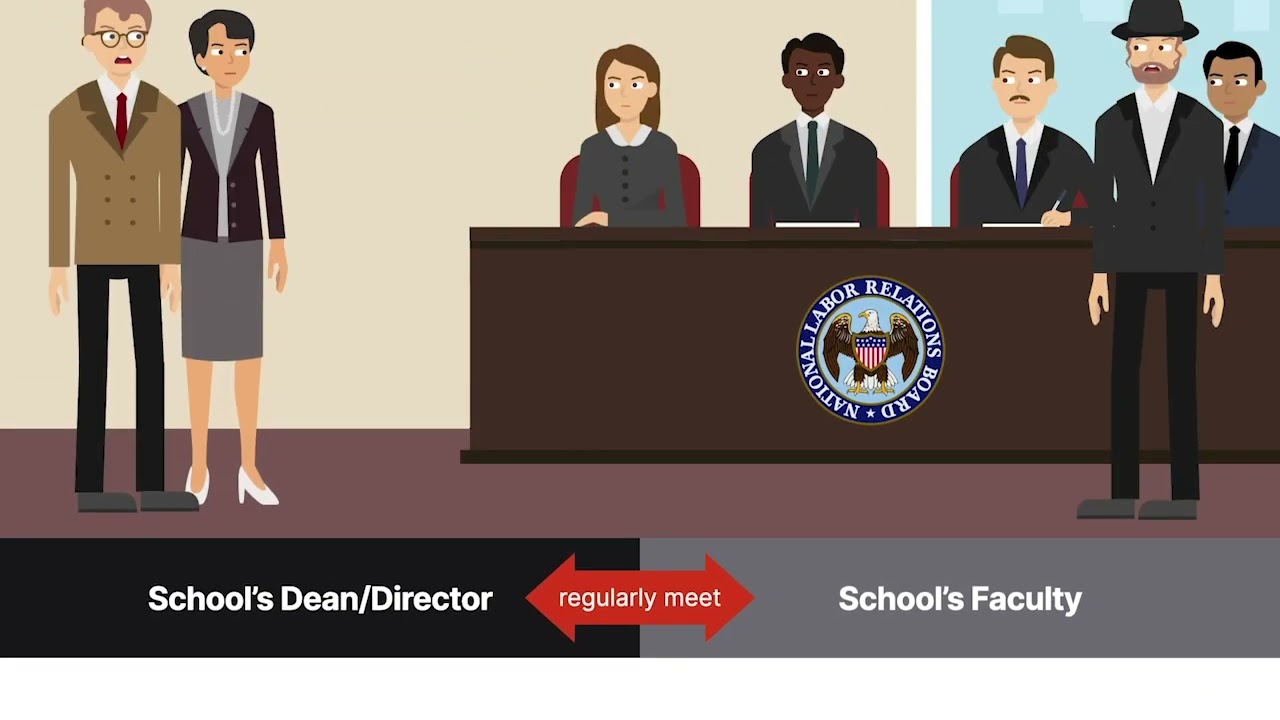
i'm drew stevenson and this is a lecture about the case nlrb or national labor relations board versus bell aerospace this is a 1974 decision from the united states supreme court about rulemaking through adjudication now for my students this is an important note case in my administrative law case book that i use in my course and it's actually one of the main cases in the case book i use for statutory interpretation and regulation or leg rig so let's look at what happens in this case so the question in this case the legal question that the opinions are going to be focused on is whether these buyers at bell aerospace facility had the right to unionize and so these are purchasers or procurement managers who order equipment and supplies or raw materials for this manufacturing plant or parts that they use component parts to make airplanes and airplane pieces and under the national labor relations act that's our operative statute in this case the answer to this question depended on whether the purchasers were managerial employees so under the act managerial employees are not allowed to unionize but other employees usually can and there's a variety of policy reasons for this but the question is whether they are managers or not and in this case at the alj or administrative law judge or stage through an agency adjudication the nlrb had concluded that the bel aerospace buyers weren't not managerial employees so that meant that they could unionize this note marked a change in the agency's policy position on this particular point or issue now just to clarify why the agency would have been of two minds about this these purchasers are office workers right so they you know work at a desk and um make phone calls look at spreadsheets and things like that and they're not the manual laborers and the factory they're not running machinery or driving forklifts or things like that and so their work environment might make them look like they're working with the management team a lot so it it's not hard to see why some people would have called them um managers or managerial employees before this but the nlrb has a way of defining that that relates to some things like the way your hours are compensated and whether you supervise other employees and so forth so let's keep going this is really about a procedural question not about the substance of the case and so the second circuit court of appeals had held that although the national labor relations board could because of its enabling statute determined that certain types of buyers that companies were not managerial employees it could do so only by invoking its rulemaking procedures not via an agency adjudication some case books like the one i use for statutory interpretation include excerpts from both the circuit court opinion and the supreme court opinion so the main issue here on appeal was not whether the nlrb was correct or incorrect and the decision that these buyers were not managerial employees the concern here is really not whether they made an incorrect determination but whether they did it the right way in other words the question here is not what the agency did or decided but how they did it the um mlrb had reached its conclusion that these people were not managerial employees um through this adjudication and that meant that they could form their own union and force the employer to engage in collective bargaining and they had done the nlrb had done the soon adjudication as i said rather than through a rulemaking now bell aerospace is the employer here and they didn't want this particular group of workers to unionize it was the workers who had petitioned the national labor relations board for the right to come together and form a union so that they could bargain as a group over working conditions and benefits and salaries and things like that with the managers so the bell aerospace argued that if the nlrb wanted to adopt a position like this on whether these types of workers are managerial they should have used the administrative procedure act rule-making procedures like notice comment rulemaking they should have published a proposed rule in the federal register and had a public comment period and then proposed a final rule and so on in other words they argued that the nlrb could not simply declare such a broad general policy in the context of adjudicating an individual union petition and um so the nlrb argued that this was exactly what they're allowed to do under the supreme court's precedent like the generate ii case that um and the main takeaway from bell aerospace is that the supreme court reversed the second circuit and reaffirmed its own generation position which remember was a much older case from the um 1940s that agencies can choose to make broad rule-like policy decisions in the context of adjudication rather than in a rule-making and if you think about it this is what courts do right so when the supreme court decides to settle a question of statutory interpretation or constitutional law they it becomes the law their decision becomes the law and they announce it in that case and the agency was essentially functioning like a specialized court in this sense not they're not article 3 judges but they wanted to make decisions on a case-by-case basis but one when they announced what the rule was it was binding in that case and would be uh presumably binding going forward now the court the supreme court noted that bell airspace hadn't shown any detrimental reliance on the agency's previous position against buyers being managerial remember one of the kind of side issues in this case is that the agency had previously said that these buyers are managers and if you walked around the workplace it might look like they're part of the management team they're they they work in the office they interact with the managers all day go to meetings and so forth they're not working on the factory floor or in the warehouse or anything like that and then the agency changed its mind um and so bell aerospace was saying that's not fair that's a big change and what if people had kind of been counting on the agency's previous position if they are going to make the change they at least shouldn't do it in an adjudication over our workers wanting to unionize they should announce that they're changing through notice and comment rulemaking and the problem was that the the um the employer bell really didn't put any evidence in or brief the issue of how this hurt them i like how they in what way they had relied to their own detriment on the agency's previous position they were just saying that the change seemed like a big change that could have caught people by surprise but they couldn't show that the surprise had hurt anyone um the court also noted near the end of the its majority opinion that this is not an enforcement action right so um bell faced no fines or penalties from the nlrb this is the only consequence of the court's decision here in reality is that a union can form for a few workers it's not even their whole workforce it's a certain type of worker the purchasers or buyers that the company could engage in collective bargaining and so maybe it would be harmless maybe the union would never get off the ground or and maybe the uh the things that they negotiated for wouldn't be that difficult for uh the management so it's not really clear that what harm bel aerospace is alleging here except the sort of theoretical harm that some of their workers are going to have permission to form a union at this point if they want i pulled out a quote from the case that i thought that i wanted to highlight for you because the court near the end of the opinion there's a paragraph where they sort of discuss the pros and cons of rulemaking versus adjudication and they can see that there are advantages with traditional notice and comment rule making so the court says it is true of course that rulemaking would provide the board with a forum for soliciting the informed views of those affected in the industry and labor before embarking on a new course but surely the board has discretion to decide that the adjudicative procedures in the case may also produce the relevant information necessary to mature for mature and fair consideration of the issues and those most immediately affected that's the buyers in the company um in the particular case are accorded a full opportunity to be heard before the board makes its determination and so what the court is saying here is there's a lot of benefits of doing notice and comment rule making having a public comment period it's true that the agency then can make a more informed decision because they can hear from experts well-informed people from both sides right they um as it said the uh the managers and the the laborers can can submit public comments could go to hearings um if there's public hearings and so forth and then the agency could make a really well informed decision the court's not denying that there's advantages to that but they are saying that here the um they weren't just flying blind or making a decision in the dark because the parties themselves had that opportunity at their hearing to submit articles and arguments and evidence and all sorts of stuff to convince the administrative law judge that their side was correct on this particular issue so where does this leave us well um again as we've seen in another case agencies like the nlrb are permitted to announce new principles or policy approaches in an individual adjudicative proceeding and the choice between rulemaking and adjudication at the outset or initially lies within the agency's discretion and that concludes our lecture about nlrb versus bell aerospace
Up Next
17:59
Mock v. Garland: ATF Pistol Brace Ruling & Second Amendment
@AttyTomGrieve
116.7K views•2023-10-03

4:27
US Secondary Sanctions Impact on EU Businesses and Blocking Legislation
@Bureauvandijk
1.6K views•2019-03-20
21:49
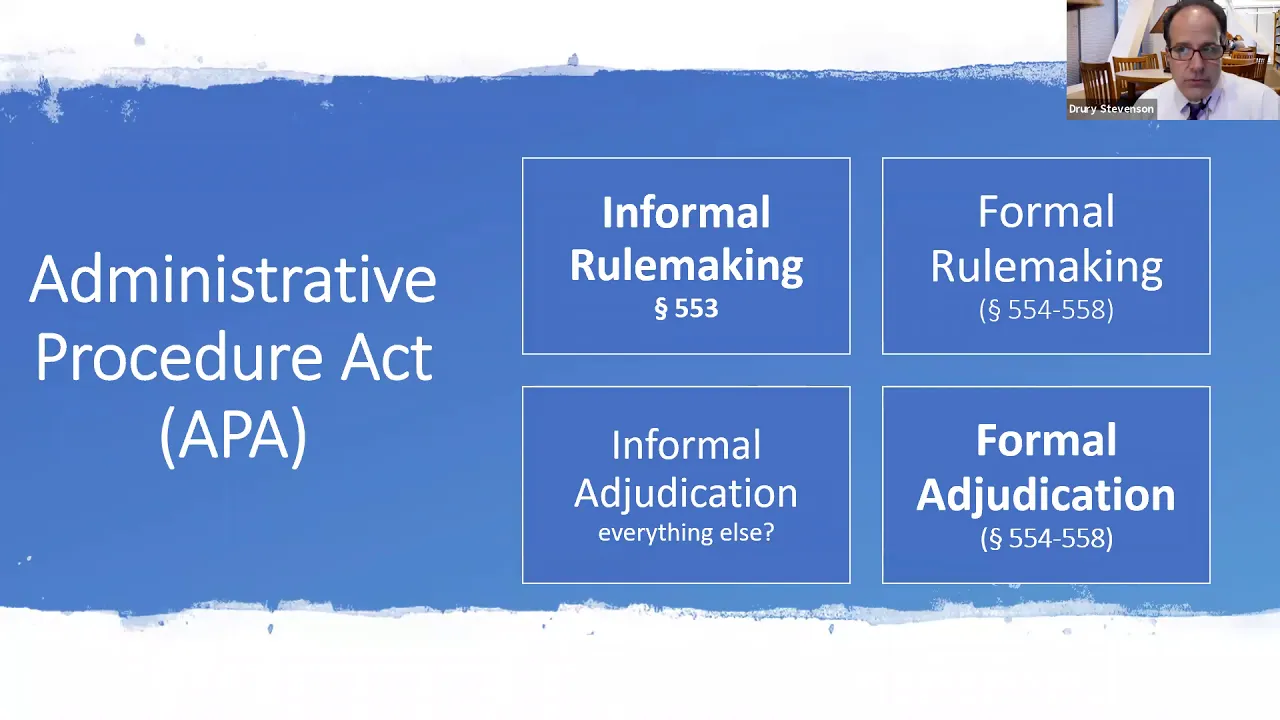
Administrative Procedure Act: Overview of Rulemaking and Adjudication
@professorstevenson
14.1K views•2020-04-09

24:42
Police Interrogation Tactics: False Confessions & Legal Reform
@LastWeekTonight
7M views•2022-04-18
Related Study Plans & Knowledge Roadmaps
Structured learning paths in Law
law
Self-Defense Law: Imminence & Castle Doctrine
01Foundations of Self-Defense Law
02Imminent Threat & Reasonable Belief
03The Principle of Proportionality
+ 3 more learning modules
12h6 modules
Explore Roadmap
law
Defamation Law: First Amendment & Actual Malice
01Introduction to civil torts and the First Amendment
02Elements of Defamation: Libel and Slander
03Public Figures vs. Private Individuals
+ 2 more learning modules
8h5 modules
Explore Roadmap
law
Hearsay Rule: Trial Evidence & Exceptions
01Introduction to Trial Evidence & Courtroom Basics
02Demystifying Hearsay: The Core Definition
03Non-Hearsay: Exclusions Under FRE 801(d)
+ 3 more learning modules
14h6 modules
Explore Roadmap
law
Medical Malpractice: Law, Liability & Care
01Foundations of Tort Law and Civil Liability
02The Four Elements of Medical Malpractice
03Defining and Proving the Standard of Care
+ 2 more learning modules
12h5 modules
Explore Roadmap