



















Cinematography, the work of the camera in filmmaking, consists of four main elements: camera work (including four points of view—objective, subjective, indirect subjective, and director's interpretive), lenses and filters (such as wide-angle, telephoto, fisheye, and zoom lenses), film stock (smooth grain vs. rough grain), and special visual effects. Camera movements include panning, tilting, tracking shots, boom shots, crane shots, and aerial shots. Shot distances range from extreme long shots to extreme close-ups, with depth of field generally increasing as shot scale decreases. The transition from silent to sound cinema affected soft focus techniques, and the 1950s saw Hollywood adopt widescreen formats (1.85:1 to 2.55:1) to compete with television, replacing the original Academy ratio (1.33:1).
Cinematography Basics: Camera Work, Lenses, and Visual Effects
Added:Hi students. Um, Mr. Alberhaski here.
I'm going to be honest. I'm have not been able to get a hold of uh, Professor Pontificate. Um, I'm not sure if he's trapped inside the life of the mind or if he simply is not returning my phone calls. I I don't know. But, um, I'm going to take over the lecture for today. It's, uh, the topic is cinematography. So, last week we talked about misan sen and the elements of that. This week we're going to talk about the elements of cinematography.
Um, think if you will u again on mison sen. If you if you pause a film and analyze the image that you see paused up on the screen, what you're doing is uh analyzing the misen everything that's been put into the frame. Um, now think of cinematography as what the camera does. And so the focus of this week uh is on cinematography or the work of the camera. We're going to categorize cinematography into four main elements.
The camera work, lenses and filters, film stock, and then special visual effects. And I'm going to talk sort of very briefly about each of these. First off is the work of the camera. And we can talk about four different cinematic points of view. Um, one of the textbooks talks about these four different points of view um in some length, but I'm going to talk briefly about each of these. the objective point of view, a subjective point of view, the indirect subjective point of view, and the director's interpretive point of view. So, in the objective point of view, what we have is the camera sort of acting like a window that looks inside uh at the the characters lives. It just sort of follows them around objectively.
And certainly any film is going to have a number of objective point of view shots. They could be establishing shots that kind of start the film off by introducing us to the setting. And so typically the setting is going to be shown in objective points of view. Now a filmmaker may elect to kind of tell the entire story through simply objective points of view. And this would be less of a Hollywood tradition and more of a tradition from the the art cinema. So we see in this example here um this is a shot from one of Bellator he's a Hungarian director um one of his films uh Satan's Tango and it it's a very long film that kind of very slowly follows around these characters from a very objective point of view and so we see this shot from behind the characters and the camera just kind of follows them uh from a distance as they walk down the street and this this would be a technique that would typically would be more in in alignment with uh the art cinema rather than the Hollywood cinema.
So it's sort of akin to to breian estrangement which we talked about in the the misonen lecture where there's sort of a distancing between the viewer and the characters and the sort of gulf that's created allows the viewer to analyze and critically think about its characters and how they relate to their setting as opposed to in the Hollywood tradition which is a more emotional type of of film experience where the viewer kind of gets drawn into the world and gets immersed if you will into the the story's ver very similitude so that we kind of feel and empathi empathize with characters rather than being distanced from them and studying them or analyzing them. All right. So the objective point of view shots can be from a variety of reasons. It could be an aesthetic approach to the film story or conversely it could be simply establishing shots that get the viewer accustomed to the setting of a film. Uh the subjective point of view shot is an estimation of an eyline uh point of view from a particular character. And so it might actually be the ey line or it might be a very close approximation of the ey line. In classical Hollywood cinema, uh, filmmakers tended to opt for the subjective point of view shot that was sort of an overthe-shoulder shot. So you see in this example here on screen, right, we have the character, we see the back of his head, we see over his shoulder, and then um, the focal point of the shot is what that character is looking at. So the subjective point of view shot puts us in a close approximation of an eyline shot of a character. So we sort of see what it is that they're seeing. Um and it's useful for identification. So we can identify with characters whom we see uh what they're seeing. It's sort of like the old adage of walking uh in their shoes.
We get to to see what they're seeing and we therefore identify with them. Uh the indirect subjective point of view shot is not from a character's eyline but it is indirectively subjective um because we start to identify with a character because of it. So the the close-up is a classic example and Hollywood is has always sort of used close-ups uh especially reserved for their star players. And what the close-up does is it allows the viewer to empathize with whatever emotion the the character is doing. And so here we have a example from the the classic scene in uh Casablanca. And of course um the use of this close-up here is intended to pass along to the viewer the emotion that the character is feeling. And it helps secure that identification between the character and the viewer. All right. The fourth type uh of of shot is a director's interpretive point of view shot. And in this shot, um, you know, there's no one really clear way to to categorize it as opposed to the subjective or objective point of view.
Um, but that's to say that if if the shot you have is neither objective, subjective, or indirectly subjective, then probably what you have on your hands is a director's interpretive point of view shot. And what that means is it's some sort of specialized information that the director is giving you through this shot. Um, example here is an image from Psycho, Alfred Cox's film. And um, in this particular scene, we have Norman Bates who's having a conversation with Marian Crane in the parlor over some peanut butter sandwiches. And we have kind of a traditional shot, reverse shot that shows uh, rough subjective point of view shots between the two characters. And then all of a sudden, Hitchcock kind of reframes this dialogue scene and gives us an unconventional shot. And this is a director's interpretive shot. It's a low angle shot. We see Norman Bates is asymmetrically framed. Uh, and we've got in the background a couple of stuffed birds in a couple of paintings on the wall. And what this shot does is it gives us some key information about Norman's character. Just so happens that uh Marion and he are talking about his mother. And we see in this shot that the that Hitchcock is giving us all sorts of insight into things that will play out later in the film. So, it's a form of of visual foreshadowing. Um, and the director gives us specialized pieces of information through items that he's placed uh in the misan scent. So, the stuffed birds, they're birds of prey.
They are in poses that are ready to strike at a victim. Um we see in the paintings on the wall uh semi- nudes of women who are being assaulted by men. Uh and this this shot gives us uh some key information that uh will take place later in the film. All right. Other terms other terms the ideological apparatus refers to the the notion that there's a sort of basic assumption of an invisible observer. And film theorists have done a lot um about the camera being sort of a surrogate of the viewer.
This sort of invisible observer who's ideally situated in space and time kind of moves through freely through the film's narrative. Um and the eyele shots are sort of this ideological assumption because we only sort of notice shots when they're not at eye level. So it's the high angle shots, the low angle shots, the caned angle shots that will strike a viewer. um as interesting nor different as we proceed through the film. Um and it's the eye level shots that we just sort of take for granted.
It's assumed that shots should be at an eye level and when they're not then we try to make sense out of what what it is that we're seeing. Um the high angle shot is a shot where the camera's positioned above the subject and so it looks down on the subject. The low angle shots the reverse of that. the camera is positioned lower than the subject. So, the camera looks up at the subject. The caned or the Dutch angle is one that's a scance. So, it it's simply tilted on its side one way or the other. And then the overhead shot is also known as the extreme high angle or a bird's eye shot. And that's taken at some great distance from the subject. So we see in this example the high angle shot the camera is looking down at the subject and the character appears very small in the frame. Um by contrast the low angle shot is the camera's position lower than the the subject and so the subject appears very large in the frame. See this is a shot from Citizen Canain. um was one of the first films where they had to construct ceilings in a studio um because of these repeated use of low angles allowed the the ceiling to be visible. A caned or Dutch angle again is one where the uh the the camera's tilted to one side. If you notice the pictures on the wall in this shot, um it looks as if we're having some sort of structural problem or some sort of earthquake is going on.
Um, and then of course Can't Resist Alfred Hitchcock's film Birds for our example of a bird's eye point of view.
This shot that's at a great distance removed from the action. And then of course in this particular shot we we see birds kind of slowly fly into the frame.
So clever way of of showing a bird's eye point of view with uh literally having birds. All right, other terms. A shot refers to a strip of film that's produced by a single uninterrupted running of the camera. So it's just a continuous running uh of the camera is referred to as a shot. Um and of course what we see are 24 frames per second which gives the illusion to the human eye of continuous movement. So what you actually see is not continuous movement but still frames that are run through the camera at a certain rate that gives uh the illusion of continuous movement.
Now when we overcrank or under crank the camera that results in either slow motion for overc cranking or fast motion for under cranking. Uh time-lapse involves a very small number of shots over a long period of time. Um think of like your nature videos. Those are typically done in uh time-lapse photography. Um panning and tilting are movements of the camera. Panning is when the camera moves in a line of sight on a horizontal plane. So it moves in a left to right or right to left fashion. It's similar to the way the the human head would say no. Um now a switch pan occurs when the camera moves so quickly left to right or right to left that it produces a a blurry image for uh a moment. The tilting is when the camera moves on a a line of sight in a vertical plane. So it moves up or down. And so panning and tilting are both uh ways in which the camera can move that approximate the way in which the human head moves.
Uh, a tracking shot involves mounting on a cam camera on a dolly which is a piece of specialized film equipment that allows the camera to move around and creates sort of a a fluid and very controlled motion as opposed to the handheld camera which um can also be called the queasy cam because it's it's jittery and it moves around and kind of makes us nauseous if we watch it. So, uh, tracking shots, dolly shots were designed to to have a more fluid movement that, uh, is sort of more much more graceful than the handheld camera.
Now, the invention of the steady cam, which was first used in the the 1970s in the film Rocky, was a stabilizing device that helped um filmmakers use handheld cameras, but also give them more of a a fluid, controlled motion. So, it was kind of combining the best of both worlds is that you get the freedom of the handheld camera, freedom of movement, but yet you get a more fluid motion um by the use of the steady cam. Boom shots and crane shots.
Sometimes textbooks will say these are are the same thing. Um the difference between a boom shot and a crane shot is a boom shot uh you know, they're both mounted on some sort of apparatus is going to move the camera up into the air. Crane shots can move the camera higher than a boom shot. So if you see, you know, a really extreme movement of the camera to a high angle, that would be uh a crane shot. A boom shot is a more modest moving of the camera. Um aerial shots are are shots that are taken from airplanes or helicopters. Um and then zoom lenses. So you can have a forward or reverse zoom. Um that's a movement of the camera where where in fact the camera doesn't actually move.
Uh it just appears to move. it's actually the lens that moves. Um, so the camera remains in a fixed static position, but we move either closer to the subject or further away. So zooming would be closer to or reverse zoom would be further away. Uh, and then a trombone shot is a shot that Alfred Hitchcock created in his film Vertigo. Jimmy Stewart plays uh a former detective who suffers from the condition of vertigo. And so Hitchcock wanted to to simulate in the movement of the camera that state of mind that that uh Stuart's character experiences when he has vertigo. And so Hitchcock combined a forward track with a reverse zoom. So the camera is literally moving forward, but the lens is zooming away.
And so it creates a sort of unique effect that um Hitchcock hope would approximate the vertigo that Steuart was feeling.
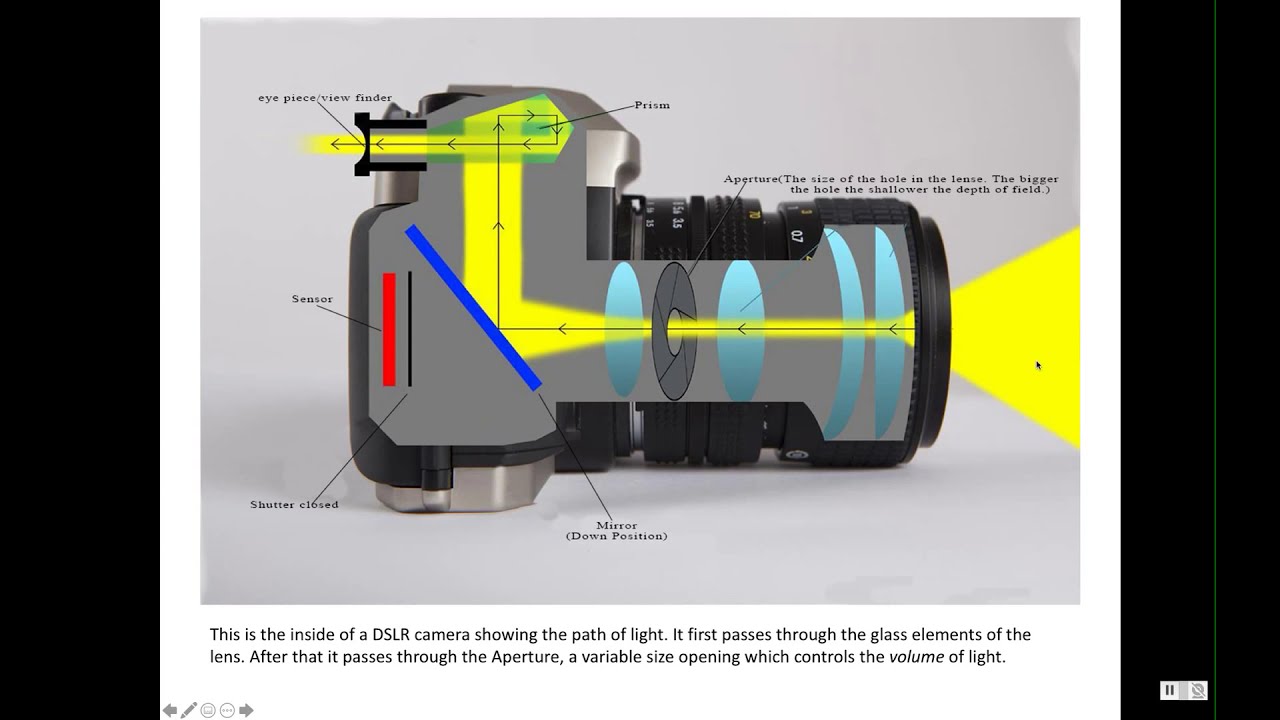
Um other terms soft focus is when the image is slightly blurry. So the it's a special type of lens that creates kind of a soft um blurry quality to the image. The wide angle lens is one that exaggerates perspective of distance. So it makes something narrow seem as if it's wider, a wider space. Uh the telephoto lens compresses depth. So it makes a distance appear less than it actually is. So it looks like you're closer than what you really are. And then the fisheye lens, it bends the horizontal and vertical planes and it creates a distortion in the depth relationships. So we'll see a few examples of these. The soft focus um an image from classical Hollywood of uh Irene Dunn uh and it was a special type of focus that was in vogue in the 1930s and it creates a a fuzzy blurry sort of effect. Uh the wide angle lens.
It's one that Stanley Kubri likes to use uh throughout a lot of his films. In particular, The Shining these shots down the the corridors of the Overlook Hotel.
Um again, you're you're going through these narrow hallways, but it feels much more spacious because of the use of the wide angle lens. The telephoto lens again allows us to see things closer um than what they actually are. So, here's an example of Jimmy Stewart in Alfred Hitchcock's film Rear Window. Uh, he's spying on his neighbors by using this telephoto lens and the fisheye lens, which, you know, looks like we're looking out through a goldfish bowl, right? We get this sort of warped u distorted perspective on the world. Um, and that can be used oftent times when characters are having some sort of hallucinogenic experience.
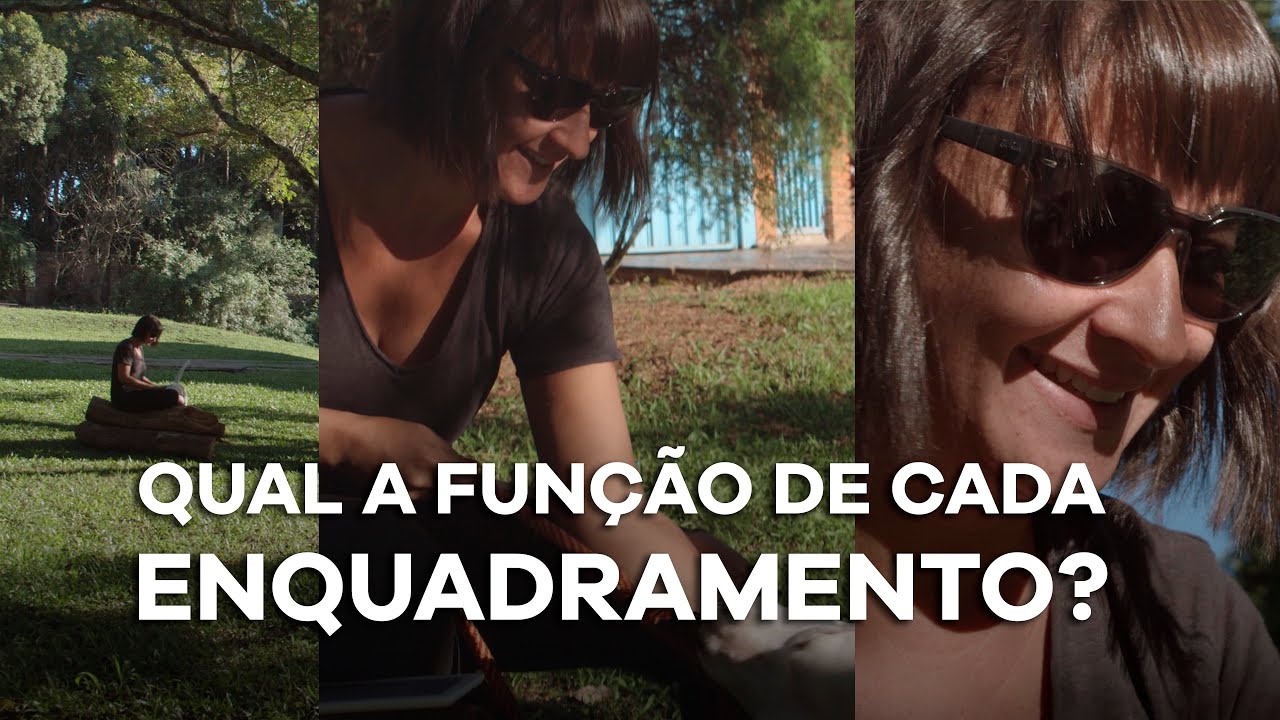
All right, shot distances. So, the the shot distance or the scale can vary from the extreme long to the extreme close-up. And we'll talk um briefly about what each of these shots look like in terms of in relation to the human figure because that's sort of our f focal point for narrative filmm. So, in the extreme long shot, filmmakers are prominently featuring the setting and the characters or the the human figure appears very small in the frame by comparison. So, here's an example from Woody Allen's film Manhattan, where the city of uh New York City, Manhattan, becomes um kind of this this large character in the film. And so, we get these great shots of the city. Um this one in particular of a bridge, and the characters are very small in relationship. The long shot shows us our characters in the setting. Typically, we get them from um we get to see the whole human figure. So, from the the feet to the head, but we also get uh some aspect of the setting. This is an iconic shot from John Ford's film uh The Searchers with John Wayne um as he brings his lost nephew back from captivity and returns her home. And so, we see, you know, the rugged cowboy John Wayne set against the the American Southwest. Uh and of course, the door frame is an important part of of Ford's films.
The medium long shot is kind of the uh the classic shot where we get characters from the knees up. And so it allows filmmakers to to stage or to block a variety of different actors at at different focal points in the foreground or background. And it's a convenient shot for um using a maybe a scene of dialogue. The medium shot is a shot from the waist up. And so we move a little bit closer and we get, you know, the medium shots ideal for for maybe a two shot. We get two characters in the frame and we see them from the waist up. We can move a little bit closer. Um, and for a variety of reasons, filmmaker may want to shoot a character from the chest up. Um, this is a shot from Billy Wilders's uh film, Some Like It Hot. And so, you know, Wilder might have a variety of reasons for why he'd like to shoot Marilyn Monroe from the chest up.
And I'll let you figure that out. If we move a little bit closer, we get our classic close-up. Um, and typically that might be the head shot where we get that great indirect subjective point of view where we identify with a character through the emotion that they're expressing. Um, and the focal point of course is the face, but it could be another part of the body, the hand, the arm, etc. But we just get uh one part of the body in the close-up. Now we move even a bit closer.
What we get in the extreme closeup is a part of a part. So in this example, um an image from Alfred Hitchcock's film Psycho, we get the eye, right? So we have a part of a part. Um could be a finger, right? Or a toe, right? We get a part of part.
Now the shot depth and focus um generally obeys a fairly strict rule and that is that the greater the shot scale.
So the tendency towards a longer shot uh that the greater the depth of focus we're going to get. And conversely the less the shot scale so the more we move to a closeup the shallower the shallower the space. Um, and so the the general rule that that Hollywood tends to follow is that if we have a medium shot or closer, we'll most likely have shallow focus. And if we have a medium long shot or further, then the tendency is more towards deep focus of the camera. Now, in the silent era, action was performed primarily on one plane. So there was one level of depth and then the surroundings were purely a background plane. Um, now the the focus of the action was concentrated on that foregrounding plane. Uh, and again the background was just sort of a backdrop.
By the late 1920s and into the 1930s, soft focus came into vogue and this was due to various new inventions of lenses, filters as well as diffused lighting sources. And of course, soft focus was borrowed from photography.
Now in the transition to sound, this would be um 1928 to31, Hollywood uh converted to sound during this period.
And so that proved a setback to the soft focus image because at this time there was all sorts of technological problems with the sound equipment. One being that the the camera produced a noise that the soundtrack would pick up. And so what filmmakers had to do was put the camera inside of a soundproof box. So, a lot of films from this era are shot through uh the glass of a soundproof box. And one cinematographer said that this gave films in this transitional period a sort of mushy look because the camera had to to see through the the pane of glass. Um now eventually things like the boom mic were invented and there were ways that uh that filmmakers adapted to the the new sound technology. But post 1930s um the soft style kind of goes out of vogue and then is tended to be reserved for fantasy sequences. So if you have sort of a fantasy scene, a dream scene, um that might be shot in soft focus. Um now the film that really was the game changer was Citizen Cane because that is a film that really pioneered the deep focus cinematography.
Um now the American Society of Cinematographers um abbreviated it as ASC which if you see that abbreviation after someone's name in film credits that's what it stands for the American Society of Cinematographers. Um in the 1940s they put forward uh a mantra in their propaganda um that said that the the duty of the cinematographer was to suit the cinematography to the story that the former is imperceptible and the latter is subtly heightened. And so that's to say that you know the technique of cinematography should be invisible. A lot of film theorists talk about Hollywood technique as as having an invisible quality to it. So you don't watch a film and think about the cinematography, right? Your focus is on the story, on the characters. Uh and that's exactly what this quote means.
Now, some film historians have said, well, Citizen Came went a bit too far at the time because what it did was it drew attention away from the story and placed it on the cinematography. And of course, this was exacerbated by Kane's um use of the the long take. So what you get in the the film is these really long takes that have this deep focus cinematography where a lot of interesting things are going on and so it puts a lot of the focus on the technique itself. Now Greg Tolen who was a cinematographer on Kain um became essentially the only well-known cinematographer in Hollywood and so in this sense um citizen Kane was a real gamecher and you know when we watch the film today it doesn't have it doesn't strike us as being oh this is very inventive unique film but of of course at the time it was it was sort of like a textbook for how films uh could be made and and it really forced cinematographers and filmmakers to bring um a new artistic level to film making.
Um after Tolen, cinematographers had to figure out how to use coded lenses, fast film stock, floor level lights, greater depth of field and so it it really was a watershed film and that it really changed the game.
Um other types of uh things cinematographers use filters. There's fog filters that help create a hazy image. Um you could use color filters and then day fornight filters are filters that are used in combination with uh underexposure to create the illusion of night. So, if you want to film during the day, you know, you want to work your 9 to5, you you're filming during the day, but you want to you have night scenes that need to be shot, you can use specialized filters that kind of give that feeling of day for night. Um, example of of colored filters, we might use a blue color or red, other types of colors as well. Um, day for night. So, very common during the classical era that you would use day foright filters. All right, the film stock, smooth grain stock and rough grain stock. The smooth grain stock produces a smooth or slick quality um sort of artistically perfected image whereas the rough grain stock has a really coarse grainy texture to it. Um and then you can tint film stock. So that was common in the silent eras that film stock would be immersed in dye that was a way of infusing it with color. Um here's an image of a rough grain stock. You can see kind of the pixelations, the real graininess uh of of the image there. And then tinting. This is a example from DW Griffith's film Intolerance where he tells four different stories throughout human civilization spanning thousands of years. And each narrative thread is tinted in a different color. Light and exposure. Um, film can be over or underexposed. And overexposed film, you're you're giving the film stock more light than is necessary. And the result is that it creates a glaring kind of washed out image. Now, if you overexpose it too much, it completely washes it out, and you're left with just a white image. Um, anyone who, you know, back in the old days, we used to have to take film from our camera over to the shop and and get it developed. And of course, when you got your pictures back, if you saw um the white image or the reverse complete dark, then either your film had been overexposed or underexposed. Underexposure is the opposite where not enough light gets onto the film stock. And so the result is that the you're left with an image that's dark and you can't really see what it is. So an example of overexposed kind of creates a glaring uh whiteness to it. You almost got to kind of squint your eyes. Um, the revol uh reverse is the underexposed film where you can't really even make out the image because not not enough light has hit the film stock. All right. Um, and then finally, some screen formats, basic aspect ratios. Um, there tends to be two two general aspect ratios. The standard or the original academy ratio, which was um approximately 1.33 width to its height.
Uh, and then the widescreen. And there widescreen is has a variety of different um aspects anywhere from 1.85 to one to 2.55 to one. And there was different widescreen technologies and of course Hollywood converted to the widescreen in the 1950s uh when it converted to color as a way of of competing with television. At that time uh the television ratio was 1.33 to1 um kind of giving you that boxy image and the widescreen gave you uh a much larger image. So it used to be the case when you would buy your DVD at the store that you you could get uh a couple of options. One was letter boxing and the other was pan and scan. And they they would call them the full screen version or the widescreen version. And so when you watched your um widescreen version film on a standard 1.33 television, what it did was it created uh lines or black boxes on the top and bottom of your image. And so those unfamiliar might, you know, take their DVD home from the rental store back when you had stores to rent movies at. and you know, you you'd pop it in and say, "Oh, something's wrong with this this disc because I've got these black boxes at the top and bottom." And so, as a way to kind of avoid that, um, you what the distributors would do is they'd pan and scan and it essentially would crop the image so that it fit your television. um which sounds good in theory, but the problem is, as you'll see on this next slide, is that when you pan and scan an image to fit it onto a uh a smaller screen, you're losing a lot of the integrity of that image. So, you see in the example here, what the the pan and scan image gives you as opposed to the letterboxed image, which retains that original aspect ratio, the widescreen image. Um, and it's really just a fraction of that. um depending on on the uh different ratios. Um now interestingly when but the mention of the widescreen television which those are 1.85 to1. So as long as the film has been filmed in 1.85 to1 they'll they'll fit your widescreen television. But if you're watching older films that have the original Academy ratio what's going to happen is you're going to get black boxes on the left and right of the screen. So unless it you know kind of stretches the image to fill the space um you know to to keep the integrity of that original aspect ratio it's going to create boxes on the left and right of your screen. Um now of course if your film has been uh filmed in a wider widescreen like a 2.35 or 2.55 to one you're still going to get black bars at the top and bottom um on your 1.85 to1 television. So, it it's really difficult to, you know, unless you get all different sorts of uh screen versions of your television, you just have to kind of get accustomed to watching it with black bars somewhere. Um, now, you know, another image of of what Pan and Scan does to your widescreen. You see in this one, the character on the screen left at the bottom, it's been completely cropped out of the image. And so, you know, you get this poor guy who's trying to show his family that uh he was in this film and and lo and behold, he's he's not in these shots because he's been cropped out of them. Um, so that's to say, you know, if you're ever offered uh a full screen version or a pan and scan version versus the the widescreen letter boxed, always choose the widescreen letter boxed version, right? Because if we're looking at film as art and we're trying to analyze it, uh how can you do proper misen analysis if what you're analyzing isn't really the full version of the film? Just doesn't make any sense. Um so this is all for today. Until next time, we'll see you later.
Up Next
Mastering High-Angle Shots: Cinematic Techniques for Filmmakers
@StudioBinder
219.7K views•2018-10-16

Visual Analysis Essay: How to Analyze Graphic Novels in College Writing
@nataliepleimann5941
1K views•2020-10-14
Film Blocking Techniques for Directors: Space, Shapes, Lines
@StudioBinder
1.9M views•2018-07-23

Evolution of Darth Vader: Anakin Skywalker's Animated Journey Across Star Wars Films
@TellItAnimated
13.4M views•2019-03-30
Related Study Plans & Knowledge Roadmaps
Structured learning paths in Film Analysis