

![+62 BANGET NIH !! - Parasocial : Chilla's Art [Indonesia] LIVE](https://i.ytimg.com/vi/OeKPIrE_rvE/maxresdefault.jpg)

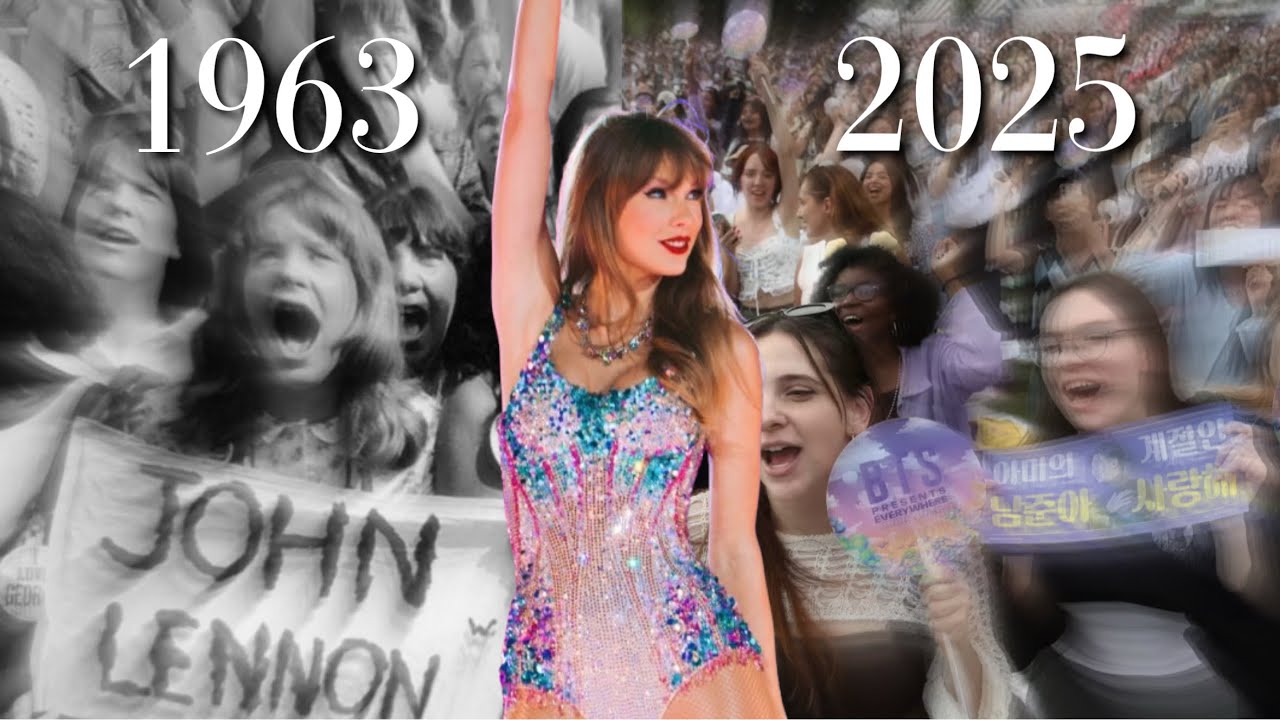



















Celebrity culture represents a modern phenomenon where individuals achieve widespread recognition and influence through media exposure, driven by three interconnected factors: economic commodification (celebrities become marketable products), evolutionary psychology (humans have an innate tendency to imitate prestigious individuals), and sociological mechanisms (charismatic authority allows celebrities to command willing acceptance). While celebrities serve as informal life coaches teaching social norms and behaviors, this reverence can lead to negative consequences including celebrity narcissism, loss of authentic self-identity, and the risk of society adopting harmful values from inappropriate role models. A balanced approach requires critically evaluating which celebrities deserve admiration and maintaining individual autonomy rather than surrendering to celebrity worship.
Celebrity Culture and Fame: Insights by Jack Gleeson | Oxford Union
Added:[Music] such an honor such an honor and a privilege to to be invited to talk to the Union here tonight you know a society that has kind of heard speak some of my greatest heroes people like the Dalai Lama Malcolm X Albert Einstein and Peter Andre indeed upon receiving the very humbling invitation from your President to address this very handsome crowd I see before me it was the procedure of his Union and it and it's past speakers that quickly replaced my sense of joy and pride with one of the most light worry and anxiety what the hell would I talk about I wondered I haven't tried to to foster a universal compassion across the globe or for oppression in in in America or even you know explored the mysteries of the universe be them hidden in some theory of quantum mechanics or just a particularly mysterious girl you know all I've done is in is acting a TV show and pretend to be mean [Music] for money essentially well I'm worse comes to worse I thought I thought to myself I could I could at least bring along my trusty crossbow and kind of a less sexually threatened someone suspecting students with impalement I thought well we discussed that and that didn't that didn't fly with with the board but from your from your invitation you know it returned my thoughts to a kind of a an all too similar event I participated in a few weeks previous during which twenty minutes into a rather long hour-long Q&A session both both cues on days respectively dried up very quickly so with forty minutes left of the event and apparently all value sucked from it like a tropical mini Capri Sun my my blood froze as I gazed out at the sea of kind of awkwardly shifting faces the silence was finally broken by a strained question about what I had consumed for breakfast that morning it was at that point I realized that after a mere 21 years of a relatively uneventful life one simply cannot expect to talk about oneself for an hour especially without either sliding into kind of irrelevant or the or the babbling I literally I literally just don't have enough to talk about for an hour so in a bid to avoid that the inevitable kind of drought of questions tonight before we come to the to the forthcoming Q&A I decided I would kind of try and waste as much time as possible talking about something that kind of hopefully won't preemptively answer any questions because every answer is gold and in terms of time but kind of where work will perhaps hopefully kind of be interesting and it will be relevant to my life in kind of Game of Thrones so basically since since the kind of show is aired and apologies for the kind of the kind of length and boring nature of this I did it I did it all last night and it's very rambling and please feel free to switch off at any point during it but I'm just kind of try and read it in an interesting way because it's not interesting since the show was aired I feel I've been given an insider lock into an ever pervasive and yet often mysterious aspect of society namely our culture of celebrity strangers on the street now call me jack and my public image is democratized by fans and institutions alike on the Internet I'm also given opportunities like this one tonight which I see is truly truly once-in-a-lifetime so feeling somewhat within but also very much abstracted from modern celebrity culture if you want to call it - that that kind of feeling has provoked a lot of reflection within me about the thing about my position within the thing so I kind of wanted to take this opportunity to perhaps talk about those reflections but I do appreciate the irony of of talking about kind of celebrity in this in this context first I hope that I hope the irony is is taken with a pinch of salt but yeah I mean I feel like like some of these reflections perhaps are somewhat unique in the sense that you know I'm in a unique position straddling kind of cigarettes and books of a student simultaneously with the with the cocaine and prostitutes of a celebrity but ever since my my mother sent me to Saturday morning drama classes from I was 7 I wanted to become a famous actor I loved the idea of captivating an audience and moving them truly through performance but more importantly being recognised and heavily lauded for that talent early on I I just performed in some small plays and short films and the like most notably giving giving my Joseph in a school Nativity at age 8 critics hailed my Joseph as being raw and inferencing I'm having a profound insight into the character that will never be matched by anyone ever again it was thrilling indeed I drew a great deal upon my Joseph when I played little boy in Batman Begins in 2005 little boy had the same passion and drive I'd seen and Joseph the same the same resilience but most importantly the same love for his pregnant wife Mary however despite only being on my new role my appearance in Batman Begins presented me with my first encounter with celebrity after the film came out I was always and everywhere and forever then the kid from Batman amongst my peers my my now a defining feature being brought up as an ice breaker or vaguely memorable kind of tidbit of certain social occasions the laboring that the labeling didn't bother me but I didn't necessarily enjoy it however little did I know that a far more concentrated form of that slight societal abstraction was going to be placed in my lap five years later when I would as a bright-eyed and bushy-tailed 17 year old step into an audition for some HBO show called Game of Thrones chapter 2 [Laughter] if I'm being honest upon hearing the the joyous news that I received the role of Joffrey I I really did not expect all of the subsidiary things that come with being at other people up there as well just being with being an actor on a successful television program I'd know predictions or expectations of all the attention invitation to events and of course all the cocaine and prostitutes that awaited me around every corner I was just literally just excited to act in a cool show perhaps that was naivety Europe perhaps that was perhaps like everyone else involved in the show I just simply didn't anticipate the success of it in any case whatever the reason was what had led to was a sharp shock when I realized that I had unbeknownst to me signed an invisible contract which required me to enter into a strange new Ashkelon of society people suddenly wanted to take pictures of me on the streets and journalists were interested in what kind of socks I preferred and you know I'm among certain groups of my peers my jokes seem to become a lot funnier which perhaps was all the comedy books I was reading at the time or perhaps he was sick of fancy I don't know it was an atmosphere from which I instantly wanted to retreat I detested the superficial elevation and commodification of it all juxtaposed with the grotesque self-involvement it would sometimes dry out on me being a faceless member of a mob I soon realized as far more comforting than teetering on a brittle pedestal one inch off the ground the exclusion and subtle differentiation that comes with a rather diluted even a rather diluted form of celebrity that I had embarrasses me but what struck me as most odd however about the whole thing was how hard I indeed found it all celebrity is seen by a huge amount of people and certainly by myself for a while as the pinnacle of society of success it is revered almost religiously both the institution it's quickly growing member base indeed these days the apotheosis of celebrity is not just confined to the worship of movie idols pop stars sports - sports heroes or even reality TV stars we have studies celebrity chefs authors comedians politicians intellectual scientists businesspeople cheesemongers or something Milner's may be hot makers for those if you didn't get that who constantly stick out their faces artists on advertisements and talk shows magazine cover ins magazine covers but this reverence an invasion is often welcomed and indeed fostered by a great percentage of the public I started to wonder if why that was and whether there was any harm in that reverence they're just people after all so whilst one could trace the origins back of kind of celebrity or whatever you want to call it back to the Romantic period and people like Samuel Johnson or even before Beckett it was it was truly in the 20th century's proliferation of photography radio television and finally mass media that a kind of a second ground could be laid for in particular sports stars movie stars and singers to be massif eyed as recognizable influential public figures this kind of fostered a culture of a culture dominated what what by what mode we are called simulacra which are like you know images that contain no reference to the real world for upon being able to for the first time see and then and also hear the well-known figures of the time that you know people like Charlie Chaplin and and Gloria Swanson the public began to kind of perhaps unconsciously reduce them down to their image alone leading to a perhaps you know irreparable commodification of these proto genic celebrities however this as a Meowth Henderson points out this commodification was clearly less the process of this increasing and influence of media but rather of the West's transition from a producing society to consuming one this is so boring America's capitalism bore as a commodity based society in which the actions of the individual could be equated with acts of consumption tabloids talk shows and subsequently reality television all became obsessed with the commodification of the celebrity image making it consumable and then ultimately disposable What's in ironic is that you see celebrities endorsing things like you know like musical tampons and appearing in advertisements for lavender-scented teeth whitener or something you know wielding goods who sell by dates or you know ironically probably at last there's well it's this form of cannibalistic consumerism doesn't appear inherently damaging to the consumers themselves the effect it has on the fodder can sometimes be profound I myself shy away from from interviews in the public eye sometimes for this very reason having one's image and effectively life democratized dehumanizes and sometimes objectifies it into an entertainment product what sort of valuation of the ego would one have once you've let have been preyed upon in the public eye for years and years perhaps it becomes truly just skin and bones jamee tehrani from the University of Durham has an alternative and rather crazy theory of where our fascination of celebrity culture comes from believing answered to lie in evolutionary psychology which I just sound a bit crazy but run with it it's it has been a value in his theory centers around the anthropological notion of prestige defined in terms of a high social status like admiration or respect that is bestowed upon an individual who possesses a certain adaptive skill like a superior hunting technique etc the procedures bestowed upon the individual so that the community can then learn the scale from them through imitation by being put into the public eye so they can learn the skill however in imitate the prestigious individual one can also mistakenly imitate some of the non adaptive skills the person may have the example tehrani uses is that men might observe a successful hunter perform some kind of incantation or whatever at the time as he retouches his arrow heads in a skilled way and the man who observed this adopt both the ritual as well as his his his arrow retouching technique when they prepare their tools so basically tehrani believes in our society because of their fame celebrities possess prestige and as a result we have this evolutionary and psychological instinct to imitate them this tendency concludes explains our interest in in what sports stars and singers wear what car they drive and all that celebrities have become our moral and social role models in some ways simply due to an evolutionary quirk however what if this instinct to Emmett ace leads us to adopt let's say slightly more immoral values of our current of our current modern prestigious individuals are we going to find ourselves in a position where we start to imitate the town drunk perhaps simply because he possesses prestige his original success having faded away long ago for it is under to Ronnies theory that's something rather frightening takes place namely a self-fulfilling Fame that's kind of come off only in the past decade or so that does not need to base itself in adaptive skill or any skill really for that matter because all it needs is the fuel of more celebrity and thus more prestige and thus more celebrity and so on ad for Nitin so I think that's a good theory of where it comes from is but I think that the most compelling cause of of our contemporary celebrity culture our fascination with our contemporary celebrity culture lies with Max Weber who he too bases his theory in one of role models in imitation but replacing the position taken by to Ronnies notion of prestige with his notion of charisma so we believe that for form of authority the attribution of legitimacy is fundamental and necessary making it what he calls a legitimacy domination which sounds pretty sexy that must presuppose some degree of willing acceptance furthermore he regarded the authority of the prophets and magicians diviners is different from other since their authority depends on a certain devotion to the exceptional character of the individual a special kind of Authority which he termed charisma the term charisma will be applied to a certain quality and this is a quote no I won't say that they see people with charisma exist outside sort of society and that's important to it so moreover he remarks that the truest form of charisma is one which receives these powers as a gift by virtue of a natural endowment so it's very easy to see how our modern celebrities are perfect manifestations of this for Berrien charismatic Authority they may not possess the heroic qualities of profit but it's highly visible role models they have become the object of imitation they their publicized personality and individual qualities work as a form of quasi charisma as a few academics put it that gains people's attention whilst selling them apart on a different Ashkelon so like classical charismatic figures celebrities are individuals who who provide people with the focus for identification essentially but unlike the classical charismatic the celebrity lacks the mysterious transcendence transcendent leadership qualities of a hero profit but there are role models so what celebrities also so clearly possess is that kind of willing willing domination that Weber describes the other forms of authority that people encounter in every day like the police or politicians you know lecturers of the like you know they're challenged by the public as often they perhaps sometimes feel oppressive conversely that the authority celebrities have over us is accepted and in fact sometimes welcomed because it's not seen as being self-serving or malevolent this is why Weber also describes the adoption or did the importance of the adoption of charisma by other authorities politicians for instance sometimes almost seem to require either celebrity endorsement or some kind of celebrity status themselves to feel the Jetta mated in the eyes of the public it's what Weber calls gentle charisma when the political authority combines with the charismatic Authority you can see it everywhere with the Obama you know getting will.i.am and stuff to sing about him it's ridiculous I voted for the danger hidden within Labour's charismatic celebrity is the same one with in Tehran ease prestigious individual having a predisposition to imitate any one individual must always have its negative impact especially when the role model does not feel a duty of responsibility to instantiate shall we say suitable values to adopt I'll skiff off this yes so there's also a thing you know this and this bleeds into this kind of the fascination that comes with this charisma which is like a celebrity worship syndrome this is actually a real thing that people in the University of Leicester found like 36% of a sample of 600 adults were afflicted to some degree by this celebrity worship syndrome and the most extreme sufferers believe that the object of their Archer knew them declared themselves ready to die for their hero but you know it's it's not just a kind of a weird societal quirk I think I think this it's indicative of a kind of a complete dissolution of the self in favor of another which is which can be seen as almost like a direct translation from a perhaps a religious hysteria I see is us whether it's a mob mentality or desire to be controlled by something higher than you these cases are indicative of how a charisma can replace the ego dusky ascii the brothers how you even pronounce that I've never known car azzam of he says so long as mine remains free he strives for nothing so incessantly and painfully as to find someone to worship conversely to try and find a you know kind of a positive boon for celebrities ation a guy called Chris rojak professor of sociology at City University has defended the benefits of this form of communal imitation he says celebrities are in formal life coaches by watching them people learn how to groom learn how to wear their hair learn what to say learn what opinions are sexy learn what's right on and not right on he's a pretty cool dude they're assimilating all sorts of life skills so and he says that it's kind of a social adhesive which is positive so that's the kind of I mean I don't believe that but I just put that in as a balanced argument but up until now I've I've discussed three theories economic psychological and sociological that attempt to explain our reverence of celebrities but now I'll talk I'll talk very briefly about the desire itself to become a celebrity you know because obviously there's the kind of immediate desire for wealth or admiration adoration but is there more than that you know and if so what's the catch what are the disadvantages so there's one way to look at this desire to be a celebrity in the form of the perspective of our personality centric culture one that I strayed inward away from the external character character-based one of the 19th and 20th early twentieth century so personality has become a means to distinguish ourselves from the masses and as a result celebrity has become the new measure of success I came across a great article by Jurgis amel who discusses this phenomenal phenomenon in his the metropolis in the mental life in which he kind of sheds life on this very modern angst of being unknown that I think affects a lot of people an anonymous you know so perhaps in in a hypertrophic Berkeley ism you know to be is to be perceived the validation of our existence has become relative to how anonymous or rather own anonymous we are truly it is declawing for this kind of some kind of individual self and self orientation amidst the clamor and growing competition of the 21st century that attracts people to becoming celebrities the Golden Tickets immortality is on sale is it not shouted from the rooftops of a New York conservatory Fame I want to live forever so I did that secondly another point and the reason of wanting to become a surgery what could be more alluring about being a celebrity than having a captive audience kind of willing to trust why you trust and care about where you care about in many ways you could see it in terms of kind of a manifestation of a master-slave dialectic with immense mobilization and communicative power so what are the dangers then involved in being a celebrity on the one hand those that there's that in some ways the true loss of the self by virtue of being over democratized oversaturated over loved perhaps without an internally directed compass an ego can drown in its own fascination rendering the bearer unable to posit or hang anything actual onto themselves this again is essentially the argument from chromatic from commodification which prescribes a kind of a ravenous ecstatic feast upon a cell until it becomes defined purely in terms of its external ability to in fact be consumed for instance those who it's another weird kind of psychological study know there are those who actually Fame are supposedly vulnerable to conditions like acquired situational narcissism which says this affliction can cause the celebrity to get so used to everyone looking at him or them that he stops looking back at his perceivers this may lead to kind of grandiose fantasies and self aggrandizement rage and loss of empathy and and all those bad things that we see every day kind of in in in celebrity meltdowns you know if that's not a kind of a crude way to put us this bleeds into another point again previously alluded to namely one of exclusion celebrities become excluded from everyday life kind of an exile in a Nash Ilan that's deemed better anyway life of a celebrity all the fame and glamour however no matter how much we can lost after this exile wanting to be celebrity is a manifestation of a dehumanization essentially one becomes easier to fictionalize when removed from any self likeness of the perceiver and thus easier to judge and also consumed and lastly of course there is the issue of privacy that comes up a lot but you know we've seen from my points about Iranian Weber what why we become fascinated with the banal mundanity of celebrity life you know what kind of bananas they like and stuff they are the prescribed role models of our time representing some form of ideal and apparently every aspect of life be it in their professional success cheese preference or even drug preference perhaps the desire to simultaneously position celebrities on both planes the ordinary and the obstructed is a bid to retrieve some of the immortality we have given them by empathizing with them and humanizing them to an extent we for a brief moment share in their the glory of celebrity life or perhaps at least remind ourselves that if they can do if I can do it in conclusion thankfully it appears celebrities have become vessels of either as I say an economic evolutionary or sociological instinct to consume and imitate certain acts ordinary members of society we've seen how this reverence can have profound effects on both parties often times more negative than positive I believe that communal admiration of individuals is is healthy for society it facilitates in in one way debase about universal standards morals but also publicly espouses the virtue of certain practices that are kind of like inherently good in in in some kind of ideas of what the good is however this kind of celebration is only a positive one if the individual represents values that should be imitated by say a reasonable moral person we need to be choosier with our celebrities or else we may find ourselves again in that situation where we just find ourselves acting out the role of the town drunk constantly and we also need to temper the concentration with which we love to celebrities primarily for the sake of the celebrity themselves and their self-evaluation but also for ourselves just as the object of our attention can become rendered Hollow and externally directed with too much worship so - I feel come the worshipers sacrifice their own individual self or autonomy in favor of giving it up to a higher power we need to fight against our human instinct to deify our role models but also fight against the instinct to subjugate our own individuality in the process stargazing is one of the most profoundly human things one can do but perhaps we must more frequently tear ourselves away from the mystery and beauty of the starry heavens above unranked admire and foster the moral law within that's it [Applause] [Music]
Up Next
How to Master Attention Management: Insights from Maura Thomas
@AnthonySPark
2.7K views•2019-10-10

Triumph of Orthodoxy Icon: Byzantine Art & History Explained
@BenCallan
2.1K views•2024-08-06

Jeffrey Sachs on Global Development, Aid & US Politics | Oxford Union Q&A
@OxfordUnion
254.8K views•2017-10-16

Game of Thrones Opening Credits: A Cinematic Analysis
@gameofthrones
46.3M views•2011-04-18
Related Study Plans & Knowledge Roadmaps
Structured learning paths in General & Interdisciplinary Studies