






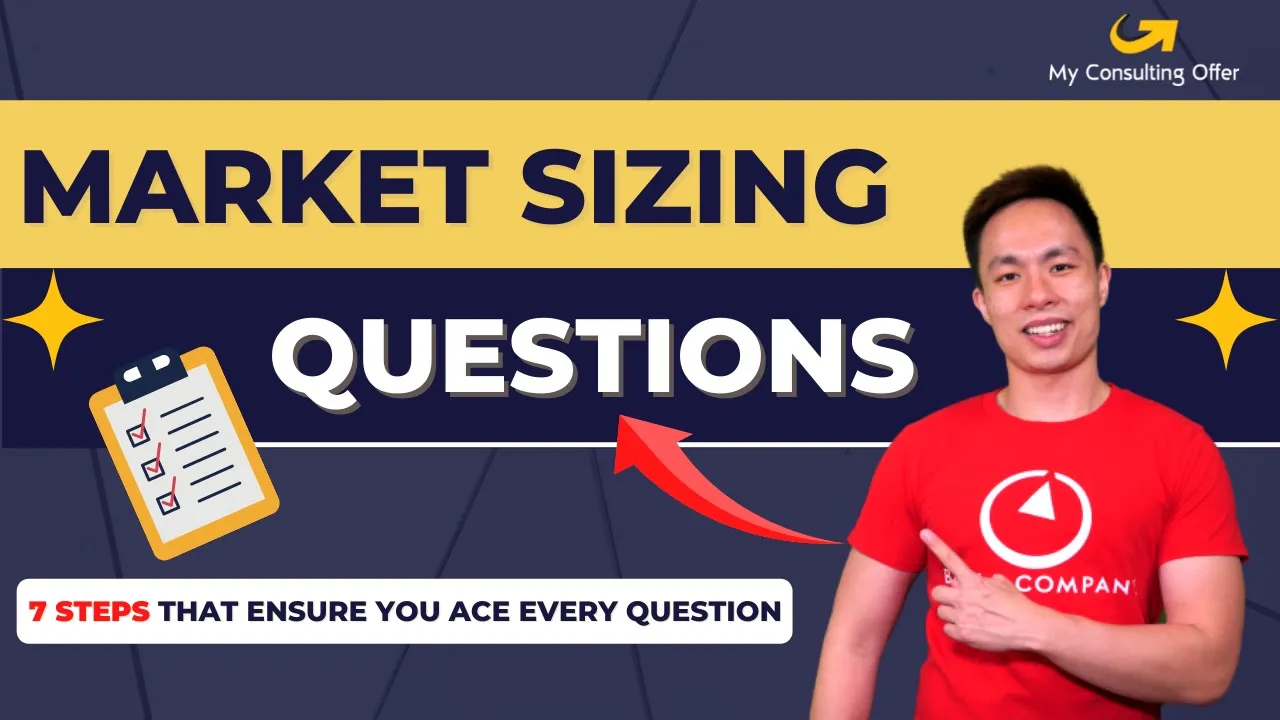



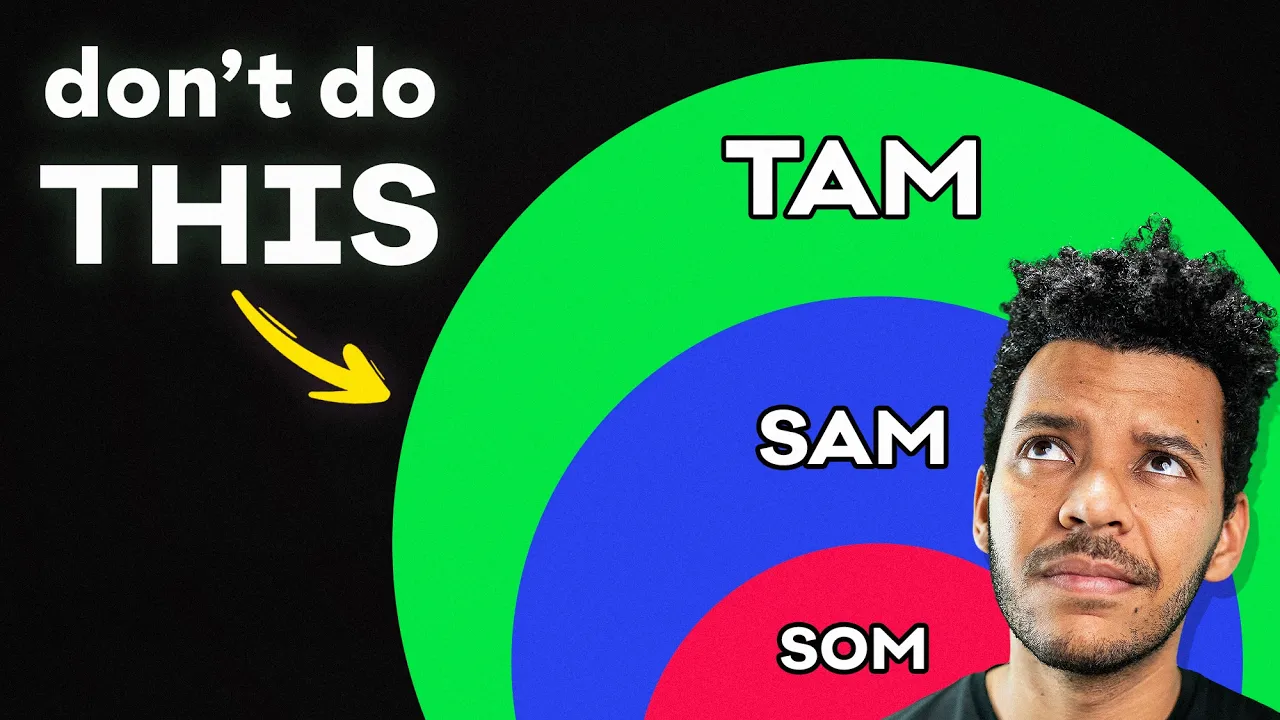

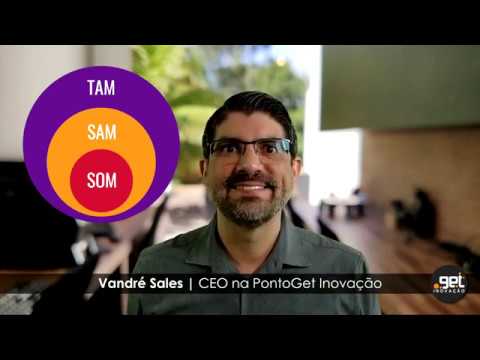

TAM (Total Addressable Market) represents the maximum revenue if everyone who could buy your product did so, SAM (Serviceable Available Market) is the realistic market after focusing on your target demographic, and SOM (Serviceable Obtainable Market) is the realistic revenue based on your go-to-market strategy and execution capability. To calculate these, start with total potential customers, narrow down to your target segment, and further refine based on your business model and market reach. For example, a startup targeting Taylor Swift fans might calculate TAM as 276 million followers × $10/year = $2.76 billion, SAM as 55 million YouTube users × $10/year = $550 million, and SOM as 26 million male fans × $10/year = $260 million. Founders should use bottom-up calculations with clear logic and show their math to demonstrate expertise and build investor confidence.
Calculating TAM SAM SOM: A Founders Framework
Added:hello Founders in this video I'm going to teach you how to calculate Tam Sams according to Taylor Swift now before you run in the opposite direction full disclosure this is not a Taylor Swift fan club video I'm not going to profess my love or that I'm my closet Swifty truth be told I have never listened to a Taylor Swift song from beginning to end I might have heard Clips here and there in commercials obviously she's super popular you can't go anywhere without knowing who Taylor Swift is seems like these days I can't even watch football without Taylor Swift coming up right but I was helping a Founder the other day calculate their Tam Sam S and I began thinking about a better way to teach it and I did some research and I was actually looking up could have would have should have and I found out that Taylor Swift has a song could have would have should have and so I watched a clip of that and here we are I thought it'd be a great way to teach this video before we continue my name is Ed Kang welcome back to my YouTube channel I am a seven time funed founder two time exits which basically means I failed a bunch of times for your benefit because I like to use all my social media to help Founders avoid some of the catastrophic mistakes that I've made during the early stages especially preed or seed fundraising it's not that you're not going to make mistakes but I can at least try and help you reduce the cost of those mistakes how painful and how much hardic that you're going to get because this journey is hard enough so again welcome if you haven't met me before thank you very much for checking this out let's jump right into the video could or would or should have this is Taylor Swift's song the content of the song is irrelevant it's about I think heartbreak or breakup or something like that but let me show you what could have would have should have basically means for your Tam Sam S could have is your Tam would have is your Sam and should have is your s this is not a video about Tam Sam S if you don't know what Tam Sam S is then I suggest that you do yourself a favor and you go out and you research it we don't have time to break it down here but you're most likely coming here because you've heard you got to do Tam Sams and you don't know how to calculate it and that's what this video is is going to do we're going to help you out we're going to use could have would have should have to explain Tam Sam song the first step in this journey is that I have to set the context and tell you what startup we're calculating the Tam Sam S for I came up with this just literally minutes ago this is my fake pitch for my fake startup and my pitch is our app delivers video lessons video lessons based on Taylor Swift songs to help fans find romantic Partners we charge a $10 annual subscription fee just straightforward I'm pitching investors I have an app we make video lessons based on Taylor Swift songs they help fans find romantic partners and we charge $10 a year for using our app okay straightforward now that you have the context we can start to look at the logic of how I'm going to calculate Tam Sam song so if we got Tam Tam is could have and basically what Tam means is that if everybody that could buy or pay for your product did so this is how much money we could make that's everybody is in essence if we focus on this type of demographic or this segment because our business model lends to itself and we basically go after a portion of the Tam because it's the focus that we need to have we're well suited for it then we would make this money and obviously it's going to be less than your Tam s is what is realistic what I'm saying is that if we get the investment and execute our go to market strategy and our plan and our assumptions are proven true realistically we should make this amount of money let me repeat Tam is if everybody bought who could buy did buy from us we could make this amount of money and it's going to be a lot of money then Sam is if we focus and implement we would make this money and S is realistically speaking if we execute because of our goto Market strategy and different parts of our business model we realistically should make this amount of money now let me back up for a second here and explain that some investors if they're startup investors need to see your Tam in billions of dollars if your investor is like a friends family and Associate investor maybe a rich uncle and you say my Tam is billions of dollars they may get intimidated so we're going to talk about how you make adjustments but just keep in mind that the context of the investor your audience the type of investor is going to make a big difference in how you calculate this because I could really blow these numbers up as you will start to see but I need to get to a story that makes sense for investors let's continue so with my Tam I'm going to say that my Tam is 276 million followers of Taylor Swift songs that's my temp now I could go even bigger but I'm going to say Taylor Swift has 276 million fans on Instagram so we're going to start there that's my total addressable Market next though is that if I focus because because my business model uses video it's better for me to focus on the 55 million that are on YouTube because guess what I'm going to be delivering my marketing advertising my goto Market strategy is going to be based on creating a YouTube channel and putting out little previews or Snippets and saying hey for the full video subscribe to my app or something like that I don't know like I said I just made this business up so I'm just kind of going on the Fly here so that's 55 million potential users of my app because there are 55 million that are on YouTube makes a lot of sense here's the logic next is my PSAL now I'm going to say based on me as the founder and the types of videos that I'm going to put out if I execute properly and everything goes according to plan there are 26 million men out of that 55 million that are on YouTube how did I get there YouTube didn't give me that information well I did some research and it's easy for me to look up how many Taylor Swift fans there are on Instagram and how many she's got subscribed to her YouTube channel because I can Target them with YouTube ads and I can say anytime someone comes in there um a guy on Taylor Swift Channel I want them to see my ad for this app and so because my content is going to be Geared for men it'll be 26 million because I found out that there are 48% of the entire Taylor Swift Phantom adults who are in my market are men so what I did is I took 55 million what's 48% of men in that that's 26 million men this is my logic so you see how my Tam Sam song got adjusted to my startup and what I intend to do because I'm painting the story I want to drisk the investment to show the investor that I am an expert in this I've taken the time to really think this through and if you give me enough money give me the money I'm asking for I should be able to implement this and what do the numbers look like well at $10 a month or $10 a year that's my subscription 276 million time 10 is 2.76 billion we're in startup country here now I could have said how many people have ever listened to Taylor Swift song or how many people are pop music fans or how many people want to be in relationship and go online looking for love that's going to be way too big I need to have this make sense and like I said show the investor I know how to think about this because that's going to give the investor confidence with this calculation it's easy to figure out what my Sam is is 55 million time 10 which is 550 million that's still a lot so I go to my S 26 million men that's 260 million now even if I do half of that that's still 130 million and that puts me in unicorn territory if I'm going to a startup investor they want to see unicorns your Tam needs to be in the billions and you should be able to make at least 100 million a year which at a 10x multiple Revenue if you're going to get listed publicly that is a unicorn a billion dollar company that's what investors want to see now that may change because the landscape is changing but I'm just using the old gospel of how we figured out unicorns if your Psalm is so much of the time let's say I said 2.76 billion and my my um um s was half of all the followers on Instagram and I was in the basically 1.38 billion a year Revenue nobody's going to believe that because I better have a darn good go to market strategy to be able to reach 50% of all Instagram followers like you can't spend enough money to convert two half of 276 million from Instagram onto your app now the fact that 2660 million is a a fraction a 2.76 billion well guess what that makes it more believable able and the rest of my business plan is going to support or rest of my pitch is going to support me showing the investor that I'm capable of making this happen especially if I already have traction and I've got metrics that I can extrapolate from and give them confidence that I've already been doing this so there's your Tam samam s that's what would go on your Tam Sam S simple as that but what if this is too complicated let's move on and let me give you some best practices on what you should be thinking about here's a review first do bottom up you don't want to be going wow the pop industry pop music industry is $1 trillion do and if we make 1% that we're all going to be majorly rich and according to this report from Gardner or deoe or ban Consulting right I see this happen all the time the cyber security industry is $ 13 trillion dollar and all those things that's just lazy you're not showing the investor that you're an expert and you know how to go out and research these things you just pulled a report off Google and you threw it in your pitch deck that's not going to work so the fact that I say I'm going to start off not with all of everybody who listens to pop music or anybody who's ever listened to Taylor Swift song I'm going to bottom up I'm going to go start with Instagram wherever you are looking you want to make sure that you go bottom up and get the data and show the logic which gets to the next part you're building a story so I may say they're 276 million Taylor Swift fans and people go yeah why are you mentioning that big of a market well I'm telling the story that's where I started I use my logic and because I am a formidable founder I know how to think about this I'm going to start at 2676 million Instagram followers for a reason because I can Target them social media is easy Etc and guess what all the people there are you know pining for relationships I don't know you know something along those lines so I'm going to tell the story and I work down the logic in a story format a narrative that makes the investor go oh yeah it's a huge Market but you're focusing on this market and realistically should make that do I believe you by that time they're talking themselves into the investment because you're giving them so much great information about how amazing you are and how competent that means you have to show the math so show the math and give them the story in a math equation format so you see how I did it I said 276 million followers I got that from Instagram time 10 a year this is how much it work that's a bottomup calculation show that math I love it when founders show their math because then I can get in their heads and say hey have you looked at it this way and what if it goes that way and etc etc I can start working with the founder if they show the math versus they just pulled a number out of thin air and they made their growth graph their projections go up and to the right like a hockey stick nobody believes that that just doesn't happen it never happens that way like it's always like a little bumpy road and there's dips and the trough of sorrow and all those things so if you're just pulling numbers arbitrarily out of the sky well then I'm going to think that you're a Founder that makes decisions like that and that's how you going to be treating my money so show the math show that you are thoughtful and willing to do the research finally simplify investors remember I said startup investors are sophisticated right if you're talking to a VC or what have you but if you're preed or seed most likely you're starting a friends family and Associate investors that aren't used to looking at Tam Sam song slides right so if they don't know what Tam samsam is don't show them don't put any more friction in their brains and make them do any more work so that either they get intimidated or they say you know what I've got like 10 other people who want me to invest in them because I got rich with Bitcoin or I just sold a bunch of houses or I have like 30 airbnbs and I happen to have some discretionary cash thing around that can YOLO into startups simplify for them and just get them what they need what happens is you can have the Tam Sam song slide but let me give you another example that you could be using and it's all going to be based on your preference and who you're working with I may have a slide like this there are 276 million swifties on social media we will focus on the 26 million mail fans that follow on YouTube which would be 260 million a year in Revenue that's simple at $10 a pop per year meanwhile I'm explaining and they go well how did you get to that well it's very simple because one male fans I'm a guy follower I'm a male myself and there are a whole bunch of other you know genders that people could identify with I'm not there argue that that's just the mathod I'm using because I am a cisgender heterosexual male then I am going to appeal to that because I'm the founder I'm the one creating the videos and running the company so they're going to relate to me it's a problem that maybe I tried to solve and I experienced with the problem Maybe Taylor Swift songs really help me through a rough patch and romantic relationships help boost my dating life I don't know remember fake startups so making all this stuff up as I go but now I want to use video and so I know that the ones on YouTube are used to watching video and I can Target them on YouTube on YouTube I can Target them watching any Taylor Swift video and that they're mail YouTube allows me to do that so based on this I think I can make $260 million a year if I fully accomplish my business plan and even if I do half of that it's 130 million investors will basically be able to do that math so there you go notice how I took Tam Sam which might be too complicated and I simplified how you calculate it and I put it in this format so you can communicate with inv the point is learn to do your Tam Sam song I know some advisers and other investors they all have opinions we all have different opinions on what you go into your pitch deck I'm just telling you stuff that's worked for me and that I enjoy doing that forces me to do the work and really understand my startup because you need to know your numbers but you can use Tam Sams as the base math if you're going to do like Nuclear Physics or everything like that you need to do basic algebra if you're going to be playing or improvise and you're playing jazz piano you need to know your basic classic piano scales learn to do Tam samsong properly so that you at least have the foundation of numbers so that you can start to get creative and do what you need to to communicate with investors so you can raise that Almighty first check your preed or seed funding I hope that was helpful just a different way to look at Tam Sams do the social media thing like share subscribe leave me a comment it really helps I appreciate all the support that I'm constantly getting it's been fantastic as of late if you are joining me you're part of any of our accelerated programs or online communities in any of my workshops or I'm working with you directly thank you so much for your support I really appreciate it that's it for this one I hope to see you in the next video
Up Next

Startup Pitch Deck Design with Canva: A Step-by-Step Tutorial
@daniellebee9
3.5K views•2022-02-12

Triumph of Orthodoxy Icon: Byzantine Art & History Explained
@BenCallan
2.1K views•2024-08-06

FastAPI vs Flask vs Django: Choosing the Right Python Web Framework
@TechWithTim
302.5K views•2024-05-26

Game of Thrones Opening Credits: A Cinematic Analysis
@gameofthrones
46.3M views•2011-04-18
Related Study Plans & Knowledge Roadmaps
Structured learning paths in General & Interdisciplinary Studies