














Helper T cells serve as the central coordinator of the adaptive immune system by releasing cytokines that activate both B cells to produce antibodies and cytotoxic T cells to kill infected cells; unlike B cells which directly produce antibodies, helper T cells require dual activation through binding to both an antigen presented on an MHC II molecule and receiving signals from antigen-presenting cells, providing a critical failsafe mechanism that prevents autoimmune reactions by ensuring only properly activated immune cells trigger widespread immune responses.
Helper T Cells and Their Role in Immune Response | NCLEX-RN Review
Added:Distinction between innate and adaptive (acquired) immune systems.
The structure and function of antigens and antibodies.
The role of Antigen-Presenting Cells (APCs) and Major Histocompatibility Complex (MHC) class II molecules.
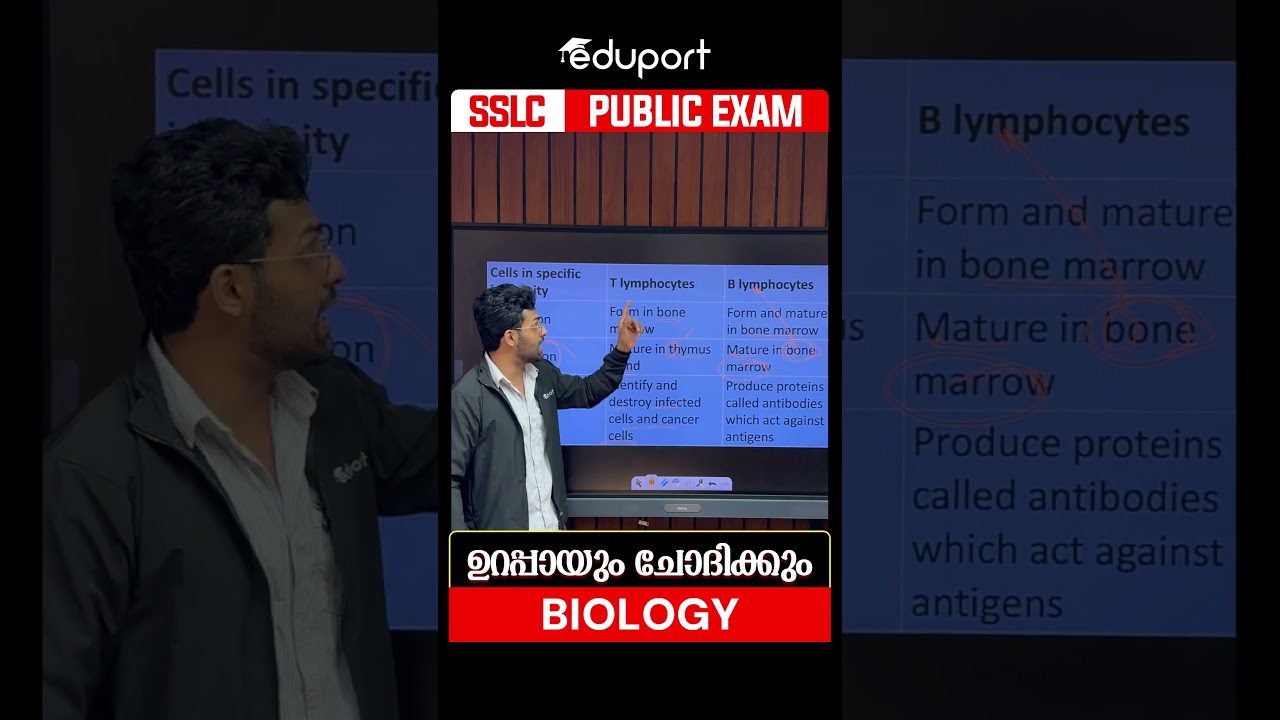
The origin and maturation sites of T lymphocytes (thymus) and B lymphocytes (bone marrow).
The mechanism of B-cell clonal expansion and differentiation into plasma cells and memory B cells.
The role of Cytotoxic T cells (CD8+) in cell-mediated immunity and how they target infected cells.
Clinical implications, such as how HIV destroys CD4+ Helper T cells leading to immunodeficiency.
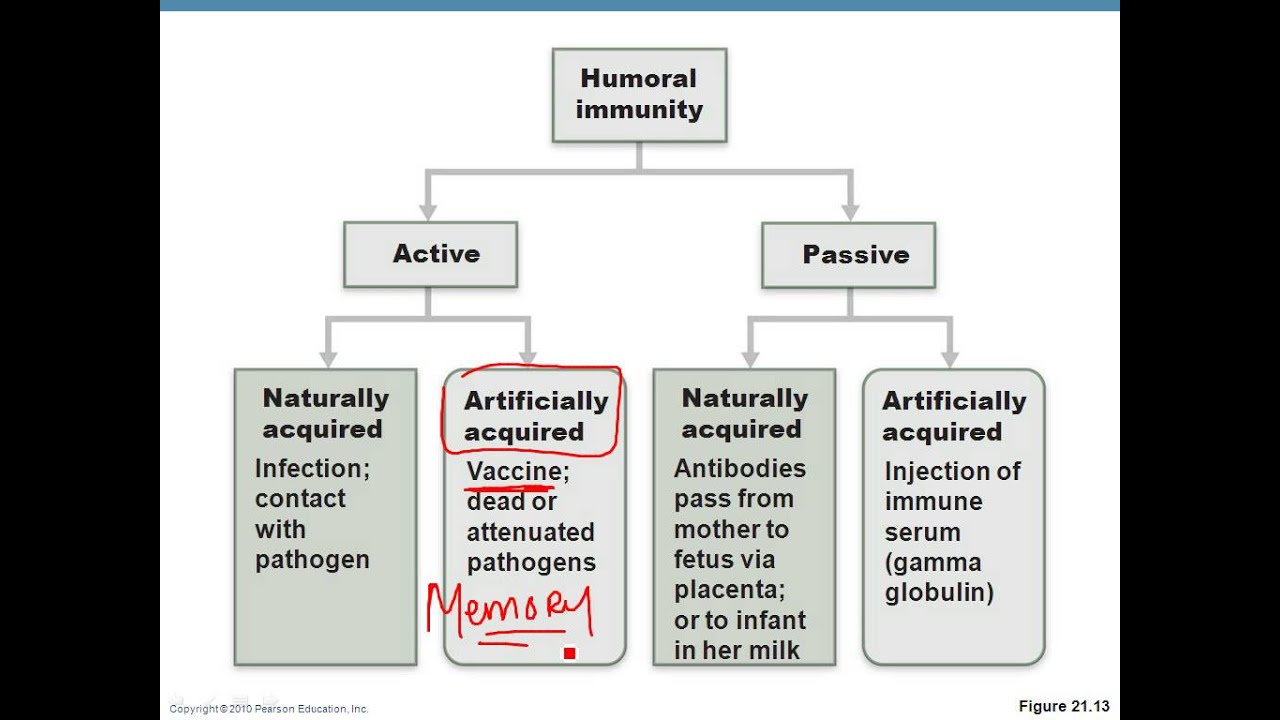
The principles of active versus passive immunity and how vaccines utilize T and B cell memory.
1.4M views7.2Klikes20:33Original Release: 2010-02-19
In talking about the adaptive immune system, we've already seen that there's a couple of actors.
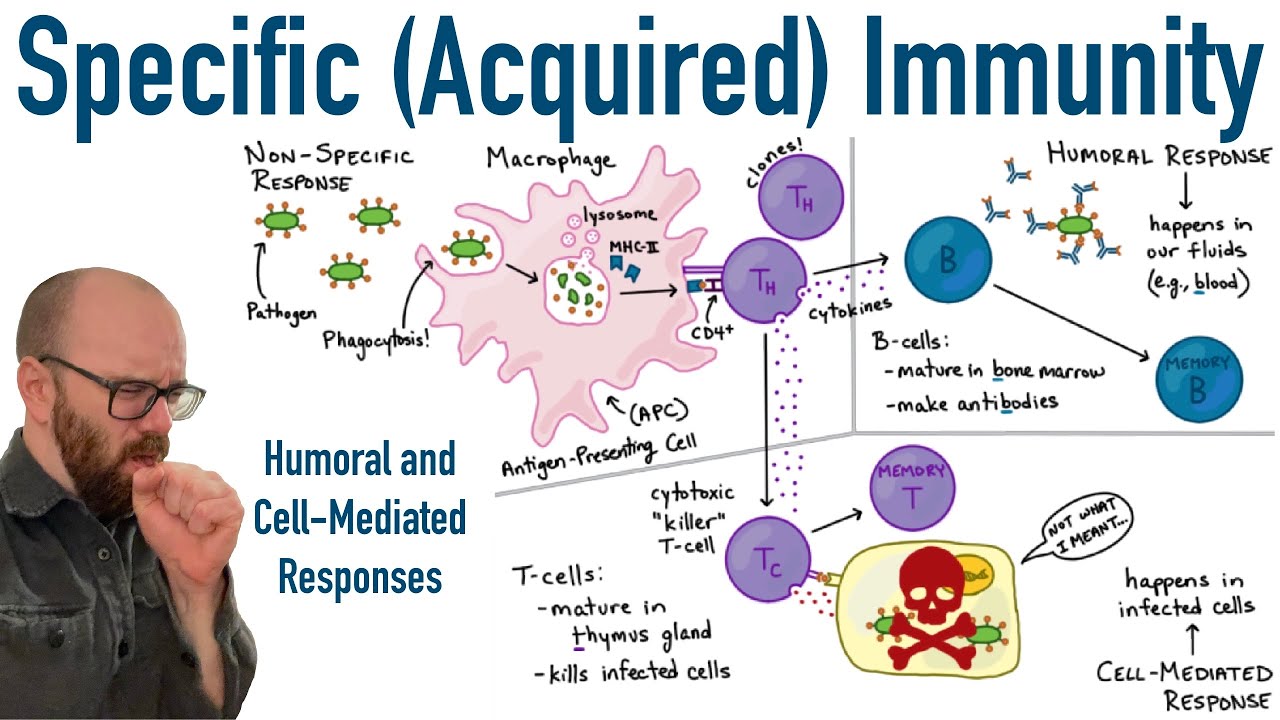
You have your humoral response.
So this is responding to things that are floating around in the fluids of the body and not necessarily things that have infiltrated your body cells and then you have your cell mediated response.
And then in the humoral response-- and we're talking about specific humoral response-- this is where the B cells, the B lymphocytes are at their most active.
And essentially what they do is, you got a B cell here.
It has a very specific antibody, specific to just this B cell, not B cells in general.
If this happens to be the one of the billions of B cells that happens to have the matching key-- or maybe I should say the matching lock for the key that is the intruding pathogen-- that pathogen will bind to that B cell.
Maybe it's a virus, maybe it's a bacteria.
And then the B cell will get activated and we'll talk about in this video that the activation doesn't always happen.
In fact, it usually doesn't happen just from this, but so far we've said it gets activated, it goes into memory B cells, which are essentially multiple versions of this original B cell-- just saying, hey, let's have multiple versions of this-- because it tends to recognize this virus.
So in the future if we get this virus, those multiple versions, those memory cells are going to be there to have this interaction.
This interaction's going to be more likely to happen in the future because I'm going to have more of this variety of B cell.
And then you have effector cells.
And these are essentially-- so both of these are B cells.
So this guy, once he gets activated, he proliferates, keeps dividing and cloning himself.
The memory cells just stick around waiting to be activated in the future.
And I'm only drawing one of these membrane bound antibodies, but there are actually 10,000 on them.
I mean, I could draw a bunch of these.
I don't have to just draw one.
The memories just wade around in the future, but there's more of them now.
So in the future, if we get this virus again, this interaction's going to happen faster and so they're going to get activated faster.
And then the effector B cells essentially turn into antibody factories.
This antibody goes in and it says, let me just produce-- I've been activated.
Let me produce many, many more versions of that exact antibody.
So they get spit out.
I drew that one little wrong.
So that exact antibody, that can then be spit out to go disable or tag antigens-- and not just any antigen-- this antigen right here.
And we also saw that the other thing that the B cell does is it becomes an antigen presenting cell.
So what it does is, as soon as it recognizes this, it's had this interaction with an antigen that just matches the variable portion of its membrane bound antibody.
It endocytosizes that.
It brings that into itself.
It's membrane facilitated so it just kind of pulls it in, chunks it up, and then presents a piece of that antibody on an MHC II molecule.
We saw that in the last video.
So it cuts that up and presents a piece of it right there and that's why we call it an antigen presenting cell.
Now in this video, we're going to talk about why we even have these MHC II molecules.
What are we presenting these antigens to?
So we're going to start talking about the cell mediated-- and actually, even more than the cell mediated, we're going to talk about T cells.
And I said in the first video, they're called T cells because they mature in the thymus.
And there are two types of T cells and it's all very confusing because you have B cells and T cells, but then there are two types of T cells.
You have helper T cells-- and most people just write T with a lower-case or subscript h there.
And then you have cytotoxic T cells-- or T cells that kill other cells.
Now just so that you have a big, overarching impression of what does what-- B cells.
When they are activated, they generate antibodies.
At 30,000 feet, that's the best summary of what an activated B cell does.
It actually generate antibodies.
Those antibodies attach to viruses and bacteria and other types of pathogens and disables them-- either tags them so that macrophages can go and eat them up or just by throwing all of those antibodies on to the surface of the pathogen in question.
It might disable the pathogens or essentially bundle them altogether so that it'll be easier for macrophages to pick them up, but this is only effective for things that are floating around.
Free floating antibodies are only effective for things that are floating around.
Cytotoxic T cells, which I'll cover in more detail in a future video-- these actually attack cells that have been infiltrated.
So this is attack, kill, infiltrated cells-- and when I say infiltrated, it could be a cell that a virus has gone into or some bacteria has penetrated it.
And when I say infiltrated, it doesn't necessarily even mean something from the outside.
It could even be a cancerous cell that shows itself to be abnormal in some way and so the cytotoxic T cells will at least attempt to kill them.
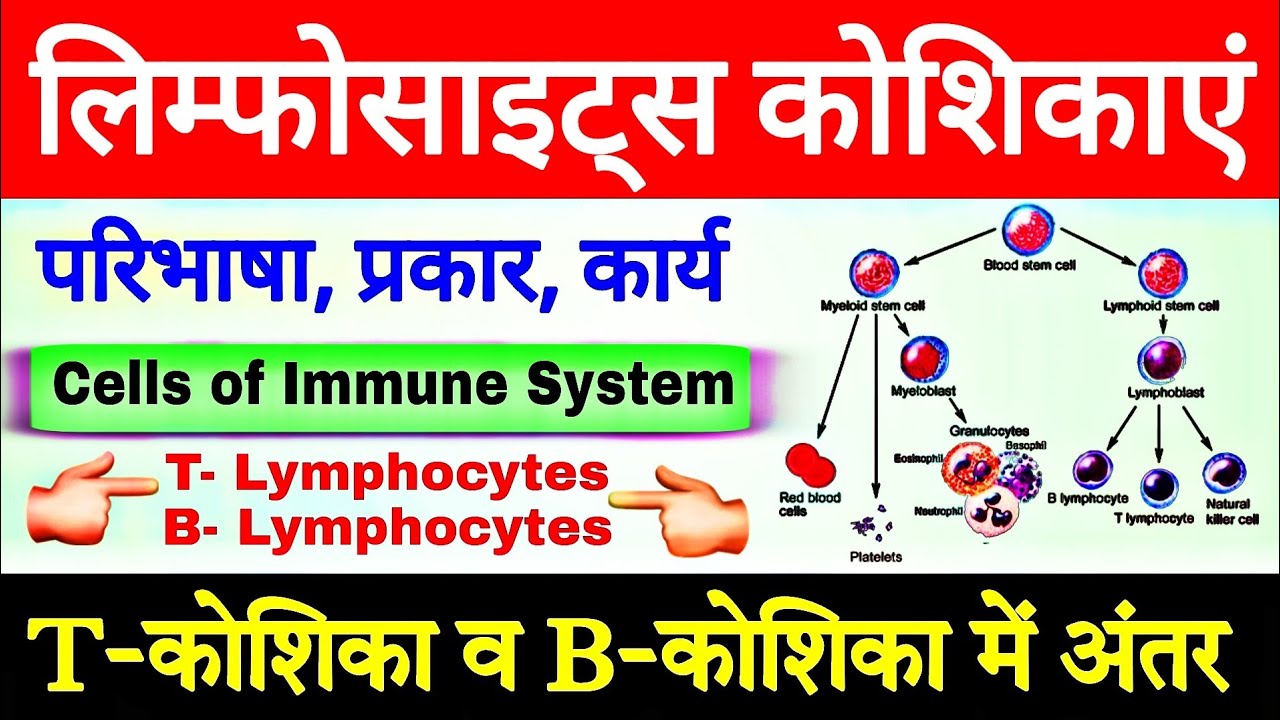
But what I want to focus on-- out of the three types of lymphocytes-- remember, everything we've been talking about was leukocytes, white blood cells, but lymphocytes are a subset of that and these three are lymphocytes.
And they're called that because they began their development in the bone marrow.
So this guy and this guy actually do stuff.
This guy generates antibodies that attach to pathogens floating around.
This guy directly attacks cells that are broken in some way.
They've either been infiltrated, they're abnormal, they're cancerous-- who knows what.
And I'll do a whole video on that, but that leads us to a very obvious question.
What does this guy do?
What does the helper T cell do if he doesn't directly interface either with pathogens or produce things that interface with pathogens-- or if he himself doesn't go and directly kill cells?
And the answer is that the helper T cell's kind of the alarm of the immune system.
And on some level, it's almost the most important.
So we talked already in the last video about antigen presenting cells-- that either when a macrophage or a dendritic cell takes things in, it cuts them up and presents it on its surface as these MHC II proteins or in complex with these MHC II complexes or proteins.
And so do B cells.
B cells are more specific.
Now, once something is presented, now the helper T cell can come into the picture.
So this is a-- let me do a dendritic cell-- and I'm doing dendritic cells actually on purpose because dendritic cells are actually the best cells at activating helper T cells.
We're going to talk about in a second what happens when a helper T cell gets activated.
So let's say I have this dendritic cell.
It's called dendritic so it looks like it has dendrites on it.
So I have this dendritic cell here.
It's a phagocyte.
Let's say it's already consumed some type of bacteria or virus and it's cut it up and now it's presenting kind of the body parts of that virus on the MHC II complex.
It's kind of its way of saying, hey, I found this shady thing floating around in the body's tissues.
Maybe someone ought to raise an alarm.
Maybe this is part of some type of bigger thing going on and some type of alarm bell has to be released.
And that's what the helper T cell does.
So let's say this guy-- he's presented it.
He says, I found this thing.
I killed it.
Here's a part of it.
The helper T cell has a T cell receptor on it.
Let's say this is the helper T cell right here.
And it has a T cell receptor on it and the T cell receptors bond to-- and I'll be very particular here.
So this is the T cell receptor.
It's just like a protein, but like the membrane bound antibodies on B cells that every B cell or almost every B cell has a different version, different variable chain, that's also true of helper T cells-- that just like the B cells, this has some variation in where it binds.
So this right here is going to be variable from one helper T cell to another.
For example, I might have another helper T cell here.
That also has a T cell receptor, but the variable portion on that T cell receptor is different than the variable portion on this T cell receptor.
So this helper T cell will not bind to this dendritic cell or the MHC II complex of this dendritic cell.
Only this one would.
And the mechanism of how you get this variation is very similar to the mechanism in how you get the variation on the antibodies and the B cells.
During these helper T cells' development, at some point the genes that code for this part of this receptor get shuffled around and they get shuffled around intentionally so that each T cell has a certain specificity to a combination of an MHC II complex and a certain polypeptide, a certain part of a virus.
So only this guy's going to be activated, not this guy.
So this is why we call it the specific immune system.
Now we said, what does that helper T cell do at that point?
He said, hey, I happen to be the one helper T cell that can bond to this guy, this antigen that's presented.
It becomes activated.
And I won't go into the details, but in general, dendritic cells are the best ones at activating it, especially a naive T cell.
In general, when we talk about a naive B cell or a naive helper T cell, these are cells that are non-memory, non-effector, that have never been touched by-- they've never been activated, in the case of a B cell.
They've never been activated by something binding to their membrane bound antibody-- or a naive helper T cell is a non-effector, non-memory helper T cell that's never had anything bound to it.
So if this guy is naive and then he finally has a reaction with this antigen presenting cell, he becomes non-naive.
He becomes activated and when activated, two things happen.
Well, just like with B cells, he proliferates many, many, many copies of himself and some subset of those copies differentiate into effector cells.
And effector just means it does something.
It does something now instead of saving the memory.
And then some subset of them become memory helper T cells after getting activated.
Now the memory T cells, just like memory B cells-- now you have more copies of this.
So in 10 years in the future, if something like this happens, this interaction's going to be more likely to happen.
These guys have the same T cell receptor as their parent.
It's just that the memory T cells-- or actually even the memory B cells-- they last longer.
They don't kill themselves.
They'll last for years so that if 10 years later, something like this starts presenting itself, you're going to have more of these guys around to bump into this guy so that you can raise the alarm bells.
This guy's also going to have the same chain right there.
So you're saying, fine.
I have these memory cells.
They're going to stick around so that this reaction can happen in the future, but I still haven't answered the question, what does the effector T cell do?
What the effector T cell does is it raises the alarm.
So there's an effector T cell.
It has been activated.
Remember, this is very particular.
Only this version of T cells, but once it got activated, it produced many copies of itself because it says, hey, I'm responding to a particular type of pathogen.
So that this is a helper T cell.
This is an effector.
And what these do is they start releasing these molecules called cytokines.
So they start releasing cytokines.
There are many, many different types of cytokines and I'm not going to go into detail on all that, but what cytokines do is that they really raise the alarm.
So if you have other activated lymphatic cells or other activated immunological cells-- when the cytokines enter those cells-- remember, cytokines are really just proteins.
When the cytokines enter-- or polypeptides-- when they enter those cells, it makes them get in gear.
It makes them multiply more often or it makes them get more active in their immune response.
So what this does-- these cytokines you can view as chemical alarm bells chemical or peptide alarm bells alarm bells it it tells everyone to get in gear.
So that's one role, and so you can see this is actually a very central role and it'll tell both activated cytotoxic T cells to get in gear, which we haven't talked about yet.
And it'll also tell B cells to keep proliferating.
So when an activated B cell gets some of-- so this is an activated B cell.
When it gets some of these cytokines, that maybe come from a local helper T cell, it'll tell it, hey no, divide more often.
Divide more often.
Only if you've been activated already.
And we'll talk more about why it has to be that case, because you don't want all the B cells to be activated.
And the other thing that the effector T cell does-- in the B cell discussion, I said, OK, if I have a B cell, and it has its membrane bound antibody, has its membrane bound antibody.
And remember, this is a particular version, it has its particular variable chain right here.
And this guy binds to a pathogen.
So this binds to a pathogen.
Maybe it's a virus right there.
Up to now, I've been saying that this guy's activated.
And he's going to-- well, when he binds to the pathogen he'll take this in and he'll take part of the pathogen and cut it up and place it on an MHC II molecule.
And we said, then he'll be activated.
He'll proliferate and he'll differentiate into memory and effector B cells-- but that's not quite true.
This first stage happens.
This guy bonds.
This B cell happened to be specific to this virus.
Cuts up the virus.
Puts parts of the virus on its surface and presents parts of the antigen.
But in most cases, this B cell isn't yet activated.
You can kind of view it as in its resting state, ready to be activated, but it hasn't started proliferating and differentiating into effector and memory molecules yet.
And in order for that to happen, an activated helper T cell that is also specific to this very same virus-- so you could imagine someplace else in the cell-- this virus was eaten by a dendritic cell.
So this exact same virus, this exact same species of virus, is eaten by that dendritic cell and so the dendritic cell eats it up, it cuts it up, and then it presents it-- it's antigen presenting so it presents it just like that.
Then this will activate a very specific T cell, maybe that one.
So a very specific T cell will come and bump into it.
Not just any T cell, the one with the right variable portion.
So think about what's happening.
The variable portion for this T cell, it connects to this part of the virus plus the MHC II, but it's really reacting to the same virus.
It might be a different part.
This little part that was cut off might be someplace inside the virus while the epitope for the B cell might be some place on the outside of the virus, but they're both specific to the same virus.
Now once this guy gets activated and he starts producing memory and effector cells-- or they're descended from him, one of those effector cells specific to this virus are needed to come bind to this guy.
So then this guy could then go along and bump around and eventually end up here.
And he is also specific to this virus.
So this binding site right here is the same as this binding site.
This combination of antigen plus MHC II.
And so when this guy binds-- and remember, this binding site is the same as this and it only binds to this combination right here-- this is what activates the B cell in most cases.
This is T-dependent activation, which is usually the case.
Sometimes all you need is this first thing, but in general you need the first thing and then you also need a T cell to come and activate it, and only then will the B cell get activated and start proliferating and dividing and differentiating itself and producing-- when its effector cells will produce a lot of antibodies.
And so there's a natural question.
Why do biological systems-- or why do we have this double system?
And at least my sense of it is, it's a failsafe mechanism.
If every time a virus came and attached this, this guy just started going crazy and producing antibodies against this thing, there's some chance that maybe after development, this chain right here or his genes for generating these chains become specific, not for foreign pathogens, but maybe they become specific for self molecules, molecules that are naturally produced within the body.
It's just a random mutation, but if he started going crazy for that, his antibodies will start attacking molecules that are naturally in the body and then that could really hurt.
That what causes autoimmune diseases, where your own immune cells start activating yourself.
But if you have this double handshake system where this has to happen and this has to happen, the likelihood of both of these guys after they leave their development stage becoming specific to a self protein or a self cell or a self molecule is very unlikely.
So it kind of inhibits this guy from going wild, even if he has some type of a mutation.
Anyway, hopefully that explains a little bit of what helper T cells do.
We'll talk a lot more about it.
I know it can be a little bit confusing.
In the next video, we'll talk about cytotoxic T cells.
Up Next
13:52
Vaccination Types and Mechanisms of Action Explained | Immunology Lecture Guide
@shomusbiologyofficial
401.7K views•2018-11-15

48:47
Graphic Medicine: Comics for Collaborative Healthcare Communication
@nationalpatientadvocate
189 views•2023-12-04

13:10
PV Loops Explained: Contractility, Ea, and Preload Effects
@khanacademymedicine
40.5K views•2012-11-28
3:05
Stages of Labor and Vaginal Birth | Childbirth Animation
@nucleusmedicalmedia
52.1M views•2017-08-18
Related Study Plans & Knowledge Roadmaps
Structured learning paths in Medicine
medicine
Abnormal LFTs: Diagnostic Workup & Pathology
01Liver Anatomy and Basic Physiology
02Introduction to Liver Function Tests (LFTs)
03Hepatocellular vs. Cholestatic Patterns
+ 3 more learning modules
12h6 modules
Explore Roadmap
medicine
Analyzing Blood Smears: RBC, WBC & Platelets
01Introduction to Blood Components & Smear Preparation
02Normal Morphology of Blood Cells
03Erythrocyte Pathologies & Morphological Variants
+ 2 more learning modules
12h5 modules
Explore Roadmap
medicine
Mechanical Ventilation: Waveforms & Alarms
01Anatomy and Physiology of Breathing
02Introduction to Mechanical Ventilation & Core Modes
03Ventilator Settings and Waveform Interpretation
+ 2 more learning modules
12h5 modules
Explore Roadmap
medicine
Neuro Exam: Localization & Stroke Syndromes
01Foundations of Neuroanatomy and Vascular Supply
02The Neurological Examination: Step-by-Step
03Principles of Neurological Localization
+ 3 more learning modules
18h6 modules
Explore Roadmap