







![Crash Course Godzilla 1954 [ゴジラ]](https://i.ytimg.com/vi/MaZQcnT1qm0/maxresdefault.jpg)
![인류 역사상 최악의 생체실험장 '731 부대' 속 숨겨진 충격적이고 끔찍한 이야기들 [역사]](https://i.ytimg.com/vi_webp/CamscRKn6sU/maxresdefault.webp)












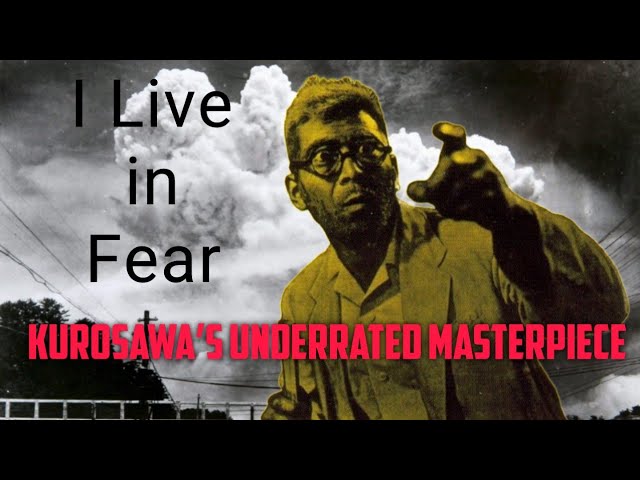
Godzilla films, particularly those directed by Honda Ishiro, serve as profound cultural expressions of post-war nuclear trauma and collective memory, where the monster's emergence symbolizes the repressed horror of atomic bomb testing and the psychological impact on populations downwind from nuclear test sites. The 'Godzilla industrial complex' encompasses not just the films themselves but the entire ecosystem of cultural production, including the Hollywood adaptations that systematically erased Japanese characters (replacing them with American actors like Raymond Burr as Perry Mason), the corporate structures of Toho Studios that maintained strict hierarchical yet egalitarian workplace cultures, and the complex network of American intelligence and cultural diplomacy figures like Donald Richie who mediated between Japanese and American societies during the Cold War. Understanding Godzilla requires examining these films through the lens of cultural forensics—peeling back layers of censorship, propaganda, and political tension to reveal the authentic historical experiences of nuclear testing victims and the profound pacifist message embedded in what appears to be simple monster entertainment.
Godzilla Studies: Honda Ishiro and the Nuclear Age
Added:Hello ladies and gentlemen. It is Professor Hamamoto and the date is August 2nd, 2026, 400 p.m. Pacific Daylight Time. Today I have an exciting talk for you.
Prepared editing to the very last moment. I just had enough time to go downstairs and get myself a can of uh cold jasmine tea. This is from Japan, by the way.
Itin is the brand. And I just mention it because it's a really good drink for it's it's non-caffeinated, nonsweetened, of course. Right. This is Japanese tea.
But it's really good for hot summer days. Another good drink I can recommend in addition to jasmine green tea is what's called a muggi cha and muggi is barley. Barley tea cold on ice or just chilled. It's very very good for hot summer days wherever you are in the world. In Japan particular, it's very very uh humid. Mushiatsui, it's called humidity, right? So, I'll be taking sips of this drink periodically to clear my throat as I deliver this talk to you today on well, it's about me. That's I wrote myself into the title. How about that?
seems to be a typical pattern in most of my talks.
And I'm talking about growing up in the post-war post nuclear age. Yes, I'm a boomer.
I grew up in fear of annihilation by the Abomb, right? I was going to get deeply into that in this talk today. Then it started to change focus and I thought I would talk more today about the director Honda Ishiro.
It's pronounced Honda ladies and gentlemen not Honda. Honda and um I would give this book a fivestar recommendation.
It's an academic well let let me clarify that it's by an academic publisher Wesleyan University Press but it's not one of these turgid so-called film studies cultural studies theoretical to you forget what you're studying very quickly when you are off into the tall weeds of so-called big theory theory with a capital te that's what was plaguing the well it still is really but it really plagued the university uh when I was coming up it was just starting to kick in and it had about a 30 year 20 30 year run or so and dominating the discourse in the academic world and this is when you started to get the whole GBTQ and feminist poststructural theory I won't get into it is this material has been critiqued enough by all the Johnny come ladies on tube view notice how many more academics are coming on tube view recently [laughter] very recently some of them are even fake professors you know who I am that that clown ass clown professor J [laughter] [gasps] so any you know I I mention this because I'm staking my turf and I'm also taking my turf today when I when I'm speaking of Godzilla study studies, goja studies, because as I've told you before and most recently last week, I've been doing this for decades now. That is popular culture studies. And I'll give you an update. I got a notification the other day that my diploma order has been received. It's being processed. I think they're going to put it in a nice little binder and folder. It's good quality paper. I'd probably have to print it up individually on good quality sheepkin, maybe not literally sheepkin, but paper of that quality from Bowling Green State University, Ohio. And it's going to have my name on there, and it's going to say Master of Arts, Popular Culture. Okay, I'm going to show you the degree right here on this channel, God willing. Hopefully, I'm still around and we haven't been uh put to arrest through World War II, which is another reason why I'm doing this talk. This is the runup to the nuking of Hiroshima Nagasaki.
And of course, Japan was attacked a third time. It's called Fukushima, although it's not conceptualized as such or understood as such. But Japan was attacked for a third time. That that's another discussion and people have begun doing alternative research on that. What you're hearing about or what you've heard about for the past uh years. Well, since the very beginning is uh mostly lies, propaganda, uh diversion. Anyway, the point is is that Japan has been under nuclear attack numerous times. It's only It's the only country that is with offensive weapons. We're under attack with nuclear weapons, but it's more like slow release into the atmosphere, atmospheric testing.
The downwinders of Utah, Northern Nevada, they are victims of the nuclear weapons complex. This is what I'm referring to when I put in my title. the Godzilla industrial complex, right? That includes you, many of your relatives, maybe you yourself.
I had a professor at the University of California, Irvine. I'll give you his name because I'd like to pay homage to him, Professor Joseph G. Jorgensson, who who was a downwinder. He grew up in that part of Utah, southern Utah, and caught a lot of the open air atmospheric testing going on in the state of Nevada.
And I don't need to go into that. We'll most of you know that the at least the basics of atmospheric and underground nuclear testing that have been going on almost continuously since the supposedly since the end of uh World War II, right? So, it's a huge topic and I can't promise to even scratch the surface here. I'm only going to be talking about one particular angle and it's an autobiographical angle because how did me how did myself, Professor Hamamoto, whose childhood hero is Dr. Siawa, he's the person on the pick for this show today. Dr. Sizawa, right? Remember that gripping scene at the very end of Godzilla? Both versions, both the white man's version and the yellow man's version, right? I grew up with the white man's version. Okay? I grew up with the Jewish Hollywood version of of Godzilla, the Jewish edit, right? We've been edited out of the history, right? And and I'm going to talk talk about that because I grew up in LA and uh well I'll tell you right now the reason why I was able to escape the brutal eraser of me myself, my people, my history uh is because we had our own network of theaters. We being the nikay community.
Nikke is overseas Japanese people. Okay.
You you're familiar with the concept of Italian Americans, uh, Irishameans, Armenian Americans.
Well, all the hyphenate groups, Japanese people had a large immigrant population. Chinese, of course, all the groups have fairly large communities overseas.
And in Japanese, it's referred to nik.
And for a long time, the Japanese people themselves never really recognized it.
It's they had their own lives to live.
But they understand now Japan, Japanese people, the yellow world more in a global uh world systems sense that I have been promoting for uh much of my career after I abandoned so-called Asian-Americans. I also don't use the term Japanese American because that's been been hijacked. That's been hijacked by people like Norman Metta, right? You remember 911? He was in the presidential executive center with Dick Cheney, right? That guy Norman M. He's from San Jose, right? He calls he was a kingpin of the so-called Japanese American Citizens League. And I'm not going to go off on them right now. They but I'm just mentioning their name, their title, that organization, and at least one individual, Norman Metta, who was conveniently the Secretary of Transportation when 9/11 went down. I'm just mentioning people like that just to prove my or to establish my point why I'm using a different terminology.
All right. I'm also staking my claim not as the pioneer of Godzilla studies.
Uh I think you might say that I mean Godzilla studies. How can you study a a fictional character? Well, it's not fiction for one thing, which I'll [snorts] establish today.
It manifested itself in fiction but but the premise of Godzilla or Gojira as it says in the Japanese is rooted in history not book learning history but lived actually existing history respect that you respect it you don't have to res the American history right let's just start locally here with American history. Be and I mention this because [laughter] I stress this is because because we are systematically taught to blank out on historical memory purposely. So, we're always caught on the back heels and every time a new revelation comes out, we're going to think it's novel. It's unique and uh we're helpless to do anything about it. That's part of the historical amnesia process that you're taught in school [laughter] definitely. And you're taught in the popular culture how to forget.
Well, today we're going to remember, but we're going to show you that remembering is a lot. It's a challenge. It's exciting. It's even fun. Yes, Godzilla is fun. I recognize that. But at the same time, I do not want to leave Godzilla to the weebs, to the weeaboos, to the so-called Japanophiles, to the newbies, to the people who are now telling me that my parent culture, although I'm really American. I'm third generation American. You now it's okay.
The white man says that we can eat sushi now. We could eat a Japanese food. We call we don't call it Japanese food. We call it food. All right. And the same by the same token that they they give me permission, the yellow man to to be interested in Gojira or Godzilla. Well, I I've been there and I've done that and I'm going to tell you a lot about probably more than you want to know.
There's going to be a lot of gossip in here, too, about some characters that people think they know about, but they don't know them as well as I do, [snorts] right? To the point of being friends with them, being in their apartments, being with them in more casual, intimate circumstances as opposed to just reading their books or seeing seeing them in the movies or watching their films or documentaries.
All right? And that doesn't make me better than you. That only makes me a more serious student of the topic because I went to Japan to follow follow up on my childhood exposure and interest in Gojira.
Because like a lot of people of my generation, I grew up being exposed for the first time to Godzilla, the king of the monsters, the Jewish version, not the Japanese version. [laughter] I I I have to stress Jewish because, you know, Haim Saban is a Jew. He's the guy that took a Japanese product, the Power Rangers, and made them into white people in his version of it and made a fortune of it.
says, "Oh, great. We don't have to see the Japanese yellow people because they have helmets on. So, we'll we'll have the black boy. We'll have the white guy and the other white person." Oh, yeah.
There is a yellow girl and she is the yellow mighty morphin ring. So, this is why I make this distinction. I don't want to blame all white people. I'm talking about Hollywood here, okay?
Let's be real. And last I I've been doing talks for the last few weeks on people like Michael Oitz.
Um gosh, Mr. Shelter, David Geffen.
Uh last week I talked about the role of Hollywood in is Israel nation building.
Right? So I've been working our way up to this process right here.
Right? And I'm talking about a an industry here that is hurting us into World War II.
I'm not going to go any further than that because I want this this show to remain up. All right? And you know which foreign power is behind all that. And you know by now which industry is has been promoting this.
the New York slimes, you know, the print print, whatever is left of print media, all the way to so-called indie media, which has been infiltrated by a bunch of foreign agents who are they might be Americans, they might be Canadians, but they're on the the payroll of of foreign agents. And it's not the checks either.
All right.
So anyway, let me begin by giving giving people who are un uninitiated to the Godzilla studies and this is a resource for you as well. Criterion Films I've missed I've mentioned them before. They're in New York City and uh it's a small company I think. I don't know if it's for profit or not, but it's probably for my money the single most important distributor, manufacturer, promulgator of quality films, film art, let's say. And I'm not looking down my nose at all movies that come out. I watch a lot of them myself. I studied the popular culture. I got over my snobbishness about between elite culture and pop moronic culture a long time ago. I just look at it as one complete entity. But Criterion Films is where you want to go to, especially where we're talking about the Japanese film, both the golden age of of Japanese cinema and we'll be talking about one of the premier critics. He's dead now. Donald Richie, who I knew personally, by the way. [snorts] Um, and I'll talk to you about how through him, through Donald Richie, how I got involved in studying Japanese film. I'm not in Japanese film studies, okay? That's a uniquely specialized field within so-called film studies. And I don't make any claims of being part of that very small tight clique. But I will tell you a secret about them. Most of them don't speak Japanese. How can you study Japanese film and don't know the language or or let alone read Japanese language? All right. I'll tell you a secret about Donald Richie, by the way.
He's fluent in Japanese. He had an American accent. I'm not a fluent in Japanese, so you know, I'm not criticizing him. All right. Um, but I found out only by hanging out with him that Donald Richie can't read Japanese at all. I mean, he could read, you know, certain basic [snorts] uh menus and whatnot, the stop signs and things, but but he can't really read any articles or even the the the daily newspaper. and he wrote for the J Japan Times for most of his writing career, which I'll put that in quotation marks because uh and I was old enough to kind of be hip to what goes on in the publishing world, academia. I was over there on a Fulbright scholarship and the Fulbright is sponsored by the State Department.
And if you're affiliated with the State Department that you're talking about propaganda, talk about diplomacy, you're talking about spies. So I I encountered a lot of spies or spooks or agents or assets while I was living in Japan and subsequently. Many of them were Japanese, many of them were Okinowan, many of them are Korean, uh but most of them were Americans, right? You can just you just assume that they have some sort of spook connection.
That that's what I do because after a while I started to put things together.
I started to run into the same people at certain events and see certain names and I could um kind of sus out, fill in the blanks what they were trying to conceal.
It's all, you know, uh the white newscasters, the analysts like to talk about Kabuki, right? They've never seen Kabuki and they've never been to Japan.
They'll talk knowledgeably about Kabuki Kabuki theater. Well, that is it's very theatrical, right? You don't know what role the person in front of you is playing.
And that holds true for Donald Richie. I don't really know who he is purposely so. And he knew that I don't know who he is. And he wasn't going to tell me. He was not going to take me into his confidence. And I understand that. But I still was able to sus out quite a bit from the few times really that I hung out with him and I knew what his predilctions were and I was able to compare notes with other people who know him. All right. So anyway, he had a very close relationship as a consultant I believe with Criterion Films some of his own. He was a movie maker as well. He's a poet, movie maker, uh, writer, essaist, cultural critic, musician. He was a composer. I don't think he could write a lick of music.
But, but of course, he couldn't read Japanese either. So, being able to read music really didn't stop Lennon or McCartney. He did it. So, I'm not putting these these criteria on him. I'm just saying he's a really multi-talented expatriate who had been live by by the time I first met him he'd already living in Japan for about 60 years and he Donald Richie had been living in Japan since like 1946 47 almost immediately after the surrender and the occupation of the US military and he came and he told me this himself okay lot and a lot of this is publicly known information. There's a lot written about Donald Richie in popular journals.
There's scholarship. There's people who are trying to write his life story.
They've done documentaries on him. He was interviewed left, right, center. And he even allowed me to interview him because I I was approaching him as a fullbrite fellow. Okay, for those who don't know, that's a semi-state department official emissary of the US government in Japan. So, he's going to treat me nice. Plus, he's an old school gentleman. Whenever I wrote him a short note or a letter, he would unfailingly respond to my queries, to my messages. He was old school, unfailingly. So, I'm not criticizing him at all. I'm just trying to convey to you the layers of I won't say play acting but of dissemblance that that takes place in the world of well all the world but my world in particular of seemingly objective scholarship like you would think gee how difficult could it be it's only Godzilla but already he's giving us a whole discourse on spycraft well ladies and gentlemen I have to tell you something. It is that deep. And you know what? I like it that way.
[laughter] I always knew there was something more to even when I was a stupid kid sitting on Saturday morning in my PJs watching Godzilla cut up in many different ways and seeing seeing Raymond Burr ironides Perry Mason is being made the focus of the movie. Not Dr. Sarah Zawa, but Perry Mason, the Japanese people who were really in the Japanese version, the original version are the focal point of the movie, of course, but in the the American cut, it's Perry Mason. So, I grew up thinking that Godzilla was about iron sides, the big obese uh per uh with Raymond Burr.
that's his his his um his his name, right? So, that already tells you that when we're talking about a phenomenon like Godzilla, it already becomes nuanced and there's already layers of dissemblance going on that you're not even aware of until later. I didn't know that there was an original Godzilla version until years and years later. and it wasn't even available in America unless you were a film scholar or a Donald Richie type person. You would not know that that print even existed.
All right?
And at the same time these days 2026 I have to listen to these they're like the papa pundits that you always hear me complaining about. They're self-proclaimed experts on Gojira [snorts] or Japanese popular. They know everything about J-pop.
Just like whenever you go to a blues jam or you play with a bunch of guys, this why I don't like to do it. There's always the guy who knows every single thing about the blues. [laughter] And he he's a white guy, of course. He knows more about the blues than you do, right? Just like Miles Davis tells the story, you know, the great Miles Davis.
Miles Davis told the story how when he was at Giuliard, you're studying music, classical music, right, the European tradition, the canon. One of his professors said was telling him a little bit about jazz. He said, "Yeah, the jazz comes out of the blues. that comes out of oppression and extreme poverty and slavery. And Miles Davis said, "Hey, wait a minute, [ __ ] My daddy was one of the richest man in the state of Missouri." [laughter] Which is true. Not the richest black man, the richest man, whatever color.
His father was a pro. This is Miles Dwey Davis. His father was a prosperous dentist. He owned a lot of land, a lot of property, right? But well, he was telling you that, hey, I'm my history. I'm I'm in the best position to tell me about tell you about my people, my experience, my music, my art, right? And I'm making the same claim for myself. Now, that doesn't mean that I can produce a book like this because I give this book high praise, five stars.
It's by a guy named Steve Rifle or Rifley. We're going to see him in action here at a conference because yes, I wasn't kidding. There are Godzilla conferences and it's not just the fanboys now. It's not just the guys wearing the Godzilla. It's not just cosplay. Not just furries.
It's a serious stuff. And I'm not saying it has to be dead serious on a scholarly deadening level. I'm just saying trying to establish for you or with you that this is worthy of your deep consideration in a second, third, fourth, and fifth level look and beyond. So this is a good place to start. It's called Ishiro Honda, a life and film from Gojura to Kurasawa.
And I learned so much from this book. I just can't begin to tell. Oh, by the way, there's a forward by my f favorite Sicilian American director Martin Scorsese. Okay.
How comes Martin Scorsese, Copola, all them guys can proudly proclaim their Sicilian Sicilian or Italian Nepalitano heritage, right? Well, how can they how can they celebrate that? But some guys in the chat here will say, "Yeah, you should go back to Japan." [laughter] Well, I'm here, baby, and I'm here to stay. You dig? Just like Dewey uh Miles Davis said, you know, you're full of [ __ ] You think you know it, think again. All right.
Uh by the way I I should tell you the one of the the I think he was the first guy who on an academic on a scholarly level you know that means foot footnotes citations scholarly protocol good research right historical background good bibliographies the first person I had ever encountered who took Godzilla serious seriously on that level was himself Jewish and I'll give him credit right now. His name is Jerome Shapiro. I met him over at UC Irvine. He was a dick but I have to hand it to him. He landed on a really good topic. I wonder what he's thinking now when all these Johnny come lately have kind of passed him by. But he was one of the first people to be be writing about Godzilla in a serious fashion.
Um and of course I already told you that I was studying this type of phenomena Japanese pops particularly way back in 7576 and at Bowling Green right so well we'll talk a little bit here and there about Honda's biographical contributions here but for now let's just say he is the person who directed Goa Honda. If you want to know his name, just think of the automobile if you have a hard time remembering, right? His last name because it's too alien for you to remember, right?
[laughter] Believe me, I have that experience a lot of times. Let's just give me your first name. I because because you know, I can't be bothered to memorize your whole name. Too difficult for me.
Uh so I just think of Honda Ishido but this guy had you know gentleman has my utmost because I've been reading this of course this is the primary text for today's talk. I didn't realize that he was uh in the Japanese Imperial Army for a total of about six years.
And this was six years in a young man's life who was already on an elite track, an exclusive track to become a filmmaker at Toho Studios, which I'll show you in a little bit. I visited Toho Studios.
That was one of the experiences of a lifetime. And it was thanks to a friend who I met at one of these events, right? He well I'll tell you I won't give his last name I think he's still alive and kicking you might not want his name mentioned but he was the head finance guy at Toho Studios and Tohjo Studio is on sort of the outskirts of central Tokyo Fjo I think is the town I took a train at with him he took me out there took many many different local trains out there took seemed like forever to get there. So, he gave me a personal tour, but he he was the head uh accountant and bookie for the whole studio. So, he knew everybody. He knew the whole finances of the whole operation.
He knew the president of the company all the way down. He knew everybody. But he had retired.
and he was um or he is emblematic of the Japanese corporate ethos and culture that we were reading about back in the 80s and into the '9s when people were talking about how Japan was going to eat up America and buy up everything and take over.
Remember that scare? Now it's now it's the Chcoms who were supposed to be the yellow peril is always in the background there, right? It's the same people who are always pointing to the yellow people to take the blame for what they're actually doing like bringing in the opium, creating the opium, selling creating the atom bomb, you know, the central European expatriots who went into the to the Manhattan project. Okay, these are all sabotans, right? These these are these are people out of that central European mystical tradition. they were they were working on nuclear physics. It's not an accident. It's not a coincidence, right?
But that that's a separate but related story, right? And I have visited the Trinity site in New Mexico, Alamagordo, right? I think I've told you about this before. So, I made my pilgrimages to all these death sites and I lived outside of Hiroshima for a solid year. And I lived at the other end of uh Japan in uh Okinawa where the last major land battle of of the Pacific War.
That's what they call it. They call it Tai Senso, the Greater Pacific War. We call it World War II. Japanese have a different term for it. Just like the Vietnamese people call their war against America the war against American imperial aggression.
We call it the Vietnam War. That's another place I visited. I went to the Hano. I went to the war museums.
I visited all the sites. Right. I'm I interested in these these historical remnants. They're not remnants to me. They're living history.
All right. So anyway, Honda had his Showa era era. They're called Sho is the period of Hirohito. He's known as Emperor Showa, right? The Showa era is named after him postumously. It's called Shawa. That's when Honda was making his films. And the reason why the eras are are important to understand is because just like in America the Japanese filmmakers like Honda had to exist under various regimes of political censorship. So when you're reading this about him as his the censorship in the late 30s through the 40s through World War II I'll use our term World War II in China Manuria Manuko domestic filmm at Toto Studios and then the 50s when the Americans came in for the occupation you're going to see very similar parallels there the supreme commander of allied powers was Douglas MacArthur and Douglas MacArthur under Scap, that's the initials of it, had a bureau specifically for newspapers, publishing and movies, films, and the type of films that were made and the content of those films were closely scrutinized and regulated. And Honda had to work under all those different regimes. And at the same times, he had spent because he was drafted three separate times, right? I I was thinking about this earlier today. I said just I said just imagine all the times in my own career I was feeling sorry for myself.
This break didn't happen. This didn't take place. I got fired from here. I got fired from there. No one wanted to hire me here. You know, on and on.
Wo is me, right? Okay. [laughter] Uh so but this guy had was in the Japanese Imperial military for a total of six years. He was drafted three separate times. He had already been put back into civilian life life when he got his red notice again and was was called back to go out into the to the battle fronts.
He went to China. He went to Manuria. I think it was China. And he wound up, by the way, for a year, uh, this was like 1934 43 44 as a prisoner of war of the Chinese national forces.
And by the way, he didn't have a a really wretched experiences as I I thought he might, but he said he uh was treated very well by the Chinese people.
They were friendly towards him. They didn't really view him as the enemy as such. I think they viewed some of the waring Chinese parties as being more evil than the invading Japanese people, right? It's the there's a period of warlords. In fact, fact, that was one of the reasons why Japan ostensively went over there because there was all this chaos going. They said, "Well, we're going to clean it up." Right?
But he he rarely t I'm talking about Honda now. Rarely talked about his his uh overseas experience as a as a soldier. He didn't like it, but he kept his mouth shut. He did his job, right? That is part of the Japanese corporate ethos, too. He was perfect for ho.
[snorts] You do your job. You have your position within the hierarchy and you do the job to the best of your ability, right? And that's not unique to Japan, but in the United States corporate culture, you're highly disposable.
All right? Many of you who are watching this know what I'm saying. Either that or you're living in fear that whether you're going to make it to the to the retirement and whether your pension is going to be there, you know, because Blackstone or uh Black Rock is going to abscond with your money, right? So, these so-called private equity companies anyway, I won't go down that road.
So Honda had an incredible history, but at the same time he was amongst a privileged few who are identified by the Toho company and probably by by the government state agencies and he probably [clears throat] had prominent family members that that were known to the the decision makers and he was brought in I think he was at the Nihon University. It's a pro it's a prominent even back then private institution and they had a a budding an an early film studies program film production not film theory like but they're saying oh yeah we're let's look at the extended shots of ou yasuho let's look at the kuran you know none of that stuff it's like how are we going to make movies or how let's go on a factf finding mission to Columbia Studios in Los Angeles and see how they're doing a certain they would do that. They would send people over and study. They'd go to France. They go to Germany. They'd look at the at the catalogs produced by Leica the Sun systems. They were really really aggressive students of the film technology and art. So these are mostly the men. They're mostly you know largely men. The women played a strong role including his own wife in the business but it was mainly the men who were the the directors. I don't know of a single film director who made it into that time but they were recruited from the top universities. He was still sent out to the battlefield but the company held his job for him while he was getting his ass shot at or being a P.
And he never complained. He never grumbled. The resentment never manifests itself in bitterness of the sort that you get to hear from me week in and week out. He was Japanese.
He kept it inside. It's called gamang.
It's like, you know, you you just grin and bear it. It's the British stiff upper lip, right? You've heard this.
That's real. That used to be characteristic, by the way, of all cultures, especially American culture.
The winter, the whiny, the wimpy, complaining, grievance culture that we're seeing today is a historical anomaly in American culture and society.
I saw it change myself right from under me. Well, during my last years of teaching, the culture, the society was being re-engineered in that direction.
So I'm giving you a basis of comparison here and I think um by reading these types of books studying the lives the the travailes the hardships as well as the accomplishments of people like Honda Ishiro through the access point of something silly like Gojira or Mosa or Gdora I think we're going to come out for the better. Don't you? I think you will. Well, you're going to start looking at these movies in a different way. Just like someone told me in a comment of last week, he said, "Well, you know, I'm never going to be able to watch The Mighty Morphin Power Rangers in quite the same way." Right? That's what I do.
My whole goal in popular culture studies and cultural forensics is to take something seemingly mundane, innocuous and undistinguished and then probe and dig into it and peel back the historical, the deep cultural, historical, existential, biographical layers and say, "Wow, [laughter] isn't humanity beautiful?"
I think Honda lived I think he was in his late 80s or 90s before he died and he went through hell.
All right. So, one of my big takeaways is for me to stop being such a big complainer or not to feel sorry for myself.
[laughter] All right. So let's take a look at how uh how Criterion Films has been p packaging because there's huge interest now enough interest where it's going to make money for Criterion right there's huge interest in Godzilla studies or sometimes it's called Kaiu D Kai D is big big monster movies and again think beyond the fanboy level.
Don't be a weeb.
All right, My Little Pony, don't be a brony, right? Don't be a furry. You notice the people who are watching my show and weaponizing my insights and saying, "Oh, yeah, this guy here belongs to a furry cult. I did those shows a long time ago, by the way. They're watching my show and figuring out how to weaponize Professor Hamomoto's observations."
Right. I I I I'm trying to train you how to she see through all the different flack that's being put out there to distract you. Oh yeah.
Tyler Robinson was a furry. Yeah. Tell us. Tell us. Lay it out for us. Megan Kelly. Yeah. Come on. Jimmy Door. Yeah.
Sean uh what's the guy? The guy that he's a cool ex-Navy Seal. He's the tattooed wonder. you know, Sean Ryan.
Yeah. Or uh the Latino dude, right, with with the headband on, you know, all these guys that are flooding the zone, right?
Um here's how Criterion is repackaging and reintroducing the Criterion series of the Kaiu movies of the Shawa era Tohjo Studios.
>> [music] >> Okay, I'll be back with you [laughter] in a moment. Here we go. That's a promo, a trailer. All the films have been digitally remastered. I think it's like 4K, something like that. It's definitely uh Blu-ray, but I must make a confession to you. I don't have a 4K player. I'm going to invest in one. I'm kind of shopping around for it. Uh I think now is the time because you have all these restorations and these reissues. Now is the time for me to upgrade my hardware so that I can watch these films and study them intently.
All right. Now, I'm still going to buy some of the the old regular. This is a big revolution itself DVDs, but I need to up my game. And I'll take this opportunity to thank my patreons because you're the ones who are providing me the funds that enable me to buy books like this and really steep myself into it and get the DVDs and the material required in order to put these presentations together. So ladies and gentlemen, we're on a um upswing so far as the larger cultural forensics, let's call it effort is concerned. We're moving in that direction in general. And this is a direction that myself, my colleagues and my predecessors have been pushing for for 40 years now or more, probably more longer than that, right? to the point where we went to go meet and go examined the sites [snorts] where these productions were taking place, including Tohaho Studios, which is now I haven't been there in years, but it's now a a tourist.
It's not like Universal Studios, don't get me wrong, but it but it's a place where people make ordinary people who are into Godzilla, [snorts] weaboo, anybody or or serious film scholars, they make a pilgrimage to go to SJO to visit the studios and it's really deluxe now. It was quite different than uh when I was there. In fact, when I w went to the studios, um I told you I I had I knew a guy who was a lifetime he was a career uh employee of Toho Studio by the way, Japanese corporate style. He was telling me about how he started he started uh at Toho cleaning the toilets.
This is how in the old days even in American industry or whatever it was or the film business you start or in the recording studios you start sweeping up or organizing film whatever you're doing really what people coming out of college they would consider to be menial work and he came out of a University of Tokyo by the way and he was cleaning toilets and it wasn't humiliation it wasn't like a fraternity hazing or anything But it's to instill a certain attitude. But you got to know everything from how the toilets are properly maintained to film making and bringing in to worldwide release. Now that's the type of corporate culture that America has lost.
We had it not too long ago within my living room memory. I I that that's not an alien concept. And when I saw saw that for myself with my own eye, this is why you got to go to these places, it was a revelation because everybody in America who in the business schools, this is the when there was a big MBA fad going on, masters of business because they wanted to get rich on Wall Street. They were study trying to study the secrets of Japanese management.
There were all these books and I read all those books too. But it goes very deep to the way the society and culture is organized pre- capitalist.
Right? And one site stuck with me quite clearly. I told you this is going to be highly autobiographical.
One site stuck with me to this very day is that I went there and I there was during lunchtime at Toho. Everybody eats at the same time in a giant cafeteria.
And it I've seen college and university cafeterias today that are much fancier than the ones you see at at Toho or other Japanese company. The food's much better in the Japanese setting. But in the uh universities they have, you know, the the taco bar, the limitless self serve, soft serve ice cream, and all the treats from home, right? But anyway, it's it's a cafeteria, and it's kind of Spartan, but all the good nutritious food is there for everybody. Everybody eat eats at the same time.
So, I was walking in there and and my my host introduced me to the president who was waiting in line with a tray of food. He had a little piece of tofu here and maybe some bowl of ramen with a boiled egg on top. I don't know what his menu was. [laughter] Maybe he had, you know, bowl of rice here, some gyoza. Just he was just eating the corporate salary man. They call him salary man. and it's a workman, white collar worker lunch and he was eating with everybody else. So I was just so I I got to meet him and you know he meets everybody right he's the head of the the studios which was astounding for for you know for starters I wasn't I didn't have to go to mama song best table and say yeah I'm with Michael oids I'm with creative artist Asians and I want a table here in the front so everybody sees what a big mocker I am no he was eating in the cafeteria with everybody [laughter] else And that sends out a very strong signal of the corporate ethos there. And did he take his table and leave and go to a private eating area? No, he ate with everybody else. He had his assistants with him. They were talking business. They were but he was eating with every in the same room. And I said, "Wow, that's amazing." I told my host, I said, "So, you know, I said, "You would never see that in an American corporation."
you know the and and they say they say Japanese society this is the people in who are studying Japanese management people studying Japan to figure out the Japanese growth miracle said oh yeah it's a real hierarchal society everybody knows this place I said wow American corporate culture is very hierarchical and you can't cross the line but Japanese corporations [laughter] is completely opposite So, you know, those are little lessons right there. I also uh bought since we're on the Godzilla theme here, the topic of Godzilla. I saw the pond. It was a man-made pond on the set, the production studio, they just keep it maintained there. And I was told that that it was that same pond where all the miniatures were floated and they were used in the first Godzilla movie. and subsequent ones. But that was supposed to be the the water, the ocean, the sea. It was that pond there. I go, "Wow, it's great." But then I saw a little sign cuz we're in Japan, right?
We I saw a sign stuck on on the lawn warning people. It said the sign said, "No fishing." [laughter] Uh, you had to have been there, I guess. I don't know. Japanese people love fish.
Okay, go figure. They're surrounded by water. The ocean is their supermarket, right? They don't have Kroger's or Costco or Giganto or us. They don't go shopping with a giant forklift, you know, over at uh Sam's Club or whatever it is. But, you know, it's a it's a different um world altogether. Quite amusing. So, yeah. No fishing. By the way, I also went to an aquarium down in Okinawa on the other side of the island. The probably the biggest one with the continuously cast glass panel in the world.
Uh I forgot the name of it. I think it's Chui Aquarium. It's world famous, but I visited there and you had all the tropical fish floating by.
And uh there was this one kid, he's probably 5, six years old, seeing the fish swim by and he goes, "Oh sh" in the child's voice. That translates to that looks good. Like I want to eat that. [laughter] I thought that was pretty, you know, pretty funny. You had to have been there supposedly. Okay. So, let me show you just very quickly uh some of the and and this is what I I learned much to my delight about Honda's pre Godzilla films, right? Godzilla was his first major earning film, but he had done movies before and a lot of them had sort of a documentary feel to them. He considered himself a quote unquote serious filmmaker. You might think Godzilla, Mothra, he didn't do all those movies. In fact, he refused to the second Godzilla movie. You may think it's cheesy and all that stuff, but but believe me, Honda and all those people who were involved with it, the special effects people, the musicians, the orchestrators, and the actors, they took it dead seriously.
All right? And again, I'm telling you this because we need to rescue Godzilla from the weebs, from the newbies, from the Godzilla groupies who are looking at at that from the toy level.
Okay? And I and not we're not just talking about Godzilla. We're talking about our own society. We have to look at Furby through a little bit more critical lens. We have to look at labubu a little bit more closely. We have to break down what Lego really means, which I did 5 years ago on this channel. It didn't even get 2,000 views.
And now we're getting very sophisticated prop political propaganda from Iran supposedly using the Lego motifs.
Are you see what I'm saying here?
Cultural forensics is very very useful, very practical, and you could probably make a fortune if you knew how to apply them and put it into play or monetize it, as they say, as the cliche goes.
[laughter] I should be out there with you trying to make a buck off of it. But no, I'm not really interested. I'm just interested in going to visit Toho Studios, flying to Tokyo, walking around, visiting with uh Donald Richie, having some tea with them, having lunch at the foreign correspondents club, interviewing people, getting to know individuals, trying to figure out who's the spook, who's the spy, who's ratting on me, who's following me around, who's trying to um honeypot me or honey trap me who's trying to embrace me like a Jesuit. I found that that was going on. It took me uh I probably I didn't realize that about 10 years ago. I I was being um I was being Jesuited down in Okinawa.
Figured it out. Just certain chance remarks. People let it slip. Didn't say, "Well, I'm a Jesuit." But they would uh they wouldn't indicate they would give me some indication that I was under observation.
that that I was being observed very closely and followed and more importantly insulated making sure that I wasn't talking to people that they did not want me to potentially collaborate with or meet or talk or exchange information. Seal me off. Okay, that's an important propaganda function by the way that I think we can all benefit by. It's not just disinformation. It's not misinformation.
not just lies but it's also a process of encirclement and um divorcement or containment. It's a strategy of containment. That's a cold war term by the way. It's very important function and I had those type of people around me and I had to always think right and and and by the way that it it exists today. It's not something that I I left behind, right? And it's not unique to me. It's it's being done to you, right? At all different levels in all different, you know, you've heard of the flock cameras. And I'm not just talking about that. I'm talking about human intelligence that's on your ass. Okay?
Not trying to make you paranoid. I'm just trying to trying to have you understand how societies actually operate, how they work beneath the rhetoric of freedom and constitutional rights that Tucker Carlson tries to pretend still exists here in American society. He's Tucker Carlson's going to protect us from falling into totalitarianism.
Excuse me.
So here's a quick example of one of the pre Goida films of uh Honda. It's called Eay Shima.
It's the great I I have never visited the the shrine, the Eay shrine.
Uh and it's it's a sacred it's a national treasure. But here it is.
Fore speech.
[music] >> [music] >> Hallelujah.
So many Well, you get the idea. It's still very much a documentary mode that he's working in. This is still a time of reconstruction in Japan and also these films like this that were being produced. I don't know if this is a Toho. I think it was a Tohjo. I saw the logo on the front. Uh but it was definitely being supervised by uh SCAP by the Washington bureaucrats that had been placed within the film industry to make sure there was no resurgence in militaristic thought or communist ideology was being promoted. By the way, I should tell you that the book, this book covers it not exhaustively, but it does talk about the huge labor and political disputes that wrecked the film studios, including Toho in the ' 40s. A lot of talent left as a result. A lot of the directors were kicked out. It's kind of I'm not going to draw the comparison with the blacklist in America in the 1950s, but it's something along those lines. But it was probably even worse because in like I told I was talking about Japanese corporate culture. If you have been fired from a Japanese company or you move, you can't move around from company to company. Your organization is who you are and your identity and once you fall off the track, you're off the track.
But anyway, that that point is not made in this book. This is just my own observation. But there was a lot of political tension that was kept out of these little short films. I'll show you one more uh in a moment. And the reason why that's important for us is because these political tensions are impossible to repress.
You can try, but it's going to slip out somehow. It's going to slim out in coded language, a metaphor, a poetic lapse, or something that'll slip by the sensor either deliberately or accidentally.
It's like repression. Just like when you do a slip of tongue, you meant to say some one thing and you say something else. But the your your slip of tongue is probably more accurate what you're really feeling. Right. Freud did a whole essay on this. You're very you're familiar with repressed uh psychological repression. Well, it's the same way with the polit the film very similar. So these directors, people like Honda were were very skilled in not externalizing visibly vocally their descent. He was profoundly anti-war. For example, all through the war, he never uttered one disloyal word about his unit, his country, his emperor or to the military.
Never once. And he never expressed any bitterness to it. But he was profoundly anti-war. And it shows up in his movies, including Godzilla.
You understand? It's called the return of the repressed.
The repressed cannot be repressed.
And why is that important for discussion today? Is because no matter how much censorship comes down on us, we Americans in 2026, we're not going to be repressed. We're not going to be held down. It's going to come out.
It's going to come out on the Professor Hamomoto channel through his puns, his jokes, his sarcasm, his irreverence, his routines, his stream of consciousness, his flow, his stories, and I'm just one person. All right? So, these characters who are working for Israel, you know, the sensors, they can try all they want, but they're a huge disadvantage. They don't know our language. They don't know our culture.
Maybe Ben Shapiro thinks he does, but um you know, or Mark Lean or one of their assets or some of you know, Harvey Wine, whoever these characters are, but even then [laughter] it's it's like a a beach ball that you try to hold under the water. It all pops up. So, let's take another look before we move on to the heart of this this talk here. It's called Eagle of the Pacific. It's a postmilitary film on the Japanese military and it's uh I think it it was edited not it was subtitled in a Spanish language country.
I don't know if it's Mexico, if it's Espa where I don't know where it is.
There's your tow hole. [music] [music] Heat.
Heat.
You might He was Shimura Takashi. He was a favorite of Kurosawa. the director. He's also in Goja. You'll recognize his face.
Oh, me cup.
[music] [music] Well, you get the flavor of it. I haven't seen this film. I'd like to get a hold of the this one. This is something that Criterion or some other company hope they do. They hope they restore these prints and then reissue them, subtitle them, have them maybe commentary from film experts, historians, cultural historians. And uh the one uh am it's about the amma the uh uh pearl divers I guess they're called uh a film that um on pioneer using underwater photography which was a technical achievement. There's there's so much so many contributions I I don't even have time to to get into it but this these type of fil films were not shown widely amongst the public. The domestic dramas were were emphasized in the occupation government of Japan overseen by Scap, the United States occupation. They did not want any trace of militarism or militaristic warrior culture. If you had films, it's called the Jedi, the samurai films with the swords and all, those were those were proscribed. they were prohibited because it conjured up an early era of Japanese militarism until I think past 52 it started to loosen up. So anyway, like I told you, Honda was trained and grew up under these different regimes of censorship. Now, this is where someone like Donald Richie comes in as a very important mediator because he's American by nationality. He comes in as a very important mediator between the goals of post-war American Pax Americana cold war Japan that particular relationship and that battle that struggle was going to be fought out [clears throat] in the realm of the popular culture. Do you understand?
They're I I don't think they use the term necessarily today. They the people who theorize this refer to this as soft diplomacy, right? The toys, the movies, the literature, the K-pop, that's all part of soft diplomacy.
Soft diplomacy is what reversed the highly, highly negative image of Japan in the world society, especially in America. We were trained by these propaganda movement, including myself.
By the way, like I told you, to the point where we had to go to our own movie theaters, the Toho Labraa, to see Japanese movies. That's how I was able to escape Jewish Hollywood by going to see Japanese movies in LA by an owned and operated theater owned by the Toho Studios where they showed their own movies.
And I saw all the classics because they were making a great movies at that time.
And there was also the Kokuzai who featured Dier and Shiku different. Those are all gone now. The buildings are still there. But now the Korean Christian church or something cuz the Japanese American or the Nik community has diminished quite substantially.
Right. They were forced to assimilate, move out, out marry, you know, gone their businesses, livelihoods. they they they had to go and endure this process of demobilization throughout that. But I do remember through the 50s and parts of the 60s where that filmgoing culture was robust and it was part of our community live, the Nikke community.
All right? So it wasn't just Martin Scorsese and Kobala. Those guys came to to my films, the ones that I grew up want only until they were adults and going to USC or NYU watching it in the classroom. I grew up with this as part of my daily life. Big difference because I got to see human yeller people, not these characters shown in Jewish Hollywood, right?
I used to call it white Hollywood and I have to call I have to call a spade a spade, right?
This is what it was. This was their charge. This is what the people in DC said, "Okay, if you want to join Wasp Society, if you want to live in the Hamptons with us, if you want to marry our daughter, you know, Ivanka Trump, and then this is what you have to do to the other people." And they said, "Okay, we're there. We'll do it."
I'm simplifying right there. So, this is where Donald Richie comes in.
He, you know, I could spend a whole hour talking about his fascinating biography, but he's from the Middle West and he added uh gosh, what can I properly say about him that that uh gives him his respect, his his um recognition, which he already enjoys really, but doesn't denigrate him because he was a um he had a shadow self, shall we say, that most people never saw. I got to see it because he recognized in me as someone who was not a threat. I was not a white journalist or a white author. I was not a CIA agent. I was a yellower kid. I was a grad student. So, he knew I was green.
No, no, I wasn't a grad. I had a PhD already. I was already teaching. So, he just thought I was some harmless academic type. clueless academic time which you know I understand you know so so he told me a lot of stuff that he normally would not u share with other people but he also recognized a fellow in Japanese it's called etchy etch or h itch and that means um someone who's slightly perverted you know etch culture scubbe Jang like a dirty old man type deal, right? Not not really deviant, but you know, I don't know how far he went with it, but I was interested in the reason why he probably got it because I was always interested in the seedy side of life, the dark side of life.
I wasn't buying all these romantic comedies that were being pumped out by Hollywood in 30s and for I knew there was a Hollywood Babylon beneath it even as a kid cuz my dad would tell me that remember he worked for the screen. He worked in Hollywood.
He would tell me stuff. He was also a Freemason. He knew all their secrets. So he would tell me and so I was getting educational watching this stuff on TV.
My head was telling me, "Well, this is [ __ ] This is [ __ ] This is [ __ ] Then I was also going to the Toho Labraa and seeing my fellow yellows in an unadulterated even heroic position like a Dr. Sarazawa, not Raymond Burr.
Okay. So, Donald Richie's charge, I haven't really fully figured it out yet. I've written about this. It has this book has not been published yet, but I've put it down on paper so I can work out my thoughts. But his charge because he came into the to Japan as a civilian contractor, a worker, 46, 1947, something like that. Went to work for the Japan Times.
Didn't work for intelligence that I could tell. He worked for the military a little bit. He might have worked for the military intelligence and then went civilian, but he was an intelligence asset of some or some sort living long-term Japan for decades and decades and decades.
And through the course of that, he became an expert in the num the number one expert, not just a expert, but the number one expert in English language in Japanese cinema. him and a guy named uh Donald Anderson co-authored a first book I ever read on Japanese cinema Donald Richie Donald Anderson I think he was and I think Anderson was probably CIA um but Richie I could never really pin him down on that he wouldn't he wouldn't really [clears throat] get into that part of it but it was through Richie that I found out about Kurosawa who is now an icon right the whole Star Wars series was inspired. It was a ripoff from Corasawa. George Lucas would be the first to acknowledge that all those guys, you know, Spielberg and you name even Quinton Tarantino, the world's oldest fanboy, he talks, you know, he's the second generation. He he loves these movies, right? They don't like the people, but they like the movies about using the people, their spirit, taking the sucking out of them and putting it into their movies at the same time eacing us or leaving out of us or putting some kind of racial hybrid out there like a Keano Reeves. You know, that's about as close as we're going to get in these movies realistically.
That's why I'm looking for investors from Japan and from China and from South Korea for my own yen project, Yellow Entertainment Network.
You got it? That's the only way it's going to happen. Anyway, Donald Richie was one of the guys sent in to kind of moderate and mediate and explain because this is all new. This is before the internet. This is before people were studying Japanese. This is before Japan became cool. They were still the hated enemy. So he was doing some soft diplomacy on for on the part of the government. He also had some connection with academic institutions like Colombia University and others. He was always getting invites, chairs and honorary uh recognition from BL. He was never an academic but he was always being courted by the academic world.
>> [clears throat] >> So here is a glimpse of a Donald Richie who I hope you will start investigating as an artist in his own right as a filmmaker, as a poet, as a journalist, as an essaist, as a cultural critic because he's certainly an historian. And he he certainly inspired me. For better or for worse, he inspired me.
[snorts] Foreign [music] speech. Foreign speech. Foreign speech.
Foreign speech. Foreign speech. Foreign speech.
Fore was Donald Richie many many years ago.
Uh you can see his his criticism comes from a position of liberal humanism. is we're all the same people emotionally, externally, it might be seem a little different, but that was his role to say we're all human beings. Now, I I disagree with that. I think people Japanese or whoever else, they fundamentally view and experience and live the world different from from maybe other groups and it'd be a mistake to assume this sort of liberal humanist universality amongst them. Anyway, that's that's a quibble. The point is, I wanted to show you that he's fluent in Japanese. He's got an American accent, but he invested his his energies into understanding a a society, a culture that was complete a complete mystery to 99% of Americans. If you can imagine that, cuz this Japan became an economic giant. It's been it's been dormant for the last 20 years or more. but a cultural force and a huge economy, right? We know that by now. But this is early days when Donald Richie So they were doing these Japanese cinema were doing these personalistic films like Tokyo Story and that's why Ozu which uh Richie wrote a classic book on Ozu Yasujiro and it's still referred to today. It's been in print for I don't know 20 years or so. It's still you can it's available. You have to look but you also get have to get the movies to understand where he's going with it. Brilliant.
That's Donald Rich and I'm proud to say that I got to meet him because I think I alluded to this already. I got a fullbrite fellowship to teach at Hiroshima University. I don't think I'm going to get to that point today where I went to Hiroshima, but one of my first stops when I arrived in Japan was cuz I well I arrived first to Tokyo was to stop in on Donald Richie to I had written him previously to pay my respects to him, bring a copy of his book Japanese cinema and have him autograph it and I still have a book of course and uh to express to him my gratitude for him being my sensei, my teacher. And of course, I'm just one of probably dozen scores of people who worshiped and admired Donald Richie.
But that's what you do. You you go and you meet the master. You meet the sensei. That's what I did.
And um I'm going to leave it at that.
You know, I could tell you some some very funny stories about him and get and shed a little bit more a light on his character um that he that he kept private.
And I told you he uh he let me in on uh his his secret life.
Um I'll just leave it at this. Uh he was in Japan for a very important reason.
when he came to Japan in 4647 you could be thrown in prison for being homosexual in America right the sexual mores were quite different when he was a young man and also through the 50s and parts of the 60s it started changing right and of course gay rights gay liber you know but this is pre gay gay liberation the only place where he could live out his sexual fantasies and the full expression of his gay sexuality and he didn't refer to himself as gay.
He didn't really recognize this term homosexual. Richie, he thinks he believes that sexuality is more ambiguous and fluid. But the only place he could do that safely without recriminations, exposure, or censure and still make a living and going about living his life the way he wanted to was in Tokyo.
Got it? So, there's all kinds of strange personal, not strange, but different personal reasons why people get into it this way, but I don't think anybody's really uh looked at Donald Richie. I hope someone who's a film scholar is watching this or a person who's interested in Donald Richie or Japanese film studies, you're watching this. Um, no one's really done any essay, any work about Donald Richie as a gay man, [clears throat] as a gay intellect, uh, artist and scholar living in Japan at a really pivotal moment in modern Japanese history. Uh, because you could extend this further to include a a wider network of Japan hands or Japanophiles.
These were the guys that were translating literature, translating Mishima Yukio, who by the way also was homosexual, right? He was a brilliant novelist, filmmaker, right-wing nationalist, idologue.
Uh Donald Richie in one of his books writes about how he met up with Mishima at a bar, a high-end Tokyo bar, and Mishima was trying to set him up with a boy. He he didn't do it. I mean, he leaves it Richie leaves it ambiguous.
He's not a social realist type writer.
He's more of a French imper impressionistic or Japanese style aesthetic, right? I'm talking about Donald Richie here. So, those are the type people he was hanging out with. He was telling me these these stories that he was living himself. That's how I found out a little bit more about his sexuality. But he told me that all these names that I grew up people reading their books, their criticism, their translations, they are all gay.
They were all homosexual men and they all were in Japan for the same reason.
the boys later on some of the weeaboos they started going there for the girls but but the initial ones were coming with intelligence probably the military men officers they were probably into boys right you know the guy that got fired from MIT right what's his nameto Joe Iichiito he's one of those guys by the way he was he was found in in Kabuki show in Tokyo. He was like one of those low low midlevel low-level rent boys you'd call him. That's Joe Ichiito. He ran he wound up winding uh running MIT Media Lab. He was big, you know, big friends with u with Jeffrey Epstein.
This was Donald Richie's world, too.
Okay. I'm sure he knew Joe Ichiito. I didn't know who Itto was back then, but there's probably a lot of people that, you know, that we we knew in common. So, and I kind of got a glimpse of that nether world, the underworld. It's called the Mizu Showi, the water trade, the demand, the underworld, that types.
I'm interested in that.
Right. That's also within my bowick of cultural forensics. I look at the dark seed side of life. That's where all the deals, that's where all the excitement, that's where all the innovation takes place in these margins in the underground. So Donald Richie, if you understood him in that light, you're going to have a completely different uh understanding of his his larger contribution to Japanese studies.
Anyway, that's enough for now. uh so far as Rich Richie is is concerned uh because I I can go on and on in that and I'm going to save a lot of this for my book um which I've had a hard time placing. I think the time is right right to get it published. I'm glad really that I got rejected from um everybody editors and publishers and I got really disparaging hostile as well as just non-com you know type of reaction to my work but I think the world has caught up with cultural forensics and with professor Hamamoto and the post Epstein world I think the world is better able and equipped to understand the real agenda of Professor Hamo and what he's been studying for years and years and years, but no one would listen to him because you'd only listen to him if it was coming from Donald Richie or some guys who were weeaboos or Godzilla fanboys, then you'd listen. As long as you discovered sushi, then I could eat sushi. So far as you think Japan is cool, then then you'll say, "Well, I'm copying you." No, you got it twisted.
You got it backwards. The blues, just like in the case of Miles Davis, it starts with me, not the other way around. Okay. So before we we move into that, let's take a little look of the um the incredible attention that Honda is now receiving amongst the fanboys. These guys are more than fanboys, but I I think I give them my highest respect as scholars and researchers, but I'm talking about the guys who are into Godzilla memorabilia.
those guys and they don't want to talk about how Gojira is a repressed expression of Honda's revulsion against war and his profound love of all humanity and animals including Gojira who came to the surface because his habitat was destroyed by American atomic bomb testing hydrogen bombs. It's a profoundly pacifistic film if you understand it from those that perspective. But if you look at it as a fanboy, as a weeaboo who says, "I'm into Godzilla." A lot of them are gay, too, by the way. Just like Richie, it's like kind of it's kind of like a a um a requirement. You have to be gay in order to like My Little Pony, Labobu, or or Lego, whatever. It's a sensibility cuz we're outside or monsters. Gays are into kaiju very much. American gays are into kaiju cuz from what I've read, it's because they themselves feel like they're misunderstood monsters in the dominant homophobic homophobic society.
They feel like Frankenstein amongst the village people who are coming at them with pitchforks and torches.
Well, you can relax now. You You won.
All right. You've taken over the castle.
You run the the world. Okay. Gay power and gay pride month is now a year. It now runs every day of the year.
Congratulations. Look where America is now. It's not your fault. It's the weak people who who succumbed and acquiesed to it. It's your fault. It's my fault.
It's our fault.
I only take partial blame for it because believe me, I took on the gay mafia and the lesbian mafia in the place in the stronghold where it was most well established, the university. Okay? And it was way before these Johnny come lately you see on tube. you who are critiquing theory and gay theory and DEI, those guys way behind the curve. By the way, I have some new insights that I'll be sharing with you to leave those people in the dust to talk about issues that have been put to bed 10 years ago. Anyway, here's some um insight into these authors here, Riyle and Godzeri.
Those are those are the authors. Uh Rifle and uh Godzi.
I think they're both American nationality and uh I assume their their language is good enough where they can read journal articles in Japanese and uh newspapers.
Uh but they've obviously interviewed a lot of people. So, this is a very recent event. It's a tribute to Honda.
>> Thanks, Steve. Of course.
>> Well, um, since this is the first time in the festival, I definitely want to talk a bit about, um, Ishiro Honda, but let's maybe start with the film we just saw. I think seeing on the big screen it's um I think the the miniatures are just and the sets probably the Toho and and Honda and Subariah at their peak. I mean >> that's that's kind of what uh I often say about this film. This is uh Honda and Subri at the the peak of their powers.
>> Uh it's one of the bigger budget uh films in the in the genre that they worked on. One of my favorite things, we were talking about this in the lobby and it's a real brief moment in the film, but uh that if you caught it, there's this sort of spectacular shot where the helicopter, the SDF helicopter flies past the Tokyo Tower and the camera kind of tracks the movement of the helicopter and you see this uh glorious miniature rendition of of Tokyo from the sky. And it's it's it's really it it gives me a little bit of a chill, you know, it's so well done. And >> so you see what's happening. They're already de depoliticizing the subtext of Gojira as h Honda himself has stated many many times and and the more serious critics and they're already making it into like a gay fanboy type of phenomenon. Gojira like I told you most of the guys are gay. It's like God, it's like Donald Richie and all these translators in English who went over there in hordes. That continuity is there. So, we owe them on one hand for the great gay research they've done, but you you have to understand in the book, you know, they talk about the politics a little bit more, but you have to understand that they're they're talking to a different audience. So they're talking about Godzilla as being an expression of gay identity, gay empowerment, maybe gay female feminist identity or that kind of nonsense being written, not them particularly, but there's all kinds of nonsense that has been coming out of academia.
So, this is another one of the reasons why I'm trying to re-represent Honda in a way that um is currently being lost from what I can tell. Here's another example just to show you the level of respect and seriousness that Honda Ishiro is given by not just fans, but by serious critics. We'll take another look here.
enough to stay.
>> Yes, I thought it was important to get Japanese perspective. They have obviously a different take on what Honda Ishiro represents to them. They seem more consistent with their own Japanese national cinema. Japanese as opposed to fanboy gaja weeaboo cinema which is where it's being taken and Tohjo is partly responsible that or to the people who are licensing all the t-shirts and the toys and all that. But uh but there's enough material out there so that we can understand it in a much more deeply political uh context. The context of World War II of the imminent nuclear war that might be taking place in Iran, that part of the world, we don't know. Or other acts of nuclear terrorism as we saw in the case of Fukushima. So, here's another example of a fanboy approach to Godzilla studies.
Hello everyone and welcome to our panel today. I just uh apologize for some of the switching around that we've done, but uh we're glad you're here to uh hear a little about Ishur Honda. And I'll let the gentleman to my left uh introduce themselves. But first uh my name is Nick Adam Polling. I have a YouTube channel called the Monster Report. Uh check it out on YouTube. Do a search for Nick Adam or or Monster Report.
Monsterreport.com also with one arm. And check out some of the shows that we have, interviews, anything Kaiju related. And go on with the introductions.
>> Hi guys, I'm Chris. I've been working and helping out a GPS here for the last 10 years or so. I'm filmmaker by trade and recently I'm producing the puzzle and I'm at Gashesi, editor and publisher of Japanese giants magazine and uh working on what I hope will be released next year with the biography of exactly the title of that will be that the publisher actually hasn't decided which title they want to exactly what what the title is, but uh >> okay, that gives you kind of a flavor what takes place at these comic conventions or kaiju. It's a lot of YouTubers, right? I talk about the pop-up pundits. There's a lot of pop-up pundits in the da kaiu. It's now cool to like a goja. I couldn't even see it in the film theater. I had to look at Raymond Burr when I was a kid and now these guys like this is our world now.
Okay. But I'm uh I'm establishing my claim to this very important legacy of Goja. Now, unfortunately, I don't have enough time to take us down to the second leg of my evolution in my study of Japanese popular culture because after I hit Tokyo for the first part of my fellowship with the US State Department with Fulbright, I went south and I lived in Hiroshima for a year, right? you know, as a town outside of that famed location that known the world over. I haven't don't have time to talk about it today. I wish I mean that was part of the original plan, but I went on and on perhaps a little too long a little bit too much detail about Donald Richie for us to get to that point. Maybe some other time. I look forward to that because it's very the Hiroshima experience that I had for that one year and then years later 10 years later down in Okinawa you know where the battle of Okinawa was fought 200,000 civilians killed right these are very important formative moments experiences in my life as a researcher as a person in cultural forensics right So, if nothing else, you you know that I'm more than a fanboy and you you know that I will never be invited to any of these panels, nor do I want to. And I'm not ever going to be you. I might go to a ComicCon one day just just for laughs to see the people dressed up in monster uniforms and furries and fuzzies and whatever that might be, right?
Because that's been weaponized, as you say. Maybe Godzilla will be brought out of mothballs and he'll make our return visit to Washington DC. [laughter] Anyway, thank you very much, ladies and gentlemen, for indulging me on this Saturday evening afternoon. I'll be back with you next Sunday, God willing. I will have a special I haven't really established a firm date on that, but I'll have a a guest on fairly soon who many of you know, and I'll have some other fascinating announcements, updates on my explorations and cultural forensics. And I thank you very much for your support, your attention in bringing this method, this theory and method to the four for serious discussion rather than to abandon serious inquiry to weeaboos and fanboys and popup pundits and retoled comedians.
All right. And also Johnny come lately academics, right? who for him for for them new world order studies and popular call that that's their hobby that's what we call a hobby see their real their main gig is teaching biochemistry or biology whatever it is but as a hobby and academ gets to teach a class that they think would be cool and fun to do so they take a popular culture class they'll teach a they'll they'll develop a course in Godzilla or something like that. All right, you understand that it's much deeper than that. And I hope you understand that Professor Hamamoto is quite different from the hobbyists that you're beginning to see showing up on TubeW. I stake my claim. All right, peace out, ladies and gentlemen. Thank you very much. Bye.
Up Next
Why Modern Films Feel Unreal: Immersion & Visual Realism
@LikeStoriesUntold
11.2K views•2025-11-20

Triumph of Orthodoxy Icon: Byzantine Art & History Explained
@BenCallan
2.1K views•2024-08-06

FastAPI vs Flask vs Django: Choosing the Right Python Web Framework
@TechWithTim
302.5K views•2024-05-26

Game of Thrones Opening Credits: A Cinematic Analysis
@gameofthrones
46.3M views•2011-04-18
Related Study Plans & Knowledge Roadmaps
Structured learning paths in General & Interdisciplinary Studies