






















Cinematic realism and immersion are achieved not just through technical elements like lighting and color grading, but through haptic visuality—a concept where films create a physical and sensory connection with the viewer by combining wide establishing shots with intimate close-ups, using sound design to evoke emotional responses, and requiring active viewer engagement rather than passive consumption; this approach speaks to the body as a whole rather than just the conscious mind, making some films more impactful through their ability to invoke feelings and stir something within the viewer.
Why Modern Films Feel Unreal: Immersion & Visual Realism
Added:André Bazin's Ontology of the Photographic Image: Familiarity with classical film theory regarding the indexical nature of cinema and its historical pursuit of realism.
Basic Film Grammar and Cinematography: Understanding fundamental techniques such as depth of field, focal length, lighting, and camera movement that traditionally ground a scene.
Introduction to Phenomenology in Film: A basic grasp of how motion pictures engage the spectator's physical senses and bodily consciousness, rather than just intellectual processing.
The Evolution of Practical vs. Digital Effects (VFX): Knowledge of how the industry transitioned from physical props and optical effects to computer-generated imagery.
Laura U. Marks' Theory of Haptic Visuality: An in-depth study of how intercultural cinema uses texture and close-ups to appeal to the spectator's sense of touch and bodily memory.
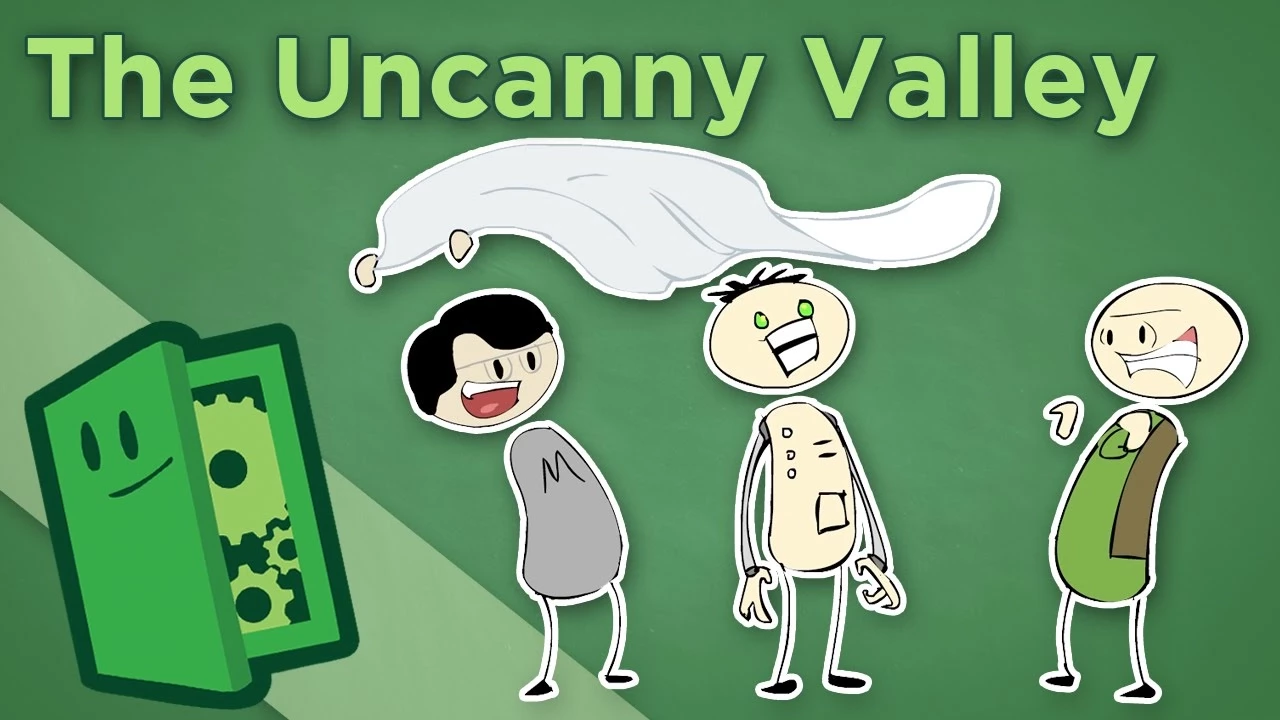
The Uncanny Valley and Digital Human Representation: Exploring the psychological and aesthetic thresholds of hyper-realism in computer-generated characters and digital doubles.
Post-Cinematic Affect and Aesthetics: Investigating how the transition from celluloid to digital media alters contemporary spectatorship, emotional resonance, and spatial perception.
Immersive Narrative Design in VR/AR: Applying principles of sensory immersion and environmental storytelling to virtual reality, augmented reality, and interactive media.
11.2K views1.1Klikes16:29Original Release: 2025-11-20
In all my years on YouTube, I've never had a video go viral like this before.
It's only been out like three days and already has like 2 million views. And just to contextualize how much that is for my channel at least, this is what my current lifetime analytics look like right now. Like this used to be a readable graph and it's just been completely flatlined by that big spike at the end of it. So, first off, obviously, thank you so much for watching the video and engaging with it and sharing it. That's really been the great catalyst that helped this propelled to the uh kind of popularity that it has right now. I honestly never expected this one to take off like it did, especially because it was kind of a challenging one to write. You know, I started with some basic observations of my own, but then as I was doing research, I came across all these different ideas that I tried to unify or that I wanted to try and unify. But what was difficult about it is that it really feels like one of those subjects where it feels like each argument or each topic comes with these endless nuances that you also want to address before even talking about it. You know, like having real things in the shot is good, but also real things do not necessarily lead to realism. But then again, you do want some kind of physicality or some kind of material connection. And you know, it just kept going on and on. And for a lot of it, I felt like I was like Cooper in the Tessact, you know, at the end of Interstellar where you can see the sort of whole picture or you can see everything that you want to say, but it's just really difficult to find a connecting point, you know, to find some linear path to guide you through all these differing ideas. And because of that, I was actually quite insecure about this one. until very late in the process. But the reason why I think it worked in the end and why maybe so many people resonated with it is because it speaks to something that we all already intuitively understand about realism and immersion in movies. You know, I think that audiences can tell when a movie is off in some way, when they're not quite immersed in it as much as they want to be or as much as they should be. And that's really why I wanted to make this video in the first place because I had that same feeling and I've wanted to finally sort of address that in depth and kind of navigate my way through it to see if I can find some kind of cohesive uh theory that goes beyond just the technical elements of oh it's the lights it's the color grading or whatever. And so I was really trying to distill that to some kind of essence you know to some set of first principles as I talked about it in the video. And in doing so, I also left some stuff out that I think might be interesting to uh address here.
Originally, I wanted to expand a little bit more on the idea of continuation and really looking at the effect of a sequence of multiple images instead of just focusing on one shot in particular.
In the conclusion, I showed some shots here from the 1977 movie Sorcerer, which I refer to a bunch of times in the video and which I think is a good case study to look a little bit more closely at the idea of sequencing and using multiple techniques in a sequence to enhance the the feeling of realism or the feeling of immersion.
So, Sorcerer is a remake of the French movie The Wages of Fear, and it's about this group of men who take on this desperate job of transporting a highly explosive cargo through the rough terrain of a jungle.
I think the original is also a masterpiece, but for this video, I think the uh remake was a little bit more interesting just to kind of look at some techniques of realism and immersion. You know, just generally, this is a really good-looking film. It's shot on location. It has these real fires, these real effects. It has a fantastic and iconic sequence where they have to move one of the trucks over this debilitating bridge in a rainstorm. And and it's just all really visceral, really tense. It's dirty, it's gritty, you know, it's just a fantastic movie. But the part that I want to look at right now is uh close to the beginning where our main character first goes to the uh rainforest or to the jungle environment.
The movie transitions us with this long series of establishing shots, ranging from more wider shots that show the environment, uh the grittiness and the dirtiness and just the atmosphere. and then contrast these with more close-ups of the the kind of textures, the materials, the dirt on the ground, the rain, the water, and so on. We then got to our main character who awakens from a nightmare, and we get this great shot that is somewhere in between, giving us a real look at the environment and still kind of feeling a bit atmospheric, but he walks out into this little makeshift bathroom. And this is the shot that I also showed in the the main video. And I think it's a really effective one because it's clearly like a deep focus sort of establishing shot that also integrates the subject into his surroundings. You know, we're not just getting a look at this guy. We're also seeing the kind of environment he's now living in. You know, this is really one of those images that you can scan for details, you know, and see the the water on the the little plate thing there. And from this shot, it then cuts to this close-up that really emphasizes the textures. You know, one that's really much more of a directly haptic image, I'd say. You know, it's just the way the water drips from his face. The way he's kind of staring into the image as if he's kind of recollecting himself in a harsh environment. It's that more classic contrast between a wide scope and a more intimate texture. Like that famous cut from Lawrence of Arabia, for example, that goes from the match to the great desert landscape. And it's that basic technique that we also see in Avatar for example. You know, I showed an example of that where it goes from this richly detailed establishing shot to one much more up close that really emphasize an interaction with that world. Denal Nerf also likes to do this in Dune where he'll cut from like a grand landscape to something really intimate or some real small interaction with it.
And again, the endless nuances. You know, this is not the only way to do realism. But in the context of like sequencing and creating a continuation between shots, I think this this idea of cutting between establishing a world and then establishing an interaction with it, you know, a wide shot, a close-up, I think all that's really effective. But of course, there's other way to go about this. And another example that I want to focus on a little bit more closely is a movie that I also showed at the end of the main video very briefly and that's the horror movie Skinnamaring.
This is much more of an experimental film that really speaks to a different mode of realism, I'd say, but one that I think is nevertheless truly fascinating, especially when considering cinema as an art form that really speaks to the body as a whole and and that isn't just like a narrative vehicle.
So, Skinnamarink is about two children who wake up in the night to find that their parents are gone and that all the doors and windows in their house have disappeared, which is already a kind of spooky premise on its own. But this movie really isn't about the plotting or the story as much as it is about the feeling of it. Because while the movie does technically have a plot, it does technically have a narrative, it is one that is mostly told indirectly through this distorted lens of digital cameras trying to capture what's going on in the dark. Like often times there's not much going on in the shots except for that sort of struggle for light. You know, the kind of noise that the camera produces when it's struggling to uh find the image. And I get that this is a movie that's not for everyone. you know, even I, you know, I didn't follow everything that was going on and every now and then I had to sort of check the Wikipedia for what was going on because I wasn't following it based on the information that the movie was giving me. But what I did do is that I did commit myself to watching this alone at night in a completely darkened room and just kind of surrender myself to what this film was doing in a sort of texture or tactile sense because I think that's where the essence of this experience lies. You know, you have to sort of connect with it on its level and just let the the imagery of it sort of hypnotize you. And when you let this movie sort of work on your psyche and when you fully open yourself up to it sort of in a sensory sense, then it really becomes unlike any other horror movie that I've seen in the recent years.
And and you know, it does so in ways I can't quite explain, but it's really I think this is really a great example of a movie that does make that full sort of body connection with you and that kind of works on your senses in a way that doesn't quite make sense logically.
Another important element here that I also didn't touch on too much in the main video is the power of sound.
You know, a movie is not just an image that you look at. It is also something that you listen to and the soundsscape of a movie, the effects that it produces. That undeniably has a strong influence on your immersion and your sense of realism as well. You know, just think about how impactful ASMR is. You know, some people really enjoy it, some people cringe at it, but either way, you know, whether you like it or not, it does invoke or does evoke a a strong response in people. It's not something that you just sort of feel nothing about. And so, yeah, that's something that I think also goes underrated in a lot of movies. You know, great sound design, immersive sound design, uh sounds that evoke something, that evoke a feeling. You know, think of the zone of interest for example, which I think is probably the most recent or the most popular recent example of a movie that really elevated itself through sound design.
And lastly, I think it is also important to remember and emphasize that the whole idea of haptic visuality, as Laura Marx also explained in her book, it really is like a subjective concept. whether cinema is perceived as heptic may be an effect of the work itself or it may be a function of the viewer's disposition, she writes. And this is also something that I've been thinking about a lot because obviously we know that the relation between a movie and its audience can be highly subjective and that some people may find something in a movie that is very personal to them. But I think we still kind of underestimate just how much of a two-way connection watching movies is. Or at least that is one aspect of cinema that is more difficult to talk about because you know critics are often expected to be somewhat objective about a movie's quality when they sort of review or reflect on it. And to some extent understandably so because even though you might find a very personal a very individualized connection to a movie that may not mean or that doesn't necessarily mean anything to another person who's watching it or you know to a general public that may not have that specific connection. And of course, we don't have to talk about every movie in this particular context. But I do think that when we're talking about the cinema as an art form, then I do feel this is something that has been of growing interest to me at least or that's that's sort of been capturing my curiosity and imagination. Like whenever I watch a movie now, like the kind of essential thing is increasingly becoming like does it invoke a feeling? Does it stir something within me? because ultimately those are the movies I will remember, right? You know, and it's not necessarily the movies that have the best plotting or the greatest characters. It's just movies that that succeed at moving you, that succeed at invoking an emotion. I'm not sure if I'm making total sense here, but I just want to name one more movie that might clarify some things, and that's the Turin Horse by Batar.
I've already talked about this movie in more detail in my top 50 most life-changing movies of all time, but I want to mention it again here because it's just such a great example of sort of a sort of brutalist cinema. You know, a kind of movie that's really stripped down to the bare essence of sensory experience.
The director Bitar has described this as an anti-creation story. And and if you just look at it on the surface, it's really just that, you know, it's seven days in the life of a kind of dreary farmer whose situation worsens with every given day and by the end of it, the lights just go out and that's the end of it. There's almost no dialogue.
It's just these two characters toiling against the elements in a world that's slowly decaying into non-existence.
And I'm honestly still not sure why this movie made such an impact on me, but after this last video, I do think it has to do with that kind of idea of haptic visuality and the idea of cinema just speaking to the body as a whole and not just to your conscious mind, but also to subconscious feelings. And I think for me at least, this was a movie that really spoke to something within me that's maybe even outside of my sort of conscious awareness. And that just had me enthralled as this sensory experience that that sort of physically communicated a deeper kind of truth.
But the thing about movies like these, which I guess is true for every movie, is that it does demand a kind of openness, a kind of engagement that especially nowadays isn't always given anymore. And understandably so. in a time where movies increasingly feel like products that are just ordered by a studio to make a profit and and grab your attention for a couple of hours.
And so lastly to end this with some kind of conclusion, I also wanted to emphasize that I do think it is important to also focus on the kind of the viewer's perspective or the viewer's point of view and the idea of opening yourself up to receive the sort of haptic qualities of a movie because again I do feel that nowadays and I've been guilty of this myself is that the cinema going experience can become a bit of a cynical one where you're like going into to a movie not expecting much and you're sort of just challenging it to prove you wrong in a way. You know, it's it's a kind of passive attitude where you're assuming a disconnected position and then blaming a movie afterwards for not sort of making that connection that you weren't even open to receive. And again, I've done this myself plenty of times and I think there's also plenty of movies that deserve this kind of reaction. But I think that if you truly want to sort of expand your passion for cinema or just engage with cinema more deeply as an art form, I think it is also important to look at yourself first and to sort of make sure that you yourself are open for whatever the movie is trying to bring to you and to just make sure that you're reaching out for a movie as much as you're hoping for it to reach out to you. And so yeah, that's something I just wanted to emphasize and expand on a little bit in this video.
Um, also I noticed there were a bunch of new patrons coming uh in the wake of the last video for which I'm obviously very grateful. I'm really glad to have your support. I actually have two more videos coming up on the main channel. One is my classic end of the year video in which I look at my favorite movies. But this year, for the first time, I also want to make a dedicated video about my favorite television shows because um I've just been watching a lot of television, a lot of great TV shows, and um I wanted to honor them as well in not just the movies. So yeah, we got that to look forward to. I also have a few more videos that I want to make for this uh second channel. So, be sure to also subscribe here if you haven't already.
And uh yeah, one more time, thank you so much for watching the video. Thank you so much for helping it go viral. Uh thank you to all the new patron supporters who decided to support me after seeing it. Uh it's really meant a lot. I really appreciate it. And um I'll see you in the next one.
Up Next

13:24
Possum (2018) Film Analysis: Trauma, Abuse, and the Uncanny in Horror
@RyanHollinger
2.2M views•2020-06-14
20:08
Hollywood Fantasy Orchestrator RPG Expansion Pack Tutorial Walkthrough
@HighResolutionJapan
1.1K views•2024-03-08

9:49
FastAPI vs Flask vs Django: Choosing the Right Python Web Framework
@TechWithTim
302.5K views•2024-05-26

1:42
Game of Thrones Opening Credits: A Cinematic Analysis
@gameofthrones
46.3M views•2011-04-18
Related Study Plans & Knowledge Roadmaps
Structured learning paths in General & Interdisciplinary Studies
general-studies
Containerization: Evolution, Logistics & Trade
01Ancient Trade & Bulk Cargo: Amphorae to Barrels
02The Industrial Revolution & Cardboard Packaging
03The Containerization Revolution: Malcom McLean
+ 2 more learning modules
12h5 modules
Explore Roadmap
general-studies
Textile Tech: Evolution, Labor & Global Impact
01Pre-Industrial Textiles: Handloom & Cottage Industry
02Mechanization: The Spinning Jenny to the Power Loom
03The Factory System & Global Labor Transformation
+ 2 more learning modules
10h5 modules
Explore Roadmap
general-studies
Pharmacology: Botany, Patents & Biopiracy
01Foundations of Ethnobotany & Traditional Medicine
02The Birth of Synthetic Chemistry: Aspirin & Penicillin
03The Battle Against Malaria: Quinine to Artemisinin
+ 3 more learning modules
12h6 modules
Explore Roadmap
general-studies
Writing Surfaces: Papyrus, Parchment & Paper
01Ancient Foundations: Clay, Stone, and Egyptian Papyrus
02Parchment, Vellum, and the Rise of the Codex
03The Chinese Rag Paper Revolution and the Silk Road
+ 3 more learning modules
9h6 modules
Explore Roadmap