











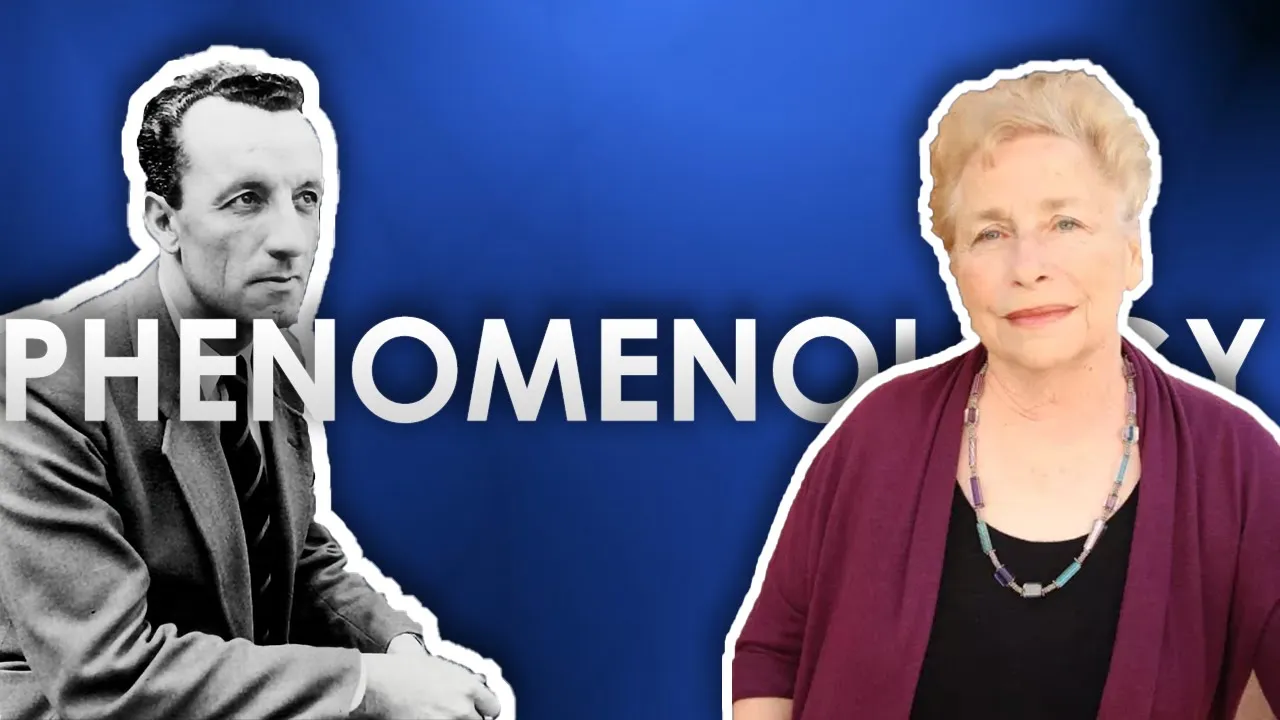









Professor Vivian Sobchack argues that film viewing is fundamentally an embodied experience where the viewer's physical body and senses are integral to the cinematic encounter, rather than passive observers who simply receive images; she critiques the mind-body split in traditional film theory and proposes that films possess their own consciousness and spatial-temporal structure that engages viewers in a reciprocal two-way address, making cinema a unique medium for exploring human experience, time, and space.
Film Phenomenology with Vivian Sobchack | Interview
Added:Basic concepts of philosophical phenomenology, particularly Maurice Merleau-Ponty's theories on perception and the lived body.
An understanding of classical film theories, such as psychoanalytic film theory and apparatus theory, which phenomenological film theory reacted against.
The distinction between passive spectatorship (the viewer as a detached observer) and active, somatic engagement with media.
Fundamental cinema studies terminology regarding camera work, editing, and how film constructs a subjective sense of space and time.
In-depth reading of Vivian Sobchack's seminal texts, 'The Address of the Eye' and 'Carnal Thoughts,' to fully unpack the concept of the 'film's body'.
Exploration of Laura U. Marks's theory of 'haptic visuality' and how cinema appeals to non-visual senses like touch, taste, and smell.
Practical application of phenomenological film analysis to body-centric genres, such as horror, melodrama, or action, focusing on somatic spectator responses.
Investigation into how theories of embodied spectatorship translate to modern interactive media, including Virtual Reality (VR), video games, and augmented reality.
450 views24likes1:27:21Original Release: 2024-11-28
[Music] welcome to the cinematology podcast I'm Neil Fox and joining me as ever I'm delighted to say is Dario Larez hello daro hello Neil and I must say many happy returns happy birthday for a couple of days ago thanks um I've got something for you but I don't know when we're going to see each other I'd rather just give it to you in person rather than send it through the post but I and I don't know I mean I'm I'm not one for like cards and like postcards with a note on and stuff like that I like to send that so I'll probably send you something along of that vein um but you know me I'm I'm kind of I I don't I don't limit myself to the day of the birthday you know it'll come when it comes yes no I appreciate that uh we sort of exchang gifts when gifts come into our perview that we think that would be a nice thing so yeah which I like um yeah yeah no I appreciate that and I'll be up I'll be up in London at the end of January so maybe you can hold it then and we can breakfast or something and that'd be nice sounds good and I didn't I I was traveling back from me anyway so I wasn't uh in a celebratory mood you know we had I had a really nice evening when I got home with yeah yeah yeah mostly just traveling yeah yeah that's true and I Eno I enjoyed the little chat that that we had there with you in transit again I think these might become more staple parts of the of the patreon um so if you want to listen to Neil talking about uh various films you'd see kneecap um which you'd really enjoyed and and and I went to town on Gladiator 2 which was enjoyable very much very much so so if you want to support the show please join the the patreon I know times are tight but it always helps with our costs you know helps us sort of bring the the quality of the show that we we want to and also our costs are going up you know we are doing more content so it is kind of more expensive to put on costs of all the software and everything just goes up and up and up so if you if you're a longtime listener then please consider joining up and you'll get access to some of the the the the commentary in the questions that we asked we were talking about the our end of season show and whether we're going to do lists this year Neil yeah we were sort of pondering what the shape of the final sort of 2024 episodes will be and it's always a kind of reflection on the year but you know we've kind of veered away in recent years from a very obvious kind of ranking of of a top 10 or a top five or whatever but we still we wonder whether we might do that again because we haven't done it for a while and you know we are in a in a year of yeah just doing what we want really which is nice and so we put it out to the patreon listeners if they wanted a particular thing or if they wanted us to do our own our each do our own top 10 in some kind of Mammoth experiment than we would do double episode or something yeah and and Jerome one of our one of our patreons instantly was like y top 10 please we were like a so but it's been really nice actually because since then it's been it's really helped Focus my what will be my last month of watching films this you know and last couple of weeks kind of think okay what do I want to see that might that might be in that that's available and I think we mentioned on the patreon I've already got a number of films I'm really excited to talk about in terms of the end of the year so yeah I think it's been a really interesting year and a good year in many ways so yeah I'm excited about that so thanks jome for the the nudge into long long long form with the final episode yeah we have to kind of carve out some space over maybe even before Christmas and then release in between because that's what we've done in the past isn't it we've we've sort of taped before and then given it as a sort of you know in between that no man's land between Christmas and New Year when when you're struggling for things to do it's nice when something drops in and you can have listen to it yeah turkey turkey hangover podcasting is what what we specialize in yeah that's it yeah I think it's good to think about the type of episode that we want to do at the end of the year and interesting this season because we've actually returned to a couple of the forms that we've sort become renowned for over the the long history of the podcast you know which is again seeing as we going into our sort 10th year nice to kind of to go back to some of those original original ways of doing the podcast and we had the author the JT looy story which we did here in fouth as a live screening which was kind of how the podcast started started and then you know very early on in the podcast wanted it to be a space for long form academic conversation with sort of you know round renowned academics that we really respected and liked and and that sort became another feature of the the podcast particularly with some of the stuff that you were doing early on Dario with people like Richard Dyer and that kind of thing so we've got another one of those which is a kind of a really nice throwback and a really kind of amazing conversation so do you want to do you want to talk us through who today's guest is and yeah s of this this conversation that you had sure so I spoke to Vivian subjack who is Professor emerit at UCLA and she is someone who has had an incredibly influential career across the entirety of film studies and on me personally I think when I read her book the address of the eye it kind of fundamentally changed the way I thought about not just film but the way that film interacts with us as human beings what I our relationship is to it as physical humans you know what I mean and it it made me sort of realize that you can't look at film in isolation in the sense that here it is and it's this objective reality that then just gets transported into the brain that you then interpret there is this intermediary aspect which is the body in Space the body in the auditorium which is often why I talk a lot and I'm interested in that that idea of the spatial elements of kind of experience whether it's film or whether it's media and I mean the other thing is to say straight off the bat and we talk about this a lot in the the interview is that viven was you know around at the very start of film studies let's say I mean obviously you could talk about the idea that film is being theorized and written about conceptually almost from the very beginning but what if you think about film studies as a discipline you know she was around and part of the formation of the first courses that were taught in in America I mean again I don't know how this correlates there's always this battle isn't there between America and particularly France about who defined where film studies comes from and where film you know where film history should be located in many ways but that's for another podcast entirely but yeah Vivien was incredibly generous with her time so we've got on the main show today we've got a 50 minute excert of what is a 2hour interview which is incredibly it was incredibly generous of her to give give us so much time but also just to to react so well I thought and so in depth to all of the areas that I was interested in and when somebody is at the stage of her career let's say that she is and has got so much knowledge I mean I say that I I sort of talked jokingly off mik with her at the beginning it's like I didn't know where to start her she sent me her CV which is like 30 pages long and you're like okay where do I start here but but just very quickly a quick bio she's the author of 10 books on many aspects of film Theory and Analysis possibly her most famous ones I've just mentioned it are the address of the eye but also screening space which is just fantastic about science fiction and we talk quite a bit in this interview about science fiction too many book chapters and journal articles to to Really list but in 2005 the society for Cinema and media studies awarded Vivian the distinguished service award and the 2012 in 2012 she got the distinguished career Achievement Award in 1995 she won the pilgrim career award for science fiction scholarship from the science fiction research Association and she served as a juror on the American Film Institute Awards Motion Picture committee five times since 2000 and she's on advisory boards and editorial boards for so many Publications over the years again you know be here listing them for forever so yeah it was it was just a pleasure and an honor we had a lot of back and forth about the shape of the the interviews she was someone who's incredibly clear and precise about the the standard you know what I mean it was just it wasn't as if she was sort saying to me it needs to be this it was like you know you could just tell here's somebody who was completely rigorous and her thinking is absolutely the recall of her understanding of these complex subjects is just fantastic and I was just hoping that I could kind of keep up in in many ways Neil you've listened to Have you listened to the the full 2hour one now what's your sort of initial take before obviously we'll we'll talk to you at the end yeah no I have listened to the full one so my response is going to be to that you know which hopefully will encourage people to listen to the whole thing because I think it's such a it's such a rich conversation and I think you more than keep up you know I think it's very clear that her work has had a major imprint on you and I think as well it's interesting that you say that you know she was very generous with her time which obviously she was but what I thought was really lovely you know before we go into it was like the sense of of of her gratitude for being provided the space to have that kind of conversation and to think through that stuff you know she was she's very open about how how grateful she was for that opportunity to actually think through this stuff and there was a little bit of the kind of the under underlying kind of academic residue of like there isn't the space to do this enough and listening to listening to the conversation I just felt really proud of us in terms of what the podcast is you know like to actually I mean it was an amazing conversation and to have carved out a space where you can give over that amount of time to someone so influential and thought-provoking is it's so rare you know and it was like actually this is what this is what the podcast has increasingly become about over the years and that was really nice to be like this conversation wouldn't exist in any other place in this form I don't think I think so that was really gratifying and it was such a rich experience and left me kind of yeah just buzzing from the the the intellectual thought that was on display from both you know like it's a real conversation it's a real dialogue you're not just being like please talk Vivian you know it's like actually we we're we're getting into the wi tier and that was amazing so yeah well well done and hopefully our audience will will respond similarly I think it's a really brilliant addition to our our archive lovely well thanks for saying that Neil I appreciate it so let's get straight into that now this is around 50 minutes as I say the longer version is around 2 hours which is on available on the on the patreon um so you can go over there and get that so this is me talking to Professor Vivian subak and we started off by talking about what drives her continued interest in cinema not just in the broad sense of that word but her continued commitment to scholarly thinking and writing [Music] [Applause] everything I I write starts from a curiosity about something and it can be any number of things doesn't have to just be what would be initially seen as scholly but everything I do is trying to understand the meaning not of my life but of my my thought of of how I mean some simple things that I mean really do go back to Childhood and could be attached to thinking phenomenal logically or letting letting me somehow find phenomenology and and recognize that that was a kind of methodology uh itself yeah yeah no definitely were and we'll come to that for for sure obviously that will be the sort of main talking point I think in the in this the center of this uh of this uh conversation but I just wondered as well um do you still do you still watch a lot of films or or I find myself kind of getting more and more selective you know when I was younger I was very much I want to watch everything I need to see everything and now I'm much more well I can I can give that a Miss that's fine well I watch a lot fewer films and the re there are reasons for that one you know I I don't know if all your listeners know that I I am physically disabled and have mobility issues so let alone that I'm a lot older every day and so going to a theater if I can't find a parking space in La I can't walk yes you know to the theater so I have done I mean during during the last number of years and of of course Co was the kind of apotheosis of that I would do some streaming and I play you know a certain DVDs for older films and whatever and here and there i' I've act so I've actually not seen many films over you know from the time Co started to where we were supposed to stay home to to the present in a theater but in terms of things that have to do with what I'm interested in and so forth I can say that I loathe superhero films they are the most boring things ever except the ones that subvert them okay of which are very few but I'm fascinated at the same time by the fact that these franchises which initially made more and more use of CGI as it got better and better all fantasies their historical fantasies like all the Game of Thrones things and spin-offs I find them utterly boring after having seen a couple so I would never plunk down money if I was writing something because I do think there's been in the culture a move to Magic as some both and history a madeup history that goes goes back to some time before King Arthur or yeah this is the subject of of your 2014 paper isn't it they're called s y if I remember yeah correctly obviously it's sort of that's 10 years ago do you think that the science fiction has has just continued on that Trend are there any films I mean you in that paper you you talk about her which I think which I'm currently sort of revisiting in the on the sof of back of AI explosion I think the more introspective ones although the most introspective I actually was didn't like all that much which was Brad Pit and AD asra yeah yeah um but films like her and and I think Christopher Nolan is I mean the only film that I was disappointed by I think was Inception because getting finally to the core of the psyche which was in some snowy area was really a let down in terms of turning into a chase scene but his attempts to work with time and space I mean which is what I mean I do think that Interstellar is yeah horrific H did you like a did you like a rival I was going to say that's exactly the next one I was going to say no I mean I I might even say in terms of its debt I think in which is not necessarily tied to the physics uh that arrival somehow got at something in terms a real change in having to change thought and space and time and that's gone through all my work thinking about space and time which started in a way with film in a in a serious way and you know Erin panowski in the 30 said that Cinema was the temporalization of space and the spatialization of time and those time space and the chronotopes which are the combination of the two are fascinating to play out and Central whether you use the term chronotope or whether you I that SpaceTime is it can't be science fictional which plays with all us abilities but but that's Cinema but even that element which has been used in the kind of like hard or serious sci-fi as you as you know the ones we're talking about that in a weird way has also been become part of the the sort of postmodern Aesthetics and relativity that you're criticizing in that in that piece if you think of a film like every everything everywhere all at once it's like actually we're going to move through all of these time and space periods but it's not just going to be another part of the fantasy Escape rapist discourse that you're sort of talking about there it's more important those films are in many ways are more important I think starting in the 2000s which had to do I mean everything everywhere all at once that's sort of what happened I mean I think the title of that film is the best thing about it other than the googly eye Brocks because but if you go through you get all of these Duo of films this is from the 2000s on in science fiction or related to that you get doover films as if somehow you could save someone from dying in this timeline and not recognize no they're going to die and they were talk you go timeline which is or how and everything everywhere all at once I'm sorry I'm forgetting the main character's name the Michelle yo character or yeah yeah I can't remember her name off the top of my head jumping yes to different timelines which is a step above in a certain way although again in terms of what's happened during all of the possibilities that are played out from the 2000s on in terms of these either science fictiony films that are taking themselves somewhat seriously the more fantasy films that are just placed in other times the ones that change I mean aren't dealing with trying to how do you get out of this world a lot how do you survive and all through the 2000s and even to to the present for the most part what used to be in the 50s with science fiction films that I watched when I was like in my teens the the breath of what could be achieved by the human beings in the films and the plots to to save the world sure they don't save the world anymore they've just saved their friends and family I mean if you take the 50s War of the world it's God and his wisdom and his disease causing disease for the Martians however the Army is called out and I mean all sorts of large institutions now you take Tom Cruz's ver I mean Tom Cruz's version and it's like all about trying to bring the family into some kind of unity because broken but that's not the only one that does it it's a full range there's an underly there's an underlying conservatism there isn't there I think yeah but what it's conserving is so minimal I mean again Seeking a Friend for the End of the World what a wonderful happy ending you know know yeah having finally joined these two people who have come to love each other as the world goes there are other films that do that one which is I think is called 411 like a time frame William defo is in it and most of it takes place in his he and his wife's apartment and they're online talking to friends and so forth cuz the ozone layer is supposed to Disappear by this time and that will be the end but they're just acting normally they send out for Chinese food yeah yeah yeah and no one's sting in the street they're just it's a sense of defeat that is being paraded as a happy ending in these films but in your pie you you kind of say it's these are the kinds of films that that today's audiences find psychologically satisfying I think you phrase it as because of the in their minds the failure of Science and rationality to deal with the the crisis you know particularly post 911 you you say and if anything you know things have gotten progressively worse since since 911 well in in that essayi why I mean I think I quote Hayden white I quote him you know the historian but he wrote it in his introduction to meta history he was looking at the different forms like romance or satire or tragedy and so forth as the kind of templates and and then doing further analyses of them in terms of their ideology there sort of ideological take and and other things rhetorical take but he points out that satire satire is the genre of a world grown old which was very much the postmodernism right and a sort of Suspicion or if not a suspicion a recognition that somehow the things that were taken as you know things like uh science and reason and so forth are not are not viable they're not helping anything they're just another TR meta narrative yes and I think we're still we're less postmodern I mean but had a certain flavor to it we don't have now but prosam malanowski an anthropologist who I read when I was writing my science fiction book and and discovered has an essay it's a long essay called Magic science and religion and he says every culture anywhere has all of those three things they may be in different ratios but where one will fail for a moment you know another will pop up and they can sort of co-exist at the same time people can believe magic and they can believe science and not even if it's a contradiction it's it's interesting then to think about the ratios of what I mean I think we're living in a period now in which again the world has definitely grown old and in growing old we're skeptical of science again it's because everything everywhere is all at once we can't we can't grasp it we can we can imagine it in some ways but we can't really grasp it and and somehow suddenly one starts watching on television when a drug ad comes on that's praising a drug all of the little tiny disclaimers that end in death so what seems yeah if you which seems like this rational very way of getting rid of variables there's no way to get rid of variables than anything you could Those ads though that you're talking about they they they almost could have been in an ' 80s science fiction movie you know and I think that's one of the interesting things for me I'm writing a piece at the moment which is kind of borrowing from from that article which is why I've got it in my mind right now and it's about how we've caught up with a lot of the science fiction narratives that we saw in the sort 70s and 80s and what's what's happening is that the the things like say for example the idea of of scary robots with scary voices you know where you talking about the the Terminator or RoboCop or the doxs or Hal for example from 2001 all of those things they're not kind of othered in the same way they're becoming much more you know much more like us they're it's not it's not Annihilation it's replication you know and and sort of we're being we're being kind of copied and mirrored and these are the things that that are now the things to be afraid of rather than the big scary machine that's going to you know destroy us that's that's absolutely true I mean all of the discourse around AI I mean I I've been one of the preliminary things that you asked me about when we were talking earlier as this was being set up had to do with what I was sort of dealing with now and I mean again in the background is the fact that I was a science fiction I grew up in the ' 50s with all those great you know cheap films and and I read science fiction a lot when I was younger I somehow from the beginning as a child was aware of there were other ways of looking or thinking I mean when I was really young so science fiction was very appealing to me but that's why I love her because her actually sort of gets at the problem with particularly at the end the problem about AI some I mean all the stuff about AI very few people although it does show up How could an AI describe sadness it's a data collector and an organizer it's not I mean it uses algorithms it does things but what would sad mean it could go to all the dictionaries in the world and come back with those words that that describe it but it could not in any way same thing with I mean death it could again conceptualize maybe yeah it could conceptualize it but it could not deal with grief except to again conceptualize it yeah it's even Spielberg's um and I I love the film AI I think that's one of his best films is early on when a woman's sitting there at the a meeting about in a sense new the new technologies and so forth and the head of the William Hurt character asks the woman who has taken out a compact what love is and she starts talking about her you know temperature and temper and things like that and it turns out of course she's in Ai and that's what using her as a demo AI doesn't understand issues of context why something that would be just rationally described the same way if that's all you were doing be totally different or a decision could be totally different just going back cuz and we talked a little bit there about your first book which was your science fiction book from your ma thesis but am am I right in saying that you did your undergraduate degree was in English literature that's correct yeah I was I went to barard as an English major and also got an incredible film education because of the geography of where I was I was on the East Coast when in the 50s mid to late 50s on all the foreign films were coming into New York and I also was not far given uh the location near Columbia University I was not far from what was the equivalent of the Paris Cinema Tech at at film called theater called athalia that would do retrospectives and and bring in you know more obscure films and so forth there was also a society called Cinema 16 that was showing I mean it was a a blossoming of film and I didn't start out at all to be a film scholar there was many there were there were history film history classes here and there and some critical classes they were all of them pretty much attached to the few universities that actually had production Department right okay complementary to production and and it wasn't until the' 70s I mean nobody or nobody very few people wrote anything that could be considered critical studies of Phil during that period of time you had I I remember going to my first conference which was then the society for cinema cinema scient cinema onology yes thank you and I wasn't a member on I had been invited for other reasons and by the time I got they could blackball you out there were only like 40 people you initially and anytime anybody would try to write a book I remember brietta Steen wrote a book on who who was Swedish wrote a book on ingar Bergman and it was like oh we have a book on ingar Bergman someone else did want a Hitchcock someone else wanted to do another Hitchcock and The response was was we already have one I mean could possibly need a second one I'm not kidding and so what one read if you were interested in in film and I was watching everything at that time but I never thought about writing about it I wanted to be a creative writer which I had doing actually and doing well you must have it must have been quite exciting to be at the Forefront of a of a subject area was kind of burgeoning maybe or was it not like that well it was but it's also scary and also sometimes don't even think about it because there wasn't anything there um and you're just doing your thing that was certainly the case with science fiction first of all as far as my teaching I didn't particularly want to teach I didn't my mother was a great school teacher and I thought that could get boring and it wasn't until I actually left New York my my my husband my former husband got a teaching job in Salt Lake City and we moved to Salt Lake City from New York in 1966 and because I had published a few essays and things there might have been a review of a book on film there might have been a published some you know an essay here and there is very limited because I was a faculty wife and and you could count on me I was asked if I would teach freshman composition of classes they didn't have enough grad students I see so and that that was my first teaching experience I was a faculty wife teaching all right and I didn't have my ma then and so forth there were large gaps between my ba and my ma which happened when my husband got a sabatical years later so I had done a lot of teaching because what happened and ited happened all across the United States really in universities somewhere around the beginning of the 70s or late you know actually it might have been or late 60s where a lot of things were changing a lot of the the young faculty across the country were interested in film and a lot of these more younger Scholars who had come through that those years and film coming in an interest in film decided they'd like to teach a film class but English departments weren't interested in that what they did end up doing where they came into existence was usually during summer session which was you know help pay the bills and it turns out when my husband offered a class and I wasn't teaching in it at the time they expected maybe 30 30 students 110 showed up which meant hey there's a cash cow for The English Department which is actually in a sense why it got finally put into the was finally it relatively quickly for Academia got co-opted and put into the English Department you know it's amazing the the the the amount that things change but really they stay the same it's exactly the same now in the UK with film courses it's like you know 130 turnup and it's the cash count yeah well I the that's really first of all if you think about the initial writings on film and so forth other than redu which I read I read a lot of reviews before you know when I was in New York and so forth of of the films there weren't really uh much available as that we would you know call criticism film criticism or Theory uh but it's interesting how things got spread out we have communications depart departments big ones in the United States but Communications never spoke to the humanities shall we say were separate School in in of Journalism and speech and so forth so there was no real connection initially and for a long time between Communications and and something that might be called film or fman media studies on the other hand one once film studies was sort of at least if not a department installed in the English Department then comparative literature another department wanted some too and there were BS of of rivalry because the people who really studied film thought people who were in compit just didn't understand what they were doing right I mean they didn't have any of the theory or thought that was then available it went on like that and actually if you go to Europe and think about philosophy in film which always have been connected from the beginning that there were discussions philosophy and film I mean the closest you could get was called Theory and even that was questionable to some extent in the United States I mean philosophy in the United States so there you go I really want to sort of move on to to your PhD then your dissertation which obviously became the second book I think the address of the eye what one of the things you sort of allude to in the in the first part of the book of course is the the critique of direct experience you know and I I always find that really interesting that that sense that especially when you relate it to cinema that we all go into the apparatus of the the auditorium you know we sit down and then we're supposed to kind of have this experience and again you know this is the critique from the phenomenological side as I understand it that you you you sit down and you that everybody their body just disappears and they become they absorb this image straight into their brain somehow and the body is is kind of Left Behind or it doesn't exist anymore but this is what phenomenology is actually trying to contest or remind us that I mean you quote Merlo Pony at the at the beginning where you say the radical semiosis of the lived body as a practical method for describing the existential structure of cinematic Vision which is really gets to the heart of that idea that you can't leave your body behind it's fundamental to the experience of watching the experience of being as a watcher kind of thing the body is always necessary choose choose to have one or not but I mean it's very interesting because looking at today for example for some time now one of the things things that irritates me greatly in a way ROP ponti was was really undoing Body Mind split yeah which has been a huge philosophical issue and and variations and so forth with the mind also being somehow hierarchically superior to the body and that's how you get gender differences and you know I mean just various hierarchies and and whatever sure so in in Reading ROP panti I mean at the time again during the theory period obviously feminism second wave feminism had become important very important theoretically within film studies and and so on and some of the work was wonderful a lot of it we owed things to or were directly visible as psychoanalytic theory but it was in a way dealing with male female and binarism and you know a classic example was Laura mul's great piece on visual pleasure yes visual pleasure yeah and it it's however I I just again found it limiting in in terms of although it made sense and it made sense in terms of narrative of the a women were passive in film men were action heroes and so forth it you know it made a certain kind of uh sense at the same time it just wasn't it wasn't Rich it wasn't full and it wasn't so when it comes to the body I mean first of all when I wrote about the body I mean r ponti did not see a split between cognition and bodily knowledge okay but that wasn't the way it's used now I mean again what's happened is embodiment I use the term embodiment because it was a way to Encompass cognition as well as the body yeah body doing things the the two together uh being in the world that slowly slowly people started privileging the body and not mentioning a thing about cognition more so you're back again to mind body split and I mean it irritates me no n because it's exists and it it doesn't make any sense and you can get really tired talking about the body yeah even if it's embodiment you know you're using the term embodiment yeah it's almost as if it's almost as if embodiment as a term has become like the signifier or just a represent ative sign of of you identity let's say or and and like you say it's kind of leads leaves behind the fact that these two these two things are are not two things they're one thing you know they being their ontology as you say first of all embodiment was supposed to create a holism Asos or an and a non abstraction because it was always the B the body that being talk about you know I make a a pun you know said body at arms length was never your body yeah um you know and so it was abstracted but the haptic and uh and some of the people were my students actually uh but others not just cognition cell out and I find that really problematic in in terms of what I was writing which they were different mod modalities of being but they were embodied together and again to make it easy cognition in its embodied state is not thought it's doing it's body memory if you want to call it like that or again you know and I had mentioned this to you earlier when we were talking before this I have a granddaughter who's very young and watching her from you know year one to she's going to turn five kids grow up they start with a big smile in front of the world and then they start moving their hands and their legs and they do things and they watch and they touch but they also have a lot room in their brains at that age and they once you can feel something you can feel something else and it's not like they saying I'm feeling to myself some somewhere it's not thought done and it's used and it's intelligent it learns yeah yeah so so it is a form of unthought thought yeah if if that makes it easier it's very difficult though to say I mean this is one of the things the the most s of tricky aspect of the of the analysis of the you know of the theory is that it's hard to sort of say to yourself it's easy to say I'm going to go watch a film but it's much more difficult to say I'm going to watch myself watching a film or I'm going to feel myself watching the film you know no I mean that's great because I used to tell my students in classes when I would to have screenings I I mean I was thought to be in some way strength I said please do not take notes right uh that's not watching the film somebody asked me I mean you you when you were starting this thread when I go to the movies I mean it this has to do also with questions about my preferences and certain things but when I go to the movies I don't take notes you know when I'm watching something for the first time and I go and whatever it is once I'm there sitting there and the film starts I just do it to me yeah yeah do your work Just Go With It yeah um uh and you know I can get bored certainly and and Abstract myself and start watching something about camper movement because I'm not totally immersed in what I'm experiencing with the The Narrative or whatever and we all have moments like that anyway through any given film of some sort of in out in you know of where we are in relation to it but I'm always hoping for the one I'm in I'm in it you know put all my money on the table right and it doesn't it doesn't fall into oh it it's particular types of films I never know when it's going to happen you know I hope it's going to happen absolutely yeah and and this sort of this idea of the film having it own Consciousness you know its own way of perceiving the world and then what that means then the sort of next point of that is that there is this thing of the two-way address where the viewer and the film are making meaning or contributing to to meaning we're taking something from the film but it's taking something from us and there's always it's almost kind of like a reciprocal thing if I'm you know reciprocal thing if I'm reading that right in some ways I'm I'm sorry I used the term body or didn't I mean for for the film's body yeah it's not except I didn't use it as a metaphor I was using it as an analy to the way our bodies function as you know given that the title of the book was the address of the eye address is both where your is first if you think about address I'm addressing you meaning I'm reaching out to you speaking to you having some kind of communic with you but address is also where I reside sure where I am I have an address everybody has an address and it's where they are and that when I I titles mean a lot to me a pun or the difficulties of you know the double meaning of of certain words actually say something they're not not just cute to to put I mean it shows a structure of some kind that's transitive and so but the problem was that a number of people didn't like my calling film in I mean thinking of film's body but I was thinking hey what's our body if we look at it materially it's a bunch of Flesh and Bones and whatever yeah that does certain things and it has eyes and ears so it has access to senses and so on and looking at the film I saw it as very closely I mean we are looking at looking we are hearing hearing and in terms of where I am I can't see I mean yes I can see parts of my own body but I'm I'm actually speaking from my body I'm looking from my body I'm hearing from my body because I'm looking outward to my world and and in a way every film does that and the other and the to myself when I'm and the the audience of the film or the viewer of the film in ways acting is responding or is being Guided by the film in the same way that I am being Guided by you now on this screen in front of me in terms of the that s of dress right so they're doing the yes exactly it's silent in a theater but it used to not be still not yeah L of arguing with a film or or making comments and and and so forth that I mean you can see the interactions in certain kinds of theaters that are less it's not it's not a it used to be than it used to be more at least than because cost $15 to see a film people shut on know well I don't know about that now I always get irritated when you know in London it's not cheap to go to the cinema and it seems especially since covid the the the etiquette or you know people's behavior has gotten has gotten worse and worse I was wondering actually would you be on the forward in the argument that the The Cinematic experience as in going to the auditorium still have a uniqueness and has a power and maybe even a kind of sacredness that watching at home can never match up to or you know because there's a lot of people who write right now where about how Cinema is just one of a you know a number of different types of embodied experiences you can have in relationship to audiovisual images absolutely I mean I the going to a theater first of all is it's dark your focus is directed to a screen and you're sitting with other people and in some cases that's important particularly with things like comedies and where you know there tend to be expressed feelings relative to what's going on but it it's no I I look streaming I've I've done this now because of my my circumstances which you know had to do with covid but also my Mobility it's not the same thing although if I'm sitting in front of a very large computer I've got two screens like that on my my tabletop right now I start and I have you know do full screen I still get immersed in a certain way right or I'm not looking at at other other things but there's just total distraction yeah or these other things or you could stop okay G I have to go pee you can you can you know I want to get a glass of wine I tend not to want to to get up once I'm watching a film that I actually care about but it's more distancing it's not the same and I don't think anybody can argue that it is I I guess when you when you actually go into the auditory you are in those conditions then it offers up the possibility for a sort of deeper sensuousness you know not not a you know leanian or a Freudian kind of idea of libidinousness you know if that's a word that is used a lot to kind of describe the the cinema goinging experience by some theorists of course but that sense of being the body being open to being impacted I suppose in that in that way well yes I mean listen we're sitting in seats I mean when when I mean I talk about it in in with contempt in the address of the eye uh Christian metz's comment about spectator fish taking in everything with their eyes and nothing with bodies yeah that is one of the most insane nonse forever and it's not like I I mean I actually like some of Christian metsis work but again there's not a split between the mind and the body sure in that sense and it would be like having a conversation except you can interrupt and sure sure but you're interrupting in your head sometimes you know when you're watching a film let's maybe talk a little bit about you know when we talked earlier on in our preparations for this conversation you know this idea of your tastes and uh how they've maybe been formulated or changed over the years and and you know and that how they feed into your your scholarship and your thinking well certainly what is clear you know is film studies is not film studies anymore in the way it was I mean the names have changed so that there was a department of critical studies uh within film like at UCLA film there's a school of theater film and television and then a department it had been a department of film and because it had both production and it had critical studies as sub areas but then it became you know and it's even larger than that now media studies in some cases where film isn't even singled out nor is the digital so there was certain Tendencies of whatever was hot at a particular time in terms of areas or where you know how to get a job for the students yeah yeah yeah yeah the things that I'm interested in have gotten so big I'm not sure I'm going to be able to do it I can talk it but because as you were pointing out language has a shape and limitation how do you write about everything everywhere all at once in linear Pros yeah without hierarchizing anything and described film recently films are like canaries in the coal M might someone said what so I couldn't use it it was quite clear to have to start explaining that there really were canaries in the coal mines they they were harbingers of gas coming you know the sense that film does not have to rationalize things films do not have to rationalize things not just the fantasy and stuff in a way they're like us going about the world doing the plot and and whatever else but what gets picked to do some have to do with money and culture you know the cultural the the high and repetitions and franchises and sequences and prequels but the way they're handled and and how many of them say things about the culture I'm always right wrting about the culture we're in I really want to I think our sense of time and space at radically change and we no longer live in a temporality that is sequential it's simultaneity and and part of this has done been huge part is what the internet has wrought yeah of course of course and it's it's not linear it's everything everywhere all at once everything bouncing off so where where is agency if you know you can't ascribe responsibility to an event in a film or whatever to clarify I started thinking about this some time ago when I saw the Curious Case of Benjamin Button Phelps wow okay and there's a sequence well two montages that follow each other in Benjamin Buton it was a lot in the film that's but but this really got to me okay so in the middle of the film one of the main characters whose name is Daisy whom Benjamin Button has has she's growing older while he's getting younger she's a dancer and and she comes out of a a theater after practicing and gets hit by a taxi she Twirls in the street in a taxi comes along and Mos her down the Montage starts with uh Benjamin in the going to the hospital in sitting in a waiting room he speaks he narrates the Montage although he could not he was not there and and he could not have been there at all and what you see is he just is describing he's describing he says a woman who was going to getting going to get a taxi to go to x she gets a phone call and you hear you know this is all happening there's no psychology for the most part you don't know these characters and there are a lot of them and it starts from there to the taxi that she would have had goes somewhere get gets another passenger and it goes on for quite a long while for Montage with his voice over saying this person did did this this person did that this is this the the car had he's not using the words if at the time he's just describing and then the second Montage comes on and you're getting different visions of what's you know it's not the same images but they're close and he says then if this didn't happen if then if then all the way through and again it's long and you're sitting there and I mean for me it was this Epiphany in a in a way in in terms of clarifying the fact that this is an endless if then and who then was responsible for the accident the sense that there is no beginning point for anything causality starts falling apart yeah it it's local you can only do it local and we have been moving because of the internet and and our expansion of space to it was local then it was Global then it was Global yeah and then it's planetary and it which is overwhelming so so there is this it's like the butterfly effect but the butterfly effect was always one butterfly yeah I mean that that film sort of started me thinking about about that and that was long before everything everywhere all at once but by the time I had to every everywhere all at once as I said which I thought the title was the best thing about the film it it it was trying but it's also a part of the the the like you you were saying earlier on the sort of mechanics of Blockbuster Cinema and superhero movies which I'm I don't care for either where you have to watch you have to watch seven films and three TV series just to know what's going on if you want to watch any of these films yeah and and some of it is boring I mean I or you don't care anymore yeah I mean so I mean the films again with the canary you know in the coine you know things like Nomad land and you know thinking I I mean the films that somehow speak to being disoriented in space yeah and time yeah which in fact again has been in fact the whole UA from momento on you know with Chris Nolan yeah he's colder except Interstellar wasn't and it's the subjects of an awful lot of European art housee movie movies as well you know yes yes absolutely and even narrative is an instant I mean again when you're having if we're dealing with this apprehension of simultaneity rather than time changes and I mean the temporal mode is Interruption no that's very true so I'm going to write all this I don't know well I keep trying first of all I can't even write because of all the crap I have to do that has nothing to do with anything we interesting we were talking about well it's an amazing kind of argument and and the way you contextualize it in terms of the process of trying to get to grips with it and write about it is I certainly I certainly agree with you but is very difficult I do want to say one thing I'm sure you are also asked because what are your favorite films who are your favorite filmmakers you know things like that uhhuh and I have I mean I have a list of films and things that range foreign popular whatever that mean something to me did something to me but uh usually I avoid that question by saying if you were on a desert island I refuse T to say I said if just to give them the 10 whatever that way I said if you were on a desert island and you you had 10 films and they would the only films you'd ever get what would they be I I said for me there would have to be variety and what the variety was wouldn't even matter right you know I would pick films that made me laugh i' make films I would have a very different criteria it's like how do you feel today what kind of you know movie do you want to watch or you go in and and suddenly I mean if you can't get new stuff and so I was looking at you know certain films I will see again and again and again and I'm always scared when I first love a film that I won't like it the second time so I tend to put off sure watch it the second time and then I put it on a syllabus so I have to watch it especially films that you haven't seen perhaps from a long time from a different phase in your life well listen thank you so much for for giving me your afternoon for a couple of hours it's been absolutely fascinating I've love speaking to you yeah and uh I'm sure that our listeners will really really appreciate the the detail and everything that you've uh that you that we've talked about so thank you so much for oh you're welcome it was my pleasure to be able to talk about it I mean I haven't talked about any of this stuff in quite a while and it's it's no it's Soul crushing yes when you know everybody's changing your passwords and all of that crap let along my new computer and uh so forth uh it's it's just not a life um this was so that's great thank you [Music] [Applause] [Music] okay so thanks once again to viven for uh just being you know who she is really and allowing us to sort of talk about so many different things and I think what's interesting to me I was sort of thinking about where phenomenology lies kind of in film studies and I think again it's it's sort of underunderstood if that's even a word or under theorized even though there's a lot of work that has been done on on uh on phenomenology particularly you know around around the key thinkers like Merlo Pony and hsel and you know people we sort of mentioned but then there was a book um I don't know Neil if you know Kelly Fury no she's um she's one of the film philosophy group um so I I ran into her in in uh in Portugal in the in the summer and she's just published a book called film phenomenologies which is a an edited collection so there's work being done out there but it's again I think it's a very very Niche a very Niche aspect of what is a niche subject if you you know if you count sort of you know really high-end film studies so yeah tell us what you thought and let's have a chat about it between us so much so much stuff yeah it's really hard to it's really hard to know where to I'll just I'll begin with like Reflections on the conversation in terms of like things that were just really lovely to sure to hear you know so obviously as someone with an interest in the history of film education it was wonderful to hear her talk through her biography as someone who was present at those kind of Milestone moments like where you say where film studies moves from being an appreciation or an apprenticeship in terms of film practice into a discipline and all of the attendant tensions that that arise but just just hearing about the development of those programs that she was present at the the start of and and sort of studied through and then obviously kind of LED was really really interesting and aligned with that was how you get a sense of her kind of critical voice developing through her love of Science Fiction but through the space of genre you know in kind of early film studies and the kind of the dominance of the western and the the gangster movie and and how she could sort of see that space for actually well this is this is interesting stuff even it's that kind of period of 50s B movies but she was very aware of what they were doing on a kind of cultural and political level and a formal level as well which I think is really it was just weird that was sort of really interesting to hear that that history you know that kind of that that history and then how she just was able to flow between her biography and kind of deep philosophy kind of seamlessly you know and a reminder that this you know it's not these things are not compartmentalized these are interl you know that there is a relationship between her experience and her her humanity and her body and the the way she thinks and what she thinks about you know it was just it was kind of effortlessly impressive but obviously is also the a lifetime of thought and then when that beautiful thing she said that writing is she writes to work out the meaning of one's thoughts not one's you know and I just thought that's a really really nice thing which is about like you know again kind of why I thought it was such a rich conversation is because that's what that's what this is that's what this has always been about like we see something we engage we have an experience and we want to work out how we think about it and what we think about it you know it's whether it's good or bad it's not whether it's I was going to say that it's not ranking it it's about you know what what is this experience that I've had and how am I you know and I was reading about the substance again this morning which I know is a film that think we differ on but I'm I'm interested in how can I articulate what I don't like or what kind of rubs me up the wrong way or what makes me feel a certain way you know rather than just always being well this is good and this is bad I don't think it's a bad film it's that's irrelevant really but it's kind of it conures up thoughts writing and podcasting as a way of working through that with in dialogue I think is really was really really wonder yeah but also that the the exper the experience of being in the experience rather than just watching the experience you know because that's that that's the key differential I think that she's getting at is that you're not watching a film you're being in the experience of a of a film but we we just don't talk in those terms really yeah I think I mean that was that where I kind of landed in terms of like the thing that was really really fascinating and I think it's very timely for a number of reasons and it is that idea I I just read this short book about meditation called being aware of being aware and like the ultimate State of Consciousness is not kind of this Zen nothingness is actually it's where you realize that you are you have complete awareness all the time that's the state of being is like an awar and that's what we're talking about isn't it it's like actually that yeah and it it goes back a lot of things that we've talked about recently which is Cinema as a thing and I love this idea of having its own Consciousness and its own body and it is this idea that cinemar is it's most alive in this kind of way of having a dialogue with an audience when it's aware of its being and it's transmitting it that awareness you know by saying this is a film yeah this is a very particular kind of experience you know rather than trying to hide it or pretend that it's something else it's actually it creates the space through that kind of consciousness of being Cinema that allows for this experience and I love that idea and that's that's what's really kind of sort of uh I'm feeling really kind of engaged with that idea consistently because I think it is about what is Cinema now and what is the experience of Cinema now because you talked a lot about the difference between the cinema space the auditorium space and the the home space you know but but but what is Cinema now with with all of that having taken place we're not going back no one's putting their phones away Cinemas are not suddenly going to become a NIC and mainstream experience you the multiplexes as an idea even if summer closing is there you know and then you've got these Boutique Cinemas like the Everyman where you get your dinner served halfway through which is a disruption on many ways not only just someone you're serving your food but then you're changing your body when you're actually too full from eating chicken wings while watching you know tarkovski you know that all of this is a a change it's a change to how we experience this thing and what is the phenomenology of that so where you know we talk about Cinema not having the same place in the culture but it's still a really important art form in terms of these kinds of experiences and how has that been changed by the physical experience I thought was just again like the opening up of that yeah and I wonder if that Kelly Fury book is about that kind of those kinds of fil phenomenologies in terms of like well how do we grapple with this because I know that Vivian clearly Loves movies and clearly love cema and it was so refreshing to not be like well films will great in the 60s like she's she's engaged and she's engaged with the idea again so what do we do you know what do we do with this art form that we love in these new contexts yeah yeah it really made me think what are your thoughts as a crer as a as a response I mean just two two things to that I think the first one is I think that there is a through her work there is a crossover between the film as artifact and the effective implications of watching a film so what do you feel in your body as a you know as a watching subject and how do you kind of reflect on on that watching of of watching you know or that consciousness of yourself watching and then you've got all of the social elements cultural elements of the you know the infrastructure of how film is delivered to us like whether you go to the auditorium you ever watch at home and I think that her work is absolutely the crooks of understanding the relationship between those three things which I think in film studies are often kept quite separate yeah reading her work it allows you to think about all those three things as in you know intersecting Concepts or ideas which is quite difficult you know what I mean it's not easy to do yeah but all of those three things are important if you're thinking about the totality of what Cinema is and the other the other thing just to say which picks up on something that you said you know in terms of her love but also the way she's you know the sort of curiosity like taking a film like everything everywhere all at once which she said you know just on a kind of like reviewer level she didn't like but was able to take that and say okay this is actually what it represents to me is is a kind of whole facet of thinking about space and time that we see in cinema that's affecting Cinema in so many different ways but also affecting our lives you know if you think about the internet the idea of you know linear progression which we've held on to as an anchoring point of understanding kind of human Human Experience and now we kind of like the past and the and the future and the present are all mixed in into one or you know that they they don't have a a conceptual map to use that phrase you know what I mean that goes out of the window that makes it much more difficult for us to understand our relationship to the to the world again if that's not too grandiose but you know what I mean like just taking that film which you you could just throw away and say oh but actually it it even if I didn't like it as an experience just of watching I didn't think it was a great movie you can say but it does represent something absolutely fundamental about the moment you know yeah it's a great example of not not dismissing anything that you watch in terms of its possibility and from that film there was that really yeah eloquent kind of discussion about kind of time and you know linear time and CH so the time is no longer sequential but it's kind of it's in simultaneity you know I mean I like that film but you know but but also what I really think it captures which I think was is is is is that kind of the anxiety of the Contemporary moment in its form of like just this kind of overwhelming barrage of the now and it and that the conversation and thinking about Christopher Nolan and and his kind of time experiments and just and how which again kind of attaches me to my experience as a as an embodied person of cinema right now and how I am looking to think about how I live in time like I know you were saying like oh maybe that's too grandiose but I don't think you can come away from this conversation without thinking in those big grandiose philosophical terms I certainly thought like oh actually I am drawn more and more to films I watch everything but the films that are really staying with me at the moment are the ones where there is a I feel a greater sense of how I want to live in time you know so the two films yeah yeah yeah yeah well I won't say what the films are this year but there's two films this year that have really stayed with me and both of them are kind of they they represent that narrative films anyway you know in terms of like actually I'm I'm very conscious about how I spend my days and cinemar is a way for me of understanding my relationship to time and that's what I've been trying to articulate to my this this year really in teaching so it was like oh actually yeah this is a really beautiful way of thinking about it and using an example of a film that you don't like I think is a really good way of doing that and saying actually like this is it's doing something on a kind of philosophical experiential level but sits outside taste and it sits outside yeah good or bad reviews like it's and what's interesting as well which I think is it it doesn't matter it's irrelevant whether the filmmakers know they're doing that and it's irrelevant whether that's an intention on the part of the filmmakers the film itself has that in it you know I don't think that's magic I think that's just you know the nature of of Art and it's you know the nature of a lot of stuff that there is this you know you talking about those other positions there's also the sear position of the film detached from everything waiting to be engaged with which sits outside criticism it sits outside film making it sits outside even the context of us it's just it's waiting to be engaged with yeah and I love that idea you know again it's I think we spend a lot of time on this podcast and we spend a lot of time talking about films and I always hate the idea that that this doesn't matter you know that it's not not important it's it's frivolous and it's like no actually it's it's vital this is our one of the ways that we really understand where we sit in this in the world as as embodied beings and yeah just that idea of oh actually like I'm I'm able to understand how I want to spend my time through film and through the experience of watching and what it leaves me with as a as a as an embod person yeah it was amazing yeah it's interesting you say that because it it made me sort of reintroduce a little bit of the I mean yeah I can say it's sort of love but but the but that sense of the importance I think what you're talking about there that sense that I'm not just I you know I'm kind of lucky to get to do this and you know I'm not I'm not going to go down a sort of personal track but that sense of I should be doing something kind of a little bit more useful you know what I mean I think maybe there are those people who work in certain areas that are just they're doing that thing they love which whatever it might be might you might be a sports commentator or a whatever or a film critic you know what I mean it's like yeah I love this but you look in the mirror sometimes and think am I just wasting my time on something frivolous do you know what I mean but I think that that that sense of being in the world and and sort of wrapping your head around that and the fact I mean I'm doing a lot of work on on as you know sort of looking at at the advancements of technology and Ai and these kinds of things try in a critical way and there's a couple of books I've read talked about the if our relationship to technology is not about the technology it's about us it's a mirror you know it's it's just reflecting us back to ourselves in so many different ways and I think that that Cinema is like that it it reflects back our imagination to us so we have to we have to contend with the fact that it's it's us but it's not us it's a it's an idealized it's a romanticized it's a fearful expression of all the things that we try to make sense of ourselves and then we have then we watch it for kind of entertainment you know what I mean it's yeah and it it kind of got me back in tune a little bit talking to Vivian there is a there is a point to this stuff Beyond just beyond just let's let's just Escape for a couple of hours and I think that that's really in The Ether right now you know I've talking to a film director yesterday and then reading a couple of Articles recently which has which has almost been been saying look we need to go to the cinema to forget all the that's going on in the world and I I think sometimes that I I get it but also that's not going to help in the long term you know I rail against that because I think that and it was interesting like to go back to the film like the substance Rose glasses love lives bleeding you know they feel like examples of where Cinema as a kind of safe transgressive space to reflect back ugliness that REM you know like we go into this space to to see ourselves as as a kind of as humans you know the the entire spectrum of humanity in a safe space where we can enjoy these you know these images and these ideas in the safety of that space But as a vital way of processing it you know like we're not avoiding it we're confronting it we're confronting the fact that this is you know these are the products of human beings and also they are you know the deep in the psyche of human beings sometimes but that's something that seems really l and we talk about this the idea of ideology and Aesthetics but you know certainly like that there has to be a kind of very clear moral position on the part of the film and the filmmakers so that we're all aware that there's nothing bad happening you know so if we're going to go in and be asked to think about the world we're thinking about it in a very clear and coherent way that aligns with how we already feel when we go in and that's I just think that that's a huge part of art that's being absolutely ignored and the idea that cinemar is only distraction that we go only to escape the world outside I think is just I hate that idea you know and I'm not saying that doesn't mean that there are times where you put on a will feral movie I love will Ferell you know but it's it's this age and i' we I talked about this at the conference a lot this kind of either all thing well it's cinemar is this it's it is this now it's this kind of safe cozy warm clear un complex space for distraction and it's like no no no no that's not that's not it should be at all there should be these things where we go in and it really brings out the murkiness and the complexity and the difficulty and the joy and the the the sadness and the confusion you know like and if you can do that through a really entertaining and enjoyable experience then that's amazing isn't it and that's kind of the highest of the art form I thought it was really interesting what she was saying early on in the conversation about arrival you know and how she was talking about how it kind of makes you rethink kind it makes you rethink language you know all of these kinds of ideas around threats and like there's so much in it that you know is so political and so present and so current but it's also it's just a really beautiful movie you know and it's like that you are being confronted with all this stuff but you're not having it you're not being reminded that it's doing it it's it's embedded in the film and in the the experience of watching it and that I'm like that's that's a that's a goal that's a mainstream American movie you know of the last 10 years or whatever like this is this is not the distant past where this is possible and there are examples recently but that's the one that she pulled out which I thought was was at apposite and and it was nice to hear her talk about so much about science fiction and and to think about that genre's move from again the very very lowgrade 50s B movies which were vitally kind of engaged with with the present moment then and how it's become something else it was really lovely which must have pleased you as a as a as a Sci-Fi n oh God yeah I mean it was funny cuz it's like there's more of the science fiction stuff in the longer version so I kind of had to cut some of that that down because it's quite a bit of it at the beginning because I wanted to get into the the biography and then you know obviously the phenomenology stuff yeah so once again thank you so much to to Vivan I hope she enjoys the episode when I send it to her in the longer version as we've said that all of those sections are expanded but she almost gives a kind of mini paper on the fundamentals of standing phenomenology and linking it to to film and there's more on her current thinking what you were saying there about that sort of falling a part of our traditional anchoring points of of time and space and the effect of that in terms of of of us as human beings but kind of like reading that through film as well so yeah I just highly recommend going going to listen to the full version if you don't want to sign up you can actually just buy that individual piece of audio from the the the P yeah and thanks to you Neil for that conversation that was really great that's invigorated me for the the rest of the day and the week to think about about these things because one of the things I'm I'm I'm again you know now I'm in my freelance mode I'm trying to think of a way that I can write about Cinema that has something of a signature rather than just Randomness and I think one way of doing that might be about this idea of the experience of watching as much as the film itself you know that I like talking about going to the cinema and the process of that and maybe there's a way of writing around that that I can kind of focus on as the as the as the main the main line into me rather than just sort of doing random film reviews as it were yeah well that's exciting you know and I'm glad that you're invigorated by by our chat it's clearly you're invigorated by the chat with Vivian and as am I you know like again it's listening to it and then our conversation this morning is that kind of vital the vital reminder of what matters in terms of like our lives which is not the three online meetings I'm about to go into you know it's not that you know that there's more there's more at stake and there's nothing at stake but there you know in terms of the great nothingness of universal Consciousness but there's also there's things that matter while we're here um and how we spend our time and you know I think and it was so so beautiful to hear that conversation and feel like yes you know this is this articulates so much that is felt um she was she is brilliant um and she was brilliant in the conversation so yeah thank you to Vivian and well done to you I mean it was it was it's brilliant it's a really great great piece great well I appreciate that I appreciate that very much uh okay so that's it thank you very much for listening to our patreon subscribers thanks very much for your continued support please head over to www.pat./ cinematology for all of our bonus content again including this this longer version of this interview Neil I'll see you very soon I hope the meetings are not too Soul destroying they won't be now yeah thanks everyone see you soon buddy this has been the cinematology podcast thanks for listening ah
Up Next
52:11
Lucrecia Martel Discusses La Cienaga at Film Society Q&A
@filmlinc
18.9K views•2018-05-24

23:14
Visual Analysis Essay: How to Analyze Graphic Novels in College Writing
@nataliepleimann5941
1K views•2020-10-14
4:55
Film Blocking Techniques for Directors: Space, Shapes, Lines
@StudioBinder
1.9M views•2018-07-23

4:00
Evolution of Darth Vader: Anakin Skywalker's Animated Journey Across Star Wars Films
@TellItAnimated
13.4M views•2019-03-30
Related Study Plans & Knowledge Roadmaps
Structured learning paths in Film Analysis
film-analysis
Sensory Cinema: Foley, Haptic Sound & Texture
01Introduction to Film Sound and Foley Artistry
02Micro-Sounds, Textures, and Extreme Amplification
03Haptic Audition and Film Phenomenology
+ 1 more learning modules
12h4 modules
Explore Roadmap
film-analysis
Breaking the Fourth Wall: Mockumentary & Satire
01The Invisible Wall: Basics of Cinematic Illusion
02Looking at the Lens: Direct Address & Character Glances
03The Mockumentary: Satire, Realism, and Complicity
+ 2 more learning modules
12h5 modules
Explore Roadmap
film-analysis
Analyzing the Long Take: Cinema, Space & Ethics
01Foundations of Film Grammar: Montage vs. The Long Take
02Choreography and Mechanics of the Simulated One-Shot
03Phenomenology of Film: Real-Time Spatial Continuity
+ 1 more learning modules
14h4 modules
Explore Roadmap
film-analysis
Anachronistic Music: Period Drama & Subversion
01Foundations of Film Sound and the 'Needle Drop'
02Traditional Authenticity vs. Revisionist History
03The Rise of the Anachronistic Soundtrack
+ 2 more learning modules
12h5 modules
Explore Roadmap