



















A consumption tax is preferable to an income tax because it taxes spending rather than earning, thereby encouraging savings, investment, and economic growth; unlike income taxes that discourage productive activities like work and investment, consumption taxes only apply when individuals enjoy their wealth, making them more efficient, fairer, and less intrusive while also being more transparent and easier to administer.
Income Tax vs. Consumption Tax: Examining Tax Reform
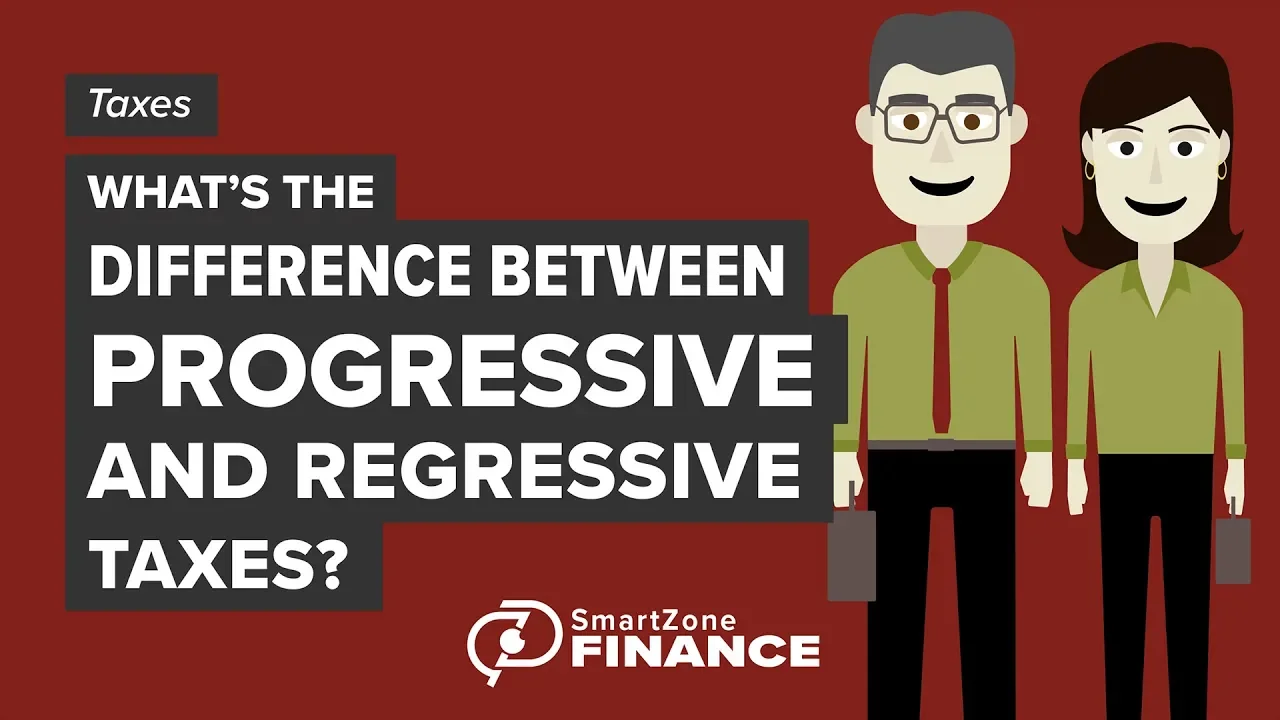
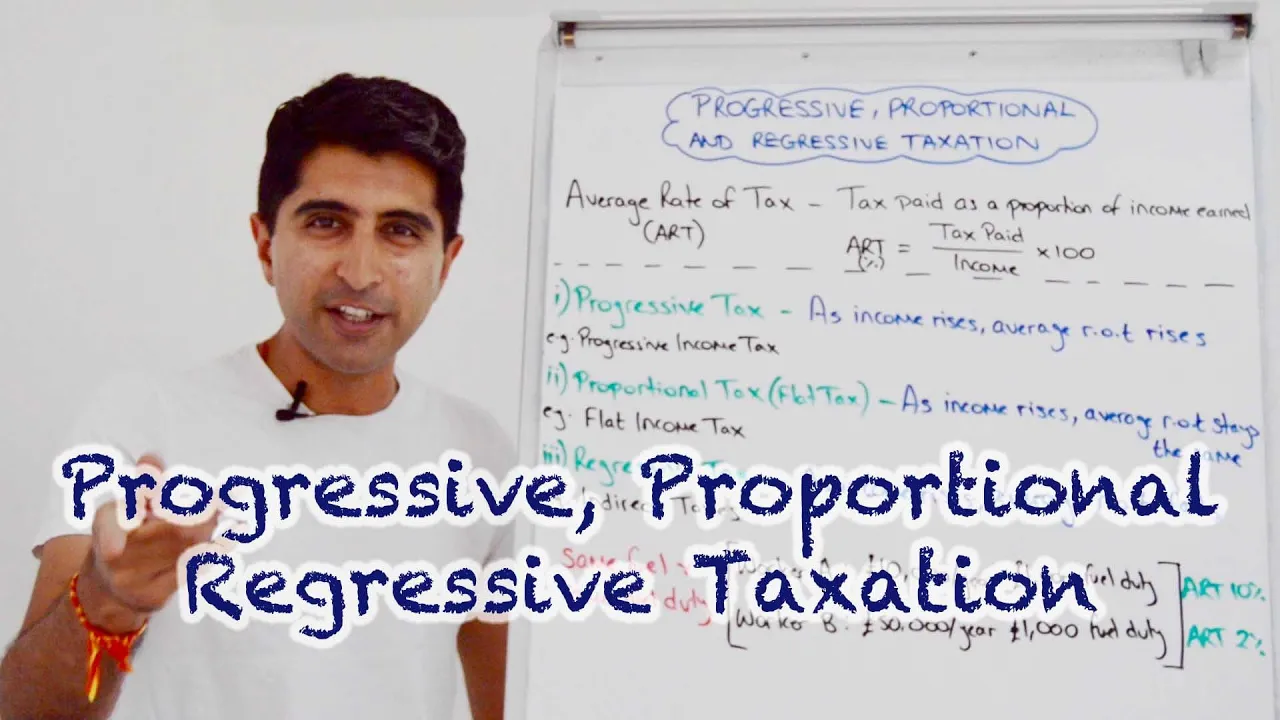
Added:Understanding the basic definitions of progressive, regressive, and proportional taxation.
The economic concepts of market efficiency, deadweight loss, and tax incidence (how the tax burden is distributed).
The fundamental difference between income (accrued earnings and investments) and consumption (expenditures on goods and services).
Familiarity with how the current personal and corporate income tax systems are structured and administered.
In-depth analysis of specific consumption tax models, such as the Value-Added Tax (VAT), Goods and Services Tax (GST), and the 'FairTax' proposal.
Evaluating the equity implications of tax reform, specifically the debate over whether consumption taxes disproportionately burden lower-income households (regressivity).
Studying the macroeconomic effects of tax policy on domestic savings rates, capital formation, and long-term economic growth.
Examining the practical transition challenges, political hurdles, and administrative costs of shifting from an income tax system to a consumption-based system.
74.3K views1.8Klikes9:51Original Release: 2010-04-16
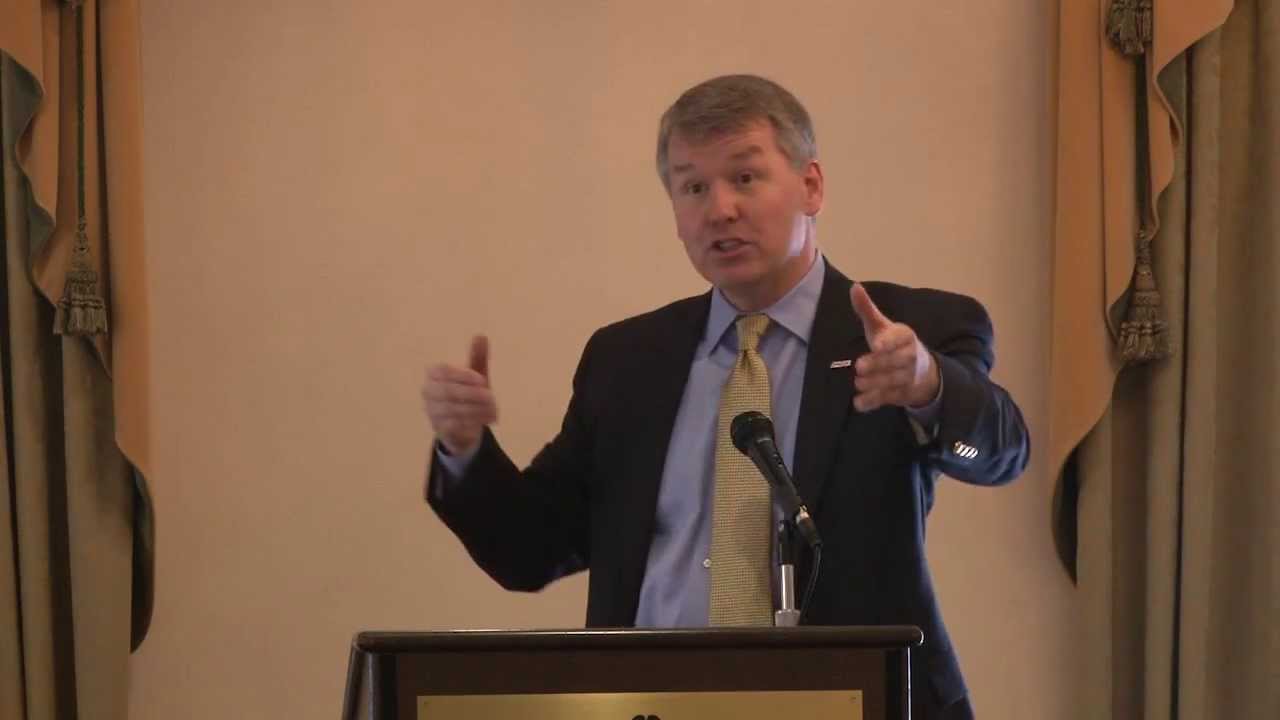
Hi everyone, it's Peter Schiff. This is Thursday evening, April 15, 2010, tax day. And I was very busy. I spoke today at three tea party events.
One in New Haven, one in Hartford, and one in Greenwich, and then I was at a I guess like a meet and greet uh in a pizza restaurant up in West Haven. So I had a busy day. Uh but also I got to uh listen to the news uh in my car and heard a lot of discussions about the income tax and the tax code and the tax structure and ideas for changing the income tax or what is the ideal tax structure for the United States. So I thought I would take a moment to opine on this in my video blog. I mean first of all the income tax is probably the worst way for a government to raise money. It is the most inefficient uh ineffective intrusive uh tax system that you can have. And certainly ideally the best thing to do would be completely abolish the income tax, repeal the 16th amendment, make sure that it never reared its ugly head again. I mean, first, the fact that we had to amend the constitution to enable the federal government to levy an income tax shows you that there is something inherently unconstitutional about the income tax that required a federal amendment uh to allow it to be imposed. Uh certainly I mentioned today at the Tea Party that had our founding fathers uh known that had they broke from the British uh that they would be hit with an income tax from the Continental Congress, we would still be a colony of the British and most likely would still not be paying an income tax because as you know, Hong Kong remained a colony of uh Britain up until about 13 years ago. And during all that time, uh Britain never levied an income tax on on Hong Kong. But in any event, it is uh a bad tax for many, many, many reasons. I mean, number one, it's very intrusive. Think about all the information you have to disclose to the federal government in order to pay the income tax. You have absolutely no privacy uh once you uh you know, you pay your income taxes. And what about the hassle of it? What about the recordkeeping? You know, I had to do my taxes today, but of course, I didn't do it myself. I paid an account, a lot of money to do my taxes. Just about everybody pays accountants. Why? Because it's so complicated. Nobody can understand it. There's an entire industry of accountants. All they do is prepare and file tax returns. What a complete waste of our resources. We need those resources to be freed up for more productive uses. I own a brokerage firm.
A lot of my clients have IAS, Roth IAS, pensions. Why do these types of accounts exist? Because if you have that type of account, you can avoid some income taxes. So all these complicated structures only exist to avoid a tax that we shouldn't even have in the first place. So if we can abolish the income tax, we could abolish all the the armies of accountants, the lawyers, uh all the the time and effort that it takes us to keep our records, compile our records.
And of course, when we file the income tax return, after it's done, we sign under penalty of perjury that it's all true and complete. and then the government can use all that information against us and potentially find us or imprison us if the information turns out to have been false. That is not a way to run a tax system. We would be much better off taxing consumption because of course you get less of what you tax and more of what you subsidize. And the Internal Revenue Code taxes hard work, it taxes savings. It taxes investment.
So we get less of it. It subsidizes debt borrowing. you can take a write off for interest, for example, on a on a home mortgage. So, we're encouraging borrowing, which is what we don't want to do. So, we want to we want to go to a consumptionbased tax. Let's tax people when they spend our money, not when they're earning their money. Now, I heard somebody on I think it was on CNN or CNBC today arguing against the consumption tax because he said it wasn't fair, that it wasn't progressive because it's going to hurt the poor more than the rich because the poor spend all their money and the rich only spend a portion of their money. Well, first of all, sure, the poor spend most of their money, but a lot of the money that they spend, they lot the poor spend a lot of money on food. They spend much higher percentage of their income on food than do the rich. and most uh national sales taxes would exempt food and a lot of the basic necessities. But number two, let's think about this for a minute. Let's say a rich person earns a million dollars a year. And let's say they only spend 200,000. Now, the argument is, well, that's not fair because he's only going to pay taxes on 200,000. He's not paying taxes on 800,000. Well, let's think about what he's doing with that 800,000 because we know what he's not doing.
He's not spending it. So, he's not enjoying any of the money. He's not spending it on himself. So, what could he be doing with that money? Well, one thing he could be doing with it is donating some of it to charity. Anything wrong with that? Do we want to punish somebody for donating to charity? I'd rather see a charity get the m money than the government. Obviously, when a charity spends money, 90% of the money they spends goes to the charitable causes. When we do charity through the federal government, we lose most of the money uh to to pay for the government bureaucracy. Now beyond charity, what else might he have done? Well, the only other option is that the money was saved in a bank account. He used it to buy bonds. He invested it in a company. He bought stock. But what are these things doing? When you save your money, when you invest your money, you're growing the economy. You're providing capital.
You are creating businesses. You are leading to production of of goods, providing services. you're creating employment opportunities. Why would we want to tax that? Why would we want to diminish that? You see, if we're going to tax that money that's s that otherwise would have been saved or invested, we're simply taking money that would have gone into growing the economy and we're giving it to the government instead. I'd rather have that money invested. Now, some people say, "Well, it's not fair because they're earning all that money and not paying taxes, but they're not spending it. They're not enjoying it. They're letting other people use it." Now, of course, whatever money the rich save today or invest today is going to get spent tomorrow.
After all, that's why the rich are investing to get richer so that in the future they can spend even more money.
And that's when we'll tax them when they spend it, when they enjoy their money, when they use it for themselves. But when they're making it available to the market, to the country for capital investment, for job creation, why would we want to tax that money? That's the beauty of a consumption tax. See, all the income is eventually going to be consumed. Let's not tax it until it's consumed because until it's consumed, it is being used to grow the economy. Let's say that that person that I just mentioned that earned a million dollars and only spent $200,000. If they invested $800,000, let's say eventually that $800,000 investment went into growing a business that provided jobs and produced products and ultimately that 800,000 turned into 8 million. Now, when that 8 million is spent, the government is going to collect much more taxes than if the 800,000 had been spent instead of being invested. And in the meantime, the economy missed out on the benefit of all the productivity of all the jobs that were created because that rich individual didn't spend his money.
Now, of course, if there's another individual who's rich and earns a million dollars and decides to spend every penny, you know, on wine and women and fancy cars and travel, then let him pay taxes because he's spending that money on himself. I mean, that's fine.
He earned it. But let's tax somebody when they enjoy their wealth, when they use their wealth for the benefit of other people, which is what happens when you make an investment. Let's not inhibit that. That is going to grow the economy. that's going to benefit the economy. That is not a reason to oppose a consumption tax. That is specifically why we want to embrace and encourage the adoption of a consumption tax. Now, that being said, the last thing that we want is a national sales tax or a national value added tax on top of the current income tax. That's the worst of both worlds. We don't want to do that. We want to have a consumption tax only if it replaces the income tax. And of course, I don't want to replace all the revenue. I think taxes are too high. I'd like a consumption tax that lays laid that raised less revenue than the current income tax because I want to slash government spending. But you know what? If we adopted a consumptionbased tax system, the government wouldn't have to spend as much money because the economy would be in much better shape.
There'd be a lot fewer people unemployed, so people wouldn't be collecting unemployment benefits. You know, it would be a richer, more vibrant economy. And so the tax base would be broader and bigger and and so that would that would that would help. So in addition to getting out from under the the the privacy intrusions, you know, when you pay a sales tax or value out tax, and I prefer a sales tax because it's more transparent and that means Congress is less likely to raise it because you can see it better. But you don't have to surrender your constitutional rights. You don't have to you don't have to, you know, give up all your privacy. You don't have to hire accountants and lawyers. You don't have to risk going to jail. You just buy a product and you pay the tax. It's very simple. It's how the founding fathers envisioned that the federal government would raise money. And that's exactly the type of tax system that I would like to restore uh if at all possible.
Anyway, thanks everybody for listening and I will blog again soon. Take care.
Up Next

18:33
Understanding Taxes: Types and Economic Functions Explained
@iammrbeat
225.2K views•2021-08-27
5:07
Impact of Yuan in Indo-Russian Trade Amid Sanctions
@WION
261.9K views•2022-07-01
10:33
Behavioral Economics Explained: Rationality, Nudges, and Risk
@crashcourse
1.1M views•2016-03-12

113:18
The Age of Easy Money: Fed & Inflation | Full Documentary
@frontline
21.2M views•2023-03-15
Related Study Plans & Knowledge Roadmaps
Structured learning paths in Economics
economics
Sovereign Debt: Defaults, IMF & Restructuring
01Introduction to Sovereign Debt & Government Bonds
02Debt Sustainability & Credit Ratings
03Anatomy and History of Debt Crises
+ 2 more learning modules
12h5 modules
Explore Roadmap
economics
Market Design: Matching Theory & Gale-Shapley
01Introduction to Market Design and Price-Free Markets
02Two-Sided Matching & The Gale-Shapley Algorithm
03School Choice Systems and Mechanism Design
+ 2 more learning modules
10h5 modules
Explore Roadmap
economics
Impossible Trinity: Forex, Capital & Policy
01Introduction to Monetary Policy and Central Banking
02Exchange Rates and International Capital Flows
03The Mundell-Fleming Model
+ 2 more learning modules
8h5 modules
Explore Roadmap
economics
Healthcare Economics: Market Failures & Systems
01Introduction to Healthcare Markets and Market Failure
02Asymmetric Information and Adverse Selection
03Moral Hazard and Insurance Design
+ 2 more learning modules
12h5 modules
Explore Roadmap