






![[성인] 산-염기 뽀개기 Tip! (33분-5번 보기 고정댓글 참고)](https://i.ytimg.com/vi/-iUE8VJeREQ/hqdefault.jpg)













The body compensates for acid-base imbalances through respiratory and renal mechanisms: respiratory compensation adjusts CO2 levels (hyperventilation for acidosis, hypoventilation for alkalosis) within minutes, while renal compensation adjusts bicarbonate and hydrogen ion handling (secreting protons and reabsorbing bicarbonate for acidosis, secreting fewer protons and reabsorbing less bicarbonate for alkalosis) over hours to days; these compensatory responses follow Le Chatelier's principle where the reaction shifts to counteract the primary disturbance.
Acid-Base Compensation: Respiratory & Metabolic Made Easy
Added:Understanding of basic pH chemistry, including the definition of acids, bases, and hydrogen ion concentration.
Familiarity with the carbonic acid-bicarbonate buffer system equation and how it maintains physiological equilibrium.
Basic knowledge of respiratory physiology (ventilation and carbon dioxide elimination) and renal physiology (bicarbonate reabsorption and hydrogen excretion).
Normal reference ranges for arterial blood gas (ABG) values, specifically pH, PaCO2, and HCO3-.
Calculating and interpreting the serum anion gap to narrow down the differential diagnosis for metabolic acidosis.
Mastering Winters' formula and other physiological rules to identify mixed acid-base disorders.
Clinical correlation of acid-base imbalances with specific medical conditions such as Diabetic Ketoacidosis (DKA), COPD, sepsis, and renal failure.
Advanced therapeutic management of severe acid-base disturbances, including mechanical ventilation adjustments and pharmacological interventions.
247.4K views2.1Klikes58:31Original Release: 2012-10-25
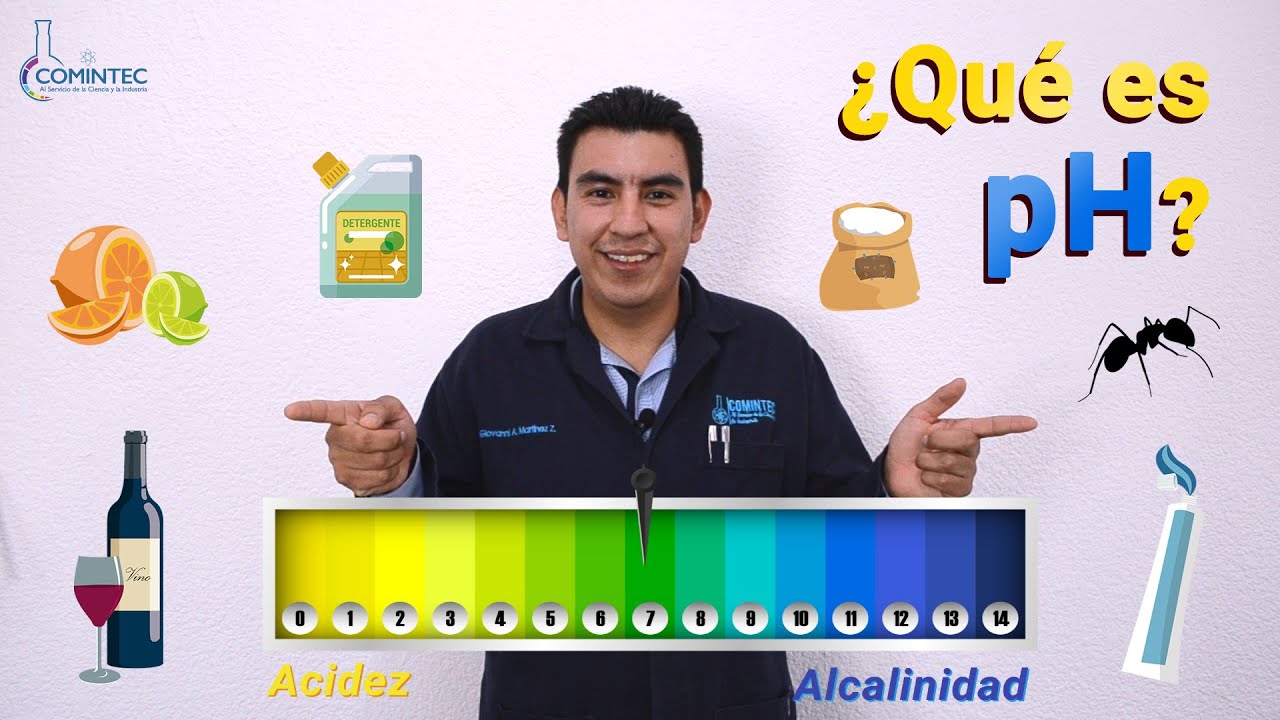
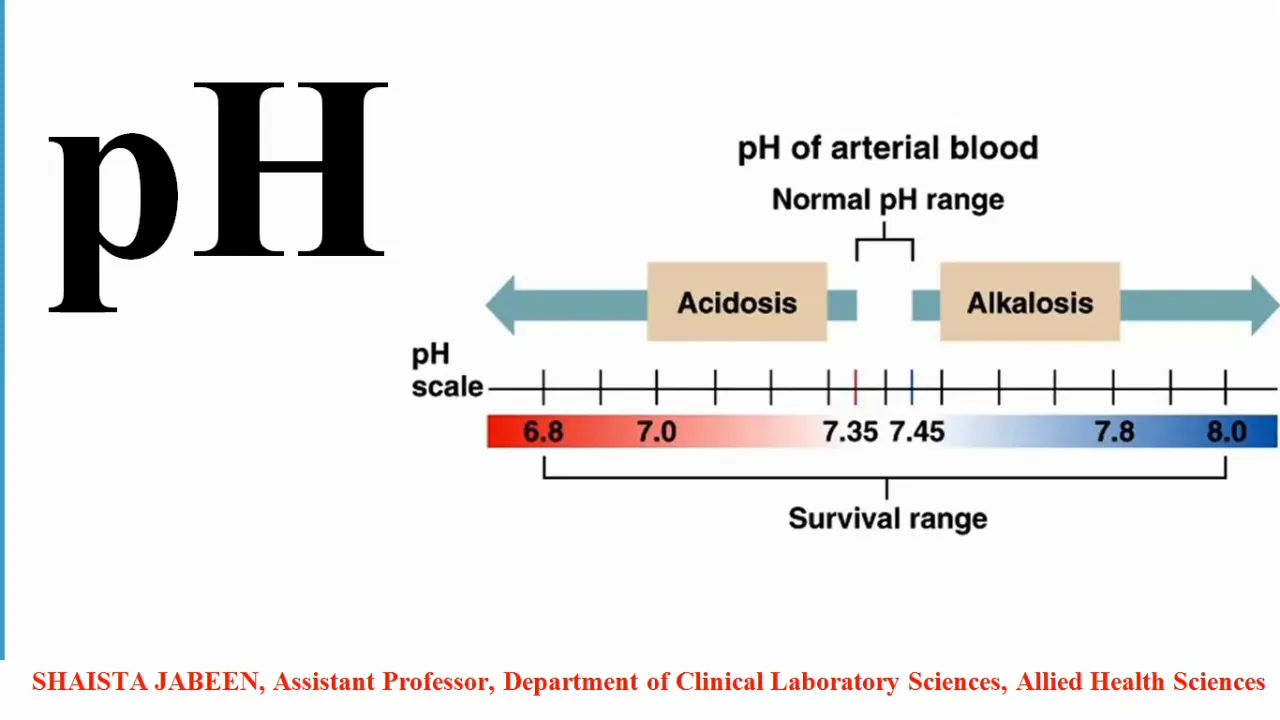
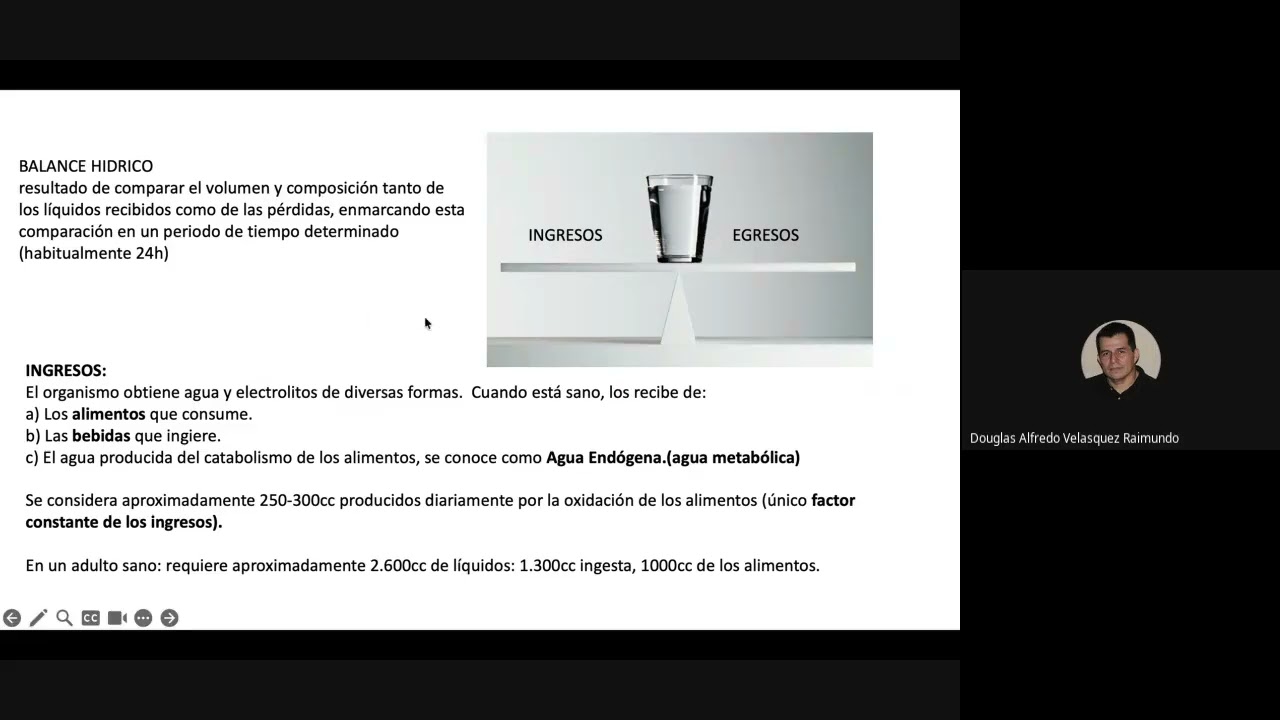
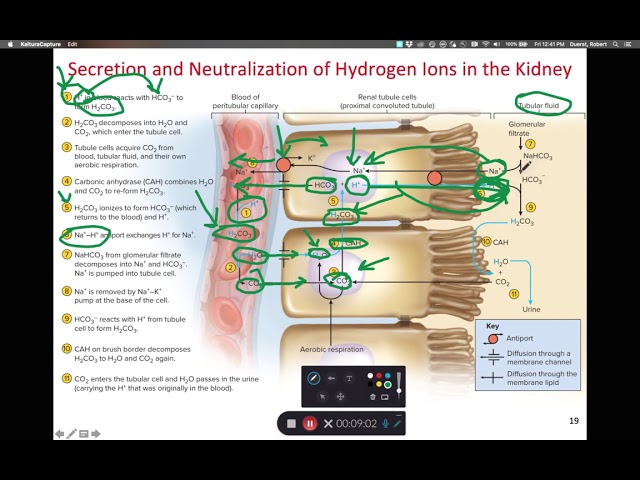
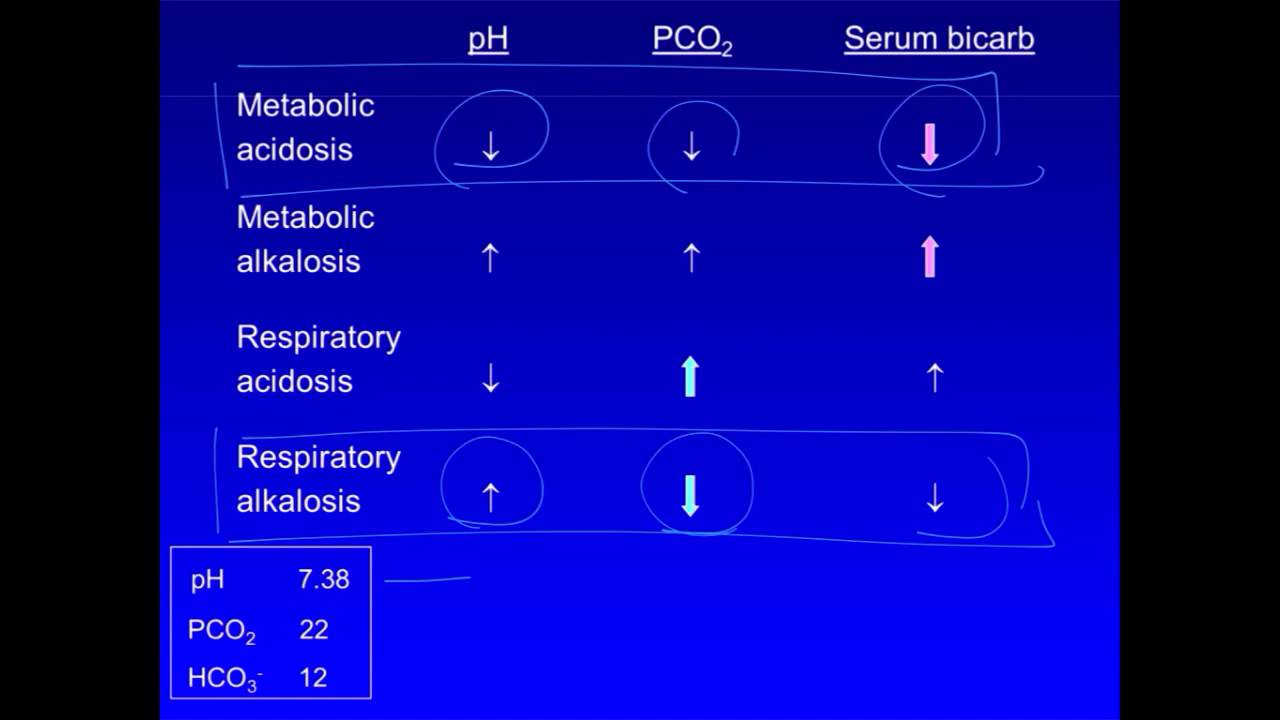
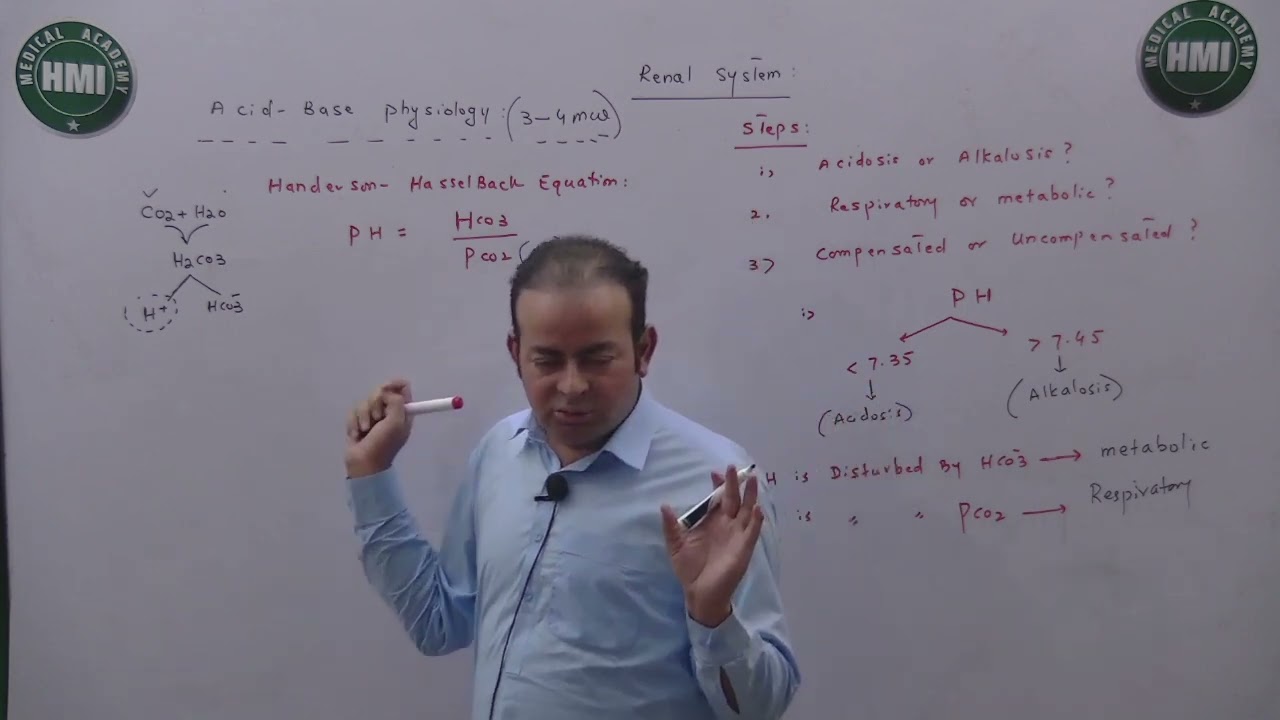
what's up guys today I'm going to cover respiratory and metabolic acidosis and alkalosis with respiratory and renal compensation and those words are definitely a mouthful and if you look at that girl at the bottom corner that's how I felt the first time I learned this subject and if you look at the guy I'll bent over at the other corner that's how I felt afterwards now I hope you guys aren't going to feel like that this is why I'm trying to break this down for you but there's also more of a purpose to those pictures than me just trying to be funny so let's get started so let's start with the pH scale the pH scale starts at zero and it runs all the way up to 14 and then what's the neutral value it's going to be dead center that's seven and then where's blood Bloods pH is at this side the left is it to the right blood pH is a little bit to the right it's right here and that's about 7.4 okay so this part here from 0 to under 7 is that acidic or basic that is acidic so that means that from 7 to 14 is basic so that means blood is slightly what blood is slightly Oh can't spell slightly basic but there's another word for basic as well too and that is ELCA linic if you're wondering where alkalinity comes from well we have a base a base is usually a hydroxide ion as a charge of minus 1 it's going to combine or something as a charge of plus 1 and what are the name of these elements right here in this column these are the alkali metals alright so if an alkali metals such as na alright has plus charge and a combined then we have sodium hydroxide same illicium potassium etc okay so blood is slightly basic or slightly L : ik so I'm not trying to do a big chemistry lesson here I'm just trying to cover a few basic concepts that we'll need so we have hydrogen chloride right here when it's in solution it's going to break up and it's going to give off a hydrogen ion and a chloride ion that's going this way to the right now this compound over here if you remember what it's called it's called carbonic acid when that dissociates it's only going to dissociate one of its protons not both uncle SI's - only one comes off and then what's this one over here that is bicarbonate and then we have this phosphate over here it's going to break up dissociate give off one of the hydrogens on both of the hydrogen's and then we have ammonium that's also going to give off one of its hydrogens but what's different about these bottom three versus the top one the top one is a strong acid it completely dissociates the bottom three are not strong acids but they are weak acid so these reactions are reversible they can go both ways so what's the importance of having the weak acid versus the strong acid is these weak acids and weak bases together make very good buffers which are going to be very important in our body when we start talking about the kidneys versus the lungs the kidneys when they do their compensation these two are going to be very important in there so these bombs are very important renal and out of those two it's the ammonia ammonium combination there are going to be the most important in the kidneys now one last thing before we continue on from here just so we have these terms down acidosis and alkalosis acidosis we're going to be less than seven pH that means we're going to have a low pH and in terms of hydroxide ion concentration we're going to have a high hydroxide ion concentration for alkalosis which is the same thing as saying basic it's going to be a value greater than seven which means it's going to be a high pH which means the hydroxide ion concentration is going to be look another quick point to mention is that in blood you can have hemoglobin bound to a hydrogen and this is also a reversible reaction and hemoglobin can release a hydrogen and go back as well all right so let's continue go down here okay quite a few things on this page but the first thing to look at is this equation up here this is a very important equation you want to be able to know how to write this and I'll give you a way here in a moment but let's just go over the components first so first you have carbon dioxide then I'm sure you know your h2 isel your h2o your water then you have h2 co3 but what is that that is carbonic acid or carbonate just take the ick acid off the end just put a te carbonate and then you have your hydrogen ion and then you have over here by car Oh Nate if you notice look at the arrows they're reversible and go both ways as well over here this is a very important enzyme up here it's usually abbreviated despise first two letters C and a carbonic anhydrase and it catalyzes this reaction in both directions where do you find carbonic anhydrase someplace is over and alveoli of the lungs this is where the air would be this is your pneumo site type to cell it secretes surfactant surfactants important if a baby is born prematurely by a month or two months it won't produce it it's going to have a tough time breathing and along with surfactant inside here you're going to have carbonic and hydrate specifically ca2 there's about 10 13 different isoforms but ca2 comes from the type ii alveolar cell you also have type 1 cells you have macrophages etc anyways also in your kidneys and your nephrons and the tubules in those cells you also have carbonic anhydrase located inside of those cells alright so how do I remember how to write this equation well I think about what do I breathe out okay oxygen I breathe in so carbon dioxide I breathe out but I must read out something more than co2 and you probably don't notice it if you live in a warm place like me right now in the Caribbean I'm going to school but when I used to live in upstate New York and if you're on that latitude or up there up north more Canada what else do you notice on a cold day well if you look at that guy down here you're going to breathe out some vapor so you breathe out water so I start with what I breathe out I breathe out co2 and water it's a reversible reaction and all I do is I just combine all of these starting with hydrogen there are two hydrogen's how many carbons there's one carbon how many oxygen there's three oxygens and then this will dissociate and just pull one hydrogen off of it so H+ hco3 minus just practice doing that a few times and you'll get it again remember start with what you breathe out combine them all and then just pull one hydrogen off of there the next point to mention is going to become important later on and that's what I'm going to call a respiratory side and a renal side again they're all involved in both areas but it's just the way I'm trying to do it here is I start here for respiratory so I call this RESP start it'll make more sense later on and then when you get to Reno I call this the start site for renal so I say renal start again this will make more sense later on now let's talk about an important concept by some dude named the shat da that's this guy over here so this principle is pretty important okay so I'm going to try to illustrate it this way let's say we draw about four red balls here and then we're going to get the blue and we'll draw four blue balls here and they are linked and joined together so the châtelet eh principle says when you have a lot of one substance on one side it's going to cause a reaction to go in the opposite direction so what eventually is going to happen is that you're going to have some of them still linked to each other as you can see over here and then since the reaction proceeded to the right a little bit you're going to have some of these on their lonesome by themselves not joined anymore so this is what I think about I picture I have a bunch of legos over here and I have a red Lego I have a blue Lego I join them together it's like making a castle so it's got got four castles but I don't have any more pieces that I can build with so what I do is I got to break some of them down so I have even amount of castles two pieces of Legos so over here you know it's kind of broken up here I still got the four here I still got the four here except some are broken up and some are linked together now I know this is not the best analogy but let's say you know all the pieces were broken off by themselves here they're the four blue ones and then we'll make the four red ones but now you know we don't have any more castles we broke apart all the pieces so which way is it reacts you're going to go oh we can't go to the right because there's really nothing to break down so the reaction is going to proceed to the left until it reaches a balance here so this is kinda like a homeostasis like a balance or we could say a buffer system right here so what I'm trying to tell you is if let's say we increase one of these over here like co2 over here it's going to cause your action to go which ways and go to the left or to the right well if we increase like over here we're going to go the opposite way so we go over to the right so that we can work to increase these components as well another way to think about it is just picture you have a hill you're going to go from the high point to the low point so you'll be going the other way so hopefully everything is going well so far and you guys aren't pulling your hair out bent over that toilet yet but let's continue on get a little deeper into this material now you're going to see a bunch of diagrams here and there's a purpose to all of them you can see I have that girl pulling her hair out and you'll find why in a moment but smoking I'm not going to lecture you want it you guys know all the goods and the bads and all that anyway smoking can cause emphysema and emphysema is going to trap the co2 and your lung so that's your windpipe and you go down here let's say that's a long and down here that's a long or in LVL I doesn't matter just air emphysema it's going to make it hard for the co2 to escape so you're going to have a lot of co2 in here it's going to be hard to get out because the walls weaken they start to collapse especially on expiration so you're going to have a buildup of co2 so if you have a lot of co2 here and remember the chatelier's principle which way is this reaction going to go is it going to go to the right or is it going to go to the left well what I want you to focus on here is the co2 and the hydrogen ion the proton all right so there's a lot of co2 remember if we go back to a legal example if we have a lot on one side I hi we go down the other side so it's going to eventually cause an increase in the hydrogen ion concentration so due to a respiratory problem something that's going on in the lungs we are getting acidosis why is this acidosis well we have a high hydrogen ion concentration which means we have a what type of pH we have a low pH will discuss the compensation mechanism shortly let's go to the next scenario respiratory alkalosis well in acidosis the co2 is high so in alkalosis the co2 is going to be low well how do we get low co2 and how about where am I talking about this concentration of co2 well go back up here co2 we're talking about in the lungs all right so when we measure we're measuring in the lungs and specifically we're talking about the blood that's traveling through the lungs it's very hard to remove it from our body so it's stuck in there so it gets converted and becomes acid down here well ok it seems like the co2 and excuse my horrible but it seems that the co2 is actually getting out so we're going to have a low concentration of co2 how do we get co2 to come out do we breathe more or less well hold your breath what happens when you hold your breath all right don't hold it too long but you're keeping that co2 trapped inside of there so it's becoming a acidotic condition but if you breathe out more so this would be hyper ventilate we're just up here and be hypo ventilate you're getting rid of that co2 so here you are you're trying to study this you're freaking out so you're breathing a lot so the co2 concentration in your blood and your lungs of your body starts to decrease now if it's going to decrease over here again we always want to look over here at the hydrogen ion what's going to happen over here well if this is decreasing that means which ways the reaction goes and go to the right or to the left well up here the reaction went this way to the right over here it's decreasing so we're having less and less of it if we have less and less of it we need to you know kind of bring it back to a balance we need to bring it up so we're going to go the opposite direction we're go to the left so for going to the left we're using everything that's over here so this amount is going to go down so it's going to start to decrease and if we decrease the hydrogen ion concentration then what's going to happen to the pH pH is going to go up what's pH going up is the acidosis or alkalosis well there it is it's alkalosis so again we get rid of the co2 we need to replace it so they replaced it we have to go that way and start making it so that means we're using everything over here so that's going to decrease the hydrogen ion so the pH is going to go up and over here there's a lot of co2 so we need to break it down so we're going to break it down we're going to go to the right which means we're increasing the hydrogen ion concentration if we're increasing hydrogen ion concentration then we're going to decrease pH and creating an acidic environment so do you remember how I told you for respiratory we're going to start on this side and you saw how we did that over here respiratory we start over here on that side well now we're going to start on this side over here for metabolic conditions so metabolic acidosis this should be pretty easy to start off right away well what's in acidic condition it is a low pH which means what's happening to the hydrogen ion concentration it's going up so we can have it happen from an increase in hydrogen ion concentration if we have increase in hydrogen ion concentration which way is this reaction going to go well we have a high amount here we have a lot of things need to get rid of it so it's going to go to the left and hence what's going to happen to co2 the co2 concentration is going to increase this increased co2 is going to stimulate our chemo receptors and our carotid bodies and our artic arch to stimulate the respiratory center so we breathe out more so you'll find patients with metabolic acidosis such as diabetic patients who have diabetes mellitus because of ketoacidosis the ketone bodies will be increasing they'll tend to be hyperventilating a little bit depending on the severity of their condition now this little funny comic strip wat I put it there well when you got the runs there's a lot of bicarbonate in the feces and this is another way to get metabolic acidosis and here's bicarbonate so if you're you know letting go of all that bicarbonate down the drain you are going to be decreasing it by decreasing the amount of carbonate you're messing up this ratio so if you have a racial year of hco3 bicarbonate to hydrogen ion you're decreasing this so hence this is decreasing then this is going to be increasing so either way you are increasing the hydrogen ion concentration all right what about this guy hunched over down here well alkalosis alkalosis what's the pH higher low it's going to be a high pH so if it's a high pH then what's happening to the hydrogen ion concentration it's going to be low so we have a low concentration of hydrogen ions so again this is getting into compensation a little bit but which way is the reaction going to go well we have low here we need to supply it so the reaction going to be driven to the right due to the Shelly's principle which hence what are we going to do to the co2 concentration well we're using it to make this so the co2 is going to decrease and how's the respiratory system going to compensate for it well it wants to increase co2 in our body how do we increase the o2 in our body do you breathe more or do you hold your breath well hold your breath and you'll see you have all that co2 is going to start to build up so patients of metabolic alkalosis may experience hypo ventilation what's this guy doing well I could have put a little bit more graphic pictures when I looked up vomiting on Google Images but I figure this would be alright and well what's the environment of the stomach so yeah the esophagus going down here's the stomach is curling around just like that what's this environment in here well it's full of HCl hydrochloric acid it's very acidic so if you are vomiting all the acid you are decreasing it so you're going to have a higher concentration of bicarbonate in your body according to that ratio up there it's going to be the opposite - to hydrogen concentration you're going to have higher this and lower this on a side note vomiting is an interesting one because if we vomit just our gastric contents let's say there's some sort of cancer or some sort of blockage here in the pyloric region then you're going to vomit your acidic contents but what if you're vomiting let's say that the Wadden um down well you have a lot of alkyl in akan tents so if you're vomiting i guess a deep vomit from your small intestine as well - you're actually going to end up with metabolic acidosis because you're getting a rid of a lot of the bicarbonate and all those basic components from your digestive system now let's start getting into some compensation mechanisms the respiratory system is the easier one to think about so we'll start with that one you already saw a respiratory compensation above but I'm just going to repeat it again that a quick note on compensation compensation means you're making up for something here we got the lungs the lungs are going to be compensating for a problem the problem where the problem in the kidneys so if there's a problem in the kidneys the lungs are going to compensate for it if there's a problem in the lungs and the kidneys are going to compensate for it so respiratory compensation means where is the problem the problem is going to be in our renal system so let's take over here the proton let's say there are a lot of protons if there's a lot of protons we learned that's one problem what's the other problem that there could be not just a lot of protons what's another relative way of saying we have more protons as we could say we can do what to the bicarbonate we could decrease the bicarbonate it could be both it can be either what type of environments is that going to cause well we have a high amount of protons so that's going to cause a what to the pH that's going to cause a low pH so that is acidosis and again here we're talking about metabolic problems so the problem is necessarily have to be in the kidneys it could be just the lactic acid buildup or whatever sort of acid up in the body just metabolic again doesn't mean just kidneys it means anywhere in the body other than the lungs so how are or how is the respiratory system going to compensate for this acidic condition in the body is it going to be driven to the left or to the right according to le chatelier's well again always just focus on the protons and the co2 if we have a lot of it then we're going to go in the opposite direction so what's going to happen to the amount of co2 if we keep going this way and this way in this way we're going to keep making more so we're going to increase the co2 so if we have an increase in the co2 in our body are we going to cause the respiratory system to hyper or hypo ventilate well there's a lot of co2 there's a lot how do you think about it try thinking about both hold your breath that's an example of hypoventilation you're trapping the co2 in there we don't want to do that we want to get rid of that co2 because there's a lot so what's the body going to do the body is going to hyper ventilate to get rid of it to inject that co2 from the body so what's happening here is if we have metabolic acidosis then the respiratory system is going to hyperventilate as mentioned before the increase in co2 will stimulate the carotid and a auric arch those chemoreceptors for hyperventilation now metabolic alkalosis the pH is going to be what it's going to be increased what does it mean if we have an increase in pH that means what - the hydrogen ions increase or decrease that's going to be decrease another way again though is to do what - the bicarbonate because if remember we had our equation here hco3 minus - the H+ well we want to say there's a low hydrogen ion concentration but what's another way of doing that without changing that of hydrogen ion is we could increase the amount of bicarbonate so if there's a lot more bicarbonate then there's relatively less of the hydrogen ion so is the reaction going to go to the left or is it going to go to the right if it goes to the left it's going to keep using all the hydrogen is going to decrease it further so the reaction accordingly chatelier's going to be driven to the right so we're using everything over here so what's going to happen to the co2 over here the co2 is going to decrease so if we're in the body and there's a low concentration of co2 and we're causing alkalosis how is the body going to compensate specifically the respiratory system well we want to act by increasing the co2 we want to compensate for what's happening here so how do we compensate do we breathe more we'd be less well when you breathe less example just hold your breath and you're going to beat rapid in so we're going to hypo ventilate hypo ventilation and that's simply how the respiratory system compensates for the metabolic problems in the body so let's proceed to the renal system and this one's a little bit more complicated so we saw how the respiratory system worked on compensation by playing with the co2 either we held our breath or decreased our breathing hypoventilation which increases co2 or we hyperventilated to get rid of the co2 which decreased it so we played with this half of the equation for the respiratory system for the renal system we're going to play over here with this side of the equation so let's say somebody over here we got respiratory conditions these are the problems let's say somebody has respiratory acidosis so again how did the respiratory acidosis happen well what was going on is you know they all their breath or for whatever reason they can't get the air out so they're breathing less they have a buildup of co2 in their body so again always all we always focus on these guys for right now so what's that going to do is going to drive the reaction to the right so it's going to increase the hydrogen ion concentration so what is the renal system or what is that what are the kidneys do so basically for compensation they get to play with two things what are they going to want to do to the amount of protons are they going to want to increase it further no they're definitely going to want to decrease the number of protons what are they going to to the amount of bicarbonate well if we have bicarbonate then we can buffer and we can neutralize things so we're going to increase the amount of bicarbonate we'll get to the mechanisms next let's just deal with a simple idea okay let's say there's respiratory alkalosis the respiratory alkalosis there's decreased co2 due to hyperventilation which is going to drive the reaction which way it's going to drive the reaction to left because we're going to try to replace that so what is that going to do to the hydrogen ion concentration it's going to decrease it so now we're in a state we have a decreased amount of hydrogen ions how can the kidneys compensate if the kidneys are playing with these two numbers I remember the lungs I'll highlight that again the lungs play with this side the kidneys play with this side so what can the kidneys do to these two guys over here well if we keep decreasing it that's not good because we'll keep increasing the pH so to compensate the kidneys will increase the concentration of hydrogen ions what are they going to do to the bicarbonate it is going to decrease the concentration of bicarbonate in the blood so we're about to discuss the mechanism see here on the next part but I'm just going to simply drive there Bowman's capsule is the proximal what convoluted tubules we call this descending should say it lupa family then it comes up becomes a wider we call it the ascending loop of Henle or the limb family and it goes and what is this called right here be your DCT your distal convoluted tubules and was they connected to at the end that connects to your collecting duct so what are some points that I want to make here there are different processes that go on at the kidney there is a process that goes on here we call that filtration and then the other two processes reabsorption what secretion pretty much go on throughout the rest of the nephron so reabsorption will be coming back out into the bloodstream because the blood vessels will be here and then secretion would be going into the opposite direction so that would be secretion so what does that mean here in terms of compensation well let's say we took respiratory acidosis the compensation means we need to decrease the amount of protons that are in the blood so what is it going to do it is going to secrete protons and reabsorb bicarbonate so looking over here all right we want to decrease going to compensate by decreasing protons so will tend to secrete more protons into here so eventually they will be excreted from the body we want to reabsorb more bicarbonate which means this way so it comes back out into the bloodstream so it can go and neutralize what's going on compensation over here we want to increase the amount of protons because we have a basic condition in the body so what are we going to do to the protons we will secrete and also filter less so less secretion here greater secretion here greater reabsorption here so what's going to happen over here we're going to have less reabsorption so one more time just to review this say we have an alkyl look or a basic condition that means we have a low amount of protons that means we need to conserve the protons inside so to conserve them we're going to secrete less so less secretion of proton so that will keep them in the bloodstream we don't want the bicarbonate but the bicarbonate is already filtered through here so we don't want to bring it back so we will reabsorb less so what's it easier way to think of this think of the bicarbonate as getting filtered and then reabsorbed think of the proton as getting secreted so that it just depends where do you want to put the block if you block the reabsorption then you're just going to urinate more of the bicarbonate so you're going to decrease the bicarbonate you're decreasing the reabsorption because freely filtered here at the glomerulus if you block the protons you're not secreting them then you're going to keep them in here so you're decreasing the secretion what about over here for acidosis we want to increase the secretion so we want more of the secretion to happen that way we can excrete it from our body don't confuse secretion which is going from blood to tube you'll with excretion into the toilet right so out here inside toilet that would be excretion and then for the bicarbonate we are going to want to reabsorb more of it back into our blood so the next thing now is we'll look at the specific mechanisms that handle these conditions alright a lot of pictures and cells and all that in here but don't let that bog you down let's get started so mechanisms I'm saying this is location one of two PCT proximal convoluted tubule the thick alh a sending loop or limb of Henle and the early DCT now these locations here easy way to look at them and just when you draw the net front out like this just the way straight out and you're go in a straight line you'll hit all these clock parts like right here you'll hit the PCT if you keep going you hit the a sending limb of Henle and if you keep going you hit the early part of the d CT why this matter is because the mechanism differ and this area versus later on the distal and the collecting duct right here the late part of the distal convoluted tubules and the collecting duct which we'll do next so let's get oriented to these views as you see here it says bicarbonate buffer phosphate buffer ammonia buffer these are the three main types of buffers that are going to be going on now just so we get to view here I'm going to take this yellow color and this side of the cell here here and here as you see it says tubular lumen for all of those here that's going to be inside the tube you'll and then over here it says renal interstitial fluid I'll just take brown I mean it's going to be going back and forth between the blood pretty much so here that's the interstitial that is outside the tubular system there there and there so this is the flaw as you see coming down going through so what are special things to note without getting in too much detail with bicarbonate buffer system as you see here the bicarbonate it's going through right if the bicarbonate stayed in here it would be excreted into the year and it would just travel its way through but what's happening is going down here going down here right it's coming down and it's making its way in through the cell you can see the carbonic anhydrase it's combining and it's going to go back so basically what are we doing here is by carb what's the important thing here is recycled we didn't make anything new we just recycled it it was filtered out right at the beginning we filtered it and it was going it's making its way through then all of a sudden remember what we said we reabsorbed it so here it is being reabsorbed let's go over to the phosphate buffer system here you see your phosphate and over here you have a proton being pumped out and it's going to combine and there we go we got the phosphate what's interesting to note here there was no bicarb in here that's going through here I mean there is but just in terms of using this system there's no bicarb so what's going on is inside we have that reaction going on and we get one new bicarb I'll write that all right so one new bicarb so that's an advantage the phosphate buffer system will produce us one new bicarbonate to go help take care of the acidic environment again in all this situation we're assuming acidic environments let's look at the ammonia buffer system what's interesting here is glutamine which is coming from the metabolism mostly from the liver has made its way to the cell and what's going on here well over here we just had one bicarb over here glutamine is going to split and we get two of the ammonium we get the reaction and we get the excretion out here I mean eventual excretion but the main important thing here is we get two new by carbs so again without getting into too much detail the bicarbonate buffer is just going to recycle the bicarb recycle or one bicarb recycled the phosphate buffer is going to give us one new bicarbonate and you can slay the details if you need to obama keep going and then over here the ammonia buffer system is going to give us two new bicarbonate so this is very important because we get ammonium in the urine and you can measure the ammonium in urine and that will tell you how much of an acidic condition a person is in so again this is location one of two includes three areas the PCT the thick ascending limb and the early DCT and so if we divide it here we got the early over here we got the late over here and then over here on the collecting duct so these two portions are going to be coming next what's a big thing that's going to separate them is the sodium all right we have sodium reabsorption going on in these parts so when we go down here next in relocation to two we're talking about the late DCT and the collecting duct which should be this part here would be the late DCT and then we'll be talking about the collecting duct first thing to note right away is the phosphate buffer this is the same the same as above so this did not change so you can see here is the sodium and what not what did it do we produced one new by card so that's exactly the same as well as above so what's different to know here is we don't have that sodium reabsorption we're just using a straight proton pump that is just going to pump that hydrogen out but same idea if it's bicarbonate all we're doing is see here it comes down here it was filtered and there's coming through here and then it is reabsorbed so it was filtered up here earlier on remember the beginning was filtered and it kept going going through and then later on it was reabsorbed so what do we do with the bicarb we just recycled the bicarb and lasting over here for the ammonia this is a little bit different remember before how many bicarb did we get new well go if we go back up and look you'll see we got two new by carbs but when we go back down here we see we only get one new bicarb there's no recycling nothing's coming back and we're just getting one new by card so just to recap the main differences is let's do actually similarity first the phosphate buffer is going to be the same back in the first portions versus the second portion it's exactly the same with one new bicarb the ammonia buffer earlier on is going to give us two new by card over C's later on it's going to give us just one new bicarb you could think about as like the early bird gets too warm the earlier the better so you're going to get an extra one let me go to the bicarb buffer it's going to be one bicarb is going to recycled for both but what's the main difference is there sodium reabsorption earlier on and later on there's no sodium reabsorption it just the straight proton pump so let's try to recap this and have a little summary alright so time for a summary okay if you're interested the normal values for all these things right here the pH of the blood the co2 by Carl that normal values are here we call them the a B G's the arterial blood gases alright how is it measured basically put a needle usually into the radial artery or sometimes a femoral artery draw some blood and look at the values so these are the normal values over here I'm going to walk you through one of them really quick respiratory acidosis let's write our equation so we have co2 plus what what else do we breathe out h2o so reversible reaction what's the enzyme carbonic anhydrase we make h2 co3 that is carbonic acid another reversible reaction and over here we pull off one proton and that leaves us with what is this hco3 minus that is bicarb so let's try one of them respiratory acidosis acidosis what's up with the pH the pH is going to be down if the pH is going to be down let's jump over to the hydrogen ion that's going to be up so if we go up here this goes up and this goes up in which way is a reacts you're going to go the reaction is going to go to the left so what is that going to do to the co2 it's going to increase the CEO - so this is initially what's happening all right so asterisk is going to say initial event why am I doing that because what are the kidneys going to do how what's going to be renal compensation what's going to happen to the bicarbonate if there are a lot of protons in there how are we going to neutralize it well we're going to need bicarbonate to match with the proton so there's going to be an increase in the protons let's do respiratory alkalosis so the respiratory alkalosis we're going to have a high ph which means we're going to have a low proton if we have a low proton that means we need to go to the right that means we're going to have a low co2 a low co2 that's initial thing that's going to happen what's the renal system going to do to compensate for it so this is compensation is going to decrease the bicarbonate why is it decreasing the bicarbonate because we're having a low H if we have a low H+ that's saying like we're having more of the bicarbonate so we don't need too much we don't need a lot of base so we need to decrease the amount of base if you remember back to that ratio we had now let's go all the way metabolic acidosis metabolic acidosis means the pH is going to be down if the pH is going to be down we have a lot of hydrogen ions which means we're going to have a relatively low amount of bicarb now this is the initial event the bicarb so what's the respiratory system going to do in order to compensate well we have a lot of protons so a lot of protons going to push the reaction to the left we don't want to have a lot of co2 right because a lot of protons is pushing it to left already making a lot of co2 so the respiratory system is going to hyperventilate to breathe a lot of it out so that's going to be the compensation for metabolic alkalosis the pH is going to be increased which means our hydrogen ion concentration is going to be decreased it's alkalosis and bicarbonate is a base so that's going to be increased relatively again where is this coming from just think back to that equation right hco3 minus over the proton if we have a low amount of protons it's like we have a lot of base so that that's going up so again this is the initial event and what's the compensation going to be by the respiratory system well if we have a low amount of protons the reaction is going to go to the right to try to add it so that's going to be decreasing the CL - so what's the respiratory system going to want to do is going to want to increase the co2 by hypo ventilation now I want to draw your attention to something right here just these three values right here let's just ignore the hydrogen for a moment just look at these three pH co2 hco3 if you take a look at these arrows notice that the metabolic ones all point in the same way alkalosis all up acidosis all down then if you look at the respiratory all right look at the pH the co2 in the bicarb are in the opposite direction the acidosis right there in the opposite direction so co2 and bicarb are always in the same direction both up both down both down both up it's how they match with the pH so here's a little way I just thought of coming up about it respiratory take the first two letters or E or E values are again take the re reversed what do I mean well look at metabolic they're all the same way all the same way respiratory well it's easy to figure out pH alkalosis means you have a high ph so that means the other two are down acidosis that means you have a low pH okay so reversal the other two are going to be up always the same direction for these guys so I'm going to show you an example that coming up and some practice questions next but the other way is just to say that co2 and hco3 - always always in the same direction the hydrogen ion ones you can figure out easily because this is going to be the opposite of pH so just focus on these three and then you can get the fourth one after all right let's try some practice questions okay so you can pause the video and attempt these questions but I'm going to go ahead and answer them right now hypoventilation okay hypo ventilation one of the things to do here is you can draw you know the little air sacs alveoli here just you know track leading into them hypoventilation so you're not breathing a lot if you're not breathing a lot that means a lot of that co2 is going to be stuck in there so best thing to do is just write out that whole equation here and we got the carbonic acid and that reversible reaction you got the proton plus the bicarbonate okay so what's going to happen here is I'll just pick a different color the co2 is increasing so which way are we going to go and drive the reactions that right look at the hydrogen what's going to happen to it it's going to increase so we're talking about ventilation we're talking about a respiratory thing so these are already out of the question and what's going on is we have lots of protons and filled lots of protons the pH is going to be down so we're going to have acidosis so this one's going to be acidosis in response to respiratory acidosis so this response to what just happened what are the kidneys going to do a couple only choices in a couple two things that can happen now what am I going to do here is I'm just going to shortcut right here to the chart and then I'll explain it respiratory acidosis let's do the pH the pH is going to be down and what did we say when something is respiratory it's going to be reversed right so we have doesn't matter which one you put first because they're both going to be the same we have the Bart carbonate and we also have the co2 so these two are going to be reversed up and up but which one of these was initial well this is a respiratory problem so this was the initial one let's draw out a nephron so let's draw here Bowman's capsule here's our proximal convoluted tubule it's going to be narrow as it goes down as it comes up it's going to widen up a little bit and a little bit of exaggeration the dct and then to our collecting duct so let's just draw this arrow like this and so let's say the bicarbonate hco3 - it goes through here comes out what do we call it at the glomerulus we call that filtration what do we call it when it comes back the blood we call it reabsorption and then let's draw the other direction this is secretion secretion usually happens to the hydrogen ions anything that ends out here that's going to be excretion so think about this conceptually we have an acidic condition do we want more assets here no so what do we want to do to secretion we want to increase hydrogen secretion what about the reabsorption of bicarbonate what do we want to do with that well bicarbonate is going to help neutralize the acid so we want to increase by carbonate re-absorption now let's go through our choices kidney secrete more hydrogen ions only do they secrete it yes but not only we need bicarb so this is this is a pretty good choice we could we could think about this be kidneys excrete more bicarbonate excrete means we're gonna we don't dump it in the toilet we don't want to we want to bring it back out so that can't be a choice kidneys excrete fewer bicarbonate ions only they will excrete fewer but not not only so these two choices okay we'll hold on to them hopefully we can combine them kidneys secrete more hydrogen do they secrete more hydrogen yes ions and more bicarbonate ions they secrete more bicarbonate well if it's secreted it it would end out we don't want to secrete we want to reabsorb so no let's see if this will combine a and C can you secrete more hydrogen ions okay it's secreting it and fewer bicarb yeah we don't want to secrete them we want to or you absorb it so that's going to be here choice II so I know I went a little quickly through that but just to save some time of the video because it's already pretty long but go slower through that and step back play rewind and make sure you understand it let's continue all right so two more questions here these are the last two questions 3 & 4 ABG arterial blood gases we have the pH we have the co2 and we have the bicarbonate I gave you the values the normal values we're back up top I'll just write the normal values for you again the pH is about 7.4 you can go either way by 0.05 the pco2 is around 40 and go either way by 5 if you notice that each of these have 40 in it and the bicarb is around 24 to 28 I just remember there's a 4 there as well too and these two values both are millimeters of mercury so let's look at this here the pH is below 7.4 so we know this is going to be acidosis we just don't know what type is we're going to be looking to be a metabolic or is it going to be respiratory let's look at pco2 it's higher than 5 over because this is a range it goes 35 to 45 so the pco2 is high let's look at the bicarb well the bicarb is within range so this is normal okay so what did I tell you about the chart well look the pH is one direction right and the co2 is in the other direction they are reversed so if it's reversed right re bursts then it's going to be respiratory acidosis and what happened here why is the bicarb normal because maybe it was a cute the kidneys take a long time hours and days to respond so it hasn't responded yet so this is respiratory acidosis without compensation without renal compensation let's go to the next one all right pH is down it's below seven point three five it's seven point three one the pco2 is 55 just like above it's up you guys getting the point now here's the acidosis from the pH down this is up it's reversed so you can already say respiratory acidosis let's see if there's compensation well by carbs will still be 24:38 it's high so yes this is with compensation if you want to practice more of these questions I gave the link right here you're going to have to type it go to this website and you can practice a lot more of those scenarios just a few last words here the first line of defense when we have a center-based problem are the buffers in the body they react in seconds they're very quick but all they do is they just hold up the acid or the base they don't eliminate it they just hold it up the second line of defense are going to be our lungs they react in minutes so that's going to be the next fastest thing and finally our third line of defense are going to be our kidneys and unfortunately it takes hours of days for them to react that's why you'll see them in chronic versus acute conditions but what's good is they may take a while but they are the most powerful so I just came up with a little thing here you can ignore it if you want the kidneys don't kid around because they are the most powerful if you have any questions you can email me here at my gmail you could also find me on Facebook with my name or I'm just trying to start developing a website I'm trying to make it free cuz I know there's a lot of paid sites but here's my website please don't make fun of it I'm still working on it and learning how to build websites alright good luck on your exam and hopefully everything works out take care
Up Next
18:57
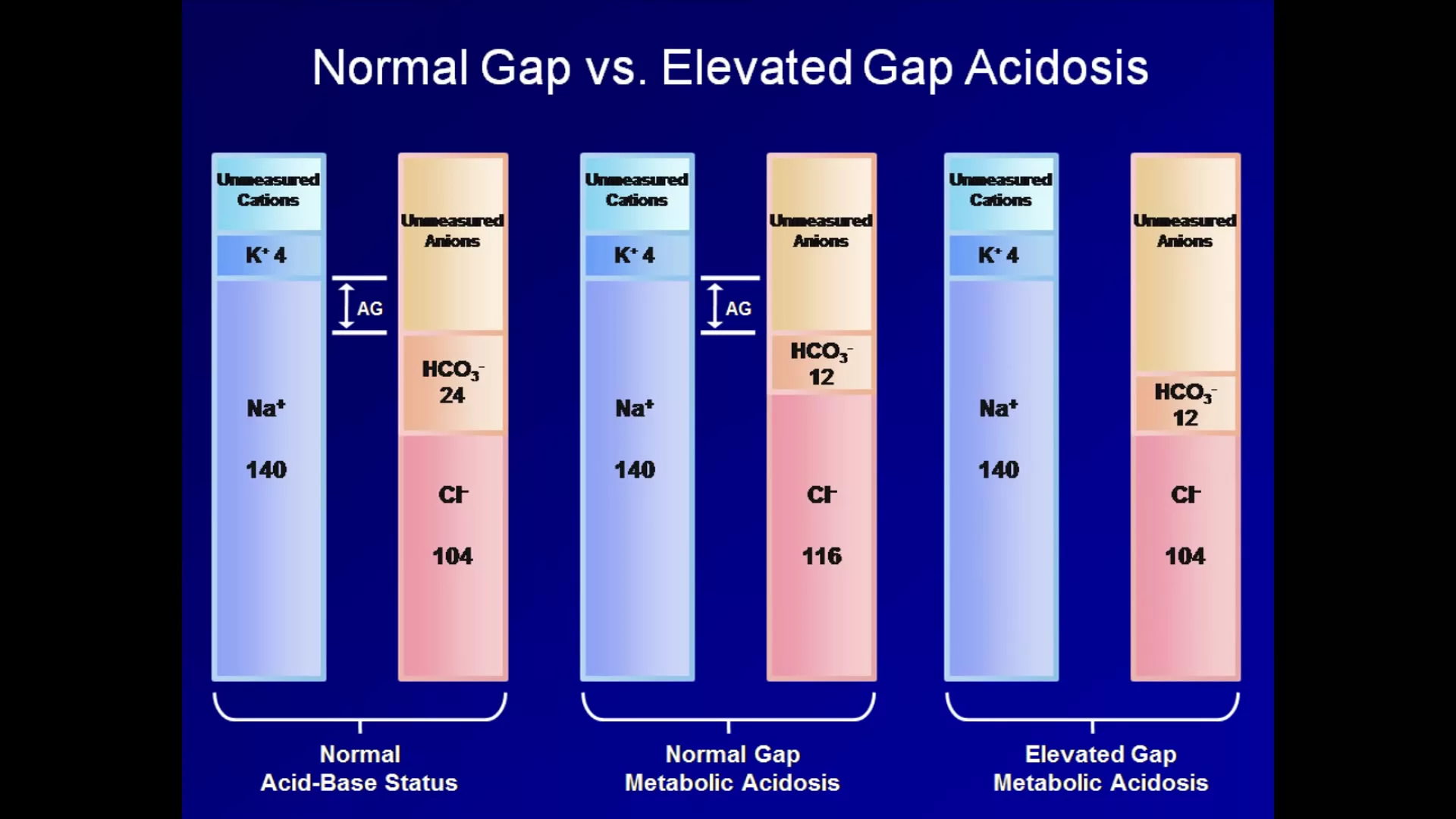
Anion Gap in ABG Interpretation: Calculating & Classifying Metabolic Acidosis
@StrongMed
209.3K views•2012-02-11

48:47
Graphic Medicine: Comics for Collaborative Healthcare Communication
@nationalpatientadvocate
189 views•2023-12-04

10:28
Neuroanatomy: Central and Peripheral Nervous System Divisions Explained
@AKLECTURES
136.2K views•2014-09-20
3:05
Stages of Labor and Vaginal Birth | Childbirth Animation
@nucleusmedicalmedia
52.1M views•2017-08-18
Related Study Plans & Knowledge Roadmaps
Structured learning paths in Medicine
medicine
Abnormal LFTs: Diagnostic Workup & Pathology
01Liver Anatomy and Basic Physiology
02Introduction to Liver Function Tests (LFTs)
03Hepatocellular vs. Cholestatic Patterns
+ 3 more learning modules
12h6 modules
Explore Roadmap
medicine
Analyzing Blood Smears: RBC, WBC & Platelets
01Introduction to Blood Components & Smear Preparation
02Normal Morphology of Blood Cells
03Erythrocyte Pathologies & Morphological Variants
+ 2 more learning modules
12h5 modules
Explore Roadmap
medicine
Mechanical Ventilation: Waveforms & Alarms
01Anatomy and Physiology of Breathing
02Introduction to Mechanical Ventilation & Core Modes
03Ventilator Settings and Waveform Interpretation
+ 2 more learning modules
12h5 modules
Explore Roadmap
medicine
Neuro Exam: Localization & Stroke Syndromes
01Foundations of Neuroanatomy and Vascular Supply
02The Neurological Examination: Step-by-Step
03Principles of Neurological Localization
+ 3 more learning modules
18h6 modules
Explore Roadmap