










Evidence-based medicine relies on rigorous scientific research, peer review, and transparency, while pseudoscientific alternative medicine exploits cognitive biases, uses emotionally appealing but unverified claims, and often employs deceptive marketing tactics to capitalize on patient vulnerability and gaps in healthcare access, making it essential for patients to critically evaluate health information and seek care from qualified, regulated healthcare professionals.
Alternative Medicine: Evidence, Risks, and Misinformation
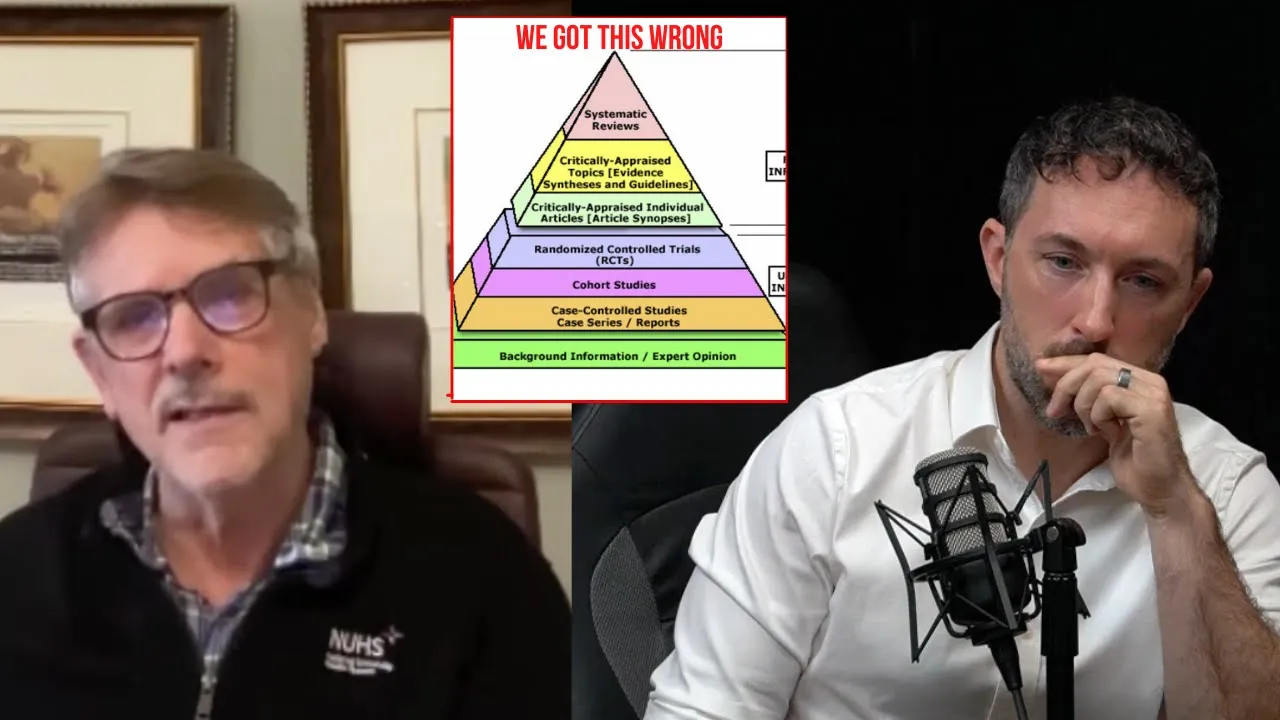
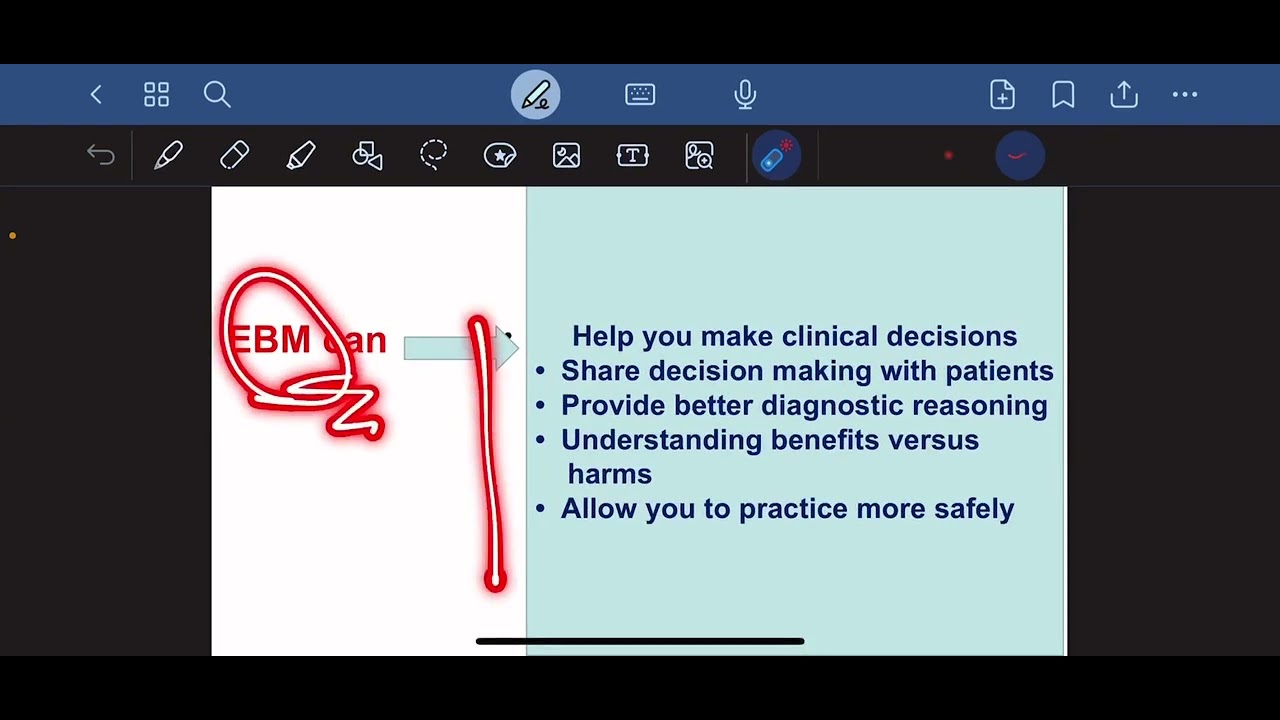
Added:Understanding the principles of Evidence-Based Medicine (EBM), including the hierarchy of scientific evidence and the importance of peer-reviewed clinical trials.
The concept of the placebo effect and how psychological expectations can influence perceived physiological healing.
Distinguishing between correlation and causation in health outcomes, specifically recognizing logical fallacies like 'post hoc ergo propter hoc'.
Basic knowledge of how conventional pharmaceuticals are regulated (e.g., FDA approval processes) versus the regulatory standards for dietary supplements and alternative therapies.
The study of Integrative Medicine, exploring how certain non-conventional therapies with proven efficacy are combined with standard medical care.
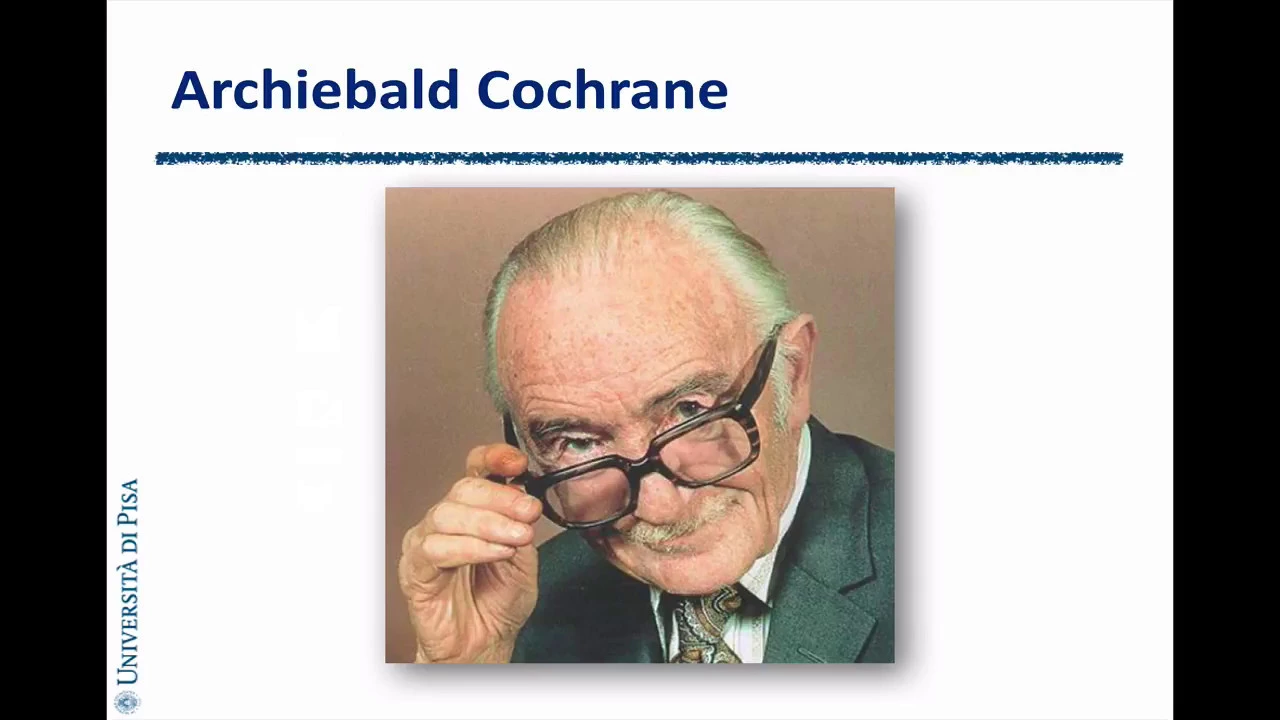
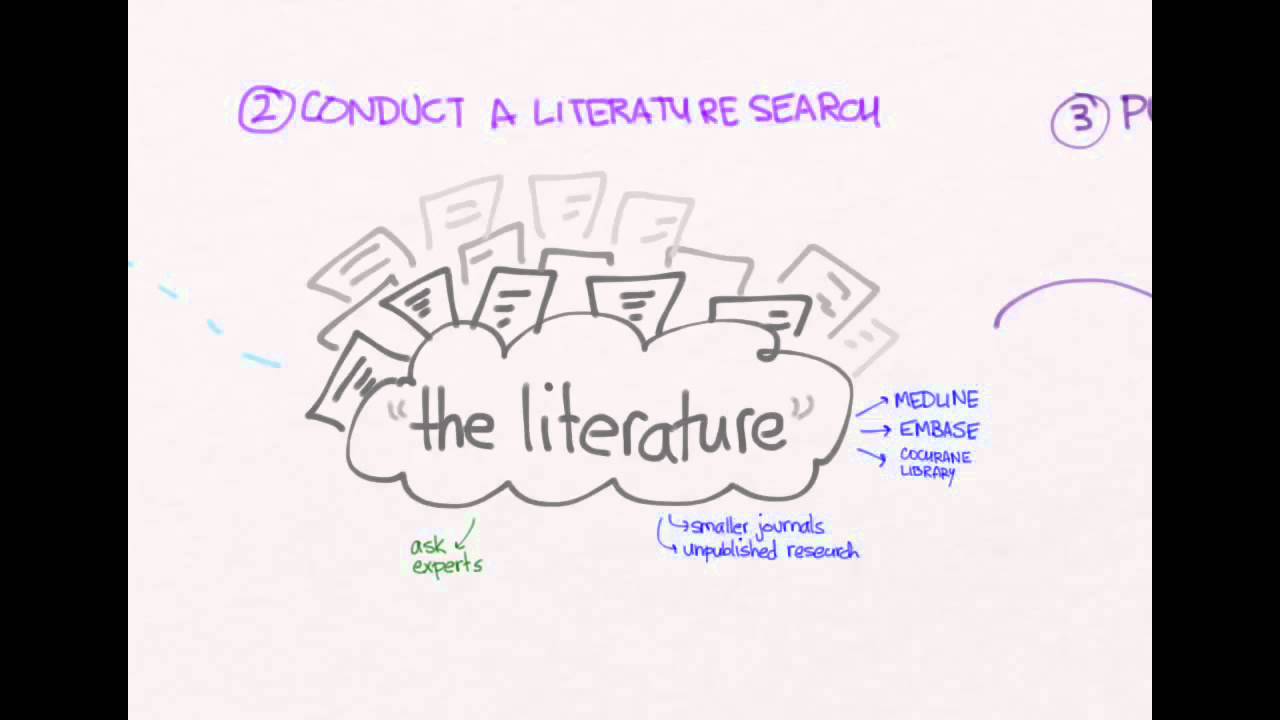
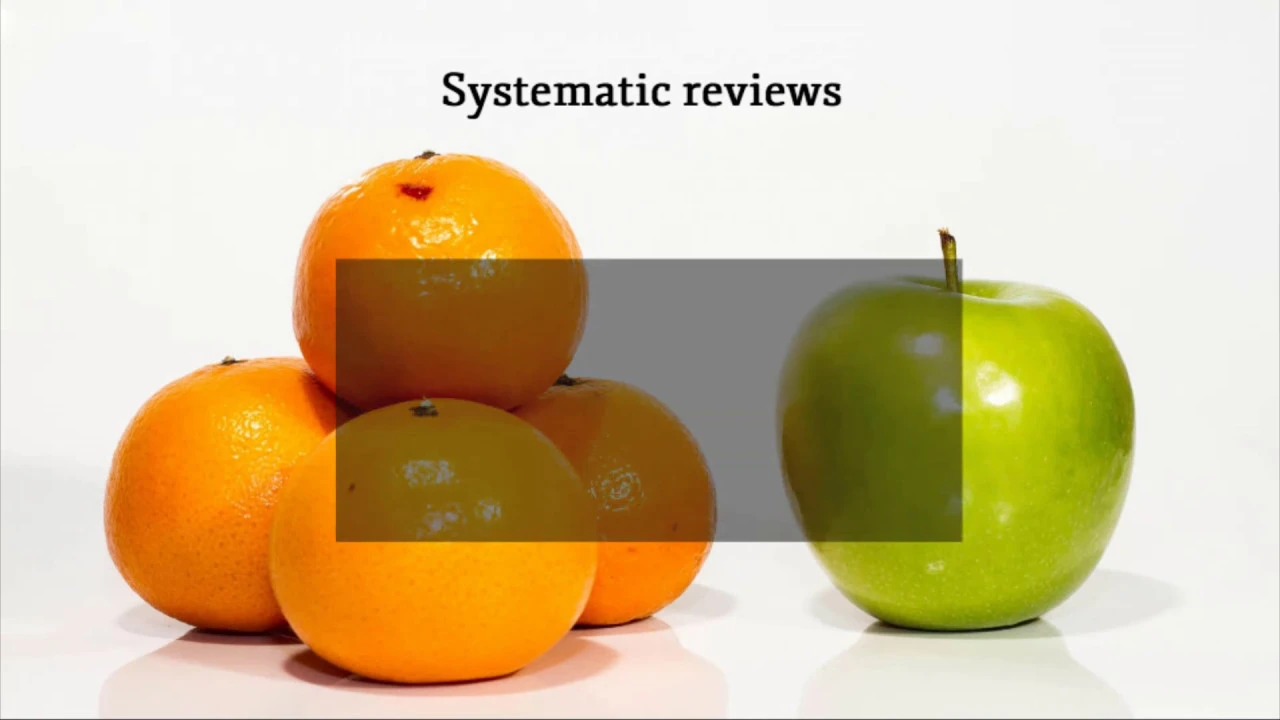
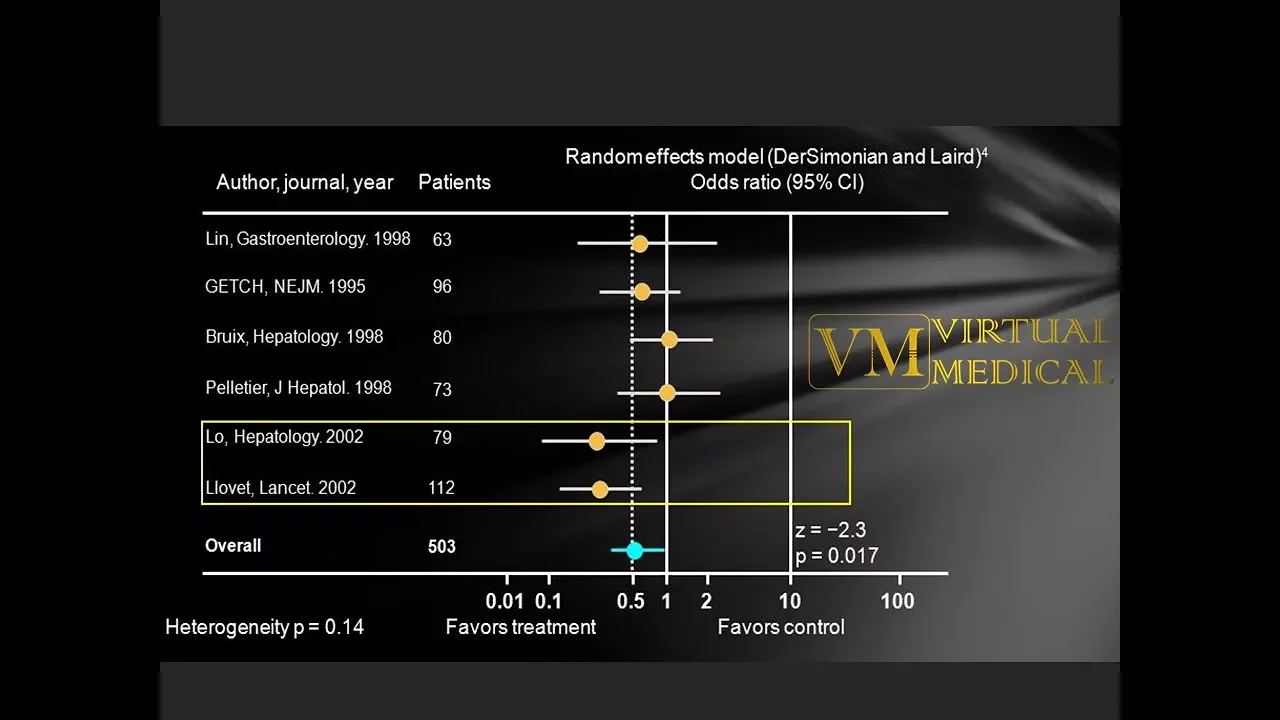
Advanced critical appraisal of medical literature, specifically analyzing systematic reviews and meta-analyses (such as Cochrane reviews) regarding alternative treatments.
Analyzing the psychology of health misinformation, including cognitive biases (like confirmation bias and the 'appeal to nature' fallacy) that drive its spread.
Public health communication strategies designed to counter medical misinformation and improve health literacy in diverse communities.
373.4K views7.2Klikes2:02:53Original Release: 2024-08-21
- Is the world of psychologists, psychiatrists struggling these days with the rise of influencers saying things like?
- I believe that feeling depressed is real.
I don't believe depression as a clinical disease is real.
- Is it making difficult for you to take care of your patients?
- Yes. - [Mike] Why?
- He's tweeting to hundreds of millions of people that depression doesn't exist.
"You're lazy and you're weak."
More people hear that mental illness doesn't exist, more people are to believe it.
- Dr. Jonathan Stea is a full-time practicing clinical psychologist and an adjunct assistant professor in the Department of Psychology at the University of Calgary.
He has become popular on Twitter for his efforts in combating misinformation and debunking quackery.
In his new book, "Mind the Science," he uncovers how alternative medicine grifters are able to trick you into skipping out on proven treatments and instead pursue completely bogus wellness hacks, including buying expensive supplements and weird tech.
I'm extremely excited to chat and ask him some hard questions on why so many fall victim to these schemes, how we can fight back against snake oil salesmen, and, most importantly, if there's any truth in alternative medicine that might actually be helpful.
Sir, you've become an expert on debunking the world of misinformation and allowing people to see the truth where there's a lot of lies.
But a lot of those lies feel like truth.
Why is that?
- The brain's not good at differentiating familiarity with the truth.
It's called the illusory truth effect.
- Oh, okay.
- And so I think that's what we see just rampant all over social media.
You see repeated lies, repeated lies about mental health misinformation, repeated lies about health misinformation more generally.
And we have, as health professionals, you and I, have an ethical obligation to try our best to correct some of that stuff.
Because it affects people, and it can affect their health decisions.
- Yeah, like if you're scrolling through social media and you haven't been taking care of your health and you know that, and then you come across a product that says it will fix the fact that you haven't been taking care of your health or the fact that it could be a shortcut for something where otherwise you would need to put in a lot of work for, why is that shortcut so appealing to the human mind?
Like being a psychologist, do you know if there's a mechanism by which that kind of trips us up?
- Well, we know that our brains kind of think in shortcuts.
We think in heuristics rather than algorithms because it's what's more expedient.
It helps us make sense of our environment.
There's so much information floating around that it's hard for our brains to process every single piece of information in our environment.
It's too much.
We get overload.
It's too effortful.
And so our brains have developed heuristics and shortcuts that are supposed to work, they mostly work.
That's why our brains evolved that way.
And they help us to make sense of the world.
The problem is when they go awry, and that's what leads to things like cognitive biases or personal biases.
And that is dangerous, for one, and more than that, it's more than dangerous because it's also capitalized on by, I think, the real world that we're living in now, which is the social media era.
Because social media preys upon those biases.
It literally capitalizes on them.
So we want sexy headlines, we want emotion-laden language.
We want the kind of messaging that's going to tap into those biases, and then our brains just kind of light up and say, "Okay, that makes sense."
And it's hard to peel ourselves away from those biases.
And so we know... Daniel Kahneman was, he won a Nobel Prize in Economics, and he detailed these two thinking styles that we have.
One's this intuitive kind of thinking style, that sort of quick, effortless, just quick processing of information, and then we have this more effortful, analytic style of thinking.
And we know from the research literature that when we can tap into that more effortful, analyzing style of thinking, that protects us more from this kind of misinformation.
- Makes sense.
"Thinking Fast and Slow." - Excellent.
(Mike laughs) One of the best.
- Heuristics.
Define that for the audience.
- Heuristics are, to help me understand it, I just think of mental shortcuts.
- So is one example of this, when you see a word that's missing vowels, you can plug it in yourself?
You could still read the word even though the letters are missing.
- Yeah, absolutely. - Okay.
Because, to me, when I figure that you feel your leg vibrate and you automatically reach for your phone but it wasn't your phone, it just felt like the idea of something vibrating, that your brain's like, "Oh, yeah, use that same pathway," and it creates the same action.
Whereas you didn't even really think to say, "Oh, is that my phone vibrating?"
You didn't go into that deep, thoughtful state.
And it seems like these days it's happening more and more, to me, I think because companies are realizing that they can profit by tapping into the thinking fast mindset.
Do you see a pattern with that evolving?
- I think so, yeah.
That makes total sense to me.
And it just sort of goes back to that illusory truth effect too that we were kind of just mentioning.
So, you know, if our brains are seeing repeated messaging over and over, it sort of capitalizes on this heuristic.
It's like, well, then maybe it's true, right?
- Yeah, like if we hear it enough times, it could be true.
- Yeah.
Yeah, because think of how that would've evolved back in the day.
If we're hearing repeated things over and over, why would we question our peers?
- Because they've survived so long, they have wisdom, et cetera, et cetera.
Yeah, it brings a very unique situation where you wanna lean on experience because there's value in experience, but you also wanna rely to some degree on innovation.
And there has to be like this push-pull between the two of, okay, you want a doctor who's evidence-based but also uses their experience to individualize the treatment for you.
And that's really tricky for me, even in the physical world of medicine, meaning, you know, treating pains, treating illnesses, viruses, bacterias.
But in the mental health space, that's even more tricky 'cause now it's becoming super subjective.
Do you ever find that difficult when working with a patient or a group of patients?
- Totally.
And what you're speaking to, to me, reminds me of what our ethical codes and our legal standards of practice are based on, which is evidence-based medicine.
It's this delicate dance between three pillars, right?
It's paying attention to the science or the research literature and the evidence base.
We need to consider that when making clinical decisions.
But what also matters is our previous clinical judgment, so that's that subjectivity that's coming in, and patient values and preferences.
And so we're trying to delicately dance and juggle these balls in the air, so to speak, and that's what makes the clinical world challenging and more challenging than the lab, say.
In the psychotherapy languaging or the psychotherapy research world, we call that the difference between efficacy versus effectiveness.
So we can evaluate whether a treatment works based on, in a lab setting where it's really more controlled, if we find the treatment works, it's efficacious.
But is it effective?
Meaning. - Real world practicality.
- Real world practicality, yeah.
Where it's not just someone dealing with depression, but they're also dealing with depression and maybe substance abuse and maybe homelessness and marital conflict and job loss, and they can't get their medications covered.
And so there's all of these other psychological and social factors that come into the picture.
And maybe they've tried evidence-based treatments and they don't necessarily work.
So now what's a clinician to do?
- Yeah, I see that happen even outside of the mental health space.
As a simple example, like condom use.
Condom use in a lab is very different than condom use in real life.
Which is why, when we talk about these statistics, people can get really torn up because they don't realize that just because something works in a study doesn't necessarily mean it will work for you.
And it also take it a step further where people love to make leaps and bounds.
Just 'cause it works in a Petri dish or an animal model, even less likely that it'll work in you, right?
- Absolutely.
And it's the same.
It speaks to the perils of randomized control trials.
Which, you know, I know you've discussed in the past, but, you know, randomized control trials are one of the highest forms of evidence that we have.
But they also have limitations, one of which is that they speak in averages, so to speak.
So they can tell us whether a treatment works on average for a given population but not for the patient sitting in front of you in your office.
- Absolutely, that's where I hope algorithms will change and improve in terms of an AI standpoint.
If we can find out better mapping of who should take a blood pressure medication that will actually benefit through algorithms in AI, our number needed to treat will drastically drop.
And then I can say with much more certainty to a patient that, "Hey, when you take this, "it doesn't just work on a population-level therapy, "it works for you."
And I feel like that's where I feel like the next frontier will be.
But the people who are anti that frontier are usually in the pharmaceutical industry because that means there's gonna be a lot less medications prescribed.
Because when they are, they're gonna be actually working and not just, you know, there to be there.
- Totally.
That excites me too.
Precision medicine, right?
And just sort of being able to tailor our treatments for the individual.
And, you know, I love and appreciate how we're talking in this sort of nuanced way and just sort of acknowledging limitations of evidence-based medicine in randomized controlled trials.
Because that's what ethical clinicians do.
What bothers me, though, and it's sort of what I got into writing in my book, was that the alternative medicine community, say, and the wellness industry at large, they really capitalize on those limitations.
And I try to make the case that they're pitching a narrative that's very, it's anti-evidence-based medicine.
And so it will amplify and sow distrust in mainstream medicine to grift and to sell its pseudoscience.
And so that really bothers me because it's very exploitive for patients.
And so, you know, you and and I are talking about the next frontier is precision medicine, with more research we'll get there.
We're both excited about it, and that's amazing.
You go to an alternative medicine website, and they'll pitch it as if they're already there.
(Mike laughs) - Exactly.
- And that mainstream medicine doesn't know what it's talking about, and they have the treatments that can cure you by tailoring it with their pseudoscientific treatment.
And the research, it's not there.
- I struggle with that world a lot.
Not just, you know, talking about it with my patients and on my channels, but also like I get an invitation to go on someone's podcast, and I know that they've hosted many guests who spread that level of misinformation, or perhaps I know or I've seen episodes of that podcast where they do a sponsorship for some genomic probiotic test to tell you what foods you should be eating.
Like when I look at those tests to see what gut bacteria you have that should tailor your diet, it's ridiculous.
Because we only know as far as what's probably beneficial for your gut bacteria.
And that's it.
And guess what?
When they test your gut microbiome, it almost doesn't matter what they find.
They'll just make that same recommendation to you.
And guess what? I can do it for free.
And I don't need to test anything.
But people love the idea of the sci-fi future.
"Oh, they're going inside my gut.
"I'm getting an advantage.
"I can buy good health."
And, to me, that's just a non-starter.
It doesn't exist, you can't buy good health.
There's a limitation to health where it's, healthcare can be good, but once you try and get it perfect, oh boy, the outcomes are so bad.
- Totally.
- Is there an example from the mental health space where you feel people strive for perfect and then they get into trouble?
- One of the things when I was writing my book that I discovered is one of the things about pseudoscientific treatments is that they pitch themselves as a panacea.
So, you know, you'll find some sort of pseudoscientific treatment that says they can cure your depression or your post-traumatic stress disorder or your anxiety, but the same treatment can also cure your cancer or your glaucoma.
- Just happens to work for everything.
- Or COVID-19, right?
That's one of the things.
By virtue of pseudoscientific treatments pitching themselves as a panacea, they're not specific enough.
And so they'll say past life regression therapy or energy healing or homeopathy can treat all of these various things using these pseudoscientific treatments.
And, you know, you and I were talking about earlier that it's not, we can't blame people for seeking these alternatives.
- Sure.
- I mean, everyone, we're all human, and we all want our ailments to be remedied.
- Yeah.
- What bothers me is the grifters, what bothers me is hucksters, people that prey upon that financial and emotional vulnerability of people to make a profit.
And it becomes even more nuanced than that because I think that majority, or many of these people who are grifting, as we say, I think a lot of them actually believe in it too.
I think there's a percentage that are malicious and they're actually just solely profit-driven.
But, in my experience, just talking with the other side, so to speak, or talking to some of these grifters, they totally buy into it.
And I think that's really dangerous.
We see it in things like the anti-vaccine movement where, you know, a lot of the leaders in that space, I think, you know, we can't peer into their minds and actually see whether they believe it or not, but the way they speak about it certainly suggests that.
- Do you think that there's a world where they said it enough times that they've convinced themselves it's true?
- Absolutely.
I think that, yeah, that's almost a cliche and for good reason that you repeat a lie often enough and it becomes your truth.
- Yeah, how would you, 'cause I'm a big fan at the start of a podcast to do some defining of terms, how would you define alternative medicine and grifter?
- So a grifter is just a huckster, someone who is out to exploit people financially and emotionally. - Scammer?
- Scammer, snake oil salesman.
Which actually derives from Clark Stanley in the late 19th and early 20th century.
He sold snake oil lineament, which was a cure-all for various health conditions.
Didn't work, didn't even actually contain snake oil.
So that's where we get the. - What was it?
- I don't even know. - But it wasn't snake oil.
- It was not snake oil.
- Can't even get good snake oil these days.
- It's just like homeopathy will say like, they'll say that they have an ingredient in it, but homeopathy is literally just water or sugar or alcohol.
Diluted to a degree, yeah. - Diluted out of existence.
- Well, that's because water has memory.
(Jonathan laughs) - Yes.
And what a story it could tell.
- Yeah.
- So a grifter is a snake oil salesman, a scammer, essentially.
Alternative medicine is more complex.
And one of the things that I've been trying to help people understand is that, based on what I've learned, it's more than just a set of unsupported treatments.
It's more than just a set of pseudoscientific treatments.
So it's not just energy healing or homeopathy.
It's an entire ideology.
And it has a narrative attached to it, kind of like we were talking about earlier.
So it has its own tropes and its own fallacies that are used by grifters, whether intentionally or not, to sell pseudoscience.
And it's an old narrative.
And so what I mean by a trope is an often repeated idea or theme or phrase.
So, for example, if you Google a local alternative medicine website, 99% of the time you're gonna see something like, "Unlike mainstream medicine, "our treatments treat the root cause.
"They don't just mask the symptoms.
"Our treatments are natural.
"They have no side effects."
So those are the kind of tropes that I mean.
And the problem with that is that... That's part of the ideology or the narrative.
The problem is that, even with respect to the treating the root cause, if you dig deeper, you'll find that the cause that they're speaking about is a pseudoscientific or a false root cause.
- Right.
- So for example, if you have depression, they're gonna treat your root cause by unblocking your energy blockages through energy healing or reiki or whatever it might be.
And so I think that's very deceptive.
But that is part of the ideology or the narrative.
So it's not about the particular treatments.
Because if a particular treatment garners enough scientific credibility, it garners enough evidence, then it can cross the somewhat arbitrary threshold into evidence-based medicine.
And that's a fantastic thing.
We all want our patients to do well, and we want to cure or treat or manage as many health conditions as possible.
But alternative medicine is this ideology, and it serves as a foil to the medical industry at large.
And I think that is what's very lucrative and it's very dangerous.
And I mentioned, you know, it's not just tropes, but it also uses a fallacy.
So the appeal to nature fallacy, for example.
What is natural is good, right?
Plenty of things that are natural that aren't good.
- Yeah. - [Jonathan] COVID-19.
- Yeah.
Although some people will argue that these days.
- Touche.
We won't go there, but yeah, touche.
Appeal to tradition fallacy is another one.
"This treatment's been used for thousands of years, "therefore it's effective."
Maybe, but it's a logical fallacy.
So you go to these spaces where alternative medicine treatments are marketed and sold, and you'll find this language, this ideology, this narrative.
And so that's what I really want to help people see with their own eyes because it's a marketing pitch.
And I think that's what's very dangerous.
And it runs counter to an evidence-based philosophy, which we talked about, which is what's baked into bona fide healthcare professions.
It's baked into our codes of ethics and legal standards of practice, and I think it takes advantage of patients and it's dangerous.
- Yeah.
- There's another really even more insidious way that I believe alternative medicine sort of markets itself.
And by insidious, I mean kind of sneaky or underhanded.
And that's by publishing findings in pseudoscientific journals.
And so many people might be aware of scientific journals, they vary in quality.
We have top medical journals like Nature or The Lancet, and then you have kind of lesser tiered journals.
There's also predatory journals, which kind of, you know, you'll find them in your inbox, people trying to, you know, ask you to partake in this study, or you'll pay an author fee, $1,000 to have your study published.
But that's not quite what I mean.
By a pseudoscientific journal, I mean journals that are devoted to publishing on unequivocal pseudoscientific topics.
So, for example, there's one called Explore.
This is a journal, people can look it up.
You can find in that journal a randomized controlled trial that suggests or that supports the finding that if you send positive vibes to water, you can make its ice crystals look more beautiful.
So it dresses it up as science, right?
It's got an introduction, it's got a method, it's got a results section.
It uses terminology like randomized controlled trial.
- Who's publishing in that?
- So there's journals like the Journal of Evidence-Based Alternative Medicine, there's Explore, and they are peer-reviewed, but they're peer-reviewed by people that have the same pseudoscientific beliefs.
There was another journal, I think it was called the Journal of Religion and Health, but it entertained the idea that demonic possession is an explanation for schizophrenia.
So what I mean by insidious is that you can find studies that are being published on unequivocal, so clear pseudoscientific topics, and then grifters can draw from this literature and use it to support their treatments.
And then on their websites they can say, "Hey, look, I have research to back up what I'm saying."
Even though the vast majority of the way in which they market their pseudoscientific wares, so to speak, is using testimonials or anecdotes.
That's another pseudoscientific warning flag.
But, again, underlying that is sort of this whole pseudoscientific journal industry, which I think is dangerous.
- Yeah.
What's your take on legitimate medical institutions, Cleveland Clinic, launching integrative or complementary health departments where they frequently talk about alternative medicine?
- I don't like it.
To put it mildly is an understatement.
So I write about this topic as well.
I think that alternative medicine, so the term alternative medicine wasn't used until the 1970s.
Before that, there was various other terms that were used.
Fringe medicine, holistic medicine, unconventional medicine, et cetera.
Drugless healing.
There's different kinds of ways.
Alternative medicine then began to be used.
The historian James Horton wrote about this, he wrote a really great book detailing the history of alternative medicine.
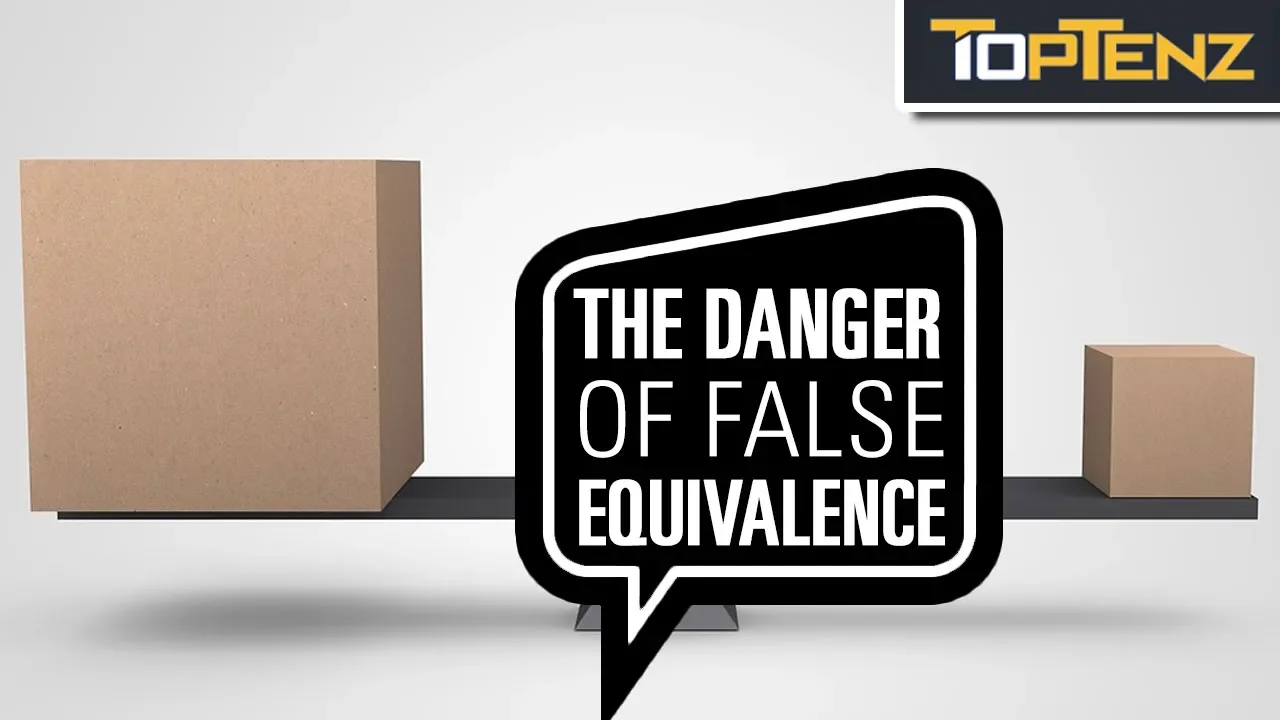
And he said it's a sleight of hand because the term alternative medicine connotes a modicum of legitimacy or a false balance.
It suggests that alternative medicine can be on the same plane as a legitimate alternative as mainstream medicine.
It's a branding technique.
And then as time went on, the branding changed.
So in the '90's, we got complementary and alternative medicine, which is CAM.
Then we also got integrative medicine pioneered by Andrew Weil out of Harvard, and he's a bestselling author.
And then came functional medicine invented by Jeffrey Bland to sell dietary supplements and really shot to fame by its poster boy Mark Hyman, who was an advisor to Bill and Hillary Clinton.
So, yeah, a lot of these major medical schools are now taking up these programs which use the terms integrative medicine and functional medicine.
But when you dig deeper, they are really... So it's argued and so I argue, they're really a way to try to sneak pseudoscience, alternative medicine pseudoscience into mainstream healthcare.
Because what integrative medicine does, again, it's sort of a branding trick.
It uses the rhetorical power of language.
It suggests that we can integrate mainstream medicine and pseudoscience.
They'll say it's the best of both worlds.
David Gorski is an oncologist.
He's a very well-known skeptic.
He heads up Science-Based Medicine, one of the amazing skeptic websites that we have that can debunk a lot of misinformation.
And he described functional medicine as the worst of both worlds because it combines the massive overtesting and overtreatment that we do see in mainstream medicine with just pure quackery.
So all that to say, I think, I don't like it, to answer your question, in terms of that branding.
Because I think it's branding.
I think that at, the end of the day, evidence-based medicine shouldn't be a brand.
We should be relying on science, we should be relying on clinical judgment and patient values.
And that we don't need that narrative, which, again, I tried to highlight.
Because if you go, whether it's an alternative medicine website or an integrative health medicine website or a functional medicine website you'll see those tropes that I mentioned.
"We treat the root cause, unlike mainstream medicine."
They create this polarizing, divisive narrative.
And I think that narrative does a big disservice to patients.
It's not for them.
We should all be on the same team.
We should all be looking to embody the scientific spirit to support evidence-based medicine.
Yes, I get that, obviously as you mentioned, the pharmaceutical industry doesn't get a pass in any of this.
They've done great harm.
There's lots of corrupt research and conflicts of interest.
Fair enough.
The answer to that, though, is better science, better accountability, better transparency.
It's not to buy into this narrative that alternative medicine does it better and integrative medicine and functional medicine does it better.
And so I think that's sort of one of the biggest messages in my book and that I want people to really understand is that we have gaps in our healthcare systems and we have gaps in our knowledge.
Especially when it comes to mental health.
We don't fully understand the science of psychopathology.
If we fully understand post-traumatic stress disorder or anxiety disorders, we would love to be able to treat it and help everyone with it.
We don't.
And so even our best evidence-based treatments that we have, like evidence-based pharmacotherapies and psychosocial interventions like cognitive behavioral therapy, those don't work for everyone, and that sucks.
And we wish that it really did.
So we have gaps in our knowledge, and we have gaps in our healthcare systems.
But that doesn't mean... Those gaps signal a call to fill those gaps with better science, more equitable and competent patient care.
Gaps in knowledge and our healthcare systems doesn't justify filling those gaps with pseudoscientific treatments and patient exploitation under the guise of wellness and alternative medicine or integrative medicine or functional medicine.
- Yeah.
Do you think about at all that there ever is some potential nugget of value in the complementary space where, oh, you know, this is something we didn't do enough research on, or just haven't prioritized as research, and yet people are getting great outcomes from it?
Even from, let's say, a placebo effect.
Is there ever value in tapping into that or do you feel like that would be unethical?
- It's a great question.
I think there is, yeah.
I mean, we see the placebo effect in mainstream medicine and alternative medicine.
And so you're right.
We don't want to strawman alternative medicine, which means my intention is not to make a cartoonish, easily defeated version of what alternative medicine is so that we can attack it and say it's all bad.
The best approach to counter something that I'm trying to say is dangerous, like alternative medicine, is to take a steelman approach, which means you offer a charitable definition or a charitable depiction of what alternative medicine is.
And so, all that to say, what I think alternative medicine does really well, is it capitalizes on the placebo effect, like you mentioned.
But I think what it also does is it kind of clumsily stumbles upon what we call in the psychotherapy research world as common factors of treatment or non-specific factors of treatment.
So what I mean by that is things like cultivating a therapeutic relationship between clinician and patient.
- Which is the most important thing.
- Absolutely.
It's the most important thing.
And so it's no wonder people seek that in alternative medicine.
Because the five-minute family physician appointment times don't cut it and the dangerously long specialist appointments, those wait lists don't cut it.
And so when a patient goes to an alternative medicine practitioner, they get an hour, and they get to be seen and heard and validated.
And that's not something that necessarily happens in a five- to 10-minute family physician appointment.
And so that alternative medicine practitioner gets the opportunity to cultivate that therapeutic relationship.
They also get to do some other things.
Like I mentioned, they clumsily stumble upon these common factors of therapy, which means things like instilling hope and motivation for change, trying to encourage new ways of behaving and thinking about one's health, and expressing empathy and non-judgmental acceptance and positive regard.
These are things that, it's actually the forte of the mental health professions.
That's why I mentioned clumsily stumble upon it because we're trained to do those things.
That's what, you know, social workers and psychologists and psychiatrists and psychiatric nurses, people at allied mental health professions, we're trained to cultivate this therapeutic relationship and to cultivate common factors because we know that that accounts for a large part of what is healing.
And so a shortcut or a shorthand name for that, you could call it the art of healing.
And so I think alternative medicine kind of stumbles on this art of healing.
Harriet Hall was a legendary skeptic in the community.
She unfortunately passed away about a year ago.
And I think she perfectly captures what alternative medicine does.
She says, "What alternative medicine does that is good "is not special, "and what they do that is special is not good."
Meaning, what they do that is good is not special, is the ability to cultivate the therapeutic alliance, a relationship, instilling, cultivating our hope, our motivation for change.
So things that good healthcare clinicians do.
So it's not special in that respect.
But then what they do that is special is not good, is you're pseudoscientific treatment.
So you get a foot in the door, they're telling you this stuff, and then they're doing, it's in the context of acupuncture or energy healing or homeopathy or past life regression therapy or God knows what else of the countless pseudoscientific treatments that we have, which could be harmful.
And so that's, again, where the danger lies.
And it's not just the fact that the treatments themselves can be harmful, but it's also deceptive to patients.
Because a foundation of evidence-based medicine or evidence-based healthcare is honesty when it comes to informed consent.
And that means accurately balancing the risks and harms of treatment.
And so we have to do that.
And I think that's flagrantly ignored in the alternative medicine community because, if they were honest about their treatments, they would have to say something like, like with energy healing, for example, "This treatment doesn't work beyond the placebo effect, "and the other evidence-based treatments do work "and are likely to be more helpful."
- Yeah.
I want to get back to acupuncture in a second 'cause I have a unique question for you on that.
But you mentioned earlier gaps of our knowledge.
Do you think a gap exists?
And I'm not talking about grifters.
Do you think a gap exists between how evidence-based medicine should be practiced and then what medical practitioners across the board are actually doing?
Because in my world where I venture outside into the space, let's say big city, New York City, patient comes in, starts talking to a psychiatrist, says that, you know, they have symptoms of anxiety.
10 minutes later, they're walking out with a Klonopin, a benzodiazepine prescription.
That's clearly not evidence-based medicine.
And yet, again, not taking into account the people that are grifting full on, there's this like practice of medicine that feels like it's been corrupted to some degree.
Do you feel like that's happening on a large scale or is this my bias being in a big city or maybe with the wealthier clientele that are demanding this from their doctors?
- I agree with you.
I think it is on a large scale.
I think mental health misinformation and pseudoscience is embedded in our culture.
It's on social media, popular culture, but also within the healthcare systems themselves.
I think a large... It's hard to trace exactly the root of the problem, so to speak.
I think a lot of it, though, derives from variability in quality of care between practitioners.
I mean, that's a sad reality.
I mean, we have good restaurants, we have bad restaurants, we have good healthcare practitioners, we have bad healthcare practitioners.
And so the ones who are ethical and competent are doing their very best to, again, navigate that delicate balance between the evidence-based clinical judgment and patient values.
And that can be difficult.
I think there's, like you said, there's systemic, not barriers, but systemic factors that make that harder.
So, for example, a five-minute or five- to 10-minute family physician appointment, that doesn't free up a family physician to develop a therapeutic alliance or to, you know, even practice evidence-based medicine the way that they would want to.
And, you know, that sucks too.
And so, yeah, I mean, in my job, my day job is a clinical psychologist.
I work in an outpatient hospital clinic.
So for over a decade, I've been helping people who experience what we call concurrent addiction and psychiatric disorder.
So what it means is someone comes to our clinic, and they have both addiction and a mental disorder, and they've had some treatment before, it hasn't quite worked, and we're trying to help them.
And so I work on a really fantastic interdisciplinary team with other psychologists but also social workers and addiction medicine physicians and psychiatrists and nurses.
And so we're trying to help people navigate that.
And yeah, a lot of what we're doing, we take what's called a biopsychosocial approach.
So we try to help people from a biological perspective and psychological and social.
What that means is we try to do group therapy, individual therapy, and then pharmacotherapy, which is medications.
Often, we will see people coming in on a benzodiazepine prescription.
And so whether they're addicted or dependent, which are two kind of different constructs or ideas, either way, the psychiatrist will try to develop a tailored taper schedule to try to kind of taper them off it.
And where did they get it?
They got it from their family physician.
It wasn't from the wellness grifter, the one who's unlicensed to even prescribe that stuff.
So, yeah, it absolutely exists in our healthcare systems.
Even in my own profession in psychology, psychologists will practice non-evidence based psychotherapies, right?
- What are the worst psychotherapies that you've seen that position themselves as evidence-based?
- I hate past life regression therapy.
It's the worst thing I've ever heard of in my life.
- Can you define that for me?
- I'm laughing 'cause of the absurdity of it.
So it's the idea that someone's trauma or distress that they're experiencing in the current life can be traced to a previous life.
So it's based on the reincarnation hypothesis, basically meaning that you could have been a, I don't know, a peasant living in the 1200s, and something really terrible happened to you, and you lived in that life.
And so now in this current life, you're experiencing somehow some sort of trauma, some sort of post-traumatic stress disorder symptoms that are linked to that trauma.
And so what past life regression therapy does is it puts you in a hypnotic trance, or it uses hypnosis to regress a person to their past lives so that they could, I don't know, relive that trauma or process that trauma or however a past life regression therapist wants to pitch that idea.
And I think that idea is terribly exploitive emotionally, and it can be harmful because, number one, it's very suggestive.
I mean, you can implant kind of a false memory into someone.
You can use leading questions, and people that score higher on something called suggestibility, which is just your proclivity or your, yeah, your proclivity to be suggestible or to buy into these ideas, they may actually believe that.
And so there's just something very shady and deceptive about that.
And it's dangerous because often what a past life regression therapist might be treating is someone who is experiencing the devastating consequences of a post-traumatic stress disorder.
I treat people with PTSD all the time.
They've gone through horrific, horrific traumas, often repeated traumas.
And so those patients and those people deserve the best shot that they have to remedy their symptoms, which is evidence-based treatments, and our evidence-based psychological treatments for that are advanced branches of cognitive behavioral therapy.
So it's called exposure therapy or cognitive processing therapy.
We can get into EMDR.
It's sort of in the gray zone for me.
It is an evidence-based treatment for PTSD, but the debate becomes about the mechanisms of change and why it works rather than whether it works.
I'm happy if my patient experiences or receives EMDR because it is evidence-based.
I think what they're actually doing is this exposure mechanism, and it's not due to any sort of eye movements.
But that's besides the point.
The point is that they should be getting, whether it's EMDR or cognitive processing therapy or exposure therapy, a patient with PTSD deserves those treatments.
They don't deserve past life regression therapy and that kind of deception, whether or not a past life regression therapist believes in it or not.
- Yeah, how do we balance that?
We're, obviously, when you bring up the topic of past life regression, you and I kind of chuckle.
Given that we're so much in the evidence-based world, and we've seen people get tricked that maybe we're bordering on cynical with some of these treatments, past skepticism, if you have a patient in front of you who perhaps believes in reincarnation as part of their religion, how do you approach that if they believe that this works because of their religion?
- It's a tricky concept.
There's two main points I wanna try to get to if I can.
- [Mike] Please.
- One is that when we offer treatments as clinicians, again, we have to... We don't necessarily have a choice with respect to... We're obligated to evidence-based practice.
It's baked into our codes of ethics and our legal standards of practice.
So even if I wanted to, as a clinical psychologist, to deliver past life regression therapy, that would be unethical.
And, in my opinion, my licensing body, so we have regulatory bodies, they should be more stringent with the cases of unequivocal or clear-cut cases of pseudoscientific treatments.
It gets tricky in the gray zones.
Things like cannabis or psychedelics, not mindfulness, but we can go there if you want, but there's other kind of gray zone pseudoscientific treatments, and then there's the clear-cut ones.
The clear-cut ones like past life regression therapy is unethical.
And so if I had a patient literally in front of me, obviously, I would use my therapeutic relationship and be cultivating that and explore, you know, is that meaningful for them, explore why that's the case.
But at the end of the day, I wouldn't be able to deliver it, and I would explain why.
I would explain that I can't.
Part of respecting patient autonomy is they're free to go and find that elsewhere, which I wouldn't necessarily recommend they do.
But I wouldn't be able to do that.
It hinges on this concept called the two hats fallacy, which was coined by Timothy Caulfield, who is a friend of mine, and he's a professor at the University of Alberta.
- We just spoke together in my hospital, so that was cool. - Yeah.
I know you know him as well.
He's a great guy.
A leader in the misinformation space and kind of debunking it.
And he's a professor of health and law and policy, and so he's really navigated this terrain well.
And so he coined the term two hats fallacy to kind of capture that dilemma that you're asking about, which is this choice between... So the two hat fallacy means, it's the idea that, as a clinician, we don't get to wear two hats.
We don't get to wear an evidence-based hat and a pseudoscientific hat when we're offering treatments.
We only get to wear the evidence-based hat when it comes to informed consent.
And so it comes back to that idea that, if the most ethical way for a clinician to proceed if they were to offer a past life regression therapy would be to say, "This treatment doesn't work beyond placebo "and that there's other evidence-based treatments "that can work for your PTSD more than this."
I would go a step further and say that clinician shouldn't be offering this at all.
It runs counter to our philosophy, it runs counter to evidence-based medicine.
From a patient perspective, I get it.
Because, desperation, we're all human, and we all want our ailments kind of remedied, as we mentioned.
- And people find meaning in all sorts of things.
- And people find meaning in all sorts of things, and that's fine.
We don't wanna shame anyone for seeking alternatives because I've lived that personally too.
It's not about that.
It's about respecting patient autonomy, and it's respecting our codes of ethics.
And I'd say too that, you know, someone who's offering past life regression therapy that doesn't say that, that doesn't present the idea that this treatment doesn't work beyond placebo effect, they're not respecting patient autonomy.
If they say that this treatment will cure your PTSD, they're effectively lying.
They may not believe they're lying, but they're not drawing upon the evidence base that says that it doesn't work beyond placebo, and they're not paying attention to.
- Or expert opinion.
- [Jonathan] Or expert opinion.
- Expert opinion - Yeah.
That's not respecting patient autonomy.
If you really want to respect patient autonomy, we're forthright and honest about the respective harms and benefits of a treatment.
That's true respect for patient autonomy.
- Yeah, I think that's what separates, for me, the line between alternative medicine and evidence-based medicine so clearly, in that evidence-based medicine has so many things it does wrong or incomplete or imperfect, you know, whatever adverb or adjective you choose to use.
It's not perfection.
But it is the one field of evidence that is not scared to call itself out for being wrong.
Or at least it tries to constantly improve.
Even when you're running a randomized controlled study, you're doing a null hypothesis.
You're trying to disprove yourself.
So like you're always challenging... Even if you're doing a replication study, you're always challenging the norm, but in a way that you can validate, you can go back and check.
Versus in alternative medicine, you have to accept what the preconceived notion is, the overlying theme, the overlying message.
And if you don't buy in, you're not part of this alternative medicine club.
And I find that really disingenuous because it's easy to poke holes in evidence-based medicine.
There are things we can't test.
We've never even done a randomized controlled trial to show that smoking is bad for you.
But there's enough data in other types of studies that show it's plenty bad for you.
And that's because it's an imperfect system.
But just because something is imperfect doesn't mean it's not the best thing that we have to use.
And I think that's the difference that people fail to get right when they talk about science, when they say like, "Follow the science."
Follow the science doesn't mean follow the scientist, some person claiming to have the answers.
It's the idea of doing something, checking it, rechecking it, tweaking it, then rechecking that tweak and constantly building off of that.
Versus alternative medicine, you're not building off anything.
You're just doing the same thing you've always done and hope for the best.
It's so messy in that regard.
I actually have a question very specific to the idea that you can have a licensed medical provider that really shouldn't be doing a proven evidence-based treatment and also some kind of unproven treatment 'cause it goes against code of ethics.
I actually had Dr. K, Healthy Gamer, on my show, and he says that he does everything evidence-based, you know, when it comes to CBT or different types of medications.
And he talked also about how he leans into some Ayurvedic principles, looking at people's doshas and the way that their faces are shaped and to guiding them.
And he does a very good disclosure to patients explaining that this isn't as evidence-based, this has only a foundational layer of evidence, but he believes it could have some benefit to them, and he offers it to the patient.
Do you believe that that's ethical, or do you feel like that could be crossing the line as well?
- So first I'd say I love what you just said there.
I think it just rings true in terms of evidence-based medicine being limited.
And that's totally right.
And I like to borrow Winston Churchill's quip on democracy because it really rings true to me.
It helps me understand sort of the idea behind it, which is that evidence-based medicine is the worst form of medicine except for all the other forms that have been tried.
- Yeah, okay, fair.
- For me, that makes sense.
We don't have anything better.
That's the nirvana fallacy.
If you're gonna critique evidence-based medicine, give us a better alternative.
And alternative medicine doesn't do that.
It focuses on confirmation rather than refutation, which is kind of what you said.
Back to Dr K.
Personally, I do think that's unethical.
I wouldn't do it as a clinician myself.
There's a gray zone, and I don't know, you know, these are tough ethical problems to talk about.
I don't know where that topic lies in terms of who are supposed to navigate these ethical issues.
Is it the clinician?
Is it the regulatory body?
Is it peer support system of other physicians that are supposed to do this?
If I knew something was unequivocally pseudoscientific, I wouldn't feel justified and ethical to provide something like that to a patient.
I guess where it does get gray is where clinicians may believe there's more or less evidence in support of a particular treatment or idea or not.
And so that's where I think it can become very, very murky, and I don't have a solution for how to navigate that.
And we have that rule all the time, for example, with psychedelics or cannabis, say.
But with something like energy healing.
- There's all sorts of promises for psychedelics and cannabis in the medical world.
And I find specifically with marijuana, I find it so interesting that it's a Schedule I medication and yet there's, you know, cannabis-derived medications that we use for childhood seizure disorders.
So like how can both worlds be true, that this is a Schedule I with no medical utility, which is what Schedule I really means, and yet we use it?
And yet it's also misused.
How do all three of these possibilities live together?
- Where I live in Calgary, Alberta, it's legal everywhere.
- I think it's legal here.
Sam, a fact check.
Is marijuana legal in New York?
- I didn't know that.
- Dan, do you know? - [Dan] As far as I know.
- Yeah, I'm pretty sure it's legal full on.
- Oh, interesting.
I didn't know that.
- It's changing all the time, obviously.
And it's definitely medically legal in New Jersey 'cause some providers that I work with end up prescribing it.
But, all right, let me ask you this.
Are there any evidence-based... Are there any evidence-based uses for smoking marijuana?
- Yes and no.
And the reason that's a complicated kind of cop out answer is that cannabis is super complicated.
I did my dissertation on this topic.
- Perfect person to ask.
- I have a great interest in it.
- Yeah, that's actually how I started in science communication to begin with.
I was out there trying to debunk myths around the nature of cannabis and cannabis addiction per se.
But, yeah, the cannabis plant is super complicated.
It has over 600 cannabinoids in it, which basically means it's sort of a chemical soup.
And so cannabis itself is an umbrella term because you could get different combinations.
- Strains or whatnot.
- Different strains and different combinations.
And so those will have implications for whether it's a treatment or not.
So, for example, the two most famous cannabinoids are THC and CBD.
And so we know from the research literature that THC can be anxiety-inducing and psychotic-inducing at certain dosages and euphoric-inducing as well.
Versus CBD, some research has shown that it has anxiolytic effects, which means it can reduce someone's anxiety, and even antipsychotic effects.
So depending on different combinations that you're getting, that's what makes the research in this area so complicated.
And I should backtrack for a moment.
Just because I mentioned that CBD has anxiolytic properties and antipsychotic properties doesn't mean that it's necessarily a frontline.
- End result, yeah, gonna be working for you in that regard.
- Exactly.
And doesn't mean that we should now go treat people with schizophrenia with that either, or anxiety disorders as a frontline treatment.
Because we need better quality studies to support that idea.
But there is some evidence that cannabis can be helpful in certain kinds of things, certain kinds of, I think it's neuropathic pain, chemotherapy-induced side effects like nausea.
It can be helpful for those things.
It gets much trickier in the mental health world, which is where I live, in terms of, you know, I'll have patients asking me 'cause they'll hear it online or they'll hear it everywhere, "Can I use cannabis to treat my depression or my anxiety?"
And, in my experience, and the research kind of bears this out as well, the bulk of findings tend to say, no, it's not helpful for mental health like depression and anxiety.
It tends to make those things worse.
So that's what I mean by it's sort of complicated.
- Is it because it's different for each patient and we haven't yet figured out which patient population or which strain works best, or is it more so that the drug isn't suitable for those purposes and there's better options?
- I think there's so many layers to it.
It's like even depression itself is an umbrella term.
And so it's like one person's depression could be caused, is it more biological, is it more psychological?
Is it more social-induced?
And so do we want to be prescribing a pharmacotherapy intervention or do we want a psychosocial intervention, like a therapy?
So, number one, the health conditions themselves can be variable.
And number two, though, like most often what I see when people say something like they want to use cannabis to treat their anxiety or their depression, sometimes people will say that it does quote unquote help them.
But when you dig deeper, much like alcohol or other kinds of substance of abuse, it numbs them.
It takes away uncomfortable feelings, and it kind of helps them escape.
- Which is almost the opposite of what you wanna give a patient.
You wanna give a patient control over their feelings, emotions, behaviors as opposed to reduce it with a medication.
- Yeah.
Especially with acutely psychoactive substances like alcohol and cannabis.
By acutely psychoactive, I mean you take this drug and it can immediately alter your experience of anxiety or depression.
Because what happens, especially if they have a propensity to develop physiological dependence like alcohol, that's how addiction can develop over time.
So every time you're angry or you're anxious or you're depressed, smoke a joint or take a drink, your brain learns that, "Hey, I can temporarily numb out."
And then soon enough you're just doing that over time, and you've developed an addiction.
And so a lot of what we do in addiction therapy work is to try to help people learn how to identify, tolerate, and express uncomfortable emotions in the absence of using.
- Is this just a form of conditioning, like Pavlov's dog, where I feel this way, and when I reach for this, that awkward feeling goes away, and I'm gonna do this every single time?
- Yeah, absolutely.
There's two conditioning processes happening.
So Pavlov's dogs is your classical conditioning.
So you pair an uncomfortable emotion with a substance 100 times.
So every time you're angry, you drink, your brain salivates, so to speak.
Like a dog would to the sound of a bell with food, your brain, it salivates to the feeling of anger.
So you feel angry.
If you've drank every time you're angry, your brain says, "I need to drink "because that's what helps me not feel angry."
And so that's the bad news of it, which means that your brain... It means that anger and alcohol has become so well paired that it's almost like a neural pathway, to put a metaphor on it.
So it's an association now.
And so that's a really strong association.
And so what we do in treatment is we try to decondition or break that association.
And so what that means is presenting anger 100 times in the absence of alcohol.
That's how you get a dog to not salivate with the sound of a bell.
You give it food without a bell 100 times, it learns that the bell doesn't mean anything.
So that's what we need to do.
We need to unpair.
- And that's uncomfortable.
- Super uncomfortable.
And then the other kind of conditioning process is what we call operant conditioning.
Which, in the case of substance use, it's called negative reinforcement.
Which just means our brains are reinforced, which means we're more likely to do something by taking something bad away.
So alcohol is negatively reinforcing by taking away something bad, which is the anger.
And our brains learn, "Hey, look, alcohol takes this bad thing away.
"I want that, I want more of it."
- Be a mouse pushing the.
- Exactly.
So those are tough processes to break.
I mean, we're not dogs, we're much more complicated, but at the end of the day, we still follow the same behavioral patterns.
- Yeah, I feel like this Pavlov's dog thing strikes me a lot in the alternative health space.
And I'll explain to you why I feel that way as a trained DO specifically.
So part of my philosophy that's a little bit different, although it's merging so quickly in the American healthcare system between MDs and DOs, is that we focus a lot on the body's ability to heal itself.
And that's kind of how the field started.
And as a result, I've always preached that to my patients about trying to not intervene when possible.
Because intervention for the sake of intervention leads to harms.
And that's what I found.
And research bears that out as well.
So for my patients who I say, "Look, your body will heal itself, it will heal itself."
That also goes true to alternative medicine.
Meaning that when I have a friend that swears by Miracle Supplement X that's to be taken at the first sign of a cold, the body heals itself no matter what you do.
So they are literally conditioning themselves, "I'm sick, I take this, I get better."
But you would've also gotten better had you not taken the thing.
And I don't know how to do the ringing the bell and not giving the food or giving the food and not ringing the bell in that scenario.
On an individual level, for like, let's say, one of my friends or family members.
Any tips or ideas of how to do that?
You see the connection though?
- Absolutely, it makes perfect sense.
Yeah, so they're conditioned to believe that they take this treatment, "I feel better, therefore it works."
It's the same idea.
It's why alternative medicine uses anecdotal evidence to market it itself.
And so let's say you discover quantum neurological reset therapy, which is a bizarre existing alternative medicine treatment that I've seen online.
It's actually a real thing.
It's absurd.
But let's say someone does it and their depression went away, therefore it works.
The problem with that is it's anecdotal evidence.
Just because it worked for you doesn't mean that it's gonna work for other people.
And more than that, we don't know that it worked for you because we didn't test.
We can't infer causality from that.
And so your friend who's taking a supplement and the cold goes away, we don't know that the supplement is what made the cold go away.
That is feeding off one of the most powerful fallacies of human logic that we have, which is the post hoc ergo propter hoc fallacy.
- Oh, that's a mouthful.
- It's Latin, yeah. (Mike laughs) Took me a while to memorize that one.
- So it means that.
- Do it again, I want to hear it again.
- Post hoc ergo propter hoc.
So it's the fallacy that just because an event happened earlier and then an event happened after that, the first event caused the after.
- Is this like correlation doesn't equal causation in Latin?
- Yes, yeah, pretty much. (Mike laughs) So it's the idea that just because you shower every morning and have to use the washroom and then the sun rises, your shower and using the washroom didn't cause the sun to rise.
They're correlated.
There's two events that happened.
So your friend, the cold went away, and he took the supplement.
Well, okay, we don't know that that's the causal factor.
And so I guess my tip and my antidote to that is to make people aware of these kinds of fallacies that alternative medicine kind of uses to cajole audiences.
That's why, on alternative medicine websites, you'll see testimonials everywhere.
"Quantum neurological reset therapy works," says Bob or says Karen or whoever it is.
And so, number one, they're usually anonymous people.
But just because we have anecdotal evidence doesn't mean a treatment works.
And so I think that's very dangerous.
- From a psychological perspective, is anecdotal evidence so powerful to us as humans because of the concept of emotional mimicry, that we almost feel like we're going through it?
- Tell me what you mean by that.
- So the idea that we could watch a movie in an FMRI machine.
The same patterns light up in our brain as if we're doing the running, right?
- Totally.
- So is the same thing happening where, you know, my friend tells me that, whenever they take this supplement, they feel terrible, and then it somehow goes away after that supplement?
And if I hear that enough times, it's almost like I live that.
- Yeah, I think that's certainly part of it.
It's playing into our desire or want to believe our peers or to believe our, you know, it activates our empathy system, so to speak.
I think it's also just playing off the heuristics that we mentioned earlier, right?
It's too complicated to... Our brains can't do a randomized controlled trial or analyze all of the factors that would tell us whether an earlier event causes a later event.
It's easier just to see it with our own eyes.
And so that's an example where, a lot of the time it could work, but sometimes it goes awry, like in the case of a supplement causing a cold to go away.
- Yeah, that's true.
And they would never be aware of the story of when the supplement harmed them because they would never think it's the supplement that harmed them.
It was, "My body failed.
"I should have been doing this.
"I should have been that."
And there ends up being a lot of this victim blaming that happens in the naturopathic or alternative world or wellness community, if you will.
I think I even saw a tweet that you put out from one of the big podcasts the other day where you feel like this is a constant thing with mental health, that if only you thought differently, if you were only more positive, if you were only more strong.
Do you see that pattern happening a lot these days?
- Totally.
The perils of anecdotal evidence is that it allows grifters to cherry pick the wins and ignore the losses.
And, so yeah, we'll see that on websites.
Incidentally, it's literally unethical for psychologists to do that as well.
So as a practicing psychologist, I work in the public sector, so I don't have a private practice, but if I did and I wanted to have a website, I wouldn't be able to put patient testimonials on there because it's considered, at least in my profession, to be unethical for those very reasons.
Because it does, it leads to inaccurate advertising as well as kind of taking advantage of power dynamics between patients and clinicians.
But, yes, back to kind of patient blaming, it has a long history in the wellness community, in the alternative medicine community.
And I think it's very tricky because there's obviously tremendous merit to lifestyle medicine, say.
So eating well, exercising, getting adequate sleep, these things are fundamental to good health and good mental health, and we know that.
What I've noticed, though, as part of alternative medicine ideology is that they'll try to own that as if it's not part of evidence-based medicine.
That's what evidence-based medicine does.
I've been running a self-care group of nutrition and exercise every week for the past decade, but I get people online saying, "Well, just tell people to exercise "and cure their depression with..." You know, obviously we talk about these things, and then it becomes much more complicated because someone with debilitating depression, I'm trying to help them shower and brush their teeth, not, you know, run outside.
Obviously, that's a goal that we can work towards, but things get much more complicated.
And I think what we see in the alternative medicine community is that patient blaming, change your mindset, but in a way that's not nuanced and that's not kind of... The messaging is not patient-sensitive.
And it's also, in my experience, it can also pitch it as a cure-all.
So, "Take this diet plan or take this supplement regimen, "and that's what's going to lead you to feel better."
And so a friend of mine and colleague, Michelle Cohen, she's a family physician in Canada, she said that lifestyle, there's a big difference between lifestyle counseling and pitching lifestyle as a cure-all.
The former makes you a healthcare practitioner.
The latter makes you a grifter.
That's the difference, right?
Because what we see in the alternative medicine community is that they'll often just be pitching lifestyle as if it's the be all, end all.
It's a super important part of what evidence-based medicine practitioners do, but it's not the be all, end all.
- Yeah, that's why when like I first heard the term functional medicine and I kind of read the definition of it, I was like, "Oh, I'm a functional medicine doctor "'cause like I talk about diet and exercise "and how important that is "for your blood pressure, blood sugar.
"So like that must be me."
And then someone commented on one of my videos like, "Oh, you should not listen to this doctor.
"He is not even a functional."
I'm like, who decides that?
Is that just a full-on marketing term that you can just slap on yourself, like organic or GMO-free salt or whatever that you see on the supermarkets?
I don't get it.
- Yeah, I think it is.
I think functional medicine is absolutely a marketing term.
I also think one of the propaganda tactics that I know in the book too that is used by, say, functional medicine doctors or integrative medicine practitioners, is this sort of baiting and switching.
So they will praise the idea that we need exercise and, you know, nutrition to help with our health conditions, which is obviously very valid.
But that's to get them in the door, get the patients in the door.
Then what they're doing is they're selling pseudoscientific treatments, whether psychosocial or supplements or whatever it might be.
And I think that's very, again, dangerous.
- And unethical.
'Cause you're promising one thing, and then you're kind of doing something else.
'Cause it's hard to get someone to make a huge lifestyle swap.
- Yeah.
- You know, like I frequently hear from these like 10X people where it's, "Oh my God, we changed his life "because we did this red light therapy."
It's like, well, you helped him lose weight.
He started exercising, he stopped drinking alcohol, he stopped doing drugs.
Yeah, of course he's gonna be healthier.
It doesn't matter that you did all these magical things around it that have no proof for working.
- Yes, totally.
And I think that that's what happens.
So that's, again, it's sort of capitalizing, it's alternative medicine capitalizing on what we know works in evidence-based medicine.
We know that having a therapeutic relationship works, we know that lifestyle management works, but those things rightfully fall under the purview of evidence-based medicine.
And so just because alternative medicine does that, couched in energy healing or acupuncture or whatever it might be, doesn't mean that the mechanisms of those treatments are what caused the person to feel better.
- Yeah.
Is the rise of misinformation our fault?
- Our fault?
- Healthcare industry.
- I don't know.
That's a good question.
My gut instinct, I tend to blame social media for a lot of it.
I think it's just so rampant.
I mean, obviously it's always been with us, you know, there's always been health misinformation everywhere.
But I think that with social media giving everyone a mic, which can be a good thing.
Again, it's not black-and-white.
It can be a good thing and it can be a bad thing.
And one of the byproducts, a bad byproduct of that is the amplification of misinformation by people who are unqualified to understand topics related to health and science because they're not trained in health or science.
And I think that can really magnify what we see.
And I can take an example in the mental health space.
There was a study that looked at the top videos on TikTok, the top ADHD videos.
And so the researchers analyzed these top ADHD TikTok videos for their content, and they categorized them as misleading or not.
And they found that over half of the ADHD TikTok videos were misleading, and they were viewed millions of times.
Similarly, I'm grateful to be invited onto a research team.
So a guy named Marco Zenone, who's a public health researcher, fantastic researcher in the misinformation space, he asked me to come onto one of his studies, and they looked at the top 1000 videos on TikTok with the hashtag mental health.
- The top meaning most viewed? - Most viewed, yeah.
So most viewed.
- Like a third of them were off, right?
- In a specific timeframe.
So yeah, October, 2021, top 1000 in mental health.
And it was, it was one third of them were misleading.
But what blows my mind about it is that those videos reviewed a billion times.
A billion.
We can't even wrap our minds around a billion.
To me, that just shows how pervasive this stuff is.
- I think the major counter of it is putting out accurate information and doing it in a transparent way.
Short term, that doesn't obviously solve the problem, but I think long term it can foster some more trust.
And I feel like a big thing that we've lost trust with is, one, the obviously marketers of it that understand how to hack into people's minds, for lack of a better term, the fact that our human minds innately like controversy and drama.
And, as a result, social media becomes fuel for that.
And I've always said like, social media is life on steroids.
So everything is massively amplified.
How happy someone is always bigger on social media, how sad they are maybe can also be amplified.
And what we see is our evidence-based healthcare system is broken, and it has some serious flaws that need repair.
So when one person has a major error play out in the system and now it gets amplified because of that inherent want for drama and confrontation, it creates the label.
So it's like almost social media is a creator or purveyor of cognitive distortions to some degree.
- Absolutely.
I love that that idea that you said, it's sort of like life on steroids.
Because it it amplifies the... - The thinking fast part of our thinking.
- Exactly.
It's playing into our biases, it's playing into our heuristics.
And in many ways it does the opposite of what happens in science and academia.
Because if you read a great paper in a top scientific journal, you'll see very nuanced, tentative language.
"It may be this, it may be that, "the conclusions may support this."
This is why it's limited in these ways.
You go on social media, you see oversimplifications and just black-and-white thinking, emotion-laden language that just fuels.
It wants to go viral.
It wants headlines to go viral because that's what captures attention.
And it's dangerous.
And so you're right.
So in that sense, social media does us and people a great disservice.
And at the same time, there's such a need for science communicators to go to the frontline, so to speak, where this misinformation is being spread and to fight it on the frontline.
And it's hard for the average person to know who to trust, and that's fair, but I don't think shying away from it is... I get why people do 'cause there can be a lot of harassment and trolling on social media.
You and I talked about that earlier.
We both have experienced that.
And it's not for everyone, and I'm not saying it is, but I just think that there's also a need for more of this kind of stuff that helps people navigate what true and what's not, and try to help people evaluate what is credible messaging and credible evidence versus not.
- Yeah, I almost feel like we also need to study what snake oil salesmen do and try and leverage it for evidence-based medicine.
They have good catchphrases, I have like the silly catchphrase of chest compression, chest compression, chest compressions on my channel.
So like figure out what works and then try and use it to create good content.
It's not easy.
It's already hard to create content, but now if you're trying to do it for evidence-based medicine, it makes it hard.
But I think it can be done.
- It can be.
I'll be very transparent and honest too.
Like I found that really challenging writing my book because I wrote this book to reach a large general audience.
It was not an academic book where it's meant for a niche kind of set of researchers.
I wanted to help people take their mental health into their own hands to help protect them.
And so I needed to reach a large audience.
Well, how the hell am I gonna do that?
I can't write in very academic speak, so to speak.
So what do you do?
You have to story tell.
Because that's what a good kind of general public book is supposed to do.
And so I'm telling stories, and then part of my brain is conflicted because, well, now am I just using anecdotal evidence to spread misinformation?
And the counterpoint to that is, no, because I'm also presenting the science to try to back it up.
But I need to convey that science through storytelling.
- I think you're doing an introduction through an anecdote and supporting by evidence, and that's different than just supporting with anecdote.
Give yourself credit there. - That makes me feel better.
- Yeah, for sure.
I have a very personal relationship with acupuncture.
So everyone probably watching my YouTube channel knows I'm a skeptic when it comes to a lot of alternative medicine wellness claims.
But I try not to be cynical.
And when I was younger, I thought I was macho man, and I was benching and I tore my rotator cuff.
I had some fraying of tendons, labrum tear, labral tear.
And my shoulder was so bad that even like lifting my arm up was most of the time not feasible.
And it was an issue that I had for well over a year.
So it wasn't like something that was going on and would heal if I just gave it a few weeks.
I somehow ended up in a pain management office that did acupuncture, and the doctor, who's an MD, was also trained in acupuncture, said, "Let me do a session "of acupuncture therapy on my shoulder."
No exaggeration here, one session.
And I did not believe it would work.
I found it ridiculous.
My shoulder never hurt again.
How is that possible?
- I wish I knew.
- No, but it's like I'm anti-this, right?
And I just don't understand what's happening.
And the only other time I've had acupuncture in the future, which is kind of ironic, is I became a professional boxer a couple years ago.
And when you're boxing a lot, you can develop medial epicondylitis inflammation here in the elbow.
And I was like, "Let me try acupuncture "because I have this fight, I have to do this."
And after one session, 80% of the pain went away despite me trying all sorts of things.
And I said, "Oh, well, let's make it perfect," which is something I say to never do.
And I went for a second session, he hit my nerve, and I had the worst neuropathy for weeks.
So it's like, it helped me, but it also destroyed me, and yet I know the evidence for it is very low-quality.
What's going on?
Help me wrap my mind around what's happening here.
- I don't know.
I think it just speaks to the complexity in our gaps in knowledge about how we... It speaks to our gaps in knowledge with respect to the nature of our health conditions and the treatments that are supposed to help them.
I don't have an answer.
And we see those stories all the time.
I worked in a chronic pain clinic for a year or so as well, and we saw some of those.
My own mother, I write about this in the book, during my youth, she grew up with a chronic pain disorder which she still experiences.
And so we tried everything.
And the reason we tried everything was because evidence-based medicine was failing us.
No one quite knows what the hell complex regional pain syndrome is.
Again, it's an umbrella term.
It's characterized by excruciating pain.
I saw it with my own eyes growing up.
Her legs would double in size.
Her hands were blue.
They leaked lymphatic fluid.
I ended up injecting her as a kid with opioids and benzodiazepines just to give her, you know, muscle relaxation and pain management.
And she ended up doubling and tripling her doses, inadvertently became addicted and depressed on them.
And it was terrible.
And so what would any reasonable people do?
We looked to alternatives, right?
We tried energy healing, we tried acupuncture, detox foot baths, chiropractic, ear candling, a roll thing, psychics, healing crystals, everything, right?
Because desperation is intoxicating.
Who wouldn't turn to alternatives?
The problem is that evidence-based medicine didn't help us at the time.
Some things made her feel worse.
Acupuncture made her feel worse.
Detox foot baths made her feel worse.
Chiropractic made her feel worse.
And so, you know, that's what we find a lot of patients in the mental health world and just in the health world, you know, who have chronic diseases and chronic pain disorders, they're left to navigate that terrain.
And I totally get it.
I mean, it's hard not to feel the stirs of resentment towards mainstream medicine.
You know, science can send us to the Moon, but it can't help me and my family navigate a decade-long trek you know, through a healthcare system that felt really unguided.
But, again, alternative medicine wasn't the answer either, and it had a lot of false promises and a lot of exploitation.
Fortunately, today, my mom's in a much better place.
You know, she learned how to do chronic pain management strategies like activity pacing and relaxation.
And, you know, through self-help materials, she learned evidence-based principles that followed along the lines of cognitive behavioral therapy to kind of get her out of depression.
And also too complex regional pain syndrome has a really... The prognosis tends to be that it can get a little better with time, but it's still very variable.
In her case, time kindly lifted the roar of her symptoms.
So that was really great.
But, again, I get why people turn to it, and we get why sometimes people may find benefit from energy healing or acupuncture, and then it can make them worse.
And I think at the end of the day, it just speaks to, again, why science itself is so important and much more important than anecdotal evidence.
We want to study this stuff in robust, methodologically sound ways in the service of patient care.
That's why we're doing it, and that's why we want to pay attention to it.
And, again, it's not about shaming anyone, and if people find benefit from these things, fantastic.
But we also just want to be very honest, forthright, and informed about the evidence behind these things.
- Because I've seen doctors, and I'm sure I've done this in the past as well, where you have a patient with back pain that has gone through injection, surgery, physical therapy, maybe even behavioral therapy if we thought that could have been a confounding factor or a causal factor even, and nothing worked.
Then we say, "Oh, try acupuncture, try marijuana."
And, technically, by the standard you mentioned earlier, would I be then doing something wrong by advocating for those things?
Or is that still in the gray zone of things in your mind?
- In my mind, my own personal ethical kind of line is I wouldn't... Respecting patient autonomy means I'm empathizing with them, and I'm, again, being honest about the risks and harms of treatments, and I wouldn't offer these things.
Obviously, though, when I have patients in front of me, I'm saying, "Do what you find helps for you."
But I'm not gonna deliver those treatments myself.
And I'm probably not gonna name specific treatments that I think are pseudoscientific and have the potential for harm.
- Got it.
For the current state of prescribing habits, what I found, and we kind of touched on this earlier with the prescription for a benzo for someone who is having some component of anxiety symptoms, currently, it seems like it's very easy to start and then potentially get hooked on a prescription like Adderall.
And there's people who need a medication who have a diagnosed medical condition, whose lives benefit greatly from being on a medicine.
You know, otherwise they can't focus, they can't drive, other mental health values start deteriorating.
What do we do for the over-prescription side of things where people are trying to use certain medications in the psychiatric space for over-optimization as opposed to a treatment for a legitimate condition?
- I wish I had the answer to those things.
I think it falls on, again, sort of back to the practitioner or the clinicians, their codes of ethics and legal standards of practice.
They should be prescribing in a way and practicing in a way that fully aligns with their codes of ethics and legal standards of practice.
I don't know, I don't know how to solve that because obviously over-prescribing and over-treatment is a very real problem.
- Do you think it's an issue that a lot of college students, for example, use Adderall?
- Sure. - [Mike] Why?
I can't draw on any research to back that up, but in my personal life, I've heard people say that to me all the time.
I treat people with addiction, and I've treated college students who've had, not addiction to Adderall per se, but they've had stimulant addiction more broadly, and Adderall just kind of gets thrown into the mix of these things, whether it's cocaine, crack cocaine, or any kind of stimulant-producing drugs.
- Is there any harm for... If you're speaking to the college community, what's the harm of taking Adderall for your test?
- Well, there's a risk of dependence.
There's a risk of addiction to it.
And with addiction comes loss of control.
It can interfere with your responsibilities.
It can interfere with your schooling over time.
So I wouldn't recommend that.
I would recommend other behavioral strategies.
I wouldn't, yeah, I would never recommend someone do that.
- Is the world of psychologists, psychiatrists struggling these days with the rise of influencers saying things like, "Anxiety and depression "are not mental illnesses.
"It's just that you're weak"?
- Yes.
- Is it making difficult for you to take care of your patients?
- Yes. - [Mike] Why?
Because it reaches so many people.
So Andrew Tate put out a famous set of tweets, famous.
- Infamous. - Infamous, notorious.
(Mike laughs) He's tweeting to hundreds of millions of people that depression doesn't exist and that, yeah, you're lazy and you're weak in doing so.
Elon Musk, similarly, will tweet to millions of people that SSRIs or antidepressants do more harm than good.
- Wellbutrin is terrible or whatever.
- And that Wellbutrin is terrible and that Adderall is terrible.
And so just no nuance whatsoever and just these blanket kind of statements.
And, yeah, again, it goes back to the idea that misinformation just has this giant reach.
There was another study I recently posted, it was published in Nature, where they found that false news claims and false health claims spread further and faster than the truth.
- About 70%, yeah, the tweets that are misinformation spread 70% faster.
Specifically, though, before we go into why that spreads faster, why is that untrue?
- Which one?
- When Andrew Tate says, "Depression doesn't exist, "mental illness doesn't exist, "this is a mind control simulation," whatever vocabulary he chooses, why is that untrue?
- Because he's parroting anti-psychiatry tropes and doesn't even know he's doing it.
So I write about that in the book as well.
And many people are probably less familiar with the anti-psychiatry movement.
They're more familiar with things like the anti-vaccine movement or the perils of alternative medicine.
But one of the tropes, and, again, by trope, I mean an often repeated idea or theme in the anti-psychiatry movement is that mental illness doesn't exist, that all psychiatric medications are harmful.
And they... Maybe I'll back up and just kind of explain the anti-psychiatry movement so that people can kind of understand it.
Its roots can be traced back to about the 1960s.
And at that point, the anti-psychiatry movement was quite good.
Like it served a purpose, and it was basically a reaction to psychiatry's dark past and its various missteps.
So there was inhumane treatment of patients in asylum care, there was inappropriate pathologizing of minority groups, and there was this perceived arbitrariness of mental illness diagnosis.
And so Thomas Szasz was a psychiatrist who was one of the pioneers of the anti-psychiatry movement.
And he wrote a book and an essay called "The Myth of Mental Illness."
And he tried to basically say why mental illness doesn't exist.
And he was joined in his efforts by other pioneers of the anti-psychiatry movement.
David Cooper coined anti-psychiatry in 1967.
Michel Foucault was one of his intellectual pillars.
Anyways, these guys were kind of coming at, it's a bit philosophical, but they were coming at psychiatry from what's called a critical theory lens.
So they're trying to look at psychiatry through the lens of examining its cultural assumptions and its power dynamics and just sort of critiquing it in that way.
The good news, though, psychiatry listened.
So at the end of the day, psychiatry got its act together.
It closed down a lot of those asylums.
It moved patient care into regular hospitals and the community.
And it got its act together with respect science-wise too.
So it focused on a more lively understanding of the biological, psychological, and social factors that contribute to mental illness, which is our biopsychosocial model, which is really pervasive in healthcare.
And so what we saw was, essentially by the 1980s, the anti-psychiatry movement greatly diminished.
But it didn't die.
It just sort of transformed and lost its way.
And so now it's really a movement that's outlived its cause.
And so now what I try to help people understand is that it really exists as a disorganized entity outside of mainstream medicine.
And it's given breath by a few different lifelines.
So one is Scientology, which is, you know, people hear that as a religion and sort of a, you know, it's something to be laughed at.
But they will parrot anti-psychiatry tropes, like Tom Cruise telling, you know, Brooke Shields that she shouldn't be taking antidepressants for postpartum depression 'cause it's dangerous.
So Scientology has a lot of these tropes.
In part that's because Scientology has an organization called the CCHR, the Citizens Commission on Human Rights.
And it was co-founded by Thomas Szasz, who I just mentioned, who pioneered the anti-psychiatry movement, and L. Ron Hubbard, who founded Scientology.
Recently went to L.A. on a vacation, and I dragged my wife to the CCHR museum called Psychiatry: An Industry of Death.
And she was upset with me about it.
We only lasted about 10 minutes, but you go in there and you just see Holocaust imagery everywhere and just kind of the perils of psychiatry, basically saying that psychiatry is just a plague on humanity and that it needs to be shut down.
And so that's what anti-psychiatry does.
And so one branch is Scientology, but that's sort of.
- What's the modern version of anti-psychiatry?
- So the modern version, so Scientology still promotes these ideas, but there's also fringe scholars.
They are self-identified psychiatrists or psychologists or journalists or scholars in critical psych, what we call critical psychology or critical psychiatry.
So they are subdisciplines, which, again, use that critical theory.
And what they do is they'll publish kind of insidiously in, you know, opinion articles and books and blogs and websites such as Mad in America designed to flame psychiatry in a way that dodges scientific critique, and it's not kind of published in mainstream medical journals.
So that's how a lot of these ideas are disseminated.
There's also a big social media component to it.
So if you go onto online forums or on Twitter or whatever it is, you'll find, and this is a really sad reality, you'll find patients who identify as being harmed by psychiatry, just like you would find patients who identify as being harmed by vaccines.
And so in that way it kind of parallels the anti-vaccine movement or saga, in that you have patients that were harmed by vaccines and by psychiatric drugs.
And that exists, and these patients do deserve empathy and compassion.
A problem, though, is that some of them will promote anti-psychiatry propaganda while they're trying to do that, just like you'll see in the anti-vaccine movement.
So we'll see just untruths and misinformation saying, again, that mental illness doesn't exist or that all psychiatric medications are harmful.
And so that stuff is permeated online, and it gets spread, and it gets kind of baked into our culture.
So much that guys like Elon Musk and Andrew Tate will end up parroting these tropes.
I don't even think they know where it came from, where these ideas came from, but they're the ones with a lot of reach.
And so kind of back to your question with health influencers, they're repeating anti-psychiatry tropes.
And, again, if it's reaching such a large audience and a lot of people repeat it, it's back to our original conversation with the illusory truth effect, that more people hear that mental illness doesn't exist, more people are to believe it.
You also ask like, "Why is it wrong?"
Well, it's wrong because research says it's wrong.
Mental illness certainly exists.
We know... This is another thing about topes that I'll add is that, just like propaganda, there's often kernels of truth that get blown out of proportion and amplified and distorted.
So for example, the DSM, the Diagnostic and Statistical Manual of Mental Disorders, is one way in which we categorize mental illness.
And it's gone through various iterations from the DSM-I to now the DSM-5-TR, the text revision.
In that time from the DSM-I, I think it was around 100 mental disorders, and now it's ballooned to about 300 sort of mental disorders.
And so what that means is that the boundaries of what we consider to be mental disorders has expanded over time.
And so in part that reflects our evolving science and our evolving understanding of how to categorize and describe mental illness and mental disorders.
And so even within the field, clinicians like me and scholars and researchers rightfully chastised the DSM and it should be chastised because that's how science works, and it's evolving.
We have an imperfect understanding of the science of psychopathology.
We're not great at carving nature at its joints, so to speak, when it comes to mental illness.
That's true, and that's why we need to keep evolving our knowledge.
That doesn't mean mental illness doesn't exist.
And so what the anti-psychiatry movement does is it takes that kernel of truth, it balloons it, it amplifies it, and it says, "Mental illness doesn't exist at all.
"The DSM is entirely unscientific.
"It's just made by committee.
"And no one in psychiatry knows what we're talking about "or in psychology, "and so we should just all throw it out.
"Schizophrenia doesn't exist.
"It's all just trauma or it's all just distress."
And that's really wrong.
And then even more insidiously, in my experience, is like I make the case that the anti-psychiatry movement, and much like the anti-vaccine movement, both of them, the anti-psychiatry movement, the anti-vaccine movement, and alternative medicine as an ideology, or wellness, they all serve as a foil to mainstream medicine at large.
All of them distrust mainstream medicine.
And so what I've found is that the wellness industry is bedfellows with the anti-psychiatry movement and the anti-vaccine movement, say, because what they do is they sow distrust in mainstream medicine.
So you can see it in the anti-vaccine movement, for example, where they'll say, "All vaccines are harmful.
"You need to detox from vaccines.
"Buy my wellness product to do it."
Similarly, you'll see that in the wellness community with respect to mental health.
They'll say, "Psychiatry doesn't know "what they're talking about.
"Depression doesn't exist.
"Instead, here's adrenal fatigue," which is a medically disputed diagnosis that has parallel symptoms to depression.
So like fatigue or low motivation or low energy.
"And we know how to treat your adrenal fatigue "by these supplements or this diet, "or go on our diet regimen."
And so, in that way, I think that is so dangerous because what they're doing is they're, again, the wellness industry and the anti-vaccine movement or the wellness industry and anti-psychiatry, they're bedfellows because they serve as this foil to mainstream medicine, and they can say, "Mainstream medicine is wrong, "and we're right and we know what we're doing, "and we can treat your products."
Rather than being nuanced the way you and I are in saying, psychiatry does not know everything.
Of course not.
It's an evolving science, and we do our best to help our patients.
But that doesn't mean it knows nothing.
- Yeah.
Is there a problem in the fact that we don't know yet how some treatments work and yet we still prescribe them?
- I don't know that there's a problem.
I think that's been a mainstay in medicine.
I mean, I think that we can... You know, we use anecdotal evidence.
The one merit of anecdotal evidence is that it can spawn research, and then from there we can evaluate things, say, in randomized controlled trials, and we can use randomized controlled trials to evaluate not just the effectiveness but also the safety of treatments.
And so if treatments are both safe and effective, then they can essentially fall under the purview of evidence-based medicine.
Kind of like EMDR that I mentioned before is a treatment for post-traumatic stress disorder.
It's been found in randomized controlled trials to be effective for post-traumatic stress disorder.
We don't quite know why it works.
There's debate in the literature.
Is it something to do with, you know, moving your eyes back and forth or is it because you're telling patients to expose themselves to trauma?
- While distracted.
- Yeah, while distracted.
And so similarly with antidepressants, say, that's another kind of anti-psychiatry trope that's often used is that people will talk about the chemical imbalance theory, which is a really early and incorrect way of describing how antidepressants worked.
So it says basically that we have an imbalance in our brain of serotonin, and so SSRIs help increase serotonergic activity or serotonin in the brain, and that's why it works.
Psychiatry, real psychiatry nowadays doesn't buy that at all.
It's an oversimplified version of how things work.
We know that that's not the case.
Instead, the reality, we don't know why antidepressants work.
It's incredibly complicated.
We do know that serotonin plays a role, but we don't know precisely what that role is.
- Is it downregulation of receptors?
Is it the presence? - [Jonathan] Totally.
- Is it some other downstream effect of it?
- Totally.
It's hard to know.
So anti-psychiatry will take that trope and say that, "Psychiatry says it's chemical imbalance.
"The chemical imbalance theory has been disproven.
"Therefore, antidepressants are bullshit.
"They don't work.
"We know what we're doing, buy our supplements."
- Yeah.
(Mike laughs) It's obviously an incorrect statement from a logical perspective, forget whether or not you believe it's factual or not.
It just doesn't stand up to logic.
'Cause to me what is logical means you could retest it numerous times and question it and it would still be truthful.
And here in this case, I don't think it is.
Speaking of truthful, do you think life coaches are bullshit?
(Jonathan laughs) - No, I don't.
I'm being serious.
If someone wants to hire a life coach to increase their motivation and help with their life goals, all the power to someone.
I mean, that's fantastic.
I think where it becomes problematic is where ethical problems start to emerge when life coaches step beyond their scope or beyond their purview to say that they can treat things like health conditions without any qualifications or any training to do.
That's where I think it gets very dangerous.
So you want to get motivation to help with your job or your life goals, fantastic.
But if you have a life coach telling you that they can help with your depression and your anxiety, that's dangerous.
- Yeah, the claim itself, I see why that's problematic.
The actual practice of it all, from a practical nature, it's such a thin line and it's so subjective, right?
Because if you say that you're gonna improve someone's motivation and performance at work, won't that maybe reduce some of their depressive symptoms and anxiety?
And aren't you gonna have to address someone's anxiety if you're gonna improve their motivation?
So like how can the field exist if almost by its identity you have to tackle the things that they're not technically licensed to tackle?
- Yeah, it's a fine line. (Mike laughs) I know.
- So you're saying that they have to just tread carefully if they do it ethically?
- Yeah, like so what's an ethical life coach?
An ethical life coach is someone that is forthright about what services they can provide, that is forthright about their training, and is forthright with respect to what they can offer.
And just being very crystal clear about that.
And, yeah, if I were a life coach, I'd want to say that, "I'm not here "to explicitly address your depression or your anxiety.
"You may have that.
"Some things that we offer could help with that, "but that's not why we're here.
"And if you're really struggling, "please seek a mental health professional."
- Yeah.
I just know that how the marketing world works, and if they have a testimonial of someone saying that they were depressed and now their job is doing so much better, they're putting that on their homepage.
So they're not gonna outwardly say they're treating depression, but they'll indirectly highlight it quite well.
- Yeah, terribly unethical.
And that's what's really dangerous.
And that's what I wanted to call out too, because even there's countless unregulated providers of mental health services in the wellness space, they're life coaches or their wellness consultants or their mental health clinicians.
These are what we call legally unprotected titles.
There is no regulatory body, there's no license to become a health coach or a wellness consultant.
And so it's very dangerous because, again, the burden falls on patients to be, it's caveat emptor, buyer beware when shopping for care.
And there's even more kind of terms that people may be surprised to know that are unregulated like practitioner or counselor or psychotherapist.
Depending on particular countries or jurisdictions, those titles too could be unregulated.
Meaning anyone can just, depending on where you live, if it's unregulated where you live, anyone can just set up a website and hang a shingle and say, "I'm a psychotherapist" and literally have no training or qualifications whatsoever.
The reason that's so dangerous is because they lack training.
It obviates codes of ethics 'cause there are no codes of ethics.
There's no legal standards of practice.
And so when shit hits the fan, so to speak, if treatment goes awry and a patient is left damaged, there's no recourse for that patient.
There's no regulatory body to complain to so that a regulatory body can sanction that person or try to remedy it in some way.
So there's no recourse short of filing a civil lawsuit and the stress of that.
I mean, who the hell is gonna do that?
- And if we're complaining about, and rightfully so about some healthcare providers, doctors doing a bad job, imagine if there were no rules what a bad job would be happening.
Like right now there's a lot of rules and still there's some doing a bad job.
Now, imagine you take a field and you say, "Hey, no rules, "do whatever you want, say whatever you want" how much worse it's gonna get.
- Totally.
In a twist of absurdity, though, I've noticed that, and I write about it, there's some unequivocal pseudoscientific disciplines that are regulated.
So, for example, the practice of homeopathy is regulated in Ontario where I am, so it's a legally protected title.
So to me that blows my mind because I don't know what's worse, a grifter with no license and no accountability or a grifter with a license and feigned accountability.
(Mike laughs) - Yeah, that's funny, wow.
For my education, what I got as a family medicine doctor, learning of what yields best outcomes when it comes to therapy, cognitive behavioral therapy.
It's not so much the form of therapy, not so much who's delivering the therapy, whether it's a LCSW, so social worker, a psychologist, a psychiatrist.
It's your connection.
So the degree matters less.
Do you believe that notion or do you still believe that there's one that's more superior?
- It's a great question.
It's one that's been wrestled with in the psychotherapy literature for decades.
There's a term for it.
It's called the dodo bird verdict.
It derives from "Alice in Wonderland" where the dodo bird, there's a bunch of animals, I think they got wet, and they had to run a race around the lake, and the dodo bird had them run around this lake.
And then ultimately they ran around the lake to dry themselves 'cause they were wet.
And then the dodo bird announced, "Everyone is a winner and everyone gets prizes."
So it's been dubbed the dodo bird verdict, because in the psychotherapy research, people were discovering that it doesn't matter the kind of psychotherapy that you had.
Was it CBT, cognitive behavioral therapy, was it psychodynamic therapy?
We tended to see the same kind of outcomes.
So all therapies win.
And so my take is that the dodo bird is right in some ways and it's wrong in some ways.
And so it's right in some ways by virtue of what you were saying.
We know that a large part of why a lot of psychotherapies are similar in their effectiveness is because it's not just the specific factors or the specific techniques.
It's also what we call the non-specific factors or the common factors of therapy, which is the ability to cultivate a therapeutic alliance, instill hope, instill motivation, the very things that alternative medicine practitioners clumsily stumble upon but aren't trained to do.
So in that respect, the dodo bird is right in that we do have those non-specific or common factors of therapy account for a big portion of why people can get better during psychotherapy.
But it's also wrong in the sense that we do know that specific therapies also add to the variance.
So they also contribute to why people can get better.
So, for example, if we wanted to treat obsessive compulsive disorder, OCD, there is one particular treatment called exposure and response prevention, which is an advanced branch of CBT that is our first line.
It's one of the best treatments that we have.
And so that treatment outperforms other kinds of psychotherapies.
We also know that some therapies do harm.
And so that's also a legitimate thing to keep in mind.
And so there's a literature on that.
Harmful psychotherapy.
So one example is, there's something called critical incident stress debriefing, which is sometimes called psychological first aid.
And it's an interesting one.
So it's basically when... It was geared towards emergency responders.
So basically when a set of people witness a traumatic event like a car accident or a fire, this treatment is supposed to help people prevent the onset of developing a post-traumatic stress disorder or anxiety disorders.
So what it does is it breaks people up into groups essentially so they could debrief or process the trauma right after it happens, like 24 to 48 hours, in small groups.
And so this treatment is offered today.
It was featured on Joe Rogan at some point.
So it gets, you know, a lot of press time.
But the research is pretty clear that it actually makes anxiety and PTSD symptoms worse.
And no one quite knows why.
The leading hypothesis is that it probably interferes with natural recovery processes because not everyone that witnesses a traumatic event is gonna develop PTSD.
And so if you're trying to mess with that, so to speak, it could actually make things worse.
So that's one example of a harmful psychotherapy.
Conversion therapy is another classic one where you're trying to change someone's sexual orientation or gender identity.
You know, we don't have to go into the depths of that, but that's another harmful thing.
So all that to say is, there's reasons why evidence-based psychotherapies work similarly in a lot of ways because we have these common factors.
Some work better than others, like ERP, exposure and response prevention, and then we also have harmful psychotherapy.
- Yeah, I think it's also just the idea of medical touchpoints.
Like having the ability to go get care will give you better outcomes than if you don't seek care.
Just the fact that you're meeting with someone is largely helpful from like a humanistic side of things.
- Absolutely.
- And, also, less likely to fall through the cracks in those scenarios, for lack of a better term.
In family medicine, you know, a lot of times I see my colleagues struggle with the fact that they get so few minutes with a patient, especially a new patient, when it comes to mental health visits, and the patient may request a medication.
And I even saw like a little bit of critique towards family medicine in your book about having to prescribe those medications.
I remember even Lady Gaga made a statement like, "Family medicine doctors "should never be prescribing antidepressants."
And like on a practical level, I know that to be not a correct statement because there's not enough psychiatrists to prescribe all the antidepressants that are necessary, number one.
Number two, it is reasonable if you're trained in it from a family medicine perspective to do it and you're doing it the right way.
What's your kind of landing point for family medicine doctors to start the course of treatment, at least first-line options?
- It's a tough question, and I have such a soft spot for family medicine physicians.
They're my favorite.
I have a great one myself.
And I call 'em the Swiss army knives of medicine because they have to know a little bit about everything.
And I value them.
I think that our healthcare system would be destroyed without them.
Like they're our frontline.
And with that comes so many challenges and especially in mental health.
And so, yeah, in my book I was talking about just a bit of the perils of that because, again, working from my perspective, working in an addiction treatment program, I'm seeing people come with benzodiazepine addiction or other kinds of antidepressant medications that they probably don't need.
And so that's, you know, one way to tackle the over-prescribing, over-diagnosis problem that we have is to just be more vigilant about it.
I don't have a good solution for how family medicine physicians, per se, can do that, other than trying to increase mental health training for them.
- And awareness. - Yeah, and awareness.
And, you know, I guess too, I wish I had the answers at the systemic level, but obviously having them consult or work more closely with psychiatrists, say, or, you know, having a space where they can share that space, like bring in a quick site consult if that's possible.
Or even just have that availability.
Because they have to manage so many different problems.
- Yeah, you know, I always thought about, I feel like hospital systems at the very least are like, we call them like medical center homes or something in our current healthcare system, should have a specialist like that, especially a psychiatrist, where they're not doing consults for patients.
They're doing like curbside consults for us.
- Yes.
- So just the other day I had a patient who was diagnosed with a mental health condition, failed on some SSRIs, failed on Wellbutrin, and was still struggling, wants a medication.
And I said, "Look, you should go see your psychiatrist again "'cause there are "other pharmacological options that may work," 'cause he's already in therapy.
And he said, "Well, what are the options?"
And I printed some of them out for him just from like a reference, and they're not ones I regularly prescribe.
They have more adverse outcomes, they have unique ones, some require monitoring.
And I'm just not comfortable prescribing them.
So I gave a list of those medications, and he said, "Look, my appointment "that I was able to get, "earliest is in six months."
"Any shot you're comfortable "starting one of these medications?"
That's a dilemma.
A patient going six months without the correct treatment because the system can't see them or prescribing a treatment that I'm not very well versed in prescribing.
And I said, "No, look, I just don't work "with these medications enough.
"They're very specific.
"I think you should see a psychiatrist.
"Here are some other options.
"Maybe we can speed up your appointment."
But what are we supposed to do in these scenarios from a practical standpoint?
This is a real-life scenario from like one week ago.
I'm not even making this up.
- Yeah.
Well, just as you're saying that, like what comes to mind?
'Cause, obviously, I empathize too, like I'm not able to help all of my patients, and I benefit from consultation as well.
And so I work in what's called tertiary care.
So it's a specialized treatment for people that have concurrent addiction and mental disorders, they haven't responded to treatment.
And so you work in primary care.
But where I'm working in tertiary care, we have weekly what we call case rounds.
And so, again, I work on a fantastic interdisciplinary team.
So if I have trouble with my patients, I get to bring it up to the other psychologists on the team and all the psychiatrists and all the addiction medicine physicians and all the nurses.
And I wish primary care had something like that too.
- Yeah, we desperately need that consultation aspect.
'Cause otherwise I feel like it's such a missed opportunity to be able to help a lot of people.
'Cause we wanna learn, we wanna be able to help people, and it's like one step is missing in this equation from like a tertiary standpoint.
- Those are some of the systemic problems that I totally empathize with, and I'd be lying if I had solutions.
Like they're really, really tough problems, and I'm glad we're airing it out.
And what I try to do in my book is, I'm really clear.
I say I'm not a public health researcher.
I'm not a policy analyst.
I'm writing from the perspective of a clinical psychologist.
And so I'm trying to help people from the individual level to arm and protect themselves from all of the crap that's out there in terms of misinformation and pseudoscience.
Because I don't pretend to offer any systemic solutions.
I'm trying to just arm people with a defense, the defenses to just guard against all of the crap.
- Sure, that makes sense.
So if you have a person right now listening or watching and they feel that they need help with their mental health, where should be the first place they look?
- Well, I think it depends on their jurisdiction and their country.
But, yeah, I would look to credible... Well, first I would actually go to their family physician, and hopefully their family physician would be able to refer them to a bona fide mental health professional.
- Are they looking for counselor, therapists, psychotherapists, psychologists?
Where should they... Or if their family medicine doctor makes the recommendation.
'Cause I'll tell you the reality.
When I say, "Hey, you need CBT," or, "I think you would benefit from CBT," the next step is I'll give you the referral, and please call the hotline on the back of your insurance card.
That's the disaster where we live in now, and who knows who they end up getting.
I hope that their insurance is guiding them to a person who's licensed and checked and verified.
But if they have the choice, if they're lucky enough, if they're blessed enough financially to make that choice, where should they go?
- Yeah, that's really sad because there's so much variability in our system.
So like where I live, there's a line, there's a phone number called Access Mental Health.
And so I tell people, like if it's friends even, and they're saying they're struggling with their mental health, they call that line.
And what they'll get on the other line is either a social worker or a mental health professional, and they'll do a 10 to 30 minute quick assessment, a triage assessment, because that mental health professional will then be able to triage the best service for them.
Do they need counseling?
Do they need tertiary care?
Do they need, you know, more specialized treatment for addiction?
Or maybe they just need general counseling.
And so I wish that kind of service could be more available.
Notwithstanding that, in a more kind of broader level, I would say reach out to kind of major organizations and major associations.
So by that I mean, in Canada, there's the Canadian Psychological Association, and in the U.S., there's the American Psychological Association.
There's also various ones within, I guess, your state or within your province.
And just trying to reach out to those bona fide, credible sources and just ask them, email them, and try to say, "Where can I get help?
"Who can help me to decide where to get help?"
I totally get it.
It's hard to navigate these.
- It's hard to navigate as a healthy, motivated young person.
How difficult is it as someone who's struggling with their mental health to shower to do that?
- And, in part, that lack of access and availability of evidence-based care also is what opens the door for pseudoscientific grifters to slither in.
Like, "Here I am."
- To finish off, a couple of rapid fire questions.
One, what's the biggest misconception you see in mental health right now?
- The biggest misconception in mental health.
I think I'm biased, but just what I've been seeing on... I'm biased because I live on social media, and so what I've been seeing on social media is that idea that mental illness doesn't exist.
Depression doesn't exist, ADHD doesn't exist, schizophrenia doesn't exist.
And at first, to me, that was an absurd claim until I kind of realized how pervasive it is and that people actually buy into it.
And so I think that's incredibly dangerous.
And it ties into that idea that... It leads to patient blaming too.
Because if mental illness doesn't exist, well, then what's the problem?
The problem's the person, and that's what kind of leads to blaming.
- Yeah, it's such a difficult line to strike when speaking in generalities of balancing individual effort versus external options.
So like maybe Ozempic isn't the greatest example here, but, you know, if we Ozempic-ify everything, I don't know if that's a term.
Maybe we just created it. - Yeah, yeah.
- Like if we can pharmaceutical ourselves out of ADHD, not even ADHD 'cause that's a disorder, out of inattentiveness, if we can pharmaceutical ourselves out of overeating, if we can pharmaceutical our way out of anger, what problems does that create?
- Well, it robs us of humanity on some level, right?
We all become the same.
It's the idea I tell that to my patients all the time, it's like, you know, what is mental health?
Mental health is not eradicating uncomfortable emotions.
It's not getting rid of anger and sadness and anxiety.
You and I will experience them next week or next month or next year.
They're all part of humanity.
And so part of mental health, which is different than mental illness or mental disorders, is being able to learn coping skills, learn how to roll with life's punches, so to speak, learning to live a higher quality of life, and learning to live a life with productivity and meaning and connection and purpose.
That's mental health.
And it can be a moving target, and it's very difficult.
In some ways, it's a false question because I know that the pharmaceutical industry or even the wellness industry will try to offer that as a solution, but I don't think it is a solution.
There is no magic pill for that stuff.
And so I think it leads people down a rabbit hole of chasing an unattainable goal.
- Yeah, and I agree with you about the idea of, we're not trying to erase your emotions, even the negative ones, right?
You don't want people to never feel sad, you don't want people to never get angry.
What is the benefit of having sadness?
- Well, all emotions, including sadness, tell us something, they're information.
They're really low-resolution information.
It doesn't tell us what it is.
It's just flagging our brains to pay attention to something.
So sadness says, "You're sad about something.
"Pay attention to that.
"Look into it further.
"Try to process why you're sad.
"What is the meaning of the sadness behind it?"
So that maybe you can do something about it or not.
Maybe you just need to feel it.
Maybe you need to ride it out.
Maybe it's part of grief.
And so it's sort of information, and it's part of our stories.
And, again, working with people with addiction, we talk about this in group therapy all the time or in individual therapy.
It's like the brain... We can't blame people for wanting to eradicate that emotion.
It's a normal human experience too.
It's like you touch your hand to a stove, you want to withdraw it.
Like who the hell wants to feel sadness or angry all the time?
And so addiction or substances of abuse will help eradicate that temporarily.
It's an unattainable goal.
And so part of it, part of addiction therapy is learning how to identify and tolerate and understand these emotions.
So the purpose of sadness is to tell us something.
We just don't know what that is.
We need to go further investigate it.
- Yeah, it's like emotions like sadness are sensitive stimuli, not specific.
So they have high sensitivity, low specificity, from a geeky standpoint of it all.
- Exactly.
- I think the way that I put it to my patients, or at least I make sense of it to myself, is that, in order to be the most competent human being that is gonna be the most functional in the world of which we live, you need your emotions.
And the more you try and get rid of them altogether, you're ultimately creating a less competent version of yourself.
I don't know if that makes sense or if that's even accurate.
- I love that, I love that. (Mike laughs) And it's also unattainable.
Like it's unrealistic.
You're chasing a never-ending goal.
- Final question.
You have a magic wand.
You can fix one huge issue in the field of psychology, modern psychology.
What are you fixing?
But something that exists within your world, not a piece of misinformation.
- Within my world.
I would want to find a way to... I want better funding for mental health research, psychotherapy research.
I basically want our treatments to be better for those that we have.
So like I mentioned, even our best evidence-based treatments that we have, like cognitive behavioral therapy and antidepressant medications or other psychotherapies and pharmacotherapies won't help everyone.
I think the estimate's around, you know, for antidepressant is 40 to 50% all respond, similarly with psychotherapies.
That means about half of people don't respond.
And so they may need a medication switch or a psychotherapy switch, or they need to figure out something else.
So I want to find ways to improve our evidence-based treatments.
Fortunately for me, that task falls on researchers who actually devote their entire careers to do that, and I wish I could, you know, provide ways to do that.
I feel grateful that there are people slaving away in the labs every day trying to do that, and that's why science is this molasses, like slow process, trying to make headway.
But I wish we can get there faster.
So if I had a magic wand, we'd be there faster.
- Fair, okay.
Do you think we missed everything, anything?
Everything? (Mike laughs) - I think we got it.
I had so much fun. - We solved mental health.
- Yeah, we can go home now. (Mike laughs) - Yeah. - Now we're done.
- Click here to watch the harsh reality of living with morbid obesity.
Click here, check that out.
And as always, stay happy and healthy.
Up Next

64:48
Overview of Circulation: Pressure, Flow & Resistance | Physiology
@DrAsifLectures
30.3K views•2023-07-10

48:47
Graphic Medicine: Comics for Collaborative Healthcare Communication
@nationalpatientadvocate
189 views•2023-12-04

10:28
Neuroanatomy: Central and Peripheral Nervous System Divisions Explained
@AKLECTURES
136.2K views•2014-09-20

3:05
Stages of Labor and Vaginal Birth | Childbirth Animation
@nucleusmedicalmedia
52.1M views•2017-08-18
Related Study Plans & Knowledge Roadmaps
Structured learning paths in Medicine
medicine
Abnormal LFTs: Diagnostic Workup & Pathology
01Liver Anatomy and Basic Physiology
02Introduction to Liver Function Tests (LFTs)
03Hepatocellular vs. Cholestatic Patterns
+ 3 more learning modules
12h6 modules
Explore Roadmap
medicine
Analyzing Blood Smears: RBC, WBC & Platelets
01Introduction to Blood Components & Smear Preparation
02Normal Morphology of Blood Cells
03Erythrocyte Pathologies & Morphological Variants
+ 2 more learning modules
12h5 modules
Explore Roadmap
medicine
Mechanical Ventilation: Waveforms & Alarms
01Anatomy and Physiology of Breathing
02Introduction to Mechanical Ventilation & Core Modes
03Ventilator Settings and Waveform Interpretation
+ 2 more learning modules
12h5 modules
Explore Roadmap
medicine
Neuro Exam: Localization & Stroke Syndromes
01Foundations of Neuroanatomy and Vascular Supply
02The Neurological Examination: Step-by-Step
03Principles of Neurological Localization
+ 3 more learning modules
18h6 modules
Explore Roadmap