



![Physiologie animal en Arabe, Transport membranaire [Actif et Passif].](https://i.ytimg.com/vi_webp/Rd5WCnrSbgs/maxresdefault.webp)






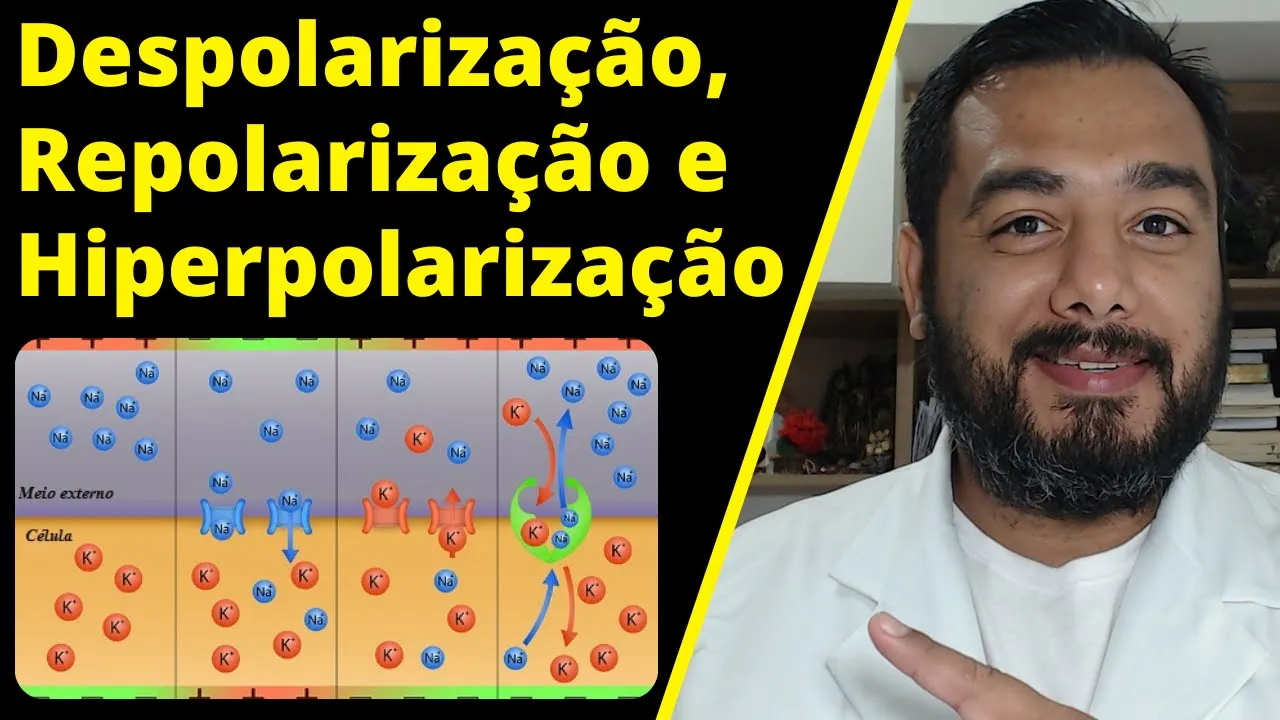
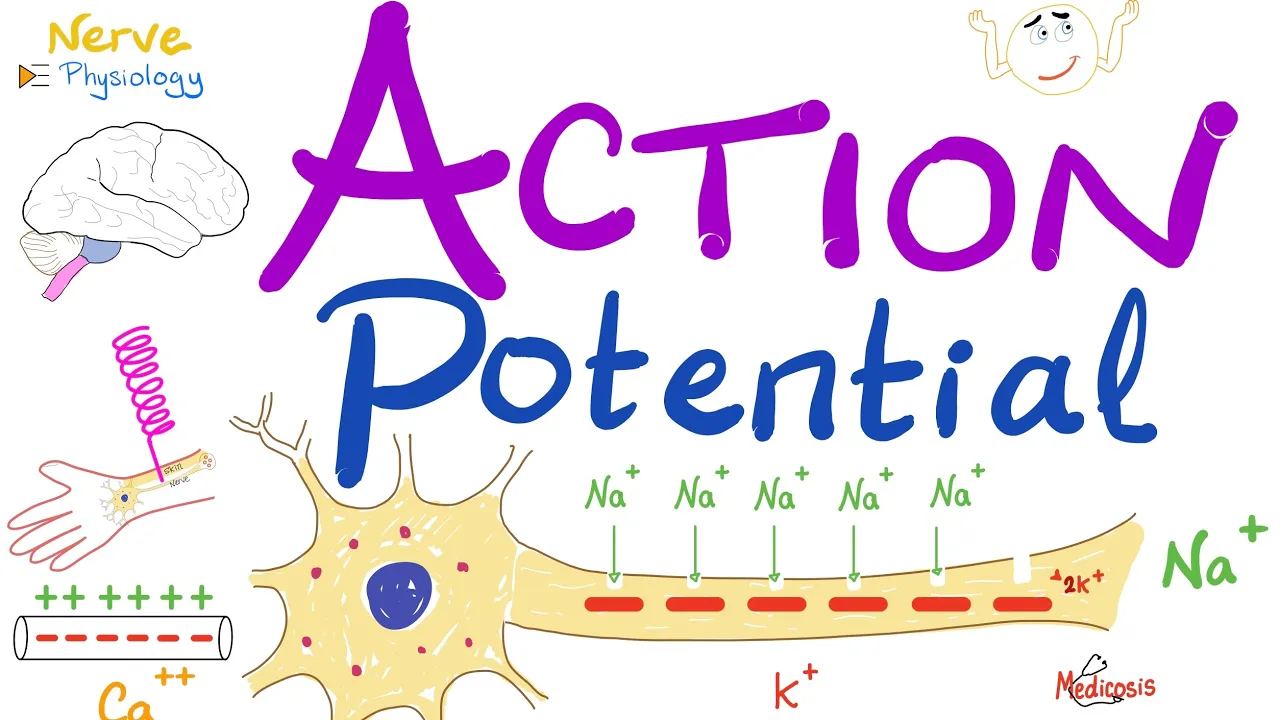










The Nernst equation calculates the membrane potential for a single ion species based on its concentration gradient and electrical charge, while the Goldman-Hodgkin-Katz equation extends this to account for multiple ions (typically potassium, sodium, and chloride) with different permeabilities, providing a more accurate representation of the actual membrane potential in neurons, which is approximately -65 millivolts when all three ions are considered.
Understanding Nernst and Goldman Equations | Membrane Potential
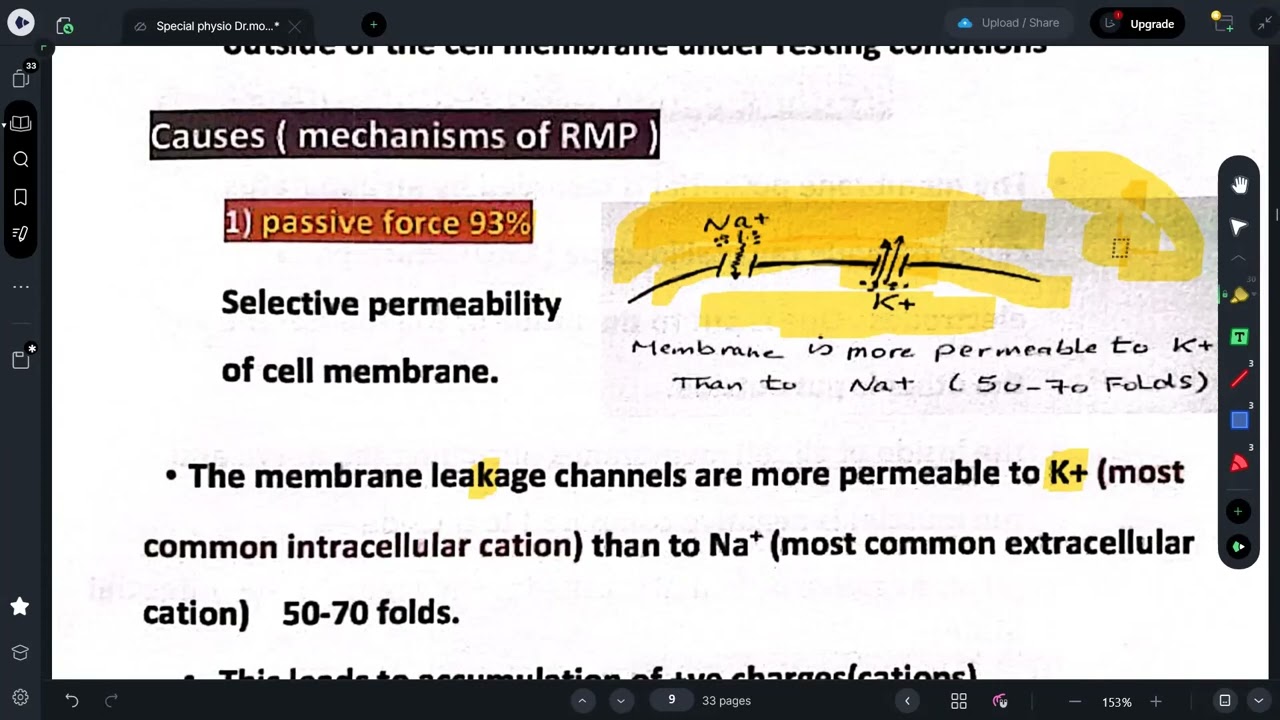
Added:Structure of the neuronal cell membrane, including the lipid bilayer and membrane proteins like ion channels.
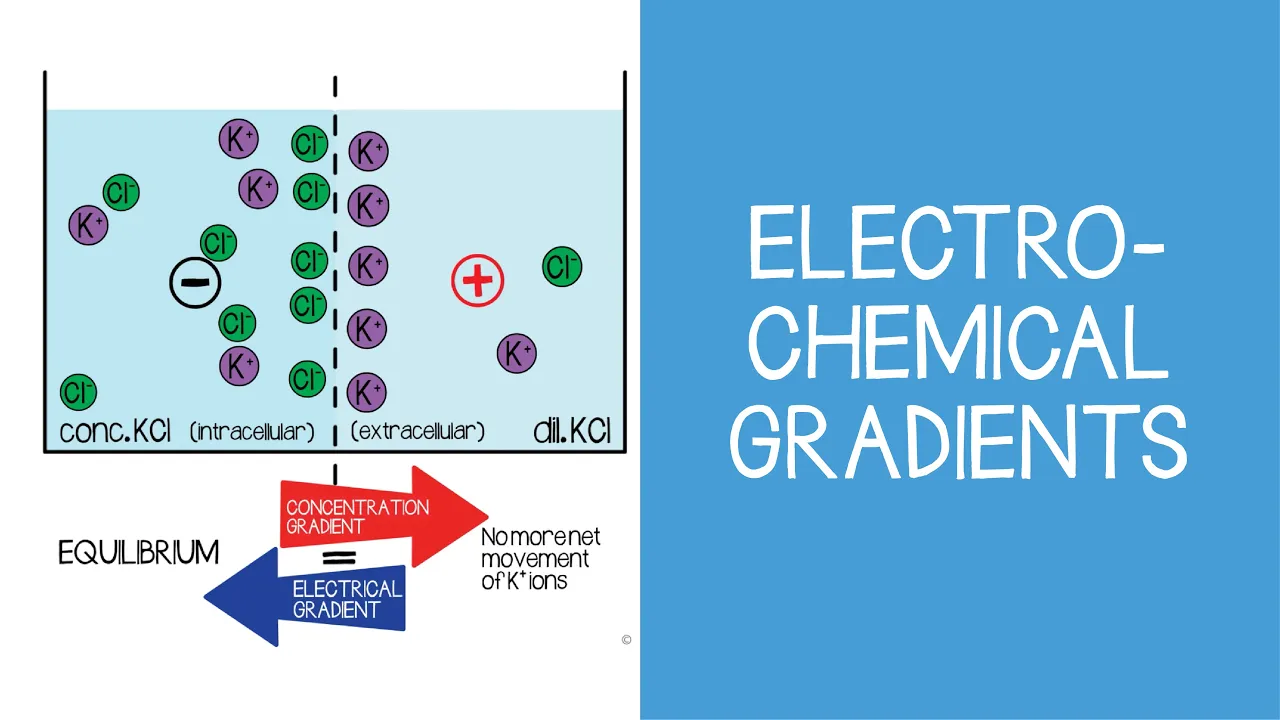
The concept of electrochemical gradients, combining concentration differences and electrical charge forces.
Primary physiological ions (Sodium, Potassium, Chloride) and their typical concentration gradients at rest.
Basic mathematical literacy in logarithmic functions and algebraic equations.
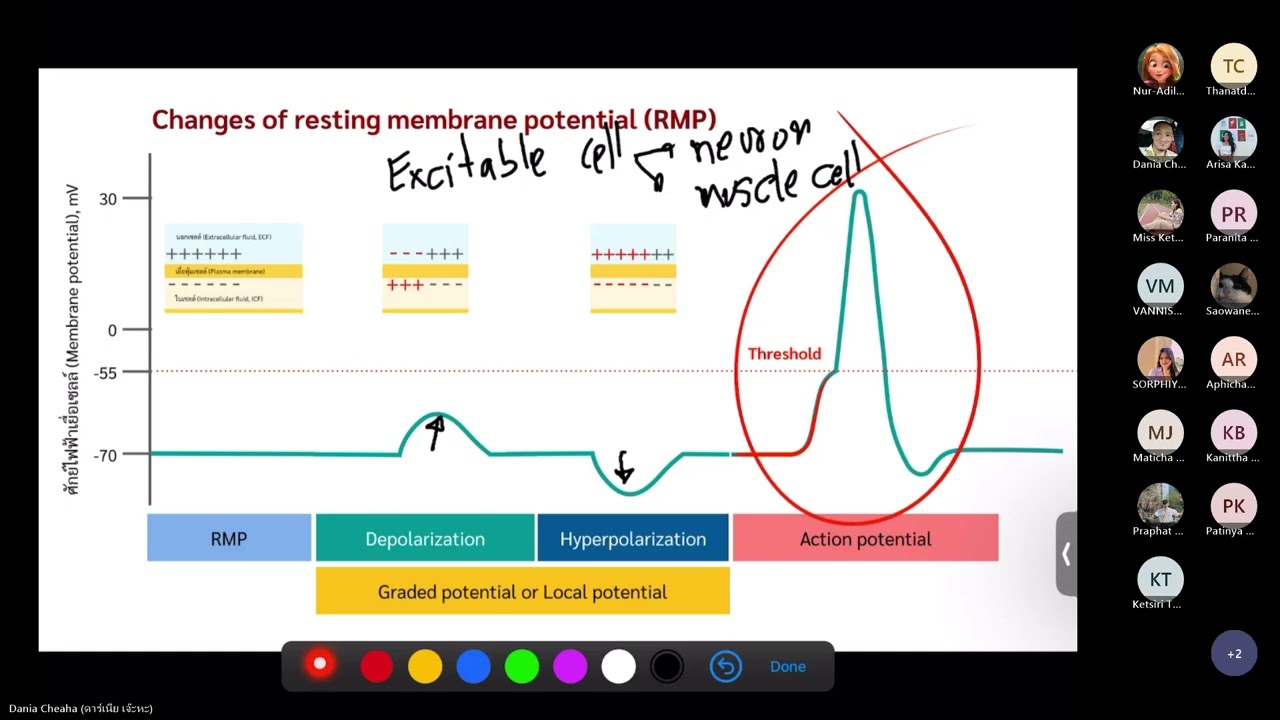
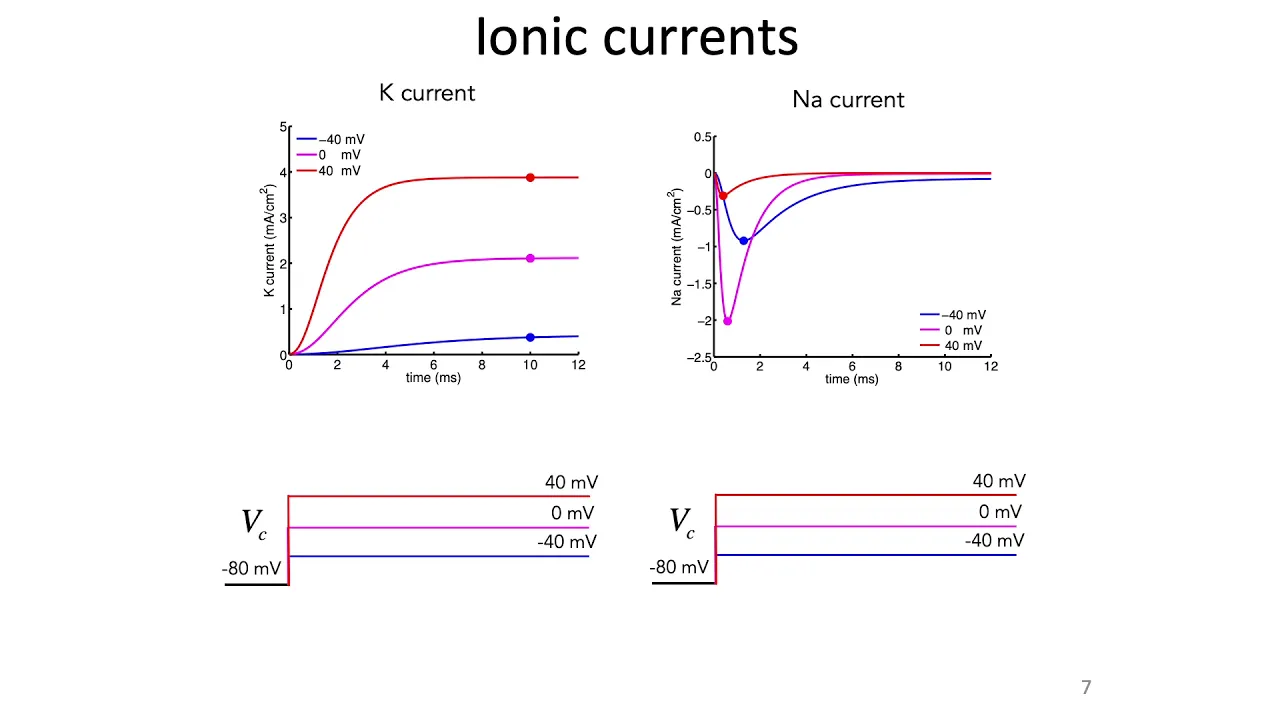
The phases of the Action Potential (depolarization, repolarization, and hyperpolarization) driven by dynamic permeability changes.
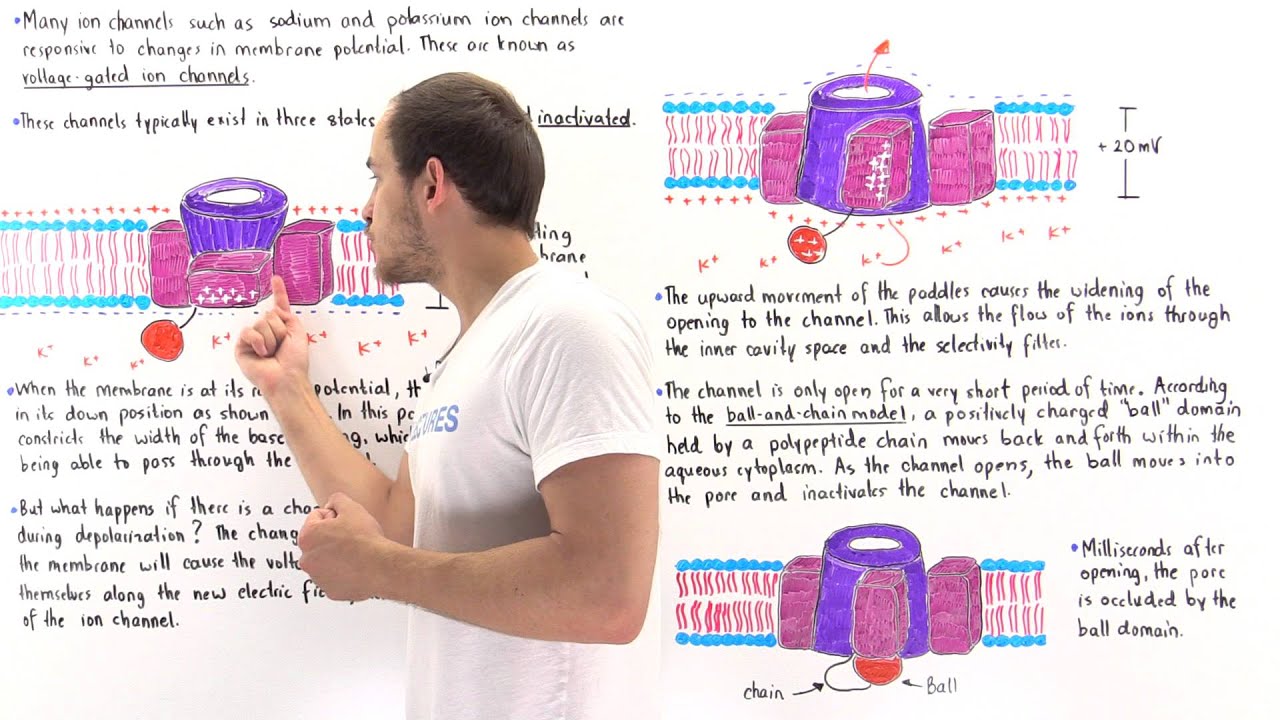
The structure and function of voltage-gated ion channels and how they respond to voltage changes.
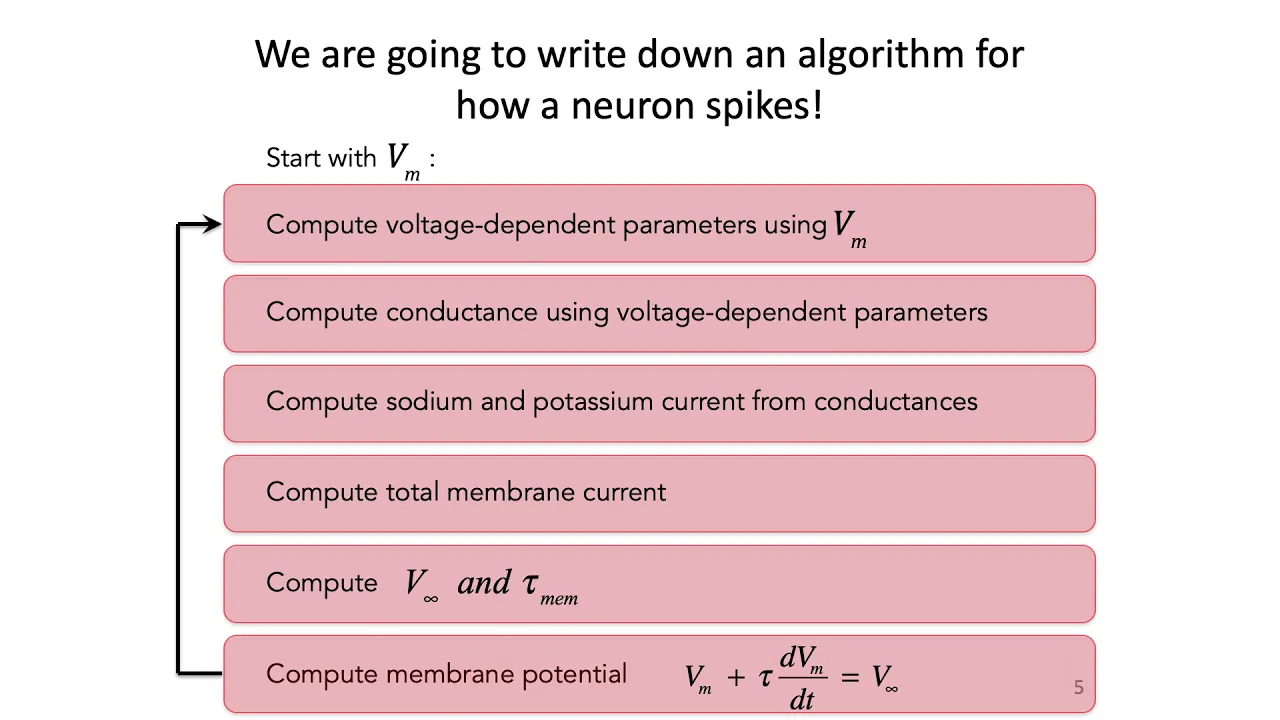
The Hodgkin-Huxley model, which treats the cell membrane as an electrical circuit with capacitance and resistance.
Clinical consequences of electrolyte imbalances (such as hyperkalemia) and neurotoxins on membrane excitability.
4.5K views86likes7:21Original Release: 2020-12-30
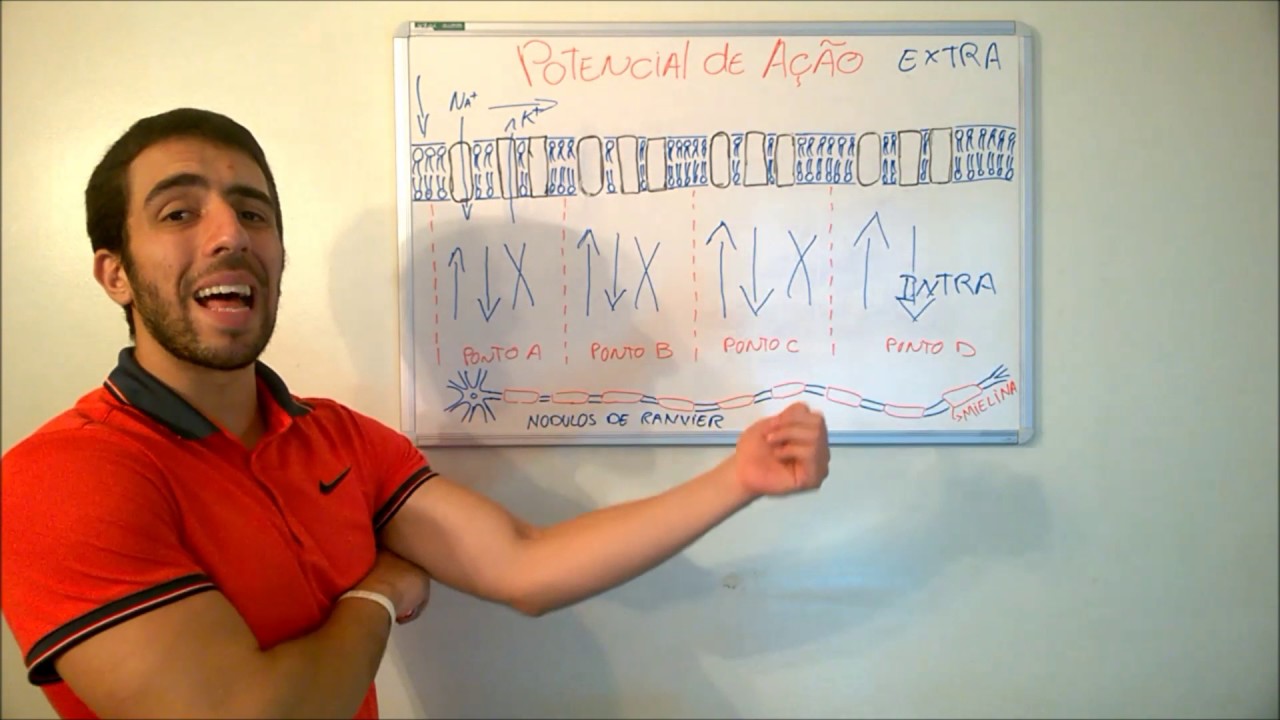
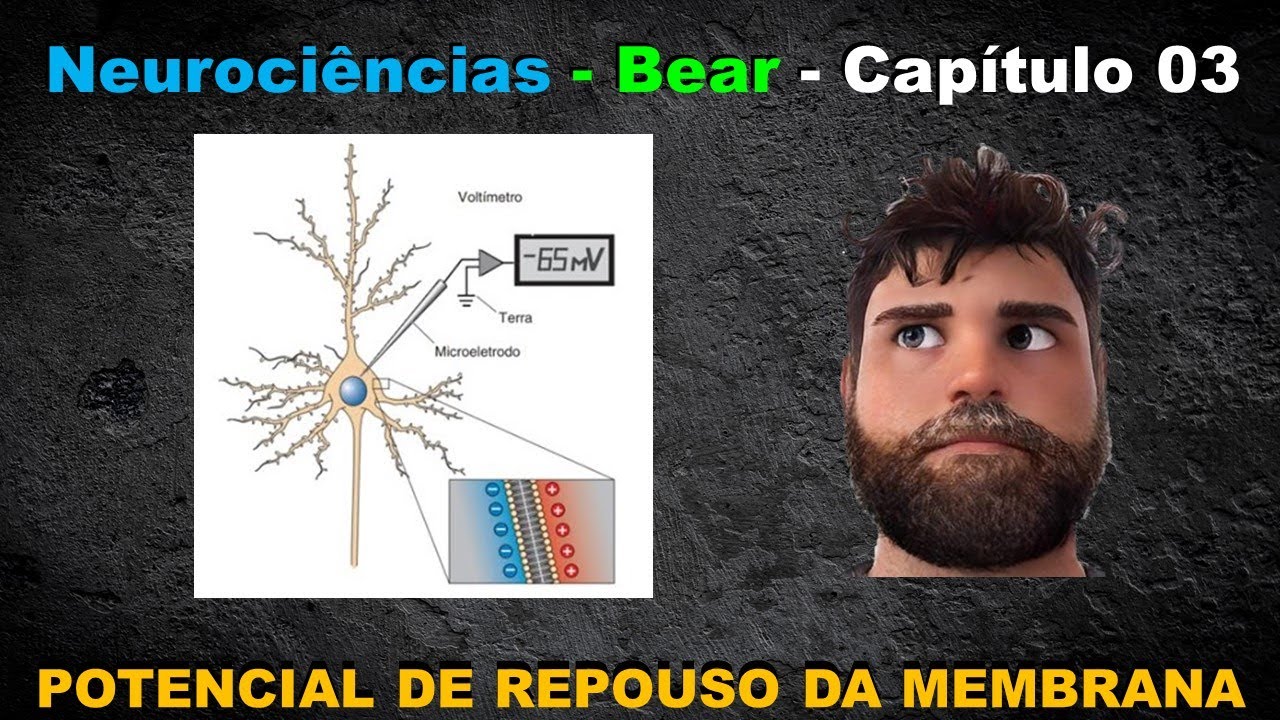
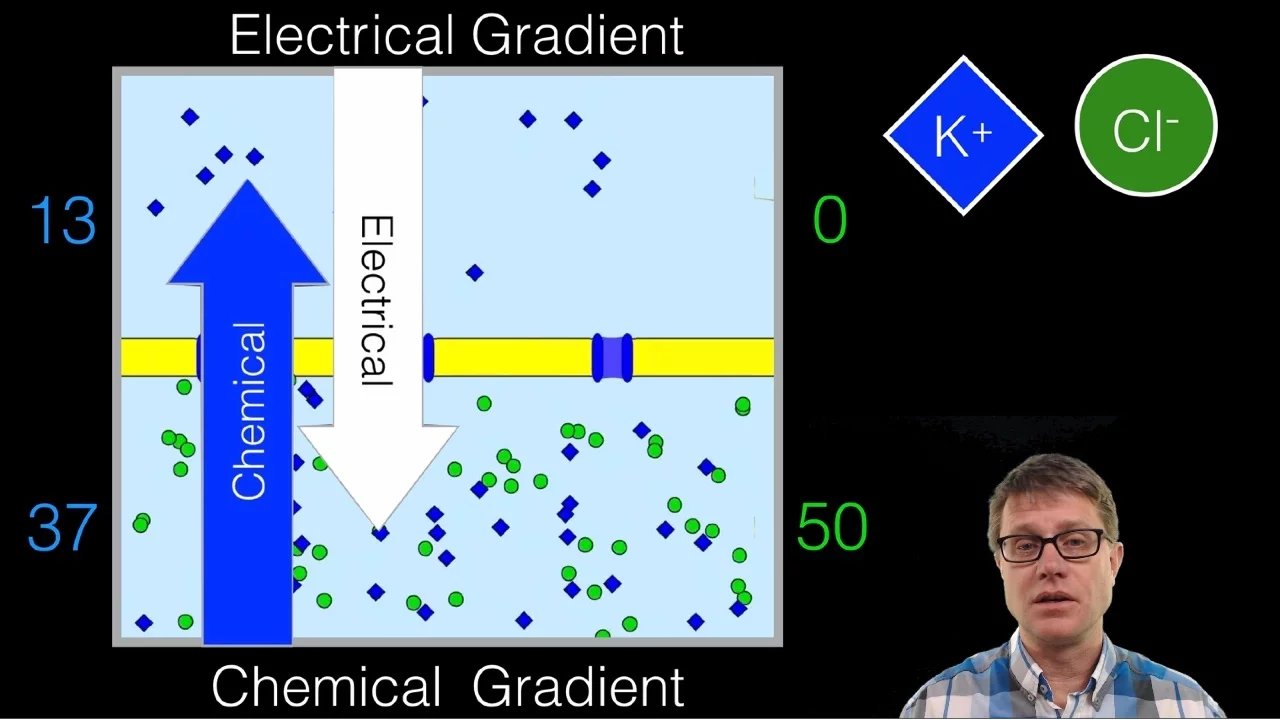
[Music] um this video is on the nernst and the goldman equations for determining the membrane potential of a neuron to better understand this we must first look at the membrane potential the membrane of the neuron is like all cell membranes it is made up of a phospholipid bilayer of the fluid mosaic model of the membrane the phosphate heads are on the inner and outer edges of the membrane and the lipid tails are tucked inside this makes the membrane a good barrier as the outside of the membrane is hydrophilic and the inside is hydrophobic there is a potential difference across the membrane of the neuron if you take a voltmeter and place one electrode in the extracellular space and one in the cell you will see the inside of the cell is negative compared to the outside of the cell this is called the membrane potential the cell will send a signal to other neurons in the brain or the spinal cord when this potential is changed by incoming stimuli this potential is due in part to two major ions sodium and potassium let's start with the sodium ion the inside of the cell has a sodium level of 10 millimoles and the outside of the cell is 145 millimoles the membrane is not permeable to sodium so it does not allow sodium to cross the inside of the cell also has many proteins which have a negative charge so the inside of the cell is negatively charged overall sodium can only cross the membrane when voltage-gated channels are opened the sodium electrical gradient is directed so sodium wants to get into the cell the concentration gradient is also directed inward when the voltage-gated sodium channels open sodium moves into the cell explosively depolarizing the cell or making the membrane potential less negative the next ion is potassium inside the cell the potassium level is 144 millimoles while outside the cell the potassium level is 5 millimoles in the neuron the membrane is permeable to potassium so it can pass through the cell membrane easily again the cell contains proteins that are negatively charged the chemical gradient for potassium is to move out of the cell but the electrical gradient is to stay inside the cell this is known as the potassium dilemma potassium does move out of the cell but it doesn't go far sitting just outside the membrane returning the membrane to its resting potential the last two ions of importance are chloride and calcium inside the cell the chloride level is 10 millimoles while outside the cell the chloride level is 110 millimoles the membrane is not permeable to chloride when the voltage-dependent chloride channels open chloride wants to move into the cell down its chemical gradient but it doesn't go far as the electrical gradient pulls the ion outward when chloride enters the cell it makes the inside even more negative hyperpolarizing the cell inside the cell the calcium level is 0.0001 millimole while outside the cell the calcium level is 2 millimoles which is a huge gradient the membrane is not permeable to calcium when the voltage-gated calcium channels open the calcium wants to move into the cell down both its chemical and electrical gradient this influx of calcium will depolarize the membrane locally walther nernst determined the nernst equation by starting with gibbs free energy he determined the value of the membrane potential if only one ion was involved in maintaining that potential his equation is the membrane potential is equal to the gas constant times the temperature divided by the valence number times the faraday's constant this is multiplied by the natural log of the concentration of the ion on the outside of the membrane divided by the concentration of the ion on the inside of the membrane this can be converted to a base 10 log with the total of the constants being 58 divided by the valence number i've worked out two examples for you the first is for potassium the membrane potential for potassium is 58 divided by a positive one times the log of five divided by 140 giving an answer of a minus 84 millivolts for chloride 58 is divided by a negative 1 and multiplied by the log of 110 over 10 equaling a minus 60 millivolts we know that the membrane has more than one ion producing the membrane potential difference this is where the goldman equation comes in the goldman equation looks at the membrane potential for when more than one ion contributes to the potential actually it's the goldman hodgkin cat's equation it states that the membrane potential is equal to rt over f times the natural log of the permeability of k times the concentration of k in the extracellular space over the permeability of k times the concentration of k inside the cell plus the permeability of sodium times the concentration of sodium in the extracellular space over the permeability of sodium times the concentration of sodium inside the cell plus the permeability of chloride times concentration of chloride inside the cell over the permeability of chloride times the concentration of chloride in the extracellular space the chloride concentrations are reversed because chloride is a negative ion while sodium and potassium are positive ions when all three ions are taken into account the membrane potential is a minus 65 millivolts and this ends the video for the nernst and goldman equations
Up Next

3:42
SNARE Proteins Explained: Vesicle Docking and Neurotransmitter Release in Synapses
@FuzailMajoo1
79.1K views•2015-11-18
50:12
Bacterial Communication: Quorum Sensing and Biofilm Formation Explained
@JHUAAP
12.6K views•2011-06-28

5:35
Enteric Nervous System Explained: The Gut's Brain | Neurobiology Lecture
@alumniu6029
438 views•2018-09-12
7:08
Bacteriophages: Earth's Deadliest Killers and Future Antibiotics
@kurzgesagt
34.6M views•2018-05-13
Related Study Plans & Knowledge Roadmaps
Structured learning paths in Biology
biology
RNAi: Biogenesis, RISC & Gene Silencing
01Molecular Biology Foundations: DNA to Protein
02Introduction to RNA Interference (RNAi)
03Molecular Biogenesis of miRNA and siRNA
+ 2 more learning modules
10h5 modules
Explore Roadmap
biology
Mycorrhizae: Signaling, Biophysics & Ecology
01Foundations of Mycorrhizal Symbiosis
02Molecular Signaling and Root Colonization
03Biophysics and Bioenergetics of Nutrient Exchange
+ 1 more learning modules
11h4 modules
Explore Roadmap
biology
Circadian Clocks: TTFL, SCN & Periphery
01Foundations of Molecular Biology & Gene Expression
02Introduction to Chronobiology and Actograms
03The Core TTFL: Molecular Architecture of the Clock
+ 3 more learning modules
14h6 modules
Explore Roadmap
biology
Population Genetics: Math, Drift & Selection
01Genetic & Probability Foundations
02The Hardy-Weinberg Principle and Baseline Models
03Mathematical Modeling of Natural Selection
+ 3 more learning modules
18h6 modules
Explore Roadmap