







![Endocytose/ Exocytose/ Membranfluss (Stofftransport durch die Biomembran) - [Biologie, Oberstufe]](https://i.ytimg.com/vi/8YAp558E8O0/sddefault.jpg)
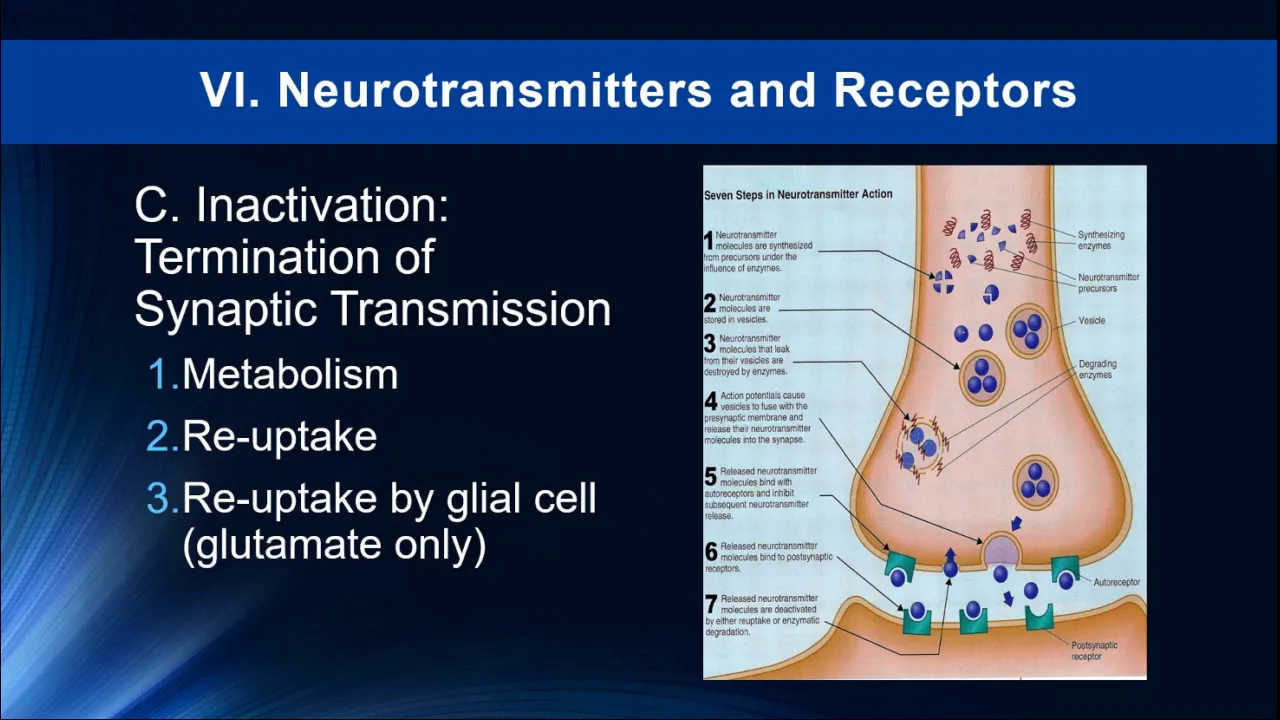


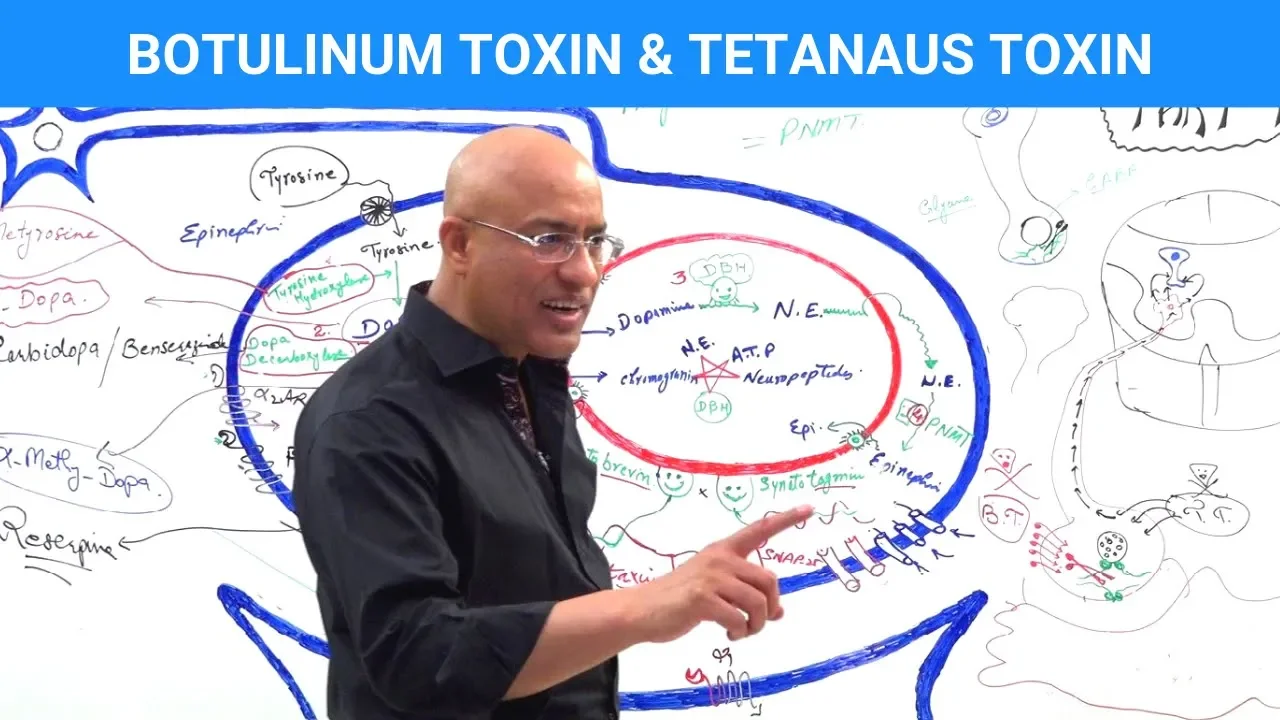









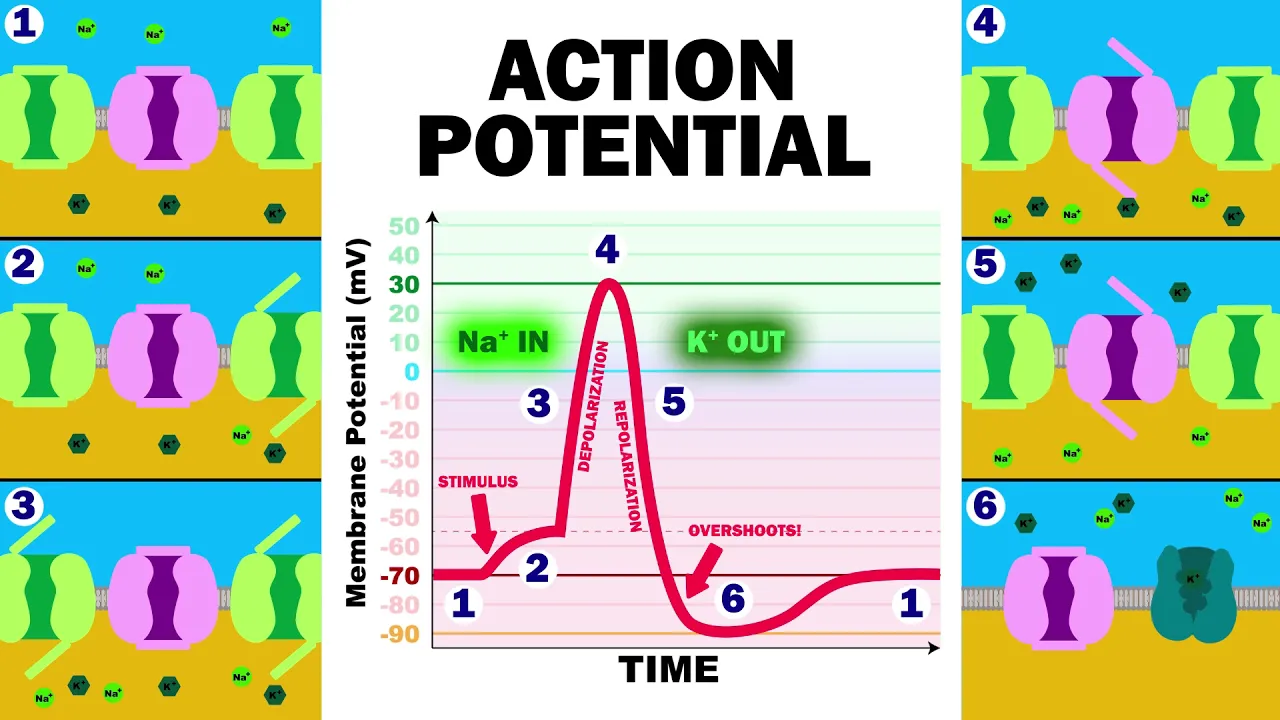
SNARE proteins (Soluble NSF Attachment Receptors) mediate vesicle docking and fusion at the synapse through a calcium-dependent mechanism: voltage-gated calcium channels open during action potentials, allowing calcium to bind to Synaptotagamin's C2A region, which then triggers the formation of a core complex where V-SNAREs (Synaptotagamin and Synaptobrevin on vesicles) interact with T-SNAREs (Syntaxin and SNAP-25 on the presynaptic membrane), bringing neurotransmitter-filled vesicles into close contact with the membrane for exocytosis.
SNARE Proteins Explained: Vesicle Docking and Neurotransmitter Release in Synapses
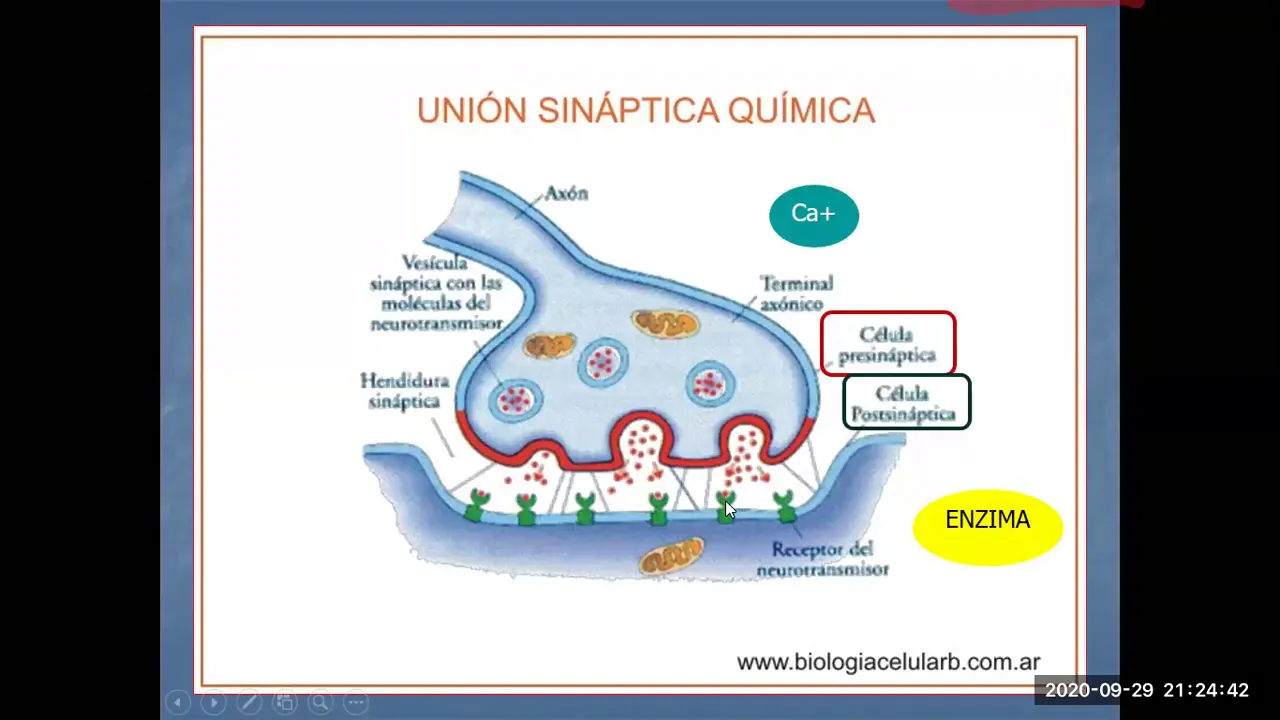
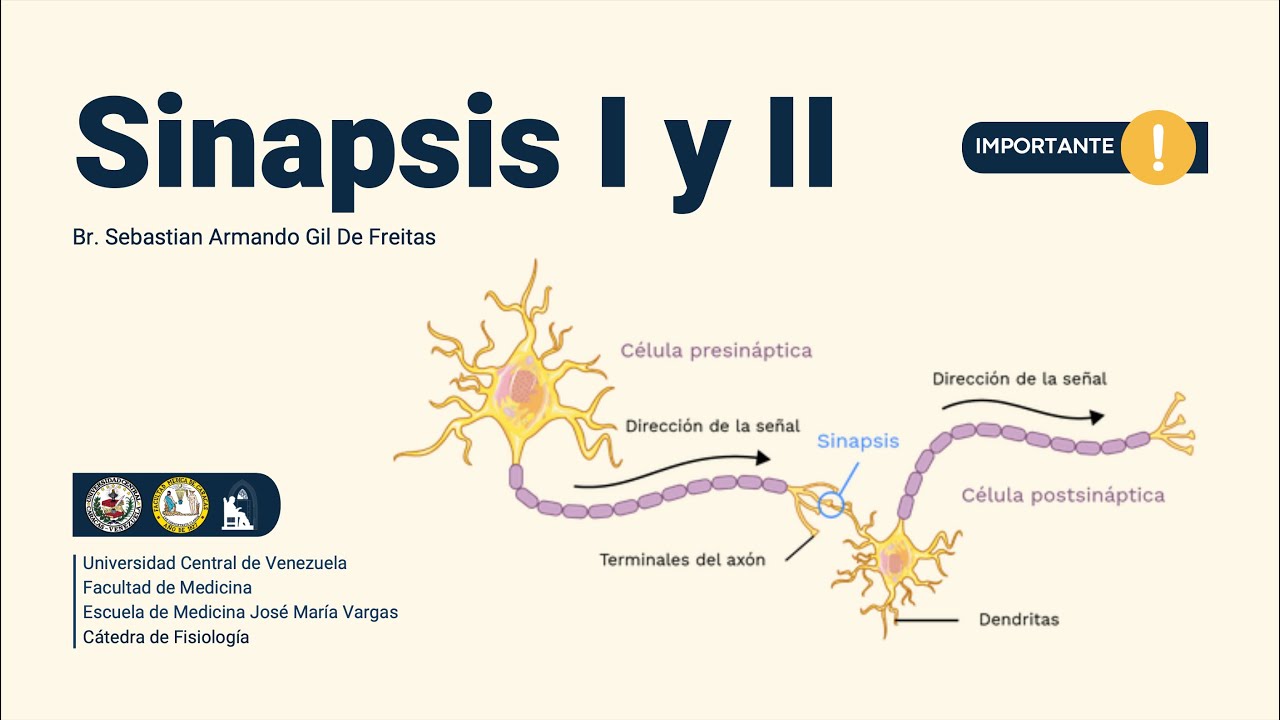
Added:Structure of a chemical synapse, including the presynaptic terminal, synaptic cleft, and postsynaptic membrane.
The mechanism of action potential propagation and the critical role of voltage-gated calcium (Ca2+) channels in triggering neurotransmitter release.
Fundamentals of membrane biology, specifically lipid bilayers and the biological processes of exocytosis and endocytosis.
Basic understanding of neurotransmitters, how they are synthesized, and their storage within intracellular vesicles.
The mechanism of action of bacterial neurotoxins, such as Botulinum (Botox) and Tetanus toxins, which specifically target and cleave SNARE proteins.
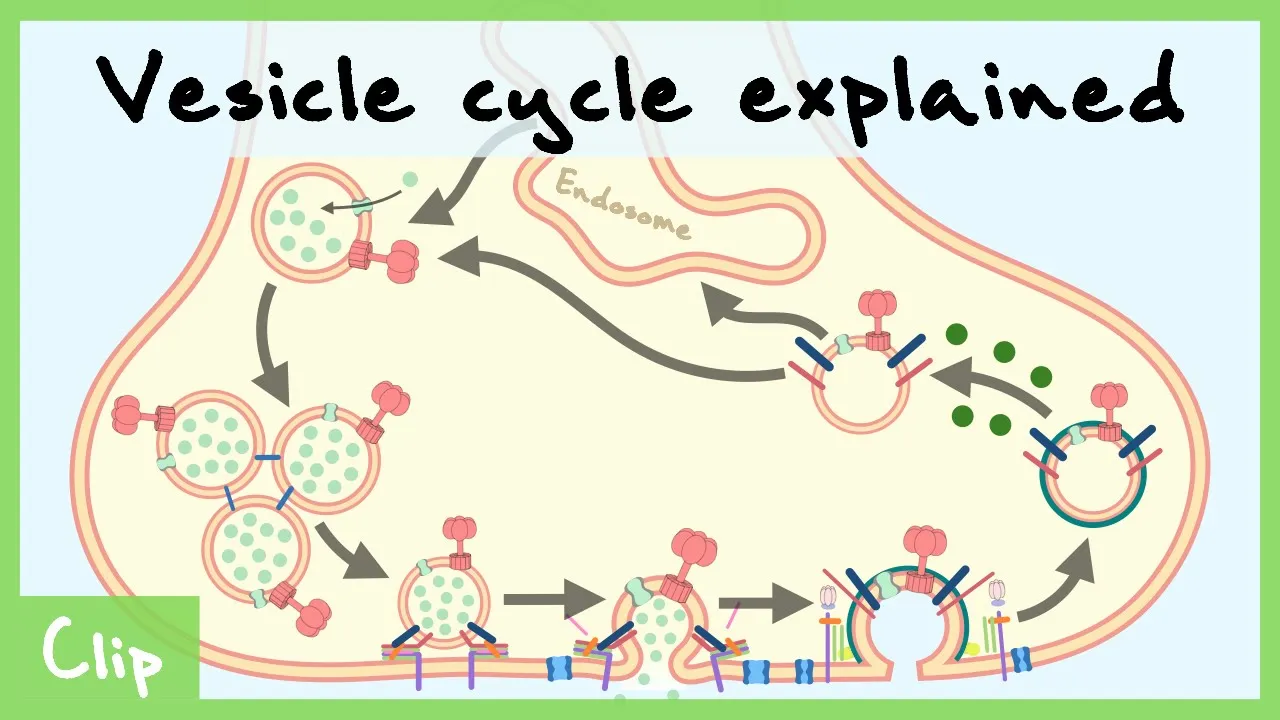
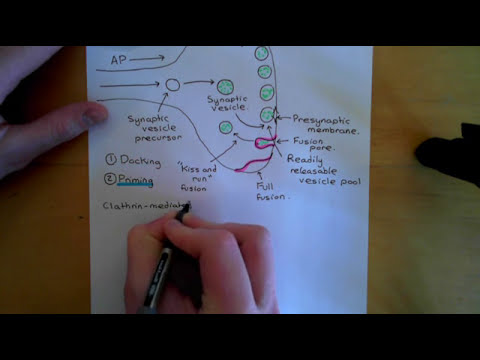
The complete synaptic vesicle cycle, including vesicle recycling, clathrin-mediated endocytosis, and vesicle refilling.
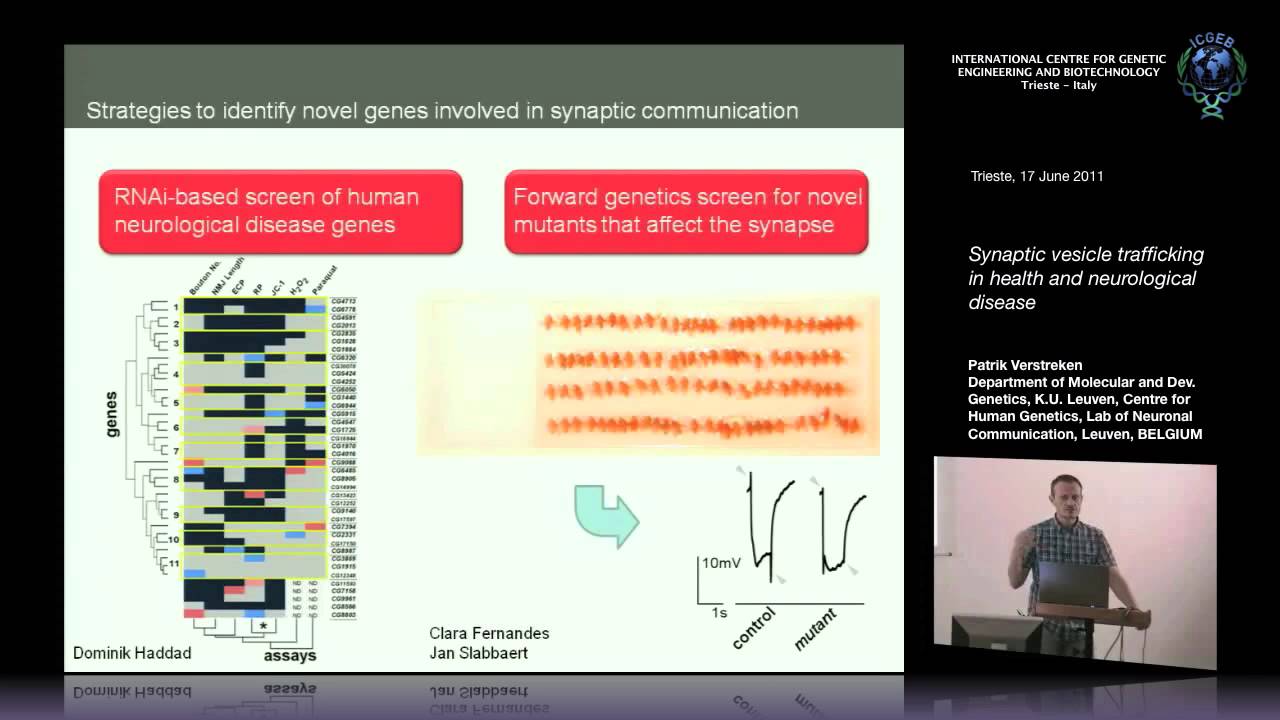
Neurological disorders and 'synaptopathies' that arise from genetic mutations in SNARE complex proteins or calcium sensors.
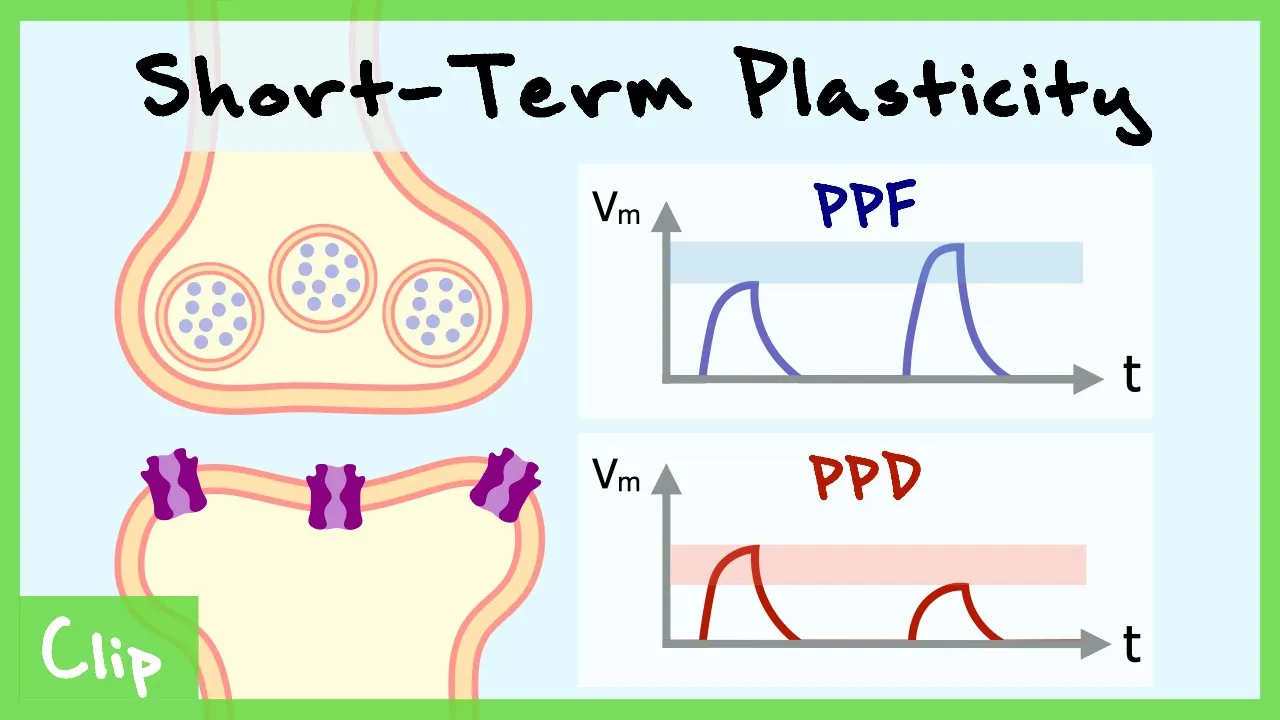
How presynaptic neurotransmitter release probability is modulated during synaptic plasticity (e.g., short-term facilitation and depression).
79.1K views985likes3:42Original Release: 2015-11-18
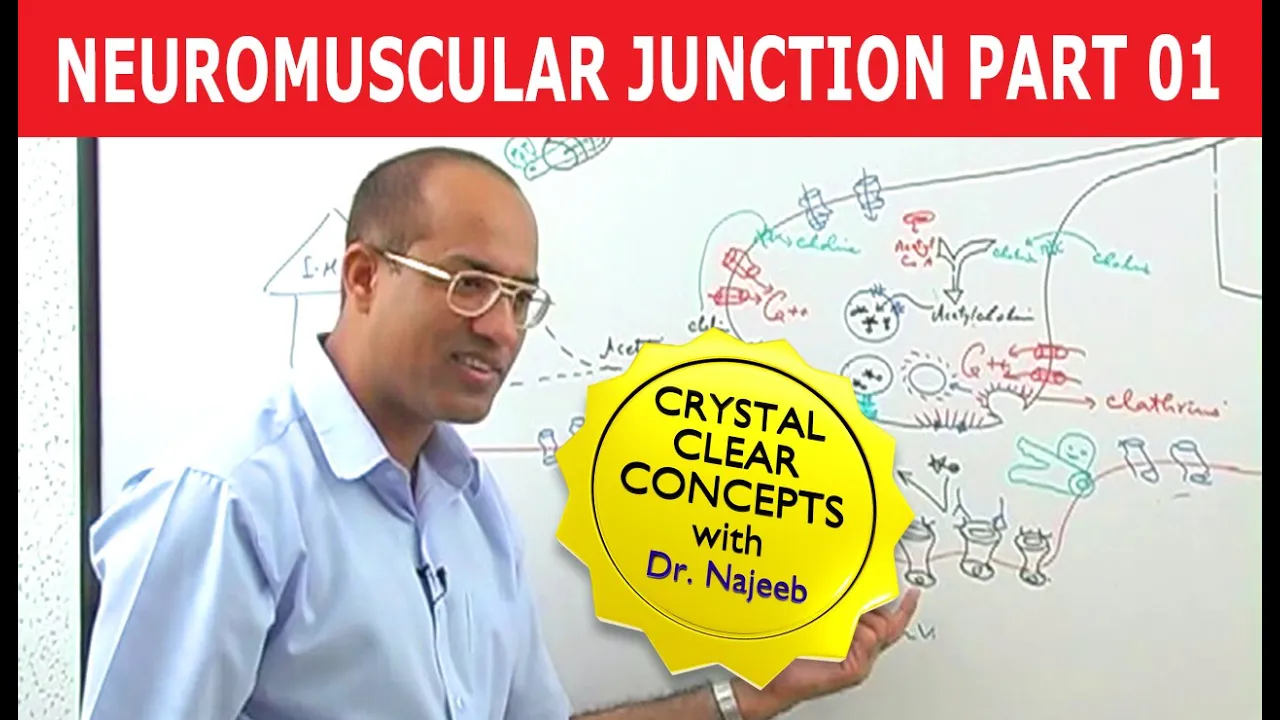
Allright so this video is going to be going over the SNARE proteins.... In the... general A&P tectbook, they mention SNARE proteins and there is practically one or two sentances to it and there is nothign else. So I thoguht I would make this video to help you guys get a better understanding of what's going on over here.
at this.... at this junction over here.
So, essentially what this SNARE protein is and what the SNARE stands for is, SNARE stands for soluble NSF Attachment Receptors and the NSF stands for N-Ethylmaleimide Sensitve Factor So, what we have here is this, remember the big picture is this; we have these vesicles, these vesicles are filled with neurotransmitters, and these neurotransmitters need to be released over here over here into the synaptic cleft. So how does that happen? Well it happens thorugh the... it happens because of these SNARE proteins, and these are the we have four proteins that we are going to be looking at.
which are responsible for this docking to take place.
So these proteins, four proteins are... Synaptotagamin and Synaptobrevin which are embeded in this vesicle here.
so they're referred to as these "V" Snares. Then we have SNAP 25 and Syntaxin which are part of this presynaptic membrane over here and the "T" stands for targer, the Target SNARE So... again, if you look over here, this is the Synaptotagamin this is the Synaptobrevin and the... for the T SNARE you have the Syntaxin over here in purple and we have SNAP 25 over here SNAP 25 stands for Soluble NSF attachment protein 25...So if you notice, that these are the...the Syntaxin the SNAP 25 and the Synaptobrevin these are all Alpha helix...So what happens over here is this, now if you look over here at Synaptotagamin You will notice that there are two circles over here. The first circle the one on top, this site is called the C2B region and the one the one on the bottom over here, this is the C2A region.
The C2A region is going to bind to calcium and the C2B is going to want to bind or interact with this syntaxin overhere. So this is whats going to happening now. As the action potential in coming down notice that i put down these voltage gated sodium channels inside the book, the publisher did'nt put this over here again this is a lack of detail they did'nt cover.
and I'm adding overe here. So we have these voltage gated channels.
so, as the action potential is coming down, it's going to open up these voltage gated channels, sodium comes in and then its going to depolarize and it's that depolarization that open up these calcium channels. So as the calcium enters it's going to come in and it's going to bind to the Synaptotagamin, and and remember, where is it going to bind to, it's going to bind to the C2A site of C2A site of the Synaptotagamin now when that happens, the calcium it and the C2A site site over here of the Synaptotagamin, it has an affinity for the phospholipids over here. So it's going to want to get pulled down, it;s going to draw this entire vesicle down closer as that's happening, the... C2B site, it's going to bind, it's going to interact with the Syntaxin, so these two things are going to lock up. At the same time the...SNAP 25 and the Synaptobrevin will end up binding with one another.
and this is how..this entire...we end up getting this, what we call this core complex, that forms, and this is how this vessicle ends up getting docked to the presynaptic membrane.
So I hoped this helps and I hope this clarrifies some of the things...that... some of the questions you may may have had. If you like this video, please be sure to give it a thumb up. If you have any questions for me, please leave them in the comments below or email me directly.
Thank you so much for watching, and best of luck on your exams.
Up Next

10:18
Bird Migration and Climate Change: The Pacific Flyway Explained
@kqed
337.1K views•2010-03-17
50:12
Bacterial Communication: Quorum Sensing and Biofilm Formation Explained
@JHUAAP
12.6K views•2011-06-28

5:35
Enteric Nervous System Explained: The Gut's Brain | Neurobiology Lecture
@alumniu6029
438 views•2018-09-12
7:08
Bacteriophages: Earth's Deadliest Killers and Future Antibiotics
@kurzgesagt
34.6M views•2018-05-13
Related Study Plans & Knowledge Roadmaps
Structured learning paths in Biology
biology
RNAi: Biogenesis, RISC & Gene Silencing
01Molecular Biology Foundations: DNA to Protein
02Introduction to RNA Interference (RNAi)
03Molecular Biogenesis of miRNA and siRNA
+ 2 more learning modules
10h5 modules
Explore Roadmap
biology
Mycorrhizae: Signaling, Biophysics & Ecology
01Foundations of Mycorrhizal Symbiosis
02Molecular Signaling and Root Colonization
03Biophysics and Bioenergetics of Nutrient Exchange
+ 1 more learning modules
11h4 modules
Explore Roadmap
biology
Circadian Clocks: TTFL, SCN & Periphery
01Foundations of Molecular Biology & Gene Expression
02Introduction to Chronobiology and Actograms
03The Core TTFL: Molecular Architecture of the Clock
+ 3 more learning modules
14h6 modules
Explore Roadmap
biology
Population Genetics: Math, Drift & Selection
01Genetic & Probability Foundations
02The Hardy-Weinberg Principle and Baseline Models
03Mathematical Modeling of Natural Selection
+ 3 more learning modules
18h6 modules
Explore Roadmap