













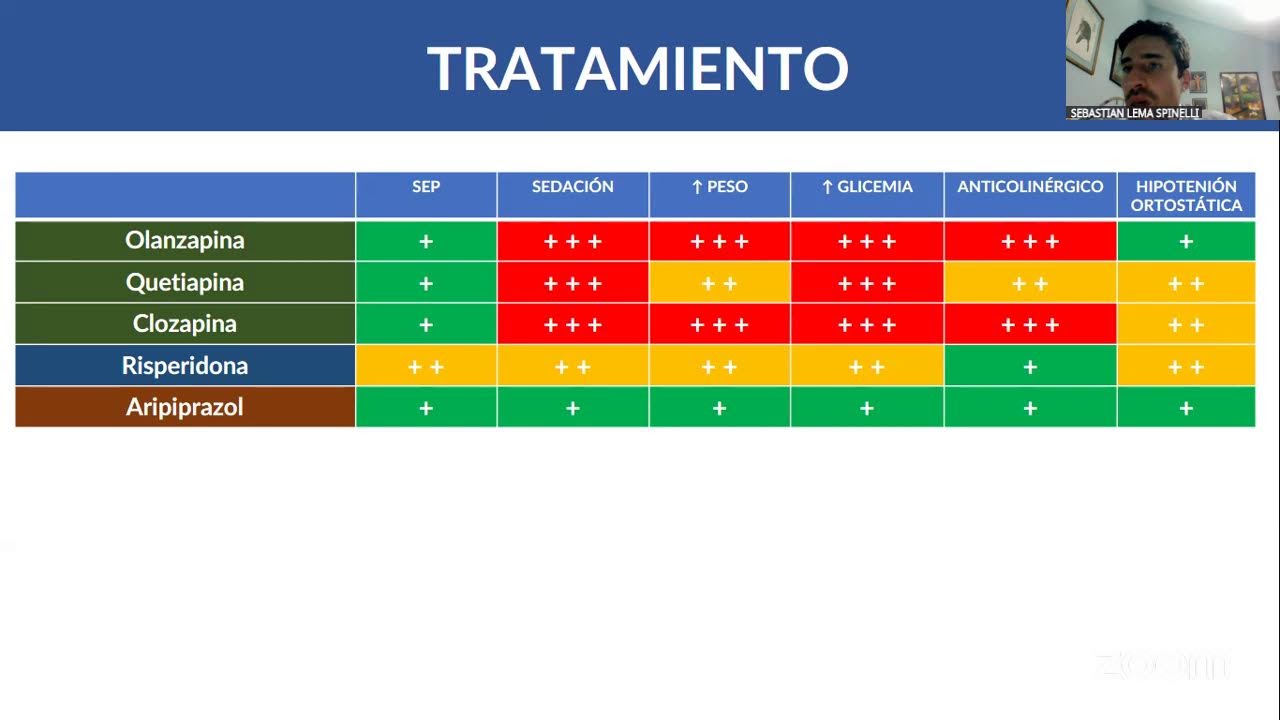



Typical antipsychotics (first-generation, developed before 1970) primarily block D2 receptors and are associated with significant extrapyramidal side effects like dystonia, dyskinesia, and akathisia, while atypical antipsychotics (second-generation, developed after 1970) block multiple receptors including D1, D4, and 5HT2, resulting in fewer motor side effects but potential metabolic complications such as weight gain, diabetes, and elevated cholesterol; additionally, atypical agents demonstrate superior efficacy in treating both positive symptoms (hallucinations, delusions) and negative symptoms (social withdrawal, reduced emotions) of schizophrenia compared to typical agents.
Typical vs Atypical Antipsychotics: 5 Key Differences Explained
Added:Basic neuroanatomy and the role of neurotransmitters, particularly dopamine and serotonin, in the central nervous system.
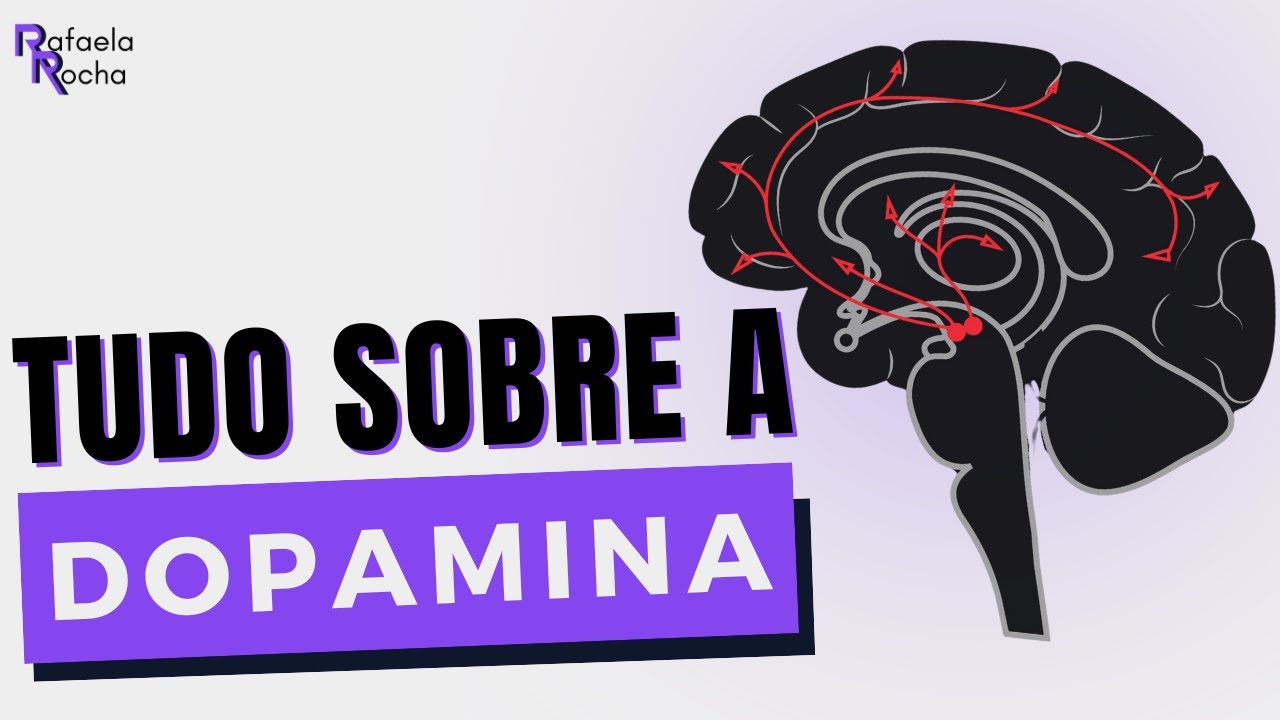
The four major dopaminergic pathways in the brain (mesolimbic, mesocortical, nigrostriatal, and tuberoinfundibular) and their functions.
The pathophysiology of schizophrenia, including the distinction between positive symptoms (hallucinations, delusions) and negative symptoms (flat affect, social withdrawal).
Fundamentals of receptor pharmacology, specifically the concepts of receptor binding affinity, neurotransmitter receptor antagonism, and second messenger systems.
Management and treatment strategies for major antipsychotic side effects, such as Extrapyramidal Symptoms (EPS), Tardive Dyskinesia, and Neuroleptic Malignant Syndrome (NMS).
The pharmacology and clinical utility of third-generation antipsychotics (partial dopamine agonists) like Aripiprazole and Cariprazine.
Clinical monitoring guidelines and safety protocols for high-risk antipsychotics, such as Clozapine-induced agranulocytosis and metabolic monitoring.
The impact of pharmacogenomics (such as cytochrome P450 enzyme genetic variations) on antipsychotic drug metabolism, efficacy, and dosing adjustments.
33.4K views542likes7:53Original Release: 2019-09-26
5 differences between typical and atypical antipsychotics.
First of all let us see what are these drugs. Drugs like chlorpromazine, trifluopromazine, thioridazine, perphenazine fluphenazine and haloperidol all these drugs are called as typical anti-psychotics. On the other hand, drugs like clozapine, olanzapine, risperidone, quetiapine and aripiprazole, all these are the drugs called as atypical anti-psychotics. Now let us see what are the five differences between these typical and atypical anti-psychotics.
They differ mainly in generation, receptor selectivity, chemical nature, side effect profile and therapeutic efficacy so let us see one by one. So let us start with first one generation. Typical anti-psychotics are generated before 1970. On the other hand, atypical anti-psychotics are generated after 1970. So there is a difference between their year of invention so typical anti-psychotics are the old generation anti-psychotics whereas atypical anti-psychotics are the new generation anti-psychotics. Of course we have an exception for this classification, for example drug like clozapine is invented earlier before the 1970. But even it is considered as atypical antipsychotic.
Two of the reasons why it is considered as an atypical antipsychotic is that even the clozapine is invented before the 1970, its clinical use is more pronounced after the 1970.
And clozapine is one of the drug which is having the less extra pyramidal side effects and multiple receptor mechanism thereby it can be categorized as atypical antipsychotic.
So in this way, typical and atypical anti-psychotics differ by their generation.
Typical anti-psychotics are old generation and atypical anti-psychotics are new generation drugs.
So let us see the second difference receptor selectivity.
Typical anti-psychotics block mainly D2 receptors, these D2 receptors which are abundant in the mesolimbic and mesocortical pathway are going to be blocked which is responsible for the antipsychotic action of the typical agents. On the other hand, atypical anti-psychotics not only block the D2 receptors, they also block D1, D4 as well as 5HT2 receptors. For example, clozapine blocks D1 as well as D4 receptors and another drug risperidone blocks 5HT2 receptors.
So in this way, atypical anti-psychotics are working by multiple receptor mechanism, their antipsychotic action can be attributed to the action on any of these receptors.
And now let us see the third difference that is chemical nature. Atypical anti-psychotics belongs to the chemical groups like phenothiazines, butyrophenones and thioxanthines.
On the other hand, atypical anti-psychotics are chemically diverse group and there is no relation between the one drug with the another drug in their chemical nature.
For example, typical anti-psychotics like chlorpromazine, trifluopromozine, thioridazine, perphenazine, fluphenazine, all these drugs belong to a chemical category called phenothiazines. You can see the suffix common suffix in all these drugs -azine so they belong to the chemical category phenothiazines. On the other hand, haloperidol and droperidol are the other two drugs which belong to the butyrophenones. In this way, typical anti-psychotics belongs to any of this chemical group and they are chemically related. And even their chemical structure is having some relation with the their binding to the dopamine receptors.
In case of atypical anti-psychotics, let us see one example clozapine, now you can see the clozapine is having a structure with a ring system dibenzodiazepine, you can see the two benzenes are fused with a seven membered ring system with two nitrogens so it is a dibenzodiazepine.
On the other hand, another drug like aripiprazole is a very large structure with a chemically diverse group and aripiprazole is having a ring system like the partially saturated quinoline ring system. So there is no relation between the chemical structure of the clozapine and aripiprazole. So in atypical anti-psychotics many of the drugs are not chemically related and they belong to the diverse chemical groups.
Fourth difference- side effect profile. This is one of the important difference between the typical and atypical antipsychotic. Typical anti-psychotics can produce more extra pyramidal side effects whereas atypical anti-psychotics produce less extra pyramidal side effects.
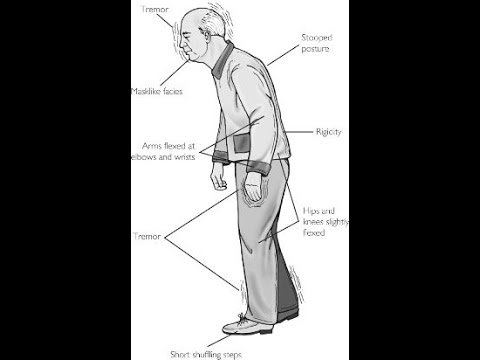
So typical anti-psychotics can produce the extra pyramidal side effects like dystonias, dyskinesia and akathesia. Dystonias they are the disturbance in the tone of the muscle leading to the muscle rigidity, dyskinesia this is the disturbance in the muscle movement leading to the muscle incoordination and akathesia is the restlessness which is observed in the patients treated with the typical anti-psychotics. On the other hand, atypical anti-psychotics are having less extra pyramidal side effects but they can produce some side effects like weight gain, diabetes and elevated cholesterol. In this way, atypical anti-psychotics does not produce the more troublesome extra pyramidal side effects but they can produce the weight gain and they can modify the glucose as well as cholesterol levels in the body.
And the fifth difference is the therapeutic efficacy. Typical anti-psychotics can relieve the symptoms like hallucinations and delusions which are the positive symptoms of the psychosis. But they cannot affect the negative symptoms of the psychosis.
On the other hand, atypical anti-psychotics can relieve not only the hallucinations and delusions, they can also relieve the social withdrawal as well as reduced emotions in the patients.
The last two are particularly the negative symptoms of the psychosis. In this way, atypical anti-psychotics act both on positive as well as negative symptoms of the schizophrenia.
So atypical anti-psychotics are having the better therapeutic efficacy compared with the typical anti-psychotics. So these are the five differences between the typical and atypical anti-psychotics. Atypical anti-psychotics are the new generation anti-psychotics having better therapeutic efficacy as well as better side effect profile compared with the typical anti-psychotics.
[Music]
Up Next

5:22
Benzodiazepines for Nursing Students | NCLEX Pharmacology Guide
@NurseInTheMaking
80.2K views•2023-03-30

48:47
Graphic Medicine: Comics for Collaborative Healthcare Communication
@nationalpatientadvocate
189 views•2023-12-04

10:28
Neuroanatomy: Central and Peripheral Nervous System Divisions Explained
@AKLECTURES
136.2K views•2014-09-20
3:05
Stages of Labor and Vaginal Birth | Childbirth Animation
@nucleusmedicalmedia
52.1M views•2017-08-18
Related Study Plans & Knowledge Roadmaps
Structured learning paths in Medicine
medicine
Abnormal LFTs: Diagnostic Workup & Pathology
01Liver Anatomy and Basic Physiology
02Introduction to Liver Function Tests (LFTs)
03Hepatocellular vs. Cholestatic Patterns
+ 3 more learning modules
12h6 modules
Explore Roadmap
medicine
Analyzing Blood Smears: RBC, WBC & Platelets
01Introduction to Blood Components & Smear Preparation
02Normal Morphology of Blood Cells
03Erythrocyte Pathologies & Morphological Variants
+ 2 more learning modules
12h5 modules
Explore Roadmap
medicine
Mechanical Ventilation: Waveforms & Alarms
01Anatomy and Physiology of Breathing
02Introduction to Mechanical Ventilation & Core Modes
03Ventilator Settings and Waveform Interpretation
+ 2 more learning modules
12h5 modules
Explore Roadmap
medicine
Neuro Exam: Localization & Stroke Syndromes
01Foundations of Neuroanatomy and Vascular Supply
02The Neurological Examination: Step-by-Step
03Principles of Neurological Localization
+ 3 more learning modules
18h6 modules
Explore Roadmap