














Populism is a thin-centered ideology that divides society into two homogeneous groups—the 'pure people' and the 'corrupt elite'—arguing that politics should express the general will of the people; it is neither inherently left nor right-wing but combines with host ideologies (nationalism on the right, socialism on the left), and while it can be a corrective force that repoliticizes important issues, it poses threats to liberal democracy by undermining minority rights, rule of law, and independent institutions through its moralistic and uncompromising rhetoric.
Understanding Populism: From Le Pen to Trump | Political Analysis
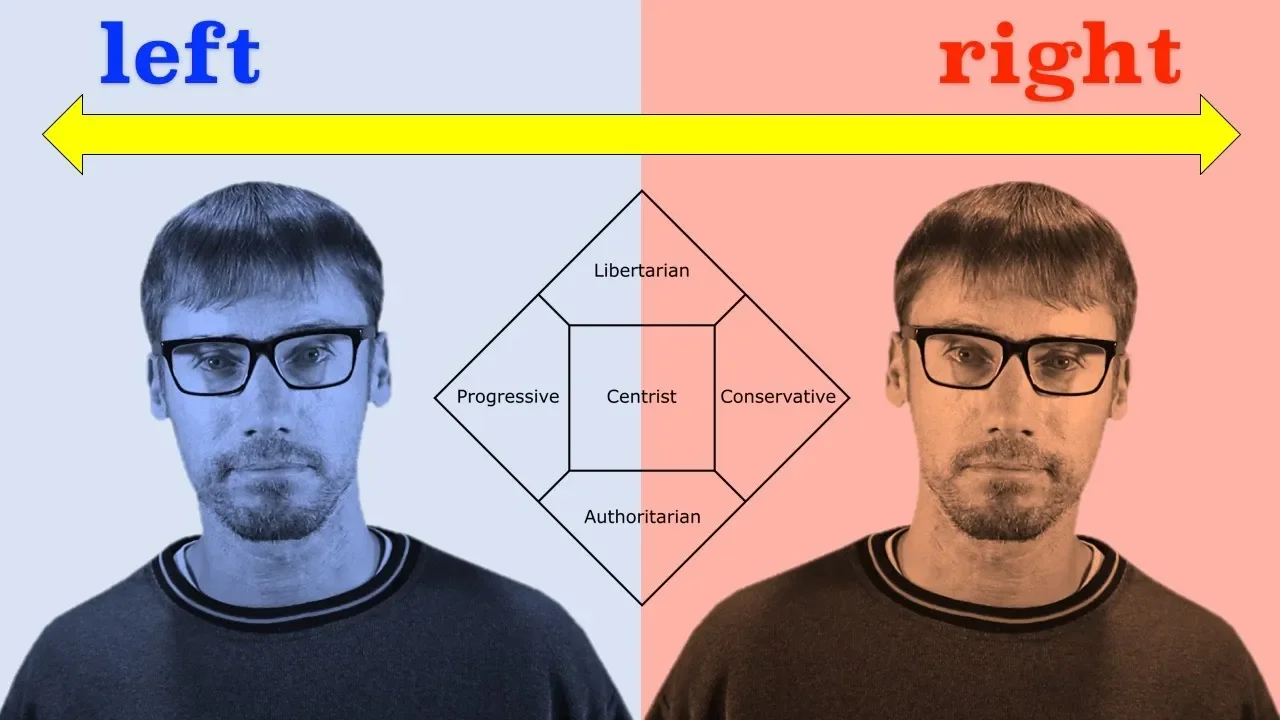
Added:Fundamental definitions of political ideologies, particularly the distinction between left-wing and right-wing spectrums in Western politics.
The core principles of liberal democracy, including representative governance, the rule of law, and institutional checks and balances.
An introductory awareness of major 21st-century political shifts, such as the 2016 US presidential election and the rise of nationalist parties in Europe.
The basic concept of political polarization and how party systems function in both majoritarian and proportional representation systems.
Advanced analysis of Cas Mudde's 'thin-centered ideology' framework, contrasting right-wing populism (nativist) with left-wing populism (socialist).
The study of 'democratic backsliding' and the rise of 'illiberal democracies' (e.g., Hungary under Fidesz or Poland under PiS).
An exploration of the socio-economic and cultural drivers of populist support, such as the 'cultural backlash' theory vs. economic globalization grievances.
Comparative research on populist governance, analyzing how populist leaders transition from anti-establishment campaigners to institutional executives.
36.7K views479likes1:02:21Original Release: 2017-05-29
[Music] We will make America proud again. We will make America safe again. And yes, together we will make America great again.
Thank you very much.
Thank you all for coming um on a Tuesday, but I heard that the explanation is that there's very little to do on a Tuesday. So, I'll take that.
Um this is actually my first lecture in a two-month tour um of Europe where I will do 18 cities in 11 countries. But I feel a little bit like a Dutch cyclist in the tour to France. we uh we tend to peak a bit early in the race and it seems that there's undoubtedly this is going to be the biggest audience I'm going to speak to and I still have two months to go.
So what I'm talking about is populism which is impossible to pretty much open a newspaper these days and not see the term. And so this is what I'm going to do. I'm going to explain what populism is or at least what it is according to me. I'm going to talk about who have been the main populist in European and US history because it's important to realize that populism might be more successful or more in the news now than it ever was. But it has a long history particularly in North America.
We're going to assess how popular the so-called populist wave is today and then what the causes of populist mobilization are and of course what the key reason is why we're all interested what the consequences of populist politics are for democracy in general but particularly for liberal democracy and so let's start with what populism is now populism is used pretty much in all kind of different ways. And there are a couple of interpretations that are popular but that are wrong and also not very useful. One is that populism is pretty much being popular.
If that were to be the case, we didn't need the term populist. We could do it with simply saying popular. Another thing is that populist are just saying whatever people want to hear. We already had a term for that as well. It was demagogy.
Populism is also not necessarily anti-immigrant or rightwing.
Populism is also not just a tool.
Populism actually has a meaning. It is a thin centered ideology that considers society to be ultimately separated into two homogeneous and antagonistic groups.
the pure people and the corrupt elite and which argues that politics should be an expression of the volunteer or the general will of the people. Now let me focus on a couple of aspects here. So I'm saying that it is an ideology. What I mean by that is that it is a worldview which means that I assume that people who use populist discourse actually believe in that. Consequently, if they come to power, these views will influence their policies. And if you look at countries like Venezuela or Hungary, they do. Second, it is a monist ideology, which means that the key categories are homogeneous.
So the people are all the same. They all have the same interest and the same values. Similarly, the elite is not plural. It's not the elites. The argument is that all the elites are identical. While they act as if they're from different parties and have different ideologies, they're actually all the same and more importantly, they're corrupt. And that's the last part that is important. The main distinction for populism is moral.
So whether you're part of the the elite or the people is not because you have a lot of money or whether you hold power.
It is whether or not you have the right values.
And this explains why someone like Donald Trump or Sylvio Berleskone who are among the richest people in their country can still pretend to be the voice of the people because the argument is that despite their wealth, they're actually one of them.
Like they're one of the people because they are pure too.
Now I have a clip that will play from another part about how popular Sound.
[Music] This will be a victory for real people, a victory for ordinary people, a victory for decent people.
[Applause] [Music] [Music] [Music] You're behaving like the mafia. You think we're a hostage. We're not. We're free to go. We're free to go.
[Music] Democracy is not about billionaires buying elections and we will tell the billionaire class and corporate America that they will start paying their fair share of taxes.
It's either the filter, the oligarchs who continue to enjoy the perks.
dimension politic from the elite.
[Music] [Applause] [Music] Whether Wall Street likes it, whether corporate America likes it, together we know what our job is.
[Music] dysfunction.
When someone criticizes the elites for being corrupt, it doesn't necessarily mean that speaker is a populist. The question, how consistently do you use this pattern? whether this pattern is the major framework of your whole rhetoric.
[Music] We are transferring power from Washington DC and giving it back to you the people.
We will face challenges. We will confront hardships. But we will get the job done. Politicians prospered, but the jobs left and the factories closed.
Washington flourished, but the people did not share in its wealth. Mothers and children trapped in poverty in our inner cities. Our young and beautiful students deprived of all knowledge. The establishment protected itself, but not the citizens of our country.
[Music] Okay, so that was Vice News and I think what you saw there and what is important at the end is that almost all politicians will say something populist at some time, particularly of course during campaigns.
But the distinction is how fundamental is this to the broader view of a party.
And so from these people that were all in the clip, I personally think that Bernie Sanders was not a populist. And the reason was not so much because he didn't speak of an us versus them or that he called out an elite, but the core of the distinction was not a moral one.
It was an interest one to a certain extent. It was old school class. What he argued was that the rich, the 1% had different interests and they played the system, but the problem was more the system than the corruption of those people, right? And so that's important to remember. The distinction is what whether it is core to your ideology and whether the distinction the key distinction within the people is based on morality.
So the relationship between populism and democracy is quite complex.
Populism is pro-democracy if you define democracy in its most narrow sense of popular sovereignty and majority rule.
So very simply stated a democracy in a democracy the people elect their leaders.
But the system that we generally call democracy is actually much more than that. And it's more accurately termed liberal democracy. And in a liberal democracy we don't only have popular sovereignty and majority rule. We also have minority rights. We have rule of law. We have independent courts etc. It is particularly with regard to liberal democracy that populism is problematic and the reason is very simple. It's the monism and the moralism.
Like for populist the people are all one.
Anyone who claims to have different interests is not considered legitimate because they're part of the elite and the elite is corrupt and the corrupt don't deserve things.
Right? On top of that, you don't compromise in a moral struggle because if the pure compromise with the corrupt, the pure get corrupted, right? And so some of the fundamental aspects of liberal democracy are at odds with populism. Now, populism can be on the left or on the right.
That is not because of populism itself.
Populism itself says very little about what type of economic system there should be or what type of political system there should be. It is the so-called host ideology.
Almost every relevant populist actor, party or politician will combine populism with an other ideology. simply stated on the right that tends to be nationalism and more specifically nivism which is a xenophobic interpretation of nationalism which can be um summarized in the German slogan like Deutschinander Germany for the Germans foreigners leave on the left generally populism is combined with some form of socialism today much more social democracy than the old school but still and overall right-wing populism is more uh successful in the north both in Europe and America whereas in the south left-wing populism is a bit more successful I will come back to the individual groups soon now in Europe populism actually has a long tradition but mostly in the margins here. It emerged in Russia in the mid- 19th century with the so-called Narotniki. Now the Narotiki were the most unlikely of populist because they were actually a small urban elite who had fought came to the conclusion that the peasants were the real people.
They were there that was where the purity of society was. And so, as urban elites do, well, at least they did, they went into the countryside and went to the peasants and said, "Hey, peasant, you're actually the real people. You should have power."
And the peasants said, "But I'm busy because I'm starving and I don't care what you say." And so that was the story of the Narotniki pretty much [Music] in the early 20th century.
Narotniki ideas had influence in central and eastern Europe in so-called agrarian populist movements. Now of course at that point in time the vast majority of the population was agrarian.
Unfortunately, most of Central and Eastern Europe was not democratic. So, it didn't really matter what the majority fought. The majority had no power because power was in the hands of military and um land owners.
But there were a couple of leaders that came to power. this person who looks a little bit like Delhi but actually was the leader of a Bulgarian agre populist party who made it to prime minister but unfortunately got killed a year later because that was how politics was at that point in time.
After this period, populism disappeared.
Sure, there were populist aspects in communism and in national socialism, fascism, particularly in the movement stage, but fundamentally both both ideologies were actually the opposite of populism. They were elitist.
Fascism, either its German or Italian form, didn't believe that the people were pure.
They didn't believe in democracy. They believed actually that democracy was mediocracy.
They believed that there were there was one leader who had all the major qualities and therefore that leader should hold power.
Communism particularly the form that was most important Marxism Londonism was also very elitist. It saw the communist party as the vanguard of the people.
it would by and large force the people to become free.
Now after the second world war there were a few populist episodes.
The most important was this man Pierre Pujad in the late 1950s in France who out of nowhere got into parliament and then disappeared.
But he did leave a quite important legacy for French politics because there was one man who was elected as the youngest parliamentarian in France history up to that point whose name was Jamarie Le Pen.
Now while we had populism of course here in Denmark, Norway in the 1970s with the progress parties emerging that was a very isolated movement. The real group that we talk about what I call radical right populism or populist radical right started in the early 1980s and became really successful in the 1990s. This is Jamarie Le Pen. And this adorable young girl is not Marin Le Pen, but is Mar Le Pen who is the next Keon who will take over for National undoubtedly in about 10 years.
Jamaril Leapen was a very important politician already in the 1980s and in the 1990s he and the fun national became the prototype of radical right populism. Almost all the parties in other countries would follow their um slogans and um their propaganda.
Now what we forget is that already in the 1990s some of these parties had big successes.
Fun national got 16%.
More importantly the FBO the Austrian freedom party got 27% in 1999 went into the government in 2000. It's just to say that while the great recession that started in 2008 is important, it wasn't the start of the wave of populism.
However, what it did was it boosted right-wing populism and it created an opportunity for a couple of new left-wing populist parties.
Today, populist parties contest elections throughout Europe with increased success.
This is an overview of pretty much 19 countries in the EU and their most important, their most successful populist party.
Some parties actually have more than one. This is the score in the European election 2014.
This is in the last national election.
This is the ranking of the populist party. And so you see that on average the populist party is the third biggest party in the country.
This is the percentage of the total vote for populist parties. As said there are several countries that have more than one populist party. Greece is the most extreme case where you have a left-wing populist and a right-wing populist party which are actually forming a coalition in government at the moment.
And then this is the change and and so the the main reason why I I show this is diversity.
First of all, the parties in black are radical right parties.
The parties in red are left-wing populist parties.
The parties in blue are right-wing populist parties, but not radical right ones. They're mostly combined populism with neoliberalism.
And then the green ones are kind of idiosyncratic which the five-star movement in Italy which is probably going to be the biggest party in Italy um is an example that party is so unorganized that at any level it will take any position and so in certain localities the five-star movement will actually argue in favor of amnesty for undocumented immigrants and in others they want to close the borders for all refugees.
Um what the party really stands for only the leader Beepo knows but he doesn't really want to take any position.
So that's a mess. But unfortunately for Italy it's a mess with a quarter of the vote and according to the polls it's a mess with about a third of the vote and probably in the next government.
What you see as well is that in certain countries there is a majority that votes for populist parties. Hungary is in the worst state. In Hungary, the government party fed is a populist radical right party. But the main opposition party is Yobic, which is an even more extreme populist radical right party.
But in many of the other countries, you see that the score is relatively modest.
The average is around 18%.
Now remember this is the 19 countries out of 28.
If you would actually calculate it on the basis of 28, the average is a bit under 15%.
That is a lot but very very very far away from the majority.
And so while we had now a whole year of is populism going to take over the world, right? Clearly it wasn't.
Not because they fail. No, they were never going to.
On the other hand, now that they don't take over the world, we get this news stories because media need a frame. It can't be complicated. It is either you take over the world or you died.
And so now we get questions. Is populism over? Has populism peaked? No.
Actually, Marin Le Pen had the best result ever for the fun national in the Netherlands did a little bit less well than he did in 2010, but together with another new party, they were roughly equally high. And so populism is going up but mostly it's going up like this.
Particularly whenever populists are in power they tend to lose.
CISA coalition of the radical left which is leading the government in Greece is doing horrible in the polls.
That's what two years of incompetence do to you generally. But it is quite normal for political parties to lose when they get to power, particularly new parties, because new parties promise a lot.
Particularly that they're going to do everything different.
But if you're in the EU, you're not going to do everything different because the EU does a lot for you.
And you will understand that after a couple of months and you start to look more and more like other parties. that is not so bad if you're just an establishment party, but if you're going to change the world, that that looks bad.
And so, by and large, the lesson from this graph table that has way too much information is that yes, populism is very is a relevant factor. On average, the third biggest party, right, influences politics.
But there are many different types of populist parties. Some go up, some go down, some are big, some are small.
Now in the US, populism has a very long history too, but it's more continuous.
I would argue that populism has always been part of US political culture and it goes back to the interpretation of the constitution which starts with the beautiful words we the people. Now the interpretation in the US of we the people is that the founding fathers of the republic really trusted the people and created a system in which the elite could not do too much because power should be with the people. If you read what the founders actually fought then many distrusted the people completely and made a system to make sure that the people would never have the last word.
Which is why we have the electoral college. Which is why we all I a little bit more than you have Donald Trump who lost the popular vote but won the electoral college.
The reason is exactly that. The reason was that the founders wanted to make sure that there was a mechanism that would prevent that the people made the wrong choice. Bit unfortunate.
So in the mid 19th century while the Narotniki were trying to explain to the farmers in Russia that they were really the people in the US and Canada there was a mass movement within particularly the heartland the prairie the plains the Midwest and the west where the people's party also known as the populist were very active at the local and state level. They would actually dominate politics. But throughout history, populism never could make a fist at the federal level. Now, as you all know, US is pretty big. um it has a system that favors the existing two parties and as a consequence it has been very hard for a third party to break that system. They can do that at a local level. They can sometimes govern states but to do that at the level of the whole country so far they haven't been successful. And so what we've had over time was explosions of mostly grassroots populist movements that really came from the people who were upset with corruption or other things that would get some success in states and then peter out. Most of the time their issues would be adopted by one of the two big parties.
Initially it was the Democratic party.
It was the Democratic Party that actually took up the issues of the people's party in the early 20th century. More recently, since the second world war, it has particularly been the Republican party that have taken up the issues of populist movements.
Now, in the 21st century, the great recession, which to a certain extent hit the US harder than Europe, but also much shorter. It hit it harder mostly culturally. I would argue Americans are amazingly optimistic.
Like it's it's it's part of their culture that they always think that a of course they live in the best country in the world history ever. Um but also even if things don't go well, it will get better.
The great recession was not just that the bubble burst but was also the realization that the current generation will be worse off than the previous generation.
And that goes against the American dream. That goes against the whole really idea of what America is about.
And as a consequence, the great recession had a massive effect even though the bailouts took care of most of um the economic problem at least in the short run. So while Europe was still in crisis in 2010 2011, certain countries are still now pretty much the whole crisis theme was disappeared in 2009 already in the US.
But it gave it gave fuel to two movements. The one that you probably have heard about is the Tea Party which is here. I went to one of their meetings in Indiana. Was fun. Um so the Tea Party combined what they call astroturf and grassroots. Now grassroots means pretty much bottom up like regular people are coming together. Astroturf is when big organizations that have a lot of money are kind of pretending that they have a grassroots movement and so they pay people to demonstrate or they by and large organize things for people.
Now most liberals act as if the tea party was only astroturf. It was as if it wasn't genuine. Unfortunately for them it was. I taught for a while in a very small town in rural Indiana. School had 2,600 students.
Town probably about 40,000 people. Every first Monday of the month about 300 people would come together to talk about issues mostly about the constitution, about the Muslim Kenyan president and all those kind of issues, right? But it was 300 people every month. That is an amazing level of activity without anyone financing it. Right? These were people mostly middle class which in the US means working class. Um who had that's also part of optimism that like you define yourself a class up. um who would rather than spend their TV like their their evening for the TV would sit together. Um even today if I go to one of the places in my town um there will be five six people sitting together um discussing the constitution right and so the tea party was big it had an effect on the Republican party for a bit and then allegedly it died out. Now, Occupy Wall Street was very big among my friends and their lefty journals, and it was also big among their lefty friends in other countries.
But when I was at my little school in Indiana and I asked people about Occupy Wall Street, most of my students had never heard of it. They study political science, right?
Now I was also this is Occupy um Ottawa in Canada but I was also at Sugatti Park at Wall Street and Occupy Wall Street was a very small movement.
It was also a movement without any organization.
And so what happened once the city of New York had enough of the occupation and the other cities had as well, they moved them out and it imploded. No effect whatsoever institutionally.
The Tea Party would still run things in many localities and states.
There was a short wave of anti-immigration laws in almost all of the states that these were introduced.
Tea parties played a major role.
But you could argue that the political legacies of both these movements were visible in the 2016 election. Sanders was in many ways the voice of Occupy Wall Street. Even though he himself was irrelevant in that movement, many of the issues that he addressed were issues that were at the forefront of Occupy Wall Street. Although, as I said, I would argue that Sanders used a less populist discourse. He did speak about the 99% and the 1%, but those are objectively true.
Like, we have studies that show that up to 85% of all the new gains that were made since the Great Recession have gone to 1% of the population in the US. And he would he would just highlight those things, not saying those corrupt bastards have taken everything, right?
He would just say, "Look, the system works like that. We have to change that."
Trump was probably still thinking that he was a Democrat at the time that the Tea Party was around.
He has no connections to the Tea Party.
There were actually several of his competitors in the primaries that were former Tea Party favorites like Marco Rubio or Ted Cruz.
But if you see what Trump stood for and if you see what the grassroots Tea Party group stood for, it is almost a 100% overlap.
Because while the media often focused on the small government and low taxes, etc., etc. When you actually went to the meetings, there was always Islamophobia. There were always a lot of the banners were against immigration, were pro abort were pro um anti-abortion, but pro- repression of current abortion things. And so the great recession is to a certain extent found its voice later.
Now the question then of course becomes why is populism successful and more importantly why is populism successful now?
Oddly enough we don't really know.
There are hundreds if not thousands of articles now about populism.
But we know quite a lot about why a certain form of populism is successful.
So for example, we know quite decently why radical right populism at the moment is successful. But a lot has not so much to do with the populism but actually with their nivism with their anti-immigrant stand. But that cannot explain why sizes is successful which is actually pro-immigrant.
there. So there are a couple of points and they're broader.
The first one is that important issues are not addressed by elites or are not addressed adequately.
But this is not an objective statement necessarily.
It is true particularly in the 1990s some of the key issues for a sizable portion of the population were not addressed.
EU integration and immigration were kept off the political agenda by the main parties in countries like the Netherlands or Germany or all the elites simply agreed on it.
It wasn't that there was a conspiracy to keep European integration off the agenda in many countries just all the elite believed in it and so you had no choice and you don't have a debate on issues that everyone agrees on. So it wasn't discussed but the point is that many people feel that these issues are not addressed and whether that is true or not is irrelevant. When people believe it is true they will hand they will act on the basis of that.
My Twitter feed is of Islamophobes as any type of broader medium these days, particularly Dutch Islamophobes, and they will go on and on that you can't say anything about Islam in the Netherlands. Like, we haven't talked about anything else since 9/11.
And by now the Netherlands, and I'm sorry to disappoint you, Denmark, because you come in well at second, but the Dutch have the most Islamophobic political discourse.
And yet there is a sizable portion of the Dutch population who genuinely feels that you can't say anything about Islam or about multiculturalism.
And because they believe that, they will vote on the basis of that.
Second point, elites are perceived as being all the same. It doesn't matter whether I vote center left or center right, they will do the same.
Again, not without merit.
Right? Particularly in the 1990s, most center left parties, social democrats adopted a so-called pragmatic third way position which embraced neoliberalism and which made the difference between center left and center right ideologically pretty small particularly because many of the center right parties responded to that by coming a little bit more to the center on social cultural issues. And so if you see the difference between seu and espeay in Germany that's not stunning. The difference between Tony Blair and David Cameron which was between labor and Tories was not that big particularly if you go 20 years back when these were different worlds.
The other thing is as I said and you might notice that I'm a little bit euroskeepic.
I'm actually way less euroskeepic since Brexit than I was before.
Um, and so if Ar does anything, he he might maybe one day make me pro-Uropean.
Um, but the EU is a reality and the EU is a reality that influences many policies.
Anyone who's in the Euro zone is not individually responsible for monetary policy which has massive effects for your economic policy which has massive effect for everything else. So it is true elites are more the same now than they were 30 years ago. Whether that's good or bad doesn't matter, right? It's just the reality. And so one of the problems is they don't campaign as if there is an EU, right? And so quite often center right or center left parties will campaign on issues and make promises that they actually cannot uphold within the EU structure.
And that of course creates the idea that they're not just all the same, but they're also all corrupt.
On a more positive note, people have more efficacy, which means they have more political self-confidence.
This is the consequence of what the American political scientist Ronald Inglehart called cognitive mobilization, which means mostly that people are better educated, but they also feel more confident on political issues.
Now that is good because now they are critical citizens.
They hold their leaders to account.
That is exactly what we always wanted of democracy. But we didn't have in the 1950s, most of the 1960s, Catholic people voted for the Catholic party. Workers voted for the Social Democratic Party. Upper middle class voted for the Liberal Party.
They didn't make choices. they just did because they lived in subcultures and that's what you did.
Now when a leader says you should do this, a lot of people say why.
They didn't used to say that. And so cognitive mobilization is creating problems for the way politics was always done. So one of the things that we often hear is well why is populism successful?
Why are mainstream parties so bad?
Because they have bad leaders. Now, far from me to argue that the leaders are particularly skilled today, but it's not as if the old leaders would do that much better with the current people.
Like I remember, because I'm very old, I remember some politicians of the 1970s.
They had very low people skills.
right? They would just bite thunder at how the world was. I will mention because there's at least one Dutch person here. Um the leader of the social democratic party at that point in time, Yope Denell. Yope Denell was not a man who listened to what the people thought.
He knew what he thought and he knew what older people should think and that's what he told them. And many people workers said okay right if yoke denell would be here today they wouldn't say that and he would be gone within a year or two because and he come together there is a completely different infrastructure in which politics takes place.
First of all, the media structure is much more favorable towards populist, towards any outsider, but particularly populist.
Up until the 1980s, the vast majority of the media that we all pretty much consumed was the same, right? It was state TV, state radio.
There was by almost no private, only a couple of channels. Almost everyone got the same news.
Most of the newspapers were linked either to a political party or to a trade union or something like that.
They were gatekeepers. They decided on what came in the news and what came not in the news. Nowadays almost all media are private based on money. They have to make money.
So what the in America they say they chase eyeballs, right? You need readers because if you have a lot of readers, you can get advertisement. And if you get advertisement, you get money.
How do you get readers?
By scandal.
By polarization. Conflict. That's what people like.
And who provides good conflict?
Populist.
Now, not just because of what they say, but quite a lot of populists are very good at what they do.
Even Donald Trump, and it sounds bizarre, but if there's one thing that Donald Trump understands way better than anyone else, it is the media.
Donald Trump understands because he is a media creation and actually as a businessman has built his business largely on his media profile. He understands that the media is completely selfobsessed.
Call the media out and you are in the news for days.
That is why he all the time writes about the fake news and the failing New York Times because for days the New York Times is going to write about Donald Trump calling them failing and they're going to show how they are not failing. But all the time Trump is in the news right now. Well, before Trump started to tweet, he had Ves in the Netherlands tweeted.
Not as crazy as Donald Trump does, who has these kind of massive explosions of tweets.
Well, this is much more measured, or at least used to be. He would tweet twice a day.
but clever ones, just provoking enough that the media would go with them, but not so provoking that they would ignore them. And so what would he do? He would tweet something, the media would read it and would say, "Oh, builder said this." And then they would go to other politicians and say, "Wilder said this. What do you think?"
Perfect strategy because you set the agenda. the other ones have to respond to what you said and you're never actually criticized because he never gave interviews, right? So, he was totally protected from just statements like that's a dumb tweet, right? Or how are you going to achieve that? No, that was for the other politicians to fight over. But all the time it was about builders, builders, builders was about his issues. Like that is what populist actors like Tas, like Marin Le Pen, like Wes, Donald Trump, Christian Hans, Christian Straa in Austria, all of them are really good at playing media.
Social media plays a role, but social media only is effective if it can break into the mainstream.
Like if Trump had only tweeted and CNN had ignored him, we wouldn't have the same effect. But of course, when you have a million followers and everyone on Twitter is talking about what Trump is tweeting, CNN is going to cover it because they need eyeballs.
Now, the consequences of populism finally are pretty big, but they're also good.
One of the best things about populism, particularly when in opposition, is that they politicize or repoliticize certain issues.
So the politization of immigration, I have talked about the politization of European integration.
Today you could say the politization of austerity which also was just a doma technocracy.
Um but you can have even smaller things.
My favorite example is public is public transport. doesn't work well in the US because they don't really know what public transport is but you do and one of the consequence of European integration is that there has been a lot of pressure on privatizing public transport.
Now generally privatization means that you become more efficient which means that you invest more in those trajectories that are profitable and you minimize the ones that are not profitable.
Now the effect of that has been overall in most countries, more expensive services, more spotty services and the periphery being excluded from the services.
Now, you would say those people are going to be really upset about those businesses, but they're not because they're socialized with the idea that it's the government that takes care of public transport. And so, when the train is again not on time in the Netherlands, people are not angry at whatever company it is that runs that specific train. They're angry at the government because the government should take care of good public transport.
And so the argument would be if that would ever become an issue, well, we can't do that because we need to privatize. This is like the deal that we have of Europe. And there are issues to that. The point is that if this was really something that the majority of the people wanted, they should be able to do it. The argument that we have to do things because we're in the European Union is is only a convincing argument for people who really want to stay in the European Union.
But there is a political agenda outside of that.
There are certain points that you might find more important than previous deals you have made. That is repolidization.
On the downside, it leads to polarization.
And the reason is simple. As I said before, the debate is moral.
Corrupt versus pure.
You don't treat corrupt people the same as other political opponents. And so populists don't have political opponents, they have enemies.
The problem is populism when successful often leads to anti-populism and anti-populism pretty much used the same moral dynamics.
The Hillary Clinton campaign is one of the best examples of how disastrous that can be. Hillary Clinton's campaign was more negative than Donald Trump's.
Now, that is stunning.
But what's even more stunning is that Donald Trump's campaign was more focused on issues than Hillary Clinton.
And Trump had almost no focus on issues.
So that tells you how little Hillary Clinton had because what Hillary Clinton's campaign became as soon as Trump was the candidate is Trump is bad and we are good.
that leads to further polarization and the US is a very good example. The partisanship today is insane. You see, for example, Democrats who are now like putting all their trust in the army and the CIA to defend democracy, whereas Republicans think that Putin is like a swell guy, right? That's the partisan drug. It's a direct consequence of polarization and it by and large undermines any possibility of compromise which is the basis of liberal democracy.
What you see is an increased use of plebitarian instruments mostly referendums but most of the time it's opportunistic.
So they will use it to strengthen their their cause their case. However, if it doesn't go well, they will just dismiss it.
Um, my big friend Victor Orban, the prime minister of Hungary, had um a referendum on the EU migration deal, the redistribution of immigrants. Deal was already dead by the time the referendum was held, but of course, that was not really the point. However, he lost a referendum.
Not because people didn't vote against immigrants. That's always a winner. But he didn't get turnout. Ironically, he didn't get turnout because he himself had raised the turnout level because he was afraid that the opposition would use referendums against him. So, what does the voice of the people do? Does he stick with the outcome of the referendum? No. He just says, "Well, there is a majority. I feel it. So, we're going to do this through the parliament.
The worst example, Cass in Greece.
Cas is involved with negotiations about a bailout with the EU with the TA doesn't go anywhere. So, he thinks what I need is a referendum because if I win a referendum and I show that the majority of the Greeks don't like the bailout, then everyone else is going to agree.
logic.
He wins it. He wins his own referendum.
61% said no to the bailout.
EU doesn't move. He ignores his own referendum.
Right? And so referendums are always used strategically. This is not only by populist, but by populist it stands out in particular.
The most worrying thing is the weakening of non-majoritarian institutions, courts and media. It's one of the reasons why many people are very worried about Donald Trump, right? So-called judge, fake media, right? It's important those are not just words. this delegitimation of these institutions and his argument is always look I've been elected by the people nothing should stand in the way of what we want not I but we the people want um Venezuela is a painful case of how independent courts and media have been killed but Hungary is doing this within the EU.
One of the ways to get around the Supreme Court was because Orban is very smart. He's surrounded by lawyers and so he doesn't do things in the Polish way where you make big statements and then don't get anything done.
You figure out how other countries do it and you pick parts of that which all individually don't look bad but together are bad.
So what does he do? First of all, he lowers the retirement age of the judges.
Turns out that's a big group gone. So you have to appoint new ones. Those are of course your friends.
Still no majority. So you extend the number of judges.
Bam. You have a majority of the Supreme Court. The only thing that could still hold you back.
Media problematic.
Even the EU, which is really toothless towards Hungary for all kind of reasons, cannot really accept when the government closes important media.
So you don't close them, you buy them or better your friend buys them.
Nip Shabbatak which was the most important opposition paper in Hungary was bought by a friend of Orban someone who five six years ago had very little money and then turned out to have enough to buy a newspaper for 10 million.
And so he bought it. That's legal, right? It's capitalism. You can buy whatever you want.
But now he had the newspaper and he said, "Well, I've done a study. Turns out there's no market for this newspaper, so I'm going to fold it."
Totally legal. Can't do anything about it. But it's well, but it's the last opposition newspaper that's gone.
Now when it all really goes bad, first of all, populism creates an illiberal democracy, which means that you have now a system where you still have by and large free and fair elections, but you don't have other aspects of liberal democracy. So you don't have rule of law, you don't have independent media.
And if it really gets bad, it becomes an autocracy where you don't have free and fair elections anymore. And that's where Venezuela is today.
So in conclusion, populism has a long history in Europe and the US, but was largely marginal before the 21st century in the sense of it was there particularly in the US, but it could never become a relevant political force.
It is peing in the early 21st century, but its popularity is overstated. Right?
There are very few countries still today that have populist in power.
Its relationship to democracy is complex.
Populism can be both a corrective and a threat for liberal democracy.
Very simply stated, it often ask the right questions, but it gives the wrong answers.
And then finally, populism is an illiberal democratic response to undemocratic liberalism.
I can let that sink in. When I came up with it, I knew that it was going to be quoted. So, I needed to keep this. But there's more to it than just fishing for quotes.
I have made it clear, I think, by now why populism is illiberal democratic.
But the response to undemocratic liberalism is many points, many important issues that used to be political have become non-political or at least are put outside of the electoral arena. Think about monetary policy, which if you're in the Euro zone are now in charge is the European Central Bank, right?
experts, techtocrats, but also many other issues, death penalty, which is now a legal case. It's not a political case. And so, liberalism, whether it's neoliberal, economic, or broader liberal, social cultural, has made a lot of taken a lot of issues outside of the electoral agenda.
That's where the undemocratic comes in.
And populism is an illiberal democratic voice against it that says this might be illiberal but the people want it and we should have a right for that. Thank you very much.
Up Next
16:30
Populism & Politics: Economics vs Culture with Matthew Goodwin
@ubscenter
54.4K views•2019-11-13

24:30
BRICS Pay and de-dollarization: A New Financial Order Emerges? | 55 chars
@DannyHaiphongYT
164.6K views•2024-10-22

7:33
Government Surveillance Methods: 10 Ways You May Be Watched
@BeAmazed
1.6M views•2017-04-09
10:19
Explaining the Saudi-Iranian Proxy Conflict in the Middle East
@Vox
18.2M views•2017-07-17
Related Study Plans & Knowledge Roadmaps
Structured learning paths in Political Science
political-science
Economic Statecraft: Sanctions & Chokepoints
01Foundations of Geoeconomics and Economic Statecraft
02The Mechanics of Weaponized Interdependence
03International Sanctions: Types, Implementation, and Efficacy
+ 2 more learning modules
12h5 modules
Explore Roadmap
political-science
Central Bank Independence: Politics & Policy
01Foundations of Central Banking and Monetary Policy
02The Time Inconsistency Problem & Inflation Bias
03The Delegation Model and Designing Independence
+ 2 more learning modules
12h5 modules
Explore Roadmap
political-science
Consociationalism: Power-Sharing & Stability
01Democratic Dilemmas in Divided Societies
02Introduction to Consociational Democracy
03The Four Pillars of Consociational Design
+ 2 more learning modules
12h5 modules
Explore Roadmap
political-science
Rebel Governance: Legitimacy, Economy & State
01Foundations of Rebel Governance and Statehood
02Establishing Political Legitimacy and the Rebel Social Contract
03Wartime Economies and Rebel Resource Management
+ 2 more learning modules
14h5 modules
Explore Roadmap