






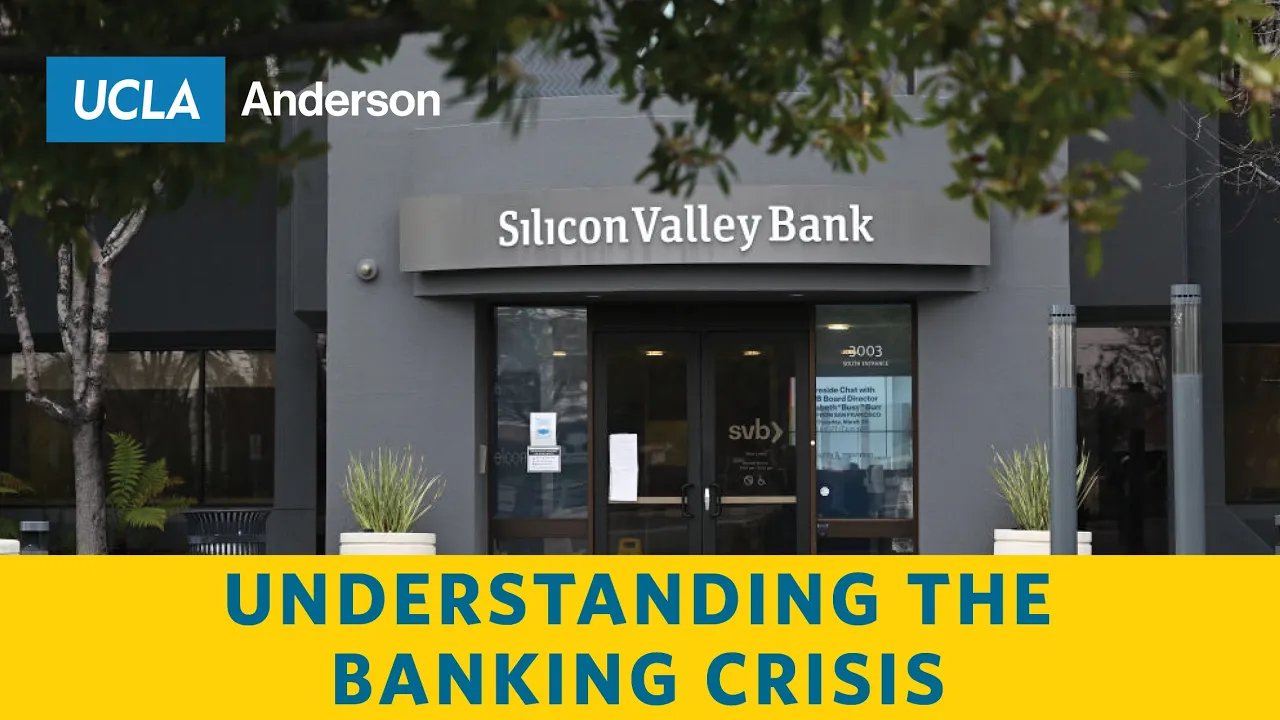












Silicon Valley Bank collapsed because it invested depositors' money in low-interest treasuries (2%) when rates were low, but when the Federal Reserve raised rates to combat inflation, those bonds became worth only 75 cents on the dollar, forcing the bank to sell at a loss during a bank run; the bank was particularly vulnerable because 88% of its accounts exceeded FDIC insurance limits, and its business model of lending to tech companies and investing in mutual funds created a shell game where depositors lost money when the bank failed.
Silicon Valley Bank Collapse: Economic Analysis and Lessons
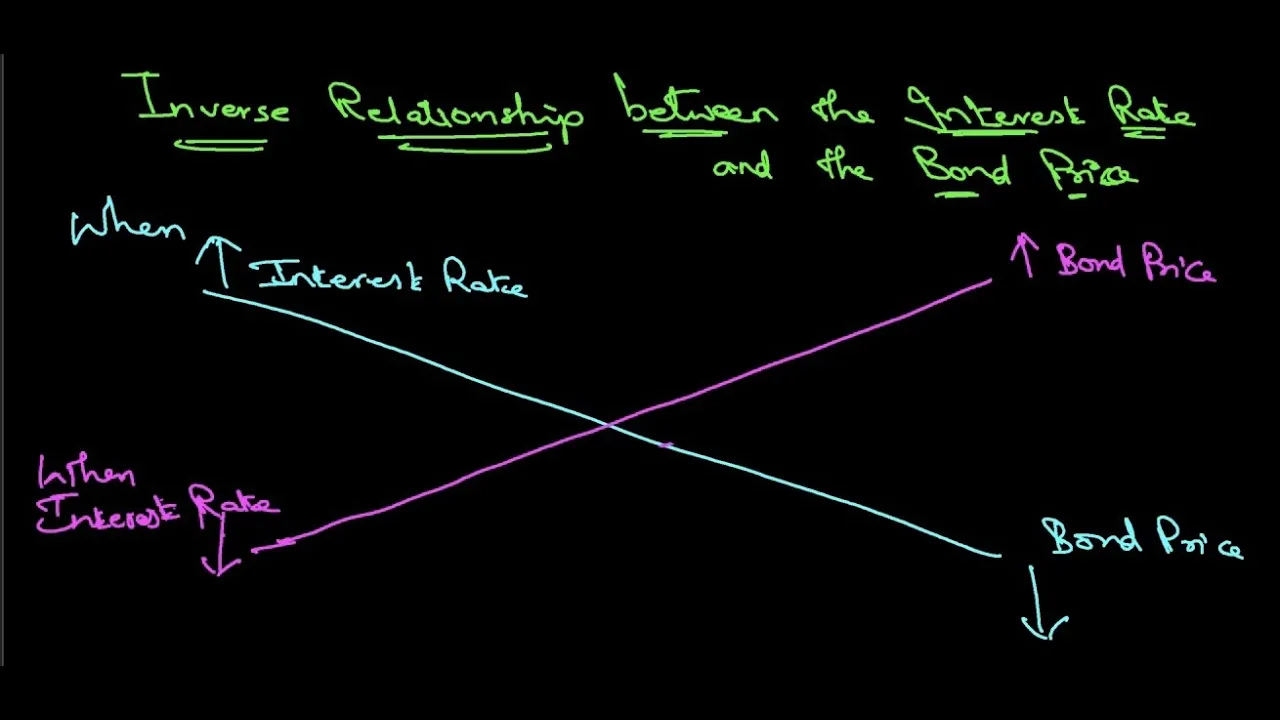
Added:The inverse relationship between bond prices and interest rates, specifically how rising interest rates devalue fixed-income assets.
The fundamentals of fractional reserve banking and the economic distinction between bank liquidity and solvency.
The role of the Federal Deposit Insurance Corporation (FDIC) and the significance of the $250,000 deposit insurance limit.
Basic monetary policy, including how central banks use interest rate hikes to combat inflation.
Macroprudential regulation and the impact of the Dodd-Frank Act rollbacks on medium-sized regional banks.
The mechanics of central bank emergency lending facilities, such as the Bank Term Funding Program (BTFP) established post-collapse.
Asset-Liability Management (ALM) strategies, including hedging interest rate risk using financial derivatives.
Systemic risk assessment and contagion theory within the global financial system.
287.5K views11Klikes14:22Original Release: 2023-03-13
here's what happened a couple of things first of all we're raising rates we had the covid money coming in right and you just heard there call this covid money well they wanted to invest it they needed to put it someplace and invest it because they had Silicon Valley Bank had so much money coming in from from Cove had and so what did they do they bought treasuries and at the time you could buy a 10-year Treasury and you would get two percent interest guaranteed at the end of 10 years that was pretty good back then but now treasuries are selling for about five percent interest and you don't get that until the end of the 10 years so when you buy something a 10-year treasury you're buying it for 10 years if you have only eight years on it you can sell it but you're gonna probably have to sell it at a discount if the new ones are paying more so they invested the the money in treasuries at two percent just let's remember that what they had um in the bank if you will they owed 195 billion dollars that's to the people who have put their money into checking accounts and savings accounts mutual funds they owed 195 billion dollars they had 208 billion on the books it's a 17 billion dollar when you have people all over the world starting to say I think the bank is going to collapse they start to take their money 17 billion dollars can go that fast there was a clog in the system they couldn't get the money wired out fast enough so they decided they needed to sell and then they announced we're going to sell some treasuries well once they saw that they were selling 10-year bonds at two percent interest and the market was saying well that's only worth 75 cents on the dollar now and Silicon Valley Bank was taking it they knew this a fire sale this bank is in trouble that's what started all of the run on the bank now you probably have FDI Insurance FDIC insurance if you have FDIC insurance it's to stop runs on the bank however Silicon Valley Bank is different it's very different I think it's 88 percent of their accounts are not covered by FDIC why because they're giant companies that are using payroll and uh keeping their money in the bank uh as as the place where they can run their company so they they have more than 250 thousand dollars in account if they also use the bank for a mutual fund they found out Friday they were also screwed see this bank loans money to these companies these tech companies and they loan them out venture capital and so they loan them the money to operate and to be able to do everything they can over the next year well they've got to put that money somewhere so the bank loans it out it's basically the depositor's money they loan the that savings account of yours per se uh and loan it to this Venture Capital firm the or the uh or the uh Tech startup and the tech startup then says where do I put all this money and Silicon Valley Bank says oh just in my other hand just give me that money back and we'll invest it in mutual funds for you we'll invest it in very safe things like BlackRock so they did and the tech companies thought they were safe because it's invested in very secure places like BlackRock except what the bank didn't say except in fine print is that all the money that you had invested in BlackRock was not yours anymore it was it was uh under the name Silicon Valley Bank so when people started to call and say hey BlackRock my money's safe they said you don't have any money your money is invested in Silicon Valley Bank and because their name is on it they're counting that as an asset and now that asset has to go to pay creditors so they lost their money this is a giant shell game we have created nothing but a shell game and the FED is the one that's causing this Collapse by the raising of the rates but if you don't raise the rates what happens inflation goes out of control why because we have printed and loaned too much money out okay we'll pull it back in well the way you pull it back in is Raising interest rates if you raise the interest rates bonds have to pay a higher yield and So when you buy a bond you get more money back and if somebody gets into trouble they have to sell their bonds exactly like Silicon Valley and they have to take a haircut and then the entire thing collapses but here's the scariest thing this is what the FED has set out to do they want to see risky things go away they want to see failure they need people who are not stable to go out of business stop spending money so we can suck all that money back in but when they do collapse it and our economy is in this kind of shape you then have a domino effect because nobody's in great shape and the banks are playing a giant game so then people can't pay the paycheck and then that paycheck fall causes you to default on your auto loan or your house loan and that makes another bank fail we're at the place I told you in 2008 we would be we've made the 2008 problem much bigger and there's no way out once you start printing money there's no way out and what did we do well the FED said we're not doing tarp no no we've got something entirely different it's got a different name and everything but we're going to cover all of those accounts oh oh okay so we're backing we're backing that now yeah but it's not your money it's not your money it's the fed's money it's the fed's money yeah it's the money that the banks gave to us to put aside for insurance in case something like this happened oh where where did the banks get that money stuff well I mean are these the banks you bailed out yeah and weren't you just giving them trillions of dollars of course we did but but they were paying in to this account oh okay so the money you printed that I'm on the hook for you gave to the bank but they didn't use any of that money for that insurance no no this is totally different okay so now they're going to be protected and I don't have an answer for you today because all of the answers are bad answers should we should we back that no no the the constitutionalist capitalist in me says that's that's really bad okay so we don't back it well no no because the guy who would like to see the entire Western world not burn down to the ground who would like you to bail it out just to give us some more time but that puts us right back where we were so I don't have I prayed hard today uh what do I tell people work on your spiritual health because this is coming at some point it's coming it has to it has to now the Washington Post said today that um the bank's death marks both a sobering uh sobering and uh salutary moment here the central bank is sharply increased interest rates over the past year hoping higher borrowing costs would slow the economy down and take the steam out of high inflation this is what the FED wants to see they want to see a tightening of the financial conditions great they're on it the Washington Post with 209 billion dollars in assets the bank was just 1 18 the size of JP Morgan Chase the nation's largest still Wall Street was rattled by their abrupt end Bank of America was down nearly 12 percent in the past five trading sessions they're down another five or about four and a half percent today some banks are down as much as 10 percent today before trading even started the banks that serve the riskiest part of the country and the uh economy are the ones in trouble now this is the Washington Post I want you to listen to this Banks like svb and silvergate capital San diego-based bank that catered to cryptocurrency users are the ones getting into trouble oh it's not a run it's not a run on the business model of the bank it's uh it's not I'm sorry it's not a run on the business model of the banking industry in general it's just the business model of this bank so in other words if you are making risky loans uh to uh to attack or if you're investing and doing anything at all with cryptocurrency you're the problem hmm that's interesting I'm going to tie some of this together here we've got a lot to go over in just a second okay so uh here's something you probably didn't know the New York Times is reporting today uh that good thing this bank has been saved Silicon Valley Bank was in many ways a climate Bank when you have the majority of the market banking through one institution there's going to be a lot of collateral damage Community solar projects appear to be specially hard hit Silicon Valley Bank said uh it LED or participated in 62 percent of financing deals for Community solar projects their smaller scale solar projects also often serve lower income residential areas don't worry don't worry the FED is covering all of this the devastation comes at a critical moment uh it is Central to cut the greenhouse gases that are dangerously heating the planets as the New York Times the federal government depends on climate tech companies to develop the Innovations needed this is going to set the climate change industry down and set them back for years hmm gee well good thing we're not drilling for oil good thing we're getting rid of all of our backup power plants isn't it Home Depot co-founder said the Global Lending firm Silicon Valley Bank went broke because it was woke now the rising interest rates are real really wide but if you want to look at their business model these guys are woke activists he said instead of protecting the shareholders and their employees they're more concerned about the social policies as recently as this month just days before it went into receivership with the FDIC Silicon Valley Bank discussed decarbonization gay rights the black Venture ecosystem and so much more well they were woke good thing good thing by the way they were purchased this morning by a British bank because Great Britain was worried about their tech industry as SPD program funded a lot of their stuff too so that's good news
Up Next
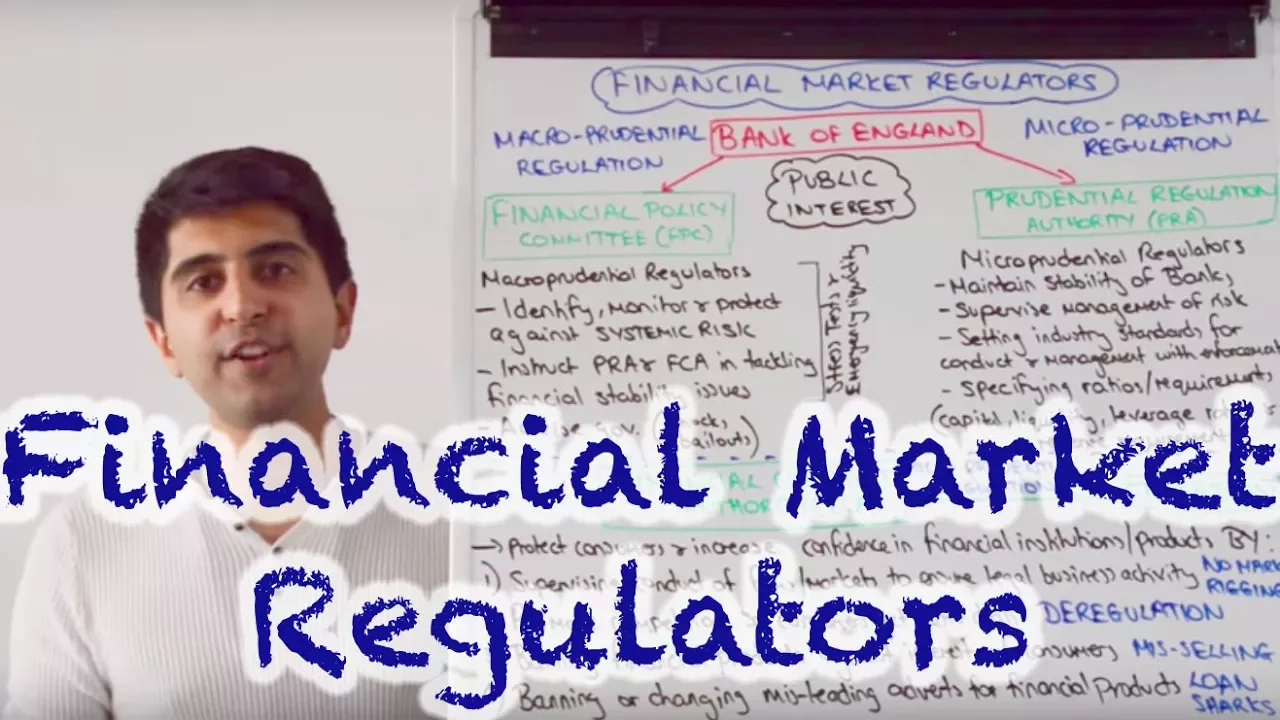
8:15
UK Financial Regulators: FPC, PRA & FCA Explained
@EconplusDal
116.1K views•2017-05-28
5:07
Impact of Yuan in Indo-Russian Trade Amid Sanctions
@WION
261.9K views•2022-07-01
10:33
Behavioral Economics Explained: Rationality, Nudges, and Risk
@crashcourse
1.1M views•2016-03-12

113:18
The Age of Easy Money: Fed & Inflation | Full Documentary
@frontline
21.2M views•2023-03-15
Related Study Plans & Knowledge Roadmaps
Structured learning paths in Economics
economics
Sovereign Debt: Defaults, IMF & Restructuring
01Introduction to Sovereign Debt & Government Bonds
02Debt Sustainability & Credit Ratings
03Anatomy and History of Debt Crises
+ 2 more learning modules
12h5 modules
Explore Roadmap
economics
Market Design: Matching Theory & Gale-Shapley
01Introduction to Market Design and Price-Free Markets
02Two-Sided Matching & The Gale-Shapley Algorithm
03School Choice Systems and Mechanism Design
+ 2 more learning modules
10h5 modules
Explore Roadmap
economics
Impossible Trinity: Forex, Capital & Policy
01Introduction to Monetary Policy and Central Banking
02Exchange Rates and International Capital Flows
03The Mundell-Fleming Model
+ 2 more learning modules
8h5 modules
Explore Roadmap
economics
Healthcare Economics: Market Failures & Systems
01Introduction to Healthcare Markets and Market Failure
02Asymmetric Information and Adverse Selection
03Moral Hazard and Insurance Design
+ 2 more learning modules
12h5 modules
Explore Roadmap