










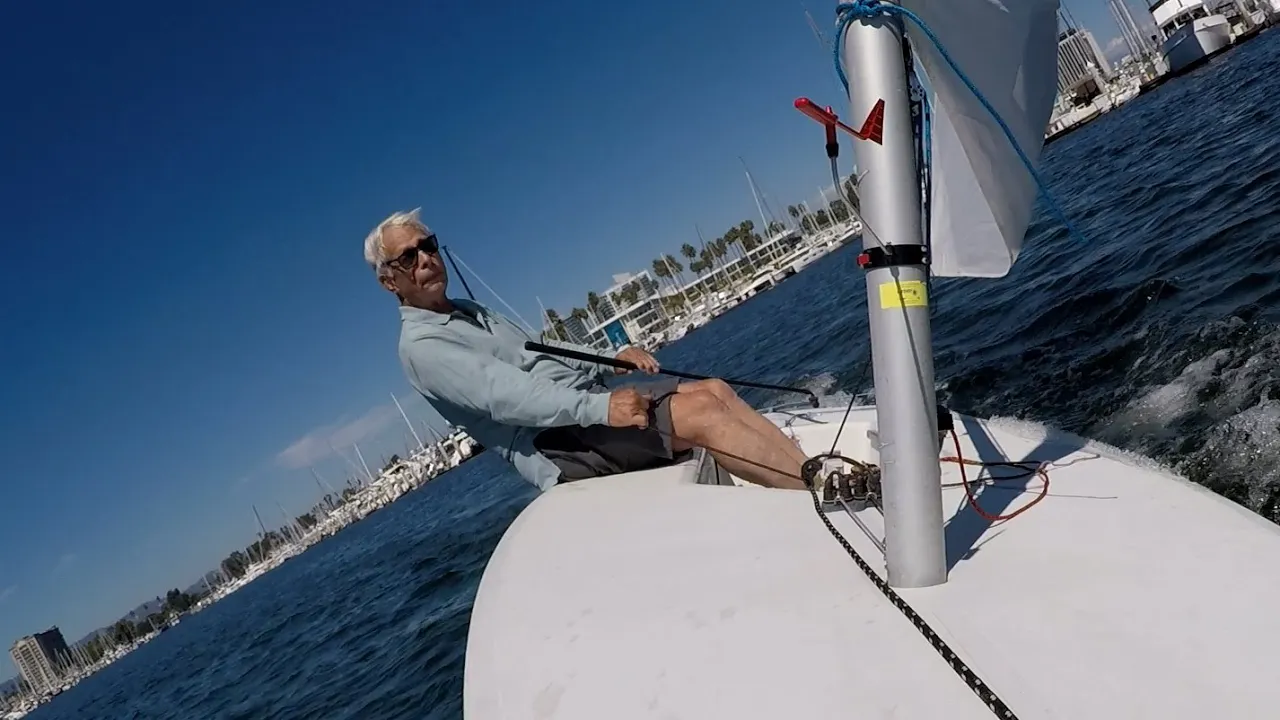








The three main points of sail are upwind (close-hauled) where sails are pulled tight and the boat points into the wind, reaching (beam reach) where sails are adjusted to a mid-position and the boat sails across the wind, and downwind (running) where sails are let out fully and the boat sails with the wind at its back; proper sail trim according to wind direction is essential for controlling the boat effectively.
Sailing Basics: Understanding the Points of Sail
Added:Basic anatomy and parts of a sailboat, including the mast, boom, mainsail, jib, rudder, and keel.
The concept of wind direction, specifically how to identify where the wind is coming from using indicators like telltales or waves.
Fundamental physics of sailing, particularly how a sail acts as an airfoil to generate lift rather than just relying on wind push.
Basic nautical terminology for directions, such as port, starboard, bow, stern, windward, and leeward.
The mechanics of changing direction relative to the wind, specifically mastering the maneuvers of tacking (turning through the eye of the wind) and jibing (turning away from the wind).
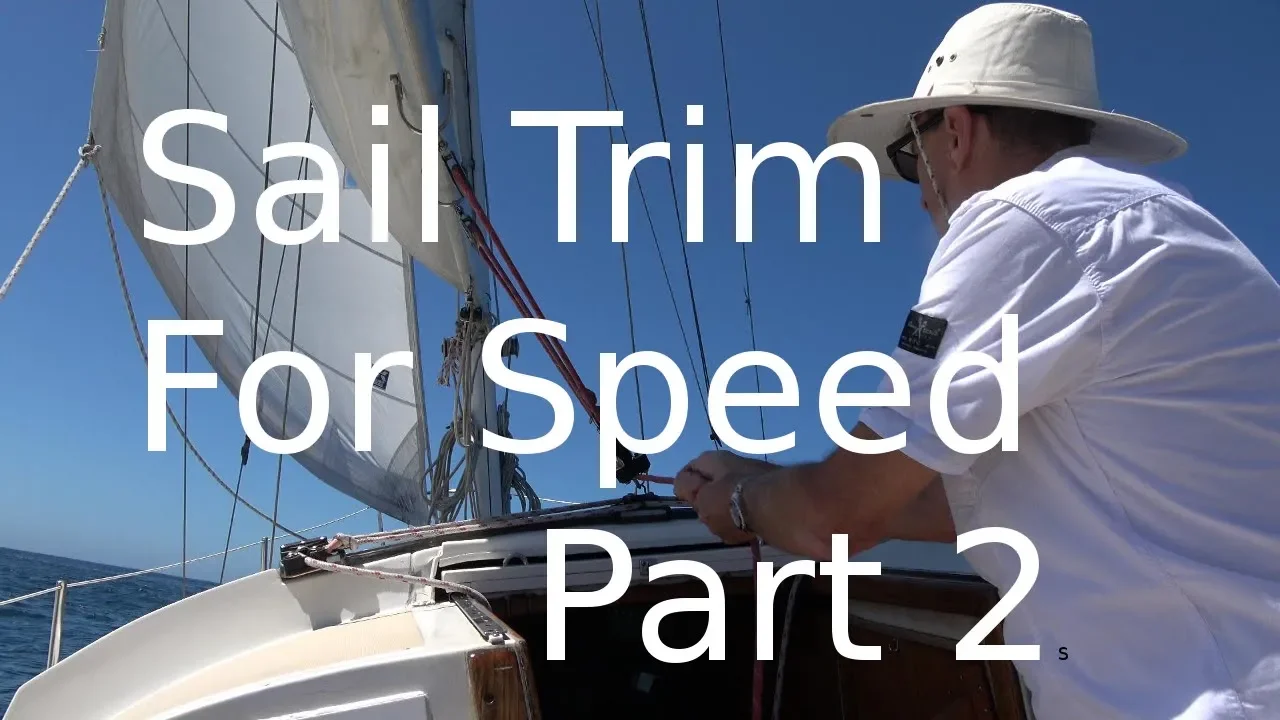
Advanced sail trim controls and adjustments, such as using the traveler, boom vang, outhaul, and cunningham to control sail draft and twist.
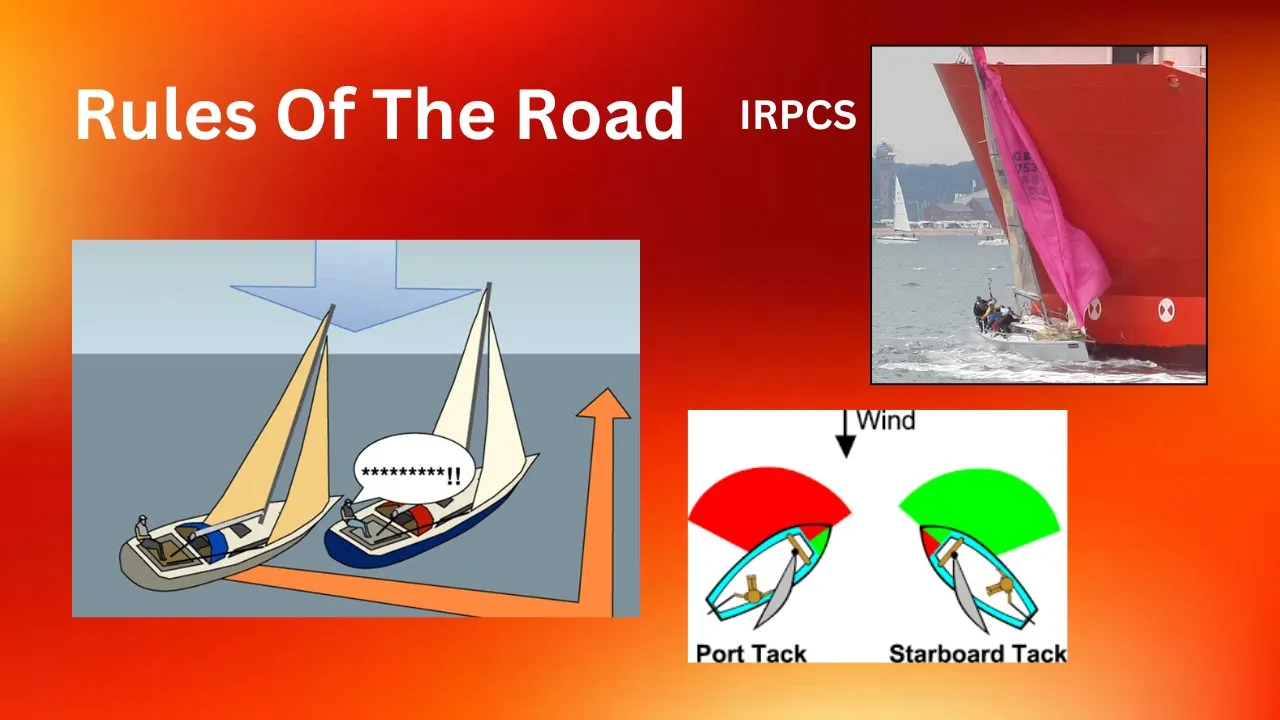
Understanding international maritime collision regulations (COLREGs), specifically the right-of-way rules for sailing vessels on different tacks and points of sail.
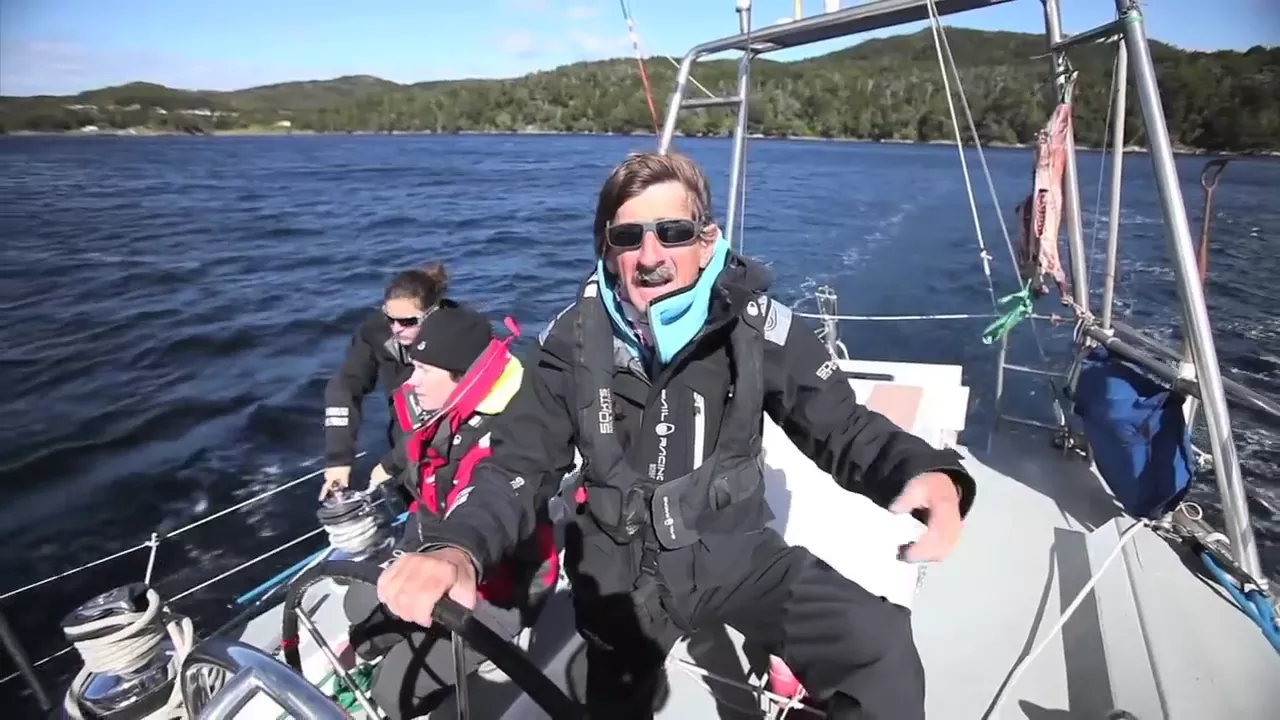
Sailing safety and heavy weather tactics, including how to reef sails (reducing sail area) to maintain control in strong winds.
380.4K views5.7Klikes7:28Original Release: 2019-02-14
[Music] welcome to learning to sail when people take up sailing they often have three misconception they think it's gonna be expensive it isn't people think it's elitist well it's certainly not elitist but people think it's gonna be difficult well I assure you it's not let me show you how easy it actually is let's go sailing to start with people get a little stressed about the names of everything on the boat and the language that goes with the sea well good news there is learn the practical skills first the names and everything that will follow later [Music] so why should you consider sailing firstly and most importantly sailing is fun whether you're skimming along in your dinghy or sailing and cruising alone on your yacht next challenging sailing is a full-on practical activity challenging you both physically and mentally [Music] life-skill sailing will give you a light skill to feed your spirit of adventure using the wind as your fuel freedom to travel relaxation or excitement the choice is yours [Music] outdoor fresh air escape the pressures of life feel physically and mentally refreshed at the end of a day sailing out here you'll see dolphins wildlife and you'll learn about the weather families sailing is a superb activity for all the family everybody gets so much out of it finally sailing is fun if I mention that let's get started let's go sailing I'm now going to show you how we get the boat sailing before we head off out let's have a look at our model boats here just to put it in our mind and to help us when we're out there if we turn our boat and we point it into the wind and these arrows here indicate where the wind is coming from don't forget on the boat we've got flags we've got wind indicators lots of things around the boat to tell us this so our wind is coming from there we've point the boat directly into the wind which is good for one thing and one thing only pulling up the mainsail because head to wind the server manger will come up and our mainsail is at the back of the boat we then pull up our jib at the front and we've got our two sails which are then going to power the boat forward head to wind is what we call that pointing into the wind we now turn the boat away from the wind by about 45 degrees and at that angle provided we've pulled the sails in nice and tight then our sails will start to fill flappy sails start to become happy sails and they're now grinning they're nice and tight wind is spilling off the back of them and the boat will now be driven forward by keeping on a steady course if we want you to head off in another direction if we wanted a head across the wind all we now need to do is turn the boat across the wind so the wind is now coming in at the side and we adjust the sails simply by letting them out let them out to that position they're about a halfway position if we turn the boat and we wanted to head off away from the wind what we call downwind we turn the boat away from the wind and once again just let the sails out even further to what we call the downwind position which is a broad reach then looking at those three positions on the wind again with the wind coming from any direction but in this case it's set here if we're sailing away from the wind that's my broad reach sails right out if I'm sailing towards the wind then I have my sails pulled in tight that's the the mainsail in tight the jib in tight and if I'm sailing across the wind that halfway position there we go as the beam reached their points of sail that's what it looks like on the table let's take her out to sea and see what it's like in real life one of the first things we need to learn when we're going sailing is a thing called wind awareness wind awareness it's where the wind is coming from and by how much because it's the wind that's going to power the boat now the wind state the obvious is invisible so we're going to use an invisible thing to power this boat around the boat however we've got various bits of equipment to show us where the wind is coming from in front of me here I've got wind instruments which tells me where the wind is coming from and by how much at the top of my mast I've got the wind arrow pointing into that wind showing me where the wind is coming from there are flags around the boat and they're showing us where the wind is coming from as well and don't forget the waves as well it's the wind that makes the waves they tell you where the wind is coming from to putting the sails up give yourself plenty of room and we're going to use the engine to hold us in position we're going to point the boat in to the wind we want flappy sails then we're going to pull on the blue rope to get the mainsail up with the mainsail up we're now going to turn about 45 degrees away from the wind and unroll the jib and with the sails out all we now need to do is pull on the ropes that control them stop them flapping and we're sailing hopefully you've now seen how easy this can be it's time now to take your next step now when you do that don't do it the hard way don't do it by yourself get yourself some structured training the best training well that's run by the Royal Yacht association the rya accredited training centers like here at learn to sail on the Elgar here you will get a structured course aimed and geared at the you want to progress Sunshine's always lovely when you're training and down here we get over 300 days a year of sunshine we sail all year round down here we've got easy access to two three hours flights from virtually any European country and you're here what could be nicer I do hope that you've enjoyed our learning to sail introduction video and that it inspires you to take the next step finally time to live that dream now bring me that horizon let's go sailing [Music] you [Music]
Up Next
25:57
How to Sail: Step-by-Step Basics of Sailing for Beginners
@JoshPostVlogs
4.1M views•2018-04-10

26:22
Walking in the City: Urban Rituals and the Flâneur in Contemporary India
@PSBTIndia
1.9K views•2016-08-02

9:49
FastAPI vs Flask vs Django: Choosing the Right Python Web Framework
@TechWithTim
302.5K views•2024-05-26

1:42
Game of Thrones Opening Credits: A Cinematic Analysis
@gameofthrones
46.3M views•2011-04-18
Related Study Plans & Knowledge Roadmaps
Structured learning paths in General & Interdisciplinary Studies
general-studies
Artificial Light: History, Tech & Human Impact
01The Pre-Electric Era: Fire, Oil, and Gas Lighting
02The Incandescent Revolution and Grid Electrification
03Gas Discharge and Fluorescent Illumination
+ 3 more learning modules
14h6 modules
Explore Roadmap
general-studies
Elevator Engineering: History, Physics & Cities
01From Hoists to Safety Brakes: The Dawn of Vertical Lift
02Hydraulic vs. Traction: The Engineering Physics of Elevators
03Modern Speed, Safety, and Algorithms
+ 2 more learning modules
12h5 modules
Explore Roadmap
general-studies
Rubber: Material Science, History & Geopolitics
01Origins of Natural Rubber & Mesoamerican History
02The Chemistry of Natural Rubber & Vulcanization
03The Geopolitics of the Rubber Boom & Colonization
+ 2 more learning modules
12h5 modules
Explore Roadmap
general-studies
Containerization: Evolution, Logistics & Trade
01Ancient Trade & Bulk Cargo: Amphorae to Barrels
02The Industrial Revolution & Cardboard Packaging
03The Containerization Revolution: Malcom McLean
+ 2 more learning modules
12h5 modules
Explore Roadmap