








![On Writing: Subtext (and how to use it)! [ Tarantino | Thrones | Gatsby ]](https://i.ytimg.com/vi/58FyvzttlIg/maxresdefault.jpg)




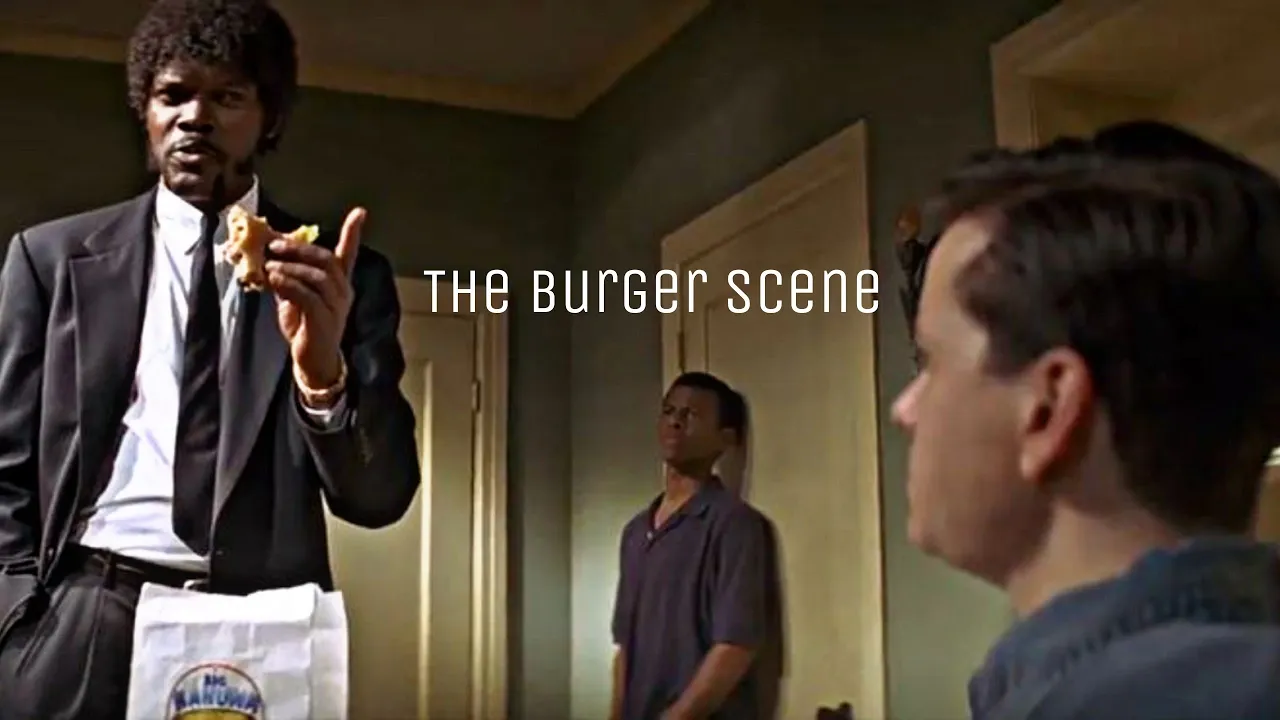
Subtext is the hidden meaning beneath surface-level dialogue and actions, representing the ninety percent of human experience that remains unspoken; it is created through the combination of text (words or actions) and context (circumstances), and can be effectively conveyed through three primary techniques: embedding layered meanings in dialogue (such as Don Corleone's 'I'll make him an offer he can't refuse' implying 'I will kill him'), using character actions to communicate unspoken truths (like Jules biting Brett's hamburger to demonstrate power), and allowing actors to interpret subtext through their performances (as seen in Moonlight where Black's hesitation at the door conveys his internal conflict); successful subtext requires writers to leave much unsaid, trusting audiences to read between the lines and actors to bring underlying emotions to life.
Writing Subtext in Screenplays: Techniques & Examples
Added:"- Yeah, Wade, I... It's Jerry. I... Wade, it's Jerry. I... We gotta talk."
- Movies as in life.
What we say can be very different than what we really mean.
"- I love my job. I love my job. I love my job."
- This is called subtext.
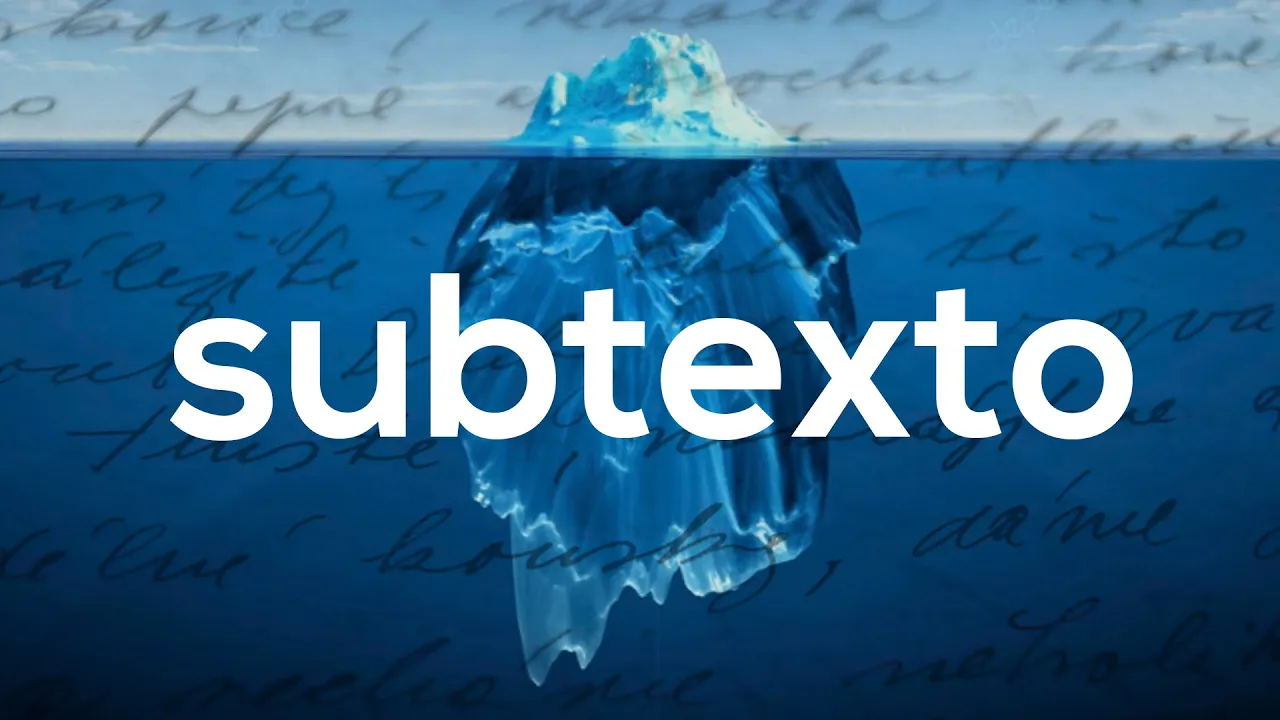
The hidden current flowing underneath our daily conversations and actions.
"- But what's there tells a story if you read between the lines."
- It is also the key to writing nuanced character behavior and layered dialogue.
"- And you will atone!
Am I getting it through to you, Mr. Beale?"
- In this video, we will uncover the strategies and mechanics of how to write it.
- Welcome to this episode of "Page to Picture".
Writing Subtext.
"- And you better get started."
- We've covered screenwriting topics like the four types of endings and how to write a great villain.
What topic should we cover next?
Make sure to subscribe and enable notifications to get more videos like this.
To really examine how subtext works on the page, we've imported these scripts into StudioBinder's screenwriting software.
Pencils out. Let's get started.
"- One of the things that keeps cropping up is this about subtext.
Plays, novels, songs, all have a subtext......which I take to mean a hidden message or import of some kind."
- Subtext refers to the motivations and truths beneath our words and actions.
It is the unspoken meaning beneath the surface of everything we say and do.
We can trace this idea back to one of the seminal figures in theater.
Constantine Stanislavski who said, 'Keep in mind that a person says only ten percent of what lies in his head, ninety percent remains unspoken'.
In other words, subtext is all about what's left unsaid.
Stanislavsky's lesson is for actors to understand what their character is thinking and feeling.
But it also applies to writers.
Writers who need to understand the inner workings of these characters just as much as the actors portraying them.
So, how a subtext created?
The easiest way to understand this concept is with this simple formula.
Subtext is the sum of two things added together.
Text and context.
Text is the words or actions in question.
It is the spoken dialogue.
"- They are coming."
- Or it is the action performed.
By themselves these words and actions have meaning.
"- I really hate you."
- But there can also be a secondary meaning underneath it.
"- I hate you."
- The subtext.
For example, in "The Princess Bride", Wesley uses a specific phrase to hide his true feelings for Buttercup.
"- As you wish. As you wish. As you wish."
- The text is 'as you wish' but the subtext is 'I love you'.
"- You can die too for all I care.
- As you wish.
- Oh, my sweet Wesley. What have I done?"
- Context is everything around the text.
The external circumstances or situations that also inform the ultimate meaning of the subtext.
For example, these scenes have the same text 'drinking tea'.
But since each scene has a different context they have a different subtext.
Like conformity.
Romance.
Danger.
Or rebellion.
Understanding this relationship between text and context is vital when writing subtext.
But why is subtext so important?
If everything is surface level there is no depth to the material.
Nothing to explore or discover.
"- How much is it? - It'll be eighteen dollars.
- Here you go. Keep the change. Hi, doggy.
- You're my favorite customer. - Thanks a lot.
- Bye. - Bye-bye."
- Subtext creates layered and complicated characters and gives the audience something to decode.
The chance to read between the lines keeps them engaged with the characters.
"- What's the most you've ever lost on a coin toss?
- Sir?
- The most you ever lost in a coin toss.
- I don't know I couldn't say."
- Now, there are three main ways to create subtext in a screenplay.
Let's start with the most direct - Dialogue.
Perhaps, the best way to illustrate subtext and dialogue is to start without it.
"- How are you? - A little frustrated at the moment.
Also equally depressed and pessimistic about our date tonight.
- Sure. - I'm Anna. Come on in."
- It's not a rule that all dialogue needs to be layered.
"- You're such a dick.
- Every day I wake up and I hope you're dead.
Dead like it... If I can guarantee Henry would be okay, I'd hope you'd get an illness and then get hit by a car and die!"
- Being direct is an equally valid option.
Something writer Martin McDonough knows quite well.
"- Dixon, you godd*mn a**hole.
So, I'm in the middle of my godd*mn Easter dinner.
Sorry, kids."
- We can see this in his script for "The Banshees of Inisherin."
- After a few minutes of Pádraic guessing why his best friend is acting cold towards him "- Have ye been rowing?
- We haven't been rowin'.
I don't think we've been rowin'.
Have we been rowin'?"
- Colm just comes right out and says it.
"- I just don't like you no more.
- You do like me.
- I don't.
- You like me yesterday.
- Oh, did I, yeah?
- I thought you did."
- Writers like Yorgos Lanthimos stripped their dialogue of subtext to create a stylized effect.
"- You look like a badger.
- Oh..." - In films like "The Lobster" the dialogue is direct and simple.
"- If I'm walking too slowly just say and I'll pick up my pace.
- This pace is fine."
- The actors stilted an emotionless delivery is perfectly suited to express the film's absurdist satire.
"- You need to choose a companion that is a similar type of animal to you.
A wolf and a penguin could never live together.
No good a camel and a hippopotamus.
That would be absurd. Think about it."
- This is dialogue with zero subtext before a vast majority of written dialogue subtext is an essential ingredient.
"- I drink your milkshake."
- Look at some of the most iconic lines ever written.
When Don Corleone says this... "- I'm gonna make him an offer he can't refuse."
- The subtext is 'If he doesn't do what I ask, I'll kill him'.
Which line is more interesting?
The one with subtext or the one without it?
The ending of "Chinatown" includes this cryptic line.
"- Forget it, Jake. It's Chinatown."
- It's an ambiguous phrase that could mean a few things.
But one common subtextual reading is justice is futile in a corrupt world.
It's the ambiguity here that makes us work for the meaning.
And it becomes perhaps a more profound idea once we figure it out for ourselves.
Writers can add subtext to the words and construction of the dialogue itself.
"- You cannot start without me see. I start the clock."
- But this can also be done by indicating a specific tone for the intended delivery using the scene description.
"- I see dead people."
- Or with parentheticals.
"- And if your answer is 'No', you'll still be the only thing I ever needed you to be.
My son.
- You okay? - Yeah."
On page 49 of Damien Chazelle's "Whiplash" a quick scene between father and son reveals an unspoken subtext.
"- How's it going in the Studio Band?
- Good. I think he likes me more now.
- And his opinion means a lot to you, doesn't it?"
- Then a line of description hints at the subtext.
'Jim looks at Andrew. Almost accusatory. A moment...' "- Yeah."
Andrew responds with a single word but the ellipsis tells us that there is more beneath it.
Perhaps, he noticed the underlying accusation behind the question.
Jim then changes the subject.
"- Grab the shakers, please."
- Which confirms our suspicions.
He is jealous of his son's admiration for Fletcher.
Like the scene description, parentheticals can help target a specific line for subtext.
" Mrs. Robinson you're trying to seduce me.
Aren't you?"
- Writers Emily Halpern, Sarah Haskins, Susanna Fogle, and Katie Silverman joined forces on the script for "Booksmart".
- After a quick introduction to our two leads Molly and Amy their interaction with Principal Brown tells us a lot about their reputation at the school.
"- That's it. Signing off. Go crockets!
Boom.
- Principal Brown."
- Before his response, we get a quick succinct parenthetical that simply says 'kill me'.
Let's see how this manifests in Principal Brown's dialogue.
"- Oh... Hi. Molly, Amy. What's shaking?"
- First the exasperated groan and then a shift into forced politeness.
- When writing subtext and dialogue consider these tips.
"- Was it bad miracle?"
- Less is more.
"- Remember, ninety percent of what we think and feel is left unsaid.
Interesting natural sounding dialogue should do the same.
"- Alright, then. Keep your secrets."
- Dialogue isn't the only outlet to explain what's under the surface.
Use the scene description or parentheticals to give the actor subtextual clues to inform their tone and delivery.
"- Hey, wait. Let's just sit with what we heard?
- Are you serious?
- Well, we don't have to constantly be entertaining ourselves, do we?"
- But subtext isn't confined to dialogue alone.
A character's actions and behaviors allow writers to include nuance in their storytelling.
As the saying goes, 'Actions speak louder than words'.
This is a fitting mantra when it comes to writing subtext.
When words don't suffice a character's actions will speak for them.
"- Let us not resort to our baser instincts and handle this like civilized man... - This is yours here, right? - Yeah."
- When Jules takes a bite out of Brett's hamburger the subtext is clear.
It is a gesture of pure dominance.
"- Mm-hmm.
This is a tasty burger."
- Hans politely asks for the computer code.
As he calmly removes the silencer there is no doubt about the consequences of non-compliance.
"- The code, please."
- The combination of Han's gentlemanly tone with his homicidal actions is what makes him such a compelling villain.
"- It's a very nice suit, Mr. Takagi.
It would be a shame to ruin it."
- At the end of "The Godfather", Kate struggles to understand the man Michael has become.
"- Don't ask me about my business, Kate.
- Is it true?
- Don't ask me about my business. - No.
- Enough."
- And with a simple closing of the door the subtext is that she never will.
She has literally shut out of his new life.
On page 11 of David Koepp's script for "Panic Room", Sarah tries to pour herself some more soda but Meg stops her.
"- Hey.
Enough."
- Sarah sees her mother struggling with her recent divorce and voices her support.
"- F*ck him.
- Don't.
- F*ck her too.
- I agree.
But don't."
- And then Meg herself pours the soda.
It's a tiny gesture with subtext that speaks volumes.
We are in this together.
When writing subtext with actions the old screenwriting adage says it all.
Show, don't tell.
Ask yourself is there something a character can do that communicates their thoughts and feelings instead of dialogue.
A similar option is to find actions that contradict their dialogue.
"- You stop drinking right now.
All right? You make a promise to yourself, you're gonna stop drinking."
- This juxtaposition is the birthplace of rich subtext.
Using a character's actions to communicate subtext is a fantastic option.
If we go a level deeper we can see how the actor's performance is also a common and useful opportunity.
Good actors don't simply recite their lines.
Their performance includes layers of meaning through their body language.
As Robert McKee notes, 'Actors are not marionettes to mind gestures and mouth words.
They're artists who create with material from the subtext, not the text.
Does the character make eye contact or do they avoid it?
Do they fidget?
Slump in their chair.
Or stare into the distance.
In all cases, there is subtext behind those performance choices.
A rule of thumb in screenwriting is to avoid telling the director how to direct and telling the actor how to act.
"- We didn't come walking on the middle of the scene and say 'don't do this'. - Yes, we did.
- We did. - All right."
- That being said the writer actor and director should all be on the same page with what a character is thinking doing and saying.
This starts with the screenwriter before being interpreted by the actor and director.
Let's look at an example of how the screenwriter's text on the page can be turned into subtext in the performance.
Consider this scene from "Moonlight" on page 87.
Black and Kevin haven't seen each other in years.
And underneath their reunion is tension and nervousness.
"- 'Sup, Kev?
- Damn, man, what... What you doing down here?
I mean..." - The trauma in Black's life has created a deep insecurity in him.
Notice how screenwriter Barry Jenkins describes this internal conflict.
When all of his instincts tell Black to leave before he gets hurt again.
Kevin is nowhere to be found.
There's nothing between black and the door.
The door.
That's the text.
Simply written but evocative.
Writers like Jenkins understand how to give the actor just enough to allow their performances to shine.
Now, let's see how the subtext manifests in the performance.
This is just a tiny example in a script and film that is all about the emotions under the surface.
As a writer, remember that an actor's performance will communicate much more than what is on the page.
Give the actor clues in the scene description and watch how they bring that underlying material to life.
Now, let's look at a scene that puts all these subtext techniques to work.
The emotional climax in "Sound of Metal" written by Darius and Abraham Marder.
To understand the subtext of this scene, we need to understand the context.
Ruben is in a band with his girlfriend Lou.
Lou has a history of self-harm and a habit of scratching established on page three.
"- Hey stop that. We got to get right to it for grizzle, remember?"
- This will become relevant later.
Everything changes when Ruben loses his hearing.
The hearing that you have lost is not coming back.
Lou is worried that this will spark a drug relapse for Ruben so he enters a rehab for the deaf.
In the process, the band and the relationship dissolve.
But they both grow and change while apart.
Near the end, on page 82 they reunite and Ruben notices the positive change in her.
"- You look different.
- Oh, no scratching, huh? - Oh, yeah.
That's good..." - Later, Ruben and Lou discuss getting themselves and the band back together.
"- We gotta get back into it.
We got to get back on it.
We got to get back in the f*cking groove, huh.
- Don't you think? - Okay, like with the tour stuff.
- Yeah the f*cking tour, everything. Like we just gotta get back on it.
The album, the tour... - Yeah."
- In the description, Ruben notices her scratching her arm in the same spot she used to scratch.
Here, the act of scratching is full of subtext.
It represents everything negative from Lou's former life.
Noticing this old destructive habit returning Ruben has an epiphany.
Ruben's eyes take in the truth of Lou now.
She can't go back with him.
And he can't stay.
The revelation is devastating.
Ruben understands that getting back together would only set her back ruining the progress she has made.
And so, he lets her go.
"- It's okay, Lou. - What?"
- What's the subtext of this phrase?
'It's okay' could mean that Ruben is releasing her of responsibility for his well-being.
It's okay could mean that he will be fine and so will she.
Or it could be both of those things and more.
The Marder screenplay is full of rich subtexts like this.
In the dialogue... "- You don't need to fix anything here..." - And woven into the description to inform both character actions and performances.
"- I can't hear anything.
- Lou, I think this is the beginning of a beautiful friendship."
- Subtext is one of the greatest tools to make dialogue interesting.
"- I do wish we could chat longer but I'm having an old friend for dinner."
- It also allows the audience to see through the surface level meaning of words and behaviors to get to the hidden truths underneath.
"- You look like you're having a rough morning.
- Ding, ding, ding. What do we have for, Johnny?"
- Through this process we can understand these characters on a deeper level where empathy is born.
If you are inspired to dive into the depths of subtext start writing your screenplay with StudioBinder's screenwriting software.
Until next week, remember to read between the lines.
"- Oh, now, I really see what's going on here.
- Oh, what you talking about?
- Hey, I'm an animal and I got instincts and I know that you two are digging on each other. I can feel it.
it
Up Next
Why Quentin Tarantino's Dialogue Feels So Natural
@DuCinema1
84.1K views•2026-03-04

Triumph of Orthodoxy Icon: Byzantine Art & History Explained
@BenCallan
2.1K views•2024-08-06
Post-Production Sound for Film: The Complete Process Guide
@StudioBinder
142.4K views•2025-03-17

Game of Thrones Opening Credits: A Cinematic Analysis
@gameofthrones
46.3M views•2011-04-18
Related Study Plans & Knowledge Roadmaps
Structured learning paths in General & Interdisciplinary Studies