









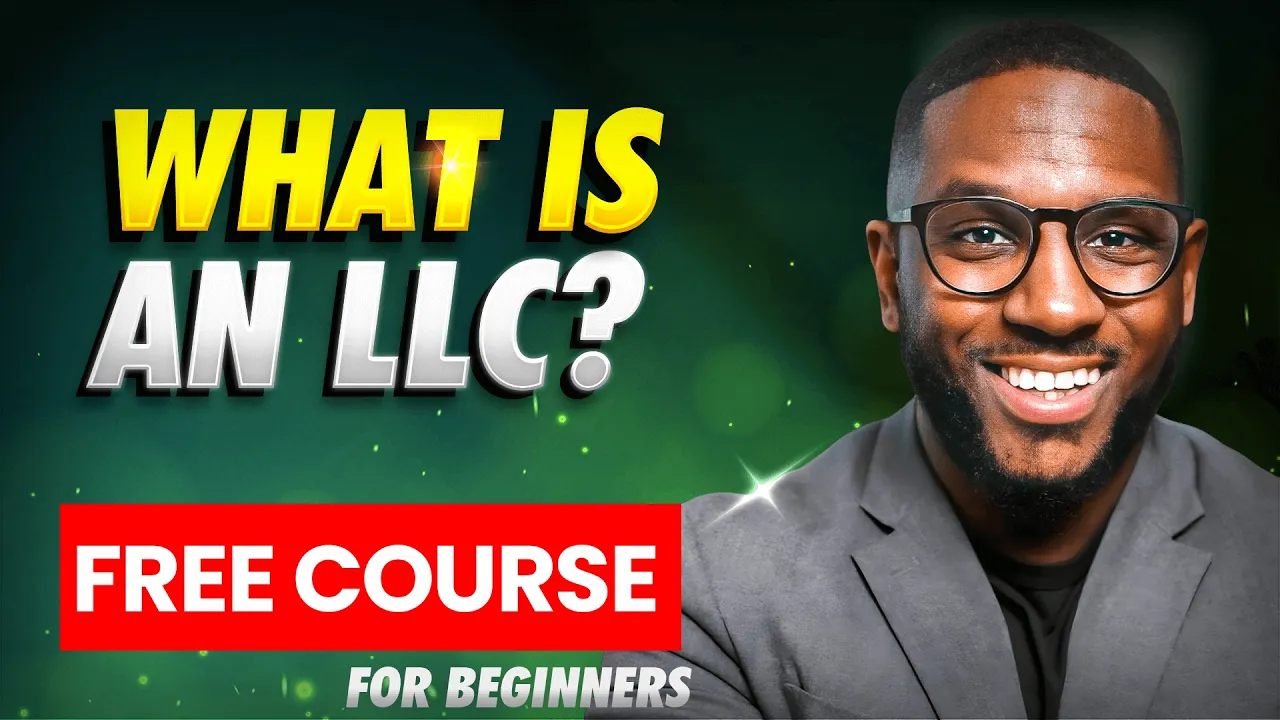











A Limited Liability Company (LLC) is a business entity formed at the state level that provides its owners (called members) with limited liability protection, meaning they are not personally responsible for the company's debts or liabilities; unlike corporations, LLCs are taxed as pass-through entities where profits and losses flow directly to members' individual tax returns, avoiding double taxation, and they offer flexible management structures ranging from member-managed to manager-managed operations.
Limited Liability Company (LLC) Explained: Definition & Structure
Added:The fundamental differences between a Sole Proprietorship and a Partnership, including how they are formed and managed.
The basic concept of personal liability versus business liability, and how debt obligations can affect personal assets.
An introductory understanding of income taxation, specifically how individuals file taxes on business earnings.
The legal concept of a business as a distinct entity separate from its owners.
How to draft an LLC Operating Agreement, defining member roles, voting rights, and profit distribution.
Advanced tax strategies for LLCs, including electing S-Corporation or C-Corporation tax status.
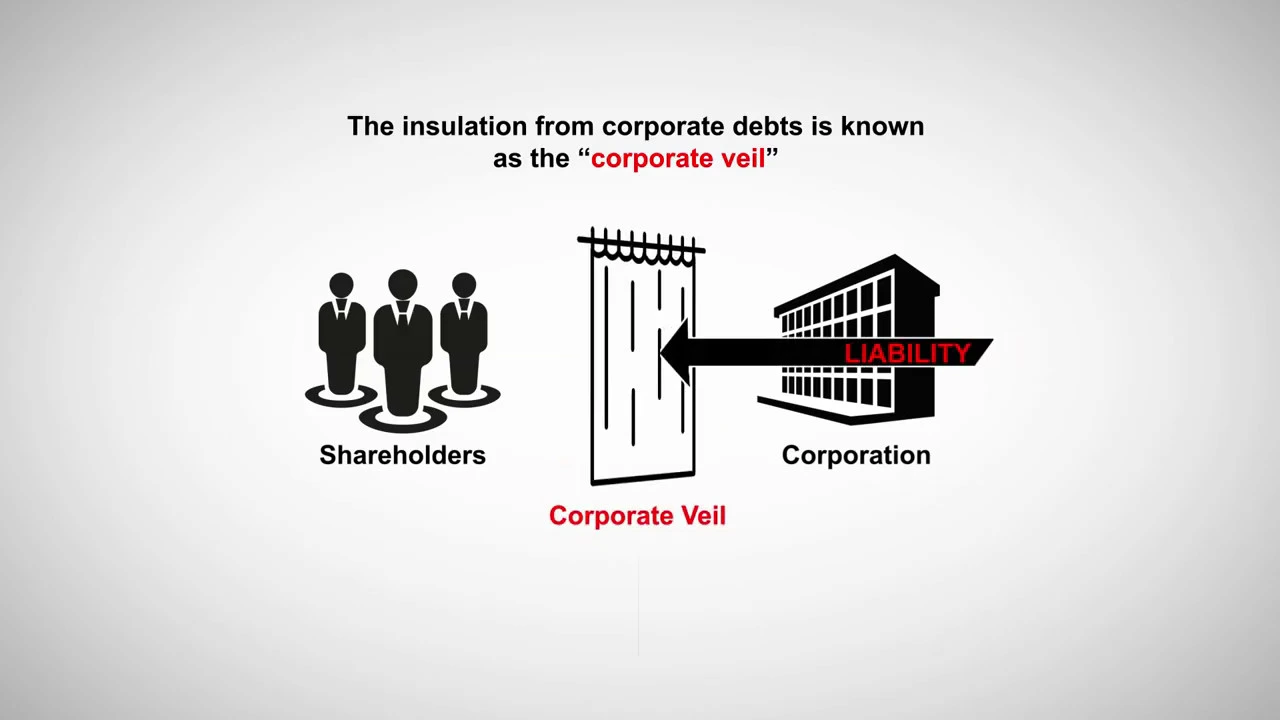
The legal doctrine of 'piercing the corporate veil' and how to maintain proper corporate formalities to protect limited liability.
The operational differences between member-managed and manager-managed LLC structures.
The state-specific administrative processes for forming an LLC, including filing Articles of Organization and maintaining annual compliance.
29.2K views1.3Klikes13:04Original Release: 2019-11-13
- Hi everyone, I'm attorney Adan Durham with 180 Law Co.
in Denver, Colorado, and you're watching All Up In Yo' Business.
(upbeat music) We talk a lot about LLCs on this channel.
I've done videos on starting LLCs, contributing money to LLCs, how you pay yourself from your LLC.
I've done a lot of videos about LLCs, but we've never really dug into the basics of an LLC.
We've all heard of them, but like what is an LLC?
What actually is it?
And what does it mean?
Well, that's what we're gonna talk about today.
Before we get into all of that, please be sure to give me a thumbs up and subscribe to my channel and share this video to all of your friends.
And don't forget to hit that little bell button so you get notifications whenever I post a new video.
You'll also want to check the description for some additional information.
I've got some freebie downloads and guides there for y'all too.
And just as with the last couple of videos I put up, I've got some random kittens walking around.
If you see some climbing on me or jumping around in the background, just enjoy it cause they're effing adorable.
So what's an LLC, LLC.
What did the letters stand for?
It stands for limited liability company.
The limited liability part, that means that the LLCs owners, which are called the members.
The LLC members aren't gonna be personally responsible or personally liable for the debts or the liabilities of the LLC.
So that's where that limited liability part comes in is it limits the liability to the members themselves.
If the LLC is sued, the members don't risk losing their personal assets in that lawsuit.
An LLC is a business entity that is formed and recognized at the state level.
In other words, it's the state, not the federal government, not any kind of local government, the state government that you'll deal with to form and maintain your LLC.
And then all of the laws of the state where the LLC is formed will apply to that LLC.
Now LLCs are kind of new creations, they haven't been around for a very long time.
LLCs were actually invented by the state of Wyoming in 1977, according to Wikipedia.
Prior to then most businesses were either structured as corporations, where the shareholders are the owners and the corporation is run by a board of directors, and there's a double taxation because the corporation has to pay its own corporate taxes.
So things were either formed as corporations or as partnerships where there's one or more people involved, the partners manage and run the business but they're all personally liable for all of the deaths and all of the liabilities of the partnership itself.
But there's no kind of corporate tax, the partners are taxed at the individual level for the partnership income.
So most things where either partnerships or corporations, and I guess businesses were clamoring for some new way to combine the two worlds and have the best of both.
They wanted the management and tax ease of the partnership, but the liability protection benefits that the corporation gave.
And so thus the LLC was born and then eventually the IRS got on board and was like, "Okay, we'll tax people like a partnership, "even if they're in an LLC."
And then once that happened, then all the other States kind of jumped on the bandwagon and started implementing their own state laws to permit LLC formations.
Compared to corporations in particular, LLCs are relatively easy to form and maintain.
It's a really simple business structure.
The structure of an LLC can be really flexible and in most states there are minimal requirements as far as ongoing compliance and regular filings.
Of course it all varies state by state because each state has its own laws regarding LLCs, but for the most part, and especially compared to corporations, LLC members can freely change the management tax structure, really whatever portion of the LLC structure that they want to.
LLCs are formed by filing a document, it's typically called articles of organization or a certificate of formation, depending on the state.
You would file the articles of organization with the secretary of state in the state where you wanna form the LLC.
In many States, the LLC officially exists as soon as the articles of organization are filed.
I briefly mentioned this, but LLCs are owned by the members.
Members are the ones who own the LLC itself.
LLCs can be owned by one person, which is typically referred to as a single member LLC, or there can be multiple people involved, and that's typically referred to as a multi member LLC.
Members can be individual people, but they can also be other LLCs.
So an LLC can be a member of another LLC.
A member can be a corporation or a trust, or really any other kind of entity or person.
There's very few restrictions on who can be a member of an LLC.
Also members don't have to be a US citizens or permanent residents here, you don't have to be physically located in the state that you're forming the LLC in.
So as far as location requirements and all of that goes for members, it's pretty open and flexible.
Management of an LLC can vary, LLCs can be run and managed by the members themselves.
This is typically called a member managed LLC, or they can be run by managers which are elected by the members and this is typically called a manager-managed LLC.
In a member-managed LLC, the members are agents of the LLC.
They are authorized to act on behalf of the LLC and they can bind the LLC to legally binding contracts.
In a manager-managed LLC though, it's the managers who are authorized to act on behalf of the LLC.
And most of the management decisions and day to day operations are handled by the manager.
And then the big decisions regarding the LLC itself like disillusion of the LLC or changing any of the LLC documents.
Usually those decisions are reserved for the members.
Managers can be members or nonmembers of the LLC, so you can have a manager who is also a member or managers can be nonmembers.
You don't have to be a member in order to be a manager.
And then LLCs can also be structured more like corporations.
They can have like a managing board or board of managers that votes on major decisions similar to how a board of directors would in a corporation.
So this is really part of the benefits of an LLC is that the management really can be structured however you want it to be.
When we start talking about LLC taxation, that's usually where some of the confusion starts to come up in the state's eyes and as far as the state is concerned, the LLC is a completely separate entity from its members.
The LLC and the members are separate and distinct beings, but in the IRS's eyes, the LLC essentially doesn't exist.
LLCs are considered pass-through entities, which means that the profits and losses pass-through to the members of the LLC.
The LLC doesn't have to pay its own corporate taxes or do its own corporate tax return.
Instead the LLC members report their share of the profits and losses on their own individual income tax.
So in a single-member, LLC, it's treated as if all of the income to the LLC is the income to the member themselves and taxed at the personal level on the LLCs income.
With multi-member LLCs, the profits and losses are allocated to the members, usually in proportion to their ownership interests.
So if it's a 50/50 ownership between two members, the profits and losses are allocated 50% to each member and then each member reports those on their own individual tax returns.
Now this is how LLCs are taxed by default, but another nice thing about LLCs is that they can change their taxation and elect to be taxed in a different way, such as an S corporation or taxed as a C corporation.
Those topics are beyond the subject matter of this video, but I do have a few others that talk about S corporations and C corporations, so you can check back to those if you wanna learn more.
So to summarize and wrap it all up, a few of the primary advantages of an LLC are of course, that liability protection for the members, that's probably the biggest one.
You get the benefit of that pass-through taxation.
So it's a relatively easy tax reporting and you don't have that double taxation that you would with a corporation.
LLCs are relatively inexpensive and easy to form and to maintain.
And then finally, it just kinda makes you look a little bit more legit, I guess.
That's what a lot of people think is that you have LLC see at the end of your business name, it means your real and official business.
So that's a little bit of benefit too.
And of course there are some disadvantages to an LLC that pass-through taxation it's often good, but it can be a negative depending on the situation.
Sometimes there are investors who don't want it to be taxed as a pass-through entity, or sometimes there are other situations where pass-through entity, taxation just isn't the best.
LLCs also aren't always great if you're looking for investors for your business, or if you plan on going public one day.
Typically investors feel more comfortable investing in more traditional corporations and you can issue shares of stock in the corporation to investors.
So if you're looking for big time angel investors or have the idea of going public someday, then the LLC may not be the best structure for you.
And then the other disadvantage is that there is self employment tax.
You don't get the double taxation like you do with the corporation, but because of that, pass-through entity taxation, the IRS adds some self employment tax to your income too so they get a little bit more out of it.
So whether or not to operate and form your business as an LLC, it's very much fact dependent on your circumstances and the situation of you and your business.
So because of that, it's always best to talk with an attorney who's licensed in your state before you form an LLC.
Just to be sure that it is the best option for you, and that you're gonna go about it the right way.
That's all for this episode, drop a comment below, let me know what you think.
And also be sure to check out some of my old videos, if you want more information on LLCs, or if you have more questions about LLCs, I've got a lot info out there so you can check my old videos for all that stuff too.
And then of course, check out my blog on my website for more information on LLCs and starting a business.
I guess we didn't get as much kitten action today as we were hoping for.
So I'll just give you guys a quick little, quick little kitten shot so that this isn't all in vain.
Thank you all so much for watching.
I'm Aden Durham and I'll see you next time.
Up Next
7:01
C Corporation Taxation and Structure Explained by CPA
@patrickbrayCPA
587 views•2024-12-29

46:36
Retention Habits of Top DTC Ecommerce Brands Revealed
@SendItPodcast
44K views•2026-03-03

15:23
Decoy Effect: How Pricing Psychology Influences Consumer Spending
@bobinvestsUS
90K views•2026-01-05

17:30
The Planned Obsolescence of Light Bulbs and Tech
@veritasium
25.3M views•2021-03-26
Related Study Plans & Knowledge Roadmaps
Structured learning paths in Business
business
Pop-Up Retail: Strategy, Design & Execution
01Introduction to Pop-Up Retail & Strategic Goal Setting
02Budgeting, Site Selection, and Legal Essentials
03Experiential Retail Design & Visual Merchandising
+ 2 more learning modules
15h5 modules
Explore Roadmap
business
Reg CF: Startup Funding, Marketing & Launch
01Introduction to Equity Crowdfunding & Reg CF
02Platform Selection & Legal Preparation
03Crafting High-Converting Campaign Assets
+ 2 more learning modules
14h5 modules
Explore Roadmap
business
Productized Services: Scaling Solo Freelance
01Foundations of Productized Services
02Packaging and Scope Definition
03Pricing and Subscription Models
+ 2 more learning modules
15h5 modules
Explore Roadmap
business
Gov Procurement: Find, Bid & Win Contracts
01Introduction to Government Procurement & Business Setup
02Small Business Certifications & Set-Asides
03Finding and Analyzing Contract Opportunities
+ 2 more learning modules
14h5 modules
Explore Roadmap