




















The Bicep2 experiment detected polarized cosmic microwave background radiation at the South Pole, confirming the theory of cosmic inflation and providing the first evidence of gravitational waves, which may help unify quantum mechanics and general relativity into a single theory of everything.
Cosmic Inflation Confirmed: Gravitational Waves Detected
Added:Einstein's General Theory of Relativity, specifically how mass and energy warp the fabric of spacetime.
The standard Big Bang model of cosmology, including the concept of the expanding universe and the Cosmic Microwave Background (CMB) radiation.
The basic definition of gravitational waves as ripples in spacetime caused by massive accelerating objects.
The conceptual hypothesis of Cosmic Inflation, representing the exponential expansion of space in the fraction of a second after the Big Bang.
The physics of B-mode polarization in the Cosmic Microwave Background (CMB) and how it serves as direct evidence for primordial gravitational waves.
Advanced theories of Quantum Gravity, such as String Theory and Loop Quantum Gravity, which attempt to unify general relativity with quantum mechanics.
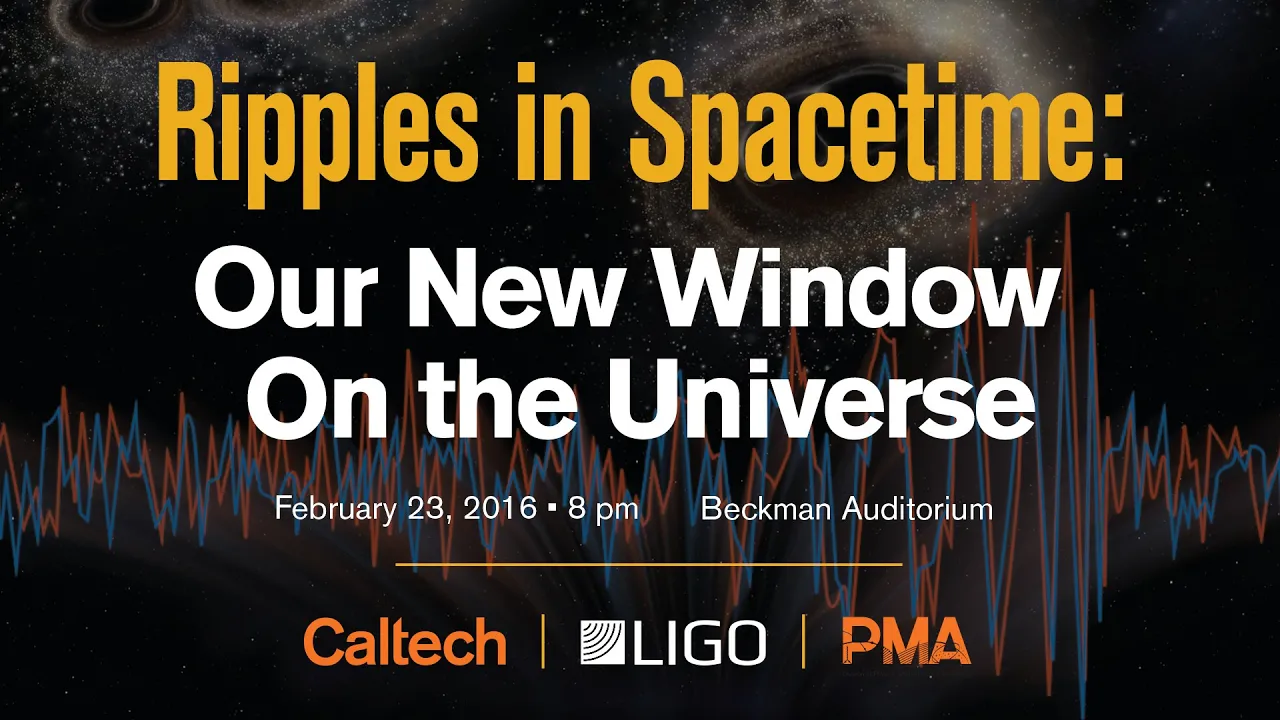
The distinction between primordial gravitational waves from the early universe and stellar-mass gravitational waves detected by observatories like LIGO and Virgo.
The cosmological implications of eternal inflation and the theoretical model of the multiverse.
468K views13.2Klikes3:58Original Release: 2014-03-20
So a Stanford University physicist walks into a house and announces "It's five sigma, r at point two!"
It's not a joke. It's physics talk.
The house Chao-Lin Kuo walked into was that of Renata Kallosh and Andrei Linde and that married couple of theoretical physicists looked at Chao-Lin as if he just told them that the house they live in is an inter-dimensional magic box that can travel through time and space.
Actually, he is confirming a theory that Linde has been working to refine and support for decades.
It's a beautiful thing, they're dumbfounded, the link is in the description, you should give it a watch it'll make your heart melt, and then come back and I'll explain.
(SciShow intro plays) So, what the heck does "It's five sigma, r at point two" mean?
Well, broadly it means that suddenly we understand way, way, way more about the universe than we did four days ago.
So much so that we are interrupting our regularly scheduled SciShow to bring you this news.
Five sigma basically means that there's a 1 in 3.5 million chance that the signal they're seeing is a coincidence, a fluke Only at five sigma are physicists ready to call a signal real.
They're a careful bunch.
So what is this signal, the mysterious r at point two?
Well, let's start at the beginning.
Actually, not quite the beginning. Like, a billionth of a billionth of a billionth of a billionth of a second after the beginning.
This infancy was a tumultuous time for the universe as it expanded far faster than the speed of light, producing an amazing amount of radiation.
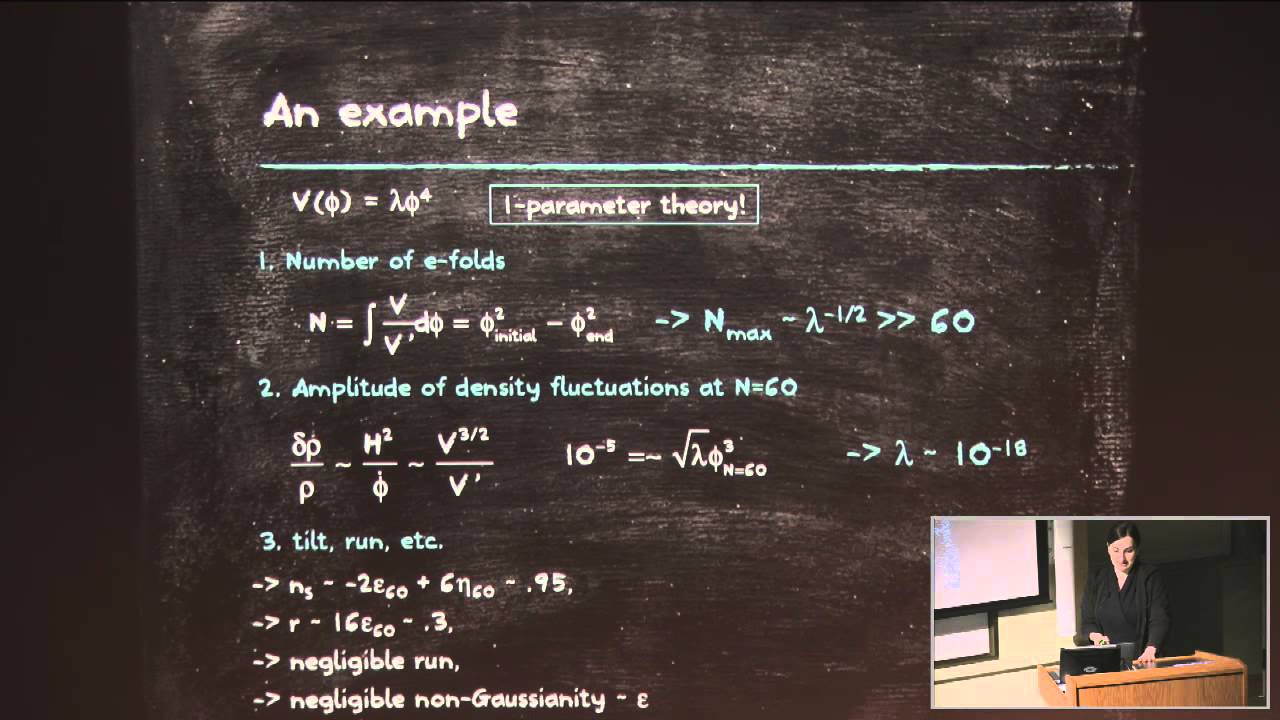
This theory that the universe expanded extremely quickly in the first few moments after the Big Bang and then slowed way down is called cosmic inflation, and it's pretty well-accepted because the math works so well but there isn't actually a lot of experimental data supporting it.
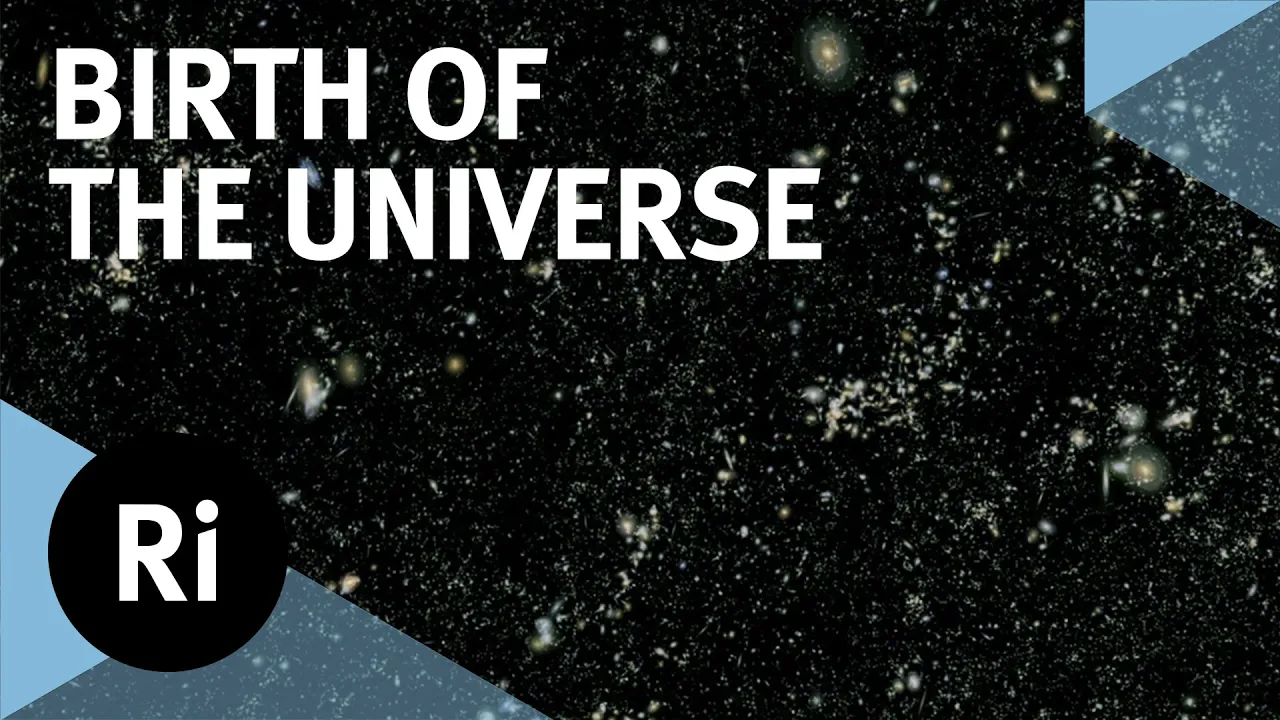
Wonderfully enough, we can study inflation because at the edge of the observable universe, the radiation it produced is just finally reaching us after a 13.8 billion year trip and that's what these scientists are up to.
With a radio telescope positioned at the South Pole, to avoid radiation produced by our sun, called Bicep2, they've been detecting that cosmic microwave background.
We've been studying the cosmic microwave background for decades, but this week the news was released that that radiation was polarized in a way that could only have been caused by gravitational waves.
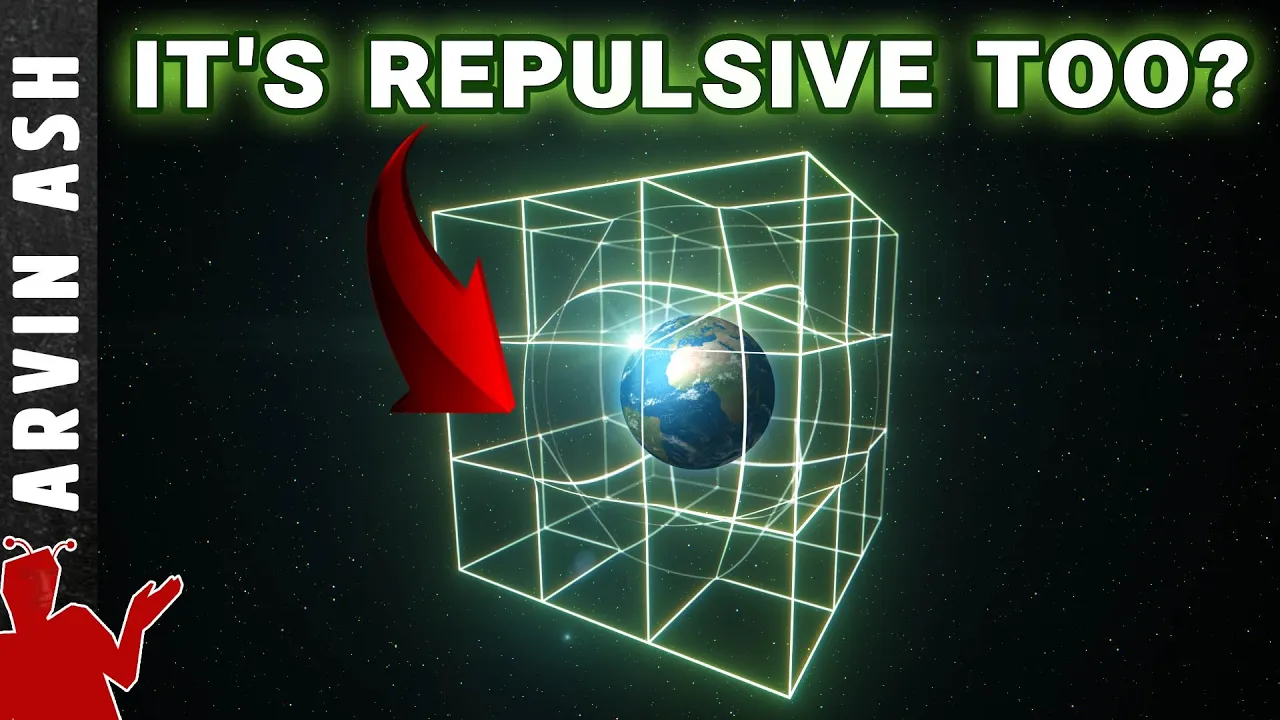
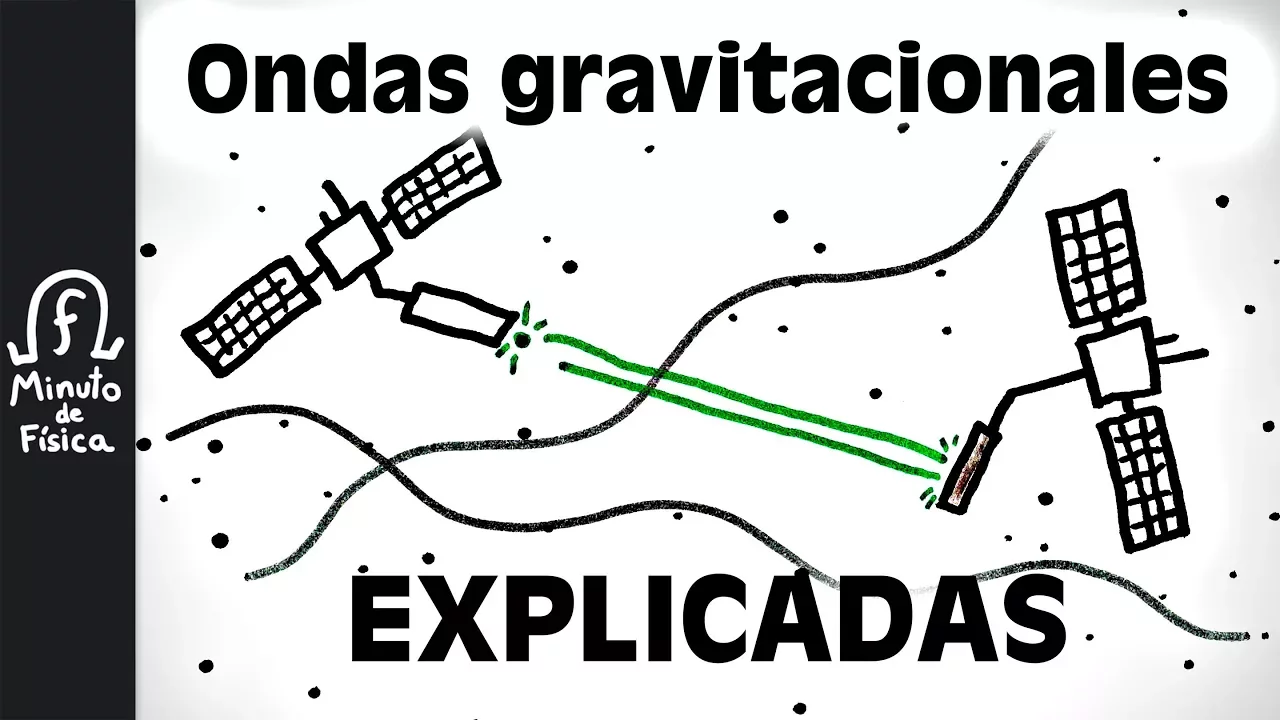
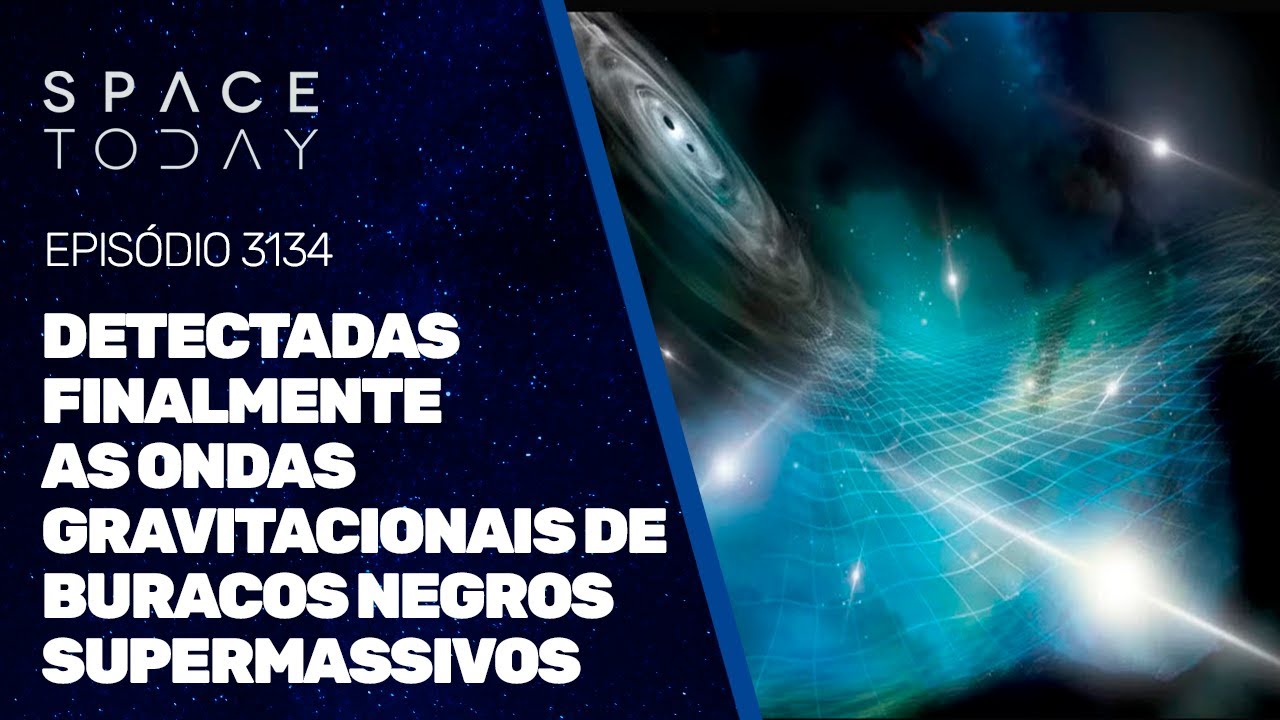
These are waves in space-time that Einstein predicted in 1916, but they require so much energy to amplify them enough to make them detectable that we have had very scant evidence of their existence so far.
This new data first confirms the theory of inflation proposed thirty years ago by Alan Guth and refined by Andrei Linde, who's house we were at when we started this journey.
Not only that, but it may also bridge the gap for the first time between the two major theories of physics, quantum mechnics, which explains the behavior of the very small, and general relativity, which explains how objects that we're used to interacting with behave.
Both of those theories are very well-understood, but in very weird ways they seem to obey different rules.
It's like they come from two different universes.
Gravitational waves have been seen for a long time as a potential link between these two theories, and this new method of detecting and studying them could help us draw the four fundamental forces of physics: gravity, electromagnetism, and the strong and weak nuclear forces into one cohesive theory of everything.
So not only are we seeing our cosmic birth in a whole new way and with a lot more certainty, but it's shedding light on what is, I think it's safe to say, the biggest mystery in modern physics.
Preemptive congratulations to those involved on their Nobel prizes, which I'm sure are forthcoming.
What they have learned is going to be bearing fruits of knowledge on us for quite a while, so look forward to more of that, here on SciShow.
(SciShow closing plays)
Up Next

11:41
Newton's Law of Universal Gravitation | AP Physics Lesson
@MrAyton12
168.8K views•2012-10-06

12:53
21cm Hyperfine Transition in Neutral Hydrogen: Radio Astronomy Basics
@AaronRobertParsons
12.4K views•2011-10-13

3:50
How Do Whales Avoid Deafening Themselves? Hearing Explained
@SciShow
187.4K views•2018-06-30

27:14
Entropy and the Second Law of Thermodynamics Explained
@veritasium
27.5M views•2023-07-01
Related Study Plans & Knowledge Roadmaps
Structured learning paths in Physics
physics
Nuclear Physics (Decay, Fission & Reactors)
01Atomic Structure and the Binding Force
02Radioactive Decay and Half-Life
03Nuclear Fission Mechanics and Chain Reactions
+ 2 more learning modules
12h5 modules
Explore Roadmap
physics
Soft Matter (Polymers, Colloids & Rheology)
01Foundations of Soft Matter & Thermal Forces
02Polymer Physics and Macromolecules
03Colloids, Surfactants, and Self-Assembly
+ 2 more learning modules
38h5 modules
Explore Roadmap
physics
Analytical Mechanics: Lagrangian & Hamiltonian
01Mathematical Foundations: Calculus of Variations
02From Newtonian Mechanics to Constraint Dynamics
03The Principle of Least Action & Lagrangian Mechanics
+ 3 more learning modules
28h6 modules
Explore Roadmap
physics
General Relativity (Spacetime & Cosmology)
01Foundations of Relativity: Special Relativity
02The Geometry of Spacetime: Equivalence Principle & Curvature
03Einstein's Field Equations: The Mathematics of Gravity
+ 2 more learning modules
55h5 modules
Explore Roadmap