







![Using the Intermediate Value Theorem - Example and Explanation ( Showing Roots in Interval [a,b] )](https://i.ytimg.com/vi_webp/3L8uPSYLFmc/maxresdefault.webp)














![[7.1] Numerical methods for ODE (Euler & Runge-Kutta methods)](https://i.ytimg.com/vi/a8aS26iOowo/maxresdefault.jpg)



The rate of convergence (order of convergence) measures how quickly an iterative method approaches the true solution, defined as the largest real number P such that the error at iteration k+1 is proportional to the error at iteration k raised to the power P (ek+1 ≈ C × ek^P). Newton-Raphson method has quadratic convergence (P=2), secant method has superlinear convergence with P≈1.618 (golden ratio), while bisection and regula falsi methods have linear convergence (P=1). Higher P values indicate faster convergence, meaning fewer iterations are needed to achieve a desired accuracy.
Numerical Methods Lec 02: Newton-Raphson, Secant & Fixed Point | GATE/ESE
Added:Basic differential calculus, specifically the geometric interpretation of derivatives and tangent lines.
The concept of algebraic and transcendental equations and what it means to find their roots mathematically.
The Intermediate Value Theorem (IVT) for locating intervals where roots are guaranteed to exist.
Fundamentals of sequences, limits, and the basic concept of iterative mathematical processes.
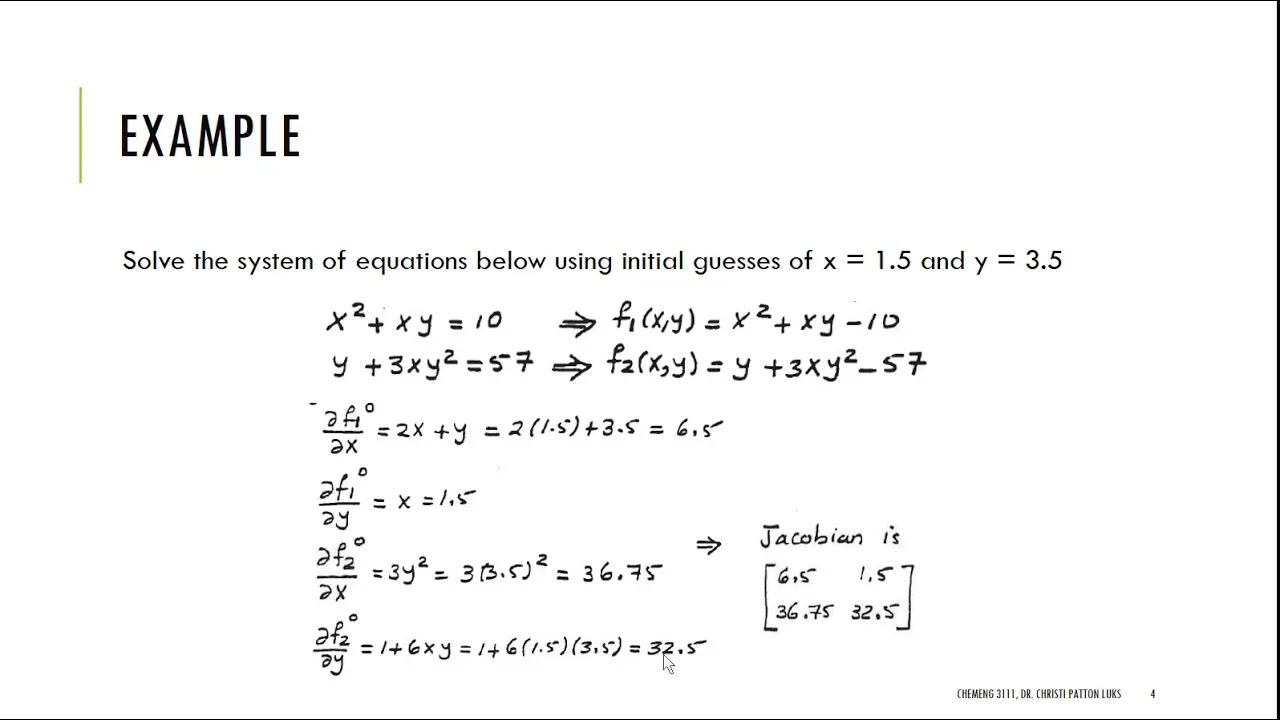
Multidimensional root-finding methods, such as the Newton-Raphson method for systems of non-linear equations.
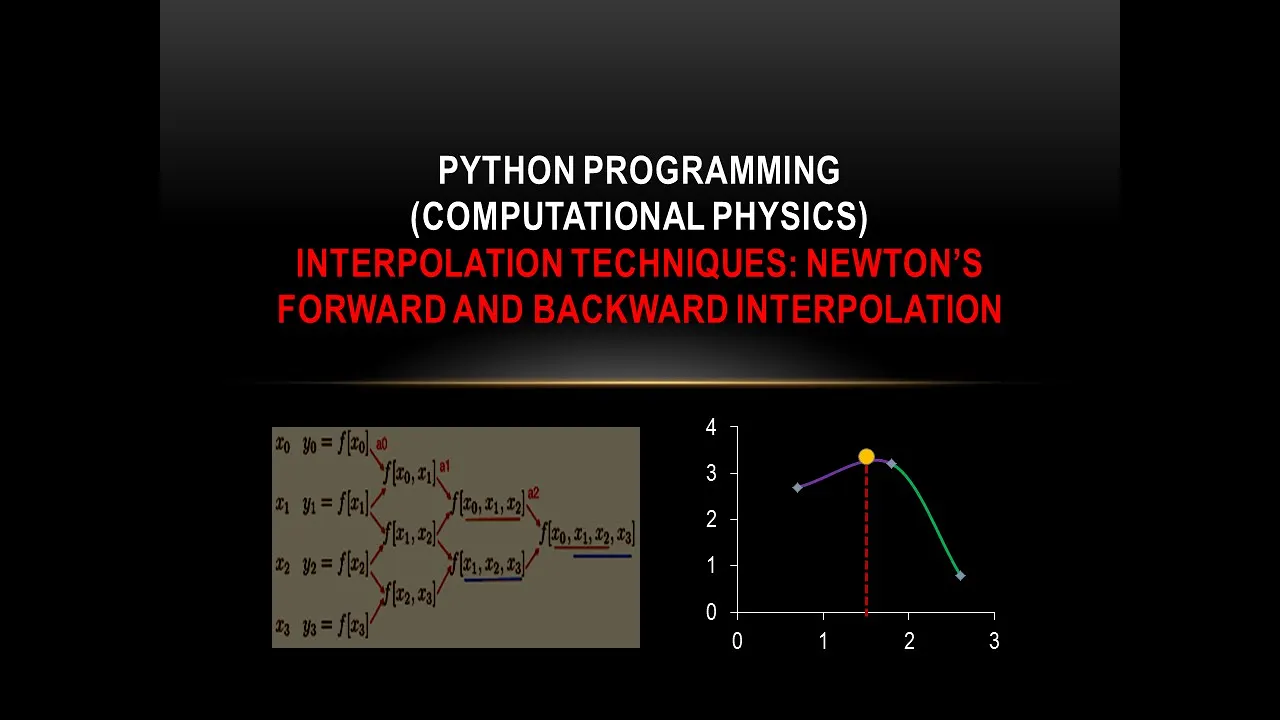
Numerical interpolation and approximation techniques, including Lagrange and Newton's forward/backward difference polynomials.
Numerical integration techniques such as the Trapezoidal Rule, Simpson's Rules, and Gaussian Quadrature.
Numerical solutions of Ordinary Differential Equations (ODEs) using Euler's and Runge-Kutta (RK) methods.
10.2K views189likes2:10:26Original Release: 2020-06-28
oh good morning students can you hear me am i audible to you okay so am i audible to you so we'll continue the session if yes please respond okay so see here will continue so if you recall last class in the morning we have power interruption and we couldn't continue the class so we'll finish off the things now of course this chapter won't get finished today because we lost the morning session today so it happened it's okay so we'll see through what moment which is the last year's from this chapter gets completed today and we'll plan accordingly so see here so in initialize class if yours if you see we have stopped somewhere here we have discussed the ITF in formula for the newton-raphson method using the Taylor sees expansion up to linear approximation and then we have generated one this you know I take a formula for this newton-raphson method okay and we then define some condition for the convergence of this newton-raphson method so now if you see by newton-raphson method by newton-raphson method we have the XK plus 1 is equal to XK minus F of XK divided by F dash of X K this is what we got here by not an absent method if you see here this is the expression that we got XK plus 1 is equal to XK minus F of XK divided by F dash of X for the addition now if this is the formula look if he XK minus one XK XK plus one as three consecutive points on a curve for example we contribute to values of X can I write EF dash of X K yes F of XK minus yakov XK minus 1 divided by Y XK minus XK minus 1 can we write this this is nothing but dy by DX at X see basically if you see there are three types of Defense's which you can take generally if you have any curve something like this this is the point XK and example if this is the point XK plus 1 and if this is XK minus 1 and let us suppose the change between all these layers is very small which means all these people int XK minus one XK and XK plus one are very small and of course this value is f of XK minus 1 and this value is f of XK and this value here is f of XK plus 1 so if you see these are very close then we can write the derivative of this function y is equal to f of X at this point XK in three ways see here dy by DX and XK is equal to F dash of X K if you write this you can write this as C taking these two points we can same one differentiation which is f of XK plus 1 minus F of XK divided by XK plus 1 minus XK and this is called forward difference forward difference okay because I told you David do is nothing but rate of change of function with respect to X so if I take F of XK plus 1 divided by F of XK then this you know this portion this change in Y is very small and you can write this as f of XK plus one minus F of XK divided by XK plus one minus XK and this is called forward difference because we will consider the point which is your head of this XK means if this is XT will consider one point which is PI over two this F of XK plus one similarly if you want to write backward difference backward difference you can write yes - of XK is equal to F of XK minus F of XK minus 1 divided by XK minus XK minus 1 this is what do you want okay so this is backward difference because with respect to the given point will consider the next point which is behind of it and it's called backward difference and there is one more thing which is called central defence centre defence for which this F dash of X K can be written as f of XK plus 1 minus F of XK minus 1 divided by XK plus 1 minus XK minus 1 so if you see these are just differences and you know when this difference is very small you can write this as limit X plus 1 tends to SK I mean XK limit X K tends to XK minus 1 and all these things aren't you know these are basically three types of Defense's that we have to find derivative at any point and in this formula if I write this backward difference for example this is what we have backward difference in place of XK is equal to this now in place of this Jeff - of XK if you substitute this formulation then we'll be getting the XK plus 1 is equal to XK minus F of XK divided by in terms of this F dash of X K we'll be putting in terms of this F dash of XK will go for F of XK minus F of XK minus 1 divided by XK minus XK minus 1 so this is what you have so since this is the denominator you can multiply this I want to bring you a net attention formula so XK minus f of xk into xk minus xk minus 1 divided by F of XK minus F of XK minus 1 ok there is nothing within this just by writing this F dash of X using this you know backward difference formulation and we are simplifying the things just algebraic simplifications you can take care of so if you multiply M on the left hand side basically I'm sorry on the right hand side XK plus 1 is equal to now if you multiply this complete term with this F XK see when you are multiplying here XK into F of XK minus XK into F of XK will get cancelled ok so we have minus XK into F of XK minus 1 plus XK minus 1 into F of XK divided by F of XK minus F of XK minus 1 so since we have a minus sign here and a plus here we'll interchange these two so if you see XK plus 1 is equal to the same expression I am writing with this term first and this term in the following because it has minus n here so XK minus 1 into F of XK minus XK into F of XK minus 1 divided by F of XK minus F of XK minus 1 so this is I did this is also a ita2 formula that we have and this formula is called secant iData formula if you evaluate using if you evaluate solution for any of the equations using this method we call that method as secant method basically so this is secant iterative formula okay and this method is called basically secant method way you will be given the values of XK and XK minus 1 means for example if you are given initial guess X naught and X 1 then you can go for X 2 once you know X 2 by using X 1 and X 2 you will go for the next titration which is X day so how this is how this you know will proceed in this idea to formula and this is for secant method ok so these are the four methods that we thought of discussing regula falsi method and then you know regula falsi method then bisection method and you turn off from method and secant method which we discussed here ok so now okay let's not go till that moment so see here before going to this I would like to tell you one thing which is called pixelpoint hydration method fixed point iteration method we will see what is this fixed point iteration method what is this fixed point iteration method so see here if Yakov X is equal to zero is an equation then ya forfeits is equal to 0 can be identically expressed as G of X is equal to X means for example if you have any function like X into E power minus X is equal to 0 if you want the solution of this value you know you can write this as X is equal to e power x I mean sorry is equal to 1 for example if you have here if you want the solution of this equation X into e power minus x is equal to 1 then this equation can be written as x is equal to e power x and this can also be written as x a power X minus 1 is equal to 0 which is f of X is equal to 0 so any function f of X is equal to 0 can be written in this form G of X is equal to X it's like taking 1 X common and writing the whole expression on the other so if you convert this f of X is equal to 0 in this form then the idea to formula and the I creative formula for fixed point iteration method fixed point iteration method fixed point iteration method is given by fixed point iteration method is given by G or you can know it may be XK plus 1 is equal to G of XK so once you make initial guess X naught X naught as initial guess zoom X not as initial guess so if you assume this X not as initial guess first of all we'll get G of X naught which means you got the value of x 1 again if you put X 1 here you will get X 2 value so this eightish and keep on repeating and what's the meaning of this let us see 0 X G of X okay so see here this combination f of X is equal to 0 can be written as G of X is equal to X so now see here okay let us write this answer by example for the time being now see here carefully what is the geometrical meaning of this let us try to see if you see these are two curves G of X is one curve and X is another so we have two curves in this y is equal to x and y is equal to G of X and we need to look for the point of intersection of these two curves that so first of all let us suppose we have gone y is equal to X okay so now let us suppose there is some curve something like this y is equal to G of X some random I'm just trying one thing and you know this is the point of intersection where yet some G of X values are same so this is x star actual solution actual solution of the equation you know this is the point where X is equal to G of X because if you see this on this line y is equal to it so if you equate both the Y's you have X is equal to G of X as this value and this is extra the actual solution where these are meeting so now what do you do as per this there or as per this is it first of all you assume an initial guess X naught X naught and you will calculate this G of X naught value you assume some X naught and you'll calculate this G of X naught value now once you calculate this G of X naught value you will take this G of X naught as X 1 okay so since XK plus 1 is equal to G of XK if you are taking X naught as initial guess G of X naught if you put K is equal to 0 then of X naught is equal to X 0 plus 1 which is X 1 so this difference which is initially here you take here this time so if you equate this length with this length somewhere here this X 1 appears to us something here so again if you take this will be getting some extra so in such way we will be approaching this solution ok so finally we'll H of this point where this happens but now one thing we should take a office well the solution to be convergent means for this idea to method to converge to a solution for the solution to be convergent the only condition is modulus of G dash of X should be less than 1 okay because you know G dash of X is generally changing you know this Y values with respect to X values and you know the system can converge only if the change in Y is less than compared to the change in X ok so this is the way you can write this solution and because I will tell you for any given f of X you can't form a unique G of X generally for example if I write X minus tan inverse X is equal to 0 then you can write x is equal to tan inverse X similarly if you ship this tan inverse to the other side we can write X is equal to tan X so they can be multiple functions but as long as this condition gets satisfied for G of X the solution definitely will converge ok for example here you can write x is equal to tan X as well if you shift on to the other side so if you see they can alike they can exist multiple number of G of X s for any given function f of X but as long as your choice of G of X is sand fine condition your solution definitely will converge ok now we will discuss one important thing called rate of convergence convergence this is also called order of convergence of convergence so let us see that difference between these I mean so what assembly actually let us see what the definition of this okay so rate of convergence if f of X is equal to 0 is an equation any equation algebraic or transcendental doesn't matter is an equation and and alpha is the actual node actual real loot of the equation actual real loot of f of X is equal to 0 and XK plus 1 comma X K are the values obtained by I'll tell you what we use of convergence see here by looking at the definition you will understand yourself so that's why I'm writing this and XK plus 1 comma X K other you know values obtained by when you obtained by using ITEX and formulas using iteration formulas in k plus 1 and k of iterations in k plus 1 and care patients see definitely if i given f of X if you use any of these methods you have different titration formulas so you can calculate XK plus 1 and XK when initial guesses are given to us then if e k plus 1 epsilon k plus 1 is nothing but alpha or you can write maybe xk plus 1 is equal to alpha plus epsilon k plus 1 because you know i tyson's only give approximated results but they don't give exact results there will be small change between the exact root and the value you obtained in the K plus-1 hydration that's why if you see in SNS plus I have I have substituted you know this I have put this approximation sign but not an equal to Center but then we assumed that after K is very large they will be equal so see here so see here if XK plus one is equal to alpha plus ek plus one and XK is equal to Y XK is equal to alpha plus ek way you know ek plus one is the difference between these two values XK plus 1 and alpha and ek is the difference between XK and alpha okay and these two need not be same but they will be very small and close as well so if you see then they say a real number in bracket largest possible this possible real number we say a real number in bracket largest possible number P as a rate of convergence as rate of convergence of the method a rate of convergence of the method if ek plus 1 can be written as some function I mean some constant into ek power P plus order of terms containing ek minus 1 ek minus 2 and so on like this which are you know me neglect in the Taylor series expansions and all these things so this is this number P is called as you know order or weight of convergence order rate of convergence okay rate of convergence so one thing I want to tell you now if this order of this Wharton's if we neglect which means if ye k plus 1 can be written as y-a into ek power of P plus I am neglecting these terms so plus some small value then we are calling this as the rate of convergence now what's the physical meaning of this rate of convergence see you know definitely after some finite number of iterations this value will be very small which is of course less than 1 but still it is very small now if P is more look carefully answer my question very carefully if you a is a constant then please tell me he K is a help small we know this if P is more what happens to the value of EK plus 1 will it be more or less if P is more and if this value is less than 1 then tell me this value will be less horrible if P is more when ek is less than 1 this implies ek plus 1 will be less see because if you write 0.5 whole square this is 0.25 but now if you go for 0.5 full cube then answer could be point 1 to 5 which is smaller when compared to this that always less now now see carefully if P is more than we yourself told ek plus 1 is less that if ek plus 1 is less which means if ye k plus 1 is less what about the relation between these two next a plus 1 is very close to alpha cut if if ye k plus 1 is less as we have told now if ek plus 1 is less which means this defense of this term will be very small if this term is very small this XK plus 1 is almost equal to alpha which means in the AI iteration values will take this real loot same as the value that we obtained in XK plus 1 iteration which means one thing it's very clear first to minimize the number of iterations this P should be more done because when ek plus 1 is very small you know this alpha will be almost equal to XK plus 1 means if you want to attain the solution in a very less number of violations this value of P has to be more because it will make the change less within last number hiatus it's clear to all of you videos understand this for the matter for the method to converge faster this P has to be more because if this P has to be more definitely this change will be less so now this is the definition of a rate of convergence and one thing for faster convergence for faster convergence of the of the of any hydrated method for faster convergence of any idea to method for faster convergence of any idea to method rate of convergence has to be high rate of convergence has to be high or you can say has to be more in general so now actually I thought of showing you this rate of convergence for noumic I mean this newton-raphson method but because of time constraint today that you know unfortunately something happened so I could give you the values ok so please consider this as a rate of convergence of different methods ok so please try to take this method and rate of convergence means basically this p-value which we can write we have formula we can do I will give you the idea how to do but I won't there because time is very less now so I won't there but I will give you the idea how we'll be getting different values of P ok method first method regula falsi method regular falsi method is linear convergence method linear convergence and we'll get P is equal to 1 ok you know generally one is called linear so a rate of convergence the order of convergence is 1 so if power is 1 we will call the test linear so this is what second for bisection method bisection method he's also linear convergence bisection method is also of linear convergence again p-value is 1 the newton-raphson method newton-raphson method the convergence is 2 and recall this as quadratic convergence quadratic convergence and P is equal to 2/4 if you go for a secant method secant method for which we'd have they ever decided to formula using newton-raphson method if you go there then the convergence is one point or you can write P is equal to 1.618 which is approximately equal to one point six two okay so all these values look something better because they are interests but this is P is equal to one point six one eight actually when you are performing this analysis you will be getting something like e K plus 1 is equal to Y a into e K power P which is same as e K power 1 plus 1 by B this is what you will be getting when you are you know finding the secant method trying to their expression for rate of convergence of the secant method so if you equate these two when basis are equal this power should be same so P is equal to 1 plus 1 by P is what you will do for secant method and if this is a quadratic equation P Square minus P minus 1 is equal to 0 so P is equal to minus V plus or minus square root of b square minus 4ac divided by 2a okay but if you take this positive value and if you take this negative value you know rate of convergence cannot be negative if rate of convergence is negative then what happens this change it increases as it goes on means the solution does not converge to a single point see for example here if this P is negative then what happens see zero point five whole power minus one if I have minus 1 has a rate of convergence then this value is two less also if this P is more then this VK plus one will in case than EK which means XK plus 1 is far away from Alpha when compared to XK which means solution is diverging so we can we can't have negative values of P and when you simplify this expression this value is nothing but I am sorry this value is nothing but 1.618 and doing the derivation of this rate of convergence of secant method we will be ending up with something like this with which when you equate the exponents P is equal to 1 plus 1 by P you will be getting this 1.618 from pure action we don't have I am otherwise I thought of showing you by complete derivation but it happens unfortunately ok so anyhow proofs are not important if I get but this values for fixed point iteration method we don't have any you know particular standard to tell rate of convergence for that and of course people call it as linear in general ok but these are the four methods that have really important first to talk about this rate of convergence ok so ok I'll show you the methodology how to calculate but we may not go till the last because it's time-consuming so for newton-raphson method i will show you simply for newton-raphson method for newton-raphson method for newton-raphson method what do we have XK plus 1 is equal to XK plus I mean sorry minus F of XK divided by F dash of X K this is the idea to formula we have now if you see this XK plus 1 can be written as ek plus 1 plus alpha and this XK can be written as ek plus alpha minus f of X K can be written as ek plus alpha divided by this is also a flash of ek plus alpha so now if you see this alpha alpha gets cancelled this implies ek plus 1 is equal to ek minus if you expand this function using Taylor series f of X plus h because this ek is small by to this alpha because this EK is the defense between the idea to value under the exact owed so this can be written as f of alpha + EK into F - of alpha plus ek square by 2 into F Double Dash of alpha and of course we are stopping it here because this F - of alpha is sufficiently you know to calculate the things divided by again we have yes - of alpha + EK into F Double Dash of alpha by 2 again we applying LS is for this because if you have the function f dash of alpha + EK then functional value F dash of alpha plus h into you have to have dash of x + y f - off this F dash of alpha is f double dash of alpha and so on we'd go for things like this okay so now if you see this F of alpha is zero why this F of alpha is zero because alpha is exact out of this f of X is equal to zero so if alpha is exact out of f of X is equal to zero then this F of alpha will be definitely zero ok so now if you take F dash of alpha + 1 EK common all these things he cape les 1 is equal to ek - if you take ek common ek into F dash of alpha if you take it common we have we have DK in the F dash of alpha if take it common 1 plus ek by 2 into y f double dash of alpha divided by F dash of alpha here in the denominator as well if you take F dash of alpha common see carefully I am doing it f dash of alpha take it common you have 1 + EK by 2 into f double nation' of alpha divided by F dash of alpha this is what you will be having you can calculate cancel this F dash of alpha and F dash of alpha here and you can write e K plus 1 is equal to ek minus ek of 1 plus ek by 2 into F Double Dash of alpha divided by F of alpha F dash of alpha into in to this term if I shift it other under the top one plus ek by 2 into F Double Dash of alpha divided by F dash of alpha alpha minus one this is what we have kept because this is 1 plus ek by 2 into F Double Dash of alpha divided by F of alpha so if you want to multiply this here we light a minus one sign there so ek plus 1 is equal to ek minus ek into 1 plus ek by 2 into F Double Dash of alpha by F dash of alpha when you multiply this into this expansion if you I 1 minus ek by 2 into F Double Dash of alpha plus f dash of alpha neglecting higher terms of ek square and all again here this will give us something like ek plus 1 is equal to C if you multiply this there will be 1 EK and this EK kansas this that and finally the thing that will be ending up with is you know minus into minus plus so 1 by 2 into curve 1 by 2 into you have touch of alpha if take common there is two here cut so one by four I guess okay if you manipulate these two 1 by 4 into ek square by 2 I mean this 2 is already taken care here so you have double dash of alpha divided by F dash of alpha so plus some odd of higher jumps which we don't consider generally higher order terms so if you take ek plus 1 is equal to some constant F Double Dash of alpha divided by this which is if your leave constant because alpha is already a constant so if you see you can calculate these two values into ek square plus some order of higher terms and so if you compare this with the weight of convergence definition that I told you we have 2 here okay so that's why we switch order of convergence of this newton-raphson method is 2 but this is the process that we need to carry out for this so anyhow and gate exam they don't ask you but just rather than giving all these values of randomly to you I thought of showing at least one for you ok because time is short otherwise for secant method I could have shown you why this is 1.618 basically okay so if you compare for near the National mother to now with your experience of rate of convergence definition please tell me yeah I think there could be some calculation mistake here this will be 2 actually ok so this should be 2 in general ok so that's why EJ terms gets cancelled and we'll be having ek square this yeah how we expanded using Taylor's is in basic calculus Uganda we have this Taylor series expansion yeah for fix plus H into F dash of X divided by 1 factorial plus hit square into F Double Dash of X divided by 2 factorial and all these things so basically on this expansion I have expanded this f of alpha plus e KS F of alpha plus ek into F dash of alpha plus ek square by all these things okay so when you cancel see first derivatives we can cancel but there will be second day or two terms here si minus ek square by 2 minus ETA by 2 and all so we have 1 by 2 into F Double Dash of alpha divided by F dash of alpha term here okay so that's why we couldn't take this ok so what are the calculations and all you please do them carefully you will be getting something like this ok because the rate of convergence of this method is to if there is some calculation error here with less than minus you please do that carefully you will be getting this expression finally okay so now if we go back so now tell me out of all these methods are any given equation f of X is equal to 0 for any given equation f of X is equal to 0 now tell me out of all these methods which method will converge faster if you have all these four methods generally if you see the rate of convergence is you have 1 1 2 & 1 point 6 2 so out of all these methods what's the method that's with highest rate of convergence the newton raphson method so that's why newton-raphson method is very important and also in gate examination they put a lot of questions on this because any given question this newton raphson provides the solution within less number of high patient ok so that star is an why to save your time because calculations in you know I attention methods are very use actually you need a lot of decimals and different things here so they generally ask you for newton-raphson method because convergence a it is higher here ok this just to show you this too comes here I have done all these things but practically forget there is no necessity of this you can it it's fine as long as you understand this one more thing I would like to tell you in bisection method in bisection method the minimum number of citations acquired the minimum number of iterations required the minimum number of iterations required to have to have an attention value to have an attentional value y X K means in the K a titration such that XK minus alpha is less than epsilon you can take modulus if you want because this is the defense between the actual load and the value that you are obtaining in X K where you can write the epsilon is a constant which is very small and and alpha is the root of root of f of X is equal to 0 in a comma B because if you want to apply bisection method you need to have an interval we have seen in excess class so this X is equal to alpha is the actual load of this equation f of X is equal to 0 in this interval and this XK is the value of the attention value that you obtain by performing few iterations by taking any of by using any of this I test I mean this bisection method I tried to formula is given by the equation is given by the equation modulus of B minus J by 2 power n is less than Epsilon so this is what the L is the minimum number of iterations minimum number of iterations you need minimum number of citations you need to get the solution XK in the K a citation such that the difference between this is less than epsilon so generally if you keep on going for this idea two methods there comes small difference between the actual load under the idea Gamla obtained but there are some permissible limits and this epsilon is decided by you up to which accuracy you need though if you don't defend this the I testing goes on because in ma I traded value after with the decimal points for the decimal may change and after some additional may change on all these things so this if this is the equation means if you want the value of X within this range of alpha then this is the number of violations you need to perform which is given by this this is given because you know if you apply first citation then what happens this interval which is a comma B get reduced to half if you want a second notation that this said you should to again one cause of the given actual interval so finally the interval gets reduced by 2 power n times when you perform ki trations or else you can write maybe k here because we are waiting in case so you can write k ok so this is the minimum number of iterations that you need to have the solution within this range epsilon because what happens if you see first if this is JB and let us suppose alpha is somewhere here then this is your new point see when you apply first titration what happens this interval is very much less than I mean half of this which is a minus B or B minus a divided by 2 this is the size of the interval now now if you go for second iteration it again gets 1/4 of this so we will go for two so like this if you perform care attentions you will be getting 2 power K and finally you will be getting your interval very small such that it lies in the neighborhood of yay okay so this is the formula that we have fun performing number of hydration bisection method that the minimum number of iterations you need to perform so that your value in the hydration and actual loot will differ by a very small amount which is less than this epsilon which is defined by us okay so we have put some questions now we will see different questions on this algebraic equations basically algebraic as the less transcendental equations so please see here let us try to solve this questions solutions the hydration formula to find the square root of a positive real number B means you want the value of x is equal to square root of B by using newton raphson method so you want to find the value of this X X is equal to square root of b using newton-raphson method so what is the idea to formula for this so if you see this function can be written as X square minus B is equal to zero because you can Square this equation on both sides we have X square is equal to B and X square minus B is equal to 0 and we have f of X is equal to 0 now you can apply the hydration formula and please try to tell me the answer XK plus 1 is equal to I will be doing along with you so please you also try we have a sketch minus f of X K divided by F dash of X K so this implies XK plus 1 is equal to XK minus f of xk if this is f of X which is X square minus B f of X K is XK square minus B divided by F dash of X you know if X square minus B is f of X this implies F dash of X is equal to 2x so this F dash of X K is 2 times of XK okay so if you simplify the things now XK plus 1 is equal to if you take LCM XK into 2 X K is 2 XK minus XK Square will give you X K square minus into this minus will give you plus B divided by 2 X K and this is the I tension formula to find the square root of this number which is given in option B okay so in exam I'll tell you one thing when such kind of the sir given there is one technique if you forget this formula because many times we'll be seeing terms like this yup dash of X my f of X means generally numerator of lesser degree we have this intuition in in our mind and we'll apply this formula in a reverse way which will change our answer actually in example correct because many times you'll be seeing this kind of terms because this degree of this F dash of X will be less than compared to f of X practically so we generally have an intuition that Nestle decay term comes in the numerator and I or decay term comes in the denominator but this is the tucked formula so in example if you get confusion between these two now you remember of course this is f of XK divided by F dash of X P but if you have a confusion then go for one thing okay don't go for random guess but you can still go for one thing now see when K is very large when number of vibrations are very more than tell me what's the value what's the difference between this XK plus 1 and XK after some finite number of large I tations this XK plus 1 and XK will be almost please tell me after some finite number of iterations this XK plus 1 and this XK will be almost same good so XK plus 1 will be almost equal to XK okay so in the given four options if you forget this formula f of X by XK all means yes by F - Oh F - by up if you have some ambiguity you can go for 1 in all the four options wherever there is XK plus 1 put XK ok so if you put XK here XK is equal to 3 times of XK plus B by 2 X K so if you simplify the things 2 XK square is equal to 3 X plus B minus 3 X K minus KB is equal to 0 is this the given equation is this same as this equation 2 X square minus 3x minus KB is equal to 0 have these two equations same please respond if you put X K is equal to XK plus 1 is equal to XK and if you simplify it is this the equation which is same as this no now let us go for next option if you put XK here if you multiply these two two XK square is equal to XK square plus B so you can cancel 1 XT square here so the final answer is XK square minus B is equal to 0 now I have these two equations same now are these two equations same XK square minus B and X square minus B again if you check for this you won't get this equation X square minus B and for this also you won't get this equation X through a minus B means if you have a doubt whether it's young by up - yup - by up then simply do one thing in the all four options wherever there is XK plus 1 put XK and simplify the equations out of all these four options one option will give you the actual question equation okay and that's the solution of that ok it's simply logical because when K is sufficiently large these two values are almost same so you can replace XK plus 1 with X K so if you replace XK plus 1 with XK and if you simplify all the four options out of these four options one option will definitely match with the given equation in the question okay but this is useful only if they're you asking you I attention formulas if they give you some initial guess and if they're asking you for X 1 X 2 other values then you can't use this obviously because with the initial guess you need to calculate values manually okay so is that understandable to all of you how to check options if questions are of this particular kind please respond did you all understand how to identify the option if questions are of this particular kind if you forget this formula clear to all of you I want to ask you to a spot around some party 6 I guess yeah ok so we are going for next question so please solve this in the interval 0 to pi the equation X is equal to Cossacks has this is the case so please tell us all this question all of you I'm giving you some time so please all this be exactly one solution community let me take sick mean when you other people do be is the correct answer okay so simple when these are given we can write we can draw the graphs actually - X Y X and - way here he is not asking for the solution he is asking for number of solutions curve which means we need not solve this equation but because he's just asking for number of solutions but he is not asking for the solution so now first the y is equal to X let us try to draw that curve y is equal to X since we are having only 0 2 pi I am NOT drawing it on the left hand side so we are stopping here because they are two pipe let us suppose Phi is somewhere here okay so now this is the line X is equal to PI and of course this is the line X is equal to 0 and we aren't to talk the nature between these two so see here if you draw the graph y is equal to cos x you know if this is Phi this is also pipe which means PI by 2 is somewhere here and you know at PI by 2 if this is the value cos 90 is 0 so if you see and if this is minus 1 you know cos x graph will look something like this between zero to PI that because this is PI by 2 pi by 2 is 1 point 5 by 7 but cos 0 is only 1 this value is 1 and this is 1 point 5 7 okay so this is Cossacks graph between 0 & 5 now if you see there is one point of intersection between this y is equal to x and y is equal to Cossacks so there is one point of intersection between other curves y is equal to x and y is equal to cos x means there exist only one value of x where this X is same as this kha'zix okay symbol titled otto coughs you know graph of Cossacks is something like this stuff of course this is 0 this is X is equal to PI by 2 and this is X is equal to PI so I have a purdue's at this part of cos x from 0 to PI here okay because the interval given is 0 to PI so if you create this graph from 0 to PI and you can plot y is equal to X so if you see between 0 & 2 pi these two curves are intersecting and only at one point so we say we have only exactly one solution clear this is just cos x cos i have any khadisha to this graph but why I have taken this as point because PI by 2 value is one point five seven and maximum value of cos is only one so we need to put this point below this PI by 2 okay we have one more question with sine X we will see there for sine X okay shankha clear so can we move ahead with this kosher did you all understand how we have only one solution exactly all of you did you understand how we have only one solution well this X is equal to cos x within this age 0 to PI okay so see here third version solution we wish to solve X square minus 2 is equal to 0 by using newton-raphson technique let the initial guess be 1 okay subsequent estimate of X that is X 1 so please try to solve this question all of you it's given we need to find the value of square root of 2 using this idea to formula basically so please try to do this it's already eleven twenty fifty minutes has already completed okay time is very short actually because of this issue we will see how to balance the things based answer one point five okay option D none of the above but many of you are telling B okay so let me show you first of all my sincere suggestion to all of you whenever you are solving something in numerical methods even if you have very good at main calculations but please don't do that right I dare to formula once okay it doesn't matter how good you are in calculations but please I am requesting you please write iterative formula once because during my calculation main calculations if you have first high-tension value changes if you make a small mistake and let us suppose this x1 is actual x1 when you apply this idea to formula neatly and let us suppose this is some different value which you got in first hydration then what happens if first hydration value is on second detection value will be our second hydration is on third iteration will be value so if you see this values which you find in iterations are very important okay because you value in one of the iteration changes every other iterations they go on okay so my sincere request it does not matter how small how big the question is please all right hydration formulas always so if you write a hydration formulas anyhow it's given this newton-raphson technique so XK plus one is equal to XK minus F of XK divided by F dash of X K okay so XK plus one is equal to XK minus F of XK what do we have XK square minus 2 divided by 2 X K so if you simplify the things of it XK plus 1 is equal to 2 X K square minus XK square which is 1 XJ square plus 2 divided by 2 K this is what we have if you like a big turtley you can take this one by two common and it says this is not K this is XK sorry so one of my two into XK plus 2 by X K this is what you will be having that so now we got the iteration formula as XK plus 1 is equal to half into XK plus 2 by XK normalization formula divide before 1 by 2 into XK plus V by XJ if B is any number so now given X naught is equal to 0 I mean 1 so what happens to X 1 X 1 is equal to 1 by 2 into 1 plus 2 by 1 which is 3 by 2 and the answer is 1.5 okay ok along with these videos I will give some individual topics which I am not dealing here so both of them could help you ok so now if you see this question carefully the first option is given as 1 point 4 1 4 that in exam if people don't have time they think that the square root of 2 is 1 point 4 1 4 that the exercise x square minus 2 is equal to 0 is same as X is equal to square root of 2 by which the actual answer is 1 point 4 1 4 so students instead of doing this all these things they'll go for 1 1 point 4 1 4 directly in exam and that way this is given in first option but one thing I personally methods will give actual solution after some finite number of violations okay they don't give the car towns and the first hydrogen itself did you all understand for example if you see here if your plane is not enough Sun whether first of all we got 1 point 5 okay which is not same as square root of 2 but if you perform one more iteration you will be getting something very close to 1 point 4 again but we don't get exact answers in the first wave you may get for some questions but it's not mandatory that you will get exact answers in the first citation itself but this is exact answer which you are not getting in the first citation in the question he is asking for first penetration value so first edition value is 1.5 but not 1 point 4 1 4 okay so even though the exact answer is 1 point 4 1 4 this new sanitation technique is not giving the exact answer in the first iteration for this particular example X square minus 2 is equal to 0 okay so in exam if you know the values if you can find the solutions you don't write them there okay because they may not be the answers of iterations here okay clear to all of you by this 1 point 4 1 4 is given here and what's the question you need to take in exam if you know the answers directly don't go for that options if they are present because I test methods may not give the same answers in the initial iteration steps okay next the newton-raphson method is used to find the root of the equation f of X is equal to 0 I think here we missed it f of X is equal to 0 ok and we F dash of X is the derivative of F okay the method converges but if is it see why it should be see yay did you all remember we told for convergence of for convergence of newton raphson method modulus of this f of X into F Double Dash of X should be less than mod F dash of X whole square we learnt this curve is this condition present in any of these three options first three options we told you this condition type newton-raphson method doesn't converge always but for its convergence this condition should be manically you know get satisfied did we tell this or not for convergence of newton raphson method all of you you want me to show this way I think this board has a trouble again it's puffing yeah okay so I told you but he's this option present in any of the first few options here see that's what I discussed as the last point in as today's class if you remember see the condition for convergence of newton raphson method okay so that's why if you see this condition is not present anyway so the answer is none of the above and we f of X need not be polynomial because we use newton-raphson method even for transcendental equations correct we use techno magic issues and all these things sine x cos x and all so if you see this they need not be mandated all the pen yeah for X naught can be less than 0 I mean it can be greater than 0 as well no problem ok so the answer is none of their work okay because this condition is not present in any of this first the options next solution we wish to calculate the reciprocal of a using the newton raphson method f of X is equal to 0 the newton raphson algorithm or the function will be means which of this iteration formulas would suit could give us the value of 1 by 8 okay so X is equal to 1 by a this is what we have so please try it and tell me the answer this is square root of two so this is not the answer this is 2x8 this is also not the answer I think she is the answer not another converges always if this function satisfies this condition okay which is not given okay and of course this don't give you the answer yes so now yeah what do you think is cut the guy taste and so see here we have yeah minus 1 by X is equal to zero okay so XK plus 1 is equal to XK minus F of XK divided by F dash of X K so if you see XK plus 1 is equal to XK minus K into XJ square plus 1 XK again so this is XK plus 1 is equal to 2 XK minus XK square which is the idea to formula but one important thing is yes that's what I am going to tell you now why I have not taken X minus 1 by a is equal to 0 this could be the question to all of you ok I have taken a minus 1 by X is equal to 0 but I didn't take X minus 1 by is equal to 0 what happens if we take this as the function see now see what happens if you are either a to formula XK plus 1 is equal to XK minus F of XK divided by F dash of X K 1 which implies XK plus 1 is equal to XK actually gets cancelled and you'll be having 1 by 8 that's it we don't have means basically it doesn't produce any idea to formula us with the initial guess we can't succeed to ideations if you take the question in this way okay so that's why we have modified the equation in this way because our main intuition is to develop some idea to scheme or itay to algorithm for the procedure ok but if you do it this way we don't be getting any algorithm for any initial guess it just tells us the final value is 1 by a ok okay someone asked me I forgot his name it's not here okay so did you understand why we have taken ei minus 1 by X is equal to 0 ok Uganda so see here this is an expression for a is equal to 7 and starting with X naught is equal to 2 in previous problem okay in previous problem given X naught is equal to 2 and what about X X is actually 1 by 8 is the equation ok in previous problem the first two additions will be means if X naught is equal to 2 what about X 1 and X 2 this is the question is asking for ok so if you see before XK plus 1 is equal to 2 XK minus a X K square yes the iteration formula ok so now yes this implies X 1 is equal to 2 X naught minus a it's not square so X naught value is 2 so 2 into 2 minus K value is 7 so 7 into 2 square which is equal to 4 minus 28 which is minus 24 oh my god something changing here but answers are given in 0.1 one and all so please practice all this - in Loulou - 7 into 2 square 4 - make one caption this make this a zero point - I think it should be zero point 2 because values have close to that so make that zero point - okay otherwise values will diverge anyhow so I think in this question it is a 0.2 but there is some mistake while writing this question so make that zero point two and calculate the values 2 into 0.2 minus 7 into 0.2 whole square 2 into 0.2 is 0.4 minus 7 into 0.04 so 0.4 - 0.28 so 0.40 - 0.28 will give you 0.12 but two options are here so this is on and this is also on because there are two options with 0.12 so you got X 1s 0.12 next calculate X 2 which is 2 times of 0.12 minus 7 times of 0.12 hold sway so calculate this 0.24 into sure we can't take 0.14 common you can take 0.12 common 2 minus 7 into 84 so point 8 4 which is 0.12 into 1 point 1 6 whose example so last number should be to and it's here so this is the answer okay because when you multiply these two to successful so units digit will be 2 before I mean after the decimals so here they H 2 so this is answer okay point 1 they named okay because if you multiply these two numbers the first digit has to be to here - this exact one and here it's 6 so 2 is the characters okay since options are given to us the oils if you want you can use calculator for determining all these things but clear we can use calculator as well to calculate these values anyhow for the time being we are not using that solution for this seventh equation the reload of the equation X into E power X is equal to 2 is evaluated using newton-raphson technique if X naught is equal to 0.8 6 7 6 oh my god someone for this thing is given the second approximation value of x factor to 3 decimal places is - so what is f of X is equal to 0 implies X into E power X minus 2 is equal to 0 so if you are playing out an option I tation scheme I told you even though they are asking for the first titration but please you know calculate this value right - formula first XK minus F of XK is XK into E power X K minus 2 divided by F dash of X K so f dash of this is xk into differentiation of this is e power XK plus E power X K into 1 minus 2 it's 0 so this is the hydration formula that we have so if you you know multiply the things the XK square into e power XK plus XK into E power minus explain to you Foxtel can they'll get cancelled minus into minus plus 2 into e power X K if you take common you will be having XK plus 1 so if you want you can cancel this X case here and you can write e power minus XK here okay so we can write the idea to scheme as XK plus 1 is equal to XK square plus 2 times of e power minus XK divided by XK plus 1 so this is either to scheme that is with us so now we'll go for finding second observational value means the x2 basically he's asking for x2 second approximation so x1 is equal to X naught square plus 2 into e power minus X naught divided by X naught plus 1 so let us calculate this value using virtual calculator and X naught value is 0.8 676 0.85 to 7 okay let us see let me show you some virtual calculator applications because in numerical methods this application of virtual calculator is really important because you need to perform lot of calculations so see here what the terms we have X naught square plus 2 into e power minus X naught X naught square plus 2 into E power minus X naught so see here 0.8 6 7 6 is the value X naught value first of all zero point eight six seven six now you want square of this plus two times of e power minus of the so it's not square plus 2 into e power minus X naught X naught square and first of all see I will tell you some key points from this calculator so please listen don't write anything I'll give you ten this young s stands for memory storage means if I want to store this see here there is nothing now cut but if I click M s you see there is young here which means there is one data that got stored in the memory of this calculator and the memory value we store this 0.86 okay so if you cancel this this young r stands for memory and recall if there is something in the memory we'll call that here so if I click Yama you see 0.8 6 7 6 came here if I click MC then memory clears and you can see this young got vanished here okay so this is what we can have so 0.8 6 7 6 I am storing it for some purpose next so square of this plus 2 times of e power minus X plus 2 times Oh - X so 2 times of minus X into exponential so this gives me square root of zero point eight six sound six plus two times of e power minus zero point eight six seven six whose value is 1 point 5 9 2 divided by X not plus 1 so memory-recall plus 1 this is by X not plus one and if he is calculate the value is 0.85 - double 7 okay so this value of iteration is 0.85 - double 7 when you calculate it this X naught is equal to zero point eight six seven six okay so this x1 is 0.85 double to 7i sorry - double 7 0.85 - double 7 okay next if you go for X 2 X 2 is nothing but X 1 square plus 2 into e power minus X 1 divided by X 1 plus 1 you want to calculate this value where X 4 is this again go to the calculator now if you click a mess again now this toes this point 8 5 2 7 7 as memory value so key see here I am clicking MS so if I can send if I click Emma you see this point 8 5 to 7 7 is told in the memory again okay so now you want this square plus 2 times of minus this value to this exponent so you can see it's way of this value let's do into E power minus this value okay so if you see this is the value divided by memory we call plus one point eight five to six point eight five to six so if you round off to three decimal places this value is zero point eight five three okay so you need to be careful with much of calculator when you are putting brackets okay see for example here if I don't put this bracket here then you know what the value that will be getting is more than one because this is divided by this so something will be more than one will come Plus this one will add to that value so placing this brackets is really important and you should know this memory storage memory recall and my very clear so if I say my purpose is finished so we can click memory clear so you see this M which is initially here what it disappeared cancel 0 okay so now after doing every question please do this because instead of clicking some 708 if you are most moves to Yama or MS then what happens the value which is here will comes into the calculation and disturbs your total value okay so after completion of every question if you are using this button please clear the memory ok this is my sincere solution to all of you so did you all understand this part how its point eight five three because calculations play a very important role in gate exam and that's why in my class I you know show some calculations in the difference between a linear percent and non linear 150 line is only this calculator please tell me okay I am telling you because of calculation mistakes every many students they lose everything okay which they deserve actually so please practice this calculator as much as you can so we'll work out few more questions okay so clear to all of you so see this solution the bisection method is applied to compute a root of the function f of X is equal to this function in the interval 1 to 9th the method converges to a solution after how many iterations so this is what we have so if for the first petition the X 1 value is a plus B by 2 1 plus 9 divided by 2 which is 5 okay so what is f of X 1 it means your 4 5 if you see carefully first of all let us calculate y apaf-1 if you want F of 1 1 minus 1 0 0 minus 1 minus 1 minus 1 minus 4 it's minus 5 and here for from 9 if you see a pop knife 9 power 4 81 into 81 okay let us use calculator for this again some cubic expression so 9 / 4 - 9 cube okay - 9 cube minus 9 squared minus 4 so minus 85 totally this is value of I mean sorry total value 8 9 / 4 minus 9 cubed which is 721 actually 729 79 minus 9 square 81 minus 4 so total 5 7 4 7 is the value here which is positive and this is negative and you know this function is a polynomial function so it's continuous everywhere so now if you go for this f of X 1 value f of X 1 is equal to f of 5 so this is equal to F of Phi value if you calculate again Phi power 4 it's 625 minus 125 minus 25 minus 4 and this value is 471 so if you see this value is 471 which is greater than 0 so root lies between 5 & 1 so X 2 is equal to 1 plus Phi by 2 which is 3 so if you calculate f of thing again 3 power 4 81 minus 3q 27 minus 3 square 9 minus 4 is 13 so 81 minus you know 48 1 minus 40 will give you 41 so this is also positive again so f of T is positive which means basically if see here initially the solution is 1 comma 9 and we got the mean value as 5 so if you see these two opposite in science but this F of Phi is greater than 0 which means replacing 1 comma 5 now when you perform 1 comma Phi you got 3 & 4 1 this is less than 0 or Phi it is greater than 0 F of T also data than 0 which means if you see the hood lies in 1 comma 3 who Tyson 1 comma T so is equal to 1 plus a by 2 which is 2 this is what you have cut 4 by 2 2 so 2 power 4 is 16 16 minus 8 8 8 minus 4 4 4 minus 4 0 which means F of 2 is equal to 0 and this is satisfying the equation so this XT is equal to 2 which you obtained in the third iteration is the solution for this equation so we need total di tations to calculate the actual root of the equation ok simple question just bisection method applying for the additions I told you depending upon the science you need to check whether the next interval is 1 to 5 or 5 to 9 so simply based on the science I have checked it just bisection method so in bisection method how will you calculate the iteration value x1 is average of the interval values so 1 plus 9 by 2 we got 5 and we calculated a 4/5 now if you see yes I told you if your coffee a into F of C is less than 0 consider the interval as a comma C if your for PA into F of C is greater than 0 consider the interval as B comma C this is what I told you that so now if you see here F of C into F of U is less than 0 so I consider this 1 to 5 as the next interval similarly if you go for other iteration we'll be adding this see but I told you one thing people are asking me here this step see on I told the waiter than zero but in this question he's asking for exact solution he's asking per epsilon is equal to zero this equation doesn't get money if you put zero because to get this value of y you need to apply logarithm and you know log zero is not defined okay I told you he giveth and zero when I owed this formula but in this case E is exactly equal to zero so they come some change if you apply this formula which is not correct actually okay this he has to be some positive quantity but it's zero if you want the solution so in theaters you could get the solution and this third rotational value is X is equal to two and you know you're for two is equal to zero okay straight away solving this question I hope there is no discrepancy here for you okay so can I go for next part p.m.
the real loop of the equation 5x minus 2 plus X minus 1 is equal to 0 is - here he is asking from who actually f of X is equal to 0 in place 5x minus 2 cos x minus 1 is equal to 0 this is the equation so we can apply on your turn have some method because that is the method which gives solution in less number of iterations as we have seen rate of convergence is high for that so let us generate the citation formula XK plus 1 is equal to XK minus F of XK so 5 xk minus 2 cos xk minus 1 divided by differentiation of this 5 plus 2 sine X K this is what we have okay because derivative of this is 5 minus 2 into minus sine X so this becomes plus so if you simplify the things XK plus 1 is equal to if you multiply this fight with here this 5 xj and 5 K gets cancelled so 2 times of XK into sine XK minus into minus plus plus 2 cos XK minus into minus again we have plus 1/5 plus 2 sine X K this is the value that we have so we can eat up to two decimals accuracy so for this hydration formula we can perform calculations 2 XK into sine XK plus 2 cos XK plus 1 divided by 5 plus 2 sine X T so initial guess is not given so let us take some random guess because we don't know what the solution but for taking that random guess we need to draw the graph first of all because I told you if your initial guess is very close to the answer you know if your initial guess is very close to the actual load of the equation then your solution gets converged faster okay so if you make a random guess your solution may take some more time to converge but if you have some idea on the curves and if you can make a appropriate initial yes then you know we can get things faster let us try to plot these two curves which means to cause X is equal to 1 minus 5x which is minus 5 X plus 1 so Y is equal to 1 minus 5x is one equation and y is equal to 2 cos x is another equation so first of all let us try to plot this kite line y is equal to 1 minus 5x so if you put X is equal to 0 Y value is 1 and if you put Y is equal to 0 then x value is 1 by 5 somewhere here so which means this line goes something like this that way this value is 1 by 5 next Y is equal to 2 kha'zix this value is actually 1 so 2 cos x means the line comes something like this from here so if you see something like this but this intersects it here Y is equal to 2 cos x okay because this line will already decline when compared to this pipe and ox so let us make X is equal to 0 as initial yes because we don't know the exact value where it's meeting so let X naught is equal to 0 if you have some idea you can choose initial guess appropriately if you don't have any idea also you can make some randomness okay but since we have some idea on graphs we are going for that this is 5 by 2 yes this value is 2 because maximum value of cos x is 1 so this is 2 but it can decline like this again there can be a point of intersection to this line on this curve so we will find that using calculator so to take initial guess X naught is equal to 0 if you don't have any idea of gas you can make some random guess X naught is equal to 0 directly the X is equal to 0 is not a solution because if you put this equation does not get satisfied for X is equal to 0 ok you will get minus a is equal to 0 so please try to do this X naught is equal to 0 initial guess you have the iteration formula so you can perform this newton-raphson iteration scheme now so initially if you calculate X 1 X 1 is equal to if you put X is equal to 0 this term is 0 3 divided by 5 which is 0.6 is the first potential value X 1 is equal to 0.6 next if you go for second hydration value you can calculate put X 1 is equal to 0.6 in this equation so please calculate this X 2 value yes you can consider magus is 0 by default okay here also X 1 is not mentioned in the question but depending upon our knowledge in graphs we have written something here okay [Music] so let me calculate the value for x 2 x 1 is 0.6 then you have taken initial ESS 0 because 0 + 2 + 1 is they divided by 5 which is 0.6 so let me calculate this whole value when XK is 0.6 okay so for doing that see I think many of your answers might be diverging that like one point you know some 50 40 some huge numbers the mistake you're committing is in equations if you have Technic ratios please tell me this X here is in biggest all radium please tell me in techno Matic equations when you take these angles in degrees or radians please tell me in this calculations in this equations if you have technical issues like sine X and cos x will you take this in radians or to use this is in radians cut so to perform this calculation this zero point six is the radiance cut which means in your calculator you should shift this radiant button from biggest to irradiance if you keep this button here and if you perform your answers are wrong because whatever you are substituting you are substituting sine zero point six degrees okay but here we need to substitute in radiance will move this radiant button which is initially here - radiance now you can perform calculations - into XK into sine X K so sine of X K so I see if you see if this button is in radians and if you click sign you see sine radian of 0.6 okay this plus 5 into I mean 2 into cos x kk so 2 into 0.6 cos so 2 into cos x k next plus 1 plus 1 okay so this is the value / / what do we have 5 plus 2 sine X K okay so 5 plus 2 sine X K okay so this is the value that is with us five plus two sine radiance of 6 this way it closes for two on this bracket closed for five under so zero point seven four nine four zero point seven four nine four so if you see these two digits doesn't match here okay so let us go for third edition yes C is equal to now zero point seven four nine four is the answer so let us throw this value first of all so see if I click EMS I want memory here okay so next two times off memory call into again for this memory call we should apply sign this is the value okay so bless plus five times off I mean sorry two times of course XK so two times of course XK as well so two times of cos x K two times of course XK plus one divided by five plus 2 sine X K 5 plus 2 sine X K so if you see 0.5 for Table seven point five for Table seven okay so Co point six so I think I made some yeah this typing didn't happen properly so we need to calculate properly and placed eye on this calculation later when you are free but this is how you need to take care of the things okay you need to chip that to variance that's the main thing I want to tell you at this moment okay because if you retain this in degrees your answers will change next perform calculations whenever you are free and you know get the answer let us shift this back to negate and clear all the memory and cancel everything okay so point five four three okay so this is point five four three then what about this value of XA okay x2 is point five forty okay so what about this XC I think you should get some point five or something here which means if you draw the drops correctly you please calculate XC meanwhile I will be trying to Dolly's graph correctly minus x y and this is minus y so two cos x is equal to 5x minus one here sorry 2 cos x is equal to 5x minus 1 - cos x is equal to pi x minus 1 so this curve is also Y is equal to 5x minus 1 is one curve and Y is equal to 2 cos x is another curve so 5 cos x 5 x minus 1 so if you put X is equal to 0 Y value is minus 1 I mean 0 comma minus 1 and if you put Y is equal to 0 x value is 1 by 5 okay so this is 1 by 5 comma 0 okay so if you see this straight line passes something like this and Y is equal to 2 cos x as we discussed if this is 2 and you know this will this 1 by 5 is less than 1 by 5 is equal to zero point 2 but PI by 2 is 1 point 5 7 so it intersects something like this this is X is equal to PI by 2 and this is y is equal to 2 posix hoping Savannah is in between 0 and 1 point this thing PI 7 so XA is point 5 4 to 5 so if you see is acting up to till 2 decimal places so 2 decimal place has got matched 0.50 and point 5 4 so we say the answer is point 5 4 okay point five four so this value is seven point five four and that's why numerical methods you know a lot of calculations they have developed calculators and all which operate on this principle so which you can evaluate this values very easily okay but if you still a C's expansion for this generally you know you're neglecting high order terms that but you know we can't we don't know basically what is the hedge what's the difference okay here so what will you make a hitch uganda if you expand using Taylor's is for Cossacks yes I understand you use Taylor C's so if you understand 5x minus 2 into I think this is what you are telling X square by 2 factorial will take but will neglect x4 4 by 4 factorial and all and you are writing minus 1 is equal to 0 this is what you are telling to me okay so but if I take this there's one complication how would you decide without knowing X that this X cube by 3 factorial value is small okay here since after doing some high tations you know the value is 0.6 point 5 4 and okay so since X is less than 1 okay then X cube by 3 factorial if you neglect then you need to solve 5x minus X square minus 1 is equal to 0 quadratic equation but in an exam options will be given very closely so I suggest to follow this okay because final arrange will be given with 3 percent tolerance okay so please all this pressure I think we spent a lot of question all the time because of the some big calculation that we involved with so please try to solve this question all of you it's okay if you don't complete that question it's just a calculation you can perform later when you've got enough time to do that so solution for this did you understand I got many kpop Commission's because we don't know what the actual loot okay so suppose it is you know the toad is less than one but if he's somewhere near 0.99 and on then this term will still have some considerable good value okay so we can't neglect higher order terms try it away in dinars is if you can select fourth-quarter then you don't have any direct method to solve for decay equations so better go this way so please try this on this question it's a simple version and it's already qualified so twenty five more minutes we'll see what will happen during this time so any option method and initial guess of X naught is equal to two is made and the sequence X naught X 1 X 2 and so on is obtained for the function 0.75 X cubed minus 2 X square minus 2 X plus 4 is equal to 0 consider the statements X 3 is equal to 0 okay the method converges to a solution in a finite number of citations so see here can we simplify this function as 3 by 4 X cube just to eliminate this point by nothing much because having this point four in the calculations could cause some trouble to us so 3 X cube minus 8 X square minus 8x plus 16 is equal to 0 this is the equation first thank both the equations are identical if you divide with 4 so if you see we can say in this equation in this way by taking an LCM so the equation is 3x cubed minus 8 access to it minus 8x plus 16 is equal to 0 so if you start developing annotation formula XK plus 1 is equal to XK minus f of X okay / f dash of x which is 9 X K square 9 X K square minus 16 XK minus 8 okay so this if you simplify a bit the XK plus 1 is equal to 9x k cubed minus the X take you we have 6 X K cube next minus 16 X K minus 16 X 2 square plus X 2 square minus 8 X K square minus 8 xk plus 8 xk xk terms gets cancelled plus 16 so minus 16 because of this minus sign here so this is minus 16 divided by 9 xk square minus 16 xk minus 8 this is what we have for the itís in conv so now given X naught is equal to 2 so put X naught is equal to 2 and calculate this value the X naught is equal to 2 so X 1 is equal to so put X 1 X naught is equal to 2 6 into 2 cubed 6h of 48 48 minus 32 16 16 minus 16 0 so X 1 value is 0 next if X 1 is equal to 0 what is X 2 if you put 0 here minus 16 divided by minus 8 to cut so if X 2 is equal to again this is the value when you substituted X naught X is equal to 2 in this equation so again if you substitute X is equal to we'll be getting XT is equal to 0 which means again X 4 will be 2 and XY will be 0 so let us consider those two statements now two statements so XA is equal to 0 yes this is correct because we obtain HD is equal to 0 here next this method converges to a solution infinite number of hydrogen's no this is wrong because you see this 0 on to keep on repeating alternatively but they don't converge for a solution curve so only one is correct and to his own because you have seen this iteration values keep on reckoning as 0 & 2 but they do converge to a finite solution okay they just give you zero and two alternatively out of you J come within Neerja okay so all of your cut and this is optional so we'll go a few more questions how many distinct values of X satisfy the equation sine X is equal to X by 2 where X is in radians so please see he's asking for the number of solutions but not per solutions so try to plot and tell me the answer sine X is equal to X by 2 how many distinct values of x satisfies the equation sine X is equal to X by 2 where X is in the audience he is asking for number of solutions but is not asking per actual values of solution okay of course X is in the audience we know because in all transcendental equations X is invariant which is a combination of TechKnow metric and other functions so please tell you the answer for this [Music] since these solutions okay let me check X 0 minus X Y and minus y okay now let us plot these two curves first of all y is equal to sine X you know in the first lecture of basic calculus I told you how to plot y is equal to sine X so the maximum limit is y is equal to 1 and the minimum value is also y is equal to minus 1 okay and you can plot sine X curve in between as you know things like this for example this is pipe this is 2 pi and if you extend this so this is minus pi so it minus PI by 2 and this value is minus pi okay so this is the value that we have this is PI by 2 next let us draw the line y is equal to X by 2 so you know Y is equal to MX passes through origin so Y is equal to X by 2 Y is equal to X mic now see carefully this is one point of intersection this is another point of intersection and this is another point of intersection so if you see there are three point of intersections for this curve Y is equal to X by 2 and Y is equal to sine X so V we here say that this there are three values which satisfies this equation okay so X is equal to these solutions clear and did you all understand how I have done it stuff please tell me around some 38 all right so please you know yeah 36 something so please tell me did you all understand this we have basically we have plotted Y is equal to one function and Y is equal to other function and we have seen total number of intersection points okay so clear I'm moving ahead for next question the number of solutions of X where X belongs to minus infinity infinity okay for the equation tan X is equal to X is K this is is equal to sign so tan X is equal to X is K then the value of limit Y tends to KY square plus 4x2 Y square plus 1 e is cash so please solve this it's a simple question I guess [Music] so please status all this the number of solutions of X way X tends to minus infinity to infinity for the equation tan X is equal to X is K then the value of this limit Y tends to K Y square plus 4 divided by 2 y square plus ma so first of all to calculate this limit we should know what is this K okay so if you try to plot see carefully this is minus X 0 tuck in my 19 okay let me see Y and minus y now let us plot tan X curve first to plot tan X graph you know if this is X is equal to pie by 2 pi 3 PI by 2 to PI and you know you can you can extend like this similarly if you have minus PI by 2 minus PI - three by my two are not okay so see here see here for me now if you da y is equal to tan X look I will show you how does y is equal to tan X cough looks like I told you already something like this similarly if you continue here will go from this particular point to this way yep so they extends infinitely many loops now if you da Y is equal to X yeah Y is equal to X something like this the line y is equal to X now if you see the number of point of intersections of this curve total how many what are the total number of point of intersections for this Phi is equal to tan X and X infinitely many okay so my main intention is in this question I wanted to show number of solutions further the equation tan X is equal to X is infinite see on board you can see only some you know how many solutions you can see on board one two three these solutions but practically what happens when this tan X gets extended like this again you will see one solution again in the next loop one more solution so again in the next loop one more solution so similarly if this goes like this you can see this line coming and intersecting all these curves which means this K tends to infinity okay so now this is a simple limit limit Y tends to infinity y square plus 4 divided by 2 y square plus 1 and now if you see I told you when both these Qala no meals are of same decay the ratio the coefficients is the answer so this is one byte which is 0.5 okay my main intention in this question is to show you that this equation tan X is equal to X has infinitely many solutions that's the only thing okay so once you know this this is this very simple limit to calculate them because if both the functions are same degree then I told you when Y tends to infinity we have ratio of the question just answer so one by two is the answer which is 0.5 okay only one we allowed of f of X is equal to only one real loop of f of X is equal to X for six minus X minus one lies in the interval one less than or equal to X less than or equal to 2 and bisection method is used to find its value okay for achieving an accuracy of 0.001 the required minimum right agencies see now this epsilon is given cut means the accuracy up to which you want is mentioned in this question so now you can apply the formula here view for bisection methods solutions so please see here so minimum number protections that you need to have the accuracy of the idea to solution to be 0.001 accurate so if you see you know if you apply this formula minus B by a modulus divided by 2 power n is less than or equal to Epsilon so if you see a comma B interval 1 comma 2 1 less than or equal to X less than or equal to 2 so if you see you can take interval as 1 comma 2 so if the interval is 1 comma 2 this B minus here alyou is 1 by 2 power n is less than or equal to 10 power minus 3 which is 0.001 can be at next and power minus thing so if you bring this to power n to the other side on this 10 cube this side to power n is greater than or equal to 10 cube which by definition you know to patan is 1 0 to 4 so n value should be something like this but if you still want young greater than or equal to log 10 cube to the base 2 so which is N greater than or equal to 3 into log 10 to the base 2 so we need to calculate that value but by inspection visual inspection you can tell this Y value will be 10 minimum number of minimum value of y n should be 10 because if you put 2 power 9 then fight wall which is 4 which this inequality that doesn't get satisfied so if you see then Y n should be greater than or equal to this you can calculate this value M is equal to 10 which by visual inspection you can tell because when you put n is equal to 10 1 0 to 4 greater than or equal to thank you ok and when you put mine this doesn't get satisfied so minimum number of eye test which is 10 but if you want this value you can calculate K into log 10 to the base 2 so see here log 10 I mean 10 if you see log X to the base 2 is present here so long edge to the basically if you click here this is the value so intothe nine point nine six five seven nine point nine six which means the minimum number of hydration that you need is ten attentions okay so minimum you need ten hydration to have the accuracy of the hood in bisection method this equation with that interval to this accuracy zero point double zero one accurate okay so with that the questions on transcendental equations what finished so now we will start system of linear equations what's the time by the way 1220 okay okay see we'll see since the east and more minutes we'll start the basic idea of system of equations solution of system of equation linear equations basically okay so solution of system of linear equations we'll just give introduction it's in ten minutes for this so see here I am dealing with three equations so we're having P by 3 matrices and all so see if this is the system a 1 1 X plus a 1 2 y plus a 1 things that is equal to Co I mean sorry B 1 a 2 1 X plus a 2 2 y plus a 2 thisit is equal to B to the 8th a 1 X plus ei theta y plus ei theta is dead is equal to BT so if this is the case then we have seen this equation can be written in the form ax is equal to B in matrix form way J is equal to a11 a12 a13 b11 b12 b13 c11 I mean sorry we made fish sticks again here 1 1 a 1 2 A 1 T based on the quotients so a 2 1 a 2 2 P a toothy and a31 a32 and a33 where X is equal to X Y Z and B is equal to B 1 B 2 B T then to find the system of equations basically calculating this a inverse may not be feasible all the time because calculating - then cofactors then adjoint matrix and then calculating gain was by dividing with determinant all this may not give accurate is I mean you know may not be time-saving all the time so we defined one method here called I am straightaway going to the methods see basically we discussed a methods yeliu decomposition method Gauss elimination method and gauss-seidel method so we discuss one of the methods today if time permits the so Lu decomposition method the Lu decomposition method ok so in this we will go for Doolittle algorithm we will see what is this Doolittle elbow so see here we have ax is equal to B so the first thing that we know is right yay s product of a lower triangular matrix and an upper triangular matrix so we will write this a as a product of this lower triangular into upper triangular matrix so this implies L multiplied with u multiplied with X is equal to B this is what you have in materials ma take you into X is equal to some by Mattox like then one will be having lower triangular matrix into y is equal to b and this will give wifeís okay so we'll be evaluating Y because we need a term and what are the elements of L we know what are the elements of B and this product will also be lower triangular so we can identify what are Y elements we have you X is equal to Y and this equation if we know Y and if you know you you can calculate L so calculate X from this okay so calculate X from this and this X is the actual solution that you need and of course when defining this lower triangular matrix we define something like see here L 1 1 so in doolittle algorithm we take the principal diagonal elements of the lower triangular matrix to be 1 so 1 0 0 L 2 1 1 0 Delta 1 Delta 2 0 so I mean sorry 1 ok so this is how you assume lower triangular matrix with all principal diagonal elements s 1 and this is donated solve the way you will be assuming this yell as lower triangular matrix with all principal diagonal elements equal to 1 and you have an upper triangular matrix and finally you'd be performing this procedure with which I'll explain you one question one example will solve now so we'll understand all these steps in a sequence ok so let us form one system of equations solve you know let X is equal to 1 Y is equal to 2 that is equal to 3 for example so let us form one system X plus y plus Z is equal to 6 X minus y plus 2 Z is equal to 1 minus 2 is minus 1 minus 1 plus 6 is 5 cut 1 minus 2 minus 1 minus 1 plus 6 5 so X minus 2y plus Z another n equation of an ee 1 minus 4 minus 3 minus 3 plus Phi 0 ok so this element is you X minus 2 y plus Z 1 minus 4 minus 3 plus the 0 okay so this is the system of equations by which these are the values actually because we formed the system using this so now we will convert this into matrix a is equal to 1 1 1 1 minus 1 2 1 minus 2 1 so if you see first of all let us make sure that this is not a scalar matrix so minus 1 plus 4 3 minus 1 into 1 minus 2 minus 1 plus into minus 2 plus 1 this is minus 1 okay the answer is nonzero so fine determinant is not 0 so see here this is hey so X is equal to X Y Z and B is equal to 6 5 0 so this is how you can form a set of equation ax is equal to B now this Y a can be written as in Lu decomposition method a product of a lower triangular matrix into an upper triangular matrix that and if you are following this doolittle algorithm see we have this lower triangular matrix s 1 0 0 L 2 1 1 0 y LP 1 l 3 2 1 and this upper triangular matrix as u 1 1 u 1 to u and p 0 u 2 2 u 2 T and zo zo u 2 thing okay see out of these two matrices you have Persian about putting this principle diagonal elements as 1 in any of the matrices but in Doolittle algorithm we put this as 1 but even if you take this as L 1 1 l 2 L 3 and if you place these values which one your answers doesn't change means the final solution of the system does not change but in Doolittle's algorithm we leave place this principal diagonal elements of this lower triangular matrix s 1 2 simplifies the calculations that's it ok so this implies J is equal to L into u ok so what is the a this matrix 1 1 1 1 minus 1 2 and 1 minus 2 1 this is the matrix this is same as 1 0 0 L 2 1 1 0 LC 1 LC 2 1 multiplied with u11 u12 u13 u 2 1 u 2 2 u 2 thing and you thievin u theta and theta ok so I mean sorry these elements are zeros all this is an upper triangular matrix so let us make this element zeros okay so this is an upper triangular matrix so we'll make all the lower Daniel image zeros now if you multiply where community did something much of here okay this is tasty which is known to us and we mentioned it carefully here okay so see here carefully 1 1 1 1 - 2 - 1 - 2 1 this is equal to see carefully let us multiply these two matrices now if you multiply these two matrixes first element is you and 1 first row second column element is you 1 2 and first order column element is you one thing next second or first column so yell 2 1 u 1 1 l21 u12 plus u 2 2 l 2 1 you and they plus u 2 the-- this is what we have next coming to the last row one I mean sorry coming to the last row yelled a 1 into u 1 1 next yellow thing 1 into u 1 2 plus y L they 2 into u 2 2 plus and this last element is yel they 1 you and thing plus y LD 2 u 2 T Plus u theta this is the matrix that we have okay so if this is the matrix that we have if you equate the elements we have u 1 1 is equal to 1 u 2 1 2 is equal to 1 u 1 thay is equal to 1 next L 2 1 into u 1 1 is equal to 1 so u 1 1 you have already as 1 so what about n 2 1 l 2 1 into u 1 1 which is 1 is equal to 1 so L 2 1 is also 1 next L 2 1 into u 1 2 L 2 1 into u 1 2 which is 1 so 1 plus u 2 2 is equal to minus 2 so 1 plus u 2 2 is equal to minus 2 so u 2 2 is equal to minus 3 next yell 2 1 into u and they yell 2 1 into u 1 T which is 1 1 plus u 2 T is equal to 2 so you toothy is also 1 next we'll go further elements lkevin into u 1 1 is 1 so LT 1 is also 1 next yell - even into u 1 - yells even into u 1 2 is 1 1 into 1 is 1 1 plus 1 plus L 3 2 into u 2 2 which is minus 3 is equal to minus 2 so this implies L theta 2 is equal to if this minus 1 goes to the other side we have minus P so minus T divided by minus K we have we have T 2 s 1 next for the last part yell the e 1 into u and they yell they even into u 1 T which is 1 plus yellow 32 into u 2 T yell theta 2 into u 2 thing again we have 1 + u theta this is equal to 1 which means u theta is equal to minus 1 so we got all the elements within this total mattis's so let us form the mattresses now J is equal to Lu and we have yellow into u into X is equal to B 6 5 0 so let us avoid the elements you do 2 is minus 2 this is minus 2 let me check yell 2 1 into u 1 2 which is 1 into 1 1 plus u 2 2 is equal to minus K 1 plus u 2 2 is equal to minus 2 then u 2 2 is minus figure that's at this element itself I have copied on so this is minus one if this is minus 1 then this value is also minus 1 if this value is minus 1 1 plus 1 plus u 2 2 is equal to minus 1 so u 2 2 is minus 2 okay so this u 2 2 is minus 2 okay then wherever you have used you to two things changes now for this term you used you to two so if this term you use you two to here LT 1 into u 1 T is 1 Delta 1 into u 1 2 is 1 1 plus y L theta 2 into u 2 2 is equal to minus 2 so this implies L theta 2 is equal to minus 3 minus 3 divided by minus 2 so L theta 2 is T right this is T by 2 the next if he LT u 2 value genius this last value also changes so let me cut here also so L 2 e 1 into u one thing which is 1 plus L 3 2 into u 2 T u 2 T is 1 plus u 3 T is equal to 1 so 1 1 gets cancelled u theta is equal to minus teammate okay tomato - if I do please tell me Monica - teammate okay yeah I hope things are fine now - payment so now let us say in this madness we know all the principal diagonal elements of the lower triangular matrix alcio and upper diagonal elements are also Co so next see here so yell 2 1 1 so yell 2 1 is 1 next yelled a 1 1 and Delta 2 is 3 by 2 1 3 by 2 so this is 1 and this is 3 by next nu 1 1 elements you know this two elements are I mean these three elements are zeros so u 1 1 u 1 to u 1 they all these are ones so 1 1 1 next you to 2 and u 2 T u 2 2 is minus 2 and you do these 1 so minus 2 comma 1 so this is minus 2 comma 1 and this is - they bite we got here cut now what we are assuming now see carefully once you write this Lu decomposition we take this u into X as Y cut means this u into X we are taking this as Y which means for this upper triangular matrix when you multiply here we will write this as 1 0 0 1 1 0 1 3 by 2 1 will taking this we will take this as Y so Y 1 y 2 y 3 means this product of u X u into X we are taking it as Y and of course you know if this is of order T by T and if this is of order T by 1 you will be getting a t way 1 matrix this is equal to 6 5 0 so let us do the rings y 1 is equal to 6 y 1 plus y 2 is equal to 5 y 1 plus y 2 is equal to 5 y 1 plus 3 by 2 y 2 plus y P is equal to 0 this is what we have so now if y 1 is equal to 6 y 2 is equal to minus 1 y 2 is equal to minus 1 so Y 1 plus 3 into -1 + YT is equal to 0 so YT is equal to 3 by 2 minus 6 which is 3 minus 1 minus 9 divided by 2 so YT is equal to yes this is yell and u into X is y cut things are going fine Nana please tell me are things going fine now okay is everything okay please respond did we make any mistake here okay so things are going fine so YT is equal to minus 9 by 2 so see here u into X u into X means 1 1 1 X 0 minus 2 1 y 0 0 I mean SOI 0 0 minus 3 by 2 so u into X is equal to Y and what are the values of y1 y2 y3 we got here 6 minus 1 minus 9 by 2 so let us calculate the things you know if you go from the oil's you who write the equations x plus y plus Z is equal to 6 okay minus 2 y plus Z is equal to minus 1 and minus 3 by 2 Z is equal to minus 9 by 2 so if you see two two gets cancelled this minus minus gets cancelled and if a cancels this 9 three times so Z value is three next if you put Z is equal to a in this equation minus 2y plus they is equal to minus 1 so this is minus 4y is equal to minus 2 I mean sorry plus 2 because - - gets cancelled so Y is equal to plus 2 if you put Y is equal to 2 and that is equal to thing in this equation you know X is equal to 1 so just by doing this Lu decomposition we can write this X Y Z values s12 and they okay which is the actual solution which we actually know here before starting the question because we say M did a set of equations using this X is equal to 1 Y is equal to 2 and that is equal to 3 okay so here this is how we perform young uni composition method for any of the given matrices now in exam what they are asking when you split this ya into Lu what is this element what is this element so they'll ask for different elements so we need to solve for this okay so now there is one complication here before I would like to close this lecture in next five minutes but please see here one important thing that you should make a note of the Lu decomposition may fail sometimes when if this determinant is 0 means this data is 0 if this thing determinant is 0 then yeah you are writing it as L into u and if this is equal to 0 then we know if these are not 0 matrices then both that L is same as that U is equal to 0 you remember the product of two nonzero mitosis is singular then both the matrices are singular we showed one result in linear algebra if you remember if both x and y are nonzero matrices but if product of XY is scallop I mean single aromatics then both x and y are singular matrices we shown this is Delta V remember in linear algebra correct then if Delta is 0 then both of them will be 0 which means you know this young you decomposition method fails if any of this principal diagonal elements are 0 okay so if you get any principal diagonal element like u 1 1 u 2 2 u theta is 0 then you know this total determinant value goes to 0 and then this method fails so to avoid that means when you are evaluating Lu decomposition method if you are getting any of the principal diagonal elements 0 this is 2 V event so see carefully you very calculating Lu decomposition method if you are getting any principal diagonal elements 0 then just do one thing swap these equations and again perform and you decomposition ok if you are getting or if restricted by this yellow mitosis at any point with having principal diagonal elements are 0 then just you can do one thing you can swab these equations you know if I write this in this order if I shift the first two equations both are same cut its again you use the same system of equations so we can slap the equations and we can calculate the values okay so it's already 1240 okay so we'll stop here for this moment and we'll meet tomorrow at 7:45 45 okay so we'll meet your mouth thank you all have a nice time
Up Next
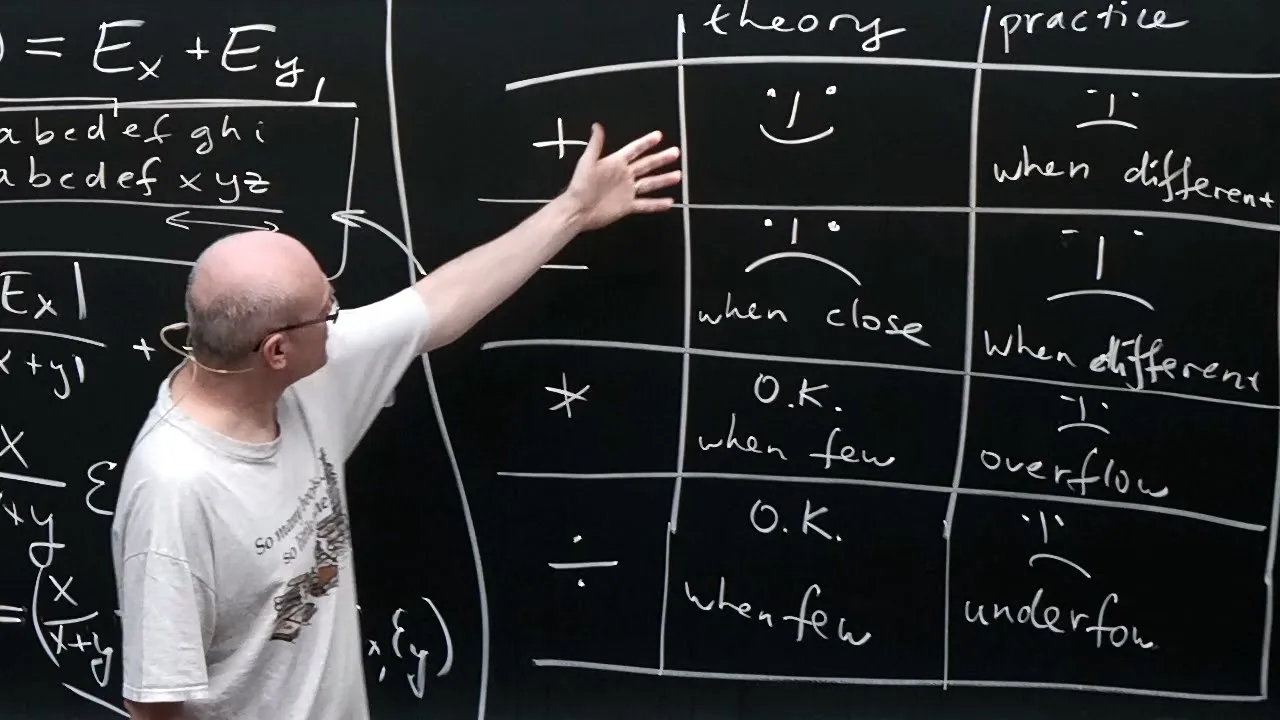
79:39
Numerical Analysis: Errors and Propagation in Calculations
@CVUTFEL
367 views•2024-02-23

4:43
Elliptic Curve Cryptography Explained: ECC, ECDSA, ECDH
@PracticalNetworking
28.5K views•2024-10-21
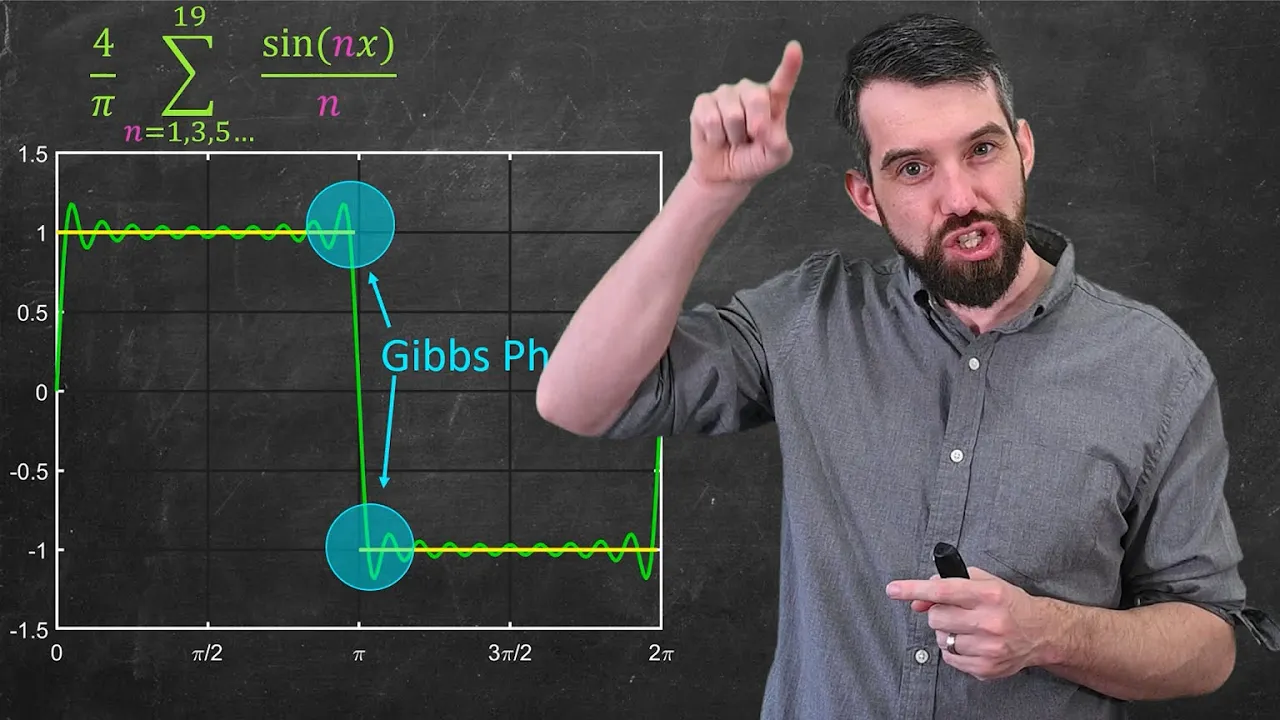
10:44
Fourier Series Introduction: The Big Idea Explained
@DrTrefor
387K views•2021-05-03

6:00
The Mathematical Impossibility of Accurate World Maps
@Vox
23.3M views•2016-12-02
Related Study Plans & Knowledge Roadmaps
Structured learning paths in Mathematics
mathematics
Tensor Calculus: Vectors to Riemann Curvature
01Mathematical Foundations: Linear Algebra & Calculus
02Covectors, Dual Spaces, and Tensor Basics
03The Metric Tensor and Index Gymnastics
+ 2 more learning modules
40h5 modules
Explore Roadmap
mathematics
Gödel's Incompleteness: Logic, Proofs & Limits
01Introduction to Formal Systems & Hilbert's Dream
02Set Theory, Cardinality, and Cantor's Diagonal Argument
03Arithmetization and Gödel Numbering
+ 2 more learning modules
14h5 modules
Explore Roadmap
mathematics
Galois Theory: Fields, Groups & Solvability
01Foundations of Abstract Algebra: Groups & Fields
02Polynomials & Field Extensions
03Splitting Fields & Symmetries
+ 2 more learning modules
24h5 modules
Explore Roadmap
mathematics
Non-Euclidean Geometry: Models & Geodesics
01Euclid's Fifth Postulate and the Birth of New Geometries
02Hyperbolic Space and the Poincaré Disk Model
03Geodesics: Defining Straight Lines in Curved Spaces
+ 2 more learning modules
15h5 modules
Explore Roadmap